“People don’t see it from the outside, but we do and we rate him very highly” - Visma DS lifts lid on Jonas Vingegaard’s resurgence after difficult two years
Cycling
From the outside, it can look deceptively straightforward. Jonas Vingegaard returned in March, dominated Paris-Nice and the Volta a Catalunya, and immediately re-established himself as the rider most capable of challenging Tadej Pogacar over three weeks.
Inside Team Visma | Lease a Bike, however, there is a feeling that the public still has not fully understood the scale of what Vingegaard has fought through to get back to this level.
Speaking to Domestique, Visma sports director Marc Reef admitted Pogacar’s extraordinary level inevitably changes how every other rider is judged. “If you compare it to the standard of Pogacar, then everybody, of course, is a little less, because he is doing what he wants, attacking from far,” Reef explained.
Inside the team, though, there is no sense that Vingegaard’s achievements have become diminished because of the era he is racing in. Reef instead described the Dane as “a different type of rider and a different person”, adding that “he has already achieved something big if you compare it to the history of cycling.”
That admiration extends beyond victories alone. “And besides the Grand Tours and all the other stage races that he won, the way he has fought back after huge setbacks is something that really marks him out,” Reef continued. “I think it’s something that people don’t see from the outside, but we do and we rate him very highly.”
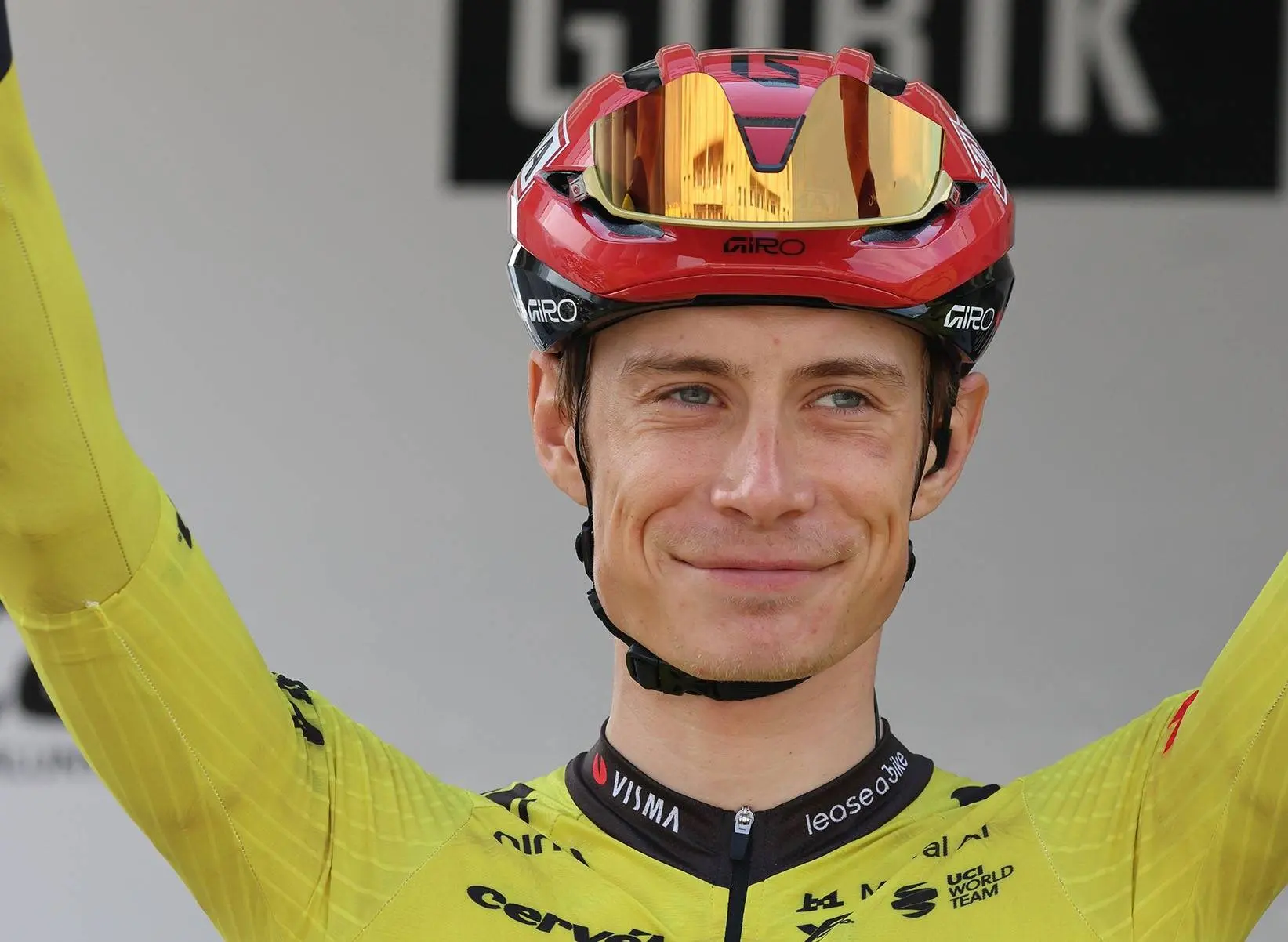
The hidden side of Vingegaard’s resurgence
Much of the discussion around Vingegaard since 2024 has centred on what he has been unable to stop. Pogacar has continued reshaping the sport around himself, winning Monuments across every terrain imaginable and arriving at the Tour de France once again looking close to unbeatable. What has often been lost in that conversation is the context surrounding Vingegaard’s own path back to the top.
Even after the horrific crash at Itzulia Basque Country in 2024 that left him in intensive care with a collapsed lung, fractured collarbone and broken ribs, the Dane still recovered in time to finish second at the Tour de France before later winning the Vuelta a Espana. His 2026 season then began with further disruption after illness delayed his start to the year, while long-time coach Tim Heemskerk and key climbing domestique Simon Yates both departed the Visma setup.
From the outside, the combination of setbacks created the impression of uncertainty around both rider and team. Reef suggested that was never truly reflected internally. “Maybe in that one moment certain things came together for him, and I can imagine that, from the outside, it looks like there’s something going on,” he said.
The atmosphere inside the team, however, was very different. “But from speaking to Jonas at the end of last season and then seeing him at the training camp in December, we saw how motivated he was, how much he was into the team, and how much energy and good vibes he was spreading to the whole group.”
Why Visma believe this Vingegaard is different
The significance of Vingegaard’s victories at Paris-Nice and Catalunya was not simply that he won them, but how he won them. At Paris-Nice he attacked repeatedly and built a winning margin of more than four minutes overall before carrying the same level into Catalunya against another stacked field. Those performances arrived despite a disrupted winter and a far lighter race schedule than Pogacar’s relentless spring campaign.
Reef explained that the victories brought confidence inside the team not because Vingegaard needed reassurance, but because of the level he displayed. “He’s a winner, so he was racing to win bike races that he had never won before, like Paris-Nice,” Reef said.
What stood out most to Visma, however, was the manner of those wins. “But the way he won it, that gave a lot of confidence to the team,” Reef added. “And it’s only a week gap to Catalunya, so to win that one too by beating a lot of strong guys with a big advantage, that only gives more confidence for the period that’s coming.”
That next period now begins at the Giro d’Italia, where Vingegaard will attempt the Giro-Tour double for the first time in his career. According to Reef, the decision reflected a desire for something fresh after years spent building entire seasons around July alone. “He was looking for new motivation and a new trigger,” Reef explained.
Visma also believe the approach could strengthen him later in the season. “And we were really behind that idea,” Reef continued. “Last year when Jonas did the Tour and the Vuelta, we saw that his level was improving slightly in the second Grand Tour, so that was an extra reason to go for it this year.”
Calmer, more relaxed and still hungry
There is also a growing sense around Vingegaard in 2026 that he has become more comfortable with both his position in the sport and the pressure that comes with it.
The rider who once gave guarded and minimal interviews has appeared noticeably more open and confident this season, something Reef believes is a natural consequence of experience and leadership. “When you grow year by year and situation by situation, I think that it does something to a person and also to him,” he said.
Reef believes Vingegaard’s growing stature inside the peloton has helped shape that evolution. “And when you realise that you’re one of the strongest riders, that boosts your confidence, of course,” he explained. “This year, he’s calm, he’s confident, and he’s more relaxed.”
Despite everything Vingegaard has already achieved, Reef insisted the hunger inside the team remains unchanged. “But above all, with this approach that we are having this season, he’s really, really motivated,” he said. “He’s been in cycling a long time, he’s already won a lot, but he’s still very, very hungry…”
Kieran WoodDeputy Editor-in-Chief
Kieran Wood is a sports journalist based in Wales and has been active in journalism since 2022. He regularly contributes to DartsNews.com and CyclingUpToDate.com, where he covers professional cycling and darts. In cycling, his work includes liveblogs from major races, including the Tour de France, the Giro d’Italia, and La Vuelta a España, alongside race reports and analysis. He has also conducted interviews with professional riders.
His reporting spans the full racing calendar, from one-day classics to stage races, with a focus on accurate, real-time coverage and clear contextual analysis. For statistics, results, and historical context, he regularly uses resources such as ProCyclingStats. To support reporting on rider activity and training context where relevant, he also references Strava.
In his work, Kieran places strong emphasis on careful sourcing, editorial accuracy, and updating articles as new, verified information becomes available.
claps 9visitors 9
Just in
Popular news
Latest comments
- in football also, The Special one is like a dictator controlling the egos of Ibra and other top footballers. Also Alex Ferguson was very abusive sometimes violent too but all of it gets swept under the rug due to the accomplishments. Even today i would say that verbal abuse and screaming still remains the best tool of most managers to motivate their players next to benching and fear of trade.abstractengineer17-10-2026
- At least all that doping talk will end when (if) Seixas becomes world #1vappaxbipmv17-10-2026
- He is only 24, i think his team is to be blamed in part for the mismanagement due to their reliance on him for points. But ultimately i dont think they had options either. What is needs is a good rest , consultation with doctors about his issues (mental or physical) if any and then fresh start, slow but steady. He should be back at the top, maybe a limited racing calendar will also helpabstractengineer17-10-2026
- i think its the worst for the winners with "win at all costs" mentalityabstractengineer17-10-2026
- You @frieder3, as an american, should also be ashamed of your president. If you're not, there's something wrong with you.PogiSloFans17-10-2026
- A simple solution would be de cluttering the media circus that follows race get rid of photographers on bikes or only allow at certain places. All drivers or riders to be certified. It is not rocket science. You cannot reduce speed of peleton so ensure the bubble they ride in is safepaultryan200217-10-2026
- I don’t know about some of these reports, is it shocking that management says do it our way? we are the managers, not you? I understand some teams might have a more collaborative approach. but this is within their rights as management.mij17-10-2026
- Remco had a great year, no question. He is clearly one of the top 30 riders in history already, & top 5 in time trial. My only criticism is he should have raced/won the Belgian & Euro TT championships--?why give them away.Xrider5117-10-2026
- no matter what anyone says, I’d take his palmares right now and be happy if I never got any more. rainbows, golds, GTs, monuments, one days, one weeks.mij17-10-2026
- There's no evidence anyone on UAE is doping. Period!Xrider5117-10-2026
Loading
1 Comments