“It’s not the best preparation for the Tour de France”- Alberto Contador on Jonas Vingegaard's Giro-Tour decision
Cycling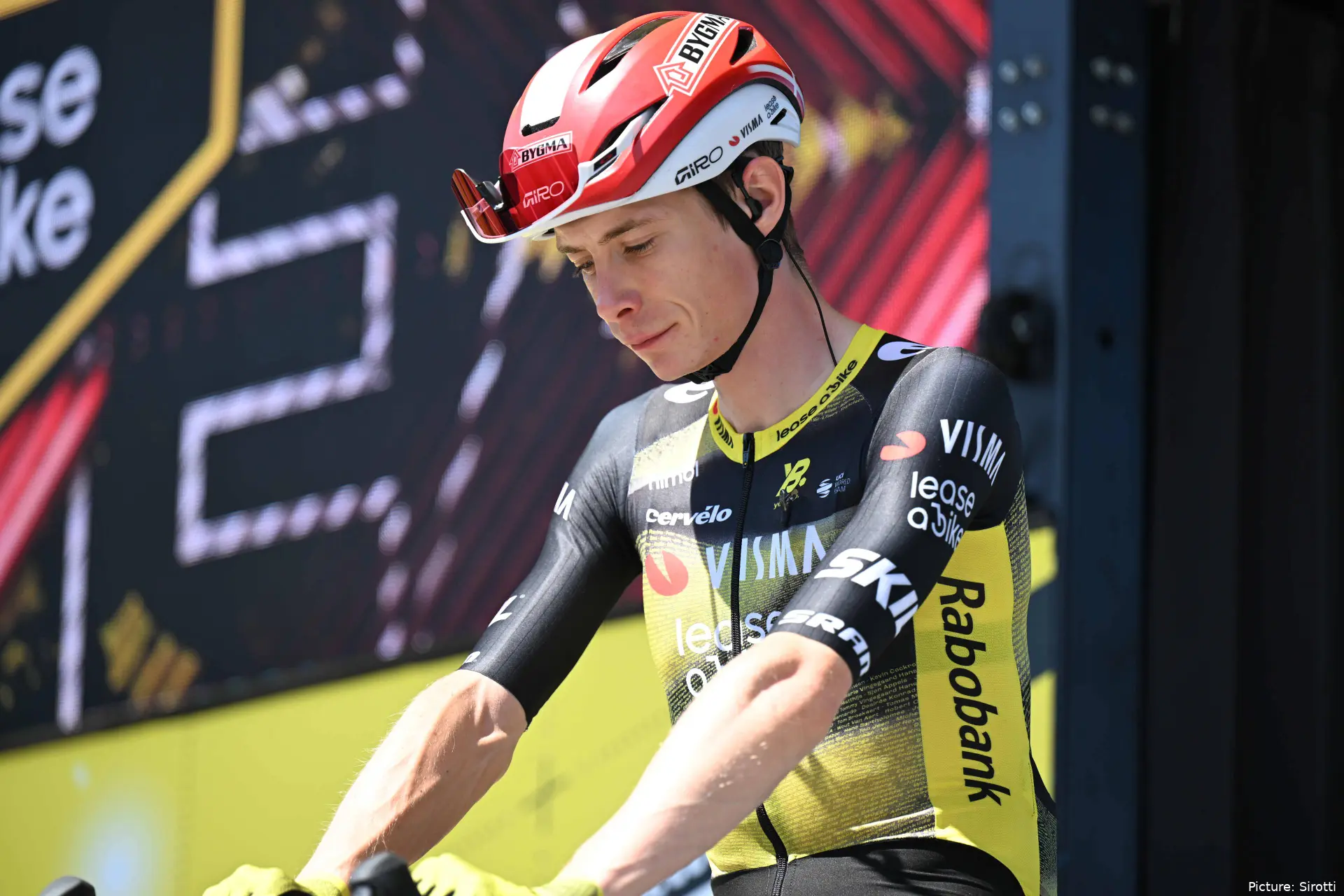
Spanish legend and multi-time Grand Tour winner, Alberto Contador, unpacked the challenge of doubling up the Giro d’Italia and the Tour de France in the same season. He believes that Jonas Vingegaard is going to struggle getting into the latter with his best form because of his schedule.
Speaking as someone who knows the demands of three-week races, he is highly skeptical that this combination truly benefits performance at the Tour. For the current Eurosport pundit, today’s high-performance paradigm has reshaped preparation, shifting emphasis away from traditional race days toward the moment to measure workload through specific training.
In that vein, the rider from Madrid underlines that modern cycling prioritizes controlled training loads, something that becomes volatile—and hard to quantify—once a three-week race is added to the mix. Diving into the technical side, Contador stresses that contemporary sport is built on meticulous planning, with altitude camps and performance data as two core pillars.
Millimetre-precise workload control
As the Polti general manager explains: “We’re living a brand of cycling today where training camps are everything, everything is measured in detail, but when you go to a race like the Giro d’Italia you can’t truly measure your efforts in detail.”
Jonas Vingegaard goes into the Corsa Rosa as the man to beat, and in an ideal scenario, would repeat the performances of Tadej Pogacar in 2024 - where he was unmatched in the fight for the overall win. However, that is not something that Vingegaard is in control of, and in any situation the Giro will be very demanding.
This loss of control over physical fatigue, in his view, jeopardizes recovery for any rider—in this case, Jonas Vingegaard. He acknowledges exceptional cases such as Tadej Pogacar, who held form throughout, yet he stands by the idea that other preparatory routes are better suited for July.
The risk of missing peak form at the key moment of the season is the main reason Contador advises against combining both Grand Tours.

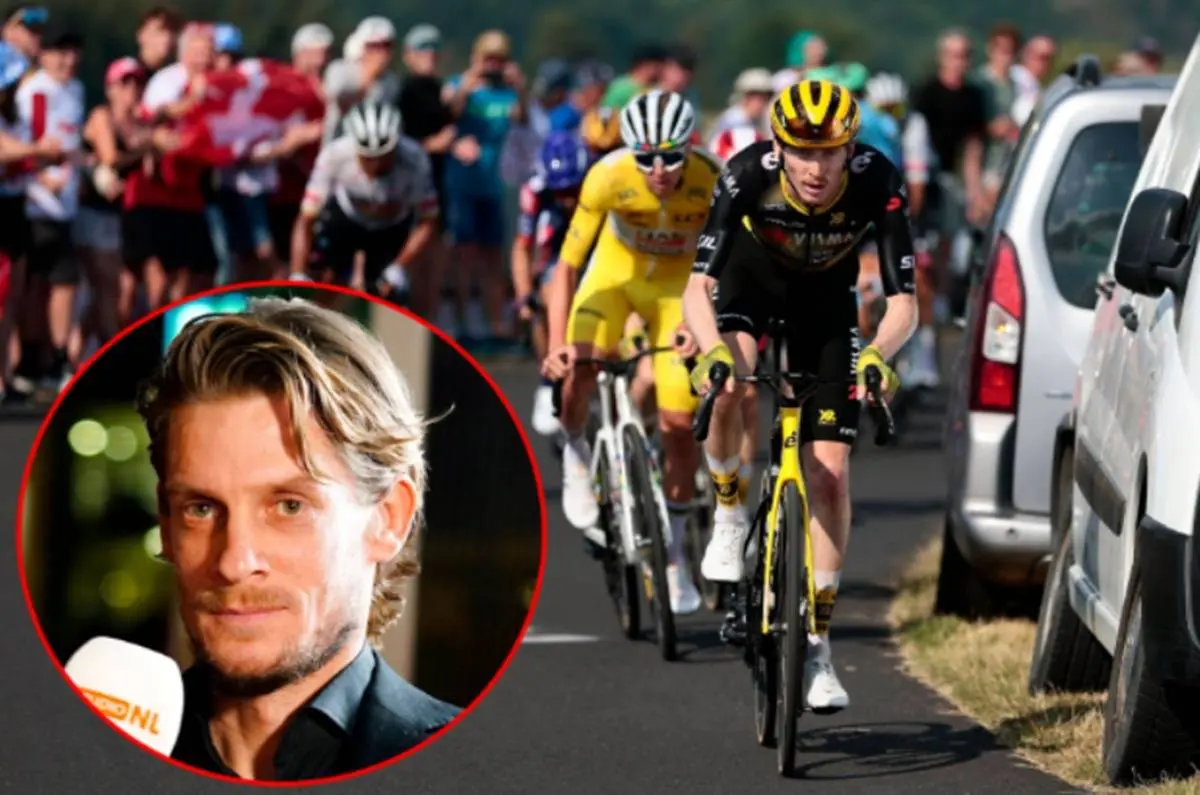
Vingegaard and Pogacar at the Tour de France 2025
Pogacar’s double, a rare precedent
On that point, the former pro does not budge, stating that “I don’t think it’s better. At best you’re taking a risk that you won’t recover in time to arrive in optimal condition.”
Cumulative fatigue and the recovery window between both races are factors that can penalize even the strongest riders in the bunch. However, modern standards of racing give way for more innovation to succeed. Whilst Pogacar performed at his very best in both Grand Tours two years ago; Paul Seixas at age 19 is also entering the Tour with podium ambitions despite being the youngest rider to start it in almost 100 years.
It is an era where what was previously thought to be impossible is now possible, and Vingegaard is simultaneously going to try and conclude his mission of winning all Grand Tours in his career.
“Honestly, I don’t consider it the best preparation for the Tour de France," Contador argues. Despite positive precedents from the UAE Team Emirates leader, the Madrilenian insists that, physiologically and strategically, it is not ideal. He leaves the door open to see how other leaders, such as Visma’s Jonas Vingegaard, manage the challenge at the upcoming Giro d’Italia.
🎙️ La reflexión de Alberto Contador, en Eurosport, sobre hacer el doblete Giro-Tour de Francia:
— Eurosport.es (@Eurosport_ES) May 5, 2026
"En todo caso es correr un riesgo, y es que no puedas recuperar en tiempo para llegar en óptimas condiciones" pic.twitter.com/JxFzBQfjTI
Read also
Rúben SilvaEditor-in-Chief
A founding contributor to CyclingUpToDate since its launch in January 2022, Ruben Silva has played a central role in shaping the site’s editorial direction and long-term growth. Before joining the project, he built his experience through independent blogging at Echelons Hub and by producing race previews for Ciclismo Internacional, developing a strong analytical voice rooted in daily engagement with professional cycling.
Beyond editorial work, he has been closely involved in the expansion and coordination of CyclingUpToDate’s wider network, helping establish and support sister platforms across multiple languages. This includes ongoing collaboration with CiclismoAlDia (Spanish), CiclismoAtual (Portuguese), WielrennenUpToDate (Dutch), and RadsportAktuell (German), contributing to a shared editorial vision and consistent international coverage.
He also helps oversee editorial governance across the network, setting standards for accuracy and consistency and coordinating updates or corrections when needed.
Originally from the Porto metropolitan area in Portugal, he holds a bachelor’s degree in Geography. His path into cycling journalism was shaped not through formal media training, but through independent reporting, community engagement, and sustained on-the-ground involvement in the sport.
Over the course of his career, he has conducted approximately 100 interviews across road cycling and cyclocross, ranging from one-to-one conversations and online formats to press conferences and on-site pre- and post-race coverage. His interviews include leading riders, team managers, and prominent figures within cycling media: Tadej Pogacar, Jonas Vingegaard, Mathieu van der Poel, Primoz Roglic, Wout van Aert, Joao Almeida and Tom Pidcock; managers like Patrick Lefevere and Joxean Matxin; and YouTube personality Bryan Kennedy (BKXC)...
Within 18 months of launch, he helped grow CyclingUpToDate’s English-language platform into one of the most-read cycling news websites, built entirely from the ground up. As both a professional journalist and lifelong cycling enthusiast, his focus remains on delivering accurate, timely, and well-contextualized coverage.
claps 1visitors 1
Just in

Popular news
Latest comments
- The hubris of this guy is laughable and complete with Delusions of Grandeur. And comparing the Giro to The Tour De France is idiocy. I love both races, but everyone knows The biggest race of the year is TTDF. If we are all being truthful, Pogi could have won at least a couple more stages. He gifted Del Torro an early stage, and Remco's stage 15. All these riders should not inspire Pogi anymore than is necessary with there pure BS!
 QPSQUANTUM17-10-2026
 - Everyone is entitled to their opinion.
 parisbound0017-10-2026
 - Take your politics to another forum !frieders317-10-2026
- Waiting for the wada test results.. Sketch AF
 Front24217-10-2026
 - Mark my words when Seixas is actually on the wheels of Pogi in the flesh on the road he will crap in his chamois.The demise of Pogacar has been greatly exaggerated for clicks and we all know it.GOAT.
 Brucegel16-10-2026
 - jonas looked so far behind pogacar that pogacar was 4min ahead in a blink in week one, thats how superior pogacar is now. Vingegaard himself was dropped by seixas and even del toro 3 times in the tour :( Piganzoli is coping so hard this is embarassing to read how unrealistic it is in reality when jonas was dropped several times by seixas and del toro ..wtfmiguel16-10-2026
- another tough one for Ineos. NSN is surprising, but they are making moves. Not sure who else is there to support Richard, but he does well as a solo rider.mij16-10-2026
- Impressive
 Rafionain-Glas16-10-2026
 - Like father, like son. Remco's father is also a BS-er.PogiSloFans16-10-2026
- No they wouldn't, because Pogi would beat him. Considering he crushed Pogi's balls 3X in a row the Belgians will have sympathy :))PogiSloFans16-10-2026
Loading
Write a comment