“Maybe Roger’s just getting a bit old — let’s put it that way": De Vlaeminck's former rival slams 'absurd' criticism of Tadej Pogacar
Cycling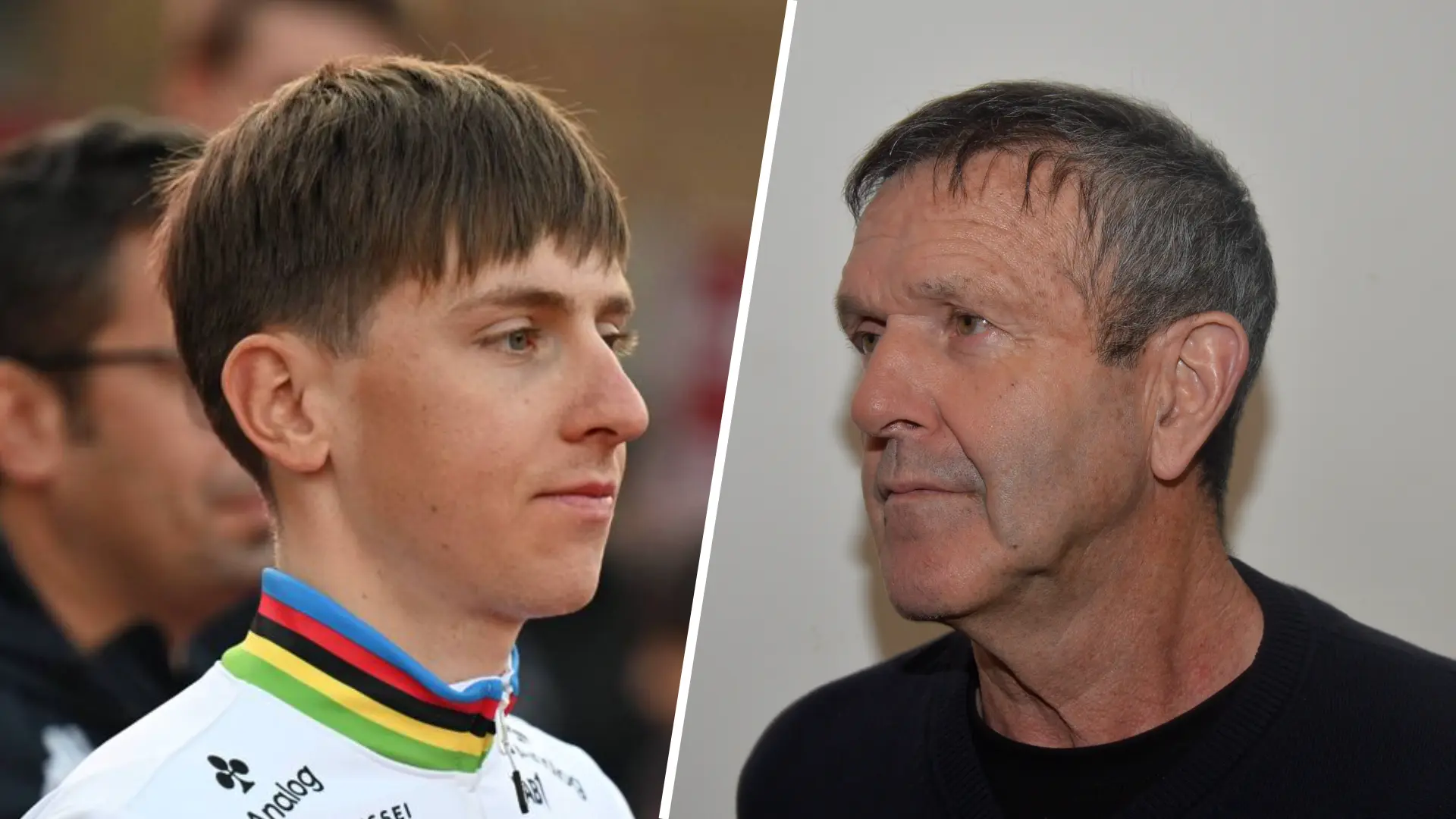
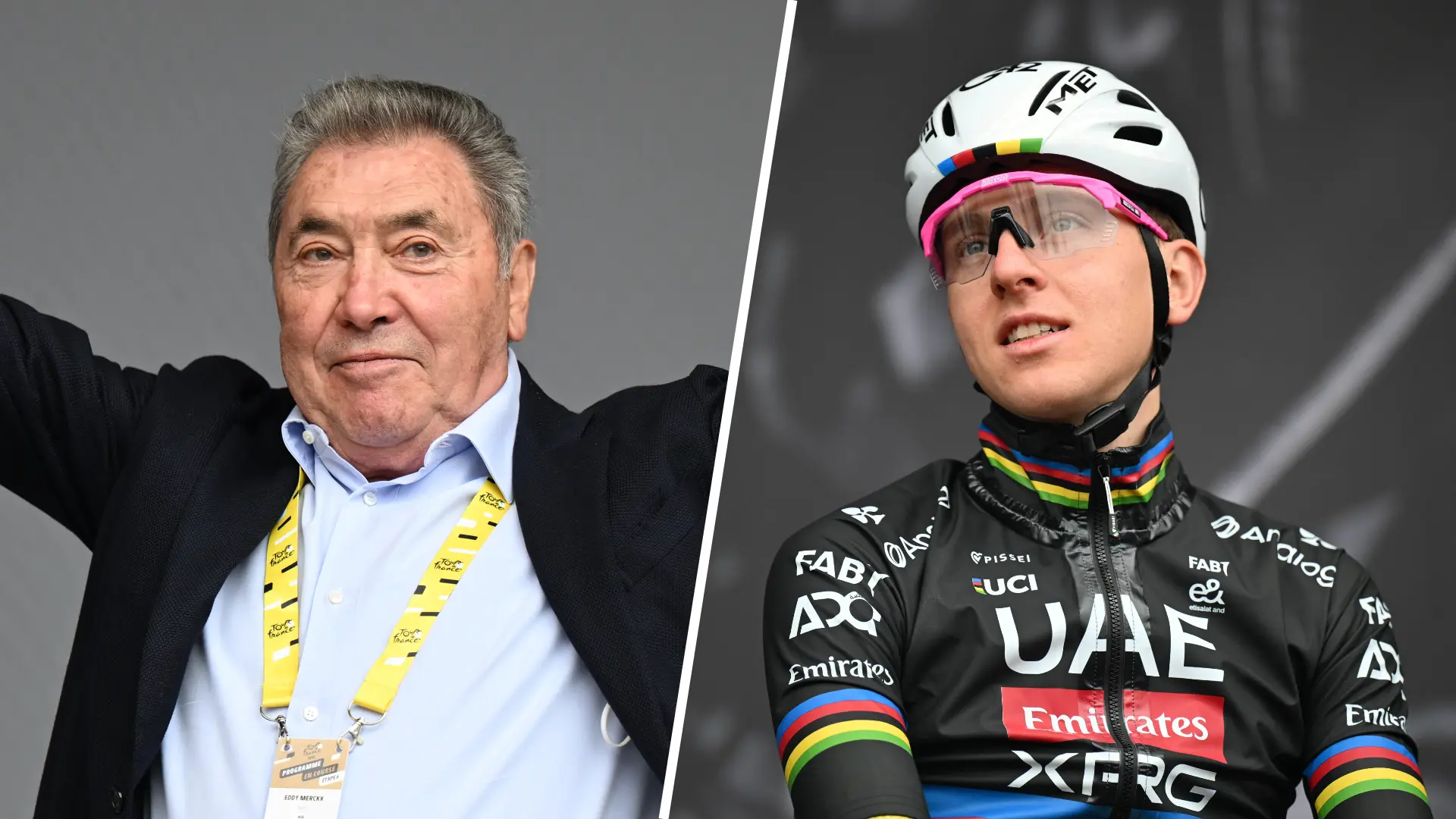
Roger De Vlaeminck’s latest verbal grenade — claiming Tadej Pogacar “isn’t fit to lace Eddy Merckx’s shoes” and that he “wouldn’t drop me if I were still in the peloton” — has caused ripples well beyond Belgium. Now one of his former rivals, Riccardo Magrini, has joined the debate, accusing the four-time Paris–Roubaix winner of living in the past and “missing the point entirely.”
Speaking to QuiBiciSport, Magrini, who raced alongside De Vlaeminck in the late 1970s before going on to a successful career as a directeur sportif and now Eurosport commentator, said he found the remarks “completely out of place.”
“I’ve always had great respect for Roger as a rider, and we also had a good personal relationship,” Magrini said. “But his comments about Pogacar seem completely out of place to me. It’s absurd to compare different eras. Too much has changed — the gearing, the training, the nutrition. Merckx was Merckx, Hinault was Hinault, Pogacar is Pogacar. Full stop.”
“When you get older, you tend to only think about what you did”
Magrini’s words carry a mixture of affection and exasperation. He acknowledges De Vlaeminck’s greatness but suggests the outburst reflects an increasingly common generational mindset — one resistant to accepting that modern cycling can produce its own giants.
“Maybe Roger’s just getting a bit old — let’s put it that way. When you get older, you tend to focus only on what you did yourself,” he said. “Personally, I really enjoy modern cycling and I really enjoy watching Pogacar. I don’t understand those who say he has no rivals or that he makes races boring. Modern cycling is full of phenomenal riders.”
Indeed, Magrini points to the sport’s current “golden generation” — Pogacar, Van der Poel, Vingegaard, Evenepoel, Roglic and others — as evidence that cycling has evolved, not declined. “People forget how fast, tactical and physically demanding the modern sport is,” he added off-air in the same discussion. “The peloton is deeper than ever, and it’s not easy to dominate like Pogacar does.”
“Comparing eras makes no sense anymore”
To Magrini, the entire debate over whether Pogacar could match Merckx — or whether De Vlaeminck himself could keep up with Pogacar — is fundamentally misguided.
“It’s like asking how Maradona or Sivori would perform in football today, against modern defences,” he argued. “Roger was a champion, and I’m sure he would have been one in any era, but it makes no sense to wonder whether he’d hold Pogacar’s wheel. I prefer to just enjoy today’s champions as I enjoyed those of the past.”
His comments reflect a growing divide in how cycling’s history is interpreted — between those, like De Vlaeminck, who view the 1970s as the sport’s golden age, and those like Magrini who see today’s evolution as proof that greatness adapts with time.
While De Vlaeminck’s bluntness remains a defining part of his legend, Magrini’s response underscores a different truth: that the sport he and Merckx helped shape half a century ago continues to produce riders whose brilliance deserves to stand on its own terms — not forever in comparison with the past.

Kieran WoodDeputy Editor-in-Chief
Kieran Wood is a sports journalist based in Wales and has been active in journalism since 2022. He regularly contributes to DartsNews.com and CyclingUpToDate.com, where he covers professional cycling and darts. In cycling, his work includes liveblogs from major races, including the Tour de France, the Giro d’Italia, and La Vuelta a España, alongside race reports and analysis. He has also conducted interviews with professional riders.
His reporting spans the full racing calendar, from one-day classics to stage races, with a focus on accurate, real-time coverage and clear contextual analysis. For statistics, results, and historical context, he regularly uses resources such as ProCyclingStats. To support reporting on rider activity and training context where relevant, he also references Strava.
In his work, Kieran places strong emphasis on careful sourcing, editorial accuracy, and updating articles as new, verified information becomes available.
claps 26visitors 15
Just in

Popular news
Latest comments
- Slowly, very slowly... 5-7 yrs. ;)MajorPayne13-10-2026
- Up to this point: "It is just not yet at the level of Vingegaard and Pogacar." First Jonas, and then level of Tadej. Period!MajorPayne13-10-2026
- The sport has long had a divide between the more diesel-like riders and the more explosive riders. Where does Pogačar fit? His explosive attacks are followed by a high speed diesel climb and he's rarely been caught in the past 5 years (people can name the moments, it's so rare). Seixas is young and we have no idea where his body will end up on this spectrum (just like we didn't with Pogačar when he was 20 and being a diesel up the Vuelta mountains of 2019). Speculation is fun, being a fan while it unfolds is going to be more fun.RidesHills13-10-2026
- yeah it'll be an epoch shift when Pog can't drop people, and/or when they start dropping him.wrsty13-10-2026
- Yes, he won't ride away yet, but he will and that day will be notable
 leedorney13-10-2026
 - Expect the young French rider to slowly asphyxiate the Slovenian into retirement.
 Front24213-10-2026
 - My thinking is that Pog's experience and strength would have outweighed any fatigue in Il Lombardia. But the sad thing is, we'll never see peak Pog (call it Pog 2) go head to head with Seixas. However well he recovers from his crash, he'll return as Pog 3, with the shadow of severe concussion always there.Hills3313-10-2026
- Some speculation and opinion. Had Tadej not crashed out of the Vuelta he would have been less fresh and I'm not sure he would have beaten Seixas in this race. Maybe he would have been able to contest the race in a sprint and maybe not. Believe me when I say I keep up with many of Tadej's climbing feats and records and I understand how great he is but the Paul we just saw at Il Lombardia was not that far behind Tadej.awp13-10-2026
- Firstly, someone who says parenting is babysitting is delusional and shouldn't be taken seriously. Secondly, with pro athletes it is not the same as a normal worker. They are being rewarded for doing something for which they have a talent which doesn't actually help people (besides inspiration). It's quite a different dynamic
 Rafionain-Glas12-10-2026
 - only way for him to effectively learn to microdose is to go to uae. other than that there is no reason for him to go to uae.whkman12-10-2026
Loading
6 Comments