"Many teams are already desperate" - Bruyneel breaks down Giro d'italia tactics after Movistar's failed stage bid
Cycling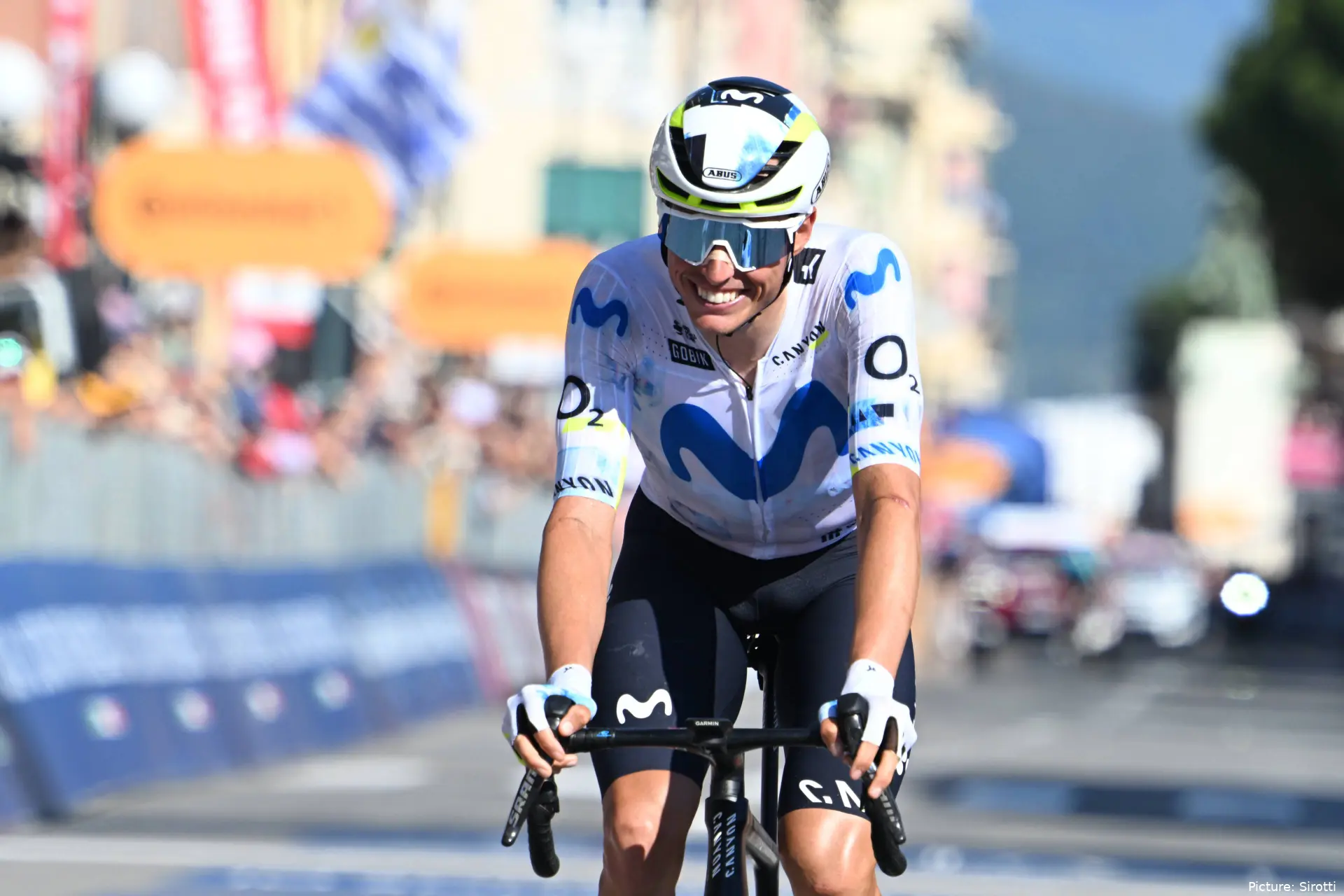
Stage 12 of the Giro d’Italia delivered one of those finales that perfectly sum up modern cycling: strategy, attrition, opportunism and cold blood. In the latest episode of the Lance Armstrong YouTube channel “The Move”, Johan Bruyneel and Spencer Martin broke down a chaotic day that ended with Alec Segaert’s win after Movistar Team’s immense, ultimately fruitless, effort.
Bruyneel highlighted the Belgian’s tactical nous in the decisive attack. For the former sports director, the move was both well prepared and well executed: “It was a perfectly planned attack.” The timing was crucial. Segaert jumped with three kilometres to go, right after a corner, catching out every team trying to organise the chase.
Martin even compared the move to the classics of offensive racing: “He must have read Greg LeMond’s book. Attack in the corners.” The analyst explained how the group hesitated too long while Visma controlled the front only to protect Jonas Vingegaard, with no real interest in closing the move.
For Bruyneel, the victory is even more impressive given the Belgian’s build. He noted that Segaert is around 79 kilos yet still managed to hold Movistar’s ferocious pace on the late climbs. “He had to push huge power to stay there,” he said. By his estimates, the Belgian likely had to exceed 450 watts on the ascents to avoid losing contact.
The former sports director also pointed out this is not the first time Segaert has tried a long-range attack. He had already attempted similar moves at Gent-Wevelgem and other classics. The difference this time was that no one could close the gap.
Movistar Team’s work in vain
Much of the analysis focused on Movistar Team’s tactics. The Spanish squad made the race hard from far out to drop the pure sprinters. The plan worked partially: riders like Jonathan Milan, Groenewegen and Lund were distanced. However, Bruyneel explained the problem came afterwards.
“The danger with these strategies is that you burn a lot of riders far from the finish,” he said. Movistar did reduce the group, but then lacked enough bodies to control the late attacks. That was when Segaert struck, seizing the exact moment.
Martin stressed that several teams indirectly helped Movistar’s work. INEOS trusted Ethan Vernon and EF chased options with Madis Mikkels. All this created a perfect scenario for a reduced finish, but without the control needed to prevent a surprise attack.

Movistar Team, at the Giro de Italia 2026
Bruyneel repeated that Visma never intended to chase in earnest. The Dutch team only wanted to keep Vingegaard safe. “Their job was to keep Jonas out of trouble, not to catch Segaert,” he stated. He also recalled the curious situation of Victor Campenaerts, Segaert’s teammate and friend, pulling the group while the attacker widened his lead.
Another major talking point was Toon Aerts. The Belgian finished second and produced one of the day’s most striking stories. Martin noted that until very recently he was almost exclusively a cyclocross specialist. Bruyneel explained his full switch to the road only came in 2025 and praised his ride: “It’s proof that it’s never too late.”
The former sports director also discussed the sanction Aerts received years ago for accidental contamination. He said it was never a substance clearly linked to performance enhancement, though the rider still served a two-year suspension.
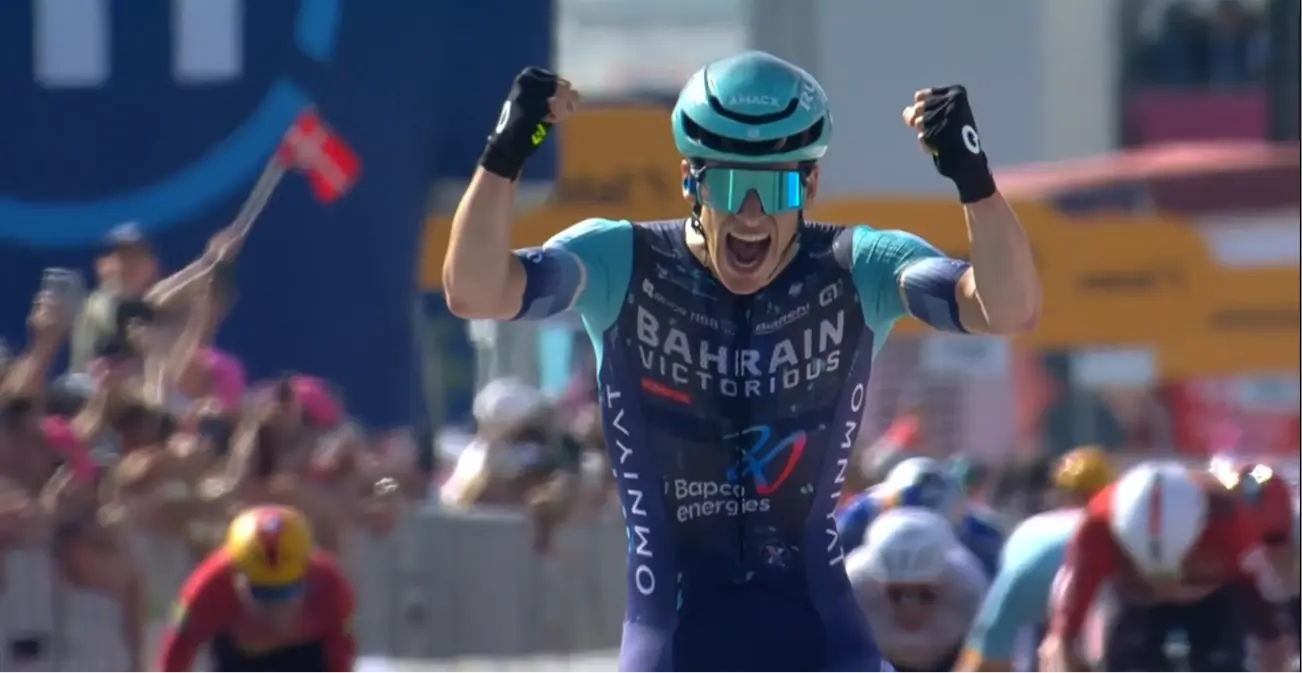
Eulalio and Bahrain - Victorious' success
Beyond the stage win, Bruyneel also underlined the excellent mood inside Bahrain Victorious at this Giro. Leader Alfonso Lualio collected more bonus seconds and Ben O’Connor also took time at the line. For the Belgian, this kind of dynamic can make a psychological difference in a Grand Tour.
“Success is contagious in a Grand Tour,” he said. According to Bruyneel, suffering feels completely different when a team senses everything is going right and results follow. “It’s very different to suffer for a reason than to suffer just because you have to hold the pace of other teams,” he added.
Martin then pointed out a curious stat in the GC: four Australians sit inside the Giro’s top 10. Ben O’Connor, Jai Hindley, Michael Storer and Chris Harper keep Australian hopes alive in the Italian race.
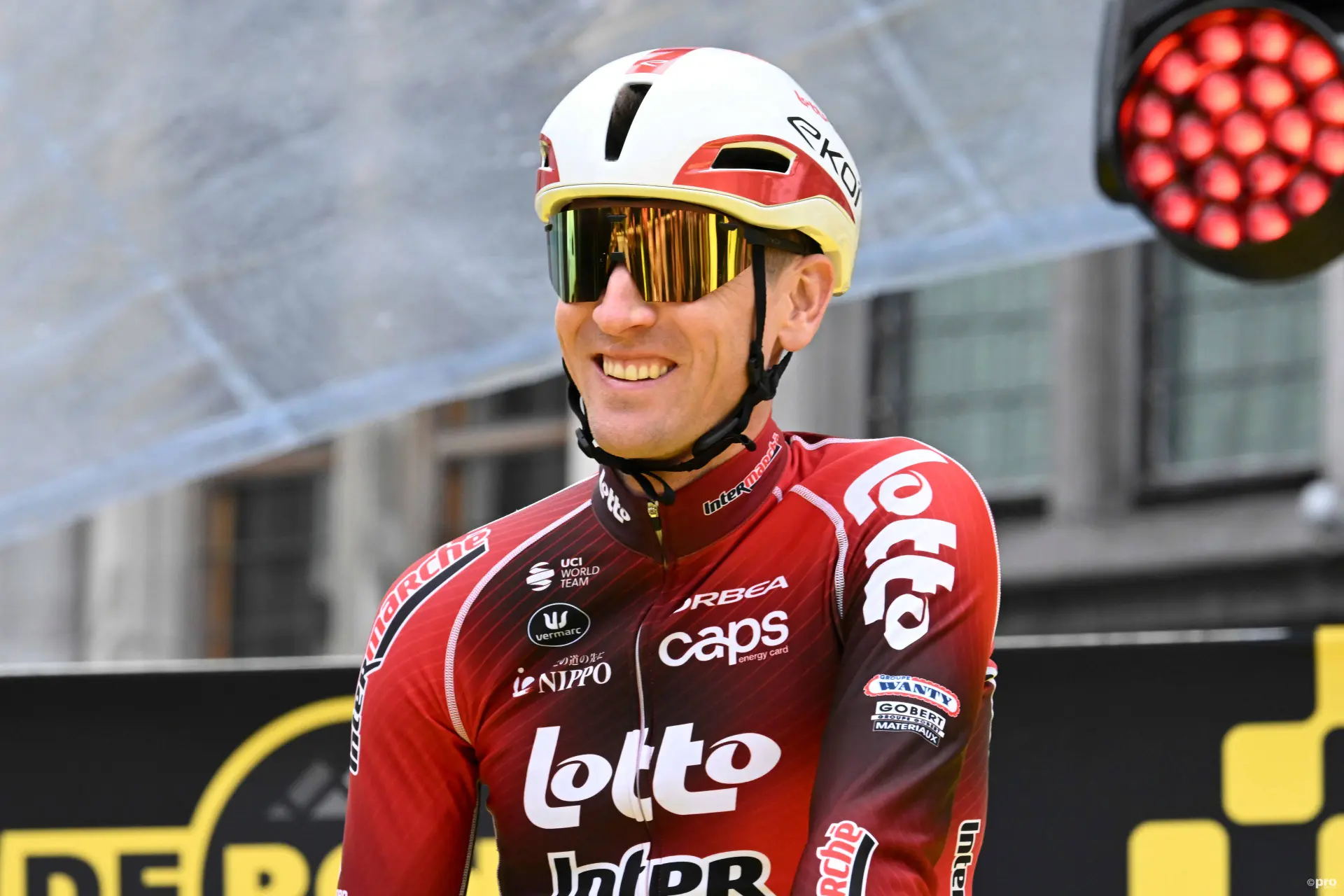
There was also time to discuss some odd tactical moves during the day. Bruyneel was surprised that teams like Lidl-Trek or Soudal Quick-Step didn’t send more riders to help their distanced sprinters. Milan’s case was especially striking, as he lost contact but still seemed to have a chance to get back.
“I would’ve called everyone back to try to salvage the sprint,” the Belgian said. Martin added that the pace was so high that even riders chased by teammates barely managed to cut the gap.

Afonso Eulálio in the Giro d’Italia leader’s maglia rosa
Bruyneel previews stage 13
Looking ahead to stage 13, both Bruyneel and Martin agreed the route will again trigger a highly complex tactical battle. The day features a punchy final climb, with ramps over 10%, before a fast descent to the finish.
Bruyneel believes the sprinters will have no chance and singled out two prime favourites: Jonathan Narváez and Giulio Ciccone. In his view, both have the ideal profile to survive the last climb and finish it off from a reduced group.
However, he also thinks a breakaway has a realistic shot. “It will all depend on how much UAE and Lidl-Trek want to ride,” he explained. According to Bruyneel, policing a move over so many kilometres would demand a huge effort from domestiques.
Read also
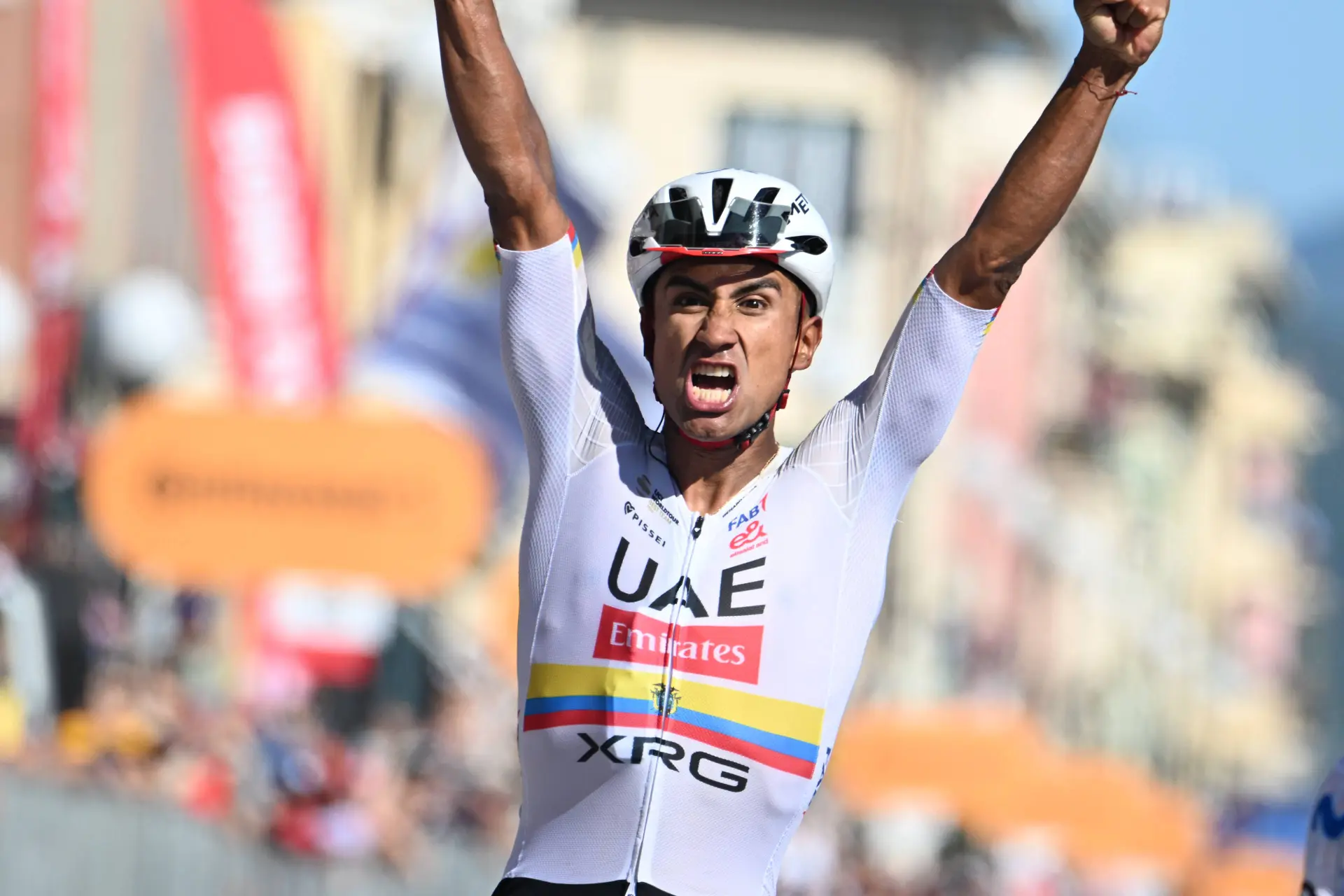
Martin even floated the idea that Narváez might try to slip straight into the right break. Bruyneel doubted others would cooperate with him: “Who’s going to want to work with Narváez right now?”.
The conversation ended with an interesting reflection on the second half of the Giro. Bruyneel thinks many teams are growing desperate as chances dry up. With few truly accessible stages still ahead, tactics could become far more aggressive and unpredictable. “We’re going to see moves we might not understand, but that’s because many teams are already desperate to win a stage,” he concluded.
Gavin QuinnCycling Journalist
Gavin Quinn is a cycling journalist and ultra-distance cyclist with a BA in Journalism from Dublin City University. Formerly the Press & Communications Officer for Cycling Ireland, Gavin has worked inside the national team at the World Championships and has reported for the Irish Mirror, Mirror UK, and The42.
His expertise is backed by elite-level access, having interviewed stars like Sam Bennett and Ben Healy, as well as immense personal endurance. In 2025, he completed a 12,000km solo cycle from Ireland to Vietnam, following a 4,600km tour across Europe. From the cobbles of Paris-Roubaix to the gradients of the Tourmalet, Gavin’s writing focuses on the "romance and brutality" of the sport. Having visited 50+ countries, he brings a global, cultural perspective to his coverage of the pro peloton for CyclingUpToDate.
claps 0visitors 0
Just in
Popular news
Latest comments
- oh boy, you're gargling with french balls now?? pogi going to be jealous.whkman11-10-2026
- Well if UAE the best team in history comes knocking their the only team in the world who can get Seixas. Seixas will become incredible there. Lets see if he stays at decathlon or goes to UAE.miguel11-10-2026
- Ahem, stage 16 of the 2025 Giro
 Rafionain-Glas11-10-2026
 - Can we get a comment from the UCI on this. The silence from Aigle is deafening! Come on cycling journalists , start annoying them to get a comment please.Paul53111-10-2026
- A shame to see him retire, I really liked him as a rider. His dignified tribute along with Matej Mohorovic to Gino Mader after his death was class and will always live in my memory. Enjoy your retirement.GregT11-10-2026
- A shame to see him retire, I really liked him as a rider. His dignified tribute along with Matej Mohorovic to Gino Mader after his death was class and will always live in my memory. Enjoy your retirement.GregT11-10-2026
- I thought Seixas had hit the end of the road from a fatigue standpoint, after the WC meltdown - and he still finished ok. This was impressive and an amazing return.mij11-10-2026
- totally, eating crow for breakfast this morning. after the world championships I thought we were looking at a late season fade from fatigue. way to go Paul!mij11-10-2026
- Pogi would have won the Vuelta at around 10 min. But it would have been boring for fools like you. Capish?PogiSloFans11-10-2026
- Rather than me describing the technology at length on here, If you google. Line-scan cameras. They are also sometimes called Slit-Scan cameras. Either search will fill you in. You can read all about how they. work. Enjoy! Just to be clear the cyclist is saying he wants to see exactly where the digital finish line is in relation to the actual physical finish. At this point we only have the word of the authority that the digital line corresponds to the exact starting edge of the physical finish line. That seems like a reasonable request to me.Prorodsandstuff11-10-2026
Loading
Write a comment