"Look at last year’s Tour, Vingegaard lost around 90 seconds to Remco Evenepoel" - Robbie McEwen plays down Giro d'Italia time trial concern
Cycling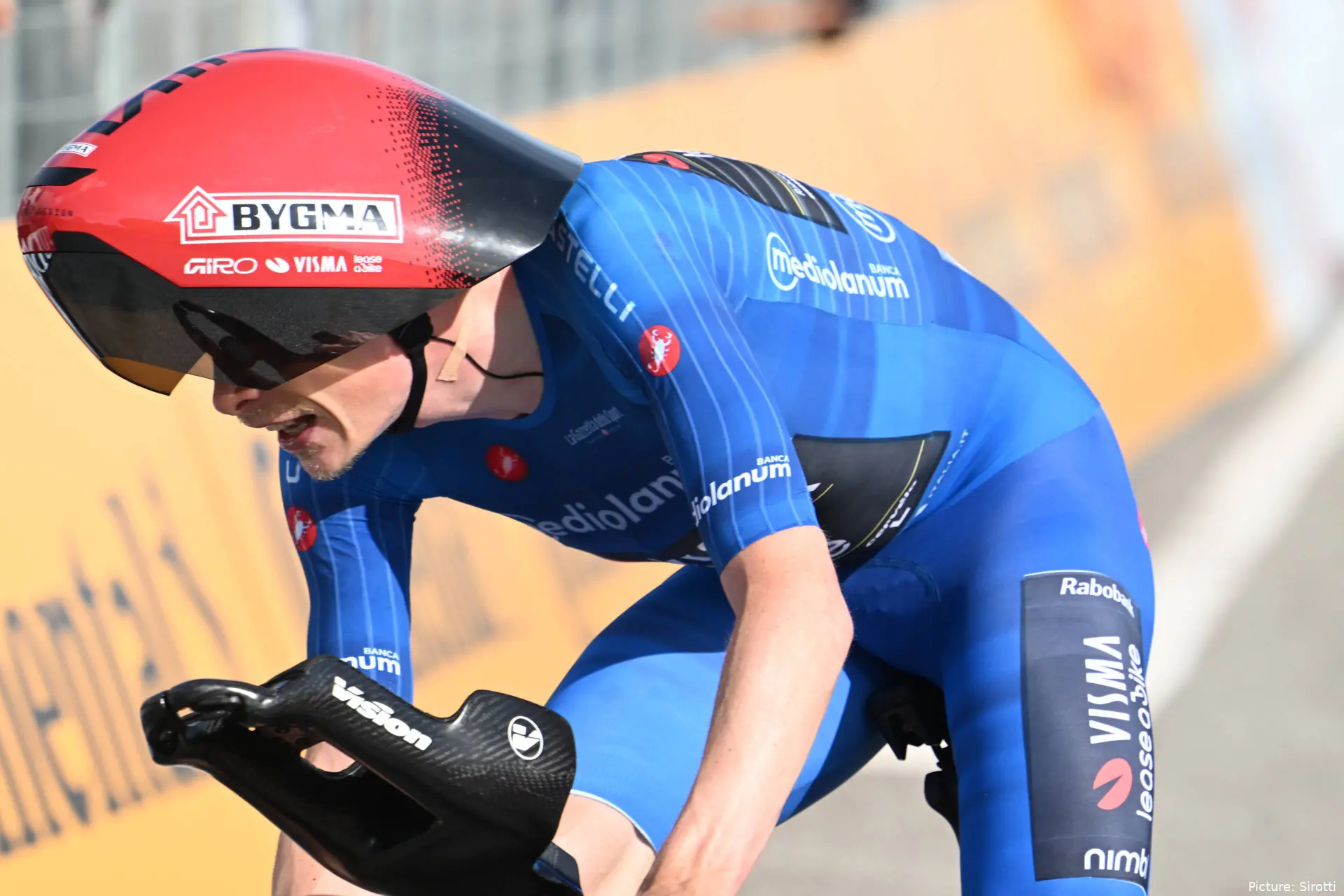
Jonas Vingegaard’s Stage 10 time trial at the Giro d’Italia has sparked debate, but Robbie McEwen does not see it as proof that the Team Visma | Lease a Bike leader is in trouble.
Vingegaard went into the 42km test from Viareggio to Massa widely expected to take the Maglia Rosa from Afonso Eulalio. Instead, the Dane finished 13th on the stage, three minutes behind dominant winner Filippo Ganna, and cut Eulalio’s overall lead to 27 seconds without actually taking pink.
For some, that made Stage 10 an underwhelming day for the Giro favourite. For McEwen, the result needs more context.
Speaking on TNT Sports’ The Breakaway, the Australian pointed back to last year’s Tour de France as evidence that Vingegaard struggling to match the biggest engines on a flat time trial course is not a new phenomenon.
McEwen points to flat time trial pattern
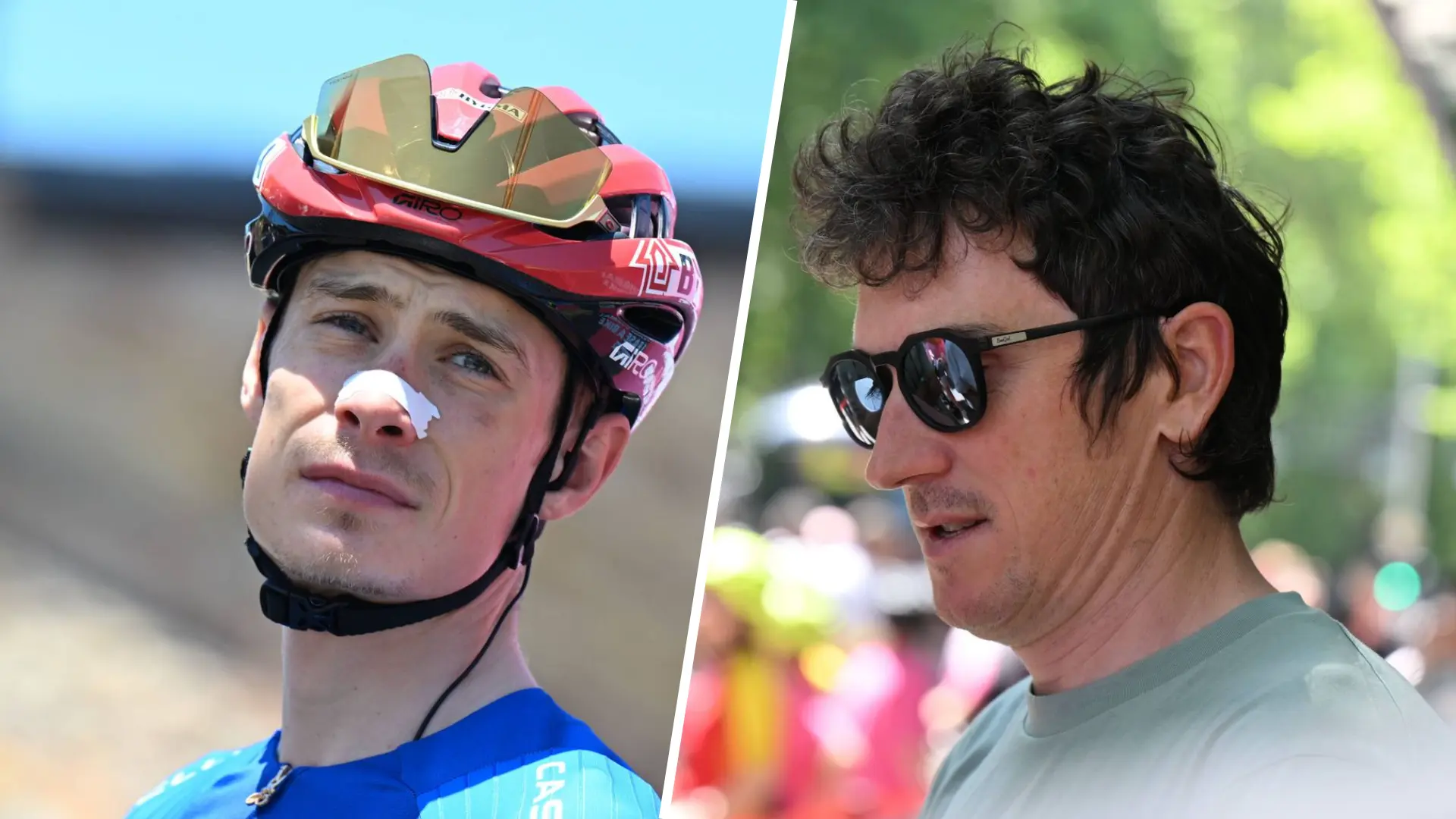
“It’s been a pattern in these flat time trials,” McEwen said. “You look at last year’s Tour, Vingegaard was also 13th - just like today. On that occasion, he lost around a minute and a half to Remco Evenepoel.”
That comparison matters because Vingegaard’s Giro ride looked more disappointing against pre-stage expectation than against his recent record in similar conditions. The Dane has built his reputation on climbing, recovery and Grand Tour consistency rather than pure flat power.
Stage 10 was almost tailor-made for riders with bigger engines. Ganna crushed the field to win in 45:53, while Thymen Arensman finished second and surged onto the GC podium. Derek Gee-West and Ben O’Connor also produced strong rides on a day where sustained power mattered more than climbing efficiency.
McEwen was clear that Ganna belongs in a different category on terrain like this. “You’ve got to leave Filippo Ganna out of it,” he said. “He’s just other-worldly, he’s an alien.”

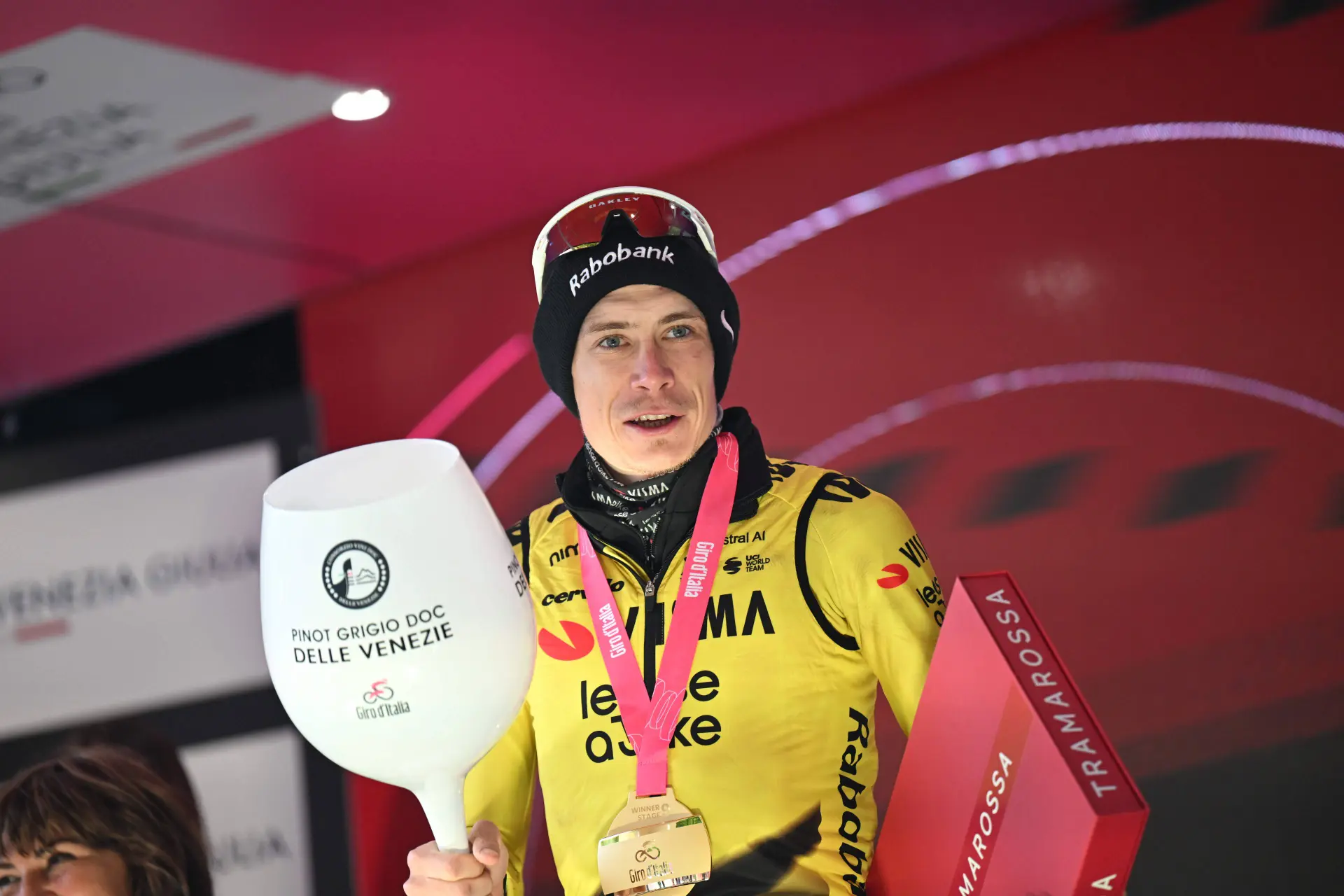
Jonas Vingegaard in action during the stage 10 individual time trial at the 2026 Giro d'Italia
“The pure grunt isn’t there for him”
The bigger question was how Vingegaard compared with the other GC riders. He still gained 1:57 on Eulalio, 1:22 on Felix Gall and 31 seconds on Jai Hindley, but he lost 1:06 to Arensman and time to O’Connor and Gee-West.
McEwen admitted that part was more surprising, especially because Vingegaard looked smooth on the bike rather than obviously struggling. “But to the other GC contenders, those around him, we expected Jonas to be the leader out of those guys, and he looked good,” McEwen said. “Often, riders look like they’re struggling if they’re struggling, but he looked good.”
His explanation was not that Vingegaard is suddenly weak, but that this type of course exposes a very specific limitation. “I think just that the really flat course is no longer his thing,” McEwen added. “He’s such a lightweight, light-built, more of a pure climber than anything now. The pure grunt isn’t there for him.”
That line gives the Stage 10 result a different meaning. Vingegaard did not produce the Maglia Rosa takeover many expected, but the route may have amplified the strengths of riders built more for raw power than mountain efficiency.

Stephens still sees warning signs
Matt Stephens was more cautious in his assessment. He felt the ride was below what had been expected from Vingegaard, while also giving credit to Eulalio for limiting his losses and keeping pink.
“We expected him to put time into Eulalio,” Stephens said. “I think it’s a combination of two things. Let’s be really honest. For whatever reason - and hopefully we’ll get to the bottom of it when we hear from him - it was a sub-par ride from Jonas. But by the same token, an exceptional ride from Eulalio.”
Stephens also raised the possibility that Vingegaard may not have arrived at the Giro at his absolute peak, particularly with the Tour de France still to come later in the summer. “Are we seeing a slightly undercooked Jonas Vingegaard coming into this race?” he asked.
That question does not only come from the time trial. Vingegaard has already won both summit finishes in this Giro, but the gaps on those days were not as large as some expected from a rider of his standing.
“Did we expect him to put more than 12, 13, 14 seconds into Felix Gall in the last two mountaintop climbs?” Stephens continued. “Should that have suggested that maybe he isn’t quite 100% because of what is happening in the summer with the Tour de France? These are all things, but still an unexpected ride from Jonas.”
Giro still tilted towards Vingegaard
Stage 10 leaves two truths sitting side by side. Vingegaard did not deliver the statement ride many expected, and he missed the chance to take pink from Eulalio. Yet he also moved to within 27 seconds of the Giro lead with the harder mountain stages still to come.
McEwen’s argument is therefore important. If the concern is that Vingegaard was beaten on a flat, power-based time trial by bigger riders and pure specialists, that may say more about the course than the Giro as a whole.
The real test now comes when the race returns to the mountains. If Vingegaard starts losing his edge there, the questions will grow louder. For now, Stage 10 has made the Giro more interesting, but it has not changed the basic fact that the road ahead still looks far more suited to him than the road to Massa ever did.
Kieran WoodDeputy Editor-in-Chief
Kieran Wood is a sports journalist based in Wales and has been active in journalism since 2022. He regularly contributes to DartsNews.com and CyclingUpToDate.com, where he covers professional cycling and darts. In cycling, his work includes liveblogs from major races, including the Tour de France, the Giro d’Italia, and La Vuelta a España, alongside race reports and analysis. He has also conducted interviews with professional riders.
His reporting spans the full racing calendar, from one-day classics to stage races, with a focus on accurate, real-time coverage and clear contextual analysis. For statistics, results, and historical context, he regularly uses resources such as ProCyclingStats. To support reporting on rider activity and training context where relevant, he also references Strava.
In his work, Kieran places strong emphasis on careful sourcing, editorial accuracy, and updating articles as new, verified information becomes available.
claps 5visitors 3
Just in
Popular news
Latest comments
- Maybe Net Company INEOS should be signing Roglic. Feels like they have been mostly irrelevant since G hung up the shoes. At least they would have someone who is there or there abouts on GC.MASnell09-10-2026
- Maybe Net Company INEOS should be signing Roglic. Feels like they have been mostly irrelevant since G hung up the shoes. At least they would have someone who is there or there abouts on GC.MASnell09-10-2026
- i guess there's journalism and then there's journalism. this website simply collects cycling stories and aggregates them in one portal for us fans to access. they aren't really investigative reporters, and their team likely isn't big enough to go into real depth... which is fine by me since i don't expect much more from them. that said, i agree with your view. it would be nice to see a bit more follow-up that pushes the people in charge to actually take a stance.Ketterechts08-10-2026
- UAE was really badly positioned at the last climb, and Ineos did a great job of making that happen at the bottom. That must have affected del Toro and the rest. His attack wasn't spectacular, and they hadn't ripped apart the bunch enough, letting a large group remain in back to reel him in. UAW lost the race on the road to the climb and the bottom third of it, I think.RidesHills08-10-2026
- He won in exactly the same way as others. By being the fastest to complete the stages.mobk08-10-2026
- Very surprised del toro couldn't beat everyone here against lesser competition. He's well on his way to being top 5 in the worldbruins3008-10-2026
- Being the best rider left in the race is pretty much the only way to win in any edition, surely? Seems reductive to say "they only won because the entire peloton wasn't as absolutely stacked as it could've been" - you can only beat who is in front of you.wrsty08-10-2026
- I’m sorry but generally the coverage on your site is first class but this incident highlights something I just don’t get with cycling journalism. This accident should never have been allowed to happen, it comes uncomfortably close to the Finlay Tarling tragedy and two other incidents took place within days of this. I checked all of the cycling websites and you all put out basically the same story. Pidcock gave journalists the perfect opening to blow this sky high, what has the UCI got to say? What is Adam Hansen doing? What do the organisers say? Nothing, you all trot out the same easy quotes taken from Pidcocks interview after the race but do nothing to follow it up. I see it time and time again, journalists taking the easy way out but being outraged when it happens again as it surely will. Riders can’t do this but journalists should be independent and should be able to raise these uncomfortable questions but cyclinguptodate and every other on line publication prefer to take the easy way out. That’s the real tragedy here.Paul53108-10-2026
- Happy to help :-)Mistermaumau08-10-2026
- Well, ok but, it’s also a structural, team, budgeting, direction and all sorts of other issueMistermaumau08-10-2026
Loading
Write a comment