Kigali Worlds under fire: “Being a journalist in Rwanda is life-threatening, hundreds of pages of war crimes, but the UCI clearly couldn’t care less”
Cycling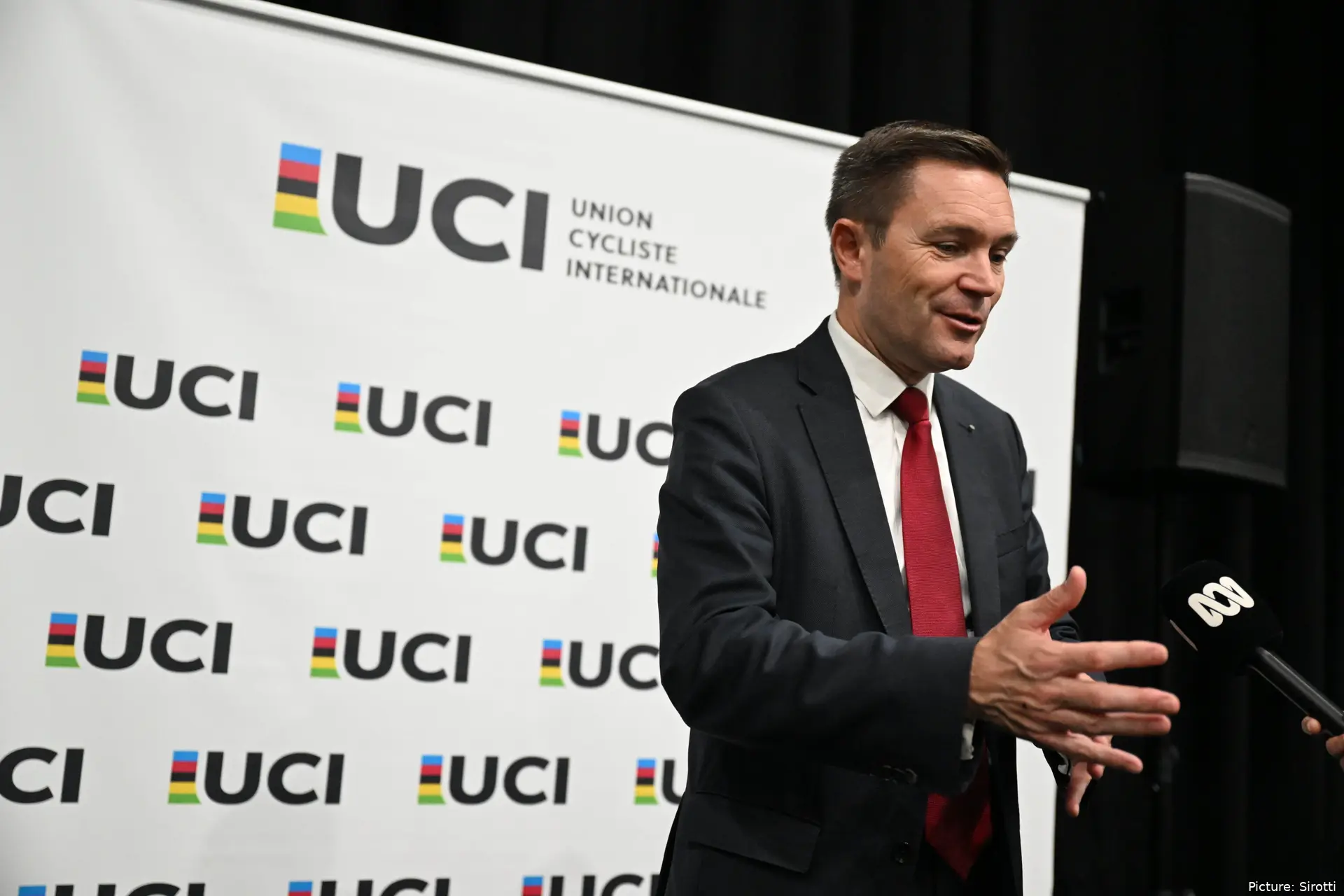
As the UCI prepares to stage its first-ever Road World Championships on African soil, leading academic Filip Reyntjens has delivered a scathing assessment of the decision to award the event to Rwanda.
Speaking ahead of the Kigali 2025 Worlds, the professor emeritus at the University of Antwerp and specialist in Central Africa’s Great Lakes region has accused the UCI of ignoring widespread human rights abuses and Rwanda’s bloody record in neighbouring nation Congo.
“Being a journalist there is life-threatening,” Reyntjens warned in comments collected by Het Nieuwsblad. “Every dissident voice is silenced. In 2010, the United Nations published a ‘Mapping Report’ detailing hundreds of pages of war crimes linked to Rwanda’s role in Congo. Kagame, not personally but as a leader, is responsible for hundreds of thousands of civilian deaths. And yet the UCI clearly couldn’t care less.”
A regime under the spotlight
Rwandan president Paul Kagame, who has ruled the African country for over 25 years and was re-elected last year with more than 99 per cent of the vote, has long faced accusations of authoritarianism and sports washing.
While Kigali now boasts modern infrastructure and a reputation for safety, Reyntjens argues that the gloss hides a darker truth. “There is no opposition, it’s a one-party system. Independent journalism no longer exists in Rwanda. That job is simply too dangerous.”
Despite such concerns, UCI president David Lappartient has stood firm, dismissing calls from the European Parliament and several national governments to strip Rwanda of hosting rights. “There is no Plan B,” he insisted earlier this year, framing the Kigali Worlds as a landmark moment in cycling’s global expansion.

Lappartient has always maintained the Worlds would not be moved from Rwanda
Cycling at a crossroads
For Reyntjens, that ambition comes at a moral cost. He points to Kagame’s extensive use of sport to polish Rwanda’s international image, from sponsorship deals with Arsenal, PSG and Bayern Munich to high-profile events such as the Formula 1 prize gala. “This is sports washing, pure and simple,” Reyntjens said. “Rwanda is one of the poorest countries in the world, yet it pays tens of millions to the richest football clubs in Europe. It binds big names to Kigali, dazzles them with spotless roads and modern facilities, but they have no idea of the political reality.”
As the rainbow bands go up for grabs in Kigali, the UCI will no doubt present the Worlds as a historic breakthrough for cycling. But Reyntjens’ intervention underlines how, for many, the event is less about global growth and more about complicity. “The political situation is dramatic,” he concluded. “Awarding Rwanda the World Championships is, in itself, an act of recognition – one that legitimises a regime guilty of systematic repression and mass violence. The UCI cannot claim not to know.”

Kieran WoodDeputy Editor-in-Chief
Kieran Wood is a sports journalist based in Wales and has been active in journalism since 2022. He regularly contributes to DartsNews.com and CyclingUpToDate.com, where he covers professional cycling and darts. In cycling, his work includes liveblogs from major races, including the Tour de France, the Giro d’Italia, and La Vuelta a España, alongside race reports and analysis. He has also conducted interviews with professional riders.
His reporting spans the full racing calendar, from one-day classics to stage races, with a focus on accurate, real-time coverage and clear contextual analysis. For statistics, results, and historical context, he regularly uses resources such as ProCyclingStats. To support reporting on rider activity and training context where relevant, he also references Strava.
In his work, Kieran places strong emphasis on careful sourcing, editorial accuracy, and updating articles as new, verified information becomes available.
claps 5visitors 1
Just in

Popular news
Latest comments
- EF’s “island of misfit toys” squad is probably one of my favorites in the peloton. They are fun to watch, always trying stuff - they ride with heart and panache, and their kits are excellent.wrsty20-10-2026
- 'Children these days'... Wout, since the caveman learned to say "Ug", older generations have always said this about younger generations. Not every young rider is a cowboy. So what's to say that the fact that Poels was respectful meant that his peers were equally so?
 Rafionain-Glas19-10-2026
 - "...In a weakened field" Most definitely ! YAWN !frieders319-10-2026
- Noted. But I had to appease his fans.MajorPayne19-10-2026
- I wonder if he'll race Challenge MallorcaRafionain-Glas19-10-2026
- Head to head time-splits: Jay Vine vs Remco Evenepoel: 10.5 km - Vine lost 45 seconds to Evenepoel 34.2 km - Vine lost a further 1:10, and was caught in the vicinity of that checkpoint. Note: I remember Vine getting caught before the second checkpoint, and ProCyclingStats log supports that, however, the gap at the second checkpoint was less than 2 minutes. 45.4 km - Vine lost only 16 seconds Of course, Vine lost less time in the middle section than the early section, but at the final segment rate, he'd have lost 15 seconds in the opening section and and 34 seconds in the middle. It is possible that Vine paced himself very well but that seems unlikely. In comparison with Stefan Küng: Kung lost: 26 seconds at T1. A further 1:11 by T2. A further 40 seconds by the finish. Relative to Evenepoel, Küng did slow down by the end. Maxime Decomble: Lost 47 seconds at T1. A further 1:20 by T2. A further 26 seconds by the finish. Mikkel Bjerg: Lost 37 seconds at T1. A further 1:34 by T2. A further 46 seconds by the finish. It is not concrete evidence that Vine cheated though it certainly doesn't absolve him. However, watching the race, I am 100% sure that Vine did not pull over and follow a different line when Remco passed him. Remco pulled away quite quickly, but the gap did not balloon and Vine definitely got aero assistance.Rafionain-Glas19-10-2026
- That ship has sailed years agovappaxbipmv19-10-2026
- He doesn't have to. I'd be perfectly happy if he loses SB if he then wins everything elsevappaxbipmv19-10-2026
- Please don't put Remco in the same sentence as Tadej. It's disrespectful to Tadej. Please make a note of this.KissinKate19-10-2026
- ....and you just described how americans are fleecing american fans as well. We don't even get the eurosport coverage you get. What you see on yurrup HBO is not available in this country. Trust me, being a cycling fan sucks everywhere.KissinKate19-10-2026
Loading
Write a comment