“It’ll come out…” – Bradley Wiggins claims Team Sky “chucked me under a bus” to protect someone else from doping allegations
Cycling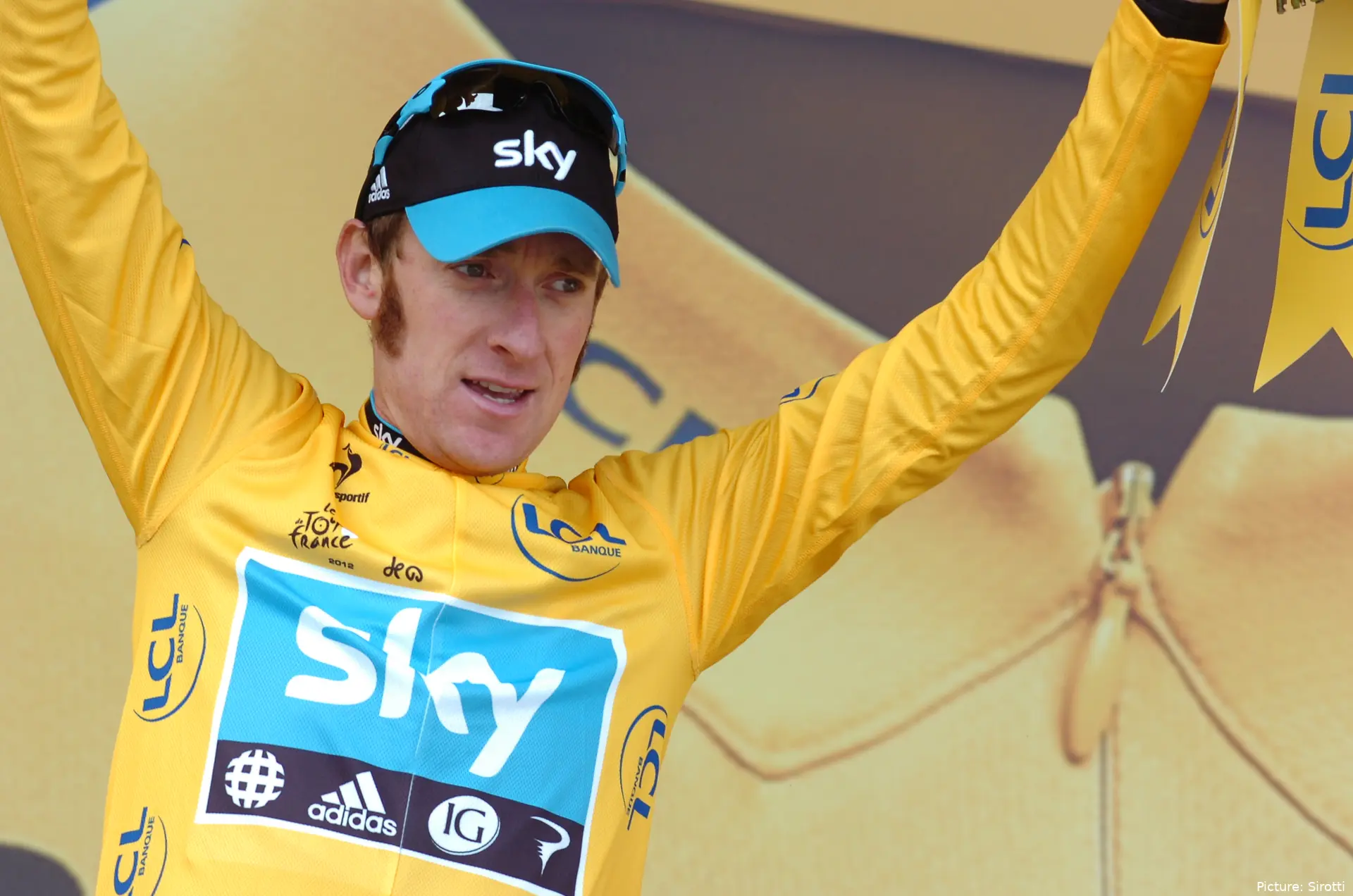
Former Tour de France winner and Olympic champion Sir Bradley Wiggins has alleged that Team Sky sacrificed him to shield someone else from doping scrutiny during the height of their dominance.
Speaking to The Times ahead of the release of his new book The Chain, Wiggins reflected on the doping allegations that dogged the team during his Tour-winning years, saying, “There was something greater going on. [Sky] chucked me under a bus.”
Pressed on who or what was behind it, he hinted at deeper revelations to come: “It’ll come out,” he answered intriguingly.
The accusations stem from one of the most controversial periods in modern British cycling. During Wiggins’s career, the team faced scrutiny over their use of corticosteroid TUEs in 2011, 2012 and 2013, as well as the infamous Jiffy bag delivered at the 2011 Critérium du Dauphiné. Wiggins was granted TUEs ahead of his Tour victory in 2012 — something he has always maintained was within the rules.
“I was pissing on my own grave”
Wiggins’s new book details not just the fallout of those years, but also his personal descent into addiction following his retirement in 2016.
He admits to snorting cocaine off his Olympic gold medal during the depths of his addiction: “Hundreds of thousands of people roaring me on, millions more watching at home. One of the great moments of London 2012, and there I am in a wardrobe, snorting cocaine [off my gold medal], mocking my achievement, hating it for what I believed it had brought me. It was the equivalent of pissing on someone’s grave, and in that moment, I was pissing on my own.”
The five-time Olympic champion writes of homelessness, nights spent in crack houses, and of how the glory of the Tour and London 2012 turned hollow in the years that followed.

Wiggins stands proud with his Olympic gold medal
Recovery and accountability
Now a year clean, Wiggins is in recovery through Narcotics Anonymous and says the book is part of his “apology and accountability” process. Former Tour rival Lance Armstrong also played a role in helping him enter a rehabilitation programme in the United States. “I wanted to be the teller of my own story. Good and bad,” Wiggins told The Times.
The 45-year-old has cut out alcohol and rebuilt a strict daily routine — rising at 6:15am, training in the gym, planning his meals and, crucially, riding his bike again for the sheer joy of it. “Gym helps. I go every day. I live like I’m a professional athlete,” he said.
Read also
Putting the past behind him
The book also addresses the long shadow of childhood sexual abuse at the hands of his former coach Stan Knight, which caused him to turn away from cycling after retirement. Knight died in 2003 without facing justice.
“I associated every aspect of [cycling] with Stan. If I hadn’t taken up cycling, I’d never have met that man,” Wiggins said. “I love going on my bike at the weekends. It’s phenomenal. That sense of escapism I had as a kid. Freedom. Yes.”
Having emerged from bankruptcy, Wiggins says he now has “more work than I can cope with” and a home of his own. But his remarks about Team Sky’s handling of doping allegations — and the suggestion that others may have been protected at his expense — will undoubtedly reignite debate about one of the sport’s most controversial eras.

Kieran WoodDeputy Editor-in-Chief
Kieran Wood is a sports journalist based in Wales and has been active in journalism since 2022. He regularly contributes to DartsNews.com and CyclingUpToDate.com, where he covers professional cycling and darts. In cycling, his work includes liveblogs from major races, including the Tour de France, the Giro d’Italia, and La Vuelta a España, alongside race reports and analysis. He has also conducted interviews with professional riders.
His reporting spans the full racing calendar, from one-day classics to stage races, with a focus on accurate, real-time coverage and clear contextual analysis. For statistics, results, and historical context, he regularly uses resources such as ProCyclingStats. To support reporting on rider activity and training context where relevant, he also references Strava.
In his work, Kieran places strong emphasis on careful sourcing, editorial accuracy, and updating articles as new, verified information becomes available.
claps 14visitors 3
Top comment
ScottG10-10-202511
Wiggins is a train wreck.
Just in
Popular news
Latest comments
- Campenaerts looked like a rolling pumpkin with that all orange leaders skinsuit !frieders318-10-2026
- He can take his dumb a$$ politics somehwere else !frieders318-10-2026
- good to have her back. fingers crossed she‘ll be able to stay!Ketterechts17-10-2026
- A tenner and he wins the Tour next year, too 😂anonymouscyclist17-10-2026
- the answer is either stick to classics or GTs but not bothabstractengineer17-10-2026
- the exodus already stared with Ciccone. Already they were struggling with two sprinters, now there are three. Also Ganna will demand leadership. Gall is the most proven GC, Ayuso has the most potential. GC leadership for everybody will be impossible. Literally a UAE style mess without pogi.abstractengineer17-10-2026
- I raced as an amateur for 12 years, including six years on my country’s national road cycling team. I secured two national titles and competed in three World Championships plus more than 15 international stage races. At 23, we travelled to Italy for a training camp—or so I assumed. On a rest day, we watched a presentation about adopting a more “professional” training approach. It was crystal clear what “professional” meant. That moment first exposed me to this dilemma. After returning from Italy, I left cycling—at least at the competitive level I had known. Over the following two years, the whole team was caught doping. I hold that everyone is innocent until proven guilty. In my view, current stakeholders operate on a different scale, and the sums involved are vast. I am unsure whether any doping would ever be revealed. I try to stay positive and enjoy the show. My 2c.
 vannpelt17-10-2026
 - Fiver he wins 🤣
 leedorney17-10-2026
 - “…measures to reduce speeds.” Might as well shorten the race course to just 50km as well? ASO generates at minimum €300m a year and 30- 40% profit. Maybe stop being greedy and spend more of the profit to protect the riders instead.b3tlla17-10-2026
- he also had quite the life off the bike during his pro years. he used his celebrity status to full affect.mij17-10-2026
Loading
10 Comments