“I was missing 500 metres” - 19-year-old Paul Seixas comes agonisingly close to following Tadej Pogacar at Strade Bianche
CyclingSaturday, 07 March 2026 at 18:00
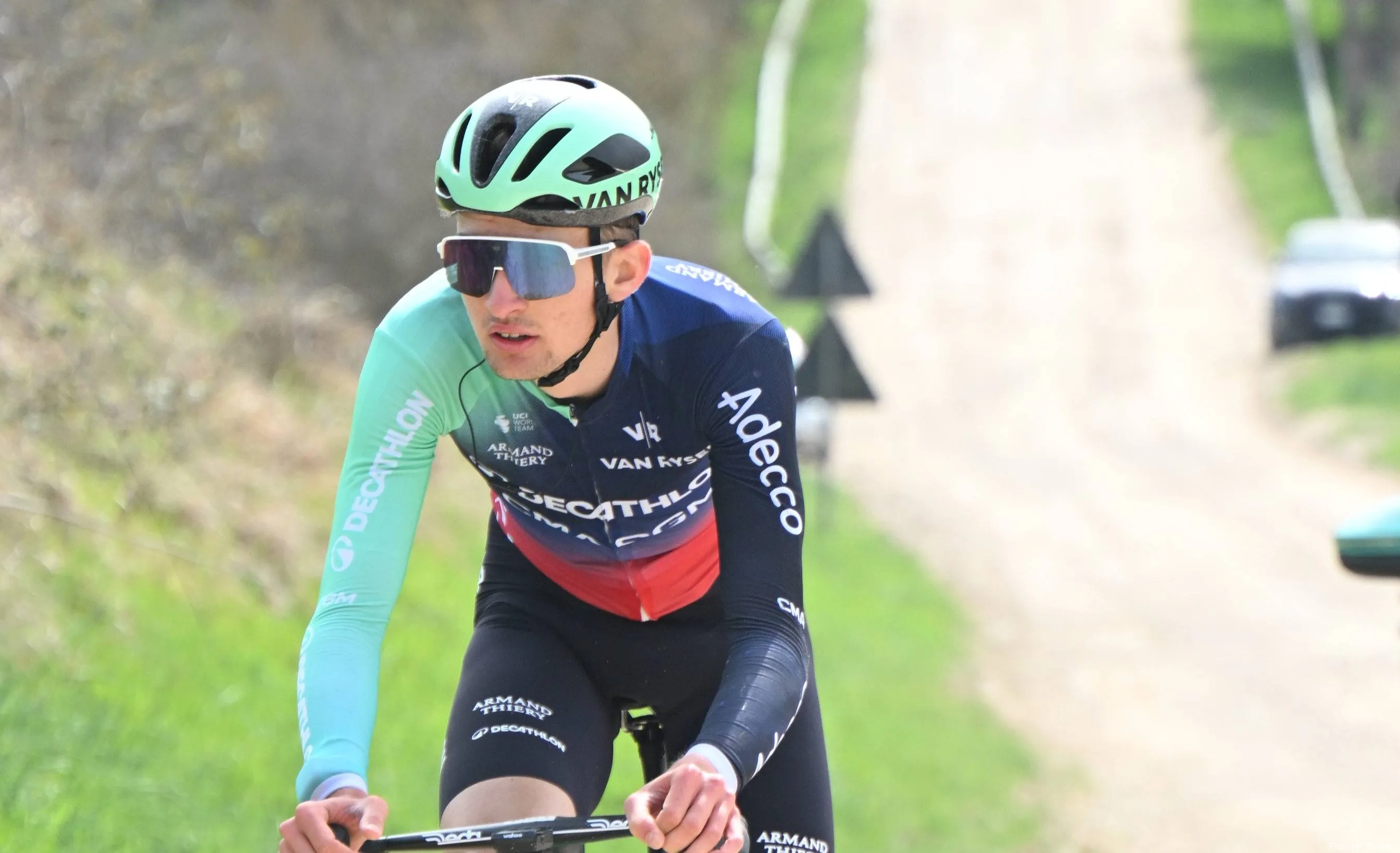
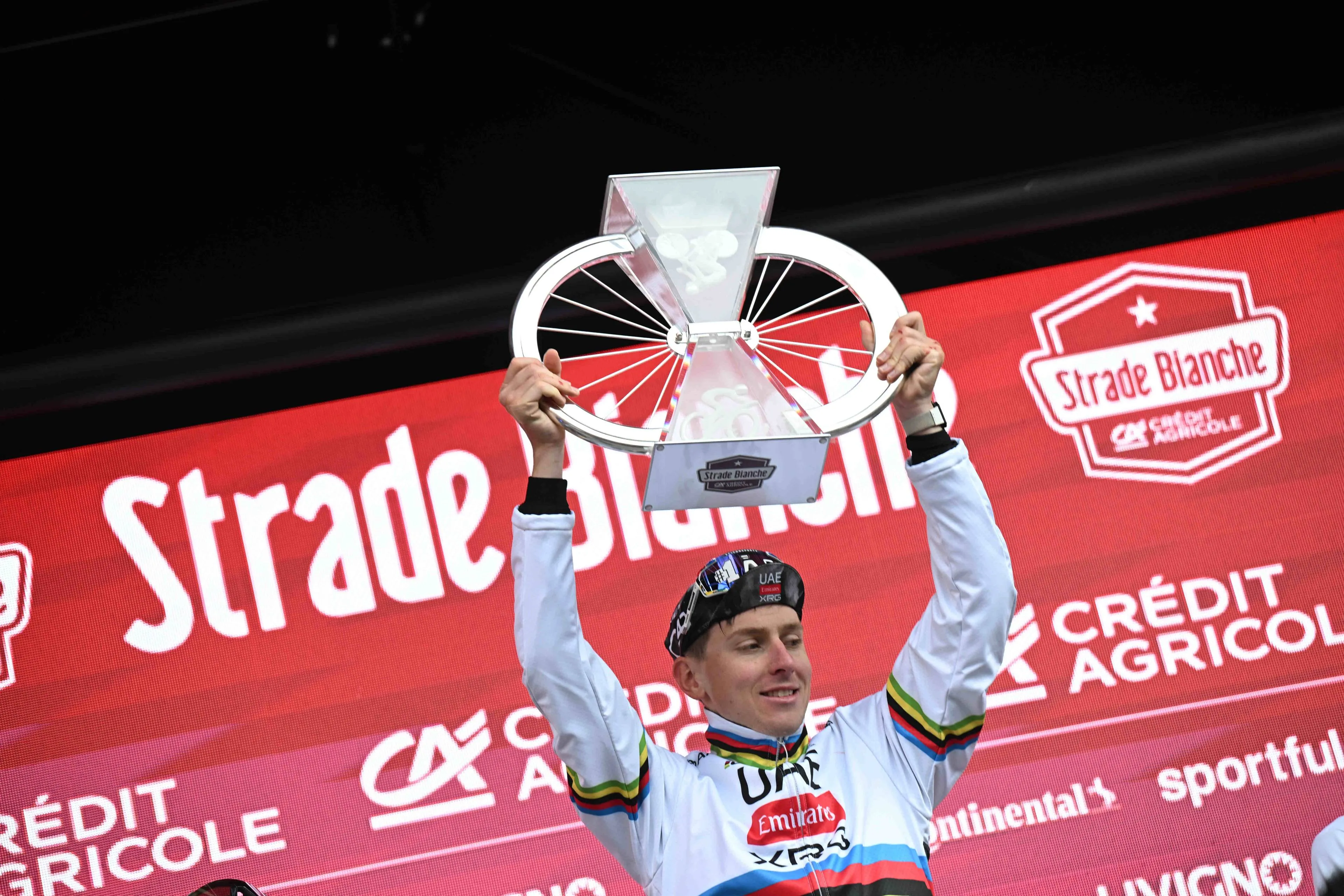
Second place at Strade Bianche might normally be overshadowed by another dominant solo from Tadej Pogacar, but Saturday’s race in Tuscany also marked a defining moment in the rapid rise of Paul Seixas.
The 19-year-old Frenchman delivered the performance of his young career to finish runner-up on the Piazza del Campo, emerging as the only rider capable of briefly matching Pogacar when the world champion launched his decisive attack more than 70 kilometres from the finish. In the end, the gap was small but decisive, yet Seixas left Siena with both a landmark result and the growing sense that he can already measure himself against the very best riders in the world.
Seixas reveals how close he came to Pogacar
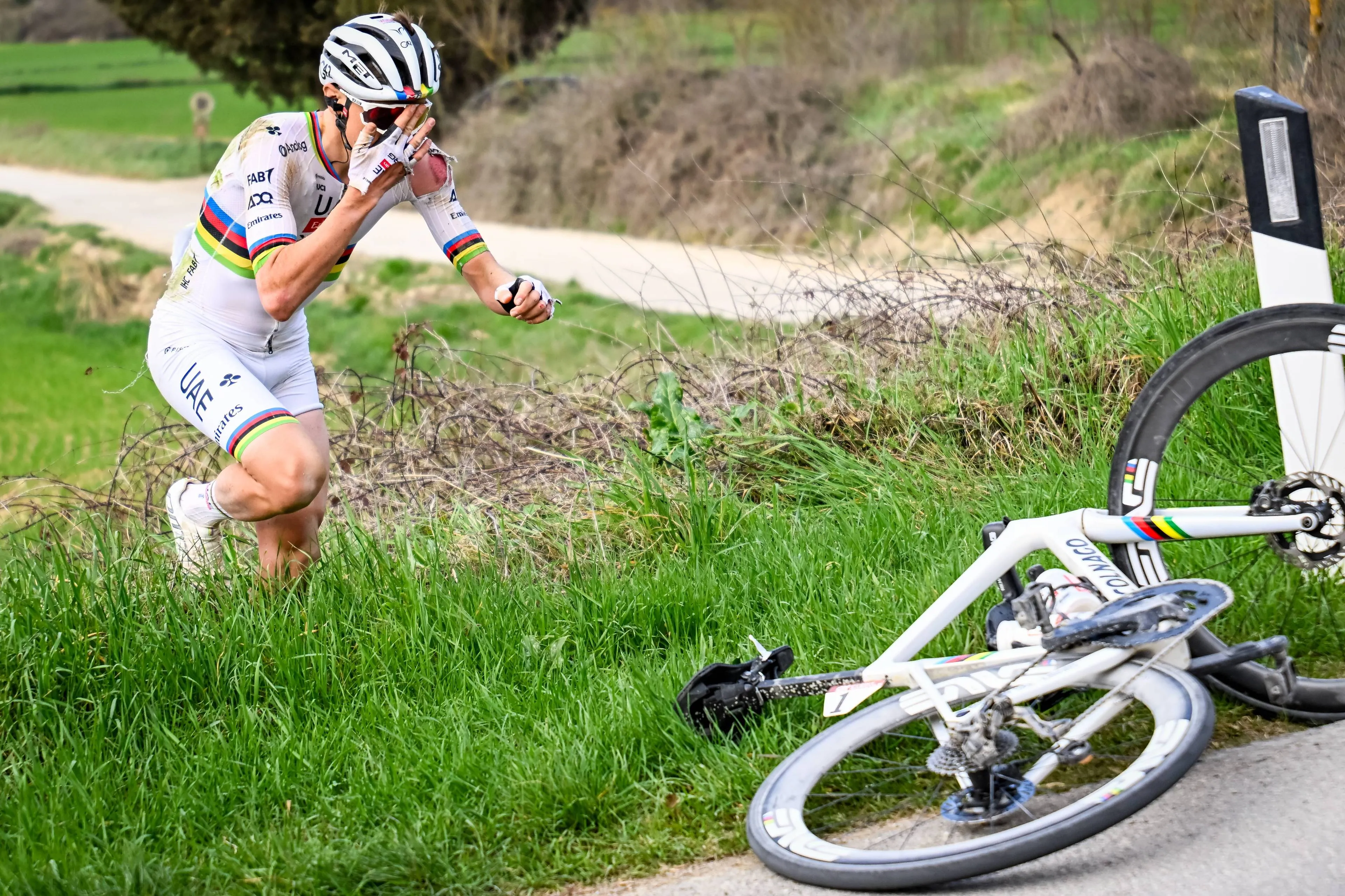
Pogacar’s winning move came on the Monte Sante Marie sector, where the Slovenian accelerated from the saddle in a surge that split the race apart. Seixas was the only rider initially able to respond, attempting to hold the wheel of the world champion as the race exploded across the gravel roads. “I said to myself that I would try to follow him,” Seixas explained afterwards in conversation with Cycling Pro Net.
The young Frenchman admitted the moment came with risks attached. With more than 80 kilometres still remaining, committing fully to the move could easily have backfired if the pace proved unsustainable. “I had a lot to lose at that moment. If I exploded there with 80 kilometres to go, it could have been very difficult afterwards.”
Tactical dynamics also played a role in the decisive moment. Pogacar’s teammate Isaac del Toro sat between the two riders and repeatedly prevented Seixas from moving forward during the early phase of the attack. “I overtook him, and he overtook me again. He slowed down in front of me and blocked me,” Seixas said of the battle in the descent.
By the time the road rose again, the gap to Pogacar had already begun to open. “I was missing about 500 metres,” Seixas admitted.
Confidence boost after breakthrough ride
Despite ultimately conceding the win, Seixas’ ride through the Tuscan gravel delivered the clearest evidence yet that the Decathlon CMA CGM Team prospect can already compete with the sport’s biggest names.
The French rider had quietly targeted the podium before the race, even though it was his first time racing Strade Bianche. “We came here with the goal of the podium. It was very ambitious because I had never raced here before and I barely knew the sectors.”
Seixas relied on technical instincts developed earlier in his career to navigate the demanding terrain. “I had to rely a bit on my cyclocross skills. I stopped two years ago, but I was still able to handle the bike well.”
By the finish in Siena, those skills had helped him defeat every rider in the race except the reigning world champion.
“To beat everyone except Tadej Pogacar gives me confidence,” Seixas said. “It shows that the work I did this winter has paid off and that I can compete with the best riders in the world.”

Paul Seixas ahead of Strade Bianche 2026
A team performance behind the result
Seixas was also quick to credit the work of his Decathlon CMA CGM Team teammates for placing him in the right position throughout the race. “Everyone had a specific role, and they all exceeded expectations,” he said. “They positioned me perfectly and helped me all day.”
That support allowed Seixas to remain in contention as the race fractured behind Pogacar’s solo attack and ultimately secure second place in Siena.
While Pogacar’s victory once again underlined his dominance in one of cycling’s most demanding one-day races, Strade Bianche 2026 may also be remembered as the day a 19-year-old rider proved he belongs among the sport’s elite.
Read also
claps 6visitors 5
Just in
Popular news

Latest comments
- Might sell mine (bike) and get a 2nd hand Canyon, still better. PS you can’t buy shares in VR, it’s a Decathlon brand and only makes up a small portion of their total revenue. Polymarket might still be worth it before he gets known.Mistermaumau07-03-2026
- I want to know if Del Toro was dead or just let Seixas go. The cameras didn't show that final move.Chazz2007-03-2026
- Nobody cares what he’s won at 19 everyone is interested in what he’s going to win. Do you want to bet the house he won’t?Mistermaumau07-03-2026
- Who’s?Mistermaumau07-03-2026
- Just shows how impressive Seixas really is, it really wasn’t far from being a two-way with Tadej and then he could have Del Toroed all the way to Siena.Mistermaumau07-03-2026
- So impressed by this young man.awp07-03-2026
- What has this new boy won ????? Yes heard it all since bernard hinault retired 1986 yes 1986paultryan200207-03-2026
- I'm extremely impressed by both guys.awp07-03-2026
- If only Tom did not have 2 mechanicals . May have been different podium . Still good race though.paultryan200207-03-2026
- I told you all that the Danish Fish and Remco Mustafa were thrown out of the game and combinations, but some of you didn't listen to me and attacked me. They won't win a single serious race if Pogi, Seixas or Del Toro will be there. Ad acta!!!Mou-Cro-HR07-03-2026
Loading
5 Comments