"It was Pauline’s own decision. She supported me unconditionally" - Pauline Ferrand-Prévot raced in Roubaix to be by Vos’s side following the death of her father
CyclingTuesday, 14 April 2026 at 03:00
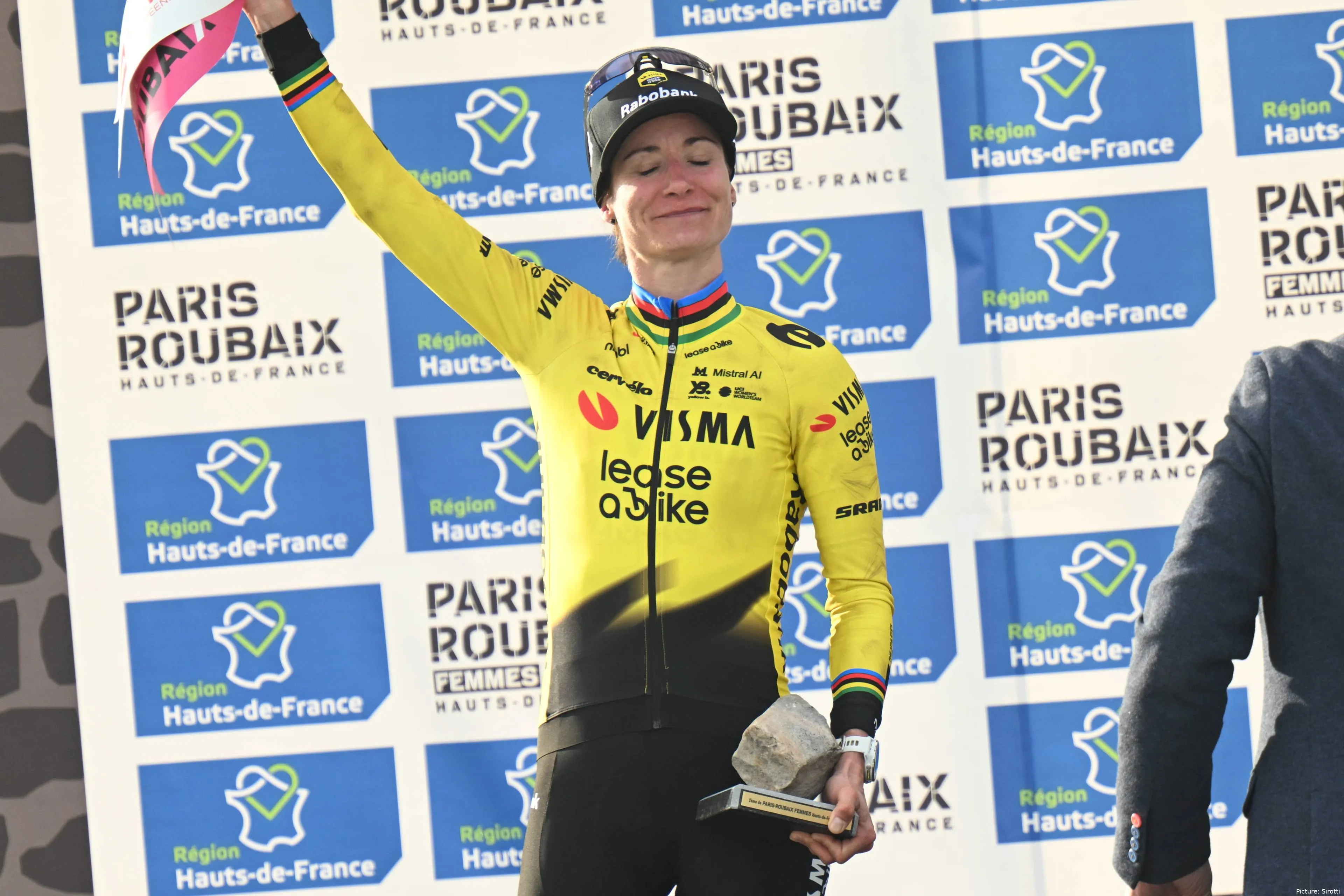
The Paris-Roubaix Femmes delivered its usual spectacle of grit and chaos, but this year’s edition carried an added emotional weight. Pauline Ferrand-Prévot lined up with a purpose that went beyond competition: to support Marianne Vos following the recent passing of her father, Henk.
The French rider made that intention clear before the start. “When I heard that Henk had passed away, I immediately called the team and said I wanted to ride Roubaix for Marianne. To support her and help her in this difficult period,” she said to domestique. Her motivation was deeply personal: “I knew it was a dream for her to win and I wanted her to win for her father.”
Ferrand-Prévot’s bond with the Vos family dates back years, adding further meaning to her gesture. “I have warm memories of the Vos family. When I turned professional at Rabobank, I was 18 and I spent the whole winter in a camper with the Vos family. Henk driving the camper, her mother making bolognese… I have such good memories of them.”
For her, the race also became a moment of farewell. “Today was also a way for me to say goodbye and thank you to him. That’s why I wanted Marianne to win. It didn’t work out, but we gave everything and I think he would be proud.”
Race dynamics and decisive moves
On the road, the race began to take shape after Mons-en-Pévèle, when Ferrand-Prévot launched a key move. Vos, Koch and Blanka Vas joined her at the front, forming the group that would ultimately decide the outcome. Vas was later dropped, leaving a three-rider battle heading toward Roubaix.
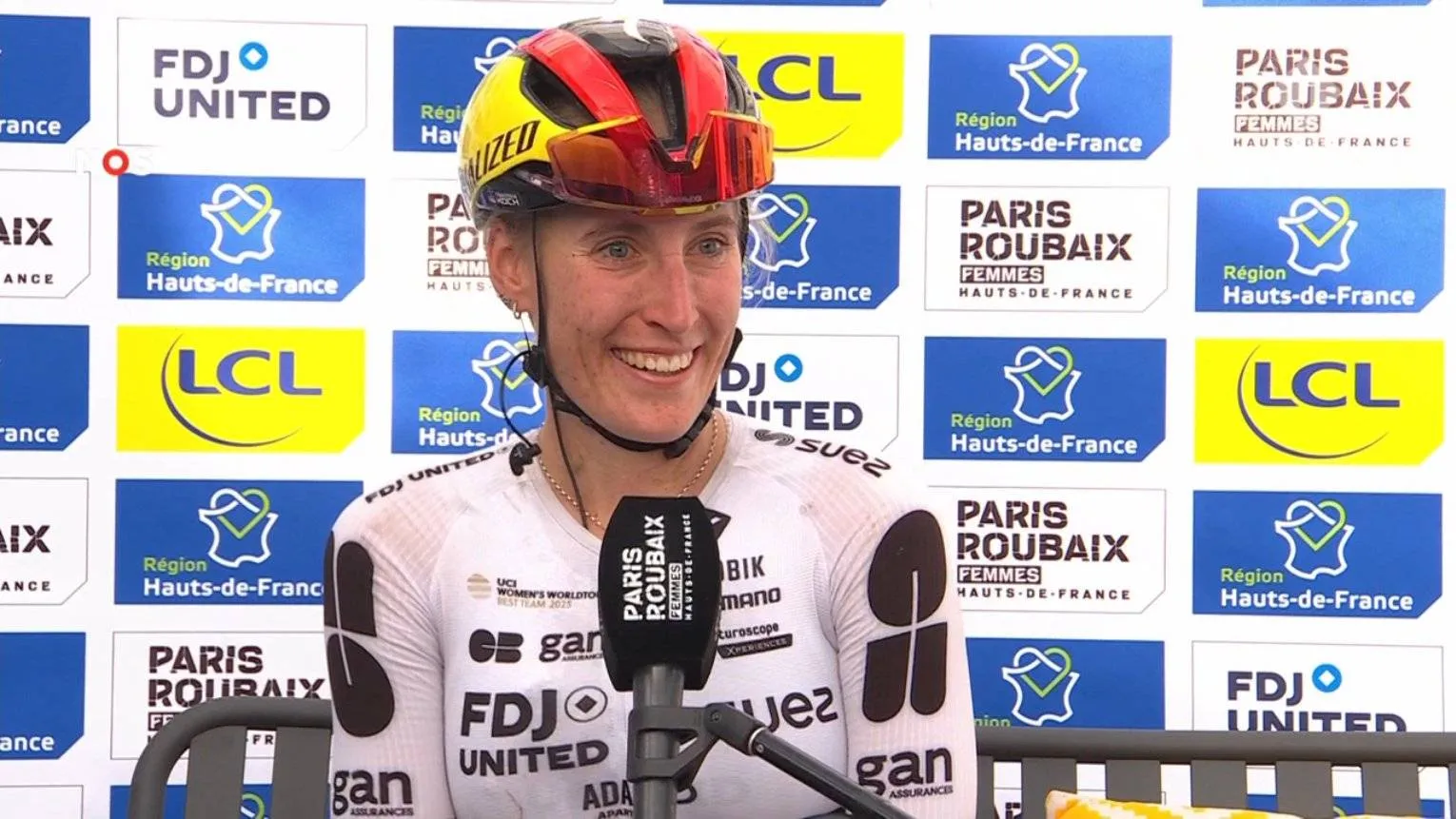
Despite being outnumbered, Koch remained composed and tactically sharp. She had sensed early that the race was unfolding in her favor. “Before the cobbled sectors it was really war, but as a team we were always well positioned and stayed out of trouble. On the cobbles I was always riding in the first ten,” she explained to cyclingnews.
The situation at the front played perfectly into her hands. “We wanted to make the race hard. We actually ended up in the perfect group. It’s always a challenge when you have two riders from the same team in front, but on the other hand it was also an advantage because I didn’t have to work anymore.”
A sprint decided by margins
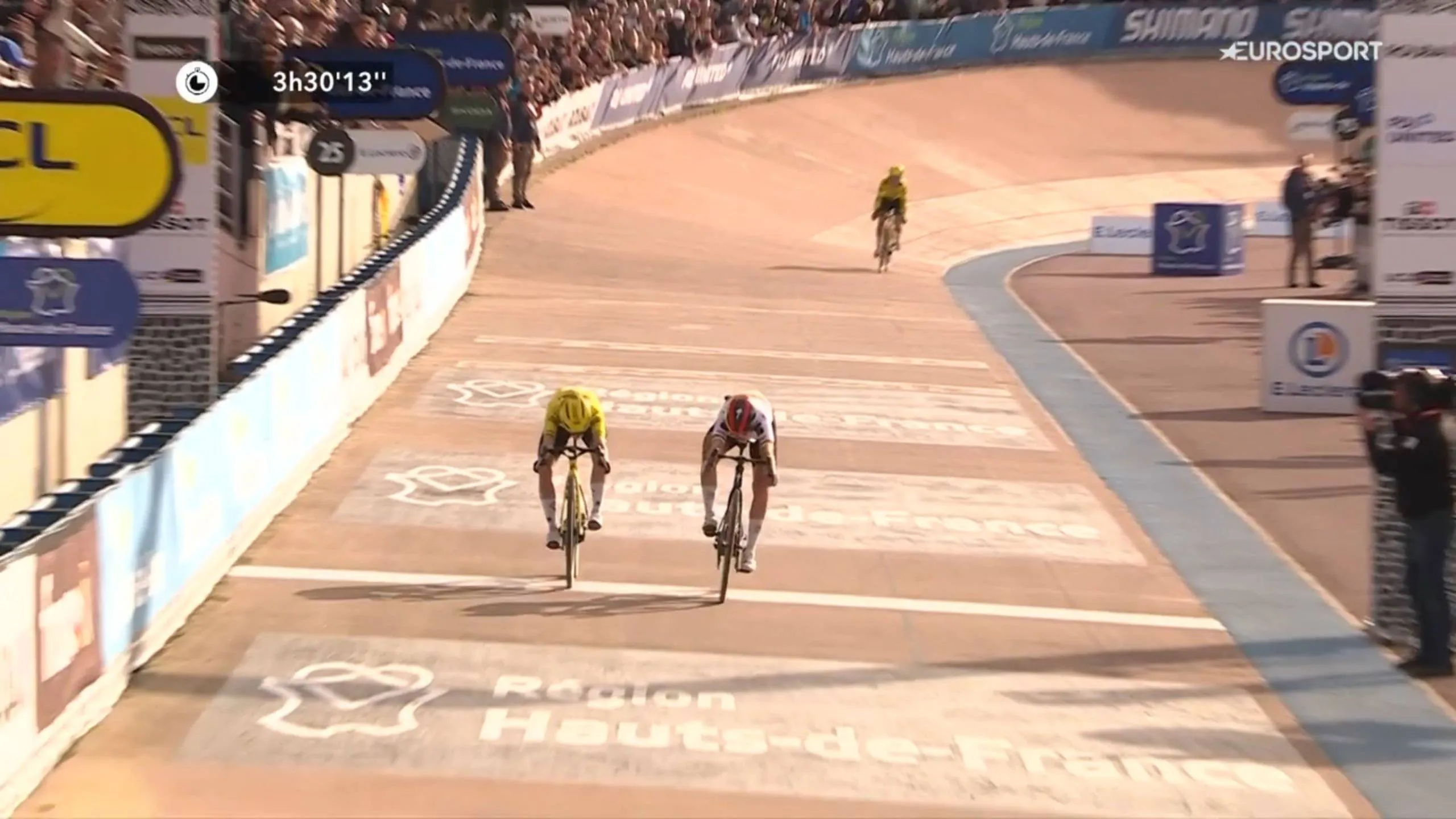
Inside the iconic Roubaix velodrome, everything came down to timing and remaining strength. Vos, known for her sprinting prowess, tried to come around Koch, but the German found an extra acceleration at the crucial moment.
“I felt her coming, but luckily I could accelerate a little more,” Koch said in a post-race interview. Still processing the result, she added: “It´s kind of hard to believe. I've been dreaming about it, I've been really hoping that it would work out but Roubaix is a race where everything can happen. That in the end it worked out is a dream.”
Vos, meanwhile, was candid about the limitations she faced after an emotionally and physically demanding period. “I’m disappointed that I couldn’t finish it for the team,” she admitted. “It has been a tough period, but I tried to stay as fit as possible. Physically it wasn’t ideal, but I’m very happy that I could start here. The support of the team gave me extra motivation today.”
In the final meters, she knew she was missing something. “In the sprint I felt that I was lacking and didn’t have the speed to beat Koch. You can always adjust the sprint, but I don’t know if it would have been better. I just couldn’t make enough speed.”
Read also
Reflection and recognition
The tactical decision to conserve energy for the sprint ultimately fell short. “It was a conscious decision not to do that, to save the legs for the sprint. But in the end, it was still not enough,” Vos explained.
She also highlighted Ferrand-Prévot’s commitment, emphasizing the team spirit behind the effort. “That was Pauline’s own decision. She was really all-in for me. I’m very thankful for her dedication and her help. That’s an extra reason, so I feel a bit sorry for the team and for her. But she was the first one to say we should be proud of what we did, so I’ll try and see it that way too.”
Looking back on the sprint, Vos reflected on the fine margins and experience involved. “Maybe in hindsight, we should have done things differently, but I've also been starting my sprint too early here [in the past]. Every year is a learning year,” she said. “Of course, it's not a normal sprint. It's after a hard race, after these cobbled sections. It's just the one who has the best legs left. It wasn't me today.”
In defeat, she was quick to credit the winner. “It’s also good to recognise how strong she was. She just found that out herself, I think,” Vos noted. “She attacked herself on the last uphill part, and she dropped Pauline there, and then she did an amazing finish. We saw a fantastic bike rider today winning Paris-Roubaix.”
On a brutal day in northern France, Koch took the victory, but the race will also be remembered for its humanity, teamwork, and quiet acts of loyalty within the peloton.
claps 0visitors 0
Just in


Popular news
Latest comments
- I imagine doing the same thing every year gets boring. He's already said as much from doing the same stage race/TDF buidl up, hence the Monuments/classics the last few years - He doesn't need to worry about any of his GC rivals turning up for Roubaix, and it's not a race for specifically young guns - so I'd say he's got more time to win this one than almost any other. experience seems to benefit more than anything.antipodeanpedalfan14-04-2026
- pretty stupid idea. these guys are bike racers, not fearful frail GT riders.mij14-04-2026
- he does need to win it to be the GOAT. the GOAT wins everything at least once, especially a monument. how can he be the GOAT if he doesn't match Merckx in winning each monument at least 1x, and each GT at least one time?mij14-04-2026
- he hasn't hinted at early retirement. he openly said he will play out this contact at a minimum. I don't think he fears Seixas or Jonas or anybody - not out of cockiness, but I think he appreciates the challenge, the good race. These guys like the competition to get better, they don't fear from it. he probably needs a moment to reflect, but he will be back with a vengeance. not sure where you come up with your crap.mij14-04-2026
- I thought Vos's positioning was a bit off in the sprint. she seemed to be coming wide at the worst possible time and didn't really take advantage of Koch's slip stream. what a great finish though.mij14-04-2026
- hoping MVDP would bring you back? what is he, your chauffeur? Bora is supposed to be a "super team". use your own #'s, and so some work on your own legs. loser comment.mij14-04-2026
- Tadej himself said his legs were spaghetti. he offered no excuses, didn't talk about flats, or mechanicals. another reason to love Tadej, WVA, Mads, MVDP - all of these guys are classy in wins and defeats.mij14-04-2026
- kinda disagree with most of what is written here. Tadej has 2 monuments this year alone, and is the ultimate outsider for Roubaix. the pressure is on WVA. he had one career monument, and none on the cobbles. stone cold assassin? WVA won on Champs-Elysees. on paper and by profile, he had that sprint locked up before entering. if his spring stayed true to his profile, which it did, then he didn't exactly need to be an assassin LOL. the real pressure was on WVA. one more lost sprint, especially to a GC/climber type would have sealed his legacy to many - can't win the big one, even though he has won big ones. Tadej had nothing to lose. Wout had everything to lose.mij14-04-2026
- It's on HBO in the USA, not FloBikes.frieders314-04-2026
- Everybody had 2+ mechanicals in the fastest PR of all time. so any of them winning would have been a legendary. What would not have been good is if these three kept looking at each other and Mads or Styuven slipped past and won it like in some past PR races.abstractengineer14-04-2026
Loading
1 Comments