“It really pisses me off!” - Bernard Hinault erupts in defence of Tadej Pogacar and Mauro Gianetti with thunderous shut down of doping suspicion
Cycling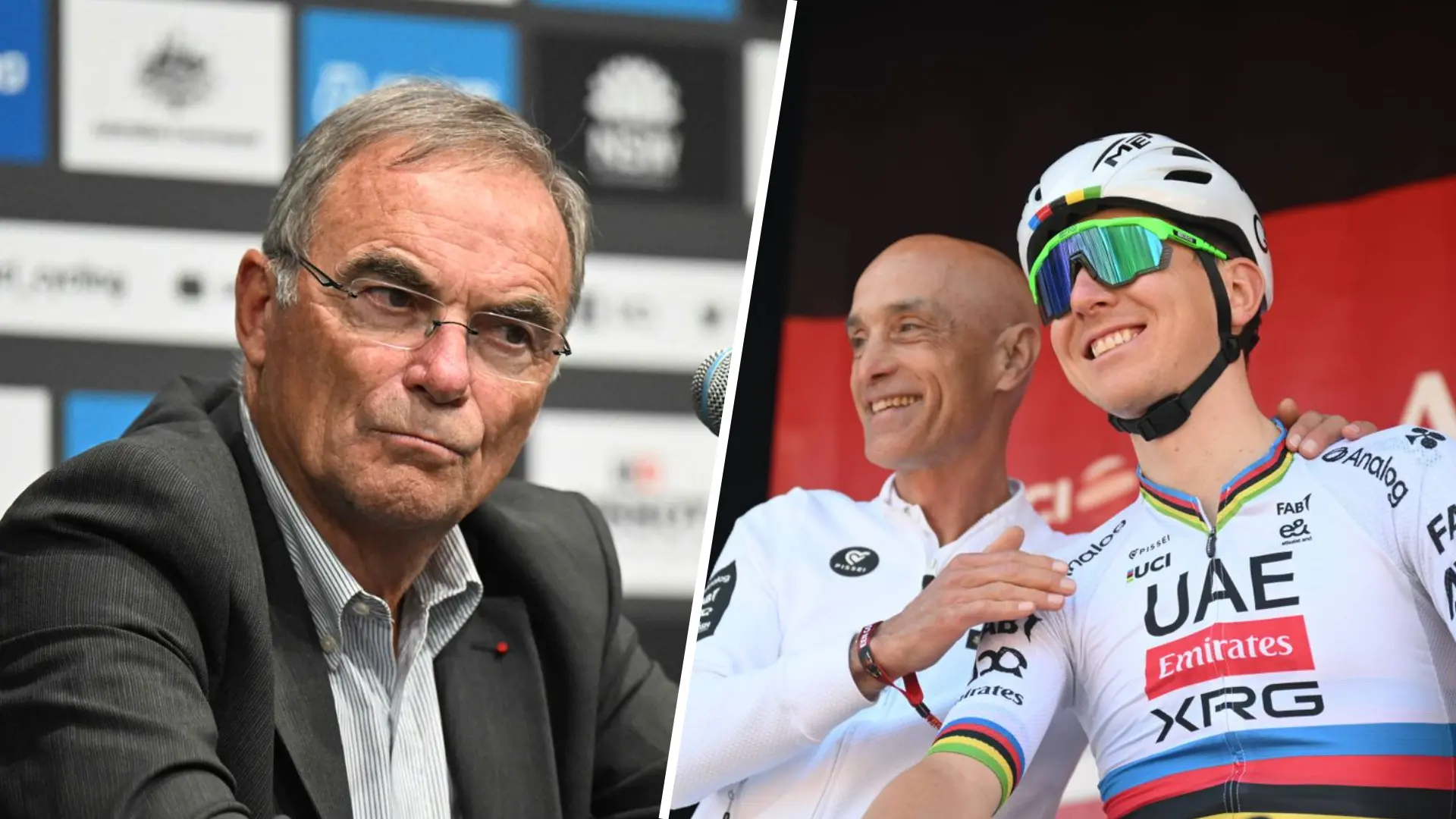
When questions around Tadej Pogacar and doping suspicion were put to Bernard Hinault, the five-time Tour de France winner did not hesitate. He shut them down with visible anger in an interview with Ravito.
That reaction lands in a context that has become increasingly familiar. Pogacar’s level over the past seasons has not just brought victories, but a form of control that rarely goes unquestioned in modern cycling.
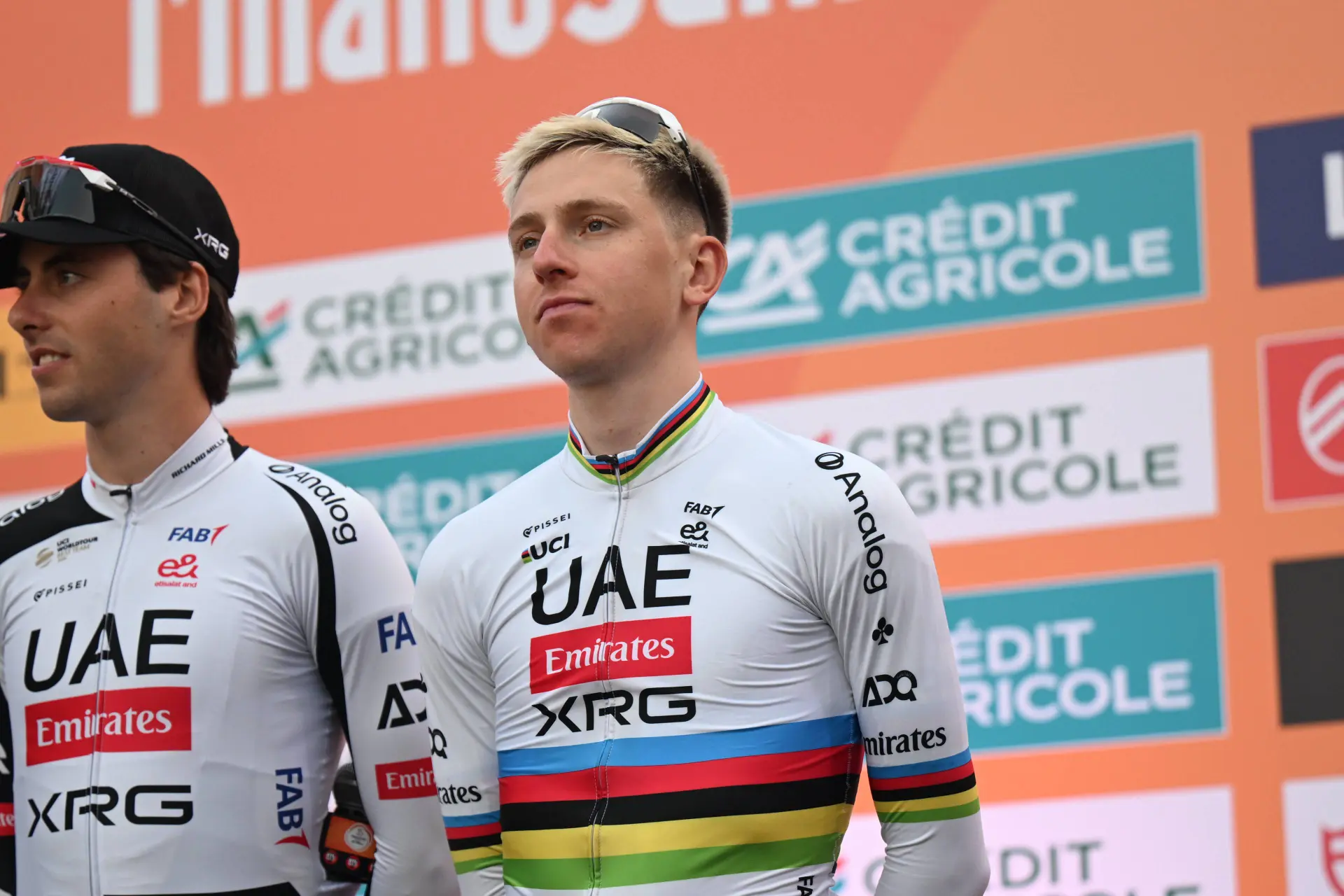
That dominance is not abstract. It is recent, visible and relentless. In 2026 alone, Pogacar has already won Strade Bianche, Milano-Sanremo and the Tour of Flanders, before pushing Wout van Aert all the way to the line at Paris-Roubaix. Long-range attacks, repeated victories at Monument level and the ability to compete for wins on terrain that traditionally sits outside a Tour de France contender’s comfort zone have only sharpened the sense that he is operating on a different level.
In a sport still shaped by stripped titles and systemic doping scandals, that kind of superiority rarely exists without question. For some, it invites scrutiny. For Hinault, it invites frustration.
“If Pogacar were French, it would be normal,” he said. “But that’s what’s terrible! I’m sorry about that! People don’t ask the same questions about Leon Marchand. He’s breaking all the records! And just because he’s in the United States, suddenly it’s: ‘Oh no, that’s normal, he’s French.’ That’s what really pisses me off! Always hearing suspicion…”
Hinault rejects doubt and defends Gianetti’s past
Hinault’s response was not limited to Pogacar’s performances. It extended to the figures around him, including UAE Team Emirates - XRG manager Mauro Gianetti, whose name continues to surface whenever the conversation turns to credibility.
Gianetti’s past remains part of that discussion. As a rider in 1998, he was hospitalised during the Tour de Romandie amid suspicions linked to the use of a blood substitute, though no offence was ever proven. Later, as a team manager at Saunier Duval, he oversaw a period marked by multiple doping cases involving riders, most notably during the 2008 Tour de France. While he was never personally sanctioned, that history has remained attached to his reputation.
Hinault does not ignore that context, but he pushes back firmly against how it is used. “He is with a manager who made mistakes at one point. But when you make mistakes, you go to prison. That doesn’t mean you should be condemned for the rest of your life. He has paid.”
A blunt rejection of cycling’s default suspicion
Hinault’s intervention does not attempt to prove anything about Pogacar. Instead, it challenges the instinct that has followed cycling’s biggest stars for decades.
Pogacar’s dominance ensures the debate will continue. In a sport still rebuilding trust, it rarely disappears. But Hinault’s response makes one thing clear. For one of the most decorated riders in Tour de France history, the constant return to suspicion is no longer just part of the landscape. It is something he is no longer willing to accept.
Kieran WoodDeputy Editor-in-Chief
Kieran Wood is a sports journalist based in Wales and has been active in journalism since 2022. He regularly contributes to DartsNews.com and CyclingUpToDate.com, where he covers professional cycling and darts. In cycling, his work includes liveblogs from major races, including the Tour de France, the Giro d’Italia, and La Vuelta a España, alongside race reports and analysis. He has also conducted interviews with professional riders.
His reporting spans the full racing calendar, from one-day classics to stage races, with a focus on accurate, real-time coverage and clear contextual analysis. For statistics, results, and historical context, he regularly uses resources such as ProCyclingStats. To support reporting on rider activity and training context where relevant, he also references Strava.
In his work, Kieran places strong emphasis on careful sourcing, editorial accuracy, and updating articles as new, verified information becomes available.
claps 3visitors 3
Just in
Popular news
Latest comments
- Pure fantasy!Lozza15-10-2026
- yeah and the headline of the next article for me to read on this site is: "Picnic PostNL release statement after explosive investigation - Allegations of fear culture and 'dictatorship' emerge" I wouldn't hold anything against a rider that does not excel and/or quits that team. everything written about them is that of a cancer for years. I hope he gets some results. seems like an easy decision to give him a chance. he is a likable guy. I hope his first win is against Dylan G.mij15-10-2026
- what race was he watching? Tadej looking less brilliant than usual? he was able to win stages for himself, others, and basically control the entire peloton with his strength. this is a crazy comment.mij15-10-2026
- I don't have a beef with Tadej, I think he's great. But had he not crashed and had he continued to race the Vuelta and won it, I don't know if he would have been fresh enough to win Il Lombardia. Maybe and maybe not. I hope you're not as dumb as the other guy who questioned me, we can dive into data if you'd like.awp15-10-2026
- They’re ‘aving a laugh, surely! 😂Lozza15-10-2026
- Especially on a 212 km stage with 1794 m of climbing and 4 climbs in the final 60 km
 Rafionain-Glas15-10-2026
 - considering he went from not finishing stages to top 10, its pretty goodabstractengineer15-10-2026
- Nah , he lost, he could not make that upabstractengineer15-10-2026
- Its more of a teardown rather than a rebuild.abstractengineer15-10-2026
- Have you considered the impacts of his crash?Rafionain-Glas15-10-2026
Loading
16 Comments