“I’m angry with myself, but I’ve got a friend who badly wants that Rainbow Jersey and I can help him” – Matej Mohoric torn over racing at Rwanda World Championships
Cycling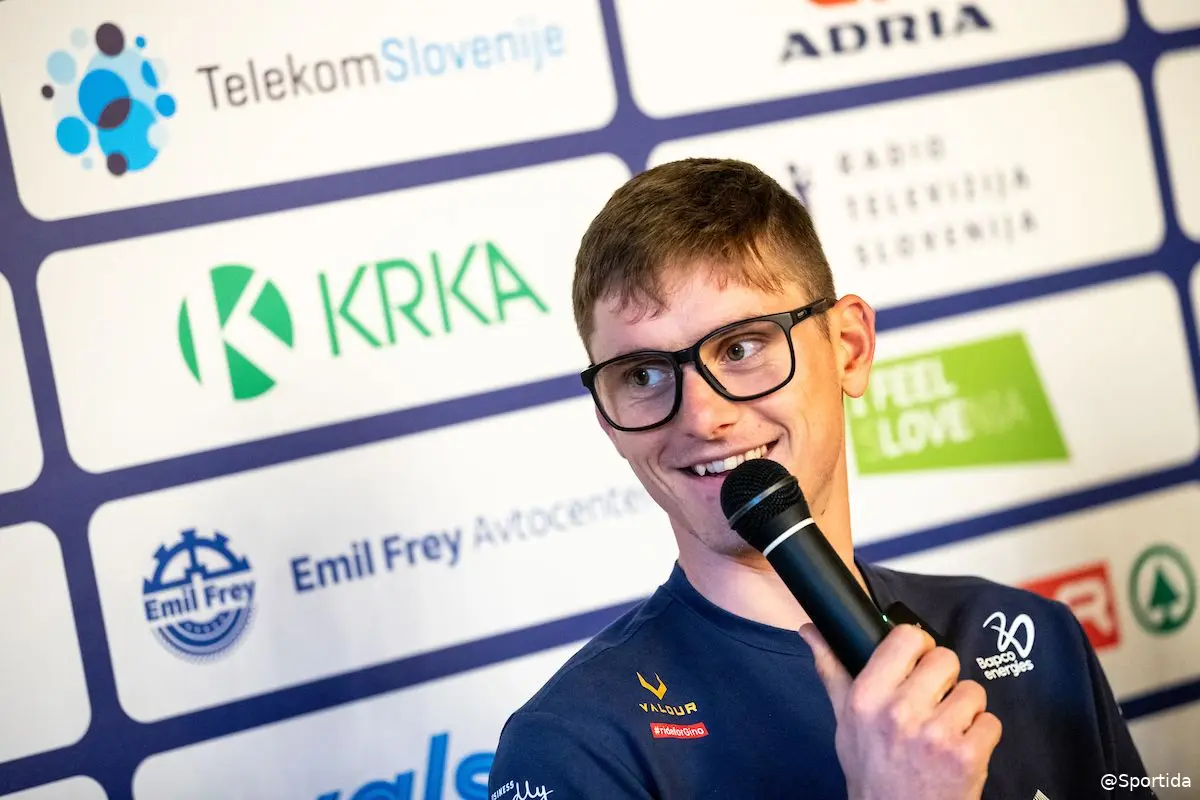
As the UCI Road World Championships make their historic debut on African soil, much of the spotlight has shifted from the roads of Rwanda to the political implications that surround them. For many riders, it's simply the next stop on a long and punishing calendar. But for Matej Mohoric, the decision to race wasn’t without hesitation – even if, ultimately, it was never in serious doubt.
The Slovenian all-rounder has been candid in expressing discomfort about the broader issues surrounding Rwanda’s controversial regime and the accusations of sportswashing tied to the event. “I wish I were better informed, and I wish I had more time to reflect on things,” Mohoric told WielerFlits with refreshing honesty ahead of Sunday’s road race.
It’s a rare admission from a rider known for his poise and intelligence, both on and off the bike. In an era when athletes are increasingly asked to confront questions beyond their sport, Mohoric offered something arguably more powerful than a soundbite: honesty, vulnerability, and the realisation that being a top-level pro sometimes leaves little space for the moral clarity fans often demand. “It’s a very difficult issue. I wish I had more time and energy to really think these things through, but unfortunately I’m constantly moving from race to race, from training camp to training camp. Honestly, I’m a bit angry with myself.”
It’s a sentiment that resonates. In the whirlwind of a World Tour season, carving out time for political reflection is a luxury few riders can afford. Yet Mohoric doesn’t hide behind that excuse – he owns it, and in doing so, strikes a chord with fans and critics alike.
Rwanda’s Moment – and Its Shadow
This year’s World Championships mark a pivotal moment for African cycling. Rwanda, a country that has rapidly developed its cycling infrastructure over the past two decades, is hosting the elite World Championships for the first time – a symbolic leap forward for the sport on the continent.
But that progress is not without controversy. Critics have pointed to President Paul Kagame’s authoritarian regime and the state’s use of the event to burnish its international image. While the peloton has largely remained silent on the issue, the underlying tensions have not gone unnoticed.
Mohoric, for one, doesn't pretend otherwise. “I’m truly sorry, and I’m genuinely disappointed in myself for having to say that I’ve been too focused on my own training, my own race calendar, and my own daily challenges to be able to study these kinds of issues in enough depth to form a clear opinion.”

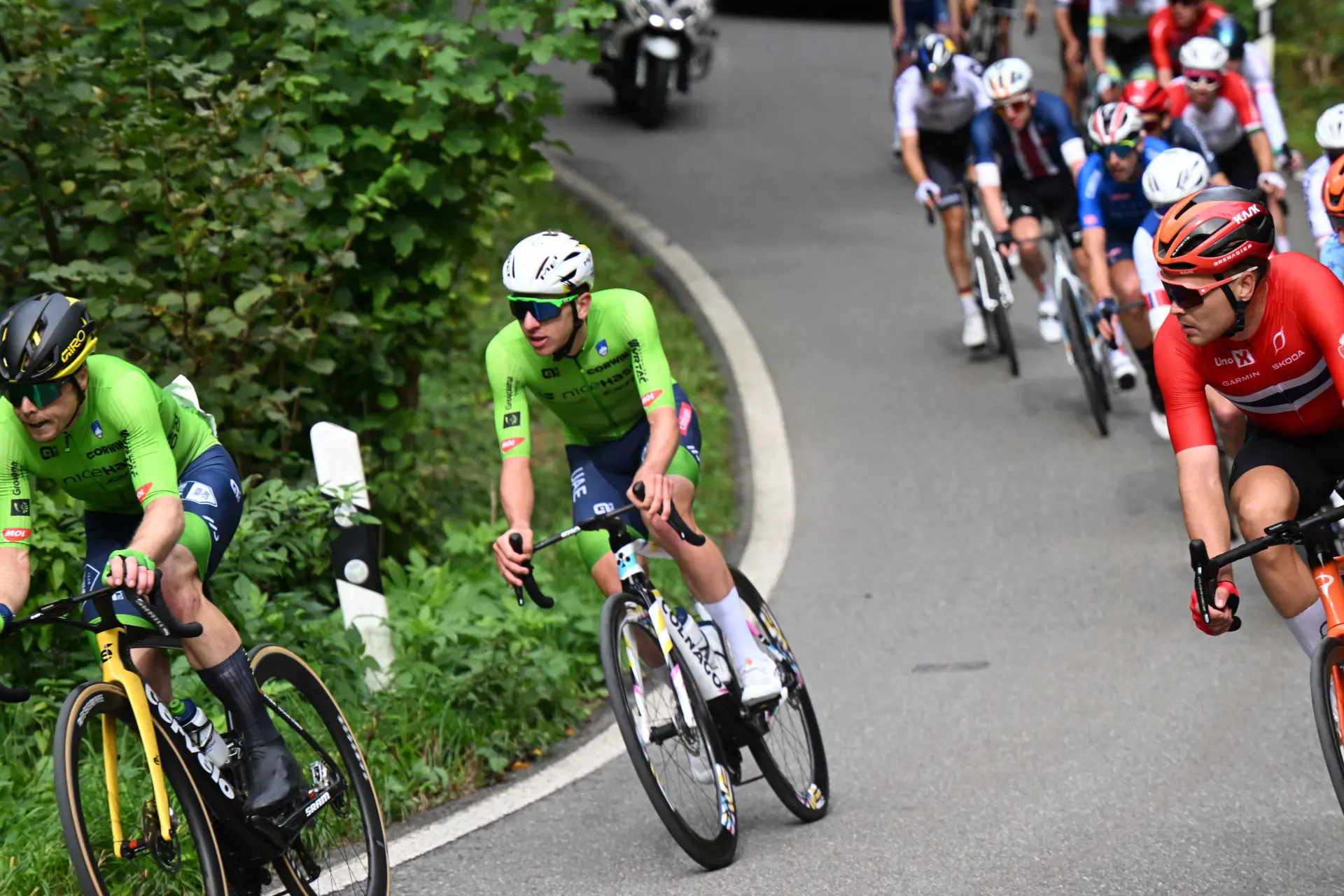
Mohoric is likely to play a key role for Pogacar in Kigali
Friendship Over Friction
Despite the backdrop, Mohoric's motivation for being in Rwanda is ultimately straightforward — and deeply personal. He’s there for a friend. “I’ve got a friend – Tadej is my friend – and I know how badly he wants that rainbow jersey. I want to help him achieve that dream.”
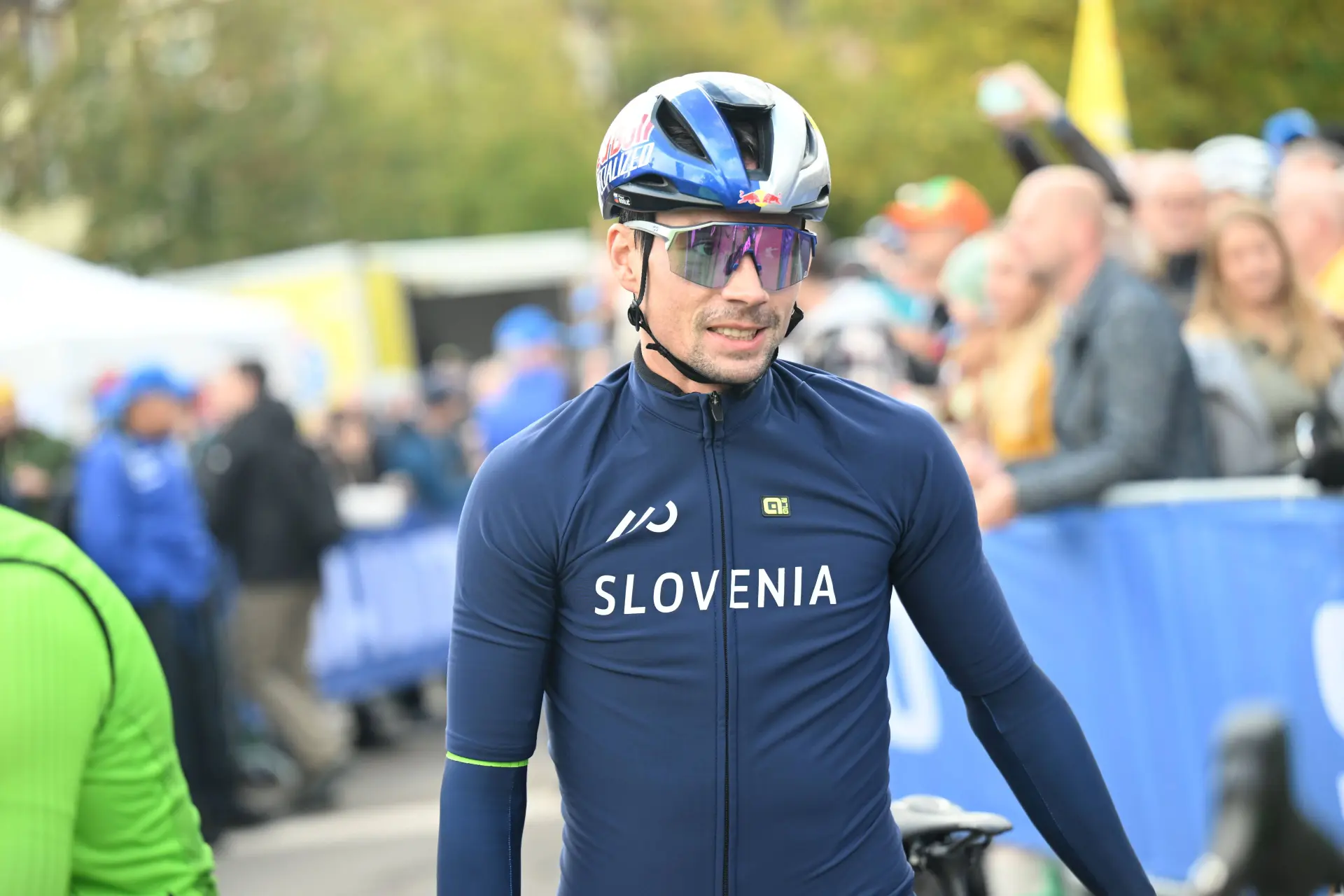
In a world where nationalism often colours World Championship narratives, Mohoric’s loyalty isn’t just to the flag – it’s to the rider. Slovenia brings two titans to the start line in Kigali: Tadej Pogacar, fresh off narrowly missing the time trial podium, and Primoz Roglic, whose form is unknown but whose pedigree needs no introduction. Mohoric, ever the consummate teammate, knows his role will be to support them both – and he’s all in. “It’s not my job to decide where we race. That responsibility lies with the governing bodies and the organisers. At the end of the day, I’m a professional cyclist – and I want to do my job to the best of my ability.”
Uncertainty on the Road, Purpose in the Race
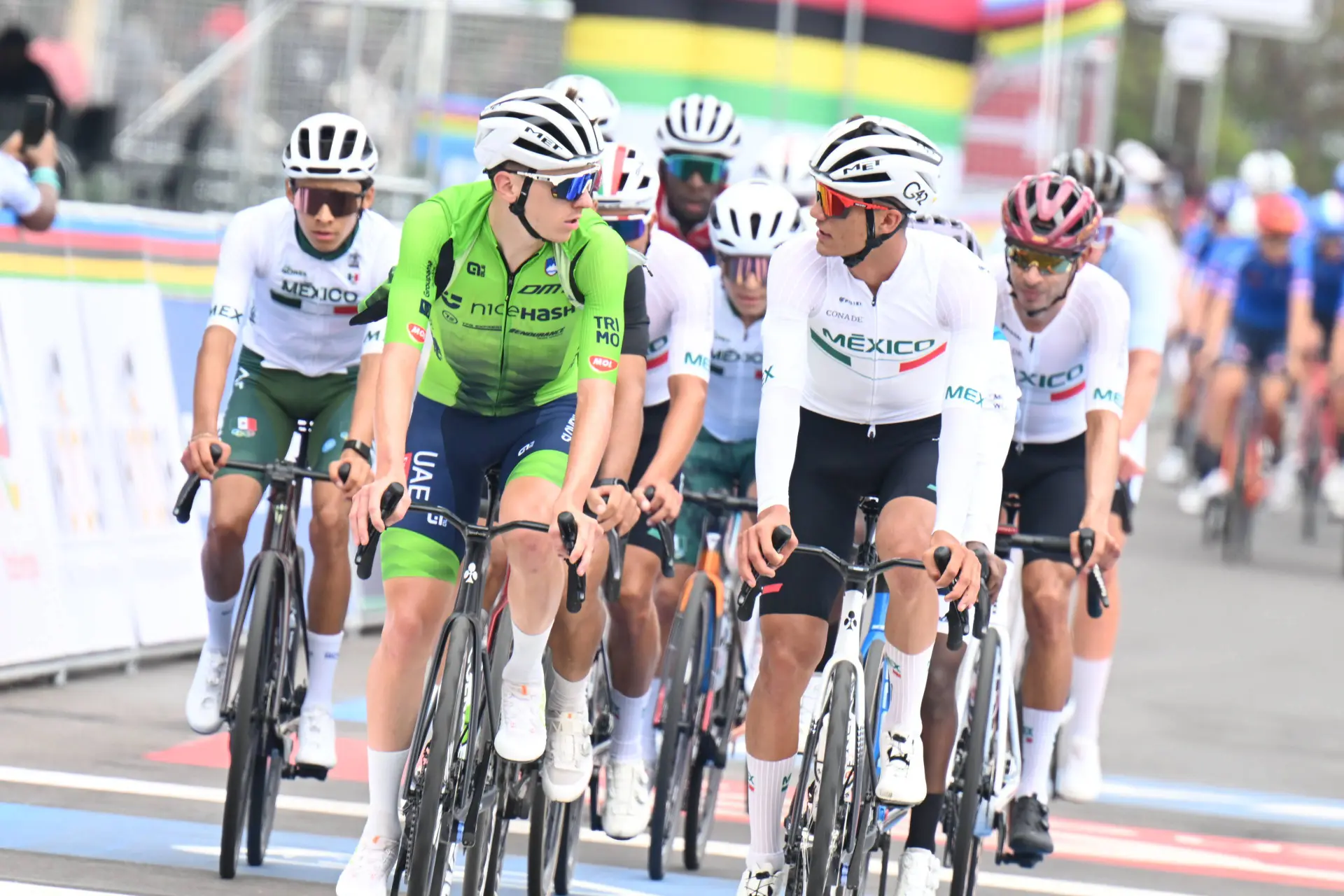
As for the course itself, Rwanda presents the peloton with a brutally hilly route where heat and altitude will be decisive factors. For Mohoric, whose career has been built on conquering the unexpected, the unknown is hardly a deterrent. “I’m not even sure how much climbing there is – the estimates vary a lot. But it’s a long race, and I think once we’ve seen the junior, U23, and women’s races, we’ll have a better idea of what to expect.”
Regardless of terrain, Mohoric believes that Pogacar’s near-miss in the time trial has only sharpened his hunger. “I think that’s only made him hungrier, and more determined to prove he’s the number one rider in the world.”
Bigger Than the Bike?
Mohoric's reflections offer a rare insight into the psychological toll of being a modern pro – one caught between the demands of performance and the expectations of conscience. He doesn’t pretend to have it all figured out, and perhaps that’s what makes his words so powerful. “It’s just frustrating that in today’s hectic world, we’re often too consumed by our own problems to engage with what’s going on at a broader level.”
Matej Mohoric didn’t come to Rwanda to make a political stand. He came to race, to work, and to help a friend chase a dream. But in doing so, he’s highlighted something many in the sport shy away from: that sometimes, even showing up can be an act of moral complexity.
Kieran WoodDeputy Editor-in-Chief
Kieran Wood is a sports journalist based in Wales and has been active in journalism since 2022. He regularly contributes to DartsNews.com and CyclingUpToDate.com, where he covers professional cycling and darts. In cycling, his work includes liveblogs from major races, including the Tour de France, the Giro d’Italia, and La Vuelta a España, alongside race reports and analysis. He has also conducted interviews with professional riders.
His reporting spans the full racing calendar, from one-day classics to stage races, with a focus on accurate, real-time coverage and clear contextual analysis. For statistics, results, and historical context, he regularly uses resources such as ProCyclingStats. To support reporting on rider activity and training context where relevant, he also references Strava.
In his work, Kieran places strong emphasis on careful sourcing, editorial accuracy, and updating articles as new, verified information becomes available.
claps 9visitors 8
Just in

Popular news
Latest comments
- The article makes it sound like a great thing and something to be applauded. The reality is is gives the Americans another 6 years to fleece European cycling fans or force them to hunt around Europe with VPN’s for free feeds. Not something to be celebrated in my book. Before someone points out that coverage of this depth costs money, yes, I agree but not £30+ per month a fee I will wager will gradually increase now this deal has been cemented.Paul53119-10-2026
- Great. Thrilled. (Satire) Oh, how I miss the days of GCN. Still wear my GCN hoodie with pride.anonymouscyclist19-10-2026
- You could also look at it another way. How many riders have had better or more consistent results since the Tour?Jumpyjohn19-10-2026
- Whilst I love Tadej (and Remco, who deserves to be mentioned here, too), @JumpyJohn makes a valid point, and he isn’t wrong @MajorPayne. It is a fact that today’s official broadcasters of cycling struggle to keep our attention once the likes of Tadej (or Remco) attacks at ~80km or so. In the 142nd issue of Rouleur, Ned Boulting reflects on the often stressful paradox of commentating on a race that is effectively over before the broadcast window even hits its stride. In this edition, he centres on Remco’s 1hr solo at the Challenge Mallorca this year, and captures the panic and dread shared by the commentators when a dominant rider kills off the racing tension early. I recommend you read it, it’s a fascinating insight into the world of commentary, and the true viewing figures of today’s cycling. I must add here, I love Tadej and Remco, but I would be lying if my heart rate wasn’t higher when watching the World Championships this year. And I’m sure Rob Hatch would say something akin regarding his commentary!anonymouscyclist19-10-2026
- The shattered women’s marathon record was clean and highly surprising and then a few months later the athlete was very positive in another test for something not taken by mistake when recording far less impressive results. Sounds to me like the problem is still the age old one, detection is often way behind. Just like with crime, it’s not because you can’t catch the criminals that you aren’t aware of the crime.Jumpyjohn19-10-2026
- Listen, you have a point but on the other hand in cycling, once some of the riders go solo and build a minute’s gap, there’s hardly any action left to watch. Cycling is definitely not for today’s generations of accelerated viewing. Other people find skydiving or chess exciting but you can’t force everyone to feel the same.Jumpyjohn19-10-2026
- That’s a funny one. Yeah obviously he’s more aero than some but most of the aero effect at elite level is the bike. Now you have me starting to feel sorry for the guy behind him when he pulls a groupetto.Jumpyjohn19-10-2026
- Knew a World Tour promotion was coming for Ben this season. Thrilled for him, and can't wait to see what he can do at this level. Another one to watch at the TTs.anonymouscyclist19-10-2026
- It honestly breaks my heart to see this. I had a feeling this might happen over the last few years, but I kept praying it wouldn't, and that Joey would find his niche, especially back racing alongside his brother. After growing up racing alongside PH-MAS, the Pidcock brothers have always felt like one of our own, as we’ve watched them grow from Club level all the way up to PC and WT. I wish Joey nothing but the best of luck in whatever he does next, but selfishly… I do wish for him to move into the role of Q36.5 team staff.anonymouscyclist19-10-2026
- Predictable, sure! But boring??? OMG! Was Mike Tyson predictable and boring in his prime? Air Jordan? Schumacher or Senna? OMG!!!MajorPayne19-10-2026
Loading
3 Comments