“If Van Aert, Pogacar or Van der Poel have a life-changing injury, or worse, we will have blood on our hands” - UCI told cycling is nearing its 'Ayrton Senna moment'
Cycling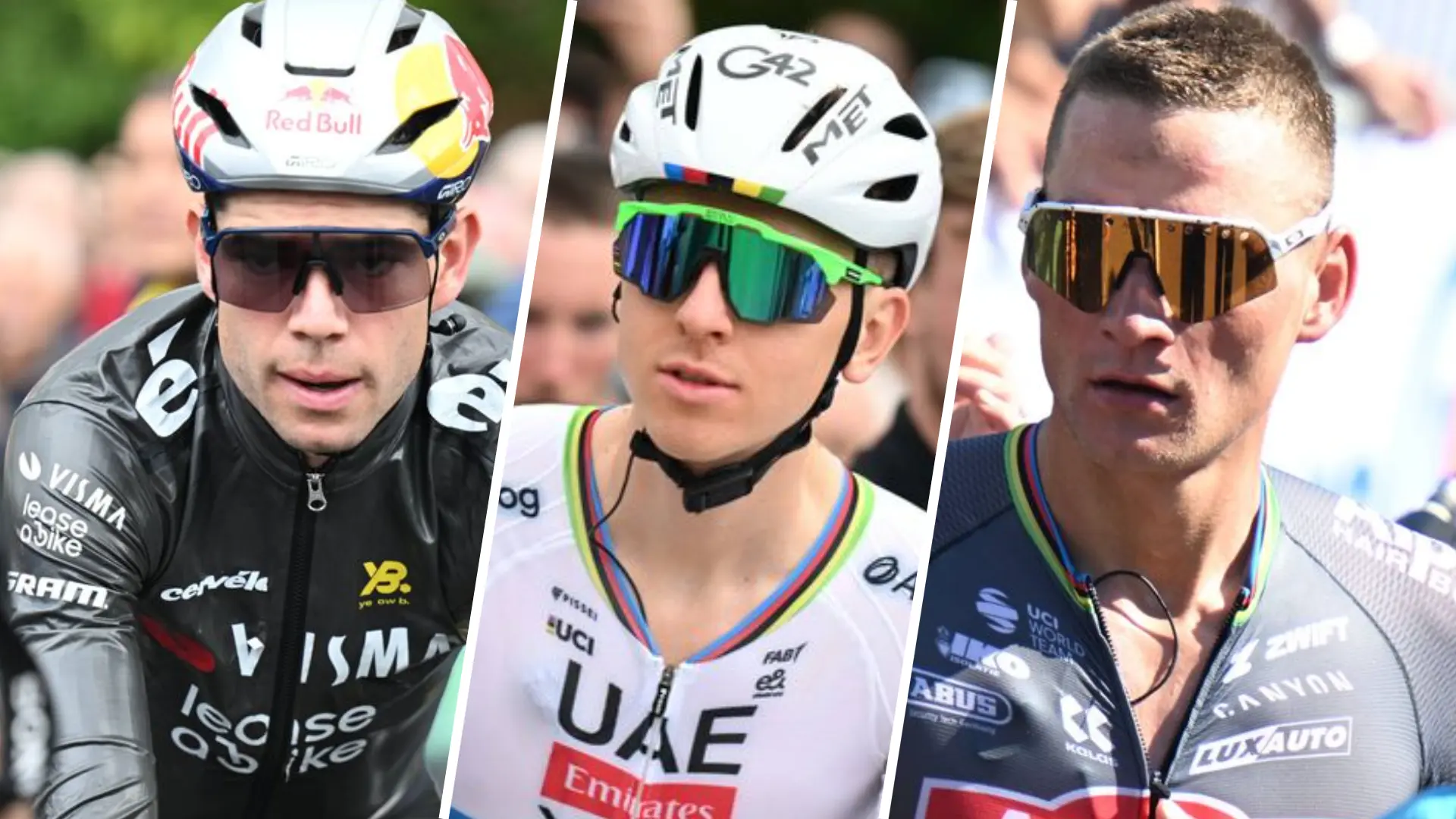
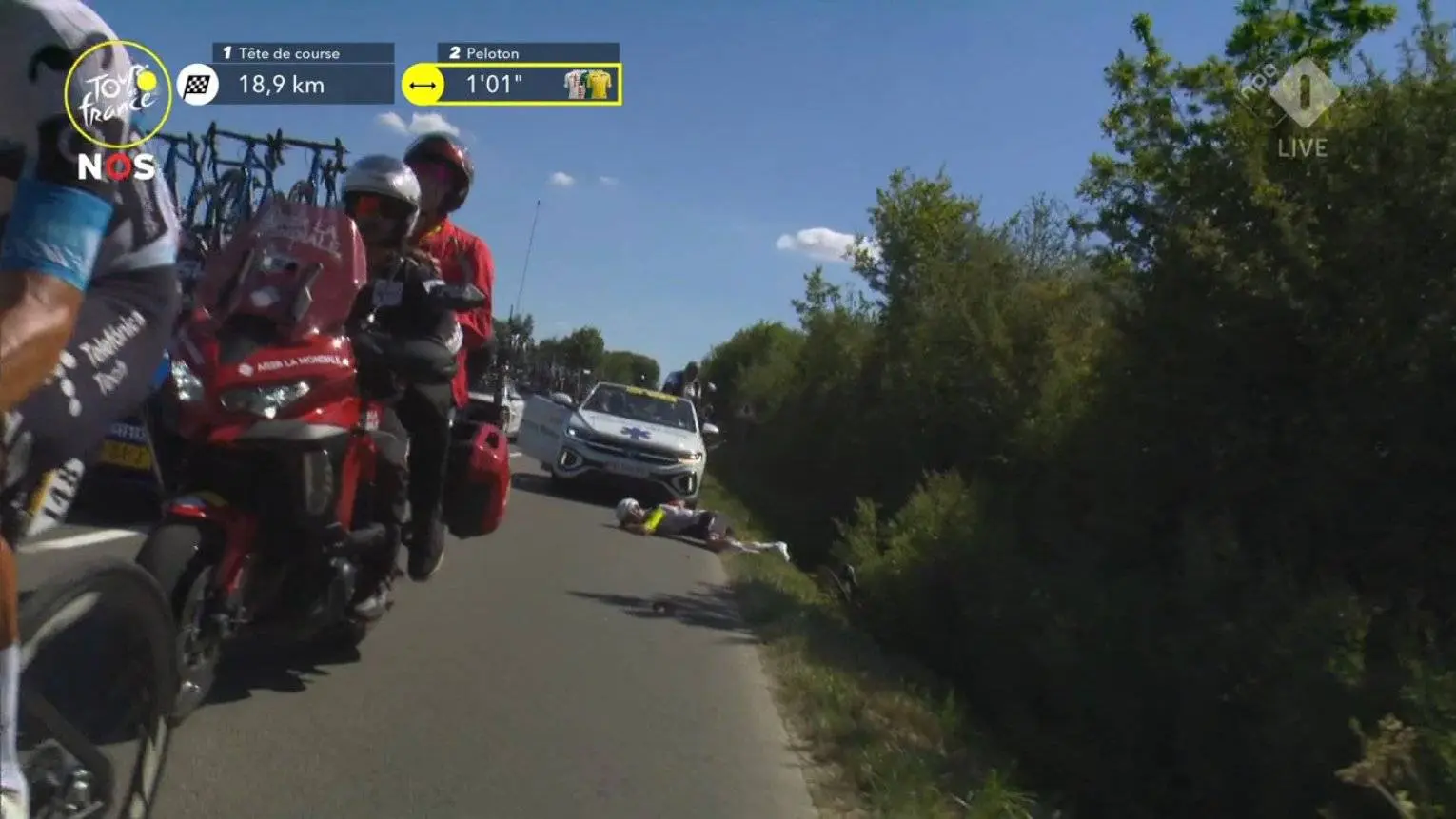
So far, the 2025 Tour de France has been a race highlighted by a number of nasty crashes. As such, the topic of rider safety and how the UCI can better protect the peloton has been thrust back into the spotlight and according to some, the sport's governing body simply aren't doing enough at present.
Big name riders such as Filippo Ganna and Jasper Philipsen has already been forced to abandon because of a crash in the opening week, with barely a day going by without multiple riders being left with scuffs and abrasions by the time they crossed the line. Speaking at the Science and Cycling Conference during the Grand Depart in Lille, Red Bull - BORA - hansgrohe's Dan Bigham hit out at the UCI and urged them to do more to protect the riders.
“If Wout van Aert, Tadej Pogacar or Mathieu van der Poel have a life-changing injury, or worse, we will have blood on our hands,” the 33-year-old former Hour Record holder warned those in charge of the sport. “We have the power to make changes."
Read also
One of the UCI's recent efforts to curb the potential dangers to the modern peloton, is a proposed restricting of the gears on the actual bikes. According to Bigham however, this is clear miss of the target.
"Restricting gear ratios simply distracts from making meaningful changes to rider safety," argues the Brit. “From my analysis, for reducing ratios to have an impact, we need to presume professionals would adhere to unrealistic cadence limits that aren’t supported by the literature. It’ll impact on as little as 0.01 per cent of a race and will arguably reduce speeds by no more than 0.5kph. All of this to change entire groupset design? It really doesn’t seem effective to me.”
“Whether you’re a GC rider or sprinter, if you want to limit a rider to 75kph and they can pedal at 200rpm, that means a gear ratio of three or less," Bigham continues. “So, will riders have to ride with – solely – a 30-tooth chainring? Even dropping cadence to 130rpm with a UCI ratio of five, you’d still ride at 80kph. But we know riders can do much higher than that for shorter periods."
Bigham also argues that the actual threat of high speeds the riders go, isn't the major issue. “What do we see? That riders don’t spend much time at high speed!” Bigham claims. “The huge speeds happen on descents where you have huge input from gravity. If you’re on a 15 per cent descent and you weigh 80kg, that’s around 4,000 watts from gravity alone.”
“We must use data to improve the situation,” Bigham concludes. “Cycling is close to its Ayrton Senna moment. Ayrton died, and it changed things because he was a superstar. The FIA took it upon themselves to use science and data… Formula One has a lot to teach road cycling about going faster, but also about teaching us about safety. Take rider safety. We should have race-relevant helmet standards. But road-race helmets are tested at 20kph impact speeds. That’s not relevant or good enough.”
Read also

Kieran WoodDeputy Editor-in-Chief
Kieran Wood is a sports journalist based in Wales and has been active in journalism since 2022. He regularly contributes to DartsNews.com and CyclingUpToDate.com, where he covers professional cycling and darts. In cycling, his work includes liveblogs from major races, including the Tour de France, the Giro d’Italia, and La Vuelta a España, alongside race reports and analysis. He has also conducted interviews with professional riders.
His reporting spans the full racing calendar, from one-day classics to stage races, with a focus on accurate, real-time coverage and clear contextual analysis. For statistics, results, and historical context, he regularly uses resources such as ProCyclingStats. To support reporting on rider activity and training context where relevant, he also references Strava.
In his work, Kieran places strong emphasis on careful sourcing, editorial accuracy, and updating articles as new, verified information becomes available.
claps 3visitors 3
Just in

Popular news
Latest comments
- I would prefer him to do the Giro and Vuelta, and leave Seixas, Remco and Jonas to fight it out in France. Btw 'redemption' implies he has disappointed us and has something to prove. I don't think he has anything to prove, but of course ticking off the Vuelta would be good. Pity he can't get a 'prior learning credit' for the first week in the Vuelta, and join in for the last two weeks!Hills3320-10-2026
- Bet you 90% of Slovenians will stop watching cycling once your boy stops. But. More pertinently, have you prepared for his retirement? I think you have extreme difficulties in understanding the difference between being a fan of cycling and being fan of a cyclist.Jumpyjohn20-10-2026
- I would keep a VERY open mind.Jumpyjohn20-10-2026
- Listen, maybe he did, maybe it’s more complicated but unless there are images* or witnesses, I wouldn’t go on stats alone. There are so many factors, terrain, wind, pacing, psychological/hormonal effects, etc. and that’s without consideration of Remco maybe changing his effort. As a rider I know all too well the effect of being overtaken can have, just like it’s always easier to push yourself when you are racing instead of training where you have no target to catch or pressure from behind. * obviously there is going to be a lack of commissaires in TTs to keep a constant eye on things but hey it’s 2026, these problems can be solved cheaply with on-board cameras or drones, they could even increase revenue and attractiveness through broadcasting right.Jumpyjohn20-10-2026
- Do you watch dog racing too? Do you remember what Einstein said about madness? What are you watching specifically, the way his ass moves over the saddle more efficiently? You should really ask yourself some psychological questions if what you enjoy is watching someone do exactly the same as all the others only slightly faster some of the time but not in any way noticeably without the immediate proximity of competitors. Would you watch time trials if no results or times were taken? You should really think about the real reasons why you enjoy watching someone much more than others (or why you can’t enjoy watching others doing the same). If you would argue it was for other reasons than simply wanting to watch the best (and I’m pretty sure you don’t watch e.g. cyclocross or kayaking because you want to dictate a hierarchy in sport) I would have more understanding (nothing else) for your choices (nationalism, ego, prediction talents, etc.)Jumpyjohn20-10-2026
- In theory you’re right but sometimes news is sparse or not funny or the discussion rather limited or predictable so a little lighthearted mocking can be a welcome distraction. Also, it doesn’t hurt to attract to agendareers and schemers.Jumpyjohn20-10-2026
- A suggestion to commentators, prepare to include interesting unrelated material when there’s little to report on. This is why the TdF grew an audience, it attracted more than hardcore cycling fans or fans of particular riders who’d find it interesting to hear or even discuss their choice of toilet paper at home. If you can’t keep viewers’ attention with surroundings, history, tourist information, etc. there’s always, highlights, best of past races, betting odds, international newsflashes, weather forecasts, etc. or the suggestion to go make a cup of tea. In fact, maybe the whole idea of one long live broadcast is the problem, a general sports update during the race would probably interest many, like the format in football where they flip across matches where goals or interesting events happen. Can’t see the point of comparing watching a guy turning his pedals in a constant fashion on an empty road with one hitting a tennis ball in a different strategic place each time or moving around a football field in an infinite number of unpredictable combinations wrt teammates and opponents every minute.Jumpyjohn20-10-2026
- Says Mr Non-stop repeating himselfJumpyjohn20-10-2026
- Phew I hope we do not get Jiffygate 2🤣🤣🤣🤣🤣 oh and by the way Bradley still has not answred the question re jiffygate even in his latwst book🙄🙄🙄🙄paultryan200220-10-2026
- What a stupid comment. If they are as good and if not better why should they sit on seasoned pros wheels. Sexias is a prime example . Move with the times they are fitter and more hungry and more ambition. If you cannot abide being 2nd string find a new profession.paultryan200220-10-2026
Loading
1 Comments