“If Florian Lipowitz improves by just 2%, he’s on equal terms with Tadej Pogacar” – Jens Voigt says Remco Evenepoel should ride as domestique at Tour de France
CyclingSaturday, 25 April 2026 at 12:00
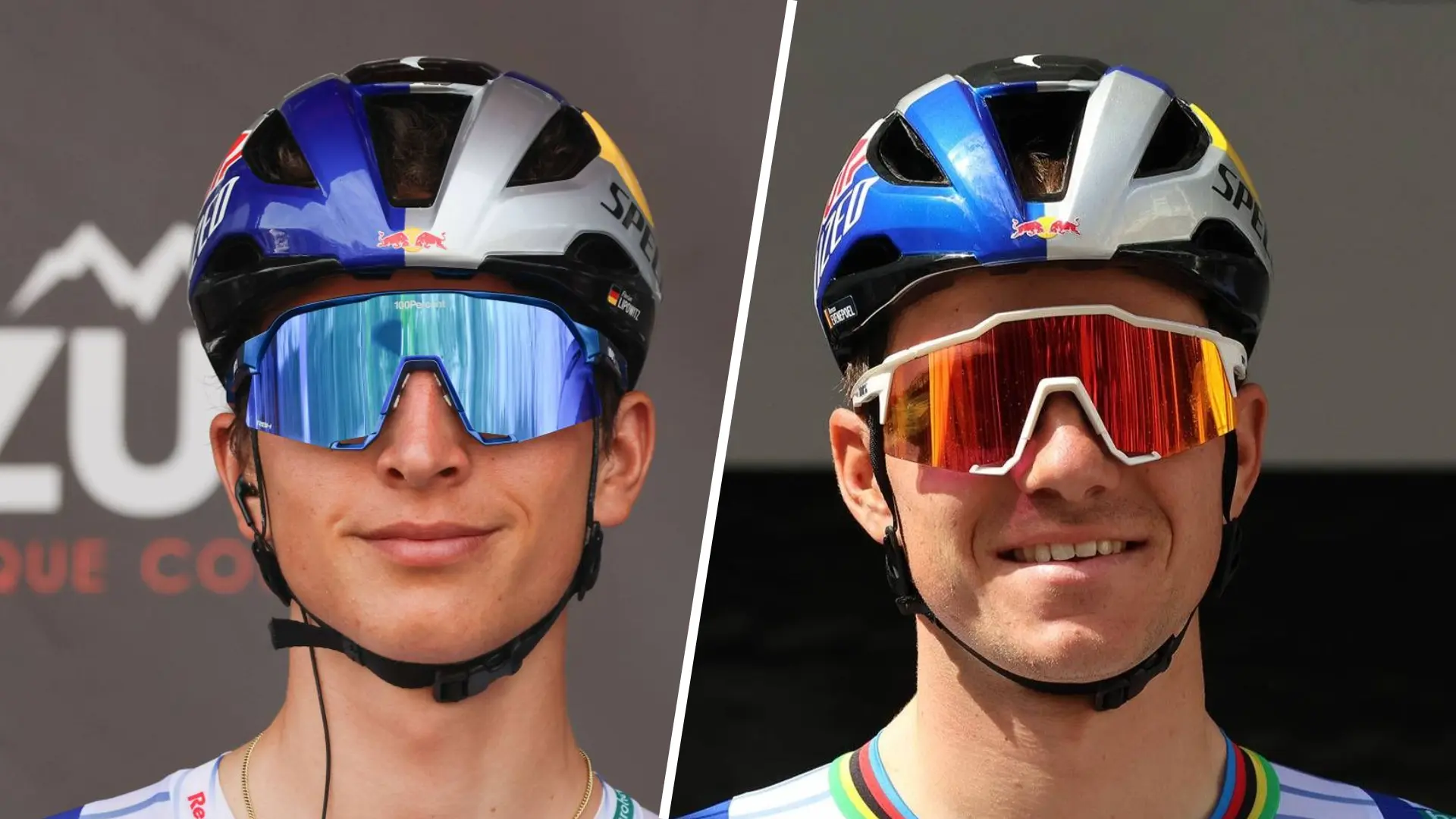
The internal balance of power at Red Bull - BORA - hansgrohe is coming into sharper focus ahead of the Tour de France, and if Jens Voigt is right, it may not favour Remco Evenepoel.
Speaking as part of his analysis for Eurosport, the former German professional pointed firmly towards Florian Lipowitz as the rider best placed to take the fight to Tadej Pogacar over three weeks. “Last year, Florian was one of the few riders who tried to respond to Tadej Pogacar,” Voigt explained, pointing to the German’s willingness to follow accelerations that left much of the field behind.
That effort still translated into a significant deficit on paper, with Lipowitz finishing eleven minutes down on Pogacar, but the detail behind those numbers is what shapes Voigt’s view.
“Even so, I believe he’s not that far away. If Pogacar doesn’t improve any further and maybe has an average day, and Florian improves by just two percent, then they’re on equal terms,” he said. “There’s not much missing. We’re talking about minimal differences.”
Climbing hierarchy emerging inside Red Bull
Those margins matter because they align closely with what has already been seen on the road in 2026. Lipowitz has quietly built one of the most consistent stage race campaigns in the peloton, backing up his 2025 Tour podium with further high level general classification results this season.
At races such as the Volta a Catalunya and Itzulia Basque Country, he has repeatedly matched or outperformed Evenepoel in the mountains, establishing himself as the team’s most reliable climbing option. In a modern Tour de France defined by repeated high mountain efforts, that profile carries more weight than ever.
Evenepoel’s strengths remain clear. He is still the superior time triallist and one of the most explosive riders in the sport, capable of gaining time against the clock and on punchy terrain. But against a rider like Pogacar, who now combines elite climbing with near world class time trialling, that advantage alone may not be decisive.
Voigt’s assessment reflects that balance. The German sees Lipowitz as the rider who can hold position in the mountains, limit losses across three weeks, and stay within striking distance if circumstances fall his way.

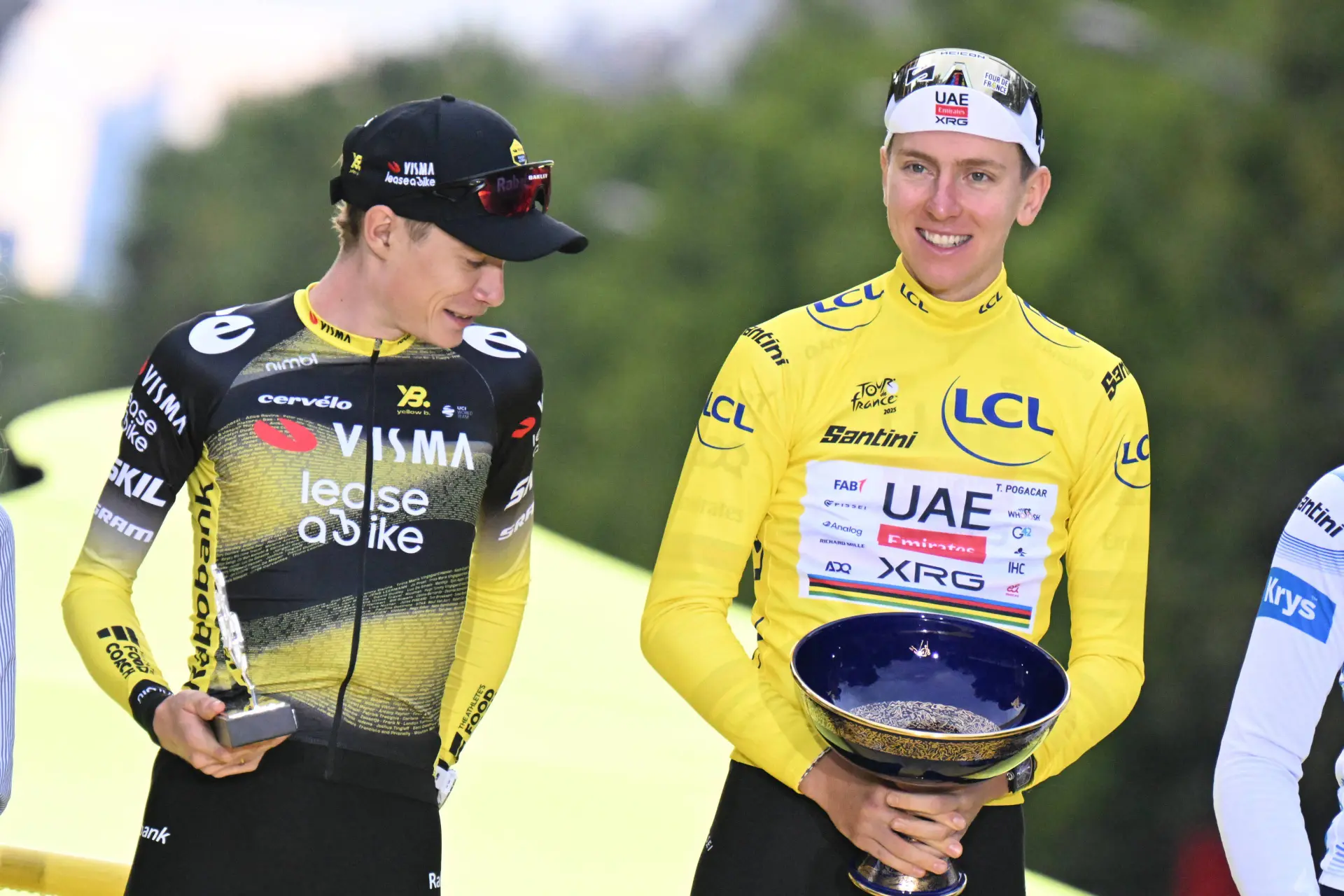
Lipowitz finished 3rd at the 2025 Tour de France
Evenepoel’s potential shift in role
That inevitably raises the question of team hierarchy, particularly given that both riders are expected to target the general classification in July. As in 2025, Red Bull are set to approach the Tour with a dual leadership structure on paper. In practice, Voigt expects that to evolve once the race reaches the high mountains.
The Belgian’s time trial advantage remains a key asset, but Voigt believes the dynamic could shift decisively once the road tilts upwards. “He won’t be entirely happy and will grit his teeth a bit. But I think he’s sensible and mature enough to say: ‘Okay, I’m in the second row now and I’m a helper,’” Voigt said.
It is a blunt assessment, but one that mirrors what has already been hinted at earlier this season, where Evenepoel has, at times, found himself riding in support during decisive moments in stage races.
Pogacar still sets the standard
All of this discussion ultimately circles back to Pogacar, who remains the reference point for the entire peloton. His 2026 campaign has again underlined his versatility, from dominating the spring classics to maintaining his position as the most complete Grand Tour rider in the world.
That is what makes Voigt’s “two percent” argument so striking. It does not suggest Pogacar is vulnerable in a traditional sense, but rather that the margins at the very top are finer than the results alone might indicate.
For Red Bull - BORA - hansgrohe, the challenge is deciding how best to exploit those margins. Lipowitz offers the closest match to the profile that has historically troubled Pogacar over three weeks: a pure climber with the ability to sustain repeated efforts deep into a Grand Tour. Evenepoel offers a different route, one built around time trial gains and aggressive racing.
Voigt’s view is clear on which path gives the team its best chance. Whether that call proves correct will begin to unfold when the Tour de France rolls out in Barcelona on July 4, with Lipowitz aiming not only to confirm his place at the head of the team, but to test just how close that two percent gap really is.

Kieran WoodDeputy Editor-in-Chief
Kieran Wood is a sports journalist based in Wales and has been active in journalism since 2022. He regularly contributes to DartsNews.com and CyclingUpToDate.com, where he covers professional cycling and darts. In cycling, his work includes liveblogs from major races, including the Tour de France, the Giro d’Italia, and La Vuelta a España, alongside race reports and analysis. He has also conducted interviews with professional riders.
His reporting spans the full racing calendar, from one-day classics to stage races, with a focus on accurate, real-time coverage and clear contextual analysis. For statistics, results, and historical context, he regularly uses resources such as ProCyclingStats. To support reporting on rider activity and training context where relevant, he also references Strava.
In his work, Kieran places strong emphasis on careful sourcing, editorial accuracy, and updating articles as new, verified information becomes available.
claps 1visitors 1
Just in
Popular news
Latest comments
- Bora signed up Roglic on the cusp of still being a contender. A bit like the israeli team and Froome. The gamble like that venture never really bore fruit. Can he win the Vuelta? I would love to think that he could challenge Pog. Is that likely? I doubt it. Off course Pogacar could get ill or crash. Top 10 at best is my guess. His best placing this year I think was 8th in Tour de Suisse. I hope he surprises us though. Wouldn't that be great?Cyclingsbestfan16-08-2026
- The fact is, even if Jonas didn't crash out and would have been second in the Tour, he still can't win the WC. Wouldn't even come close. The WC will have the best one day specialists like MvDP, Van Aert, Mads Pedersen, Remco, Pogi and others. Why would Jonas go to a race like that? Just to lose it? Trine knows very well why she won't let him race... and it's not because he's injured. She just knows!!!PogiSloFans16-08-2026
- My "dear" maumau... I have a loving family, grown up kids, three grandsons and two granddaughters. We understand each other, joke around, most of the time we're having a good time. We're all healthy and happy for the time being. So don't talk to me about life, I'm doing just fine. But do make sure to take care of your own, not too much of your incomprehensible philosophy, just common sense, respect and love to your family. I wish you the best.PogiSloFans16-08-2026
- He's easily won P-N, Catalunya and Giro and was 2nd in the Tour before he crashed out. Doesn't sound like someone brokenvappaxbipmv16-08-2026
- How can Froome possibly be 2nd if we only take 2016 onwards into account? At the very least, Jonas is before him and should easily be 2ndvappaxbipmv16-08-2026
- Stop acting like a fool. You're the one mixing up details with your immature comments. So let me explain it to you, but unfortunately I can't hold your hand to get the message to your grey cells... UAE paid Ayuso to be Pogi's domestique, but Ayuso betrayed everyone. Capish?PogiSloFans16-08-2026
- It's more his mindset. His outlook seems to have been that all the time spent away from home was worth it to be at the top level. But he seemed to lose hope at this Tour.Hills3316-08-2026
- Let see. Couple of weeks ago he was leading all three of those names in a GT. Now he suddenly is incapable of challenging them? LOL.mobk16-08-2026
- I love the way that guy races. he just goes. damn the torpedosmij16-08-2026
- Everyone should love their country. I’m not sure where you are from, but yes I’m from the USA. And I love my country. I didn’t say I love my leadership. But one can love and be proud of their country w/o loving who is in charge. BTW, not a big fan of someone that trashes someone else’s country. don’t knock it if you don’t live here. ask the millions of Europeans that came for the World Cup what they found.mij16-08-2026
Loading
7 Comments