"When I was his age, I was still at a much lower level" - Tadej Pogacar impressed with new rival Paul Seixas
Cycling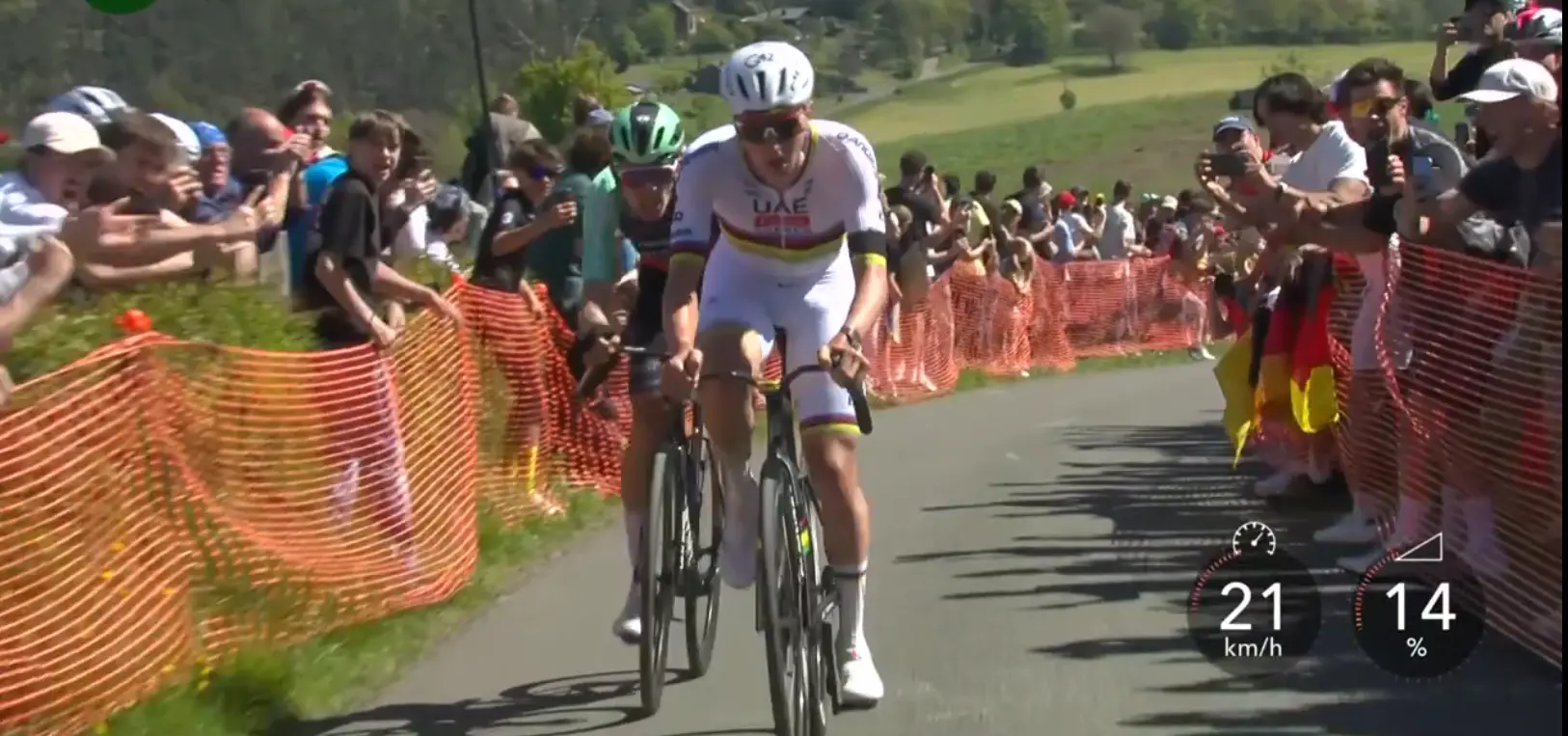
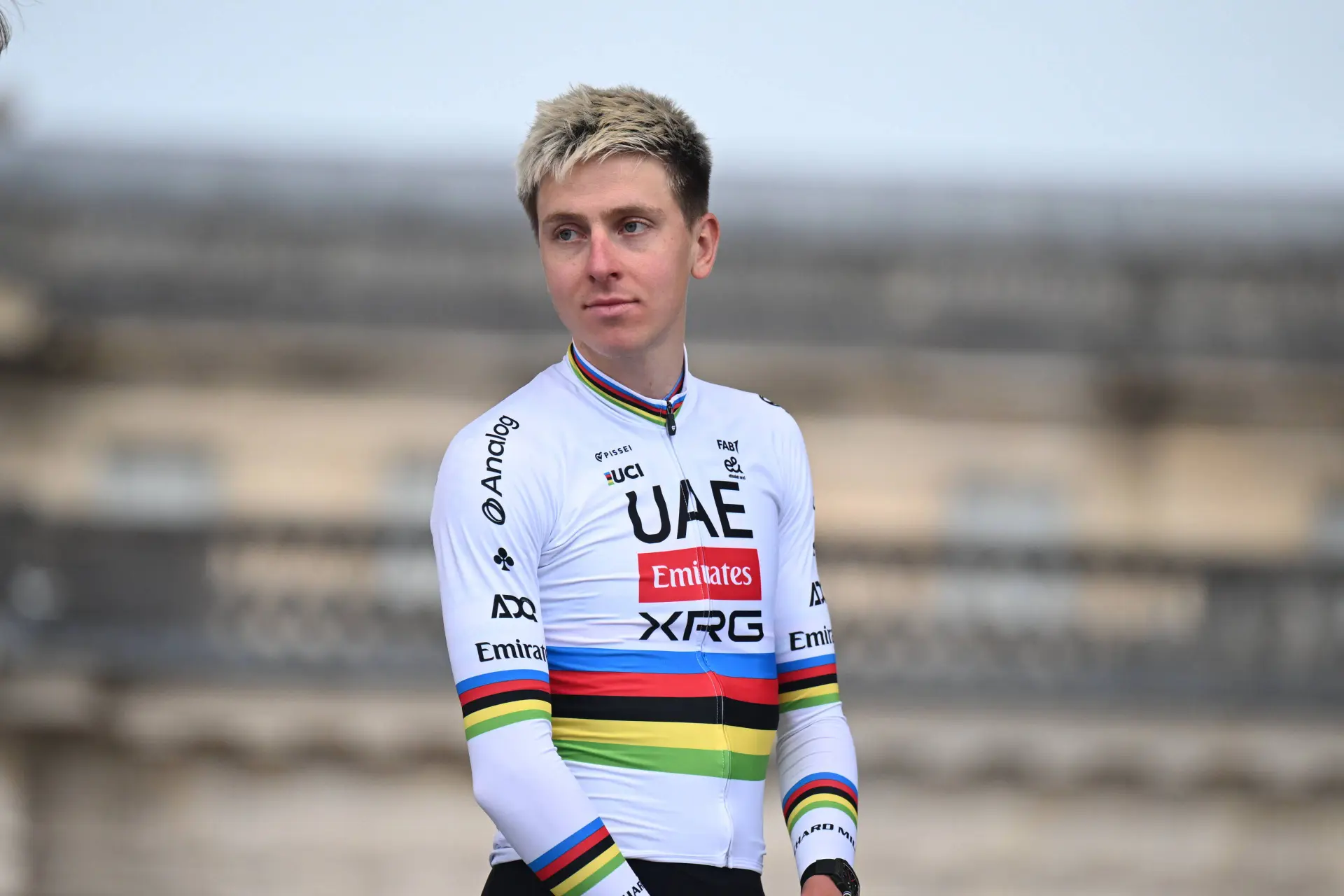
The last time Tadej Pogacar raced in the Romandie region, it left a mark that has never fully faded. More than a decade on, as he prepares to start the Tour de Romandie, the Slovenian arrives not only as the defining force in modern cycling, but with a memory from his youth that still carries physical weight.
That contrast could hardly be sharper. Then, a junior rider enduring a difficult week. Now, the defining force in modern cycling, stepping straight from victory at Liège-Bastogne-Liège into one of the few WorldTour stage races missing from his palmarès.
A week that left a lasting mark
Pogacar’s connection to the region dates back to the Tour du Pays de Vaud, where his experience stands out sharply against what would later become the norm in his career. Racing there as a junior in 2015 and 2016, he finished 74th overall in one edition before improving to sixth the following year. That earlier appearance, in particular, was shaped by a crash that continues to linger.
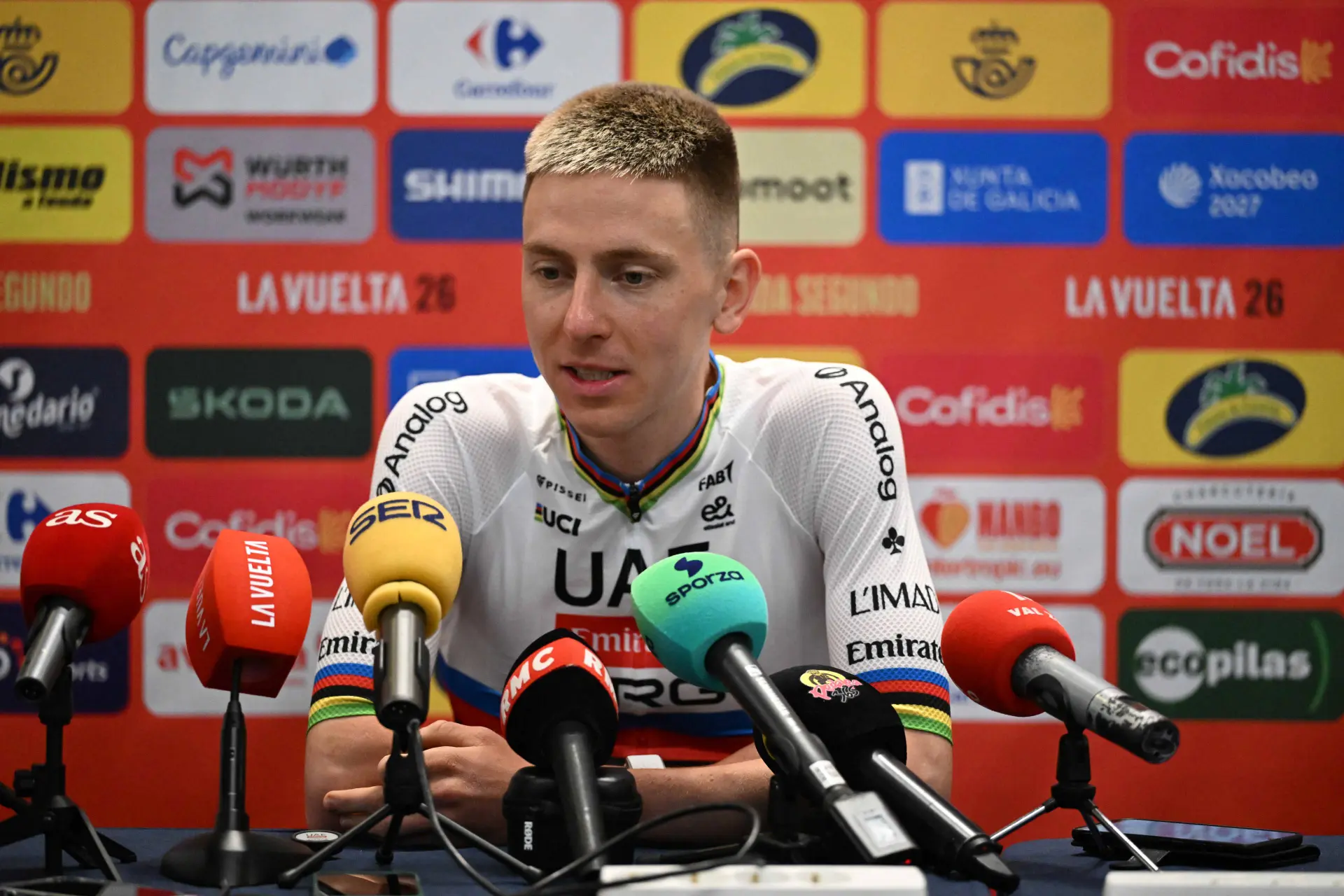
Reflecting on that race ahead of Romandie, he recalled: “It was a nice race, but I suffered a lot because I had a very bad crash. I still have a scar on my Achilles from that crash, from the chainring. “I wasn’t very good there and we had a double stage. In the afternoon I had stomach problems as well. It was a week where every day something went wrong," he recalled in his pre-Romandie press conference. “In the end, I managed to get into the top 10 on the final stage, so I was happy with that. But overall, it was quite a terrible week for me.”
Even with that experience, his view of the region itself remains positive, describing it simply as “a nice area to race in.”
From survival to dominance
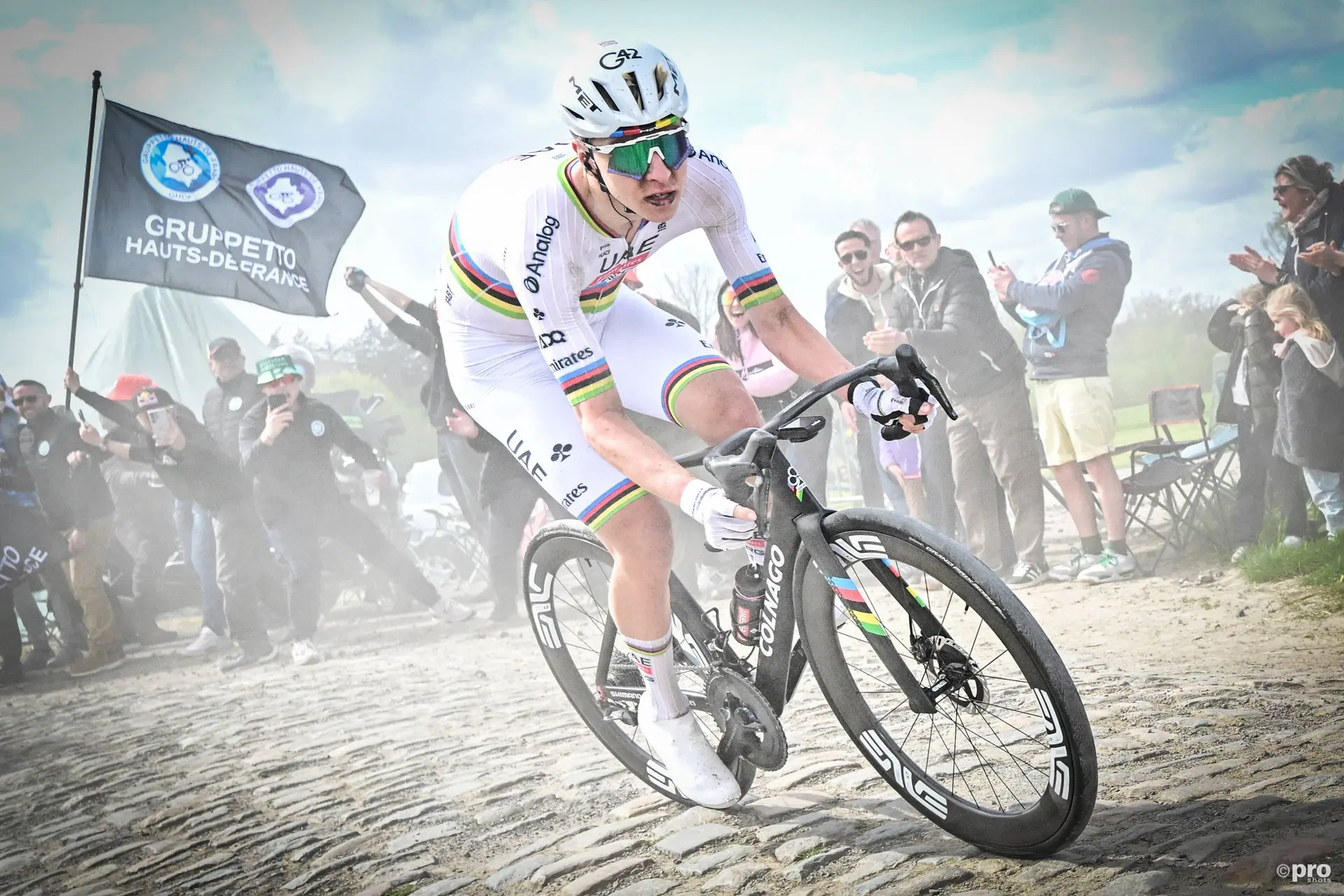
The version of Pogacar returning to Switzerland this week bears little resemblance to the rider who endured that difficult junior race. He arrives at the Tour de Romandie having just claimed victory at Liège-Bastogne-Liège, his 13th Monument, capping a spring campaign that has seen him win across multiple terrains and race formats. That success has been built in familiar fashion, through aggressive, race-defining moves rather than conservative control.
But the turnaround is immediate. From a maximal one day effort in the Ardennes to a six day stage race beginning just days later, the challenge shifts quickly, even if the objective remains unchanged.
“I want to win, and it’s no secret that we want to win here in Romandie as well. We will try our best,” Pogacar previewed. “At the same time, every race is different and it’s difficult to fight for the win. We’ll see how it goes through the week. If I don’t win, it’s not going to be the end of the world. I will give my best to try and also get the Tour de Romandie into my palmarès.”
A different kind of test
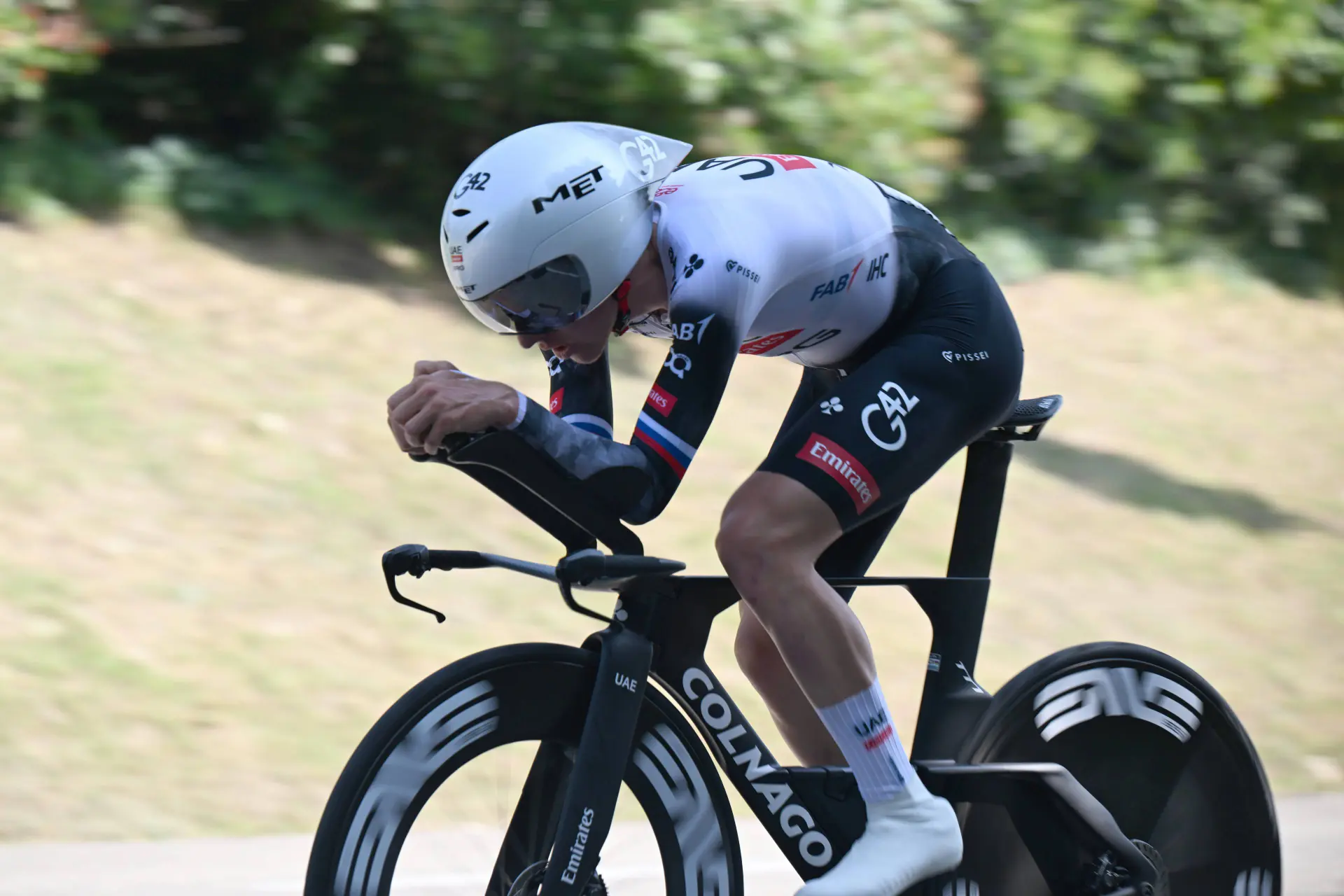
The structure of this year’s race presents a slightly different challenge to what Pogacar had anticipated. “I think it’s a pretty hard race. When we planned it back in December, I was hoping there would be two time trials like normal, a prologue and a longer one,” he explained. “But it’s just the prologue, so that’s one less big challenge in this race. I was quite looking forward to testing myself because I don’t do so many time trials. But the parcours suits me really well, so if everything goes well, it should be fun.”
That opening prologue, short and intense, offers an immediate test. As Pogacar put it: “It’s all out for three kilometres. It’s going to be really painful for the legs and lungs.”
Beyond that, the race opens up into a week where opportunities are expected to come frequently. “After that, we go more or less day by day. Every stage is a good chance to attack, but I think the other teams are thinking the same," predicts the world champion. “There are so many opportunities through the week, maybe even for surprise attacks. Every stage looks pretty good to give it a try.”
A new generation emerging
When asked about his aforementioned Liège-Bastogne-Liège win and the standout performance of 19-year-old Paul Seixas, Pogacar was clear in his assessment. “He was more impressive than me,” he said.
“When I was his age, I was still at a much lower level, so there is a big difference compared to being 19,” Pogacar added. “I think it’s very impressive. Remco Evenepoel was also very impressive at that age.”
“Maybe if you compare, Remco at 19 was already winning a lot of races,” he said. “But what Paul has shown so far is very impressive.”

Tadej Pogacar and Paul Seixas at the 2026 Liêge-Bastogne-Liège
Returning with unfinished business
For all the dominance of his 2026 season, the Tour de Romandie remains a rare gap in Pogacar’s record, adding another layer of motivation to a race that already carries personal history.
He returns to the region shaped by a very different experience, one defined by crashes, illness and frustration. This time, he does so as the rider everyone else must measure themselves against.
Whether that translates into victory over the coming week will be decided on the climbs of western Switzerland, but the contrast is already clear. From a race that once left a lasting scar, Pogacar now arrives with the chance to leave his mark on Romandie in an entirely different way.

Kieran WoodDeputy Editor-in-Chief
Kieran Wood is a sports journalist based in Wales and has been active in journalism since 2022. He regularly contributes to DartsNews.com and CyclingUpToDate.com, where he covers professional cycling and darts. In cycling, his work includes liveblogs from major races, including the Tour de France, the Giro d’Italia, and La Vuelta a España, alongside race reports and analysis. He has also conducted interviews with professional riders.
His reporting spans the full racing calendar, from one-day classics to stage races, with a focus on accurate, real-time coverage and clear contextual analysis. For statistics, results, and historical context, he regularly uses resources such as ProCyclingStats. To support reporting on rider activity and training context where relevant, he also references Strava.
In his work, Kieran places strong emphasis on careful sourcing, editorial accuracy, and updating articles as new, verified information becomes available.
claps 0visitors 0
Just in

Popular news
Latest comments
- "And we’ll avoid rushing from race to race"...LOL he took all that time off between the end of the Tour and the Canadian one day races ! That got him one win and a failed worlds RR title ! Only thing he got a was TT titles and a Euro championship against a weak field !frieders321-10-2026
- Rasmussen hasn't been relevant for years and that's only because he was booted out of the tour wearing the yellow due to failed doping !frieders321-10-2026
- Yep Pogi can't win the Vuelta if he doesn't cross the finish line in stage 21! PogiFanStalker can't seem to understand that.frieders321-10-2026
- This PogiFanStalker can't seem to help himself with his constant nonsensical comments here.frieders321-10-2026
- Only thing boring here is reading your constant drooling comments about him!frieders321-10-2026
- So much clickbait hereDAS21-10-2026
- Yes, this site has truly become a joke... and about 3/4 of the commentators. For most of them UAE are dopers and Pogi is boring??? They're brainwashed and want Pogi out of cycling.... because he's boring. Yes, in their f***ed up brains, Pogi is the G.O.A.T. ... but he's boring???????PogiSloFans20-10-2026
- As long as the anti doping agencies are on the up and up and doing all they can I can live with the world we now live in without suspicion lurking in the back of my mind all the time.
 Brucegel20-10-2026
 - The message to honour the leaving Felix Gall's performances was more enthusiastic
 Rafionain-Glas20-10-2026
 - "We all know he would have won by a big margin if he didn't crash out." But he did crash out, so why does it matter?Rafionain-Glas20-10-2026
Loading
Write a comment