“How are we supposed to believe this world is clean?” – Lance Armstrong-era outcast questions Tadej Pogacar’s UAE entourage
Cycling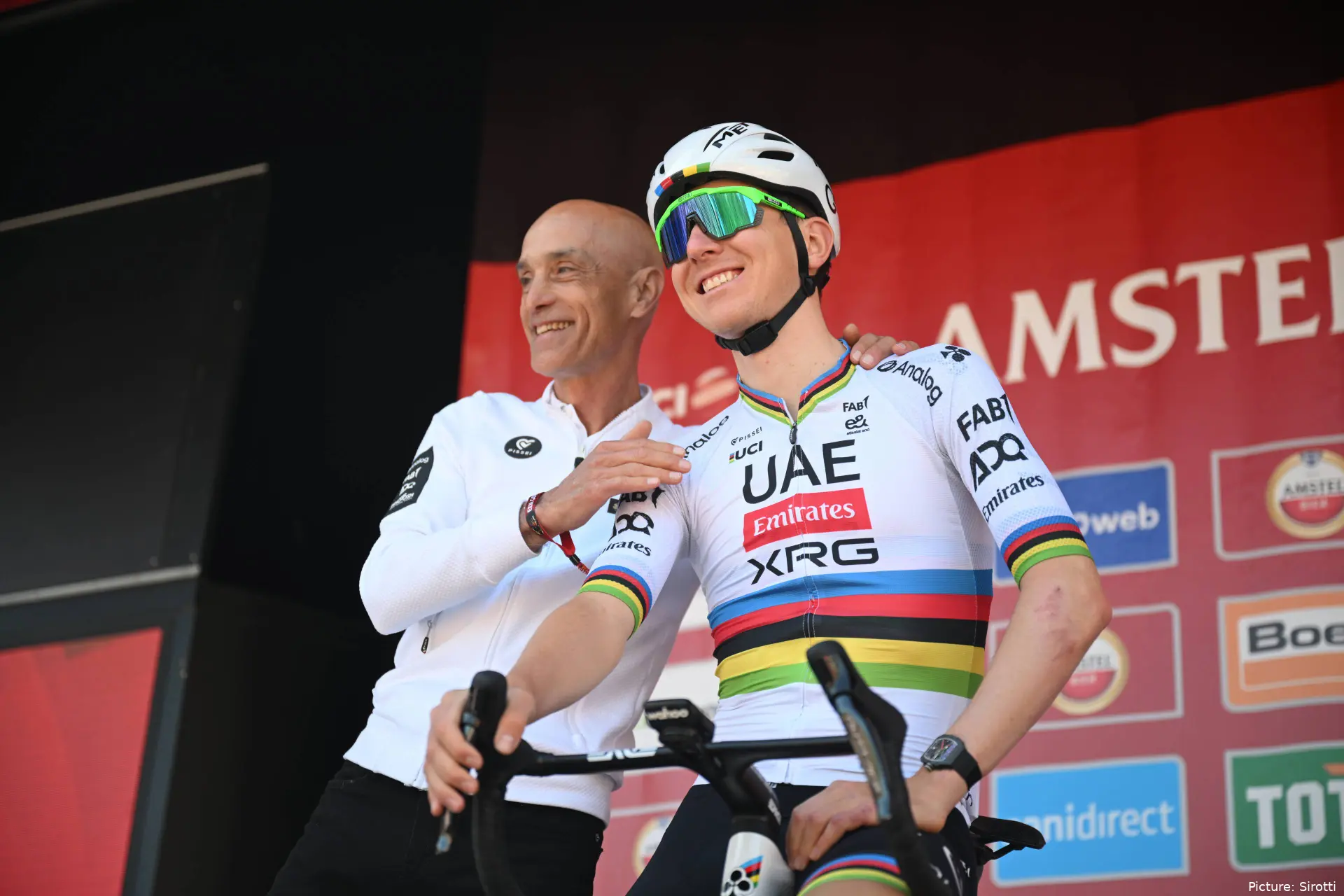
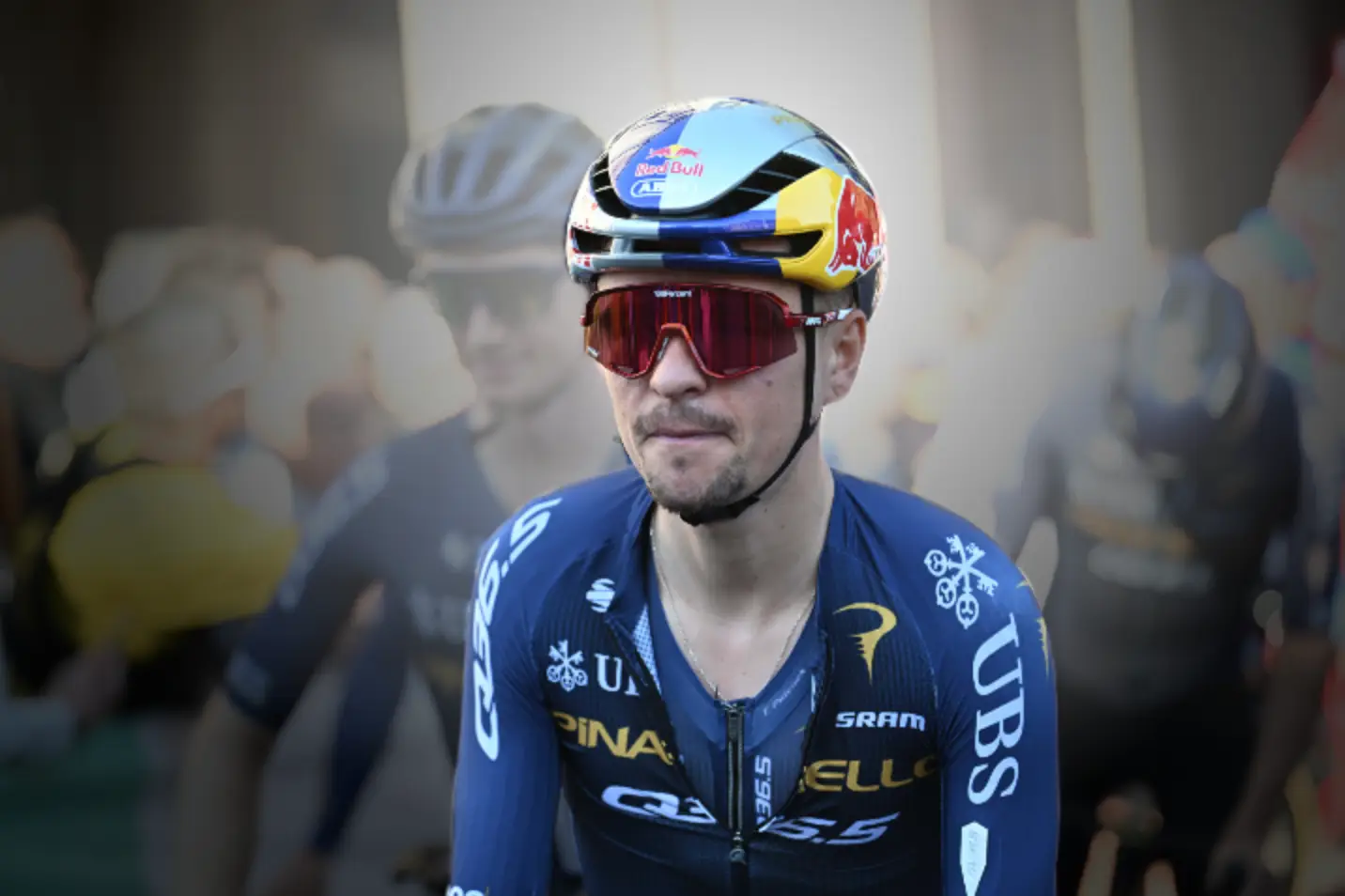
Christophe Bassons has questioned whether professional cycling can truly be considered clean, singling out the people around Tadej Pogacar at UAE Team Emirates XRG and warning that the sport’s old culture of omertà has not disappeared.
Bassons, famously ostracised within the peloton after speaking publicly about doping during the Lance Armstrong era, raised his concerns during a lengthy interview with Winamax programme L’Échappée.
“It’s difficult for me to evaluate how much the equipment has evolved. But the power numbers keep going up and up,” said the 52-year-old former professional. “What catches my attention is the entourage around certain teams. The people around Pogacar are not exactly reassuring.”
Bassons points towards UAE boss Mauro Gianetti
Bassons specifically mentioned Mauro Gianetti, Team Principal and CEO of UAE Team Emirates - XRG.
Gianetti previously headed Saunier Duval, the team from which Riccardo Riccò tested positive for CERA during the 2008 Tour de France before the squad withdrew from the race. Gianetti denied knowing about doping within the team.
Bassons did not accuse Pogacar of doping, instead questioning the environment surrounding parts of the modern peloton. “There is a culture maintained by the old guard, an omertà that still hangs over this environment,” he said. “How are we supposed to believe this world is clean? If it were, it would open itself up to the outside world. Everyone protects everyone else. Why wouldn’t there be products today that are just as effective as EPO, but which we don’t yet know about and therefore can’t ban?”

Gianetti was named by Bassons
“Nobody spoke to me anymore. Not even my teammates”
Bassons joined Festina during the 1990s and was later identified as one of the riders who had stayed outside the team’s doping programme. By the 1999 Tour de France, now riding for La Française des Jeux and openly discussing doping, his position inside the peloton had become increasingly hostile.
“Seeing the way they were riding, I told myself it was impossible to win the Tour without doping,” he recalled. “I turned everyone against me. What I had was my voice. I can’t stand injustice. Nobody spoke to me anymore. Not even my teammates.”
That Tour also brought Bassons into direct conflict with Armstrong.
Before one stage, Bassons learned that the peloton intended to ride the opening 100 kilometres relatively easily. He attacked as soon as racing began. “I went flat out on the descent,” he recalled. “But then I saw my team and Armstrong’s team chasing me down. Then I felt this huge slap on the shoulder. It was Armstrong. He told me I was damaging cycling, that I had no place there, and he finished with a ‘fuck you’. I just looked at him and smiled.”
Bassons left the Tour shortly afterwards, although he continued racing professionally through 2001.
Read also
“Tonight you’re going to become part of the family”
His problems inside the peloton had begun well before that clash with Armstrong.
Bassons recalled a New Year’s Eve gathering at the end of 1996 at the home of a leading French rider, attended by professionals from south-west France. After midnight, he says the group was taken into the basement of the house, where the host began handing something around.
“He handed it to the first rider, who unwrapped an insulin-type syringe containing the ‘pot belge’: amphetamines, everything you needed to party,” Bassons said. “He said to me, ‘Tonight you’re going to become part of the family.’ He held the syringe out to me. I was shocked, I was actually frightened, and I said, ‘No chance.’ He took it badly and said to me, ‘You keep your mouth shut. You don’t say anything.’ I was really shocked.”
Bassons says refusing to dope was not the only source of friction. There was also pressure over what riders were expected to do for their leaders.
“I got mocked a lot. Some leaders really wanted me to start taking things,” he explained. “They didn’t criticise me for not doping, they criticised me for not doing the job properly. They told me I had to do absolutely everything possible for my leader. My feeling at the time was that I was the only clean rider. The only clean rider at Festina out of 28 riders. It was the same in the other teams.”

Christophe Bassons in action at the 1998 Tour of Flanders
“French riders who are now sports directors put me in the ditch”
By Bassons’ account, the hostility became physical during his final two seasons as a professional. “In 2000 and 2001, it became physical harassment,” he claimed. “French riders who are now sports directors put me in the ditch. They made me crash two or three times.”
He has not named the riders involved.
Bassons retired from professional cycling in 2001 at just 27 before moving into sport and anti-doping work. He later worked with the French Anti-Doping Agency and remains involved in anti-doping today as an inter-regional adviser in Nouvelle-Aquitaine.
Armstrong was stripped of his seven Tour de France titles in 2012 and publicly admitted doping the following year. Bassons, who had been told by Armstrong during the 1999 Tour that he had no place in cycling, remains professionally involved in the fight against doping more than 25 years later.
Kieran WoodDeputy Editor-in-Chief
Kieran Wood is a sports journalist based in Wales and has been active in journalism since 2022. He regularly contributes to DartsNews.com and CyclingUpToDate.com, where he covers professional cycling and darts. In cycling, his work includes liveblogs from major races, including the Tour de France, the Giro d’Italia, and La Vuelta a España, alongside race reports and analysis. He has also conducted interviews with professional riders.
His reporting spans the full racing calendar, from one-day classics to stage races, with a focus on accurate, real-time coverage and clear contextual analysis. For statistics, results, and historical context, he regularly uses resources such as ProCyclingStats. To support reporting on rider activity and training context where relevant, he also references Strava.
In his work, Kieran places strong emphasis on careful sourcing, editorial accuracy, and updating articles as new, verified information becomes available.
claps 2visitors 2
Just in

Popular news
Latest comments
- Wrong again, Pogi let Remco take the win. We all know how and why. Ad acta.PogiSloFans16-10-2026
- Like father, like son. Remco's father is also a BS-er.PogiSloFans16-10-2026
- No they wouldn't, because Pogi would beat him. Considering he crushed Pogi's balls 3X in a row the Belgians will have sympathy :))PogiSloFans16-10-2026
- Montmatre offers everybody a chance including the sprinters as seen from this year. So it should stay.abstractengineer16-10-2026
- Bassons: “How are we supposed to believe this world is clean? If it were, it would open itself up to the outside world. Everyone protects everyone else." I agree, the world is not clean, despite cycling, the world has become a shit hole. Big powers attacking smaller countries. Russia attacking Ukraine... more than half a million soldiers have likely died on both sides combined, with additional civilian deaths. Hamas attacking Israel, killing 1.300 people, Israel attacking Palestine, over 70.000 dead (20.000 children). Now how about the USA? The worst country in the world at this moment. Attacking Iran unlawfully, losing the war to them and creating a world wide energy crisis. Trumps ICE agents also deporting innocent people, tearing parents from their kids, killing american citizens, around 25 to 30 school shootings every year, no health care, bad education if you don't have money, stupid maga citizens, the most hated and ugliest president in the world, pedophile Donald J. Trump. Yeap, how are we supposed to believe this world is clean? We're all f***in doped, living in a delusional democracy.PogiSloFans16-10-2026
- Well they need to get rid of 11 riders and they are doing an OK job
 Rafionain-Glas16-10-2026
 - the hype comes from Remco. Give me leadership he says and then finishes lower than a domestique on other teams. He criticizes other riders for his tactical mistakes and crashes. He demands his co leader to help him in a sprint. He calls other riders no balls and then does not even challenge Pogi, in fact he sucks up to Pogi. Every time he fails , he has an excuse about how it was not his fault. Basically he makes himself unlikable regardless of how he performs.abstractengineer16-10-2026
- In 2024 Pogačar would have been able to pull all the way up a climb like Plateau du Solaison and still beat Evenepoel. He couldn't this timeRafionain-Glas16-10-2026
- Most of the DS and the managers are from the doping era. Some have never admitted to anything and vehemently claim they were clean when they won against heavily doped riders. Untill they get out of the sport, the stigma will remain and that will take 20-30 yearsabstractengineer16-10-2026
- How to say you know nothing about the Cross world, without saying it. You should stick to what you're good at- virtually sniffing Pogi's chamois.megasmacky16-10-2026
Loading
2 Comments