“He was always in control” - Sean Kelly hails Tadej Pogacar after ‘monster performance’ in brutal Tour of Flanders
CyclingSunday, 05 April 2026 at 20:00
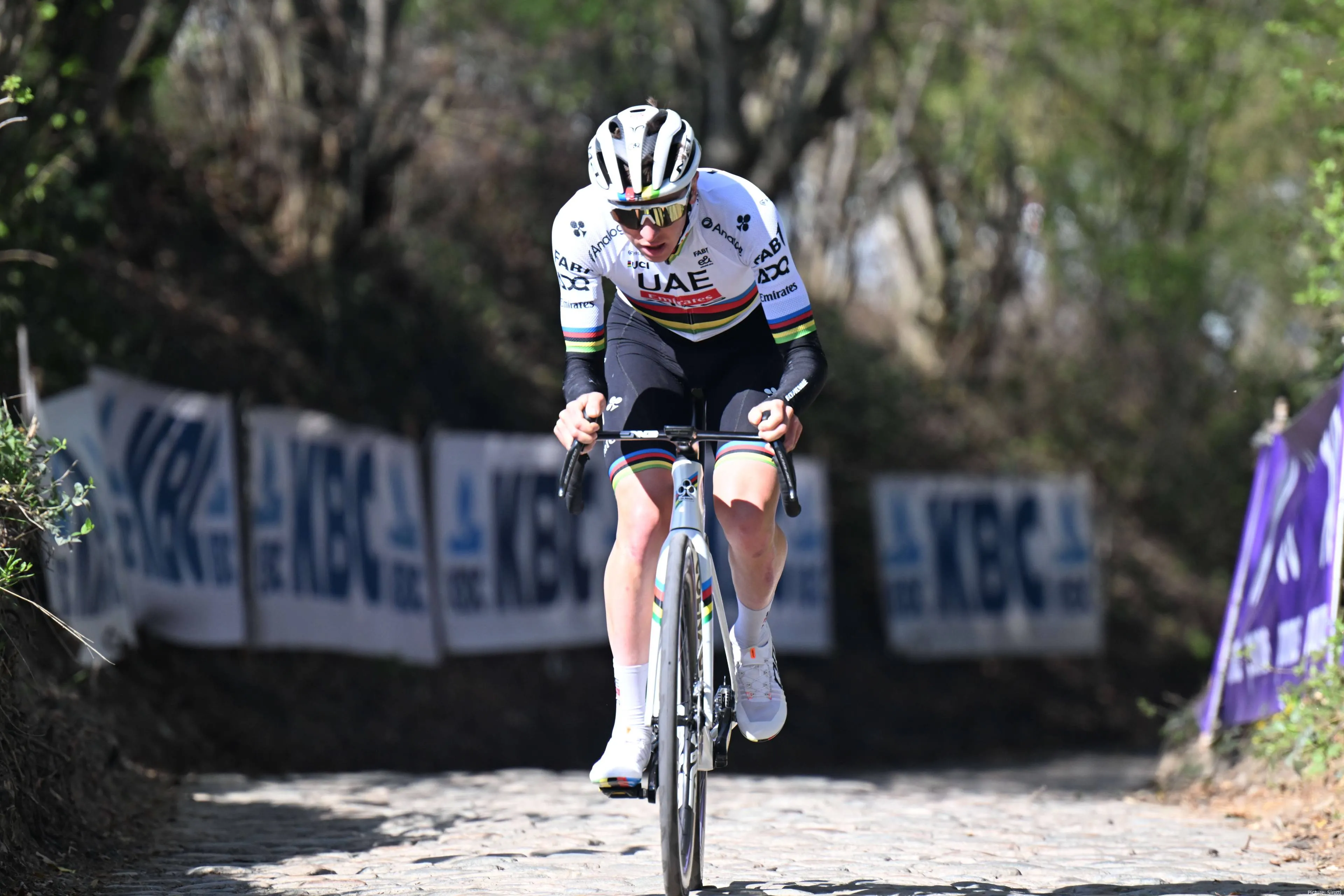
Tadej Pogacar’s Tour of Flanders victory was delivered through force on the road, but Sean Kelly’s reading of the race pointed to something more calculated beneath the surface.
On a day where the pace never truly relented, and the favourites were under pressure from a long way out, the Slovenian repeatedly drove the race forward himself, shaping the decisive phase before finishing it off on the climbs. Kelly’s analysis focused on that approach from distance, as Pogacar began to impose himself long before the final selection was made.
Pressure applied long before the decisive move
“You could see from the way he was riding all day in that group of favourites,” Kelly said on TNT Sports. “He was investing a lot to keep the pace high and the pressure on.”
That aggressive approach stood out even among a group packed with contenders, with Pogacar repeatedly taking responsibility for the tempo across the key sectors. At times, it appeared a risky strategy. “I was wondering if he was giving too much and might pay for it in the end,” Kelly added.
Instead, the opposite proved true. The repeated efforts did not weaken Pogacar, but gradually wore down those around him, ensuring that when the decisive moment came, fewer riders were capable of responding.
Van der Poel closest, but not enough
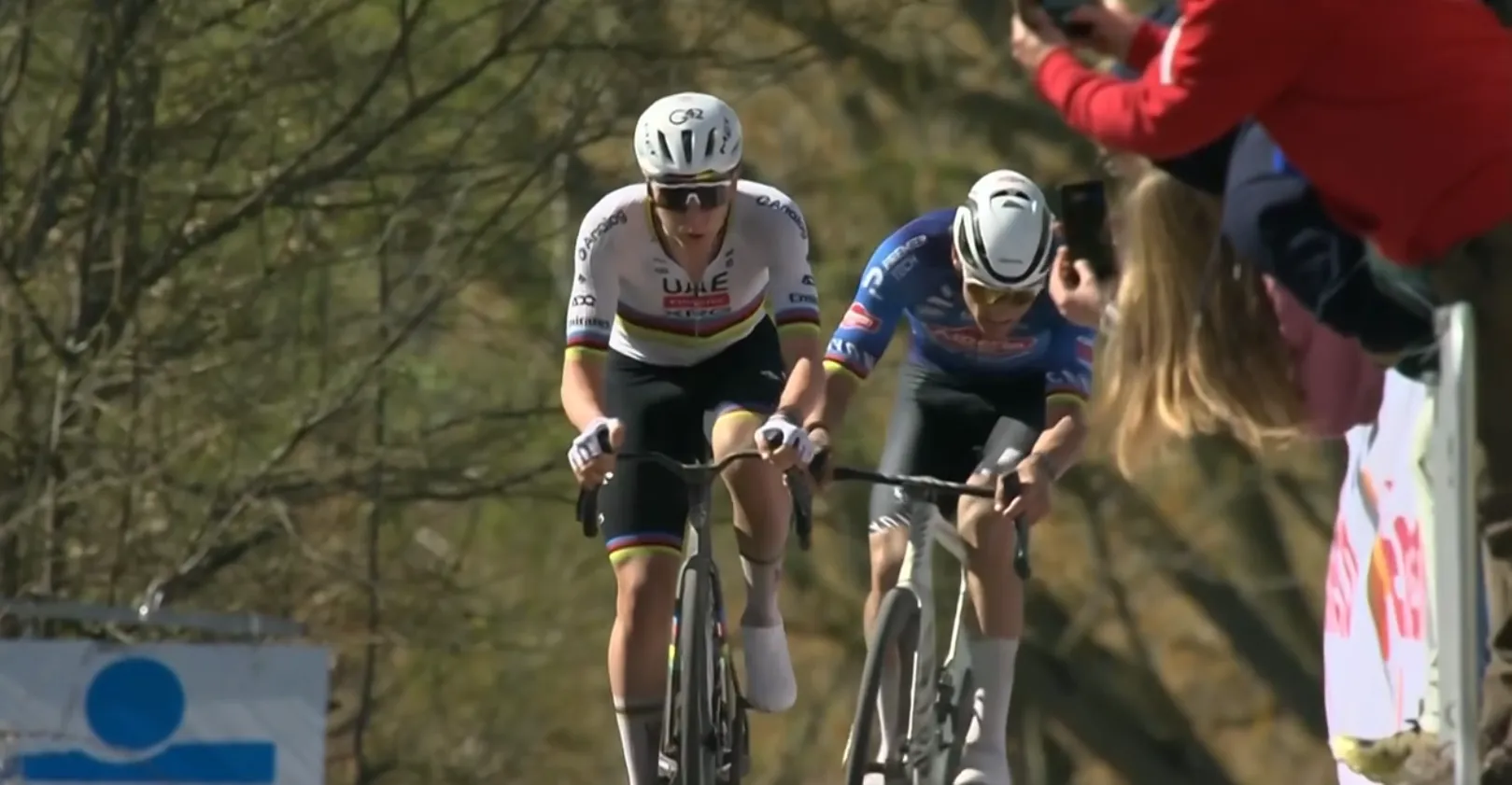
Mathieu van der Poel once again emerged as Pogacar’s main rival, riding with patience and positioning himself carefully as the race developed. “I think Mathieu van der Poel played the game a little bit, and he did play it well,” Kelly said.
But even that measured approach could not match the sustained pressure coming from Pogacar. “Pogacar was too much again.”
As the race moved into its final sequence of climbs, the repeated accelerations began to take their toll, with the group thinning under the strain.
Repeated efforts that decide the race
The defining feature of Pogacar’s ride, in Kelly’s view, was not a single attack, but the accumulation of efforts. “He is able to keep putting in these killer punches, even if it doesn’t work out the first time, and eventually he breaks everybody.”
That pattern played out across the decisive phase of the race, with each acceleration forcing a response until the elastic finally snapped. By the time Pogacar made his winning move, the groundwork had already been laid.
Kelly’s verdict of a ‘monster performance’ reflected not just the strength of the final attack, but the way the race had been controlled and shaped long before the finish in Oudenaarde.
claps 4visitors 4
Just in

Popular news

Latest comments
- Is that all you have to say??PogiFan2Day05-04-2026
- It's Pogačar not Pogacar.kuzman2605-04-2026
- That was a really impressive and composed performance from Remco.
 MarkFour05-04-2026
 - This was really smart. Pogacar worked quite hard to keep Evenepoel off, even though it looked like he was about to make contact on a couple of occasions. If he dropped Remco and MVDP together, it looked like they might be able to collaborate to bring him back on the flats before the finale. As it was, it was quite amazing to see all five superhumans in the race finish solo, and in perfect order. Any one of the five would be a worthy winner in almost any other era of cycling.MarkFour05-04-2026
- The race organisers were afraid, and that is why there was no disqualifying. If there had been disqualifying, the peloton would've been rocked and they'd have learnt who's in charge. Of course the train should've been delayed for the race, but that is irrelevant. If cars went on the course, would riders ride straight into them? Certainly not. Mathieu van der Poel is the true winner of the Tour des Flandres 2026, regardless of whether Pogačar was stronger. It should be like what happened to Senegal for their actions at the AFCON final
 Rafionain-Glas05-04-2026
 - I agree , a crash like that would be horrific in full leathers with body armour, let alone in LycraJezla05-04-2026
- Mads you have another chance next week at Paris Roubaix. Flanders is Flanders but PR is a whole different ball game. You are made for this race.Cyclingsbestfan05-04-2026
- Tadej really had to dig deep to stay away from MVDP. I think staying away from Remco, where he did more work than MDVP, cost him, but once he got a gap more than 15 seconds he simply cruised at a higher speed than his rivals and looked less ragged doing so. Kudos!velodan05-04-2026
- It would be best for Florian Vermeersch to leave the UAE and sign a good contract somewhere else, because it is more than obvious that he only wants to be the captain. Pogi allowed him to be the captain until today, and today he could not give 100% for Pogi. It is time for him to go.Mou-Cro-HR05-04-2026
- An excellent result and an accurate self diagnosis. Much like in the mountains against Pogacar and Vingegaard, he doesn’t have the explosive acceleration to stay with Pogacar and van der Poel. A commendable debut at a crazy race, better than Pogacar’s (when he was fourth in a two up sprint).RidesHills05-04-2026
Loading
2 Comments