“You have to chase your dreams, no matter how hard and difficult it is” - Demi Vollering claims long-awaited Tour of Flanders victory with dominant solo
Cycling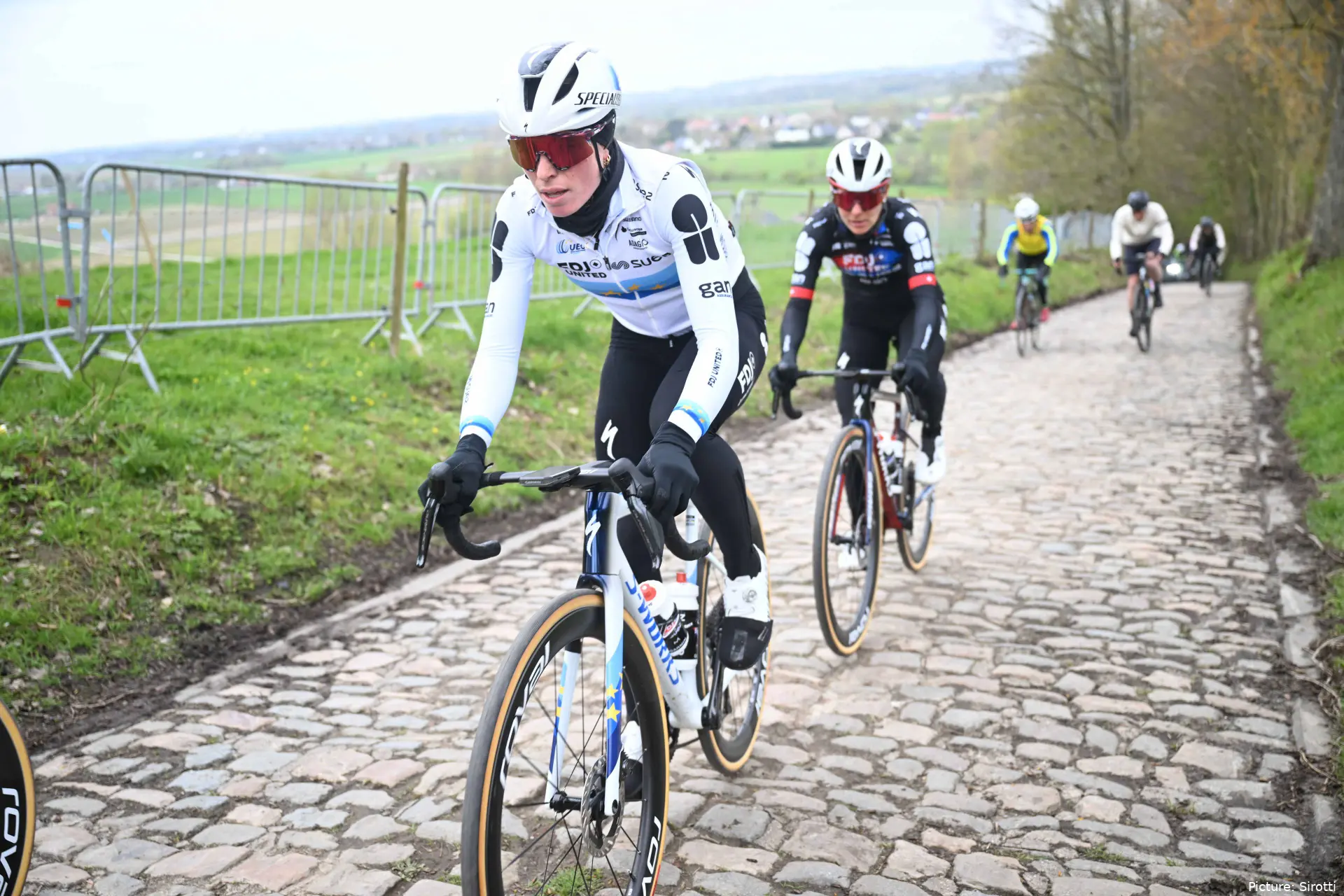
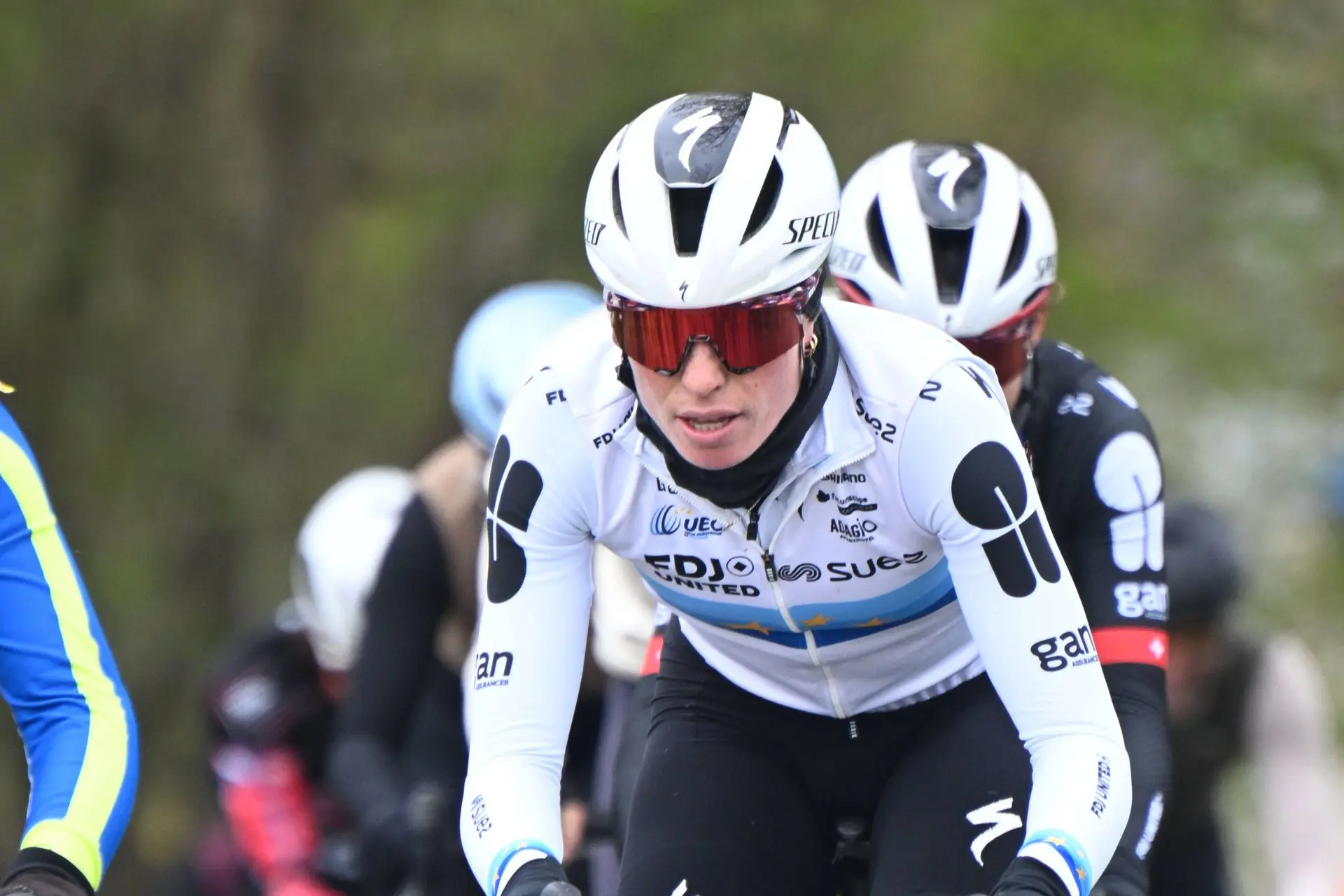
Demi Vollering delivered the defining performance of the 2026 Tour of Flanders Women, breaking clear on the Oude Kwaremont before riding solo to victory in Oudenaarde to secure the Monument that had long been missing from her palmares.
In a race that built gradually before exploding on the final sequence of climbs, the Dutch rider proved the strongest when it mattered most, turning a well-timed move into a decisive and controlled solo.
“I knew the Kwaremont suited me best”
The winning move came on the Oude Kwaremont, where Vollering committed fully on the opening slopes and immediately created separation. “It went differently than expected, but in the end everything falls into place,” she said afterwards. “I’m so proud of everyone and really very grateful. I knew the Kwaremont suited me best. On the first section, I went all in. I wanted to go as hard as possible all the way to the finish.”
That acceleration proved decisive. One by one, her rivals were distanced on the cobbles, with Pauline Ferrand-Prevot the last to follow before losing contact, while Puck Pieterse was forced into a chase behind. From that moment, the race was no longer about selection, but about consolidation.
A solo built on control and timing
Once clear, Vollering extended her advantage across the Paterberg and the run-in to Oudenaarde, riding with control rather than panic as the gaps behind stabilised.
The chase was never fully organised. Pieterse and Ferrand-Prevot emerged as the closest pursuers but were unable to reduce the deficit, while the group behind, including Lotte Kopecky, was left fighting for the minor placings. With each kilometre, Vollering’s advantage grew, turning a strong attack into a dominant victory.
Realisation comes late in Oudenaarde
Despite the clear gap, the significance of the moment did not immediately register. “Only in the final two kilometres did I realise it,” she said. “In the end, it all happens in your head. It all starts with a dream. You have to chase your dreams, no matter how hard and difficult it is.”
That late realisation underlined both the focus required to win a race of this scale and the significance of the result itself.
After a performance built on patience, positioning and a decisive move on the Kwaremont, Vollering crossed the line alone in Oudenaarde to finally add the Tour of Flanders to her list of major victories.
Kieran WoodDeputy Editor-in-Chief
Kieran Wood is a sports journalist based in Wales and has been active in journalism since 2022. He regularly contributes to DartsNews.com and CyclingUpToDate.com, where he covers professional cycling and darts. In cycling, his work includes liveblogs from major races, including the Tour de France, the Giro d’Italia, and La Vuelta a España, alongside race reports and analysis. He has also conducted interviews with professional riders.
His reporting spans the full racing calendar, from one-day classics to stage races, with a focus on accurate, real-time coverage and clear contextual analysis. For statistics, results, and historical context, he regularly uses resources such as ProCyclingStats. To support reporting on rider activity and training context where relevant, he also references Strava.
In his work, Kieran places strong emphasis on careful sourcing, editorial accuracy, and updating articles as new, verified information becomes available.
claps 0visitors 0
Just in
Popular news
Latest comments
- UAE was really badly positioned at the last climb, and Ineos did a great job of making that happen at the bottom. That must have affected del Toro and the rest. His attack wasn't spectacular, and they hadn't ripped apart the bunch enough, letting a large group remain in back to reel him in. UAW lost the race on the road to the climb and the bottom third of it, I think.RidesHills08-10-2026
- He won in exactly the same way as others. By being the fastest to complete the stages.mobk08-10-2026
- Very surprised del toro couldn't beat everyone here against lesser competition. He's well on his way to being top 5 in the worldbruins3008-10-2026
- Being the best rider left in the race is pretty much the only way to win in any edition, surely? Seems reductive to say "they only won because the entire peloton wasn't as absolutely stacked as it could've been" - you can only beat who is in front of you.wrsty08-10-2026
- I’m sorry but generally the coverage on your site is first class but this incident highlights something I just don’t get with cycling journalism. This accident should never have been allowed to happen, it comes uncomfortably close to the Finlay Tarling tragedy and two other incidents took place within days of this. I checked all of the cycling websites and you all put out basically the same story. Pidcock gave journalists the perfect opening to blow this sky high, what has the UCI got to say? What is Adam Hansen doing? What do the organisers say? Nothing, you all trot out the same easy quotes taken from Pidcocks interview after the race but do nothing to follow it up. I see it time and time again, journalists taking the easy way out but being outraged when it happens again as it surely will. Riders can’t do this but journalists should be independent and should be able to raise these uncomfortable questions but cyclinguptodate and every other on line publication prefer to take the easy way out. That’s the real tragedy here.Paul53108-10-2026
- Happy to help :-)Mistermaumau08-10-2026
- Well, ok but, it’s also a structural, team, budgeting, direction and all sorts of other issueMistermaumau08-10-2026
- I wouldn’t call it an analogy but maybe his criticism is a little unfair. On the other hand, the fact Cicco made a public affair out of it despite having received all the explanations and proof makes me feel he now deserves being criticised for not accepting there is nothing to discuss.Mistermaumau08-10-2026
- Much as I like him (one of my favourites), I do want to attract a little attention to the coincidence of his recent performances in the current context. Not the first time a rider improves noticeably when there’s a job interview to prepare. In the same lighthearted humour of his, i hope the UCI will let him wear it at home as the rules quite strictly state you can only wear it during participation in the discipline you won in, and we all know how capable they are of interpreting rule interpretation ;-) Also, if it’s going to be retirement (please not), I wouldn’t call that an agreement as somebody will probably feel they didn’t get what they wanted.Mistermaumau08-10-2026
- Agreed. There used to be a team willing to pay though. I take all these figures (that vary enormously according to who is publishing) with handfuls of salt. We don’t know how salaries are treated (especially between a UK employer and Andorran resident), we don’t know how numbers are derived and from where, if deductions have been taken into consideration, etc. but if he returns to Colombia, he’s going to need quite a bit in protection money.Mistermaumau08-10-2026
Loading
Write a comment