"He said it was privileged information, so I respected that" - Oliver Naesen admits he kept Van der Poel’s race revelation secret from his own team at In Flanders Fields
CyclingTuesday, 31 March 2026 at 12:00
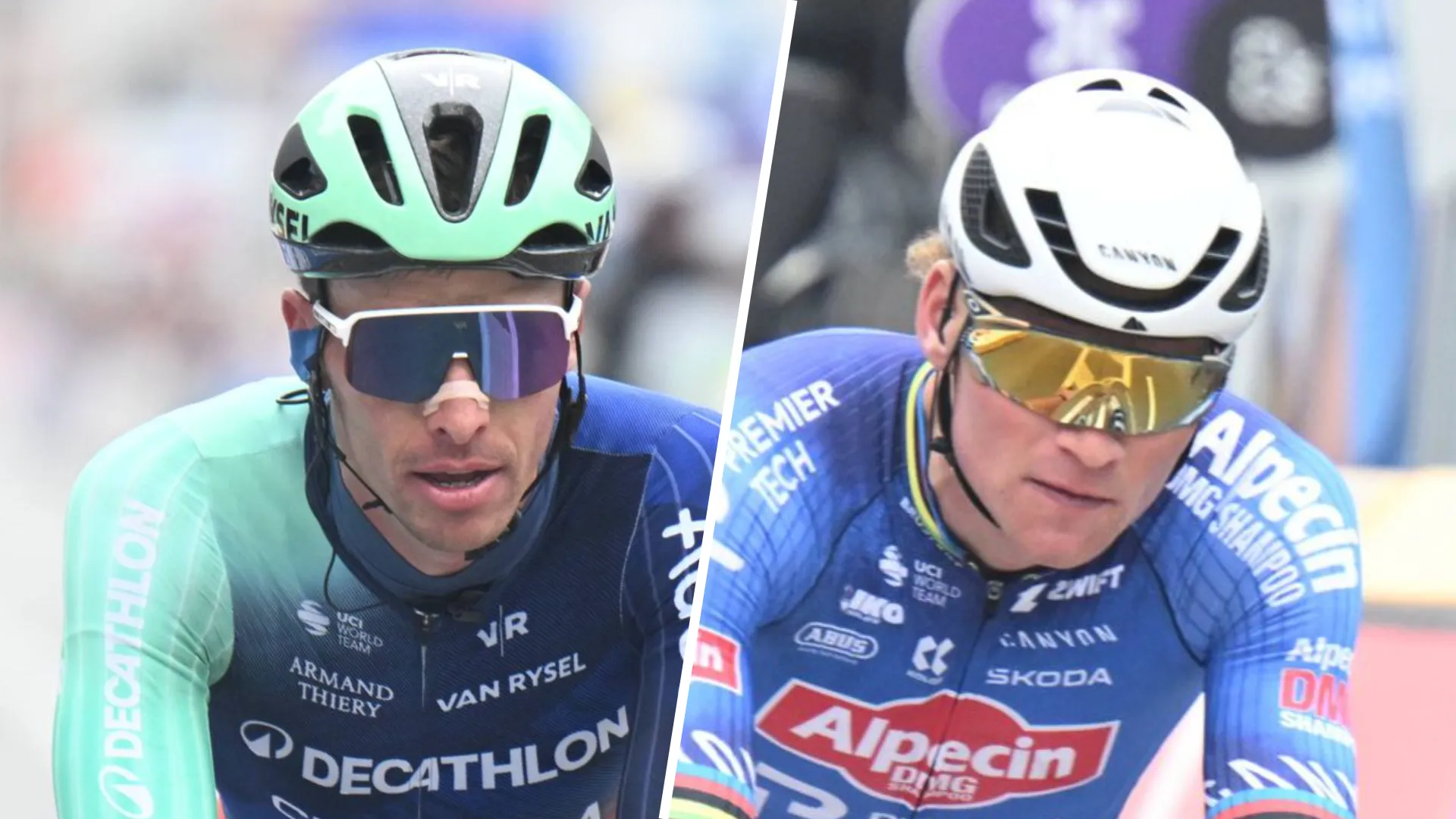
The decisive moment at In Flanders Fields may not have come on the Kemmelberg, but much earlier and in a far more unexpected way.
Long before the race reached its defining phase, Mathieu van der Poel had already made his intentions clear. Not publicly, not over the radio, but in a brief exchange within the peloton itself.
Oliver Naesen was one of the few riders to hear it. “At the entrance to one of the plugstreets, I looked to my right and said, ‘Mathieu, it would suit me if you didn’t attack immediately, I’ve just spent a lot of time in the wind,’” Naesen explained on the HLN Wielerpodcast.
The response was immediate. “‘No stress, we want to sprint,’” Naesen recalls. "That showed their plan was fixed in advance, and it immediately gave me confidence for the finale."
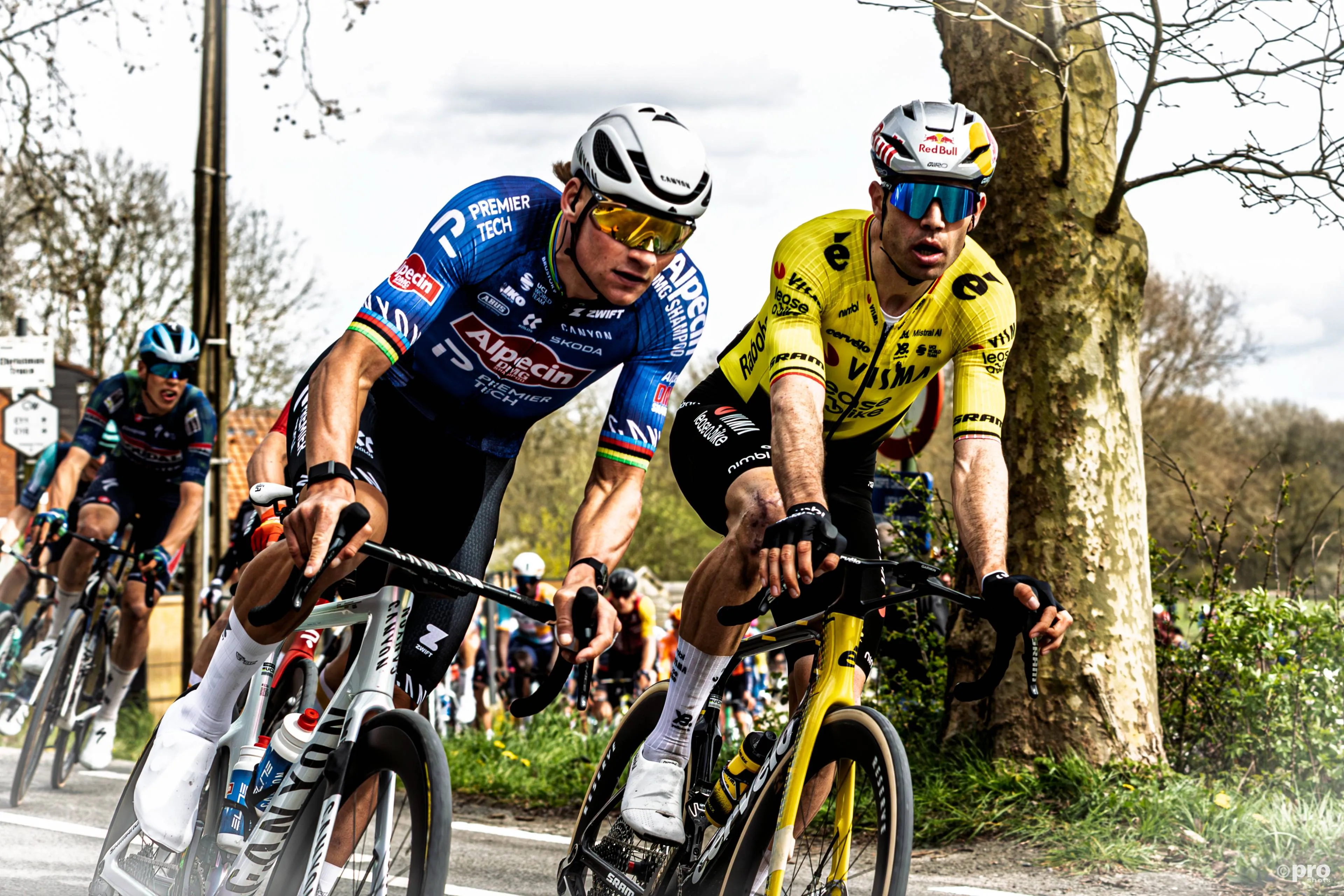
A plan revealed mid-race
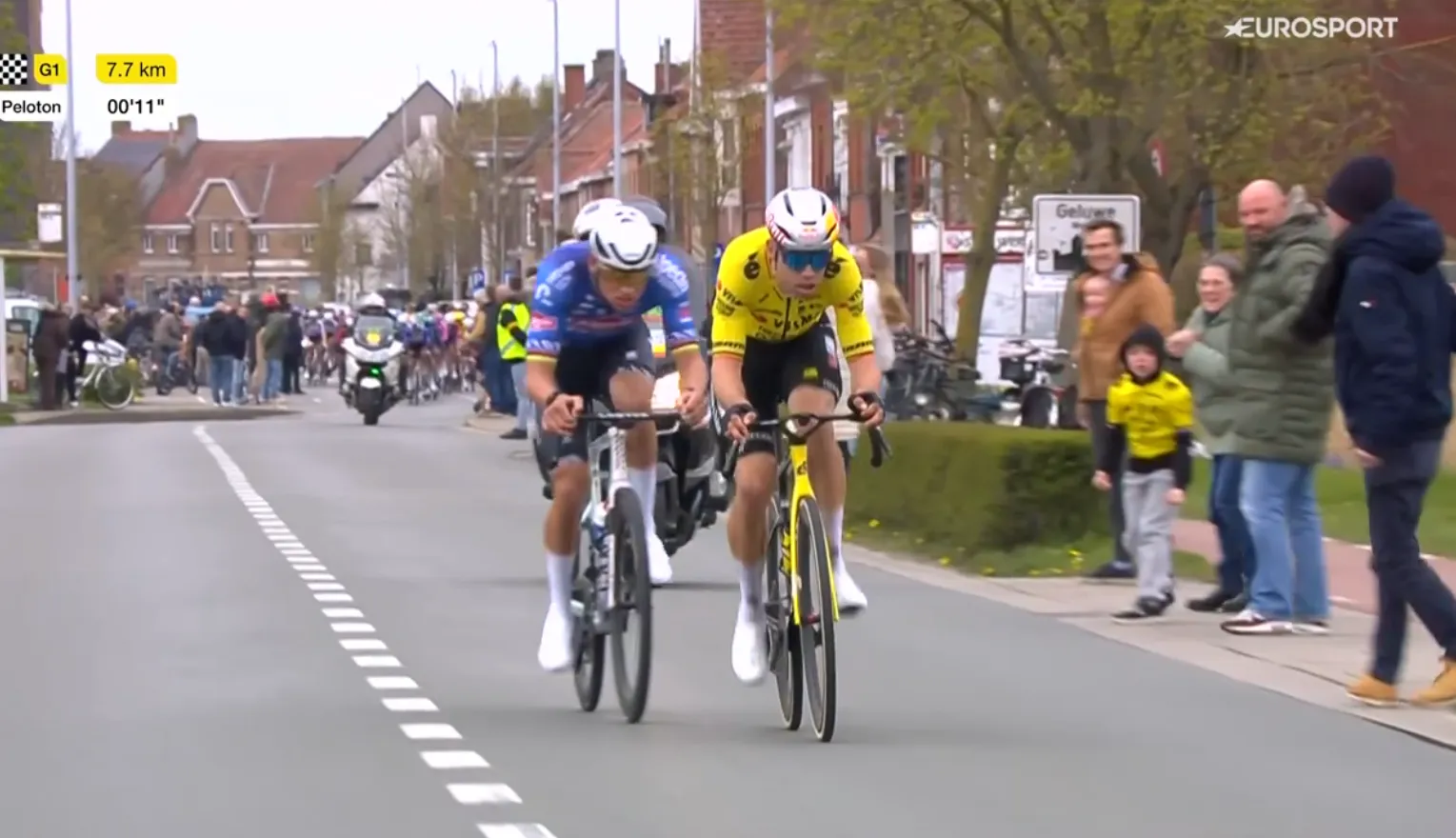
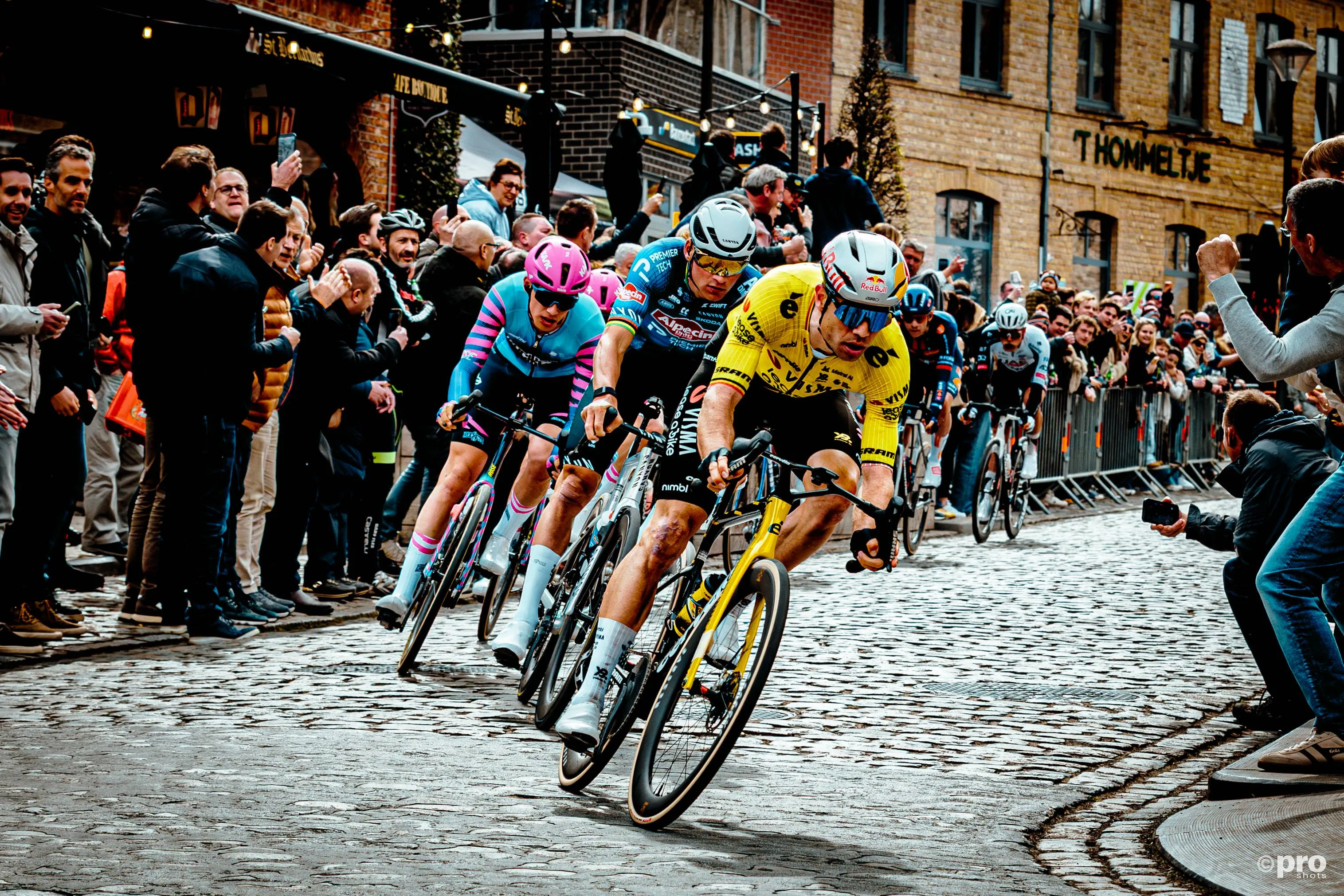
That short exchange now casts the entire finale in a different light. Van der Poel’s measured approach alongside Wout van Aert on the Kemmelberg, his reluctance to fully commit to the move, and the eventual regrouping that set up Jasper Philipsen’s sprint victory all align with a plan that, according to Naesen, had already been decided.
Even as the race appeared to be heading towards a two-man duel, the outcome that followed was already being shaped behind the scenes. That reading is also supported by Van der Poel’s own account after the finish, where he admitted: “In the break with Wout, I deliberately didn’t fully commit.”
Van Aert, too, recognised the dynamic as it played out on the road. “The cooperation with Mathieu was good, but he had the luxury that Philipsen was still behind him, which meant he could ride a bit more defensively towards the end. That was to my disadvantage and made the difference.”
Naesen, however, did not pass on what he had heard. “He said it was privileged information, so I respected that,” he admitted.

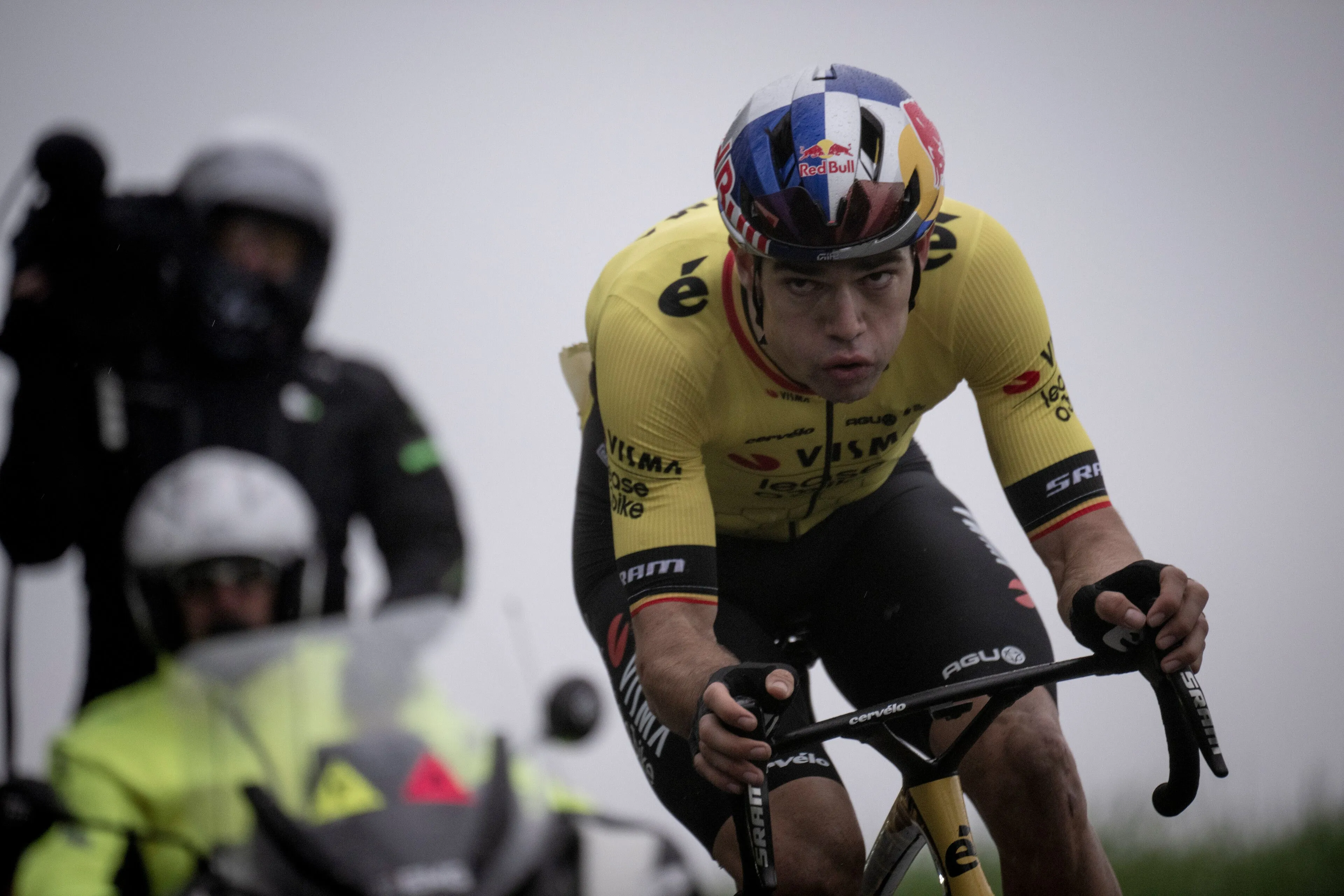
Wout van Aert and Mathieu van der Poel on the attack together
The information that stayed inside the peloton
That decision adds another layer to the story. Naesen was riding for the Decathlon CMA CGM Team, a team that still had a clear card to play in the finale with Tobias Lund Andresen. The Dane would go on to sprint to second place, underlining how close the team came to capitalising on the outcome that Alpecin-Premier Tech had been working towards.
Yet they approached the final phase without the full picture. Had that information been shared, would it have influenced how Decathlon and others approached the closing kilometres?
With Van der Poel effectively managing the move rather than committing fully, and with Philipsen positioned behind, the balance of the race had already shifted towards a sprint. Instead, the race unfolded without that insight being widely known within the peloton.
Respect, rivalry and consequence
Naesen’s decision not to relay the information reflects a different dynamic within the peloton, where personal relationships and informal exchanges sit alongside team tactics. His explanation was simple and rooted in respect rather than strategy.
That broader tactical picture was also touched on in the same podcast. Greg Van Avermaet noted: “You see that after the Kemmelberg he never really rode full gas anymore.”
At the same time, it raises an unavoidable question. In a race where margins are often measured in seconds and positioning, how valuable is information, and what happens when it is not shared?
At In Flanders Fields, the answer may lie in the fine line between a sprint for victory and a sprint for second place.
claps 1visitors 1
Just in
Popular news
Latest comments
- This is why I love cycling. There is so much strategy involved that makes it fun to watch. MvDP made sure Van Aert, the only person capable on winning the race ahead of the sprint was totally spent before the line and had no change to attack to the finish line.PogiFan2Day31-03-2026
- I think he done the wrong thing, he was thinking only of himself and acted with sheep mentality
 leedorney31-03-2026
 - Stop being a fool, we're talking about Catalunya 2026 and this years races... not about what hapenned last year or three years ago. Capish?Mou-Cro-HR31-03-2026
- In english it can be Pogachar. "Č" in slovenian is the same as "CH" (like Churchill or chicken) in english.Mou-Cro-HR31-03-2026
- It's a competitive race, not a friendly. Naesen should have relayed the information. He asked the question and it was van der Poel's choice to say that they wanted to sprint - he didn't need to. If Decathlon-CMA CGM had known, they may have committed to the chase more (without the knowledge, they were more focused on the podium). Because the van Aert and van der Poel were caught with only 900 m to go, and Segaert with 700 m to go, it made for a very chaotic finale. And in a chaotic final like that, the more experienced Jasper Philipsen excels. The younger Tobias Lund Andresen would have liked it more if the final was calmer - when the leadout is done well, he's had very big successes, such as beating Brennan, Philipsen and Milan. But the leadouts had already started before the catch was made, so it was a complex final. Lund Andresen does not lack the speed and I think he'd have won if Naesen had relayed the information. This is an example of the top riders' intimidation of the subconscious of lower riders. In a race decided by such fine margins, petty honour like this has no place. It is petty honour, not true honour, because van der Poel would not be able to criticise Naesen (imagine if he did - Mou would go after him)
 Rafionain-Glas31-03-2026
 - Death, taxes & Wout 2nd. Nothing will change.averagecyclist31-03-2026
- I wouldn't be surprised if both take place. If they do, Red Bull-BORA-hansgrohe would have, in their cobbled classics block: Jordi Meeus Christophe Laporte Maxim van Gils Arnaud de Lie Arne Marit Gianni Vermeersch Tim van Dijke Danny van Poppel Lawrence Pithie Finn Fisher-Black Gianni Moscon Jan Tratnik Mick van Dijke Haimar Etxeberria That's a seriously strong team. They'd lack a top notch rider but they'd have 4 or 5 at the next level down, and the collective to make something happen. And if they do, it'd be proof that the aliens can be beaten if you invest in itRafionain-Glas31-03-2026
- 6:36 with 7 summit finishes verses 2 summit finishes with 1:30? Add the fact that at the Tour Lipowitz was often more focused on dropping Onley rather than trying to follow Pogačar and Vingegaard (if he had, on numerous stages, pulled very hard after being dropped, with Onley in the wheel, it would not have been as effective as a few explosive attacks to drop him)? And the fact that Lipowitz is (obviously) on a steeper curve of improvement? Lipowitz is seen as a podium threat at the Tour. So is Ayuso. So is Seixas. So is del Toro. In that regard, they are all the same.Rafionain-Glas31-03-2026
- On that day, Ineos-Grenadiers (soon to be NetApp-Totalenergies) came very close to drawing level with UAE Team Emirates XRG in terms of total wins this year, but alas, they still have 14 while UAE have 17. Had Dorian Godon won the final stage of Catalunya, and Axel Laurance won the final stage of Coppi e Bartali and hence the GC, they'd have matched them.Rafionain-Glas31-03-2026
- Each rider/team is using tactics that best helps them win, Remco included, nuff said.awp31-03-2026
Loading
3 Comments