“He is calm, but he is greedy” - Jonas Vingegaard’s ruthless streak laid bare as Giro d’Italia rivals search for weakness
Cycling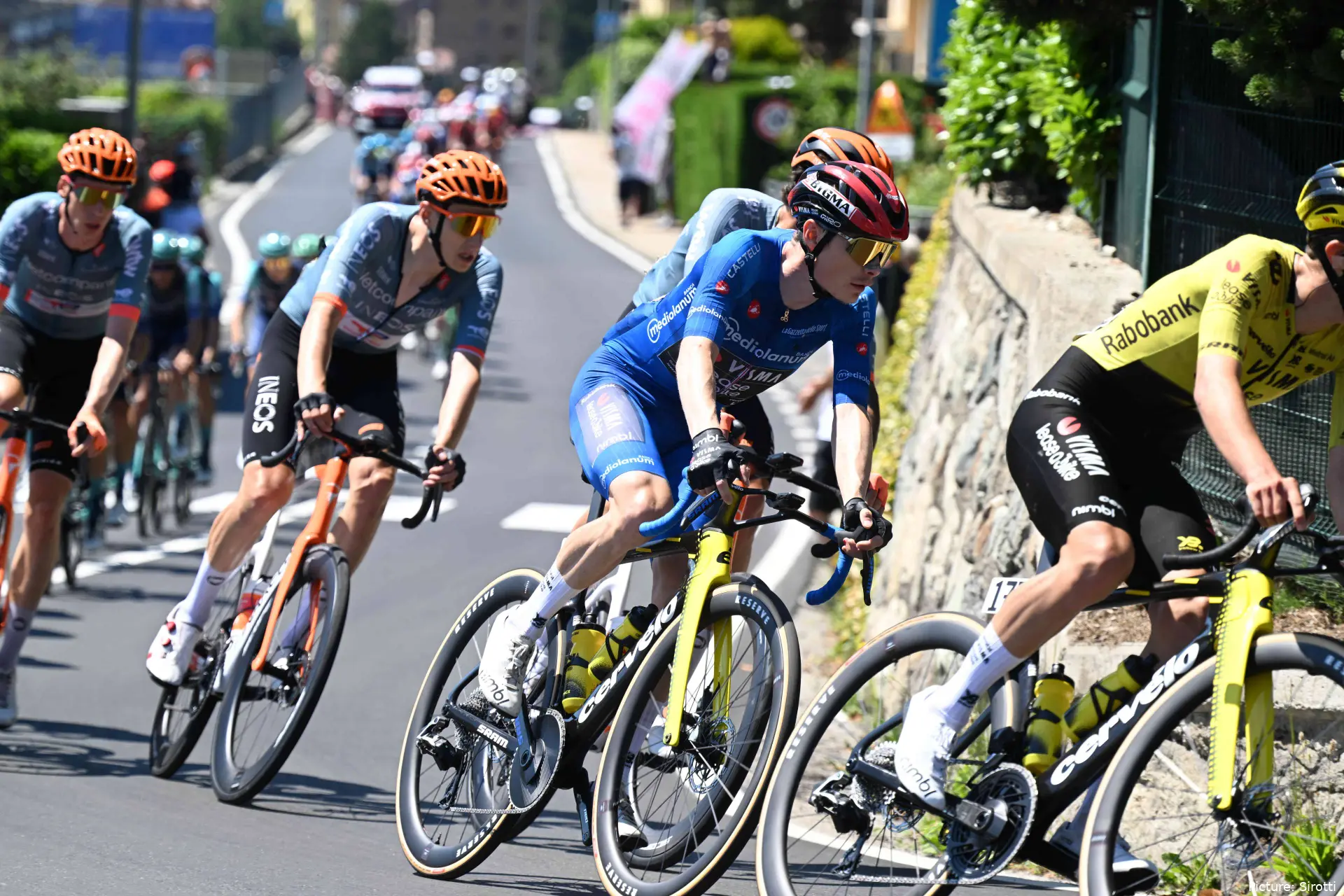
Jonas Vingegaard’s rivals are still looking for the weakness. Former leadout supremo and Danish national coach Michael Morkov sees something else entirely: a rider who looks calm, races with patience, and strikes the moment the door opens.
“He is calm, but he is greedy,” Morkov said on Eurosport Denmark. “As soon as someone plays the ball up to him, and there is a chance to win bike races, he strikes.”
Vingegaard has not steamrolled this Giro d’Italia. Afonso Eulalio still has pink, Thymen Arensman has moved into podium contention, and questions have followed Team Visma | Lease a Bike through the second week.
But the Dane has already won twice, stayed close, and kept the race within range of his best terrain.
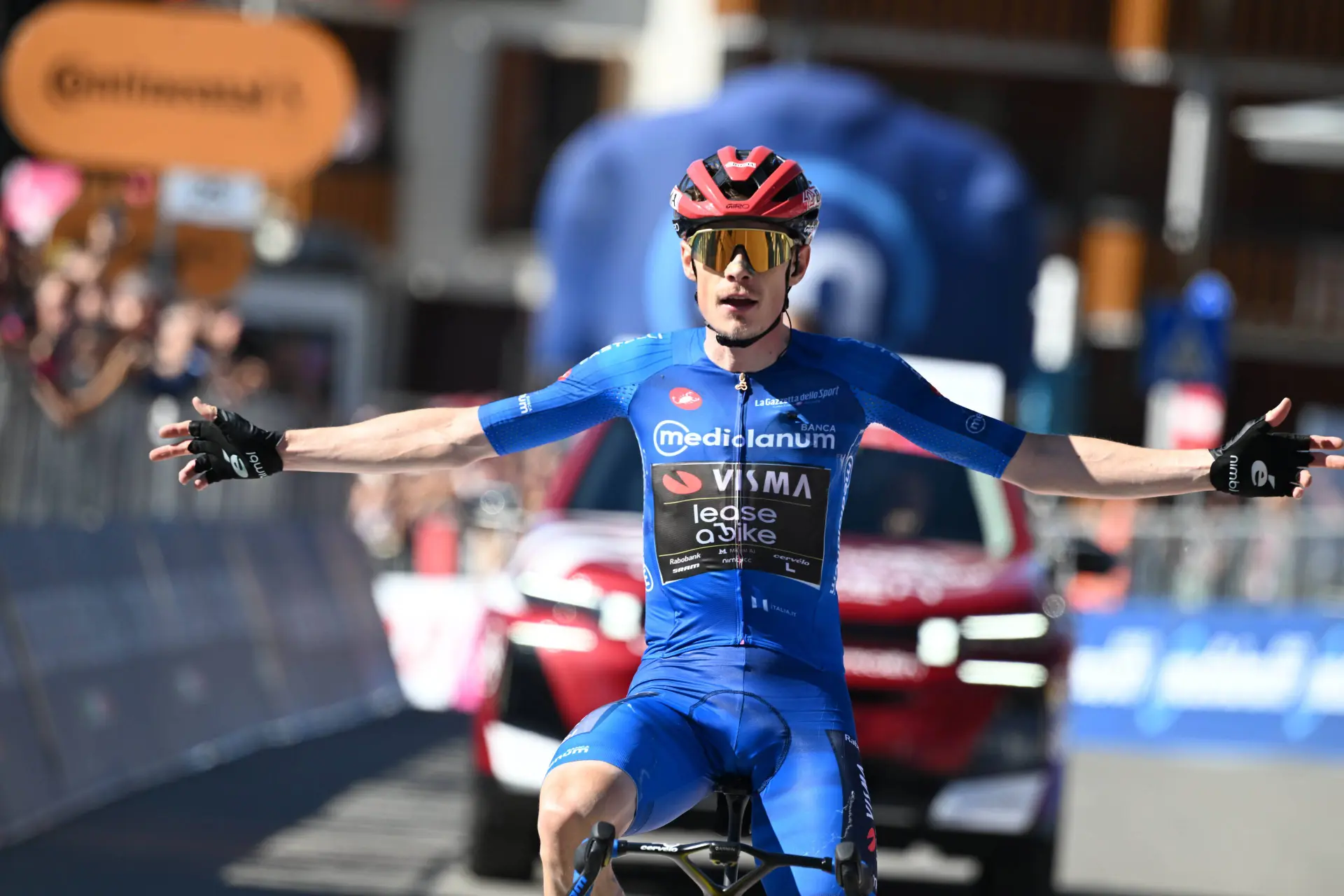
Calm outside, ruthless underneath
Vingegaard’s racing style has been picked apart throughout this Giro. At times, he has been accused of waiting too long. At others, his patience has looked like control. The difference often only becomes clear at the finish.
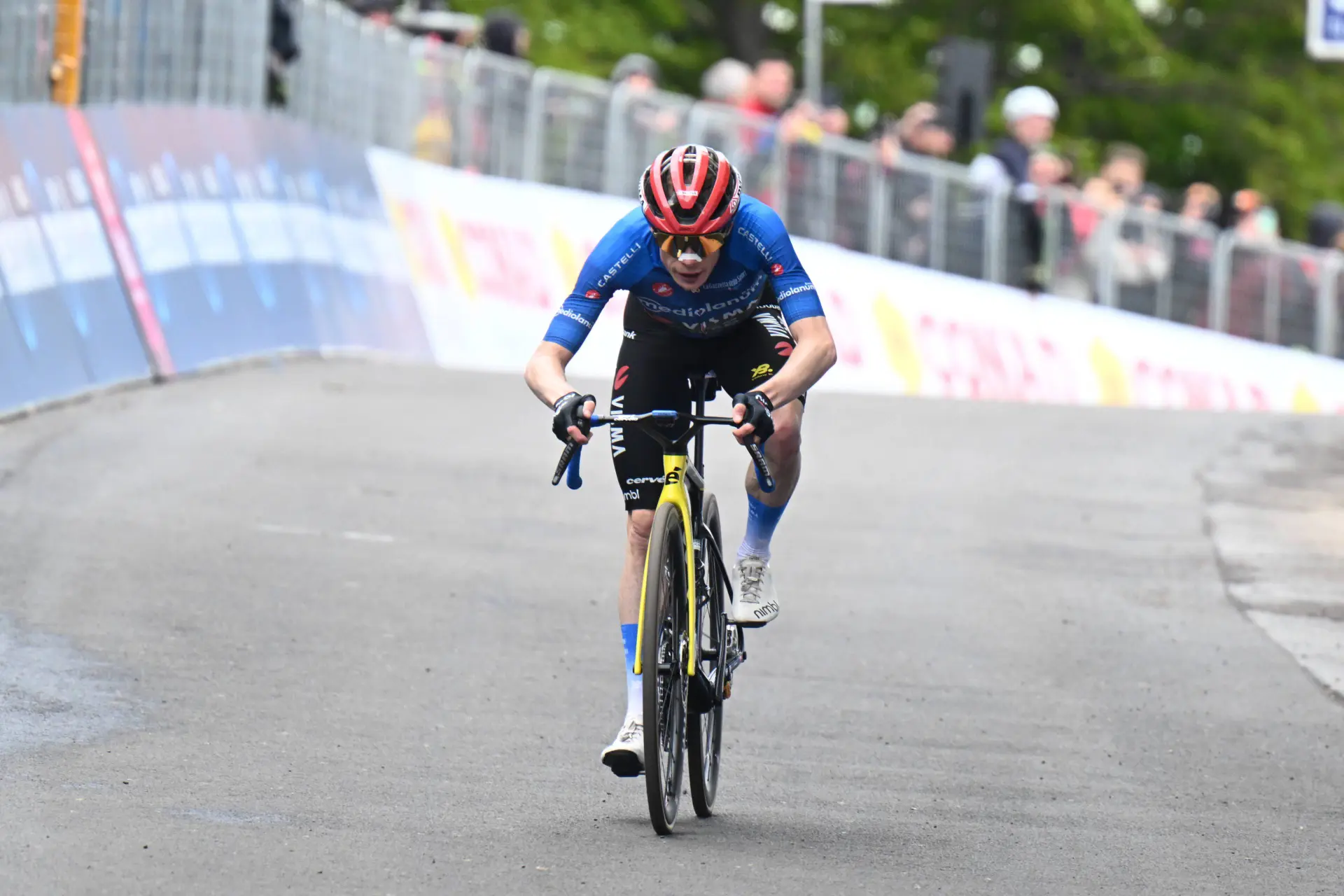
Morkov’s view is that Vingegaard does not need to look aggressive all day to be dangerous. His strength is in spending as little as possible until the moment arrives. “He is incredibly aware of when he uses his energy,” Morkov said. “He is good at sitting on the wheel, saving his strength and knowing when his moment has arrived.”
That has already been visible in this Giro. Vingegaard has not dominated every key day, and his long time trial raised more questions than answers. But when the road has suited him and the race has opened, he has punished hesitation.
For Jesper Worre, Vingegaard’s composure is one of his clearest assets over three weeks. “He is a calm person, and he always shows calm,” Worre said. “That is pretty fantastic, because there are a lot of good riders who panic. With the pressure that is on for three weeks, he can walk around calmly and show confidence.”
More than a pure climber
The Giro narrative around Vingegaard naturally returns to the mountains, but Morkov and Worre both pointed to a broader toolkit. His advantage is not only what he can do on the steepest gradients. It is also how rarely he wastes energy before he gets there.
Worre linked that to Vingegaard’s development in Denmark, where flat roads, wind and bigger rivals shaped him long before he became a Grand Tour winner. “He has been racing bikes since he was 10 or 11 years old, and he has taken a lot of beatings on the bike,” Worre said. “He has raced against riders who were bigger than him, and Denmark is flat and windy. That has also made him an incredibly skilled cyclist technically.”
Morkov went even further on that side of Vingegaard’s profile. “Jonas is one of the best technical and tactical cyclists in the world,” he said. “He has constantly had to perform on the flat against riders who were 10 to 20 kilos heavier than him. That has made him insanely good.”
Positioning, descents, illness, time trials, sprint-stage chaos and team control have all shaped this Giro. Vingegaard’s rivals may look for weakness in the mountains, but his ability to survive and save energy elsewhere remains central to the way he races.
Visma give him the platform
Morkov also pointed to the environment around Vingegaard. Visma have not had a flawless Giro, with illness touching the camp and the maglia rosa still out of reach after two weeks. But the team remains built around one objective.
“He rides for one of the world’s best and best organised cycling teams, where everything is built around him,” Morkov said. “Everything from how he sits on the bike, what equipment is used, the preparation work by the sports directors and seven riders who are dedicated to Jonas and to winning overall.”
That structure gives Vingegaard room to stay calm. It also gives him options. Visma can control, wait, tighten the race, or use their climbing depth before their leader makes the final decision.
Morkov’s view of Vingegaard’s physical profile is just as direct. The Dane may be light, but he is not fragile. “Jonas is fantastically built for bike racing. He is a small guy, weighs under 60 kilos, has a small upper body, but a big chest. That tells you he has a very, very large lung capacity,” he said.
“Despite his small body, he actually has quite long legs and good muscles in his legs, which makes him explosive. Long legs as a cyclist also mean you can push some big gears and ride fast on your bike.”
The Giro has not yet given Vingegaard everything he wanted. Eulalio still has pink, Arensman is close enough to remain a serious problem, and the final week is still loaded with risk. Vingegaard’s rivals have seen the calm. Morkov’s warning is that the greed is still there too.

Kieran WoodDeputy Editor-in-Chief
Kieran Wood is a sports journalist based in Wales and has been active in journalism since 2022. He regularly contributes to DartsNews.com and CyclingUpToDate.com, where he covers professional cycling and darts. In cycling, his work includes liveblogs from major races, including the Tour de France, the Giro d’Italia, and La Vuelta a España, alongside race reports and analysis. He has also conducted interviews with professional riders.
His reporting spans the full racing calendar, from one-day classics to stage races, with a focus on accurate, real-time coverage and clear contextual analysis. For statistics, results, and historical context, he regularly uses resources such as ProCyclingStats. To support reporting on rider activity and training context where relevant, he also references Strava.
In his work, Kieran places strong emphasis on careful sourcing, editorial accuracy, and updating articles as new, verified information becomes available.
claps 1visitors 1
Just in
Popular news
Latest comments
- Could we give Seixas time to be Seixas and not make comparisons too soon? Maybe it’s my age speaking, but he’s a mere 20, barely started. Sure, a phenom, but so young. Will he win 8 Monuments like van der Poel so far, will he win 4 grand tours like Vingegaard? Those have been the two seconds to Pogačar’s first, since covid. Yes, there’s an eventual changing of the guard, but Seixas will need time to build the palmares to make his case. Might we please give him that time (while we enjoy the hell out of his riding)?RidesHills15-10-2026
- You've been dropped multiuple times from this site LOL !frieders315-10-2026
- 'Seixas will never each Pogi's level?' WTF...you have a crystal ball or you just blowing more smoke here !frieders315-10-2026
- lol great point, but the riders have to do something. I know these are open roads, lots of cars, but these is not good for the riders of course.mij15-10-2026
- its kind of hard to believe that standing at the starting line in protest, at a race that didn't have a saftey issue, hasn't fixed the problem......jad2914-10-2026
- Comparing young riders to greats leaves them open for failure and disappointment. At one time, Moscon was compared to Boonen by his team and it turned out nothing like that. Currently its a very crowded space especially with Pogi wining everything.abstractengineer14-10-2026
- This is crazymij14-10-2026
- This is crazymij14-10-2026
- This is crazymij14-10-2026
- problem is they are not stacked at all with most of their stars declining. Behind jonas they basically have zero climbers of top tier quality its insanely bad.miguel14-10-2026
Loading
Write a comment