“I’ve just seen the images. Typical Mathieu” – Florian Vermeersch hails Van der Poel brilliance after Omloop Het Nieuwsblad showdown
Cycling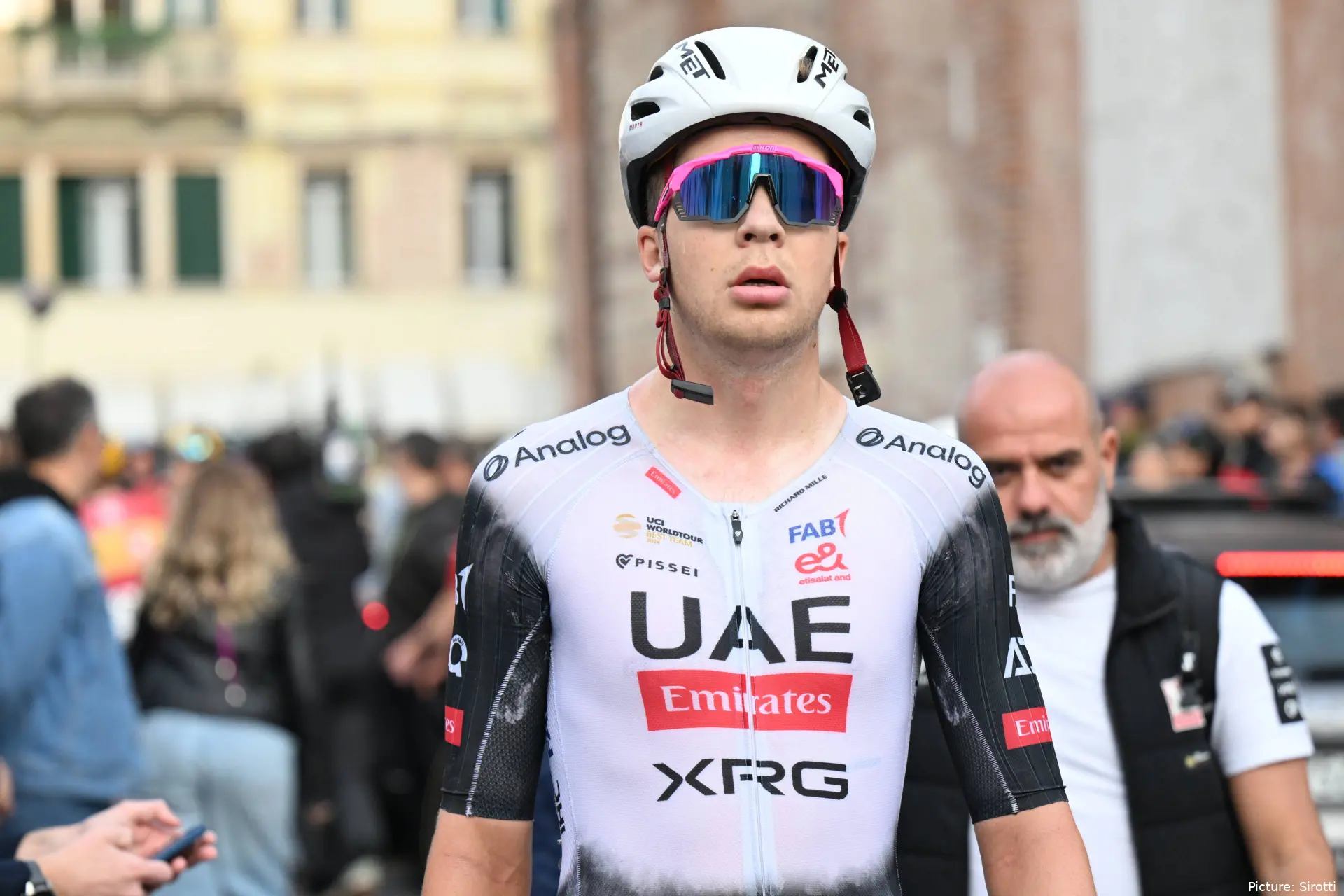
For a brief moment on the Molenberg, it looked like Omloop Het Nieuwsblad 2026 might belong to Florian Vermeersch.
The UAE Team Emirates - XRG rider had forced the move, committed early, and found himself clear with Mathieu van der Poel at the front of the race. It was the defining split of the afternoon. Behind them, chaos reigned.
And yet, by the time the line in Ninove arrived, Vermeersch stood on the third step of the podium.
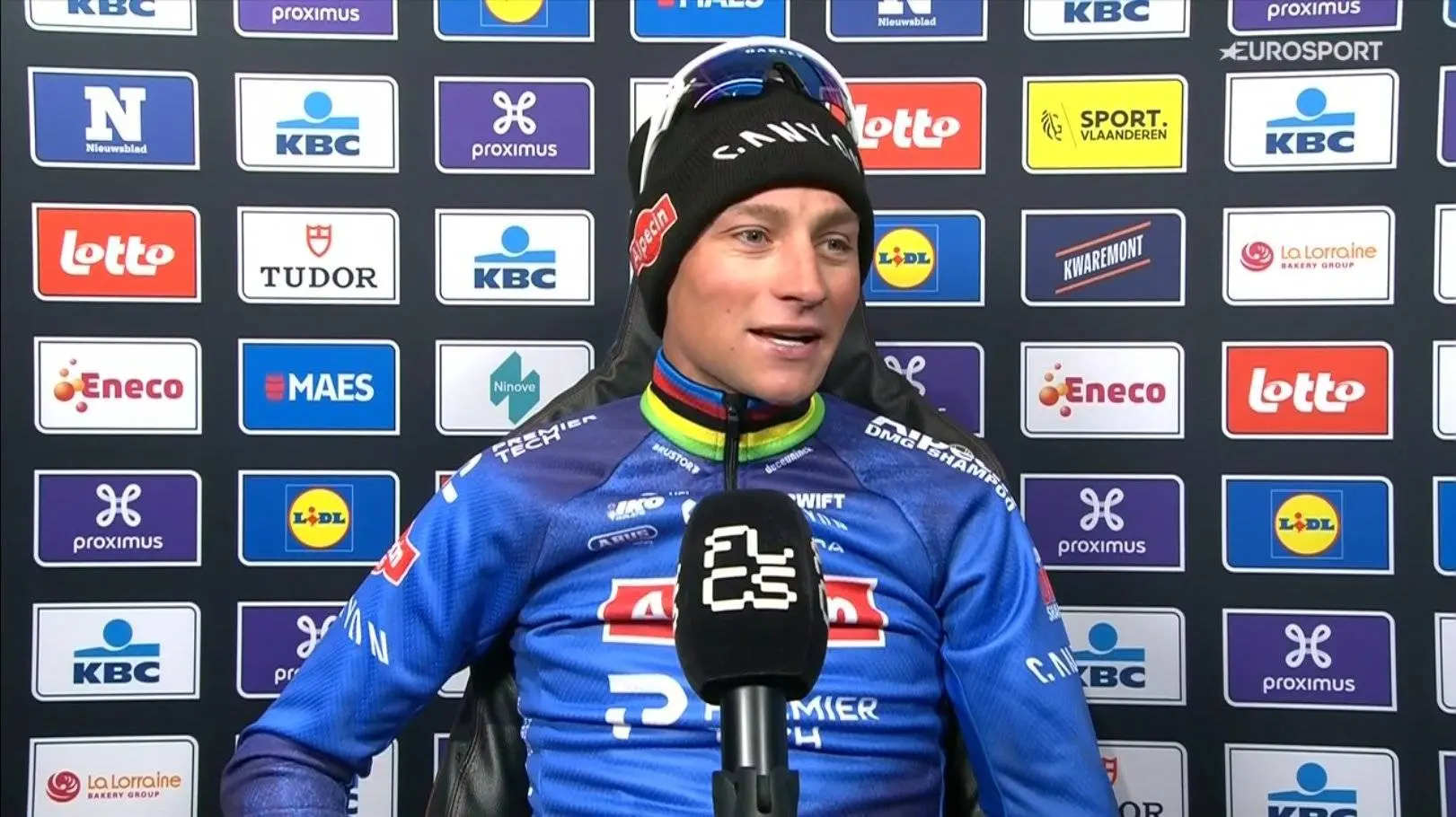
Not disappointed. Not resigned. But realistic. “I’ve just seen the images. Typical Mathieu,” Vermeersch said afterwards, reflecting on Van der Poel’s extraordinary save during the Molenberg crash, in comments reported by Sporza. “I wouldn’t have been able to do that myself.”
From misfortune to momentum
Vermeersch’s race had not unfolded smoothly. “I was in trouble in the first half after a crash and a bike change,” he explained. “I narrowly avoided going down a few more times, and I had the feeling I was on the wrong side of the peloton.”
The conditions were treacherous all afternoon. Crosswinds split the field repeatedly. The cobbles were slick. Positioning was everything.
Vermeersch made a conscious adjustment. “I said to myself that I didn’t want to drop out of the first twenty positions anymore, because you win the race at the front. On the Molenberg, I definitely wanted to hit it first, and then at the top, we would see what the damage was.”
He did more than measure the damage. He caused it.
When the peloton hit the Molenberg, Vermeersch drove the pace. A crash erupted behind him. Van der Poel somehow stayed upright, vaulted clear, and bridged across. Tim van Dijke soon joined them, forming the trio that would shape the finale.
“I was surprised for a moment when Mathieu and I were away together, but I didn’t hesitate for a second,” Vermeersch said. “You don’t get many chances like that, and you have to take them.”
At that point, the race was alive with possibility.
“Naturally, I was thinking about winning, but above all, I wanted to race without regrets. I did that. There’s no shame in Mathieu being the strongest.”

The Muur and the mechanical
The decisive blow came on the Muur van Geraardsbergen.
Van der Poel attacked with force on the cobbled slopes. Vermeersch tried to respond but ran into trouble at precisely the wrong moment. “I wanted to shift onto the inner ring, but my chain got blocked for a moment. The cramps kicked in, and I couldn’t close the gap anymore.”
It was the crack in the door Van der Poel needed. Over the top, the Dutchman had daylight. The Bosberg only extended it. “That’s a bit of a shame, but Mathieu was the strongest anyway. The gap might have been a bit smaller, but it is what it is. It wouldn’t really have made the difference.”
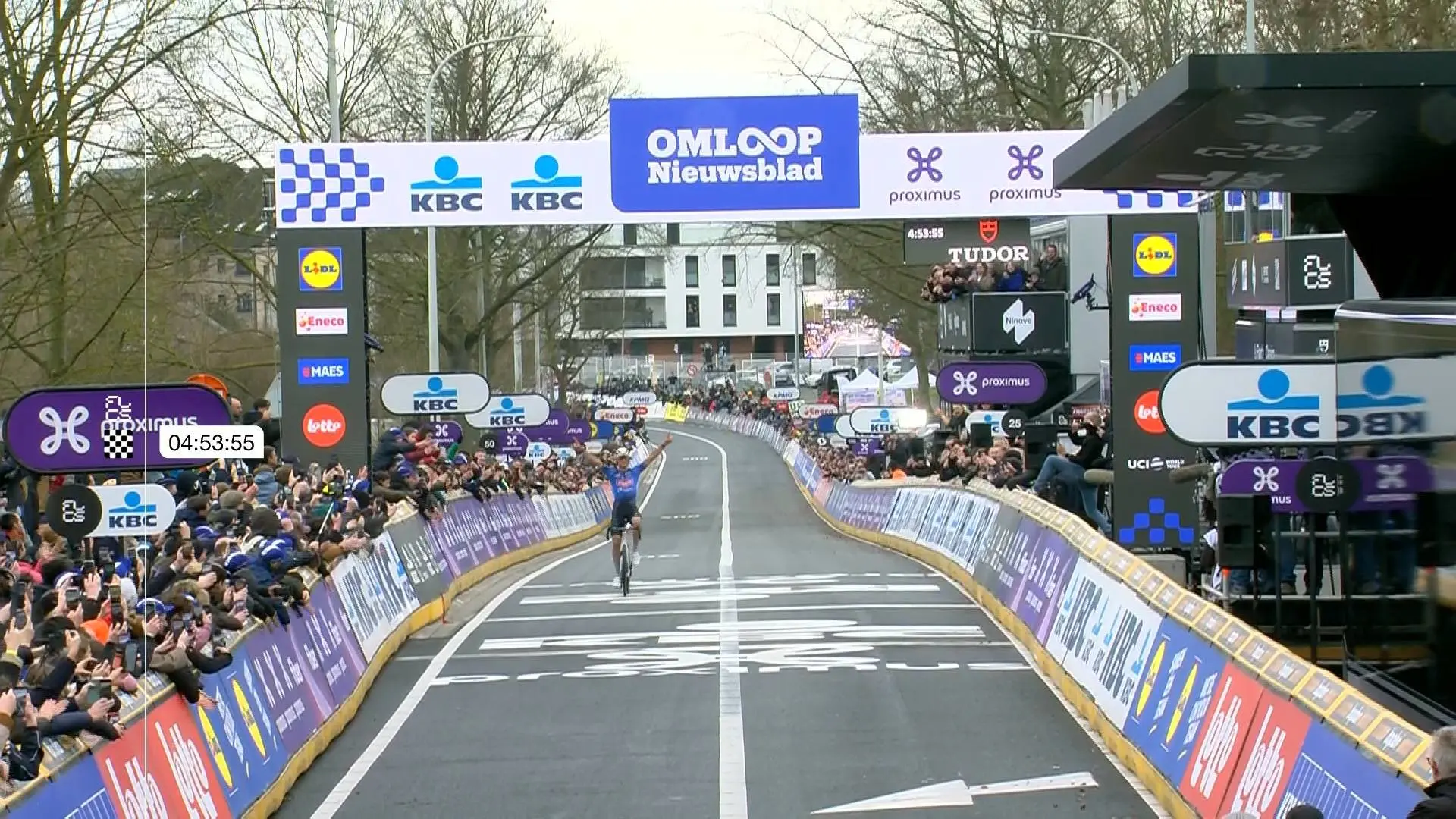
Behind Van der Poel, the podium was still up for grabs. Vermeersch and Van Dijke committed fully in the final kilometres, riding clear of the fragmented chasers and securing second and third behind the solo winner.
For Vermeersch, third place carried clarity rather than frustration. “I can live with the result, but even more with the feeling. I came here to win, and I put all my cards on the table. I’m satisfied with my race.”
He had attacked early. He had taken risks. He had forced the race open. He had gone head-to-head with the strongest rider in the world on terrain that rewards conviction.
On this occasion, that rider was Van der Poel. And as Vermeersch acknowledged with a wry smile after watching the replay, sometimes you simply encounter something exceptional. Typical Mathieu.
Kieran WoodDeputy Editor-in-Chief
Kieran Wood is a sports journalist based in Wales and has been active in journalism since 2022. He regularly contributes to DartsNews.com and CyclingUpToDate.com, where he covers professional cycling and darts. In cycling, his work includes liveblogs from major races, including the Tour de France, the Giro d’Italia, and La Vuelta a España, alongside race reports and analysis. He has also conducted interviews with professional riders.
His reporting spans the full racing calendar, from one-day classics to stage races, with a focus on accurate, real-time coverage and clear contextual analysis. For statistics, results, and historical context, he regularly uses resources such as ProCyclingStats. To support reporting on rider activity and training context where relevant, he also references Strava.
In his work, Kieran places strong emphasis on careful sourcing, editorial accuracy, and updating articles as new, verified information becomes available.
claps 4visitors 4
Just in
Popular news
Latest comments
- Bravo Paul Seixas!!! It just goes to show what BS UAE and Del Toro are without Pogi. It just goes to show that Remco "the great" is not great. Did he win the WC? NO!!! Is he going to win Il Lombardia-a Monument? NO!!! He won a BS second class race in Slovenia (my country), but when it comes to the "big boys" he's nothing (not including ITT). In the end of the cycling season 2026, we can all see why Pogi is THE GOAT...and we can all see a new rising star PAUL SEIXAS. Everything else is a sad sad story. PS: Remco's two big goals at the end of the season were: The WC in the road race and the Monument Il Lombardia. He won NOTHING!!! Ad acta!!!PogiSloFans10-10-2026
- And, if I’m correct, the first monument win for this legendary team which I still call AG2R with their garish brown shorts ;)anonymouscyclist10-10-2026
- Seixas just raced a splendid race, with timing and patience and leveraging the work of all the other teams - Yates led him out beautifully, oops. A beautiful ride, truly showing off what was made clear at Strade Bianchi and Liége-Bastogne-Liége. Well deserved champion, and a new first time Monument winner for the first time in quite a while (Philipsen 2024)!RidesHills10-10-2026
- Phwoar… Chapeau Seixas. Chapeau. Taking Lombardia today has all the makings of a generational breakthrough. I have a feeling we’ll be looking back at this win as his career-defining moment.anonymouscyclist10-10-2026
- Is Del Toro goin to sh*t his pants back there???? Yep...he sh*t his pants!!!PogiSloFans10-10-2026
- Imagine being a cycling analyst and not knowing off the top of your head, a handful of riders who wanted to do the very thing he is saying no rider has ever wanted to do. There are many riders, both men and women, who choose to take a break, and spend more time with their family. Jonas, WvA, Carapaz, and Lizzie Deignan come to mind. Give me a break.anonymouscyclist10-10-2026
- Enter Paul Sexias, Bye Remco no ballsabstractengineer10-10-2026
- Bravo Seixas!!! It just goes to show what BS UAE and Del Toro are without Pogi. It just goes to show that Remco "the great" is not great. Did he win the WC? NO!!! Is he going to win Il Lombardia-a Monument? NO!!! He won a BS second class race in Slovenia (my country), but when it comes to the "big boys" he's nothing (not including ITT). In the end of the cycling season 2026, we can all see why Pogi is THE GOAT...and we can all see a new rising star PAUL SEIXAS. Everything else is a sad sad story.PogiSloFans10-10-2026
- This aged badly…anonymouscyclist10-10-2026
- Come on Seixas! This will be transforming for the young Frenchman’s career if he wins this…anonymouscyclist10-10-2026
Loading
Write a comment