From a Tour de France winner to African trailblazers, stage-winning sprint stars to KoM kings — these are all the riders retiring in 2025
Cycling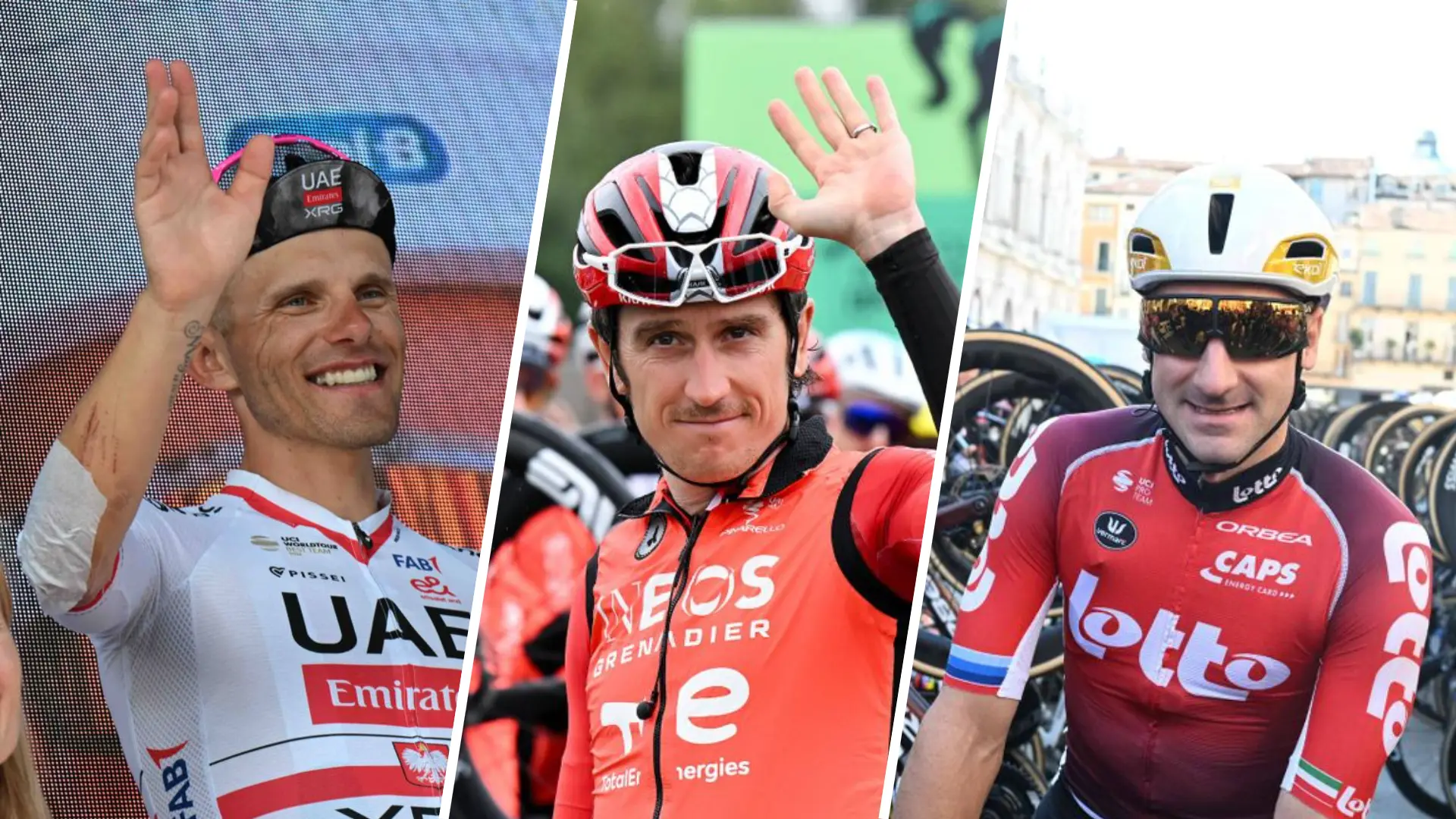
When the curtain falls on the 2025 season, it won’t just mark the conclusion of another year of racing — it will mark the end of an era. Forty riders are confirmed so far to be hanging up their wheels this year, a cohort that together shaped modern cycling: from Sky’s industrial dominance to the free-flowing chaos of the Pogacar generation.
Their combined careers span more than two decades, hundreds of victories and countless hours of untelevised work for others. This isn’t just a retirement list — it’s the collective goodbye of a generation that carried the sport from marginal gains to data-driven spectacle without losing its humanity.
The headline names — 10 riders who defined the era
Geraint Thomas — the everyman who conquered the Tour
For Geraint Thomas, the road to yellow was anything but straightforward. He began as a pursuit specialist, winning Olympic golds on the track before reinventing himself as a classics rider, and finally as a Grand Tour champion.
His 2018 Tour de France victory was the culmination of years spent in the service of others, a breakthrough that transformed him from perennial lieutenant to national hero. Even as younger rivals emerged, Thomas kept finding new ways to stay relevant: third at the 2022 Giro, runner-up in 2023, and still animating races into his late thirties.
He leaves as the last living bridge between the Sky machine and the modern INEOS ethos — measured, articulate, and utterly dependable.

Thomas waved goodbye at the Tour of Britain in Cardiff
Romain Bardet — the romantic climber who carried France’s hope
Few riders embodied the spirit of attacking purity like Romain Bardet. His rise coincided with France’s desperate search for a Tour champion, and for a while, he seemed destined to fill the void. Second overall in 2016, third in 2017, he became the emotional core of the nation’s July obsession.
Bardet’s descents were artistry, his interviews poetry — thoughtful, articulate and occasionally raw. In 2024, at 33, he finally took yellow for the first time, winning Stage 1 in Rimini to the delight of a nation that had grown up watching him try.
His retirement in 2025 doesn’t feel like defeat; it feels like closure — the end of the most soulful chapter in modern French cycling.

Bardet stepped off at the Criterium du Dauphine
Caleb Ewan — speed, chaos and sudden silence
There was a moment when Caleb Ewan looked unstoppable. Tiny, aerodynamic and fearless, he could win on any road, anywhere, against anyone. He completed the Grand Tour triple before turning 27, matching legends in pure finishing power. But sprinting is cruel.
A violent crash on Stage 3 of the 2021 Tour changed his momentum, and by 2023 his once-perfect timing had deserted him.
When he quietly announced his retirement at 30, there was no farewell lap — just a sense of disbelief. Ewan’s name will forever evoke that low-slung sprinting posture and the heart-stopping milliseconds that made him, briefly, the fastest man alive.

Caleb Ewan ended his career with a short-lived spell at the INEOS Grenadiers
Louis Meintjes — Africa’s quiet metronome
While flashier names stole headlines, Louis Meintjes built a career on consistency. He finished in the Tour’s top ten five times, podiumed stages at the Vuelta, and did it all without theatrics or controversy.
His calm manner and refusal to court attention made him an outlier in an age of social-media self-promotion. When he confirmed Il Lombardia would be his final race, it was with the same understated dignity that defined his career.
He leaves as Africa’s most reliable Grand Tour rider — proof that patience and quiet persistence can still find their place in modern cycling.
Alexander Kristoff — the last of the old-school hardmen
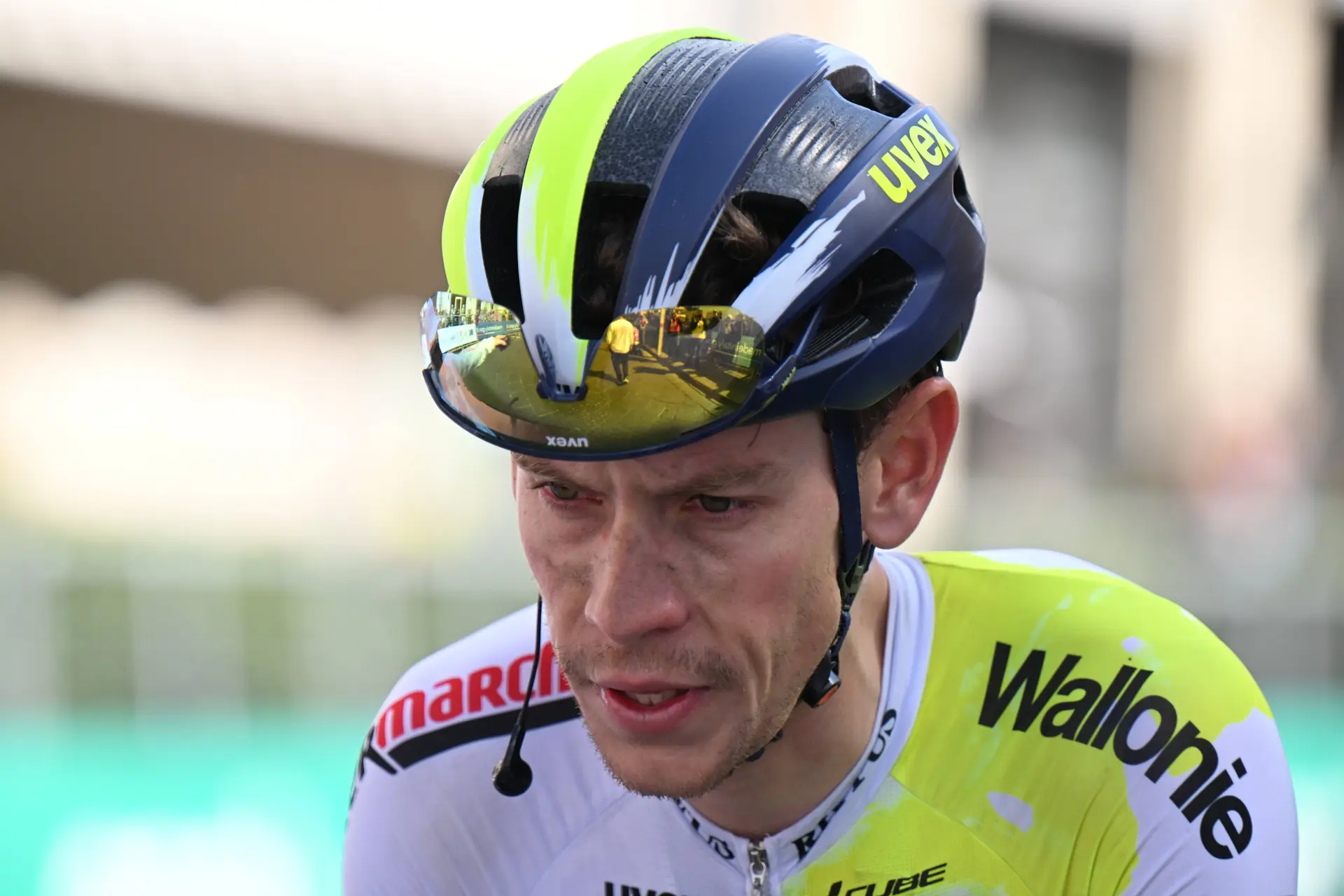
Before watts, before wind-tunnel skinsuits, there were riders like Alexander Kristoff: big, stoic, relentless. He was a sprinter who could survive Flanders, a classics specialist who could still win bunch sprints.
Milano–Sanremo 2014, Tour of Flanders 2015, four Tour stage wins — each was a masterclass in timing and brute power. When he took yellow after Stage 1 of the pandemic-delayed 2020 Tour, Norway celebrated a folk hero.
His twilight years at Uno-X turned him into a mentor, helping launch the next generation of Nordic pros. With his retirement, Europe loses one of its last true cobbled gladiators.

Kristoff has been an integral part of Uno-X's rise to World Tour status
Michael Woods — the runner who became a poet on two wheels
Michael Woods’s story is one of reinvention. Once a promising middle-distance runner, he rebuilt himself into one of cycling’s most elegant climbers after a career-ending foot injury.
He carried that runner’s mentality — all pain, all perseverance — into every breakaway. Three Vuelta stages, the Puy de Dôme in 2023, and a World Championship bronze all came the hard way. But it was his vulnerability, his honesty in defeat, that earned him admiration.
Woods leaves as a rare athlete who made suffering sound like art — the most human storyteller the peloton ever produced.

Woods posing ahead of his final Tour de France earlier this summer
Rafal Majka — the perfect mountain lieutenant
In another timeline, Rafal Majka might have been a multiple Grand Tour podium finisher.
Two Tour de France mountains jerseys, a brace of Vuelta stages and an Olympic bronze prove the talent was there.
But Majka chose a different path: to serve.
His partnership with Tadej Pogacar turned him into a legend of self-sacrifice, the silent shadow pacing the world’s best up Alpine climbs.
He retires not as a forgotten talent but as a symbol of loyalty — the man who made greatness possible for others.

Majka acted as Tadej Pogacar's right-hand man over recent seasons
Arnaud Demare — France’s sprinting benchmark
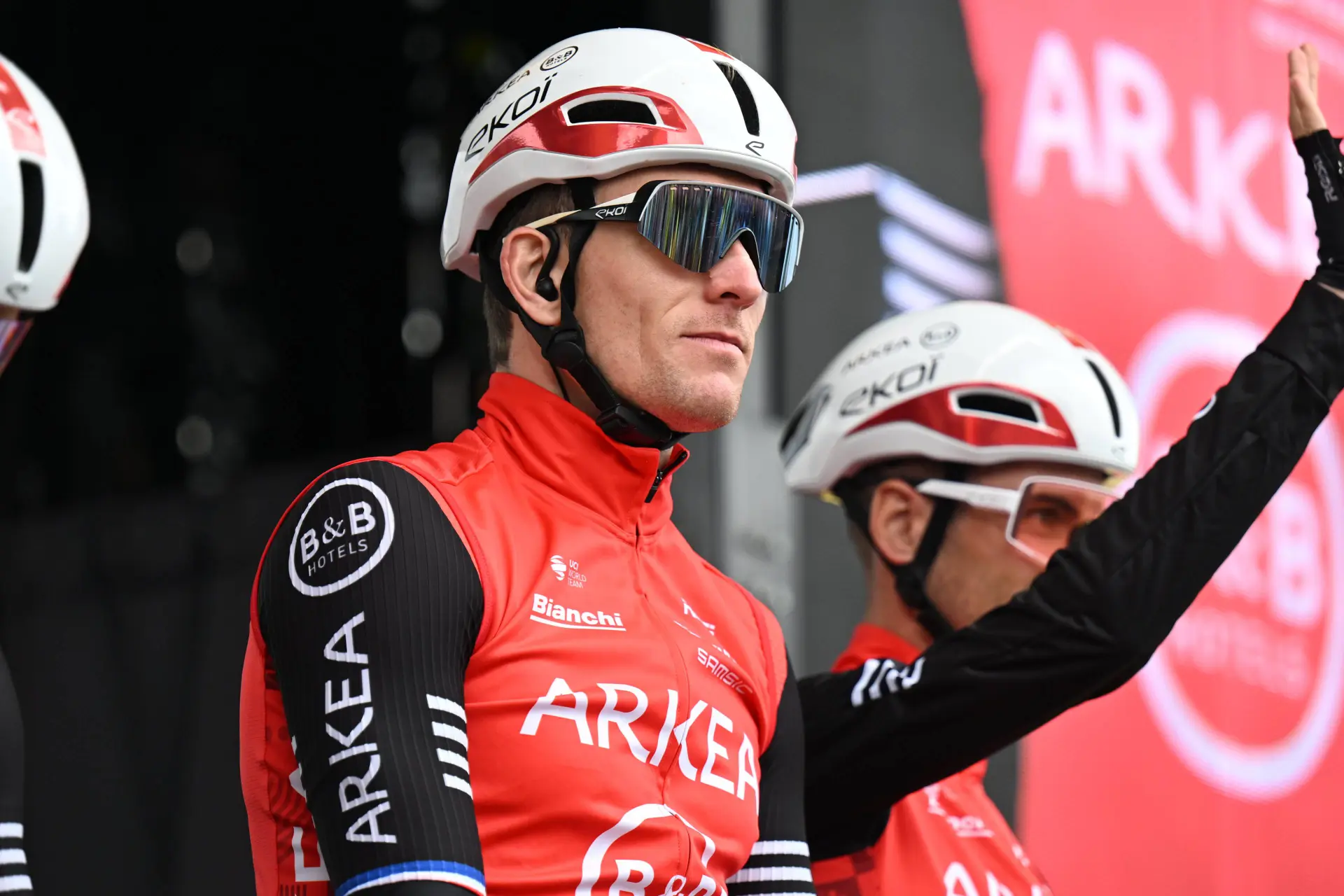
Arnaud Demare’s career was defined by power, pride and controversy in equal measure. He won Milano–Sanremo 2016, dominated the Giro’s points classification twice and racked up almost a hundred professional victories.
Yet he was also a lightning rod — accused (never proven) of taking an illegal tow on the Cipressa in that San Remo triumph, and later clashing with Groupama management over selections.
Behind the headlines lay a consummate professional who helped modernise French sprinting. When he bows out with Arkea, he does so as the rider who finally gave France a seat at sprinting’s top table.
Elia Viviani — the track star who beat the sprinters at their own game
Elia Viviani’s name evokes precision. He was the sprinter who never wasted a pedal stroke — honed on the track, clinical on the road.
From Olympic omnium gold in Rio to stage wins in every Grand Tour, Viviani defined Italian speed for a generation. His 2019 Giro relegation after a late swerve remains one of the sport’s most-debated sprint rulings, but he handled it with calm professionalism.
Few riders managed to bridge the velodrome and the Champs-Élysées so seamlessly. He retires as the embodiment of Italian style and composure in full flight.

Viviani became one of the most successful Italians of the modern era
Alessandro De Marchi — the romantic of the road
Every era needs a dreamer, and for the past decade that was Alessandro De Marchi.
Fans adored him not for his palmarès but for his persistence: endless kilometres off the front, always chasing the impossible. His pink-jersey cameo at the 2021 Giro, days before a brutal crash, became a symbol of everything pure about the sport — courage without calculation. De Marchi never chased metrics; he chased moments.
As he steps away, the peloton loses not just a rider but one of its poets.
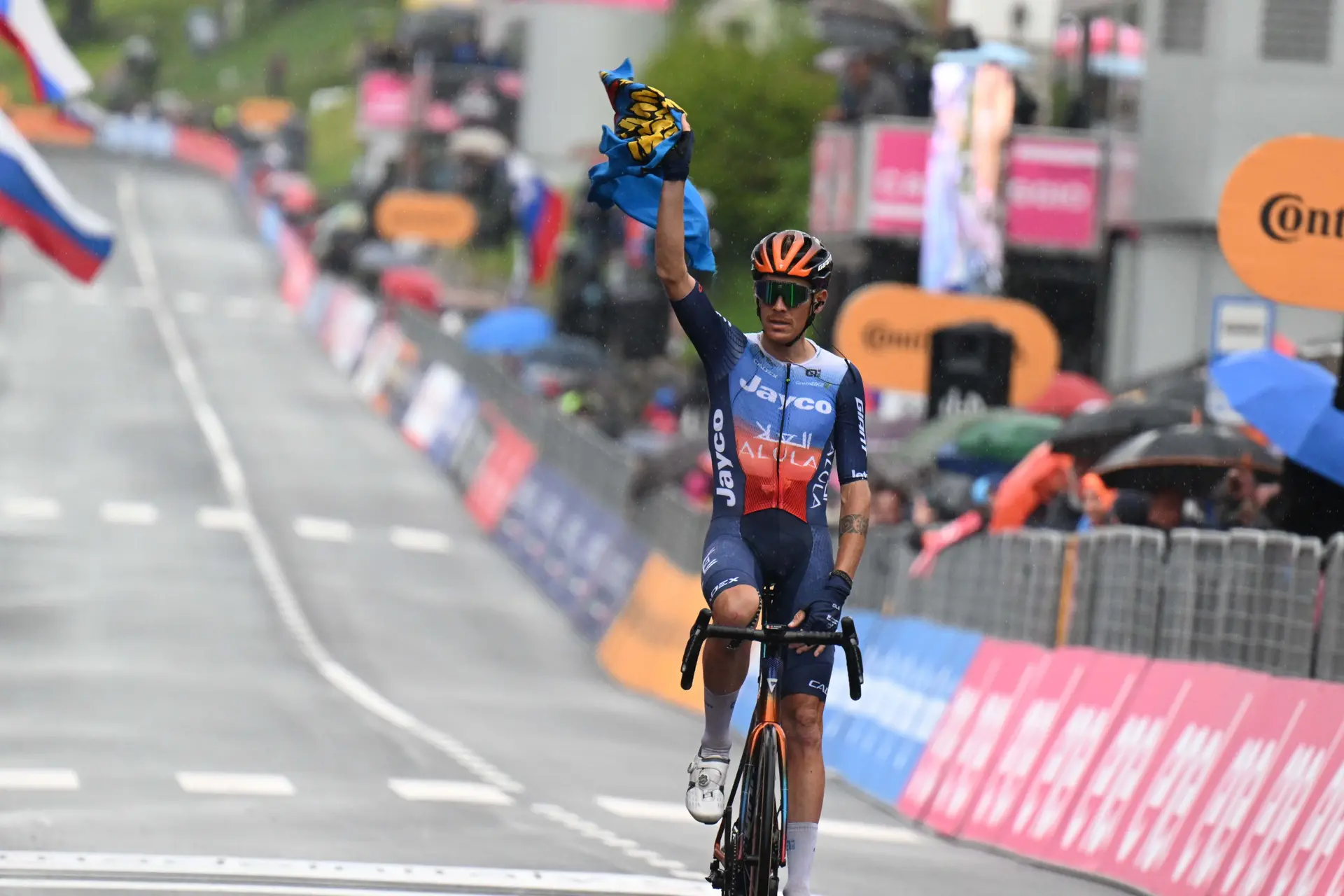
The loyal lieutenants and unheralded heroes
Beyond the headline acts, 2025 also closes the careers of those who built their reputations in service.
INEOS loses the quiet heart of its machine: Salvatore Puccio, the ever-reliable road captain; Jonathan Castroviejo, five-time Spanish TT champion and metronome of the team’s Tour trains; and Omar Fraile, the Basque opportunist turned tactical expert.
Tim Declercq, “the Tractor”, leaves Lidl–Trek after a decade of selfless grinding at the front of races, while Pieter Serry retires as Quick-Step’s ultimate glue guy — zero personal wins, infinite respect.
France waves goodbye to its tireless attackers: Anthony Perez, Anthony Delaplace, and Geoffrey Bouchard, riders who animated mountain stages even when victory was implausible.
Adrien Petit, scarred by a near-career-ending Roubaix crash, bows out as the embodiment of northern grit.
And in Italy, Gianluca Brambilla and Simone Petilli sign off as two of the peloton’s great survivors, both coming back from devastating injuries simply to keep racing.

Brambilla was given an emotional sendoff at the recent Veneto Classic
The nearly-men and early goodbyes
A different kind of story runs through the next group — one of potential interrupted.
Pierre Latour, once a white-jersey winner at the Tour, never overcame the fear of descending that followed a series of crashes. Ide Schelling, the ever-smiling Dutch attacker who lit up the 2021 Tour, vanished from the peloton after battling mental-health struggles. Unai Zubeldia, just 22, retired with long-COVID complications, while Lars van den Berg’s career ended at 26 due to iliac-artery surgery.
Elsewhere, Ryan Gibbons departs as South Africa’s most tactically versatile pro; Jonas Koch and Loic Vliegen bow out as dependable classics lieutenants; Martijn Budding leaves as a cult hero of the YouTube-born Unibet Rockets; and Eddy Fine, once France’s U23 champion, calls it quits at 27, citing burnout.
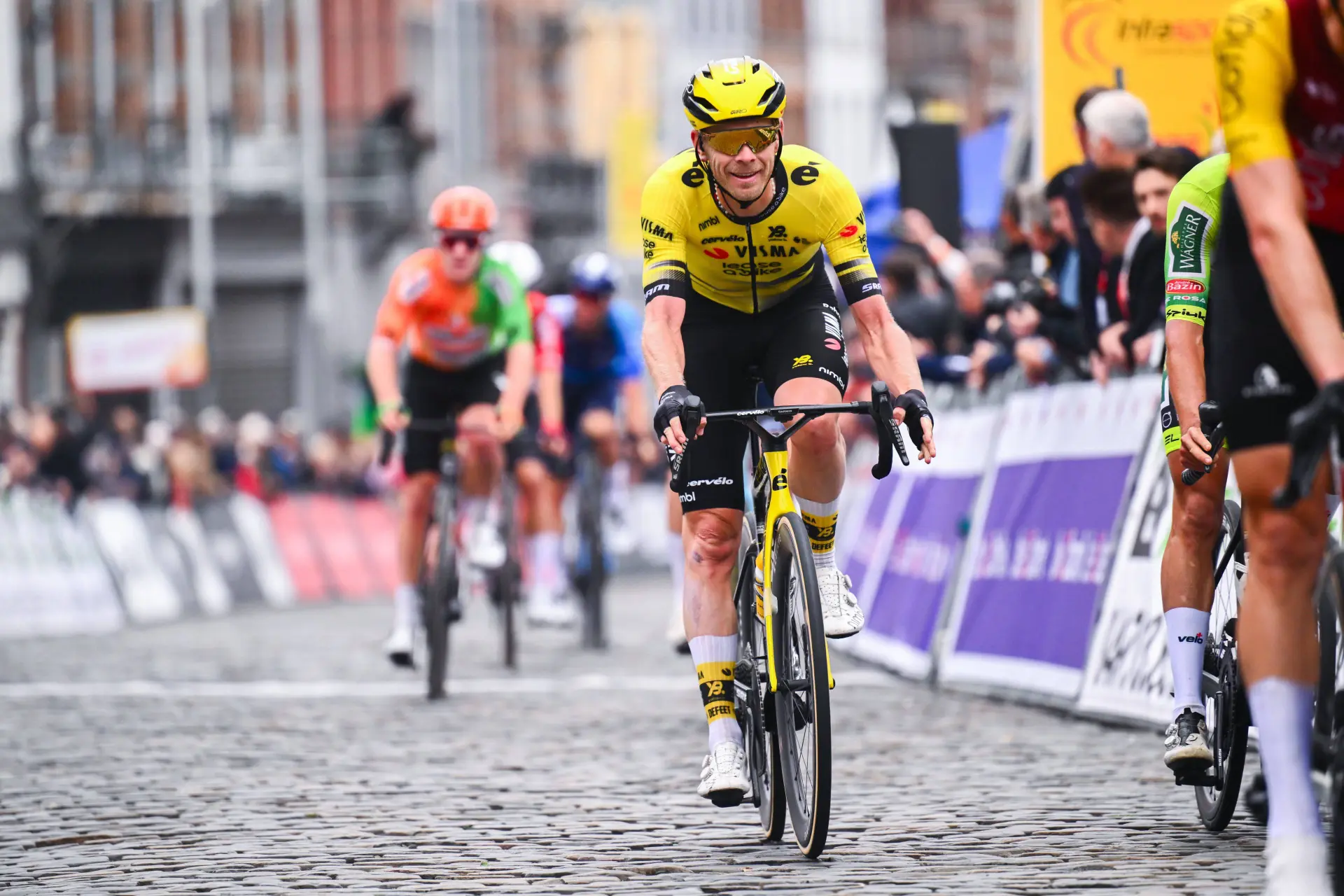
And rounding out the class of 2025 are a handful of familiar figures whose departures might not make headlines but still mark the end of long, industrious careers. Daniel McLay, the British sprinter who led out countless victories for Visma; Giacomo Nizzolo, Italy’s stylish two-time national champion and 2020 European champion; Nans Peters, the French breakaway specialist behind those unforgettable Giro and Tour stage wins; and Tosh van der Sande, the Belgian lead-out stalwart of Visma | Lease a Bike. They bow out alongside seasoned pros Kristian Sbaragli, Jimmy Janssens, and Victor de la Parte, completing the forty names whose retirements quietly reshape the professional peloton.
Completing the roll call are Geoffrey Soupe, whose surprise 2023 Vuelta stage win crowned a decade of loyal lead-out work for French sprinters; Alex Colman, the promising Belgian classics rider forced into early retirement after concussion issues; and Davide Baldaccini, the Italian climber who swaps the pro peloton for coaching after several gritty seasons in the Continental ranks. With their departures, the class of 2025 stands complete — forty riders whose exits collectively close a chapter in men’s road racing.
These stories rarely make the headlines, but they define the human cost of professional cycling’s intensity.
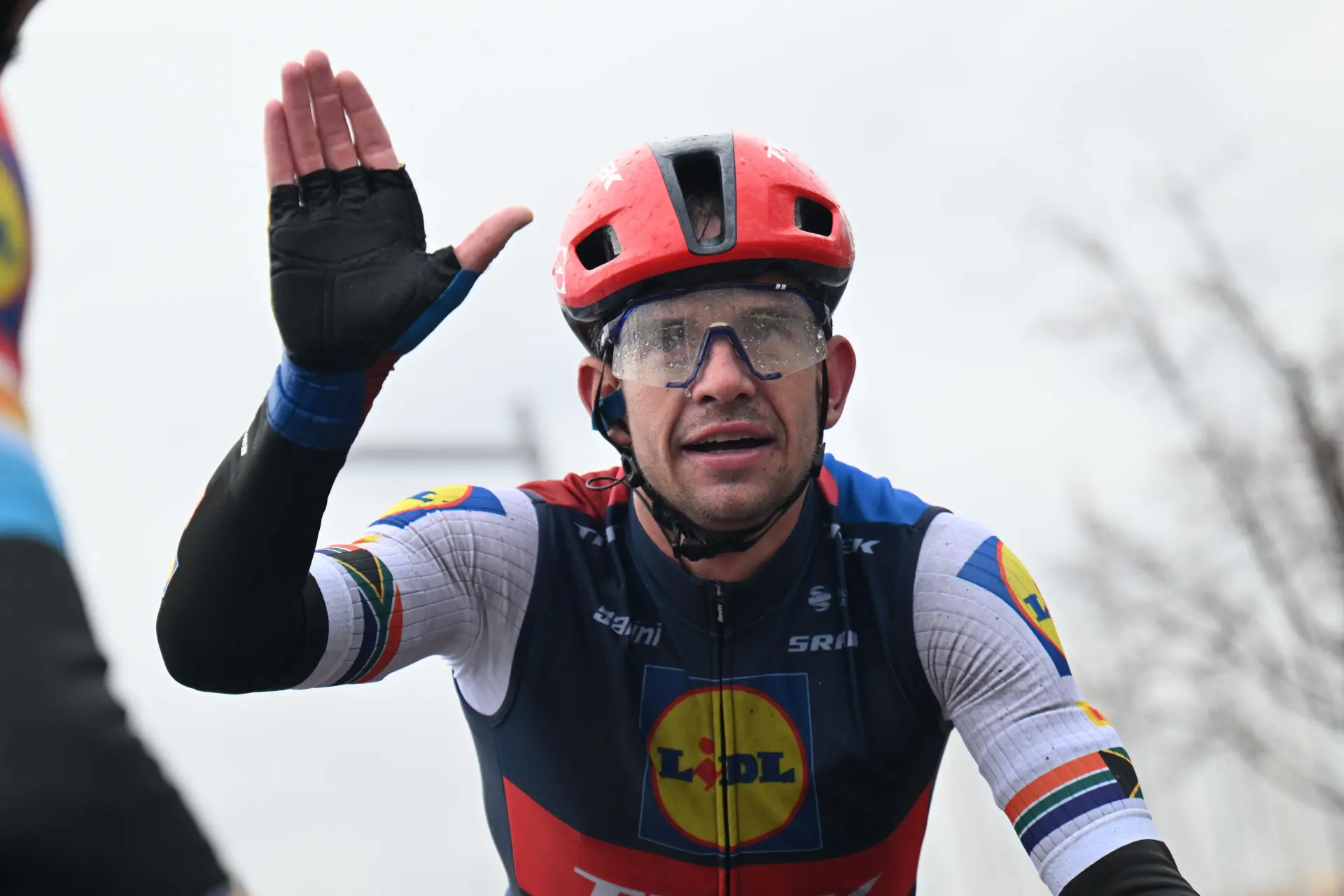
The bigger picture — a generational shift
Add them all up and the class of 2025 accounts for over 500 professional wins, spanning Monuments, Grand Tours and national titles. More importantly, they trace cycling’s evolution from analogue to algorithmic: from riders who carried radios in their pockets to those who raced by live telemetry and power-zone feedback.
What unites them isn’t their palmarès but their humanity — riders shaped as much by crashes and comebacks as by podiums. The peloton will look very different next spring: faster, younger, more scientific.
But as these forty veterans step off the stage, they leave behind something less measurable — the craft, camaraderie and quiet resilience that made road racing what it is.
The class of 2025 won’t just be remembered for how much they won, but for how they made the sport feel.

Kieran WoodDeputy Editor-in-Chief
Kieran Wood is a sports journalist based in Wales and has been active in journalism since 2022. He regularly contributes to DartsNews.com and CyclingUpToDate.com, where he covers professional cycling and darts. In cycling, his work includes liveblogs from major races, including the Tour de France, the Giro d’Italia, and La Vuelta a España, alongside race reports and analysis. He has also conducted interviews with professional riders.
His reporting spans the full racing calendar, from one-day classics to stage races, with a focus on accurate, real-time coverage and clear contextual analysis. For statistics, results, and historical context, he regularly uses resources such as ProCyclingStats. To support reporting on rider activity and training context where relevant, he also references Strava.
In his work, Kieran places strong emphasis on careful sourcing, editorial accuracy, and updating articles as new, verified information becomes available.
claps 0visitors 0
Just in

Popular news
Latest comments
- TT But he won by a minute so he could have cut down on some of it
 Rafionain-Glas13-10-2026
 - weight is measurable. power is measurable. So why didn't he prepare that way from the TDF if he wanted to beat Pogi and after Pogi wasn't going to be there, to win.abstractengineer13-10-2026
- I hope Thibau and Tibor don't do the sameRafionain-Glas13-10-2026
- Seixas is exactly what I would like Pogi to be mentally and in his statements. Both come across as shy and who don't talk much but with Seixas, you can see that he enjoys success, that it boosts his ego, unlike Pogačar who seems to feel increasingly uncomfortable the more he wins. He's won so many times, people are saying he's boring. The french media hate him for winning so much, the french cycling fans are booing him... etc. etc. But remember one thing, Seixas will never physically reach Pogi's level. He's excellent, but he isn't at that level nor will ever be. His talking to the media, his relationship with people is already at a high level.PogiSloFans13-10-2026
- Paul Seixas is now the second-best rider in the world.megasmacky13-10-2026
- When will they start dropping Pogi? Oh yeah, when Pogi reaches 40+ years, that's when young cyclists will start dropping him. But until then... eat your hearts out and cry. Pogi will remain the G.O.A.T. for years to come. Capish?PogiSloFans13-10-2026
- I figure he would have found out how to outsprint Paul and take the win, maybe. He's 28 now but I would say he's right at the peak of his powers. It was great race though, Paul showed me something different about himself.awp13-10-2026
- Slowly, very slowly... 5-7 yrs. ;)MajorPayne13-10-2026
- Up to this point: "It is just not yet at the level of Vingegaard and Pogacar." First Jonas, and then level of Tadej. Period!MajorPayne13-10-2026
- The sport has long had a divide between the more diesel-like riders and the more explosive riders. Where does Pogačar fit? His explosive attacks are followed by a high speed diesel climb and he's rarely been caught in the past 5 years (people can name the moments, it's so rare). Seixas is young and we have no idea where his body will end up on this spectrum (just like we didn't with Pogačar when he was 20 and being a diesel up the Vuelta mountains of 2019). Speculation is fun, being a fan while it unfolds is going to be more fun.RidesHills13-10-2026
Loading
Write a comment