DISCUSSION: Tour de France Stage 7 - A disaster for Philipsen? Merlier's the strongest? Is the ‘Golden Km’ sprint missing?
Cycling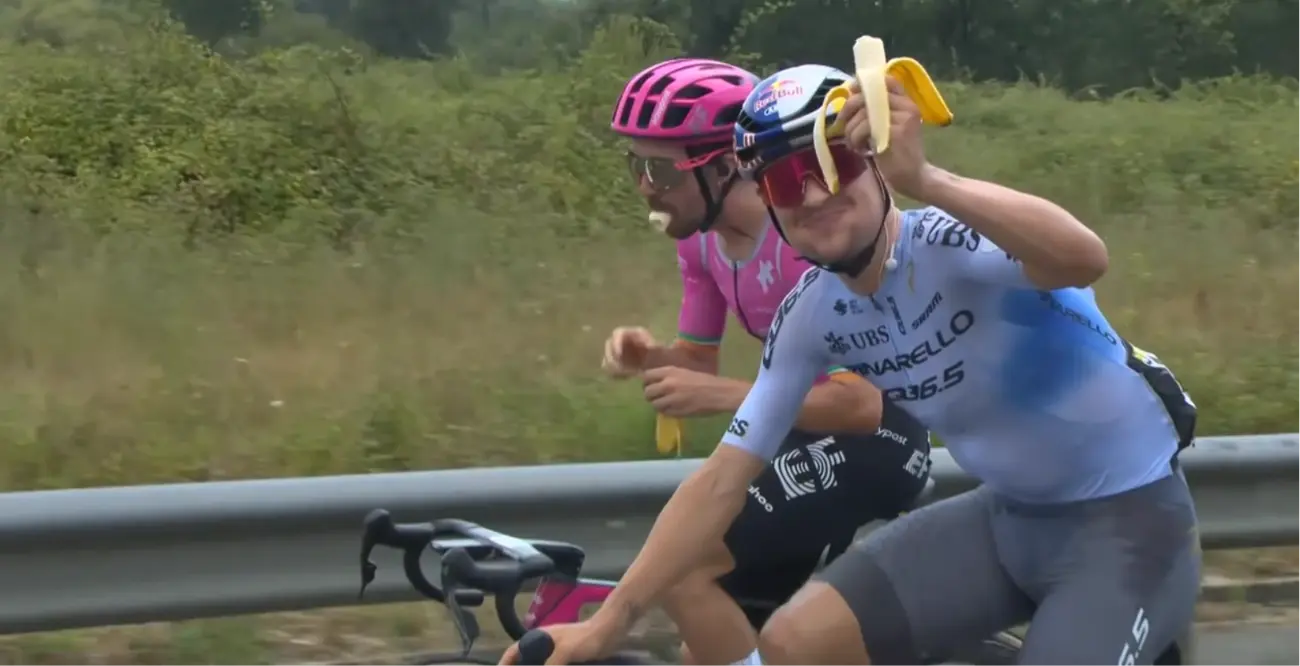
Tim Merlier claimed victory on Stage 7 of the 2026 Tour de France, winning the expected bunch sprint in Bordeaux after 175.1 kilometres of racing. Soren Waerenskjold finished second, while Biniam Girmay completed the podium. Jasper Philipsen received an excellent lead-out from Alpecin-Premier Tech but was unable to convert it into victory, and Olav Kooij never featured in the final sprint.
Veistroffer back in the breakaway
Baptiste Veistroffer was once again part of the day's breakaway, this time joined by Jakob Otruba of Caja Rural - Seguros RGA. Soudal Quick-Step and Alpecin-Premier Tech kept the gap under control throughout, while Mads Pedersen strengthened his grip on the green jersey by winning the intermediate sprint ahead of the peloton.
Uno-X Mobility tried several times to launch Jonas Abrahamsen in the closing kilometres, but every move was quickly neutralised before the breakaway was caught with 18 kilometres remaining.
Merlier proves strongest
Alpecin-Premier Tech produced an outstanding lead-out, with Mathieu van der Poel delivering Jasper Philipsen perfectly into the final 250 metres. However, Philipsen faded after launching his sprint early.
Merlier timed his effort to perfection, powering past the field to take a convincing victory ahead of Waerenskjold and Girmay. Max Kanter finished fourth, while Jasper Philipsen had to settle for fifth despite his team's impressive work.

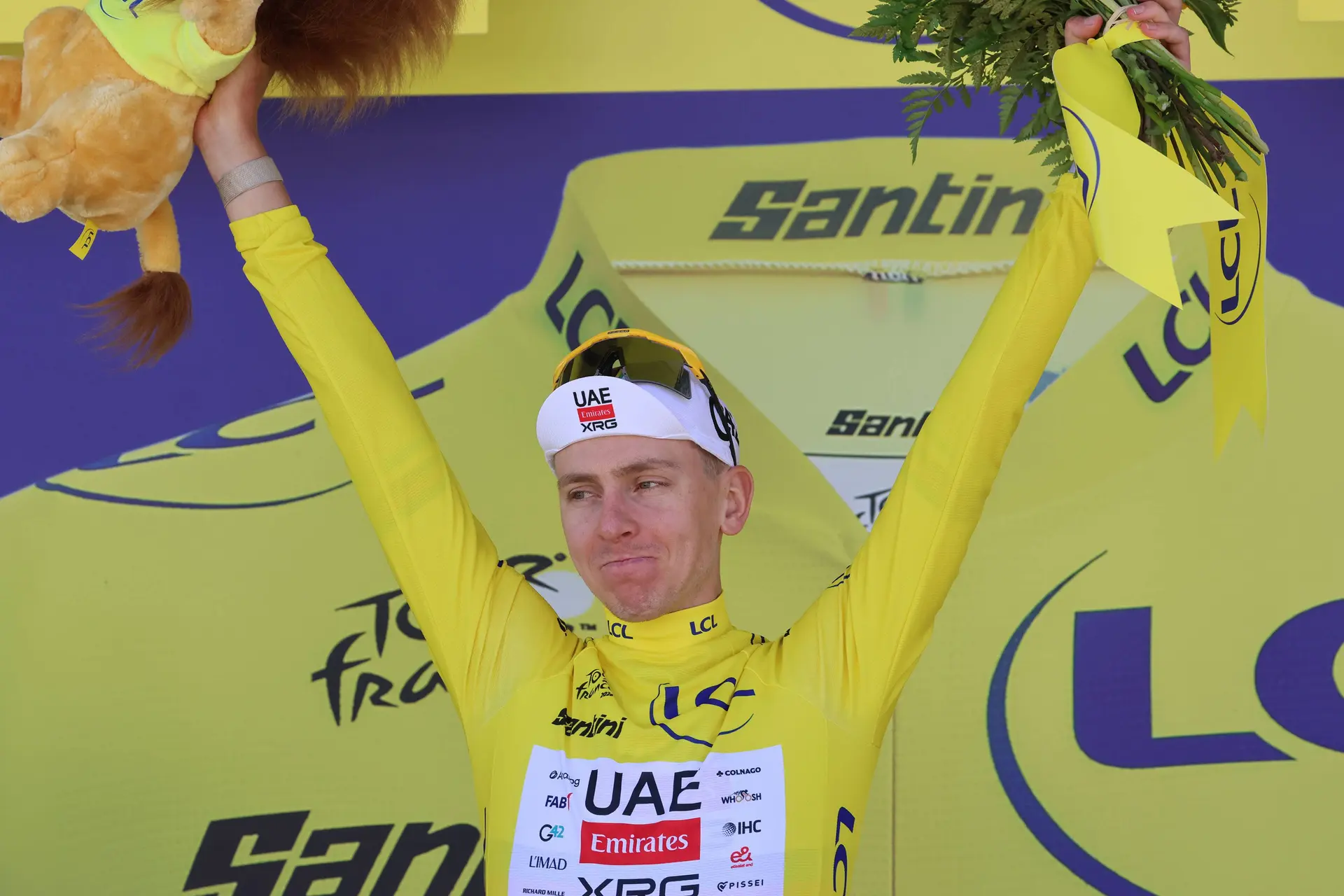
Tadej Pogacar reclaimed the yellow jersey yesterday and took advantage of a quiet spell in today’s stage to catch up with his rivals.
Merlier confirms sprint supremacy
Carlos Silva of CyclingUpToDate watched Stage 7, which ended in a bunch sprint in Bordeaux, and shared his thoughts after the finish.
There really isn't much to say about today's stage. It was completely flat and, once again, we saw Baptiste Veistroffer in the breakaway, this time alongside a Caja Rural rider. The Lotto rider is making the most of these opportunities, collecting points and prize money available at the intermediate sprints and mountain classifications.
At the finish, Alpecin–Premier Tech executed a near-perfect lead-out to put Jasper Philipsen in the ideal position to win the stage. What I don't understand is whether the team's plan really was for Philipsen to launch his sprint with around 250 metres to go.
With Sylvan Dillier producing an outstanding lead-out before Mathieu van der Poel took over, Philipsen's failure was telling. Not only does it suggest that winning a stage at this Tour will be difficult for him, but it also reinforces my belief that he is not the strongest sprinter in the race.
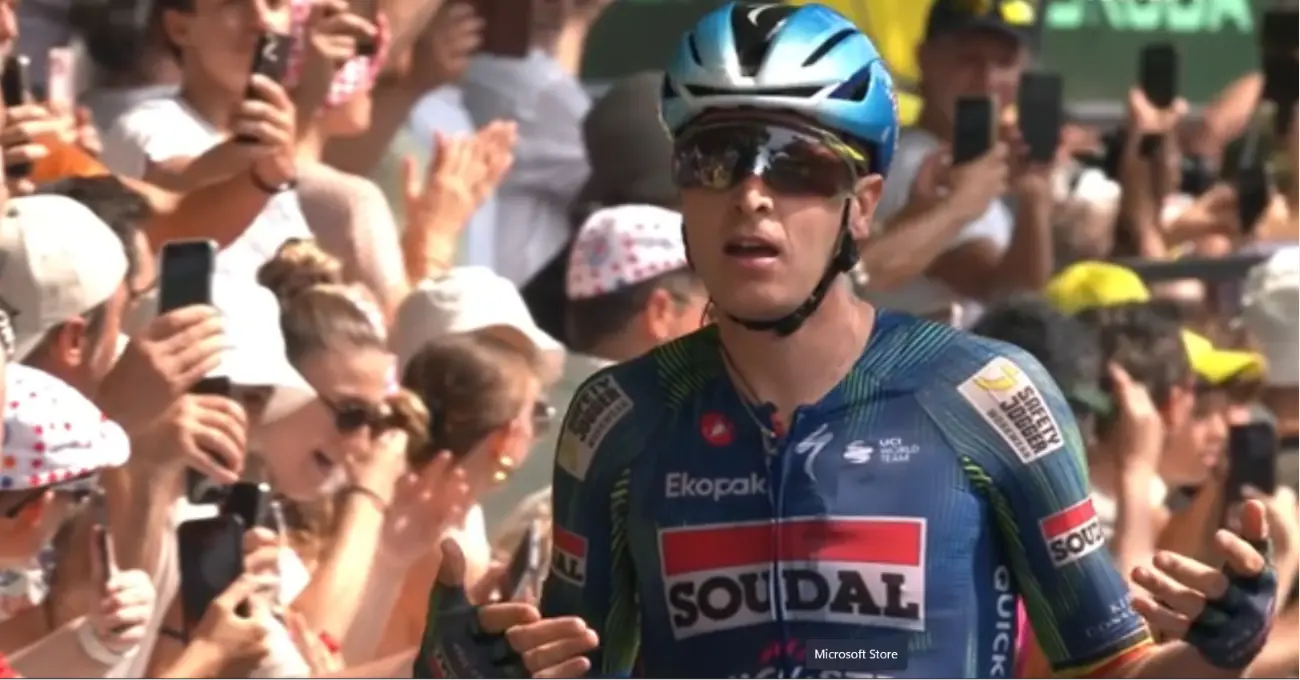
Just look at where Tim Merlier launched his sprint and, more importantly, when he launched it. Philipsen had already emptied the tank before Merlier had even started his final effort. Merlier's acceleration was simply on another level.
Merlier's victory also showed that Olav Kooij's win two days ago, while fully deserved, was helped by circumstances. Had the crashes not disrupted the finale of that stage, I believe the outcome would have been very different. Today, Kooij did not even finish inside the top twenty.
Netcompany INEOS and Uno-X Mobility both showed their intentions by moving to the front in the closing kilometres, but only the Norwegian team managed to turn that effort into a result, with Soren Waerenskjold finishing in an outstanding second place.
Dorian Godon, meanwhile, never looked like challenging for the victory. He crossed the line in eighth place, further suggesting that the Netcompany INEOS rider is still some way from his best form.
Now let's wait for the next bunch sprint to answer the remaining questions.

After the storm came the calm. Remco Evenepoel was all smiles during Stage 7.
Merlier delivers as sprint teams miss another opportunity
Ruben Silva from CyclingUpToDate watched the peloton arrive in Bordeaux and shared his thoughts as soon as Stage 7 of the Tour came to an end.
There's actually no point in defending teams like TotalEnergies, Groupama or Picnic at this stage of the race. Their lack of ambition has been extraordinary and is difficult to explain. Caja Rural and Intermarché understood that a conventional stage victory was highly unlikely, so they rolled the dice and committed riders to the breakaway in an attempt to surprise the peloton.
The absence of other teams from that move spoke volumes. When the majority of those teams reach Paris without a stage win or a jersey, they may well realise the opportunity they allowed to slip away.
With Baptiste Veistroffer in the breakaway, there was always the potential for an entertaining race. The Frenchman is an incredibly powerful rider and helped keep the move alive. Uno-X also animated the finale, with Jonas Abrahamsen attacking in the closing kilometres in an effort to avoid a bunch sprint.
It was an aggressive approach, especially considering they arguably had one of the strongest sprinters available for the finish, making the decision to attack even more surprising.
The sprint itself was fascinating. Alpecin delivered a near-perfect lead-out, but Jasper Philipsen mistimed his final effort and lacked his usual explosiveness in the closing metres. He wasn't the only rider to misjudge the finish, but in sprinting, timing is everything. Tim Merlier, meanwhile, looked overdue for a victory. As one of the fastest finishers in the peloton, it felt fitting that he finally got off the mark on a stage that suited him perfectly.

Jakob Otruba and Baptiste Veistroffer were the two main protagonists of Stage 7 of the Tour de France.
Merlier back on top as Tour faces the challenge of flat stages
Javier Rampe from CiclismoAlDia closely followed the action on the French roads and shared his verdict at the end of the day.
The world's fastest sprinter returned to winning ways in Bordeaux, capping off a stage that was largely uneventful but perhaps inevitable. The only riders who brought some life to the race were Jakub Otruba and Baptiste Veistroffer, who spent virtually the entire day in the breakaway before being caught with around 10 kilometres remaining.
Stages like this are part of what makes a three-week Grand Tour possible, but they can be incredibly difficult to watch, both for fans and commentators. It raises the question of whether cycling should consider new ways to make these days more engaging.
A golden kilometre or golden mile could be one option. Another would be to introduce intermediate sprints every 20 kilometres, forcing sprinters and their teams to work much harder if they want to secure the green jersey in Paris. Even the return of an Intergiro-style classification, as seen in the Giro d'Italia during the 1990s, could add another tactical dimension.
From a commercial perspective, however, stages like this are becoming increasingly difficult to justify. And that's coming from someone who genuinely enjoys sprint stages. Modern audiences are constantly overstimulated, and asking viewers to stay engaged for nearly five hours when very little happens is becoming an increasingly tough sell. Cycling simply cannot afford too many Friday afternoons that feel more like a nap than a sporting spectacle.
On the sporting side, Tim Merlier once again showed that he is a level above the rest when Soudal–Quick-Step executes the kind of lead-out it has been famous for over the years. Everything came together perfectly, allowing the Belgian to finish the job with authority.
The main talking point behind the winner was Jasper Philipsen. During the sprint, the Alpecin rider drifted towards the barriers, squeezing Fernando Gaviria just as the Colombian was launching his sprint. For Gaviria, riding for wildcard team Caja Rural, it was a rare opportunity to fight for a prestigious Tour de France stage. The incident will inevitably raise questions over whether Philipsen, who has been involved in similar controversies before, could face a sanction.
For Movistar Team, it was a quiet and controlled day. Following the disappointment of Cian Uijtdebroeks' abandonment and the enormous effort required in the Pyrenees, the Spanish squad chose a conservative approach, protecting its leaders throughout the stage and safely navigating what could have been a nervous finale.
Verdict
All three journalists arrived at the same conclusion: Tim Merlier was the strongest sprinter on the day and fully deserved his victory in Bordeaux. While Alpecin–Premier Tech delivered arguably the best lead-out of the stage, Merlier's patience and explosive acceleration proved decisive, underlining why many now consider him the benchmark in pure bunch sprints. Jasper Philipsen, by contrast, once again failed to convert ideal positioning into victory, raising fresh questions about his form and timing.
There was also broad agreement that the stage itself lacked excitement. Baptiste Veistroffer earned praise across the board for once again animating the breakaway, while Caja Rural deserved recognition for taking a chance when many of the other wildcard and ProTeams remained passive. That lack of ambition from several teams became one of the major talking points, with the consensus being that too many squads are allowing opportunities to pass them by in search of increasingly unlikely results.
Beyond the race itself, the discussion turned towards the future of sprint stages. While flat days remain an essential part of a three-week Grand Tour, there is a growing feeling that the current formula needs refreshing. Whether through innovations such as a golden kilometre, more intermediate sprints or alternative classifications, there is a shared belief that cycling must find ways to keep both riders and spectators more engaged throughout these long transition stages.
Finally, Philipsen's sprint was scrutinised for more than just the result. His movement towards the barriers against Fernando Gaviria could yet attract attention from the race jury, adding another layer to what was already a disappointing afternoon for the Belgian. In contrast, Merlier leaves Bordeaux with renewed confidence, Soudal–Quick-Step has its first Tour victory, and the battle for sprint supremacy has firmly swung in the European champion's favour.
And you? What did you make of the stage 7 of the Tour de France 2026? Tell us your thoughts, share your opinion on all the key moments and incidents from the race, and join the discussion.
Carlos Silva is a writer for CyclingUpToDate.com, where he contributes race reports, interviews, analysis pieces, and live coverage of the international cycling calendar. Holding a degree in Sports from the Jean Piaget Institute, he combines academic knowledge of performance, training, and competition with hands-on journalism experience in professional cycling.
Throughout his career, Carlos has conducted interviews with leading figures in the sport, including Alberto Contador, Joaquim Rodríguez, Óscar Pereiro, João Almeida, Isaac del Toro, Derek Gee, John Degenkolb and Geraint Thomas. These conversations reflect direct engagement with Grand Tour winners, Classics specialists, and emerging talents.
He has provided on-site coverage at major events ranging from the Vuelta a España to the Tour de France, alongside stage races such as Vuelta a Andalucía, Volta ao Algarve, Volta a Portugal and O Gran Camiño. Covering the mythical climbs of the Giro d'Italia remains one of his professional ambitions.
Carlos is responsible for liveblog coverage of all major WorldTour races and beyond, including the Tour de France, Giro d'Italia and Vuelta a España. His reporting integrates verified data from ProCyclingStats to ensure statistical accuracy, contextual depth, and analytical precision.
A lifelong cycling enthusiast, he approaches storytelling across written, photographic, and video formats with a focus on credibility, tactical insight, and informed race interpretation.
claps 2visitors 1
Just in

Popular news
Latest comments
- disrespectful thats a joke ...
 Davide20-10-2026
 - EF’s “island of misfit toys” squad is probably one of my favorites in the peloton. They are fun to watch, always trying stuff - they ride with heart and panache, and their kits are excellent.wrsty20-10-2026
- 'Children these days'... Wout, since the caveman learned to say "Ug", older generations have always said this about younger generations. Not every young rider is a cowboy. So what's to say that the fact that Poels was respectful meant that his peers were equally so?
 Rafionain-Glas19-10-2026
 - "...In a weakened field" Most definitely ! YAWN !frieders319-10-2026
- Noted. But I had to appease his fans.MajorPayne19-10-2026
- I wonder if he'll race Challenge MallorcaRafionain-Glas19-10-2026
- Head to head time-splits: Jay Vine vs Remco Evenepoel: 10.5 km - Vine lost 45 seconds to Evenepoel 34.2 km - Vine lost a further 1:10, and was caught in the vicinity of that checkpoint. Note: I remember Vine getting caught before the second checkpoint, and ProCyclingStats log supports that, however, the gap at the second checkpoint was less than 2 minutes. 45.4 km - Vine lost only 16 seconds Of course, Vine lost less time in the middle section than the early section, but at the final segment rate, he'd have lost 15 seconds in the opening section and and 34 seconds in the middle. It is possible that Vine paced himself very well but that seems unlikely. In comparison with Stefan Küng: Kung lost: 26 seconds at T1. A further 1:11 by T2. A further 40 seconds by the finish. Relative to Evenepoel, Küng did slow down by the end. Maxime Decomble: Lost 47 seconds at T1. A further 1:20 by T2. A further 26 seconds by the finish. Mikkel Bjerg: Lost 37 seconds at T1. A further 1:34 by T2. A further 46 seconds by the finish. It is not concrete evidence that Vine cheated though it certainly doesn't absolve him. However, watching the race, I am 100% sure that Vine did not pull over and follow a different line when Remco passed him. Remco pulled away quite quickly, but the gap did not balloon and Vine definitely got aero assistance.Rafionain-Glas19-10-2026
- That ship has sailed years agovappaxbipmv19-10-2026
- He doesn't have to. I'd be perfectly happy if he loses SB if he then wins everything elsevappaxbipmv19-10-2026
- Please don't put Remco in the same sentence as Tadej. It's disrespectful to Tadej. Please make a note of this.KissinKate19-10-2026
Loading
Write a comment