"I can't tell you how many people we've lost" - EF Education manager Vaughters blames UCI for wave of casualties in pro cycling
Cycling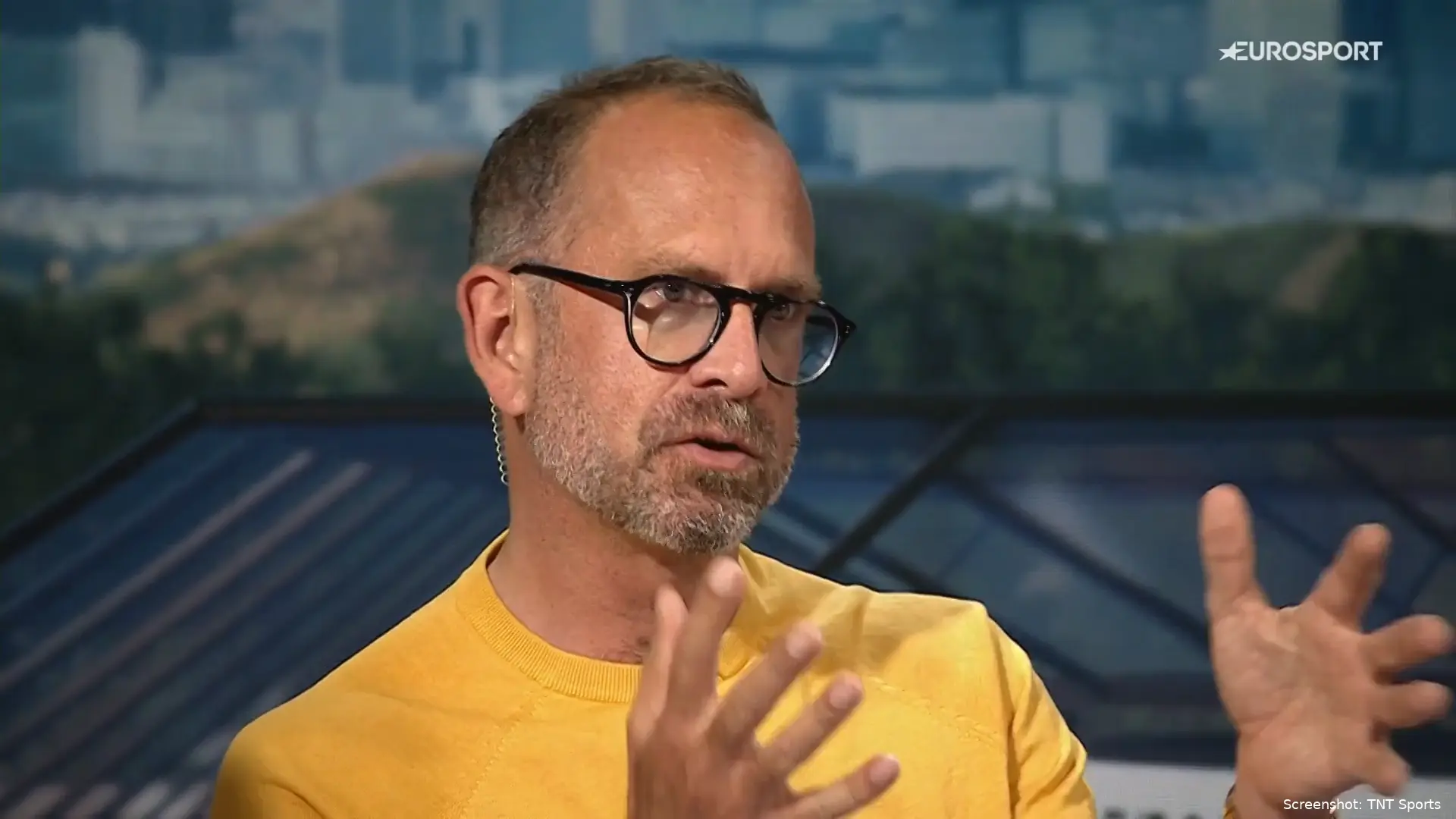
Safety in professional cycling has always been a topic, but as the years go by it becomes more and more of an important subject to discuss and improve. EF Education-EasyPost's Jonathan Vaughters has explained some of his views on the matter whilst also attributing the responsibility to the UCI.
Vaughters on smaller races having cars on course often
"What I'm really not enjoying is this sentiment that's coming from very powerful people in cycling that says 'what can you do? Sometimes cars just end up on the road - this is just part of doing competitive sport on the open road.' That is not true. This is preventable," Vaughters said in an interview with BBC.
The recent Volta a Portugal brought safety back into the spotlight after the passing of Finlay Tarling. In official declarations to RTP, a representative of the police force argued that the car that hit him, whilst having invaded the course under at the time unclear circumstances, was not riding on the wrong side of the road. The race continued all the way to its ending this past Sunday.
"People look at the Tour de France and see a bunch of riders going through the beautiful French countryside, but fundamentally it's a very dangerous sport. From the start of my career I can't tell you how many people we've lost."
Vaughters spent plenty years as a professional rider in the peloton, and is for a long time a manager in the World Tour. Currently, he is at the head of EF Education-EasyPost, having the reports and seeing what happens in races all over the world.
He states that what has happened at the Volta a Portugal was not an exclusive situation:
"The number of smaller races I've been to where there's traffic on the course is unreal. There have been too many races at this level that have exactly the same problem. This just happened to be terribly unlucky. It could have been any of the other races".
Even at this year's Volta a Catalunya this was a prominent issue, whilst in a recent edition of the Etoile de Bessèges, several teams withdrew from the race following several instances of cars invading the course. Often it is a battle against the population, with Tarling's fatal collision being reported as a driver that entered the race course from a 'secondary road' after having been told by people around that the race had concluded.

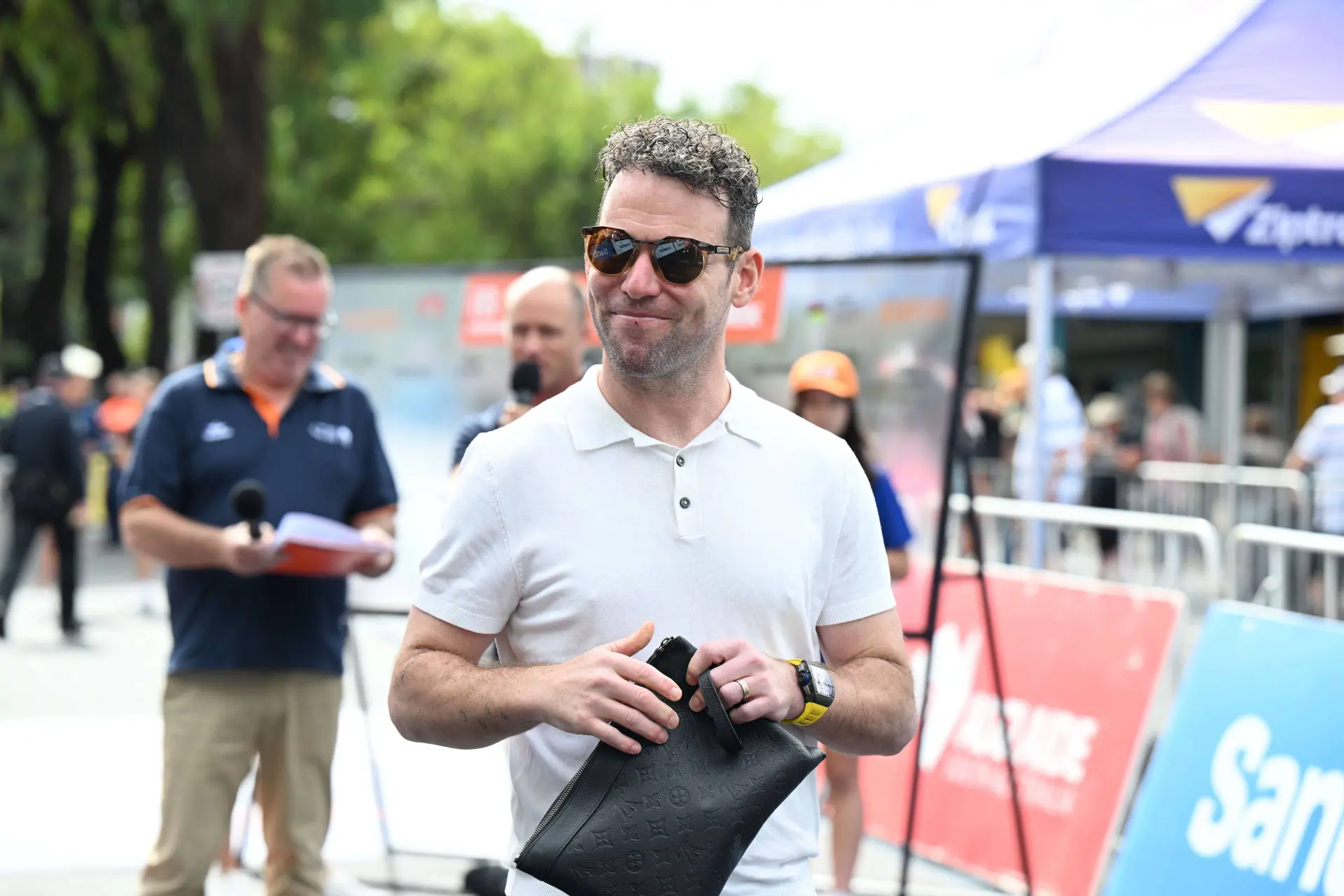
Jonathan Vaughters weighed in on the safety aspect in cycling
Race organizers forced to bear massive costs
But on the other side of the spectrum are race organizers trying to keep their races afloat. "The costs are enormous, organizers are really struggling and hoofing it financially and I sympathize with that". Often, the conflict of interest leads to some aspects of the organization being less prioritized.
"As a team, we trust races like the Tour de France, but we don't trust smaller races. Rolling enclosures become a problem when the peloton splits into groups and you don't have every T-junction blocked, and people think: 'The race is done - I'm free to go on the road.' As soon as they turn on the road, they're going 100kph and the opposite way is the peloton at 50km/h - that's a combined 150kph. I mean, it's horrible".
The UCI is ultimately at the top and is to blame for these incidents: "I’m not blaming anyone other than the ultimate authority which needs to do a better job of governing the sport. If you are forcing teams to fight for ranking points at this event then you damn well better make sure the event is up to standard".
Vaughters goes as far as arguing that these incidents happen due to the team's necessities to take part in plenty events of lower category, all throughout the world, so as to capture UCI points - and in doing so, more often being involved in difficult situations.
"They're [riders] being pressured by team managers like me saying 'we've got to get points - hurry up.' There's millions at stake so athletes feel that pressure. They start to take risks on the course – if they do that when it's not properly managed and doesn't have good enough traffic control, it's a recipe for disaster".
"We have way too many events on the calendar – it's just too much. It needs to be more selective and the governance needs to look at each race with a much higher degree of skepticism. Why do we need 700 race days around the world? It's fine if those events occur, but not as sanctioned events with riders fighting for points. What's wrong with 100 days on the race calendar?"
Rúben SilvaEditor-in-Chief
A founding contributor to CyclingUpToDate since its launch in January 2022, Ruben Silva has played a central role in shaping the site’s editorial direction and long-term growth. Before joining the project, he built his experience through independent blogging at Echelons Hub and by producing race previews for Ciclismo Internacional, developing a strong analytical voice rooted in daily engagement with professional cycling.
Beyond editorial work, he has been closely involved in the expansion and coordination of CyclingUpToDate’s wider network, helping establish and support sister platforms across multiple languages. This includes ongoing collaboration with CiclismoAlDia (Spanish), CiclismoAtual (Portuguese), WielrennenUpToDate (Dutch), and RadsportAktuell (German), contributing to a shared editorial vision and consistent international coverage.
He also helps oversee editorial governance across the network, setting standards for accuracy and consistency and coordinating updates or corrections when needed.
Originally from the Porto metropolitan area in Portugal, he holds a bachelor’s degree in Geography. His path into cycling journalism was shaped not through formal media training, but through independent reporting, community engagement, and sustained on-the-ground involvement in the sport.
Over the course of his career, he has conducted approximately 100 interviews across road cycling and cyclocross, ranging from one-to-one conversations and online formats to press conferences and on-site pre- and post-race coverage. His interviews include leading riders, team managers, and prominent figures within cycling media: Tadej Pogacar, Jonas Vingegaard, Mathieu van der Poel, Primoz Roglic, Wout van Aert, Joao Almeida and Tom Pidcock; managers like Patrick Lefevere and Joxean Matxin; and YouTube personality Bryan Kennedy (BKXC)...
Within 18 months of launch, he helped grow CyclingUpToDate’s English-language platform into one of the most-read cycling news websites, built entirely from the ground up. As both a professional journalist and lifelong cycling enthusiast, his focus remains on delivering accurate, timely, and well-contextualized coverage.
claps 7visitors 7
Just in
Popular news
Latest comments
- how it is "We’ve taken another big step forward for next year" he just lost in lombardia to a 20 year old, and two 30+ year olds. and not even top 10 for WCRR.abstractengineer19-10-2026
- This is similar to Lebron. first he said i need to consult my family , my daughter, need respectable money blah blah blah and then dont care about family , dont care about money, only onion rings, am off to Philly, very very far from family. Off season should be with family more, no?abstractengineer19-10-2026
- I hope he comes back strong for a proper battle with Tadejmij19-10-2026
- congrats to a great career and good retirement.mij19-10-2026
- Any artificial product should be reported.Any team that doesn't should be stripped of wins and fined.I know that this level of transparency does not and will never exist.All anyone can do is continue to test riders on a regular and surprise basis.If the test comes back clean then all any of us can assume is the rider is clean.
 Brucegel19-10-2026
 - Also, it's supposed to be hard to gain an advantage from drafting off Remco because he is so aero.Hills3319-10-2026
- How would stats back it up? You realise tactics involved could mean Vine saved his legs for a faster finish? Some riders can choose to go all out and fade later in the ride, others can hold steady state the whole way, and others can have a reserved start and power up later in the ride. You can't judge just by the stats unless you have power data to be able to prove Vine is riding faster even though he is putting out the same or less power (suggesting drafting). I'm sure the stats prove that Vine didn't cheat because UCI would monitor the stats to make sure this exact scenario doesn't happen (and disqualify them for drafting if the stats proved it).Pogboom19-10-2026
- Only one person would say such a thing here. Sorry to burst your bubble but I’m afraid that window of opportunity has now closed. You can beat some of the people all of the time and all of the people some of the time but you can’t beat all of the people all of the time.Jumpyjohn19-10-2026
- Both prizes are actually pathetic, almost amateur like, not even covering the cost of participatingJumpyjohn19-10-2026
- It depends on how you define doping and you would do well to give your definition so we can see how against it you are. If you consider the use (as a hypothetical example) of a new beneficial artificial product unknown to anti-doping agencies ok without considering asking them if it would constitute doping if you told them about it then we’re never going to agree on who could be or couldn’t be doping and according to what threshold, moral, statistical, legal, comparative. In football even financial doping is now consideredJumpyjohn19-10-2026
Loading
1 Comments