DISCUSSION - Tour de France Stage 5 - Smaller teams failed to roll the dice? Heat, caution or fear of the Tourmalet?
Cycling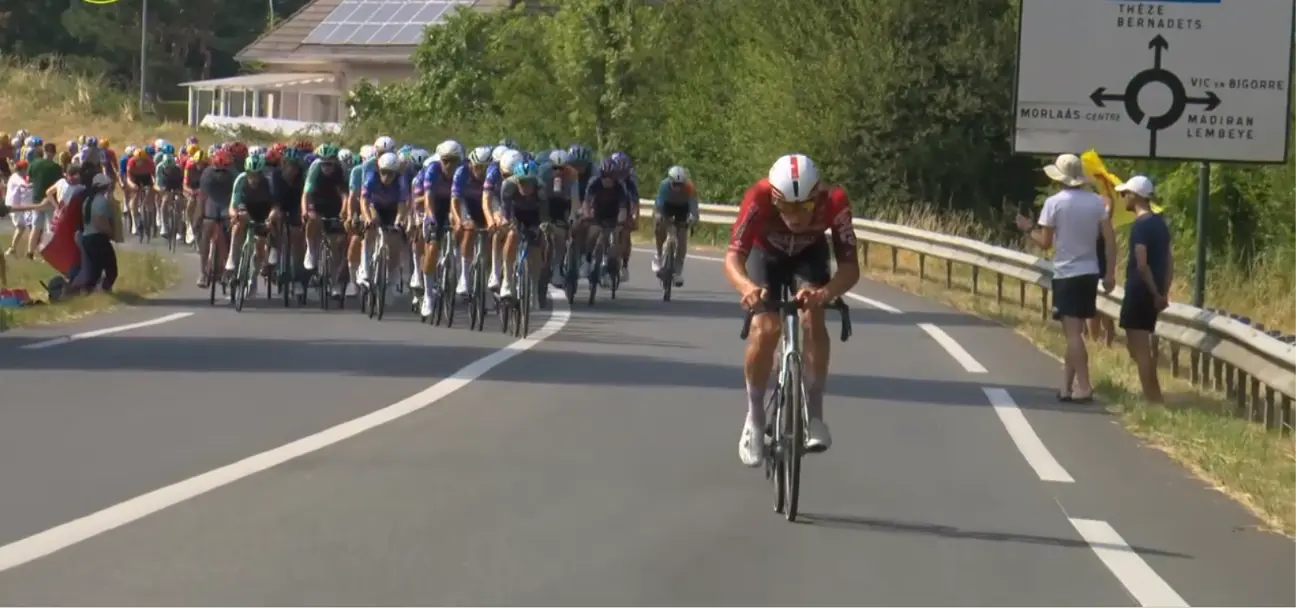
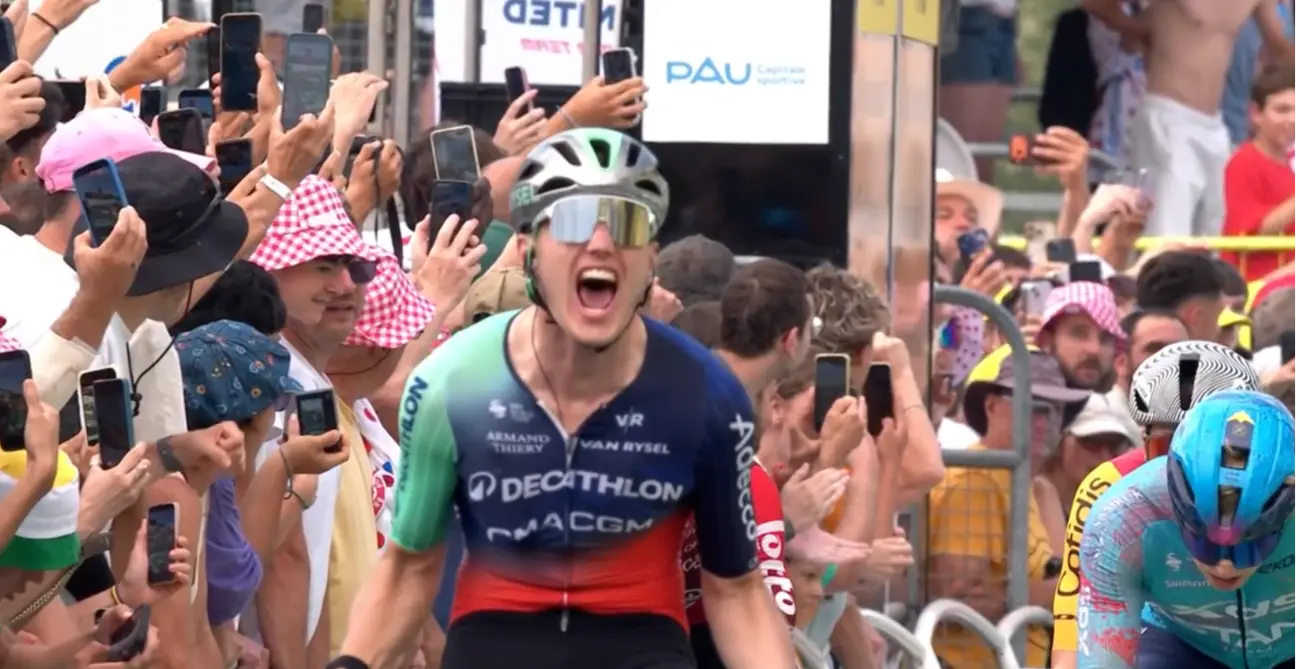
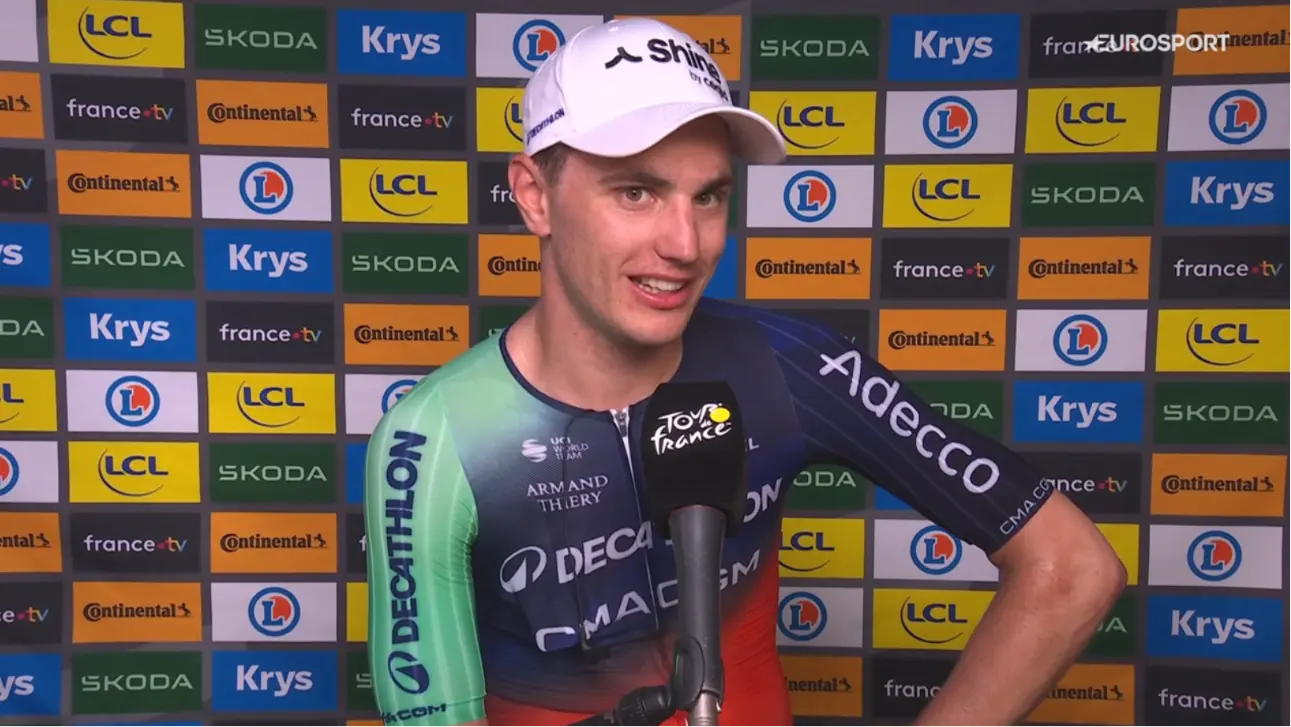
Olav Kooij can already look back on a hugely successful Tour de France debut. The Dutch sprinter claimed his first Tour stage victory on Wednesday, taking the win in the race's first pure bunch sprint in Pau. Kooij avoided all of the chaos in the closing kilometres before producing a superb sprint to beat Max Kanter and Tim Merlier.
Veistroffer flies solo
Unlike the previous stages, there was virtually no interest in forming the day's breakaway. Only one rider was willing to spend the day out front: Baptiste Veistroffer.
The French attacker, who arrived at Lotto-Intermarché last season, quickly built an advantage of around three minutes. As the lone escapee, however, Veistroffer never looked likely to fight for victory. Behind him, the sprint teams of Soudal Quick-Step and Alpecin-Premier Tech kept the race firmly under control.
Veistroffer nevertheless enjoyed his moment in the spotlight, also crossing the intermediate sprint in Vic-en-Bigorre first. Behind him, the battle for the remaining points saw Max Kanter come out on top ahead of Mads Pedersen, who also added another 16 points to his tally.
Little action on the climbs
Attention then turned towards the hilly section of the stage. The terrain appeared ideal for attacks, but the decisive Côte de Baleix produced very little action.
For one sprinter, though, the climb proved too much. Arvid de Kleijn, who had already struggled during the opening days of the Tour, was dropped once again.
While De Kleijn lost contact, Fred Wright sensed his opportunity. The British national champion attacked shortly after the summit, hoping to avoid the expected bunch sprint. Kasper Asgreen joined him, along with Valentin Paret-Peintre, although the latter – a teammate of Tim Merlier – refused to contribute to the move. Without full cooperation, the breakaway never stood a realistic chance.
Once Wright, Asgreen and Paret-Peintre had been brought back, it was finally Veistroffer's turn to be caught. After spending almost 140 kilometres off the front, the Frenchman was reeled in with just 14 kilometres remaining. His efforts were rewarded with the day's Combativity Award.
With the breakaway over, attention turned fully to the bunch sprint. As the sprint trains moved into position, tension throughout the peloton rose rapidly.
Late crash splits the peloton
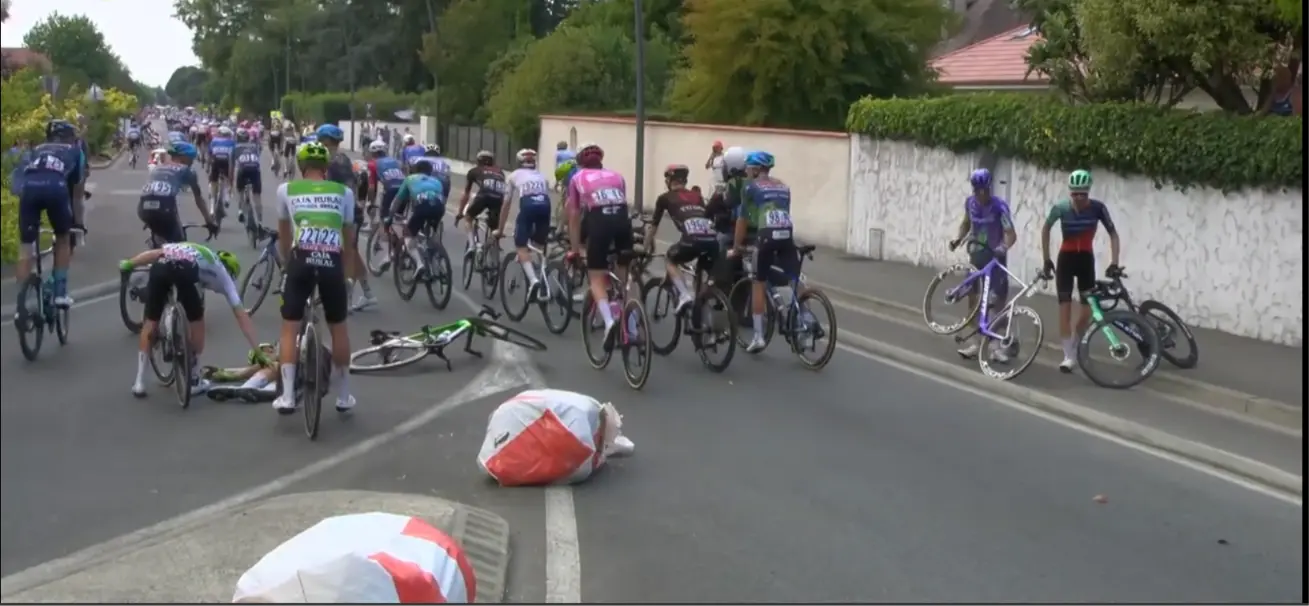
The nervous fight for position eventually resulted in a crash just over five kilometres from the finish.
Several riders hit the ground, including former King of the Mountains Alex Molenaar, splitting the peloton into two groups. Among those delayed were Jonas Vingegaard, yellow jersey Torstein Traeen and Paul Seixas.
Meanwhile, the riders who avoided the incident raced full speed towards the final kilometre, setting up the first true sprint finish of this year's Tour de France.

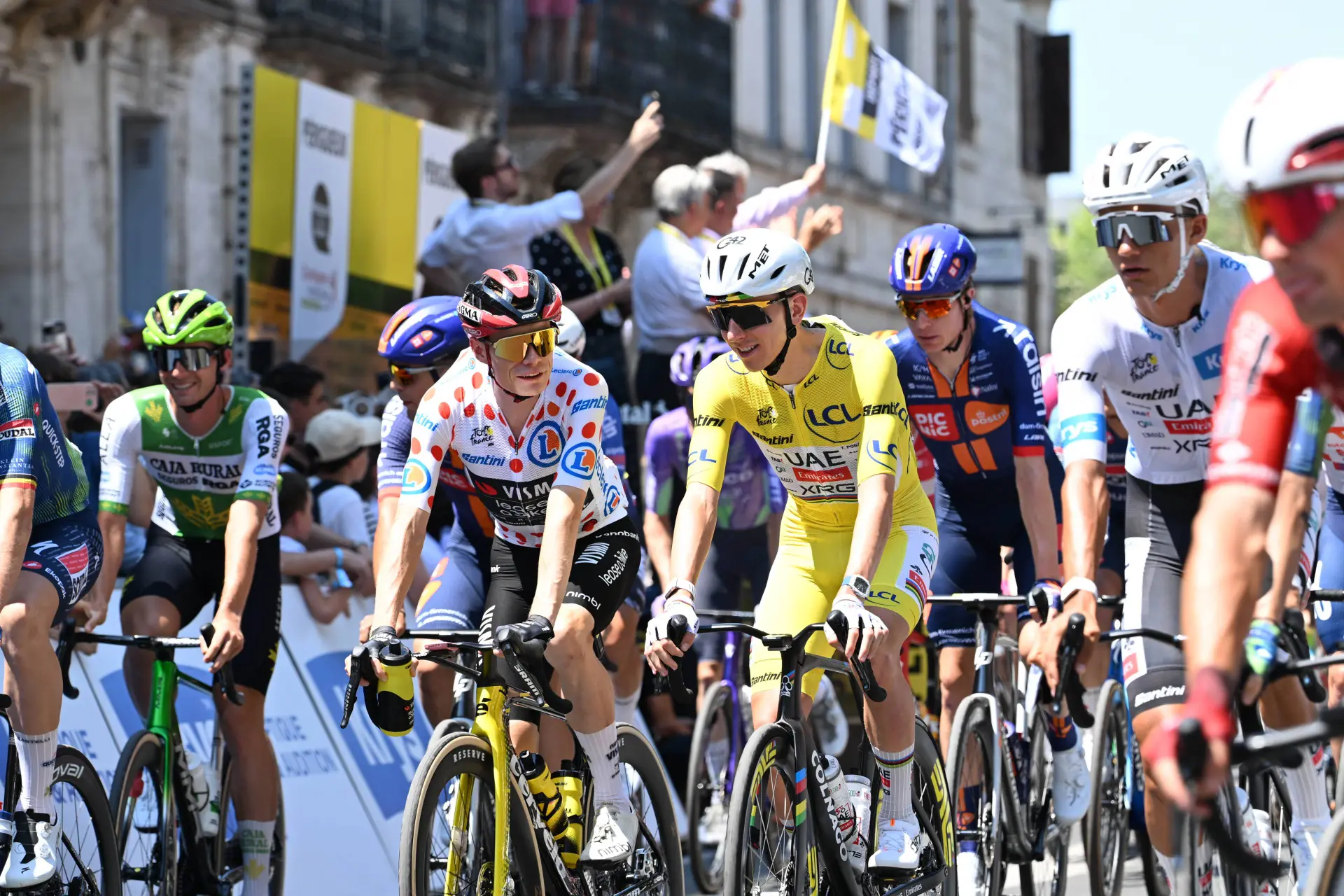
Cycling fans brought colour and atmosphere to the race as the peloton passed by.
What a boring day of racing
Carlos Silva from CyclingUpToDate shared his opinion immediately after the stage finished.
An extremely boring day. It felt like just another transition stage in a stage race. The only thing that saved us was Baptiste Vestroffer attacking as soon as the flag dropped and only being caught with 14 km to go.
I don't understand the lack of willingness to attack from the smaller teams, even if it's just to show off their sponsors' jerseys. Those sponsors deserve respect, as they invest money to keep cycling alive. If I were sponsoring a team, I wouldn't be happy at the end of the day.
After all, we're only on the fourth day of road racing, and although tomorrow's route is brutal, with the Tourmalet, nothing justifies this level of passivity. Yes... because yesterday the peloton was already riding at little more than a touring pace.
If they want to give the sport the respect and prestige it deserves, they won't attract people with this kind of spectacle on two consecutive days.
The saving grace was the colour and atmosphere that the crowds and cycling fans brought to the roadside.

A crash with 5.8 kilometres to go disrupted several lead-out trains and split the peloton into multiple groups.
Where was the ambition?
Ruben Silva from CyclingUpToDate analysed everything that unfolded on the roads of France and shared his thoughts after the stage.
A day that I wish I had more to say in the attacking section. The stage was flat yes, but when you have teams such as Picnic, Groupama, Caja Rural, TotalEnergies or Tudor for example that don't really stand any chance of winning such a stage and have very few days where they stand a chance of doing so; then you'd expect them to give it a shot.
Why not? There is very little to lose, and so much that can be gained, and all you need to do is look at the recent Giro d'Italia where even on the expected simple bunch sprint stages you'd have breakaways arriving to the line.
The lack of ambition of some teams remains completely incomprehensible to me, it is a hill that I am willing to die on that at the very least those five teams have the responsibility to themselves or even their sponsors to give it a try. It is the Tour de France, and when someone refuses to roll the dice it legitimately confuses me - they did not even give it a go when Fred Wright and Kasper Asgreen attacked.
The extreme heat has been taking a toll on the riders, and you could also feel that. An easy day on paper, but don't dare trying to tell that to the riders who spent 4 hours under temperatures above 30 degrees. Although there was terrain to attack, few dared and it came down to a bunch sprint.
Not a particularly dangerous one but the fresh peloton, flat stage and Tour de France peloton meant the speeds were incredibly high and the tension also quite high.
Cofidis and Uno-X did a great job at positioning their men into the key point of the race, and then it was Astana who did a great job with their leadout - both in the intermediate sprint, and the final one too. Excellent even.
It was a shame that Astana wasn't rewarded greatly (although Max Kanter is now a green jersey contender), but I am not bothered by Olav Kooij's victory.
It gives meaning to Decathlon's lineup choices, the victory has gone to a rider that has deserved it but only now won at the Tour for the first time; and evens out the green jersey battle quite a bit - although the gaps to Mads Pedersen have to be closed.

Baptiste Veistroffer spent more than three hours riding solo at the front of the race. He was caught by the peloton with 14 kilometres remaining, but his brave effort earned him the day's Most Combative Rider award, which he received on the podium after the stage.
Kanter comes agonisingly close
Pascal Michiels from RadsportAktuell was delighted by the performance of his compatriot Max Kanter, who secured an excellent second place on the day, only being beaten by Olav Kooij.
For German cycling fans, this one will hurt. Max Kanter did almost everything right in Pau. On a day when the Tour de France finally seemed ready for its first classic bunch sprint, the finale exploded into chaos. Two crashes ripped the peloton apart, the usual high-speed Pau sprint never fully materialized, and suddenly the door opened for a rider like Kanter to take the biggest win of his career. And he was close. Very close.
XDS Astana delivered him into the final two kilometers with remarkable strength. Four riders from Kanter’s team were still present near the front, controlling a shattered front group while many of the expected sprint giants had lost their trains, their position, or their rhythm. In that moment, this was no longer a normal Tour sprint. It was a rare opportunity created by nerve, positioning and survival.
Kanter was exactly where he needed to be. With only one Astana rider still in front of him, he looked ready to launch toward the line. But behind him sat Olav Kooij, waiting patiently in the German’s wheel. And when the Dutchman came, he came with brutal speed. That was the decisive moment.
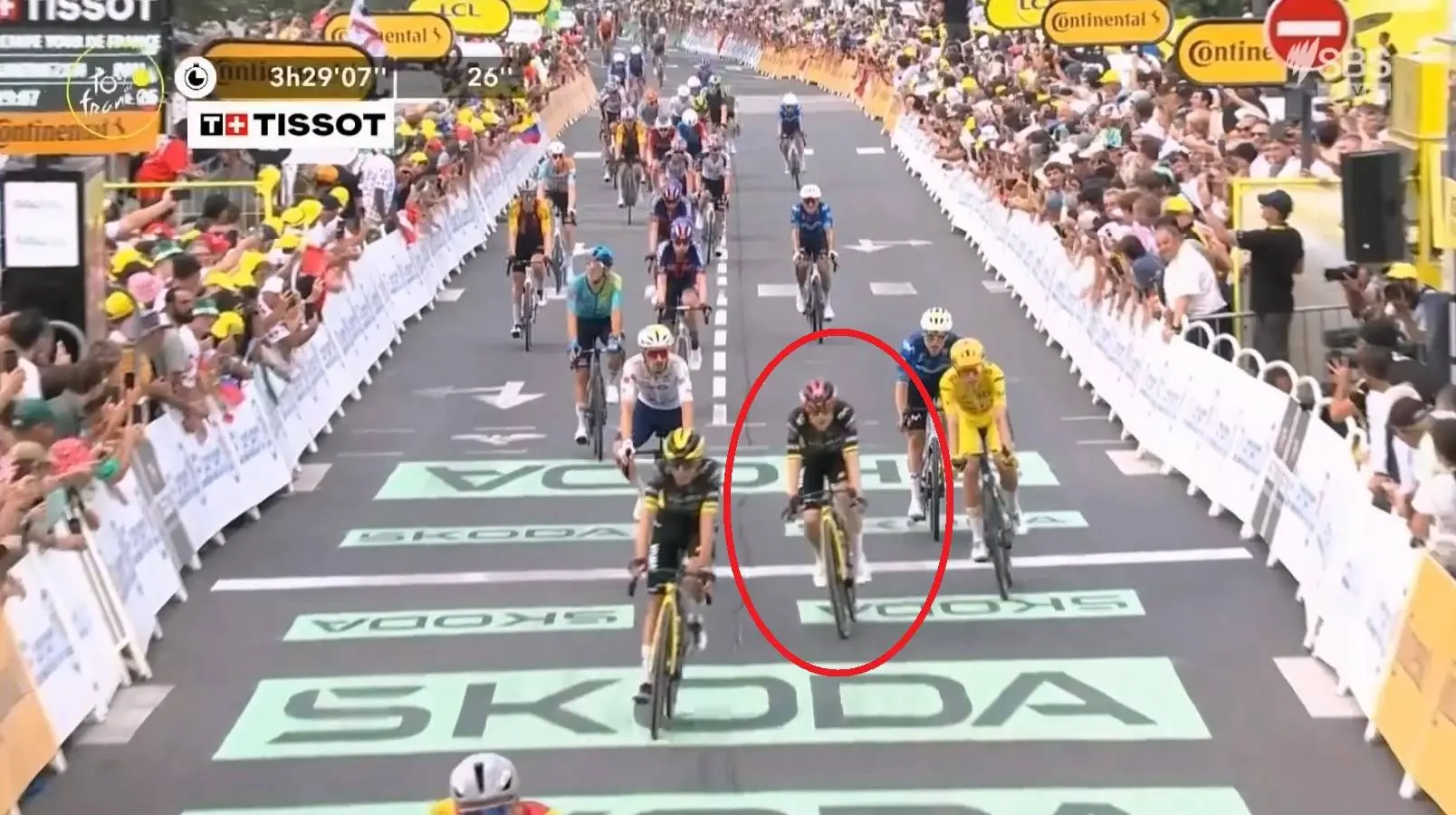
Kanter reacted too late. Not because he was weak, but because Kooij had the perfect slipstream, the better timing and the explosive finishing speed to come over the top. Once Kooij launched, Kanter could not close the door anymore. Still, this was not a failure in the ordinary sense.
Kanter beat the rest of the front group. He finished ahead of Tim Merlier, Jasper Philipsen, Biniam Girmay and Mads Pedersen in the stage result, on a day when many bigger sprint names were caught out by the disorder of the finale. The official result says Kooij won and Kanter finished second, with Merlier third and Philipsen fifth.
But emotionally, for German fans, second place will feel like a missed victory. These chances do not come often in the Tour de France. Not for Kanter, not for Astana, and not for German sprinting in general. Kanter was not the fastest man in Pau. Kooij proved that.
But Kanter was the best of everyone else who survived the chaos at the front. The encouragement is just as obvious: Kanter showed he belongs in this kind of finale. On another day, with one cleaner launch or one second earlier reaction, Germany might have been celebrating a Tour de France stage win.

Olav Kooij left Visma in search of the opportunity to race the Tour de France, and at the first chance he got, the Dutchman proved exactly why. He left no doubts about his quality, sprinting to a commanding victory on Stage 5.
Kooij strikes before the Tourmalet
Jorge Borreguero from CiclismoAlDía closely followed the action on the French roads and shared his thoughts on what he witnessed during the day.
Stage 5 of the 2026 Tour de France unfolded almost exactly as expected. It was a day built for the sprinters and, apart from Baptiste Veistroffer's brave move straight from the start, it never really felt like the victory would slip away from the peloton. The teams controlled the race with complete composure, conserving energy for the major mountain battle awaiting on the Tourmalet.
Olav Kooij took full advantage of the opportunity. The Dutchman benefited from a split peloton following the crash with 5 kilometers to go, where many of his rivals were left with little or no lead-out support, and once again showed that, when it comes down to a bunch sprint, he is one of the fastest finishers in the world. Winning at the Tour de France is always special, and doing so in such a chaotic sprint further underlined his outstanding form.
Uno-X Mobility also deserves plenty of credit. The Norwegian team defended Torstein Træen's yellow jersey flawlessly, controlling the breakaway from the very beginning and preventing any real threats before the crash inside the final 5 kilometers, allowing their leader to safely reach the finish despite the incident. They know the yellow jersey will likely change hands on the Tourmalet, but enjoying another day in yellow already represents a tremendous success for the team.
Now all eyes turn to Stage 6.This is where the Tour de France truly begins. The Tourmalet should provide the first major showdown between Tadej Pogacar and Jonas Vingegaard, with the Slovenian starting as the favourite given his current form.
If Pogacar attacks with the same aggression he has shown throughout the season, it will be fascinating to see whether Vingegaard can respond, or whether the UAE Team Emirates - XRG leader will reclaim the yellow jersey with a dominant performance on one of cycling's most legendary climbs.
Verdict
Stage 5 will not be remembered as a great day of racing, and that was the clear feeling across all four opinions. The route may have pointed towards a sprint, but the lack of ambition from several smaller teams was hard to defend. With so few chances available at the Tour de France, simply riding through the day and waiting for the sprint felt like a missed opportunity, especially for teams that depend on visibility.
The only real resistance came from Baptiste Veistroffer, whose early attack at least gave the stage some purpose before the peloton finally brought him back. Behind that, the heat, the control of Uno-X Mobility and the looming Tourmalet all helped explain the caution, but they did not fully excuse it. The roadside crowds brought more colour to the day than the race itself.
In the end, the chaotic finale gave the stage its drama. Olav Kooij confirmed his speed with a deserved first Tour de France victory, while Max Kanter came painfully close to a career-defining win after excellent work from XDS Astana. Still, the overall verdict is simple: a dull stage saved late by crashes, positioning, a sharp sprint, and the promise that the real Tour should begin on the Tourmalet.
And you? What did you make of the stage 5 of the Tour de France 2026? Tell us your thoughts, share your opinion on all the key moments and incidents from the race, and join the discussion.
Carlos Silva is a writer for CyclingUpToDate.com, where he contributes race reports, interviews, analysis pieces, and live coverage of the international cycling calendar. Holding a degree in Sports from the Jean Piaget Institute, he combines academic knowledge of performance, training, and competition with hands-on journalism experience in professional cycling.
Throughout his career, Carlos has conducted interviews with leading figures in the sport, including Alberto Contador, Joaquim Rodríguez, Óscar Pereiro, João Almeida, Isaac del Toro, Derek Gee, John Degenkolb and Geraint Thomas. These conversations reflect direct engagement with Grand Tour winners, Classics specialists, and emerging talents.
He has provided on-site coverage at major events ranging from the Vuelta a España to the Tour de France, alongside stage races such as Vuelta a Andalucía, Volta ao Algarve, Volta a Portugal and O Gran Camiño. Covering the mythical climbs of the Giro d'Italia remains one of his professional ambitions.
Carlos is responsible for liveblog coverage of all major WorldTour races and beyond, including the Tour de France, Giro d'Italia and Vuelta a España. His reporting integrates verified data from ProCyclingStats to ensure statistical accuracy, contextual depth, and analytical precision.
A lifelong cycling enthusiast, he approaches storytelling across written, photographic, and video formats with a focus on credibility, tactical insight, and informed race interpretation.
claps 1visitors 1
Just in
Popular news
Latest comments
- Campenaerts looked like a rolling pumpkin with that all orange leaders skinsuit !frieders318-10-2026
- He can take his dumb a$$ politics somehwere else !frieders318-10-2026
- good to have her back. fingers crossed she‘ll be able to stay!Ketterechts17-10-2026
- A tenner and he wins the Tour next year, too 😂anonymouscyclist17-10-2026
- the answer is either stick to classics or GTs but not bothabstractengineer17-10-2026
- the exodus already stared with Ciccone. Already they were struggling with two sprinters, now there are three. Also Ganna will demand leadership. Gall is the most proven GC, Ayuso has the most potential. GC leadership for everybody will be impossible. Literally a UAE style mess without pogi.abstractengineer17-10-2026
- I raced as an amateur for 12 years, including six years on my country’s national road cycling team. I secured two national titles and competed in three World Championships plus more than 15 international stage races. At 23, we travelled to Italy for a training camp—or so I assumed. On a rest day, we watched a presentation about adopting a more “professional” training approach. It was crystal clear what “professional” meant. That moment first exposed me to this dilemma. After returning from Italy, I left cycling—at least at the competitive level I had known. Over the following two years, the whole team was caught doping. I hold that everyone is innocent until proven guilty. In my view, current stakeholders operate on a different scale, and the sums involved are vast. I am unsure whether any doping would ever be revealed. I try to stay positive and enjoy the show. My 2c.
 vannpelt17-10-2026
 - Fiver he wins 🤣
 leedorney17-10-2026
 - “…measures to reduce speeds.” Might as well shorten the race course to just 50km as well? ASO generates at minimum €300m a year and 30- 40% profit. Maybe stop being greedy and spend more of the profit to protect the riders instead.b3tlla17-10-2026
- he also had quite the life off the bike during his pro years. he used his celebrity status to full affect.mij17-10-2026
Loading
Write a comment