DISCUSSION - Tour Auvergne-Rhône-Alpes stage 4 - Could Visma have done more for Wout Van Aert?
Cycling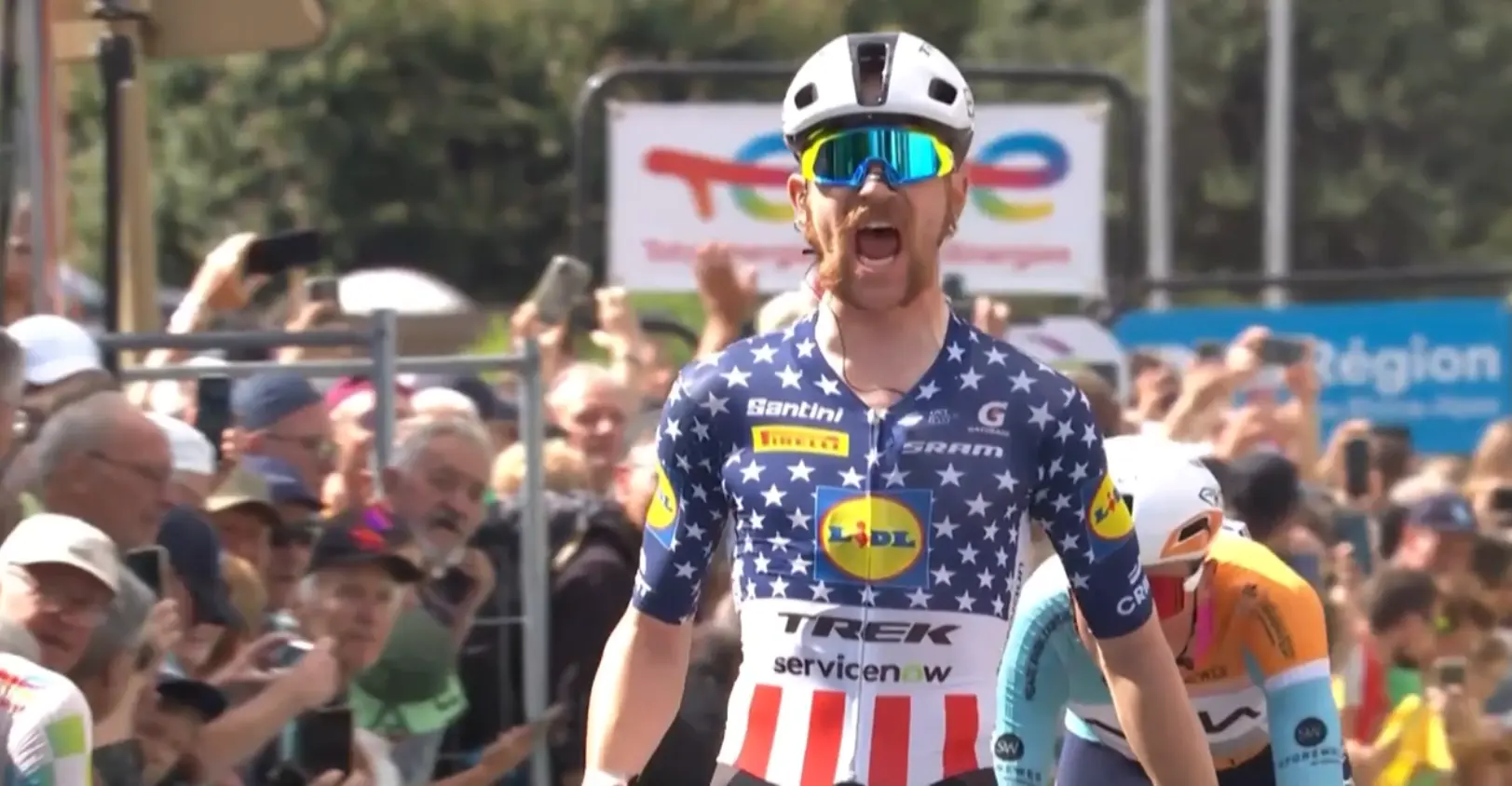
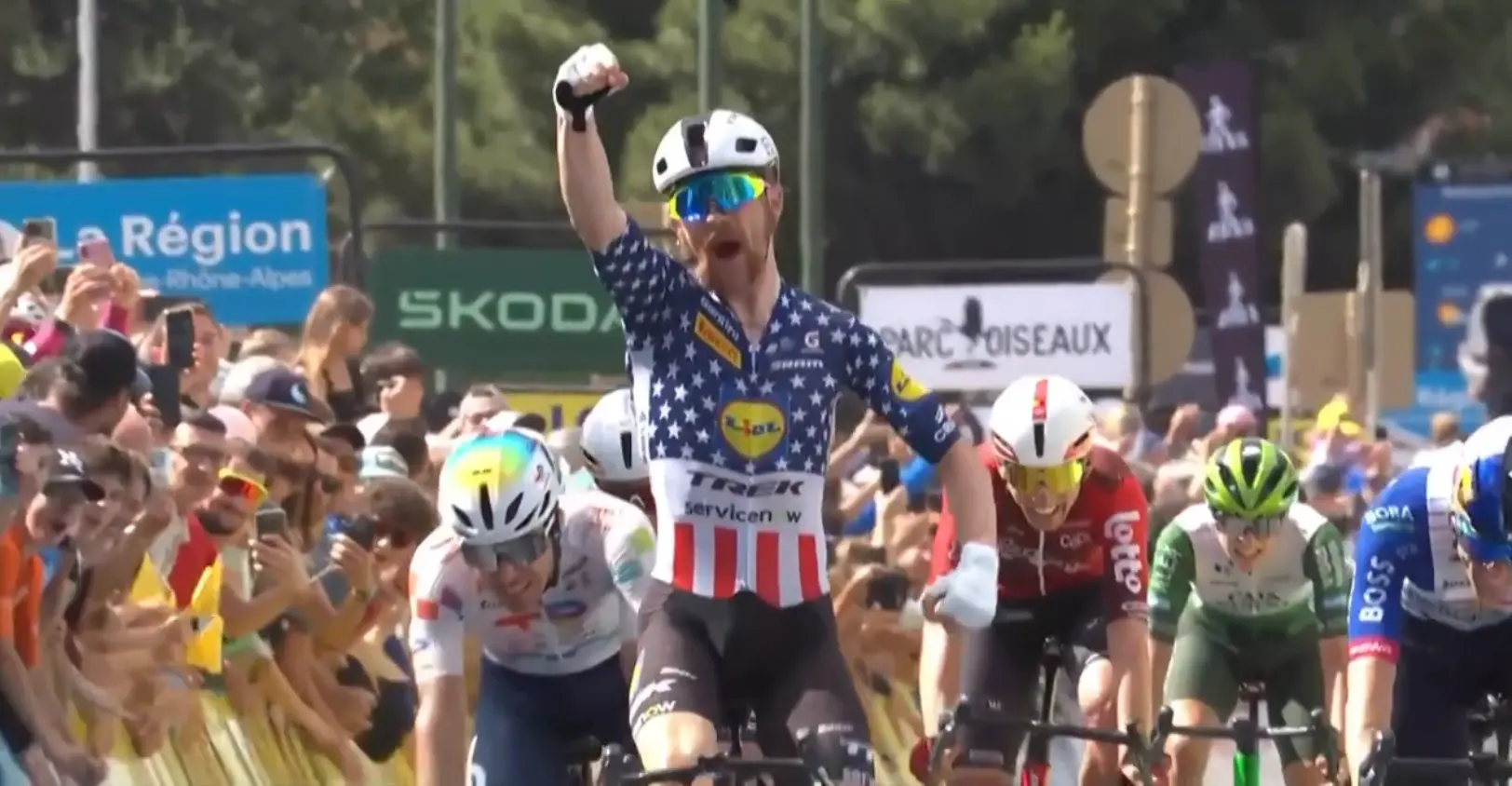
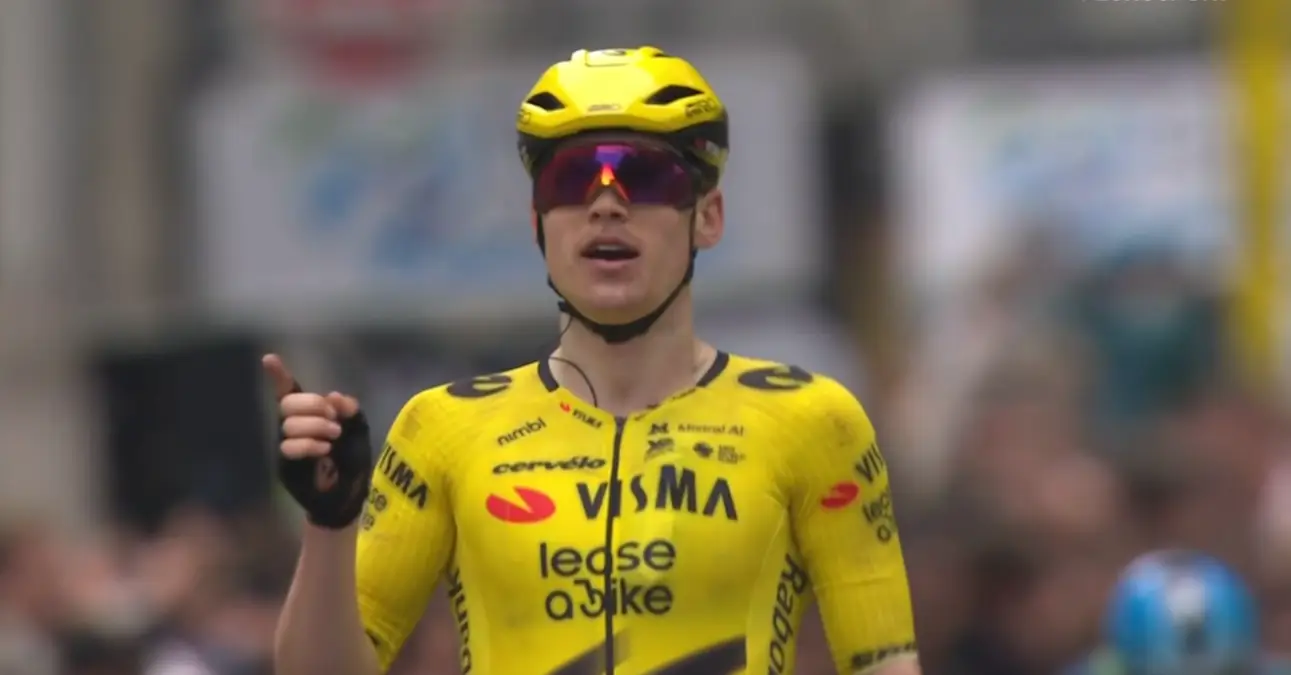
American national champion Quinn Simmons powered to victory on stage four of the Tour Auvergne-Rhône-Alpes after surviving a relentless day in the breakaway. The Lidl-Trek rider timed his sprint perfectly from a reduced leading group, while Wout van Aert won the bunch sprint several seconds later.
A stage with two different stories
After three demanding days in the mountains, the general classification contenders were finally handed a stage that offered at least some opportunity to recover. Still, the opening half of the day was anything but straightforward.
The route featured a succession of climbs, including the Col des Pradeaux and Col des Limites, before flattening out considerably over the final forty kilometres. That profile created uncertainty from the start. Climbers and attackers saw an opportunity, while the sprint teams were left wondering whether they would still have enough control by the finish.
The opening hour was raced at full speed, with constant attacks and failed attempts to establish a meaningful breakaway. It took more than sixty kilometres before the decisive move finally formed.
Simmons among aggressive twelve-man escape
Simmons was one of the key instigators. Together with Andreas Kron and Jordan Jegat, the American helped launch a dangerous group that eventually grew into a twelve-man escape.
The move also included Lars Craps, Pablo Castrillo, Paul Garcia Pierna, Finn Fisher-Black, George Bennett, Marco Frigo, Matteo Vercher, Jon Castellon and Samuel Watson. Watson later disappeared from contention after suffering a painful crash. Behind them, Gijs Leemreize and Hugo Houle attempted to bridge across but never managed to close the gap.
The advantage of the leaders remained relatively small throughout the stage. Team Visma | Lease a Bike controlled much of the pace in the peloton and kept the breakaway within reach. The pressure in the bunch was high enough for Juan Ayuso to briefly lose contact on one of the climbs, although the Spaniard quickly regained his place in the main field.

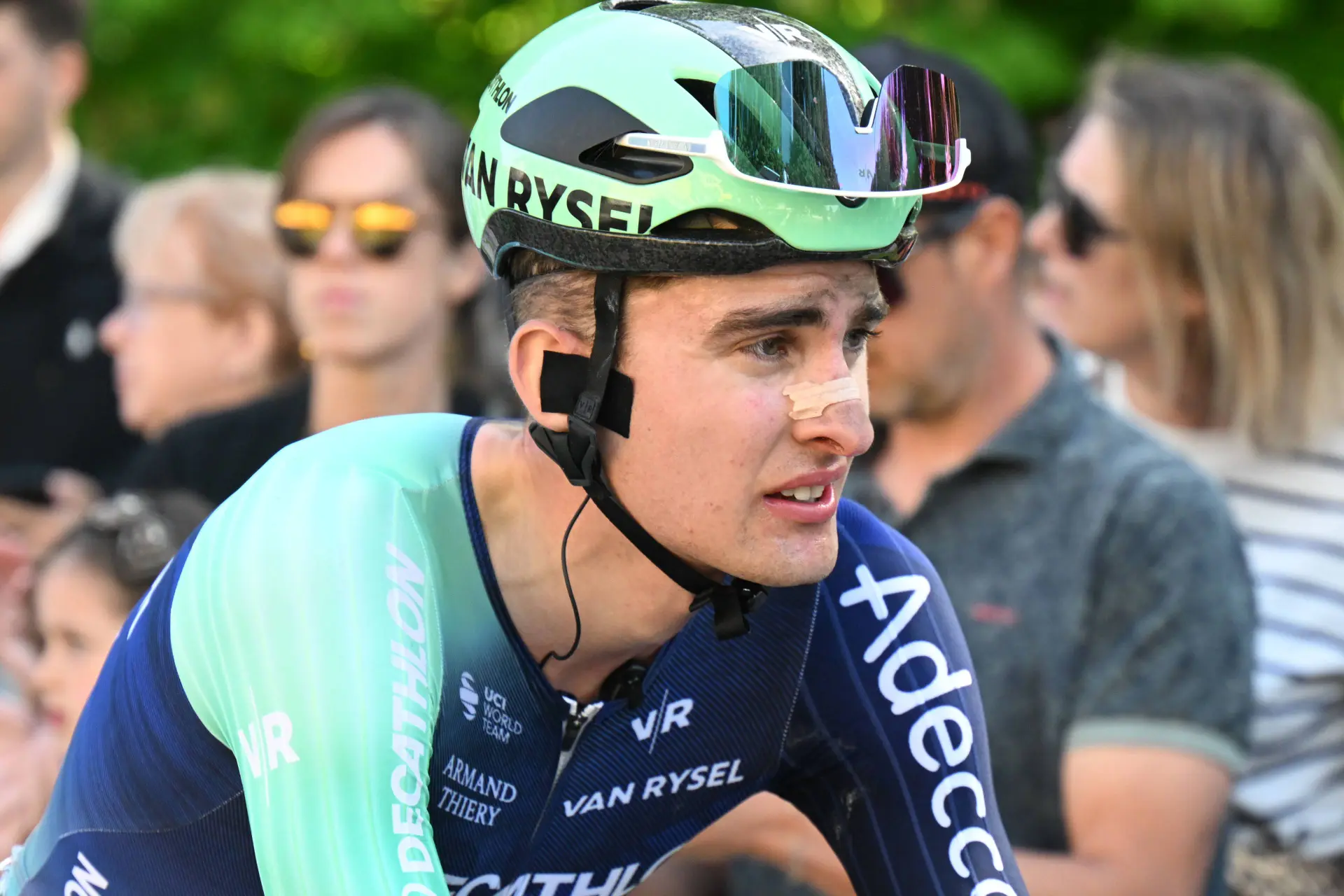
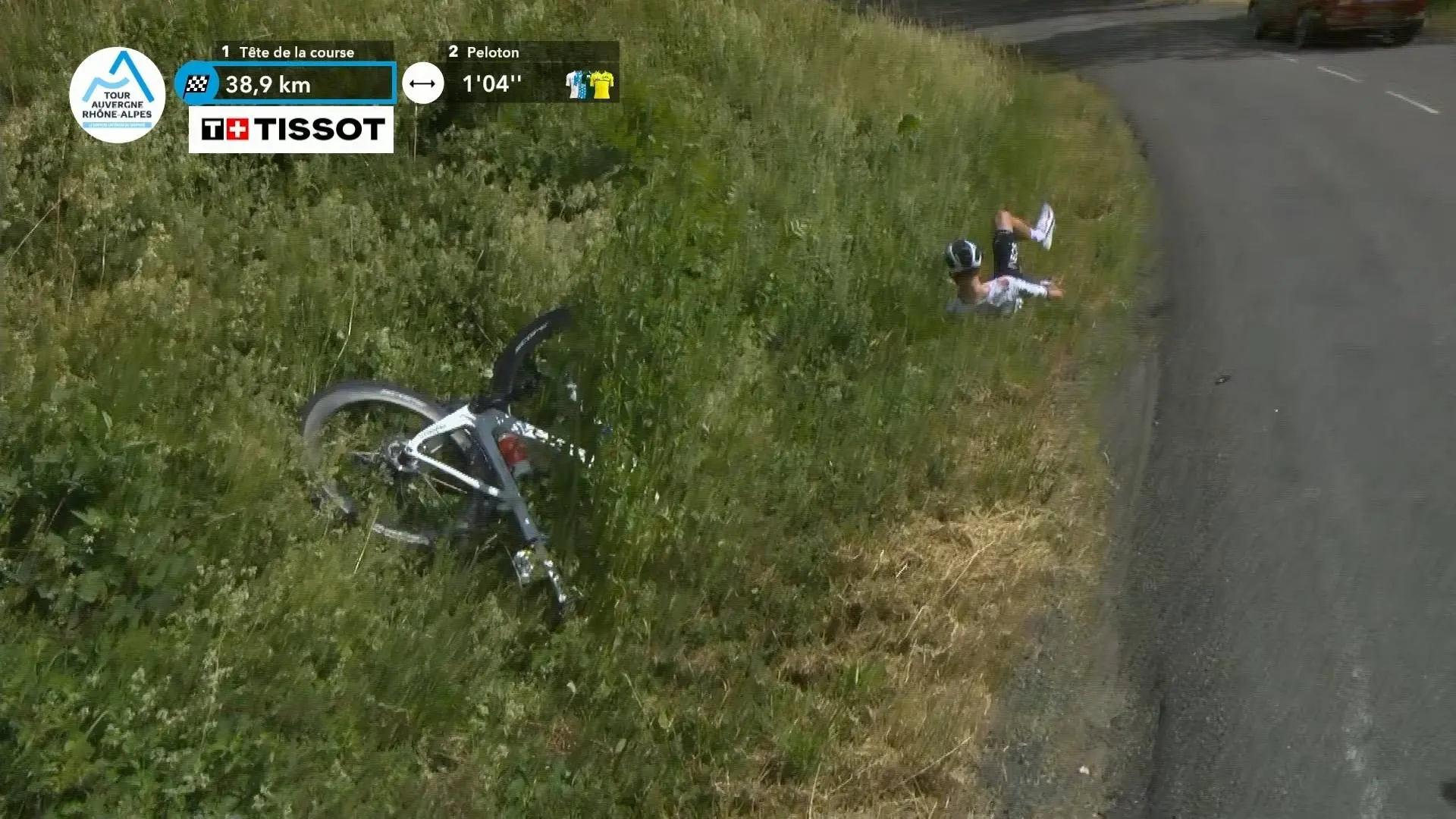
Samuel Watson crashed at high speed and was left badly battered.
Breakaway refuses to surrender
Once the toughest climbing sections were over, the race entered a tense and fast finale. Bennett sacrificed himself for teammate Frigo, leaving ten riders at the front, but the cooperation among the remaining escapees never faded.
The gap hovered around thirty seconds for much of the closing phase. Behind them, the chasing teams struggled to organise a proper pursuit.
TotalEnergies and Movistar carried much of the responsibility in the final kilometres, with both teams represented in the breakaway and eager to turn their numerical advantage into victory. In the peloton, meanwhile, the workload had clearly taken its toll.
Read also
Simmons delivers perfect timing
Despite the pressure from behind, the escapees managed to stay clear and sprint for the stage victory. Kron launched his effort from distance, hoping to catch the others by surprise, but Simmons remained calm. The Lidl-Trek rider waited patiently before producing a perfectly timed acceleration in the final metres. Finn Fisher-Black tried to respond but could not come around the American champion.
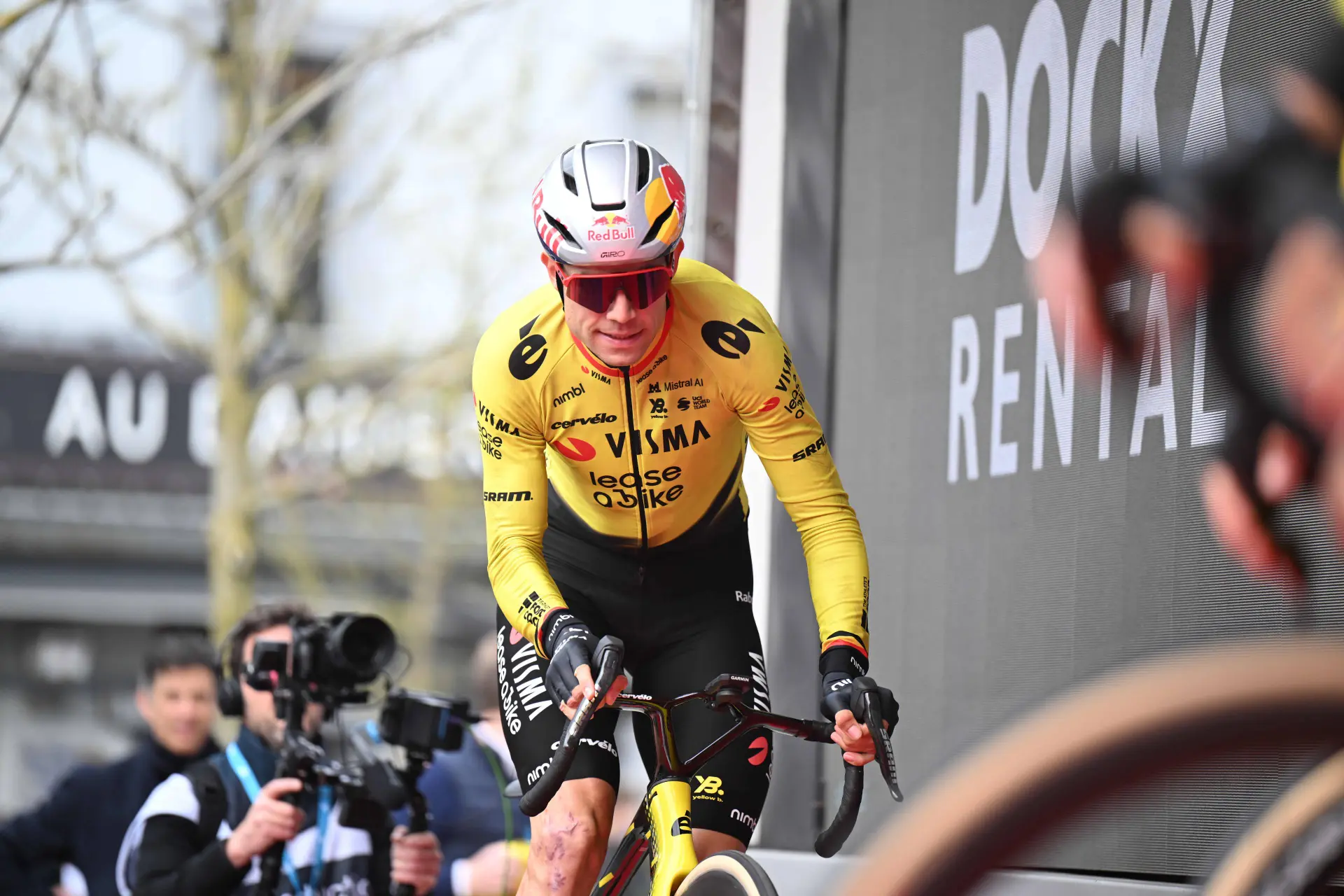
A few seconds later, Van Aert led the peloton home ahead of Bryan Coquard, winning the sprint for the minor placings, but the day belonged entirely to Simmons and the breakaway.
Breakaway reads the race perfectly
Carlos Silva from Cyclinguptodate kept a close eye on the action out on the road and offered a concise summary of what unfolded. Another stage, another victory for the breakaway. On the opening day of the race, he predicted we would see at least four wins from the break, and now only one more is needed for that prediction to hit the mark. But let’s be honest, today’s breakaway was packed with strong riders and the outcome was entirely in their hands.
When the front group reached the final 30 kilometres with just over a minute in hand over the peloton while travelling at nearly 60 km/h, it already looked clear they would stay away to the finish. Behind them, neither INEOS Grenadiers nor Team Jayco AlUla contributed to the chase, while Visma only spent limited time on the front. Most of the workload was left to Bahrain Victorious and Cofidis, with Tudor Pro Cycling appearing at the head of the peloton only sporadically.
Read also
INEOS had Sam Watson up the road, so their lack of cooperation initially made sense. However, after Watson crashed, they could still have committed riders for Dorian Godon. The same can be said for Visma, who perhaps should have started working earlier instead of waiting until Cofidis had already exhausted most of their domestiques.
At this moment, Wout van Aert is probably reflecting on what could have been another victory added to his palmarès, but Visma clearly decided that burning excessive energy for a stage win at the Auvergne-Rhône-Alpes was not a priority. Quinn Simmons eventually raised his arms in celebration, although the victory could just as easily have gone to Finn Fisher-Black. Both riders were among the most active figures in the breakaway throughout the day.
As for João Almeida, he once again drifted towards the back of the peloton on the final climbs and ended up conceding more time at the finish line.

João Almeida went over the final climbs at the back of the peloton
A proper breakaway battle
Ruben Silva from CyclingUpToDate had predicted another victory for the breakaway and, by the end of the stage, the outcome came as no surprise to him.
It was a day for a breakaway, and we had what we were promised. I must say I find it interesting and refreshing, as nowadays the difference between the top and the average rider in the peloton is so immense that you rarely see breakaways win.
Now, three wins in three road stages, which lead to a surprise GC leader, a points classification without sprinters and GC riders... Overall just a race where there are some unlikely protagonists, and the stage hunters are getting the opportunities they lack elsewhere.
Today the fight to make it to the front was brutal and only strong riders could make it, as it went on a late climb on the day. This meant it was impossible to control, and many of the main favourites knew where they had to be. Simmons, Kron, Fisher-Black, Castrillo, Frigo... You couldn't hope for a stronger group really, as all the puncheurs and classics specialists were active.
They survived, but not do the lack of action in the peloton, as several teams committed fully. Following Wout Van Aert's progression, Phil Bauhaus trying to get a key World Tour win and Bryan Coquard trying to make a comeback are nice stories to have for a sprint stage, unlike the recent Giro where it was "will Magnier will again or not" on all of them.
It's rare to see a breakaway collaborate so well deep into a finale, but the sense is that there were a lot of brains up front and they coordinated everyone where they knew that's what had to be done for them to win. Quinn Simmons thrives on the aggressive races, the powerful attacks, but you can't ignore his sprint. It was very strong, and impressive taking into consideration he beat Finn Fisher-Black. A proper breakaway stage, even if we didn't see the internal battle between themselves - which again, is rare nowadays, so something I enjoyed.

The breakaway committed fully to the move and, by the end of the day, was rewarded with victory
Breakaway strikes again
Javier Rampe from CiclismoAlDia took a close look at the day’s breakaway and particularly at the Spanish team that managed to place two riders in the move, before eventually putting his thoughts into words after the finish.
The fourth day of racing completely broke away from the script of the modern peloton: a stage designed for a controlled breakaway and another day of Visma dictating the rhythm, almost like a repeat of what we saw throughout the Giro, cycling’s own version of Groundhog Day.
Thankfully, when a powerful breakaway is filled with riders carrying both ambition and commitment, it often produces a memorable finale. And today, just when it seemed everything would once again fall into the hands of Visma’s calculated tempo, the attackers found the strength for one final effort.
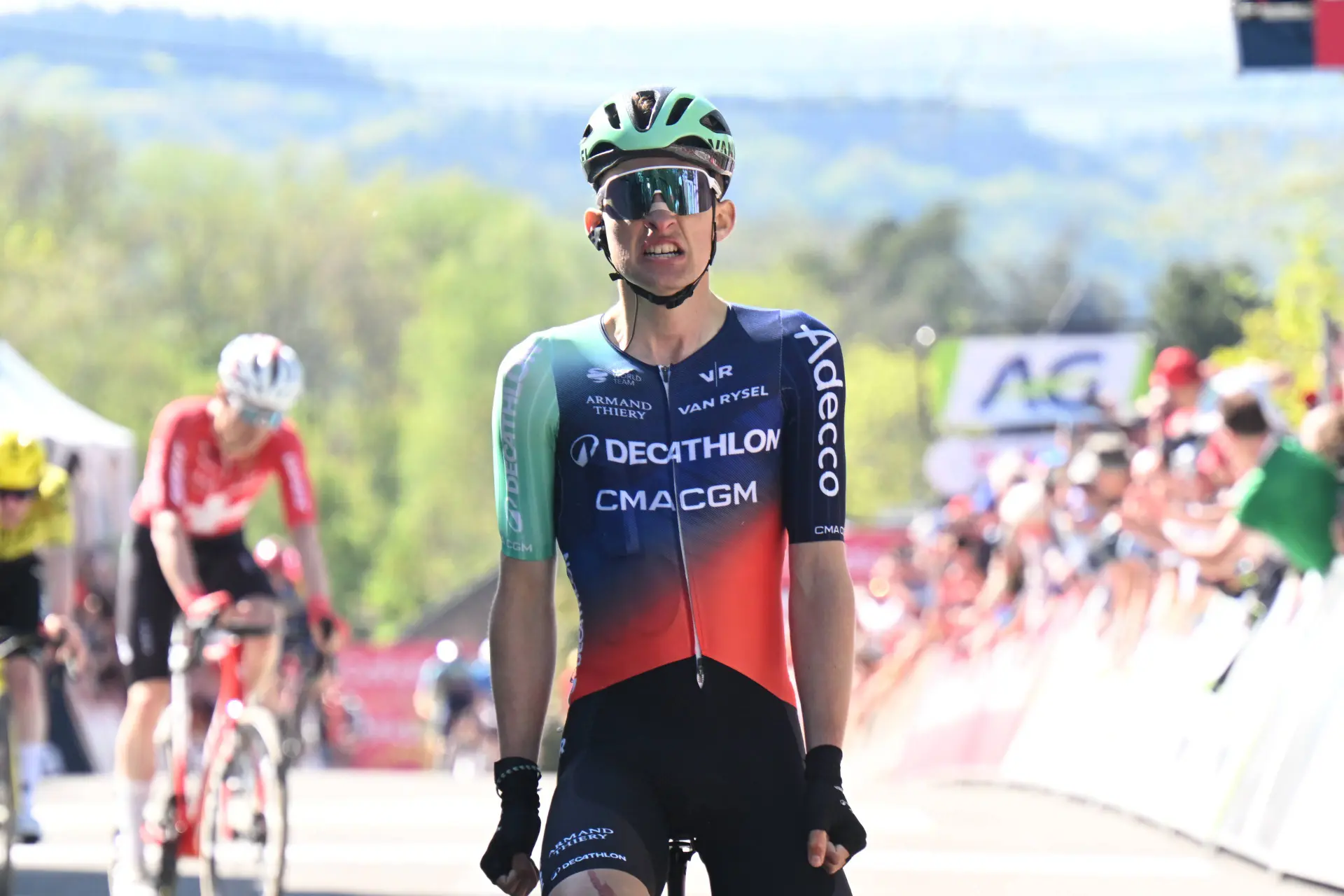
That decisive move came from Pablo Castrillo, who looked set to launch Raúl García Pierna, only for Quinn Simmons to appear at exactly the right moment and snatch victory away from the Spaniards. Movistar perhaps paid the price for a touch of hesitation, but the American deserved the win after being one of the riders who animated the breakaway the most throughout the stage.
As for the stage itself, there is not much more to analyse tactically. The breakaway only really had one opportunity, and that was on the Côte de Roche-en-Forez. What happened afterwards? The peloton simply refused to increase the pace, choosing instead to lull the race into a controlled procession. It was difficult to understand why the teams with the least chance of winning in a sprint did not attempt to make the race harder and eliminate the faster men. Many of those same teams failed to place a rider in the breakaway and still followed every move proposed by Visma, even when it clearly went against their own interests, racing with caution rather than ambition.
The fourth day of racing ultimately ended with another heroic victory for Quinn Simmons, a rider whose triumphs rarely arrive without a fight. Honour once again to the riders willing to chase the impossible.
Results powered by FirstCycling.com
A warning for the peloton
More than just another victory for the breakaway, this stage felt like a reminder that modern cycling still rewards courage, instinct and collective commitment when the conditions are right. While several teams hesitated behind and waited for others to take responsibility, the riders up front fully understood their opportunity and raced with conviction from start to finish. Quinn Simmons ultimately took the victory, but the real winners were the attackers themselves, who turned what could have been a controlled and predictable day into one of the most entertaining stages of the race so far.
And you? What did you make of the stage 4 of the Tour Auvergne-Rhône-Alpes 2026? Tell us your thoughts, share your opinion on all the key moments and incidents from the race, and join the discussion.
Carlos Silva is a writer for CyclingUpToDate.com, where he contributes race reports, interviews, analysis pieces, and live coverage of the international cycling calendar. Holding a degree in Sports from the Jean Piaget Institute, he combines academic knowledge of performance, training, and competition with hands-on journalism experience in professional cycling.
Throughout his career, Carlos has conducted interviews with leading figures in the sport, including Alberto Contador, Joaquim Rodríguez, Óscar Pereiro, João Almeida, Isaac del Toro, Derek Gee, John Degenkolb and Geraint Thomas. These conversations reflect direct engagement with Grand Tour winners, Classics specialists, and emerging talents.
He has provided on-site coverage at major events ranging from the Vuelta a España to the Tour de France, alongside stage races such as Vuelta a Andalucía, Volta ao Algarve, Volta a Portugal and O Gran Camiño. Covering the mythical climbs of the Giro d'Italia remains one of his professional ambitions.
Carlos is responsible for liveblog coverage of all major WorldTour races and beyond, including the Tour de France, Giro d'Italia and Vuelta a España. His reporting integrates verified data from ProCyclingStats to ensure statistical accuracy, contextual depth, and analytical precision.
A lifelong cycling enthusiast, he approaches storytelling across written, photographic, and video formats with a focus on credibility, tactical insight, and informed race interpretation.
claps 1visitors 1
Just in
Popular news
Latest comments
- only way for him to effectively learn to microdose is to go to uae. other than that there is no reason for him to go to uae.whkman12-10-2026
- that was a great win, and quite a surprise at the time. That was a loaded field, and he held of Valverde for the win. Still shocking that Valverde never won Lombardia. He seemed perfect for it. Mollema just went to work every day.mij12-10-2026
- I hope he races Volta a Majorca. We'll really be able to see if he can do one-day-races (but do they count?)
 Rafionain-Glas12-10-2026
 - See, you can write a sensible comment without just slagging off everyone else! Well done!👏😆 🫣Lozza12-10-2026
- Seixas best chance is obviously UAE. They are the best team in history of the sport and they developed pogacar into the goat. They also developed Del Toro to be nr 2 in world. Seixas would become unstoppable at UAE. Lets see if Seixas stays at decathlon but if UAE comes knocking its impossible to say no. Barcelone and real madrid combined into one team, thats UAE in cycling it feels like..miguel12-10-2026
- I think he does or goes to whichever team gives him the scope to become the rider everyone thinks he'll be when Tadej stops.. that simpleslappers6612-10-2026
- I remember at one time he was mentioned in the same breath as Seixas. no more. Onley has a lot of work to do to be deserving of that.mij12-10-2026
- I hope he goes to Bahrain-Victorious to mentor JakobRafionain-Glas12-10-2026
- I hope he stays! Cycling is more fun with Primoz, even if he is not winning.mij12-10-2026
- yes for sure, there will be more chances for him at Euro than Lombardia. I wonder if that emotion wasn't also because he knows he has now been eclipsed by a younger rider w/o his goals being checked off. At least when Seixas over takes Tadej someday, Tadej will have accomplished his major goals. He still has Roubaix left, but Seixas isn't a threat there. And he should find a year to get Vuelta. Remco now is behind at least 2 riders w/o ever having won a Tour, one monument to his name, and the next few World Championships are not Remco friendly. I would still take Remco's wins though!!!mij12-10-2026
Loading
Write a comment