DISCUSSION | Strade Bianche 2026 - Do smaller engines provide more excitement and suspense? Sponsors, disconnected teams, bad luck, good fortune, Pogi & Paul
Cycling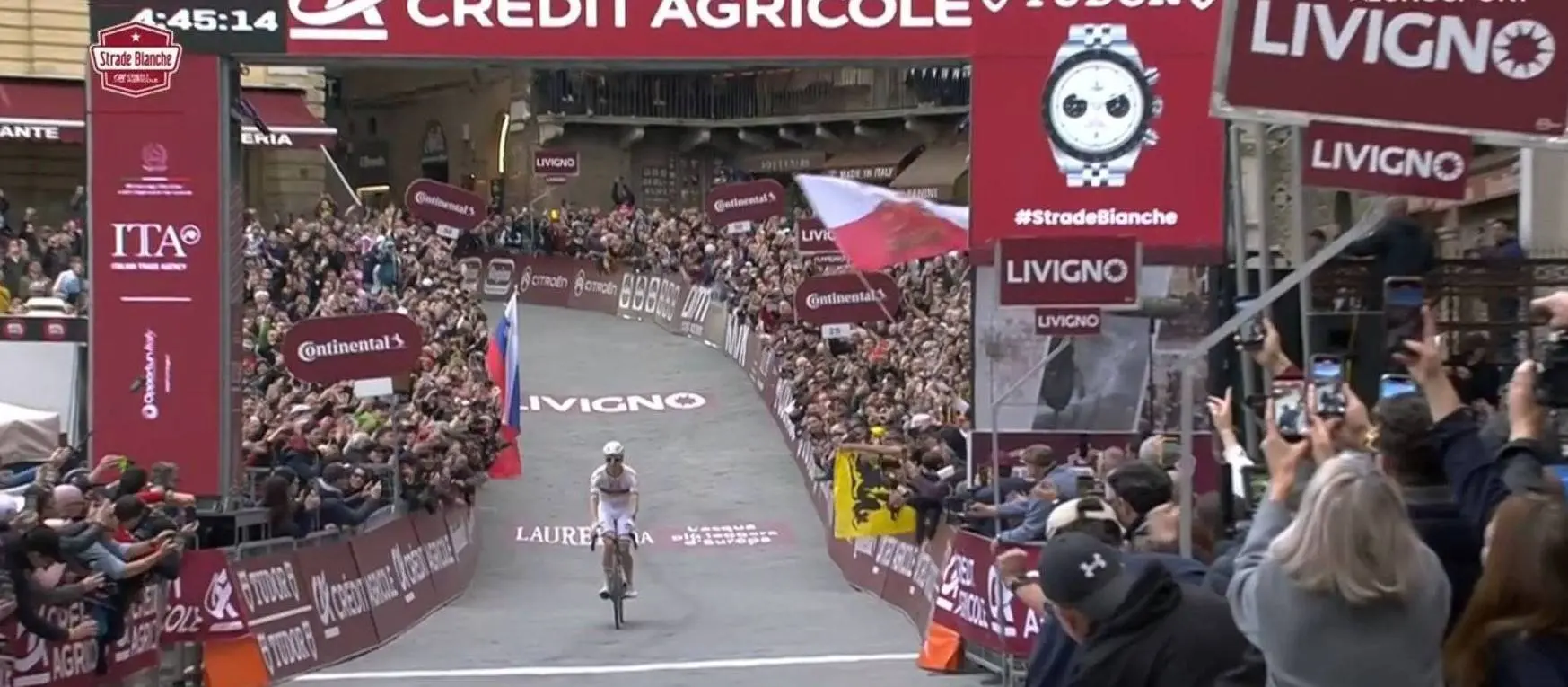
Tadej Pogacar opened the 2026 season in the most impressive way possible, winning the 20th edition of Strade Bianche with another commanding performance on the gravel roads of Tuscany.
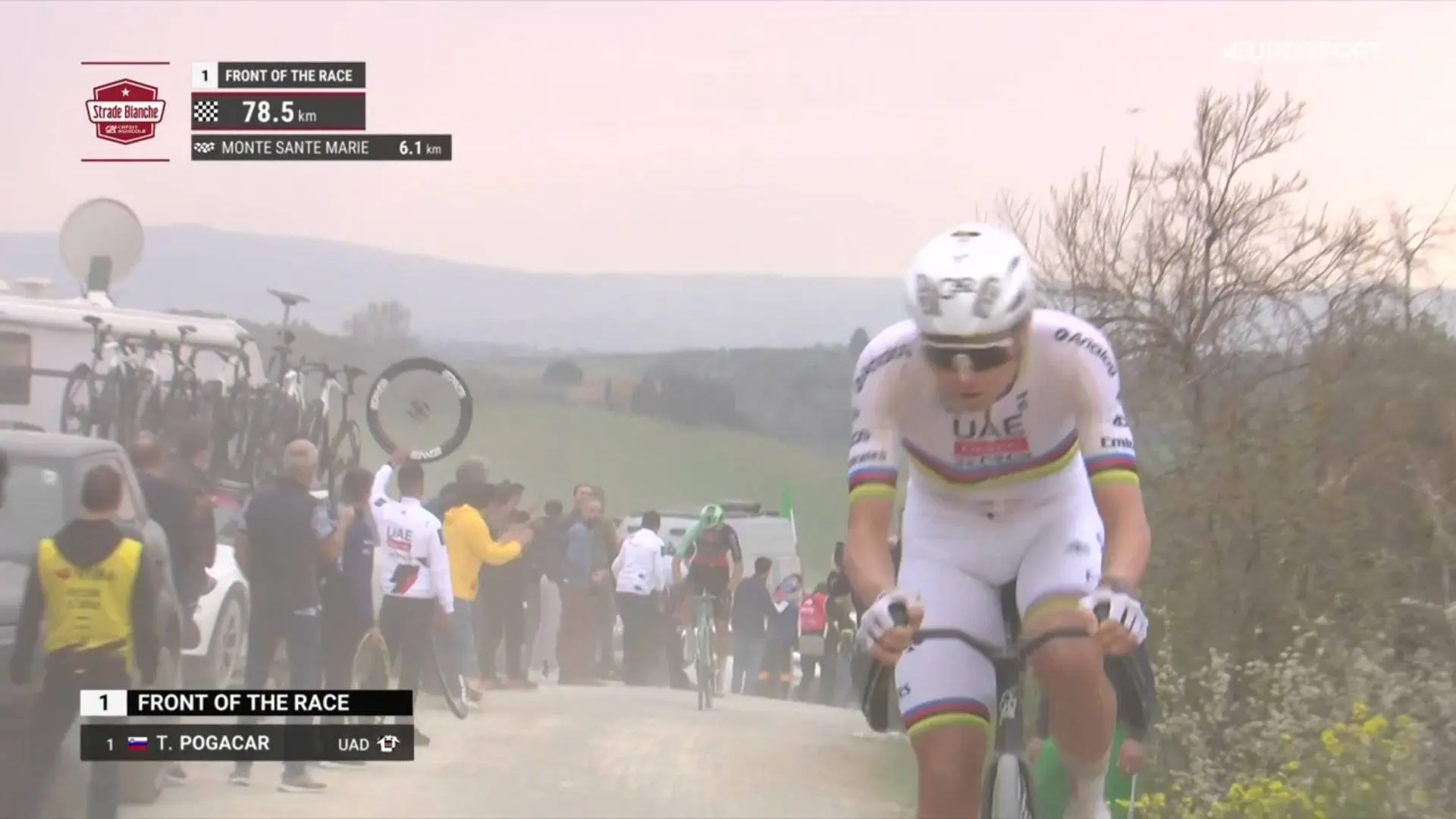
The World Champion decided the race with a long-range attack on Monte Sante Marie, around 78 kilometres from the finish, and rode solo all the way to Siena, turning the race into a display of individual strength that left all his rivals without an answer.
UAE in control of operations
The race began at a high pace from the very first kilometres. An early breakaway of nine riders, including Jack Haig, Patrick Konrad and Tibor Del Grosso, attempted to build an advantage but never managed to extend their lead beyond two minutes.
UAE Team Emirates - XRG took control of the peloton and kept the race under constant pressure, preparing the ground for the decisive moment. The real selection came when the riders entered the gravel sector of Monte Sante Marie, considered the toughest and most decisive section of Strade Bianche.
At that point, the Emirates team gradually increased the tempo. Florian Vermeersch moved to the front of the main group, followed by Jan Christen, and the rising pace quickly began to thin out the peloton.
The breakaway was caught and only the main favourites soon remained at the front of the race. The stage was set for Pogacar’s move.
Pogacar left the rest eating his dust
The Slovenian launched his attack far from the finish, accelerating explosively on the gravel ramps. The acceleration was fierce and only Tom Pidcock and Paul Seixas initially managed to respond.
Tom Pidcock suffered a mechanical problem and dropped back, while young Frenchman Paul Seixas managed to close the gap, producing an impressive moment as he reached the wheel of the World Champion.
However, the effort proved too demanding and shortly afterwards Pogacar raised the pace once again, dropping Seixas and riding clear at the front of the race.
From that moment, Strade Bianche effectively turned into an individual time trial for the UAE Team Emirates - XRG rider. Despite more than 70 kilometres still remaining, Pogacar maintained an extremely high pace and steadily increased his advantage.
Behind him, the chasers struggled to organise an effective pursuit, with repeated attacks preventing any consistent cooperation.
On the decisive gravel sectors around Siena, the Slovenian’s advantage had already surpassed one minute. Along the route there was also time for a symbolic moment in the Colle Pinzuto sector, where the organisers had placed a commemorative stone dedicated to his previous Strade Bianche victories.
Another noteworthy moment came when Pogacar passed the location where he had crashed in the previous edition, calmly pointing towards the television camera in a gesture that showed confidence before continuing his long solo effort.
The battle for the podium and the Slovenian in stealth mode
Meanwhile, behind him the fight for the podium was becoming increasingly intense. A chasing group featuring Tom Pidcock, Matteo Jorgenson, Florian Vermeersch, Romain Grégoire, Paul Seixas, Isaac Del Toro and Jan Christen gradually fragmented over the rolling hills approaching Siena.
Constant accelerations eventually triggered another selection, with Paul Seixas launching a strong attack that only Isaac Del Toro managed to follow.
The remaining riders hesitated for a few moments, allowing the duo to gain a few seconds. Jan Christen attempted to bridge across but was eventually caught again by the group he had tried to escape.
Even so, the battle for the remaining podium places stayed open until the final kilometres, in stark contrast to the situation at the front of the race, where Pogacar was completely alone.
After 200 kilometres the reward: La Piazza del Campo
When Tadej Pogacar entered the steep Via Santa Caterina climb inside Siena, victory was already assured. After more than 70 kilometres solo, Pogacar arrived in Piazza del Campo with more than a minute’s advantage over his closest rival, confirming yet another remarkable performance on the Italian white roads.
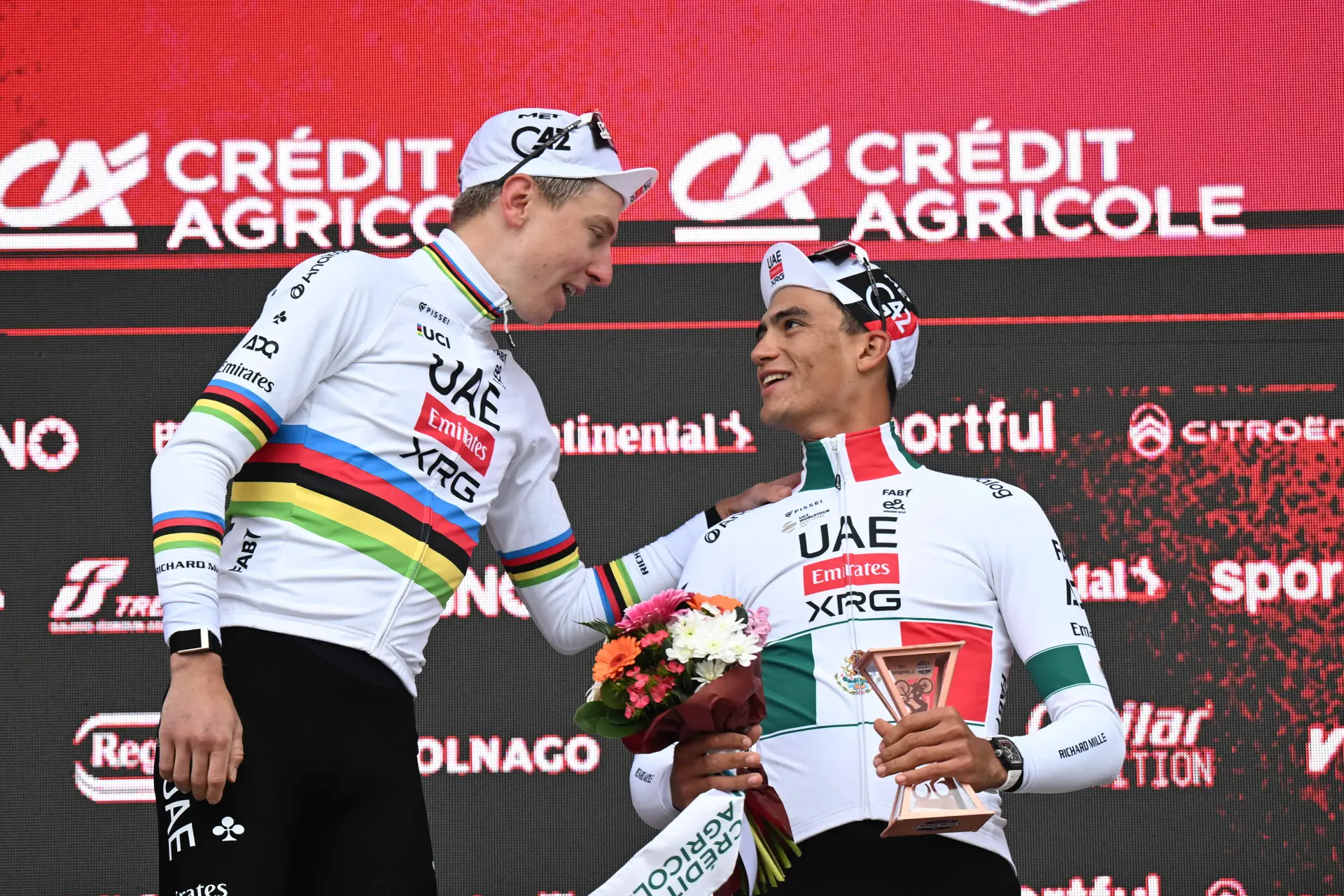
In the fight for the remaining podium places, Paul Seixas proved stronger than Isaac Del Toro on the Via Santa Caterina climb to secure an outstanding second place. Isaac Del Toro was unable to capitalise on the work of the 19-year-old French prodigy and finished third.
Tadej Pogacar’s fourth victory in Italy further strengthens the special bond between the Slovenian and the Tuscan gravel classic, a race that perfectly suits his aggressive racing style.
Whenever he decides to attack from long distance, Pogacar shows that he possesses superior physical and mental strength compared to his rivals, and this victory in the opening race of the 2026 season makes it clear that he will once again be the rider to beat in the biggest races of the year.
Strade Bianche Donne
The 2026 edition of Strade Bianche Donne was perhaps as eventful as one might expect. Many of the top favourites were taken out of the race after following a motorbike off course, punctures and mechanical problems turned the race upside down, attacks on the gravel sections were unsuccessful, and there was a final sprint between several riders after Via Santa Caterina.
The race had no breakaways and was therefore a race of attrition, with mechanical failures and punctures starting early and affecting several contenders for the win. About a dozen riders remained in front after the first combination of gravel sections in the decisive part of the race, but a strong group remained in pursuit.
With 32 kilometres to go, there was a real twist when a motorbike leading the chasing group veered off the course and ended the race for the cyclists in the group.
With 18 kilometres to go, on the climb up Colle Pinzuto, Elisa Longo Borghini and Elise Chabbey broke away with an attack, but it petered out shortly afterwards. In the Le Tolfe sector, there was another attack, this time by Longo Borghini, Puck Pieterse and Katarzyna Niewiadoma, who selected the group.
There was no agreement between the three and they were caught a few kilometres later.
Seven cyclists arrived together at Via Santa Caterina, with Marianne Vos being the first to give up at the start of the final climb.
Elisa Longo Borghini took the lead on the 16% ramp, but four cyclists stayed together at the entrance to the streets of Siena. The finish was decided in a tense and technical sprint in Piazza del Campo. Elise Chabbey positioned herself perfectly in the tight corners before the finish line and launched her sprint at just the right moment, clinching a memorable victory. Katarzyna Niewiadoma finished second and Franziska Koch completed the podium.
Carlos Silva (CiclismoAtual)
I had high expectations today and I wasn't disappointed with the race. Tadej Pogacar was the big favourite and obviously didn't disappoint. UAE Team Emirates - XRG controlled the race and at the usual attack point, the Slovenian cyclist launched his attack to victory.
Another attack from afar, this time 78 km from the finish line. Pidcock followed in the wheel of the World Champion, but fell behind due to mechanical problems. Paul Seixas, the 19-year-old, bridged the gap and clung to Pogacar's wheel. But the Slovenian accelerated again before the young Frenchman could catch his breath and rode away.
From then on, the race for victory was decided and only a crash or bad luck could deny Pogacar his fourth victory in the Strade Bianche. The fight for the remaining podium places looked set to be an exciting one with a high-quality group, but Paul Seixas had other ideas.
UAE, through Isaac del Toro, followed Seixas' move and the two broke away from the rest of the chase at the front of the race.
Seixas was tired of working and Del Toro wasn't cooperating. He didn't have to. On Via Santa Caterina, Seixas dispatched the Mexican and finished the race on the white roads of Tuscany in a brilliant second place.
UAE Team Emirates secured two places on the podium.
Regardless of the line-ups they took to Italy, I noticed that some teams completely missed the race. Where were INEOS Grenadiers, Lidl-Trek, Movistar, Jayco AlUla, Uno-X, Soudal Quick-Step, Bahrain Victorious...
If this race is tailored to the profile of men like Tadej Pogacar, with the other teams bringing in men to fight for the remaining places of honour, when we analyse the whole race coldly, we see that there is perhaps a lack of motivation and ambition on the part of certain sports directors, who should rethink their intentions and strategies.
Am I going to name names? No, I've already written the names of those teams above. I think the sponsors of those teams deserved a different approach to a race that is now in its 20th edition, has extraordinary visibility and would give a good return to those who put money into it.
What is Strade Bianche missing to become a Monument? If I were the race organiser, I would have already taken the necessary step.
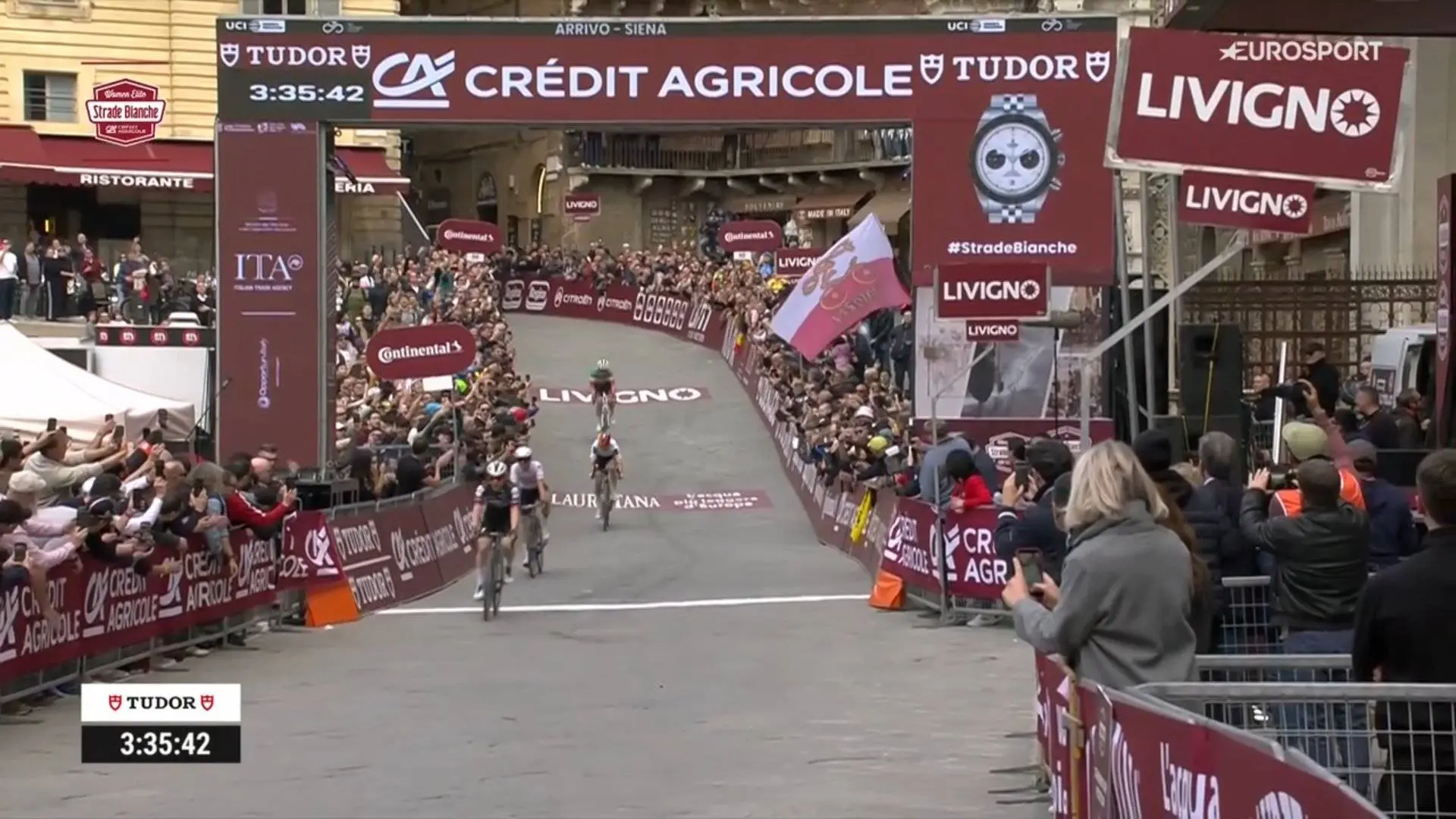
The women's race had a decisive moment about 30 kilometres from the finish line, when a motorbike took the cyclists off course.
It would have been a hilarious moment, if we weren't talking about professional cycling. If the man on the motorbike had the route map in front of him... How could he have gone to the right?
Did that mistake have an impact on the outcome of the race? Obviously, yes. Just look at the names of the cyclists involved in the incident.
And that finish on Via Santa Caterina? What tremendous excitement. What suspense.
Women's cycling taught men's cycling a lesson. For those who did not see the race, watch it. It was a tribute to cycling.
Ruben Silva (CyclingUpToDate)
The women's race was what Strade Bianche can truly deliver in terms of spectacle. The strongest riders are going to be fighting for the win, but here the mechanicals and treacherous locations make way for other riders to surprise and be in the mix.
It was a crazy race in all aspects, obviously with the motorbike incident taking the spotlight.There, it was a shameful accident from the motorbike to go off the route, as it is not only their job, but they also have a map with them.
The riders followed along, and half of the favourites were suddenly out of the race. But by no means did that kill the spectacle. Over the decisive gravel sectors the attacks were countless, with different riders being the strongest in different moments, but the gaps were never huge and the race was tactical.
Then followed the Via Santa Caterina battle; and then yet another battle in the streets of Siena, technical and with a fight for positioning that was great to watch. Elise Chabbey, who didn't risk it all on that penultimate corner, carried the most momentum and overtook the rest for a well-deserved win. Much to the delight of Demi Vollering, who would've otherwise been outraged by losing her race in such an insane circumstance earlier on.
In complete contrast, the 2026 men's Strade Bianche was, in terms of the fight for the win, an exact re-run of the 2024 edition. It isn't the same for 3 years in a row because Tom Pidcock had the legs last year.
UAE had a winning formula and simply executed it, with Pogacar attacking on Monte Sante Marie and taking a comfortable solo win after 2 hours riding by himself.Pascal's remark is funny because I must say I did use Pogacar's solo ride to wash the car and organize documents around the house.
The race was still exciting, but the win was gone the moment Paul Seixas lost those 10 seconds. Nothing new, he doesn't need racing rhythm, he was the strongest, and the route is simply too difficult for anyone to have a shot as long as Pogacar has such a superiority. 0 tactics, simply pace until Sante Marie and attack.
Paul Seixas: Wow. Yeah I must say it is not a surprise he finished second, but the way he finished second is. On Monte Sante Marie he stood out and then rode solo with Isaac del Toro on his wheel for many kilometers.
Then again after his final attack. Logic would dictate he would be more fatigued then Del Toro and his rivals that were chasing him with a coherent collaboration. But Seixas really does seem to be an 'alien' already, not just one in production; as his advantage to the rest only grew in the part of the course where it should've gone down.
And additionally, he really did drop Del Toro on Santa Caterina despite towing him for God knows how long. He is the real deal Seixas, you cannot underestimate him under any circumstance, and he might just be the one rider who can give Pogacar competition next year here.
Gianni Vermeersch's 5th place is a nice surprise, great gravel specialist and puncheur but it's nice to see him quickly thrive away from Alpecin and presenting himself as a worthy man for the cobbled classics.
Jan Christen's 6th place is a mixed result because he attacked so much whilst having 2 teammates in front, not managing to bridge across and then waiting again for the group who just seemed to ignore him; Tom Pidcock had bad luck with a bike he didn't change and had several mechanicals on...
Wout Van Aert was 10th which is just about what you'd expect, not top form but actually pretty good 1 month away from Flanders and Roubaix; I expected him to still lack the legs after his injury and illness. I believe with Tirreno-Adriatico and a few more weeks of good training he will show his best level just in time for the cobbles.
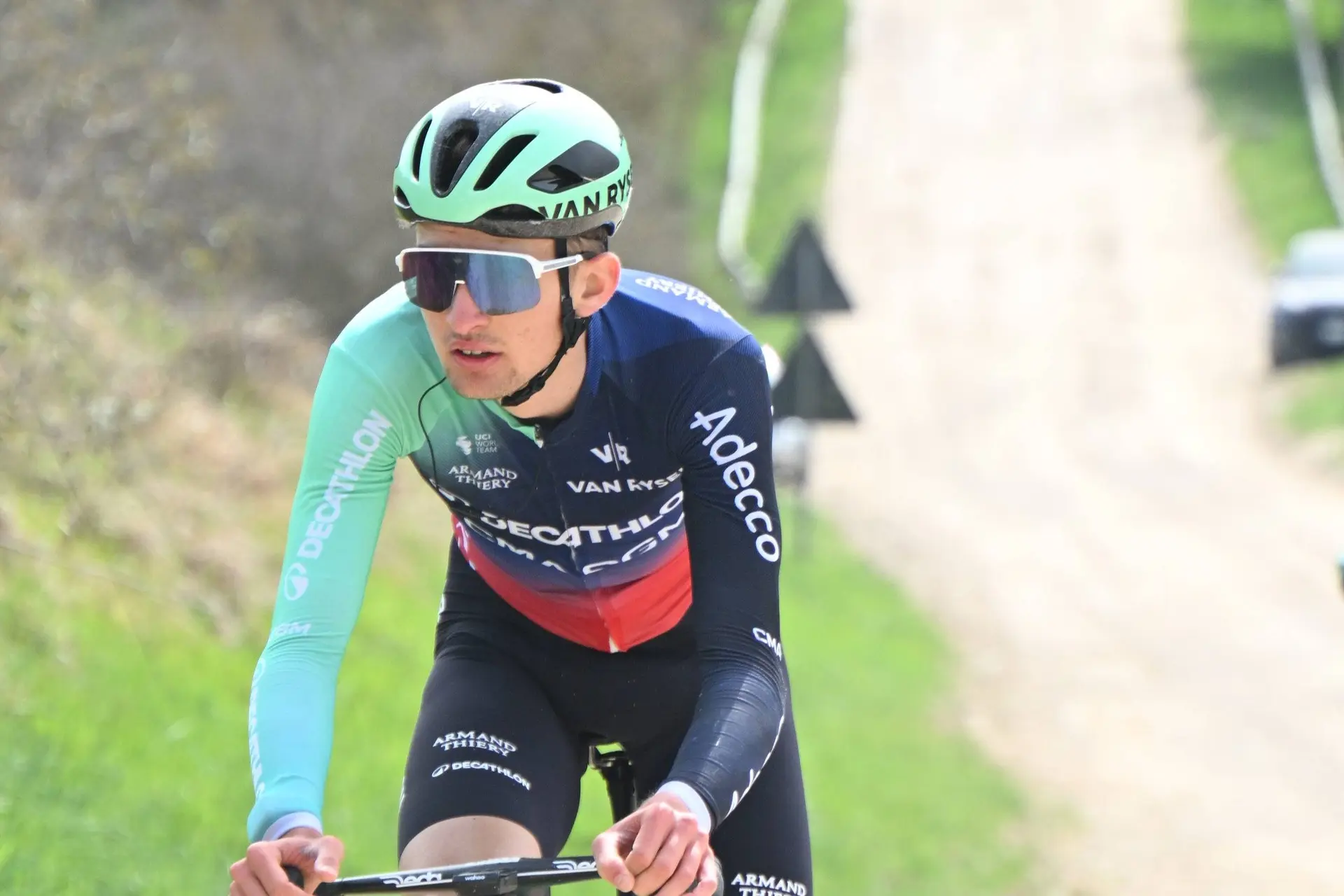
Pascal Michiels (Radsportaktuell)
I’ll leave it to my colleagues to dwell on the remarkable rides of Paul Seixas and the Del Toros of this world. Strade Bianche always promises spectacle. This year, it delivered something else: inevitability.It felt written in the stars that Tadej Pogacar would win again.
With roughly 78km to go, the Slovenian attacked in a race barely three times that distance. By the time a casual viewer might tune in – say around the 140km mark – Pogacar already had a minute in hand. I texted my cycling-mad family: “Are you watching?” The reply was unanimous. “Pogacar is going to win anyway. We turned the TV off.”
It is a brutally honest reaction, and an increasingly common one. Whether in this year’s classics, last year’s, or the season before, the suspense often drains from the race long before the finale. Young talents such as Seixas or Isaac del Toro can do little about that.
Pogacar is simply operating on another level. Dominance, of course, is nothing new in cycling. The sport has always produced riders who tower above their rivals. But when victory feels inevitable hours before the finish, the nature of the spectacle shifts.
The race becomes less about uncertainty and more about witnessing superiority. For purists, Pogacar’s long-range attacks are mesmerising: an exhibition of power, confidence and racing instinct. For casual viewers, however, predictability quietly erodes the tension. Cycling lives on suspense – the lingering sense that everything might still unravel in the final kilometres.
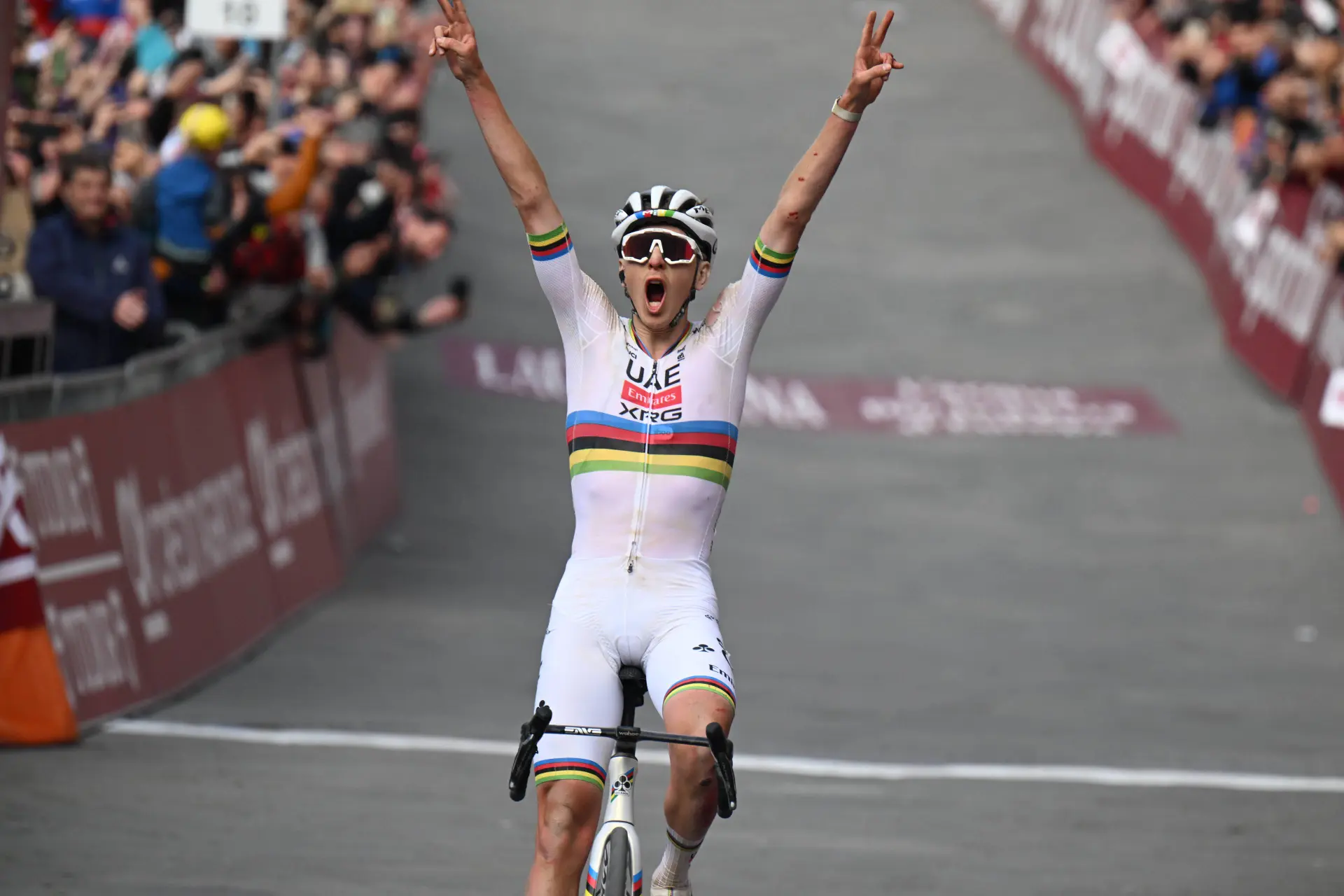
When that sense disappears too early, audiences drift away. The sport may be witnessing one of the greatest riders of all time, but it also faces the paradox of maintaining drama while greatness unfolds.
And the day offered a striking illustration of that paradox. Because while the men’s race appeared settled long before Siena, the women’s race delivered exactly the drama cycling thrives on.
Across the Tuscan gravel, attacks came in waves and the outcome remained uncertain until the final climb to Piazza del Campo. There, a small group fought for victory. Elise Chabbey judged her move perfectly, sprinting to the biggest win of her career ahead of Kasia Niewiadoma and Germany’s Franziska Koch after a chaotic and unpredictable finale.
In other words: the race with the smaller engines produced the bigger spectacle. And that may be the most telling conclusion of the day. The men’s race gave us dominance. The women’s race gave us suspense. And in sport, suspense is what keeps people watching.
And you? What did you think of 2026 Strade Bianche? Leave us your comment and join the discussion.
Carlos Silva is a writer for CyclingUpToDate.com, where he contributes race reports, interviews, analysis pieces, and live coverage of the international cycling calendar. Holding a degree in Sports from the Jean Piaget Institute, he combines academic knowledge of performance, training, and competition with hands-on journalism experience in professional cycling.
Throughout his career, Carlos has conducted interviews with leading figures in the sport, including Alberto Contador, Joaquim Rodríguez, Óscar Pereiro, João Almeida, Isaac del Toro, Derek Gee, John Degenkolb and Geraint Thomas. These conversations reflect direct engagement with Grand Tour winners, Classics specialists, and emerging talents.
He has provided on-site coverage at major events ranging from the Vuelta a España to the Tour de France, alongside stage races such as Vuelta a Andalucía, Volta ao Algarve, Volta a Portugal and O Gran Camiño. Covering the mythical climbs of the Giro d'Italia remains one of his professional ambitions.
Carlos is responsible for liveblog coverage of all major WorldTour races and beyond, including the Tour de France, Giro d'Italia and Vuelta a España. His reporting integrates verified data from ProCyclingStats to ensure statistical accuracy, contextual depth, and analytical precision.
A lifelong cycling enthusiast, he approaches storytelling across written, photographic, and video formats with a focus on credibility, tactical insight, and informed race interpretation.
claps 9visitors 5
Just in
Popular news
Latest comments
- Strade? Never saw him as a gravel rider that can handle it.mij18-10-2026
- It surprises me that anyone still believes any professional (or amateur!) sport is clean--much less wants it to be. The best you can hope for is a reasonably level playing field that doesn't expose young, ambitious athletes to health risks they don't understand. In that regard, World Tour cycling appears to do a better job than almost any sport with independent, random testing. There are certainly fewer mysterious midnight "heart attacks" these days. If you want to see what an uneven playing field looks like, show up to masters nationals. It is also certainly the case that no major pharmaceutical corporation has developed a multi-billion dollar miracle drug just to give it only to one or two anointed ectomorphs in a minor non-revenue sport. If you don't like that all sports run on PEDs these days and you can't be bothered to contribute as a tester, a federation official, or pharmaceutical representative, then just turn off the TV and play outside.
 MarkFour18-10-2026
 - Good grief, who proofreads this stuff? Errors abound.wrsty18-10-2026
- You can add weight to a bike and limit gears or make it single speed if you like. I doubt that would reduce crashes. It would just add another dymanique. All good and well, but It wont stop cars getting on to the course.Cyclingsbestfan18-10-2026
- Seixas is probably second best in the World on short climbs. But that hasn't translated as well to long climbs
 Rafionain-Glas18-10-2026
 - Idiotic fellaRafionain-Glas18-10-2026
- Nothing. Against Pogi nothingabstractengineer18-10-2026
- He didn't even try to sprint all outvappaxbipmv18-10-2026
- Campenaerts looked like a rolling pumpkin with that all orange leaders skinsuit !frieders318-10-2026
- He can take his dumb a$$ politics somehwere else !frieders318-10-2026
Loading
1 Comments