DISCUSSION | Paris-Nice & Tirreno-Adriatico - Aggressive racing brings fireworks, Valgren shines, Tejada surprises, Del Toro and Vingegaard lead
Cycling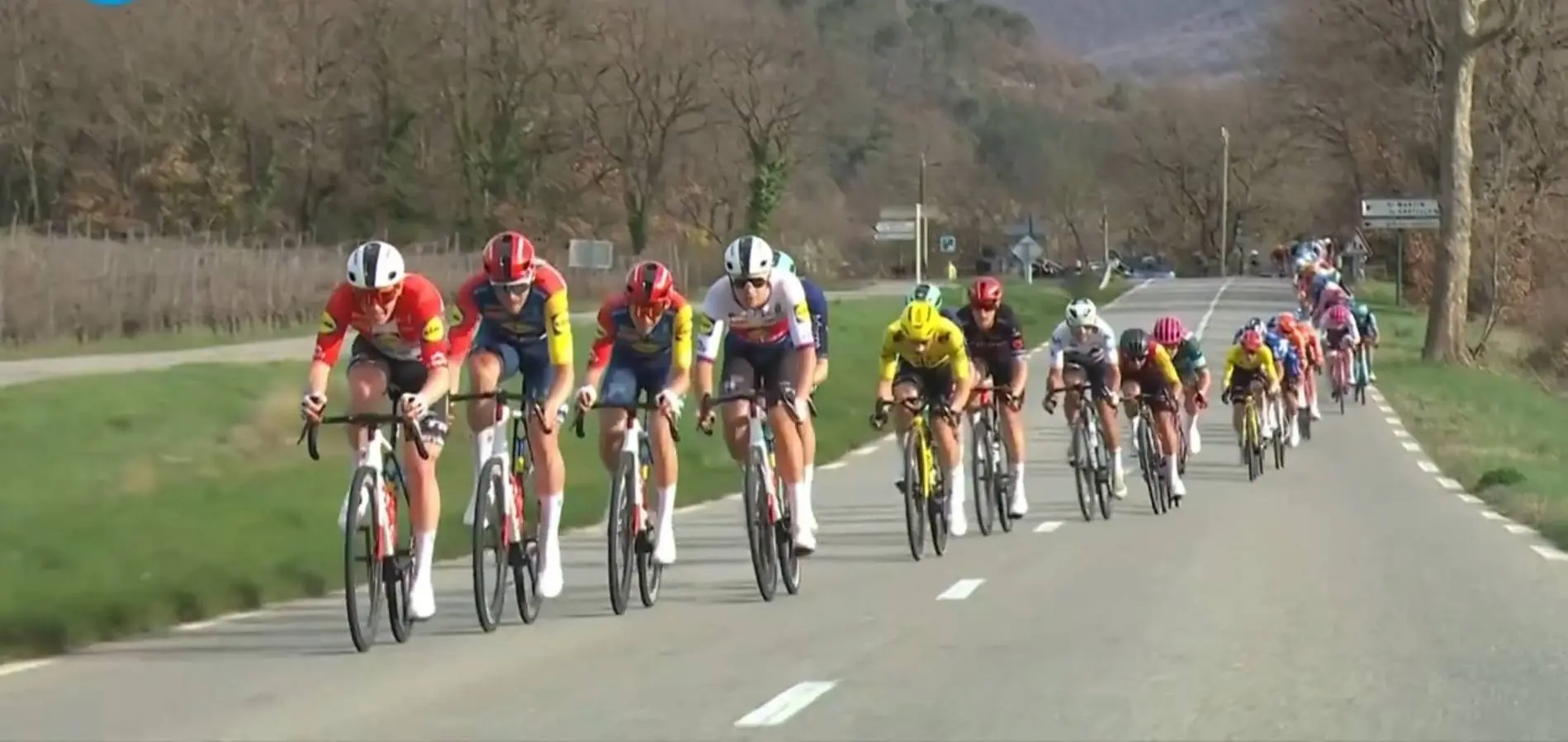
Stage racing in Europe delivered two very different but equally aggressive days of racing, as Harold Tejada powered to victory at Paris-Nice while Michael Valgren took a breakaway success at Tirreno-Adriatico, with the general classification fights intensifying in both WorldTour events.
Paris - Nice
At Paris-Nice, stage 6 was expected to favour the sprinters, but the rolling terrain once again opened the door for attackers. The day’s breakaway featured Arthur Kluckers, Joshua Tarling, Igor Arrieta and Steff Cras, a group that never gained a comfortable advantage as the peloton hesitated behind.
Cofidis and Tem Visma | Lease a Bke took responsibility for much of the chase, although the lack of cooperation in the bunch allowed the move to stay within reach without ever being fully controlled.
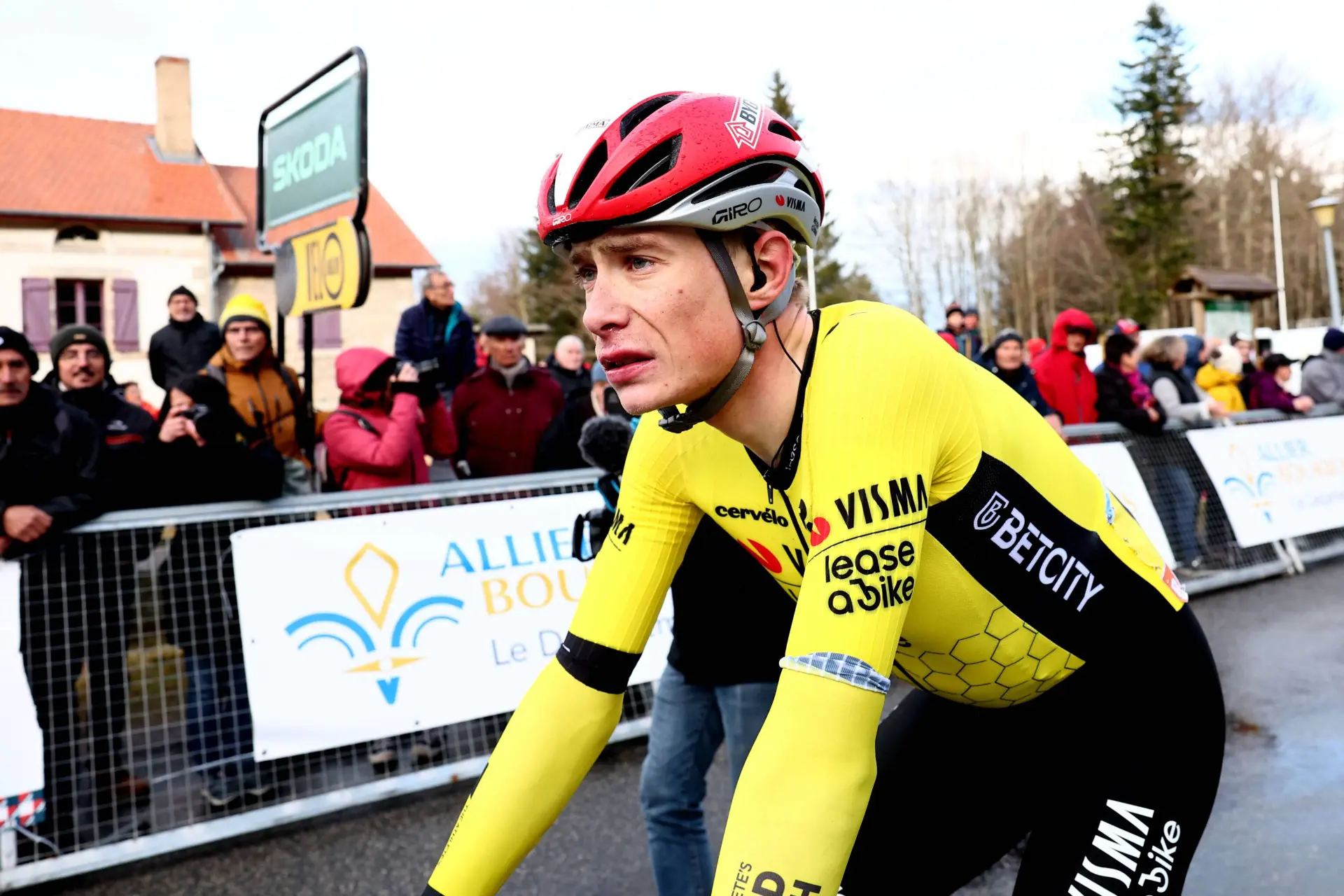
Lidl-Trek tried to increase the pressure on the penultimate climb and descent, briefly stretching the peloton, but the move failed to create decisive gaps. The race remained finely balanced between a reduced sprint and a late attack, with the pace high both in the break and in the bunch.
The front group started the final climb with around half a minute in hand, and the gap initially held as Arrieta and Tarling accelerated from the base while the peloton hesitated.
The race exploded inside the final five kilometres when Lenny Martínez attacked on the steepest ramp, drawing out Jonas Vingegaard and the main contenders for the overall classification.
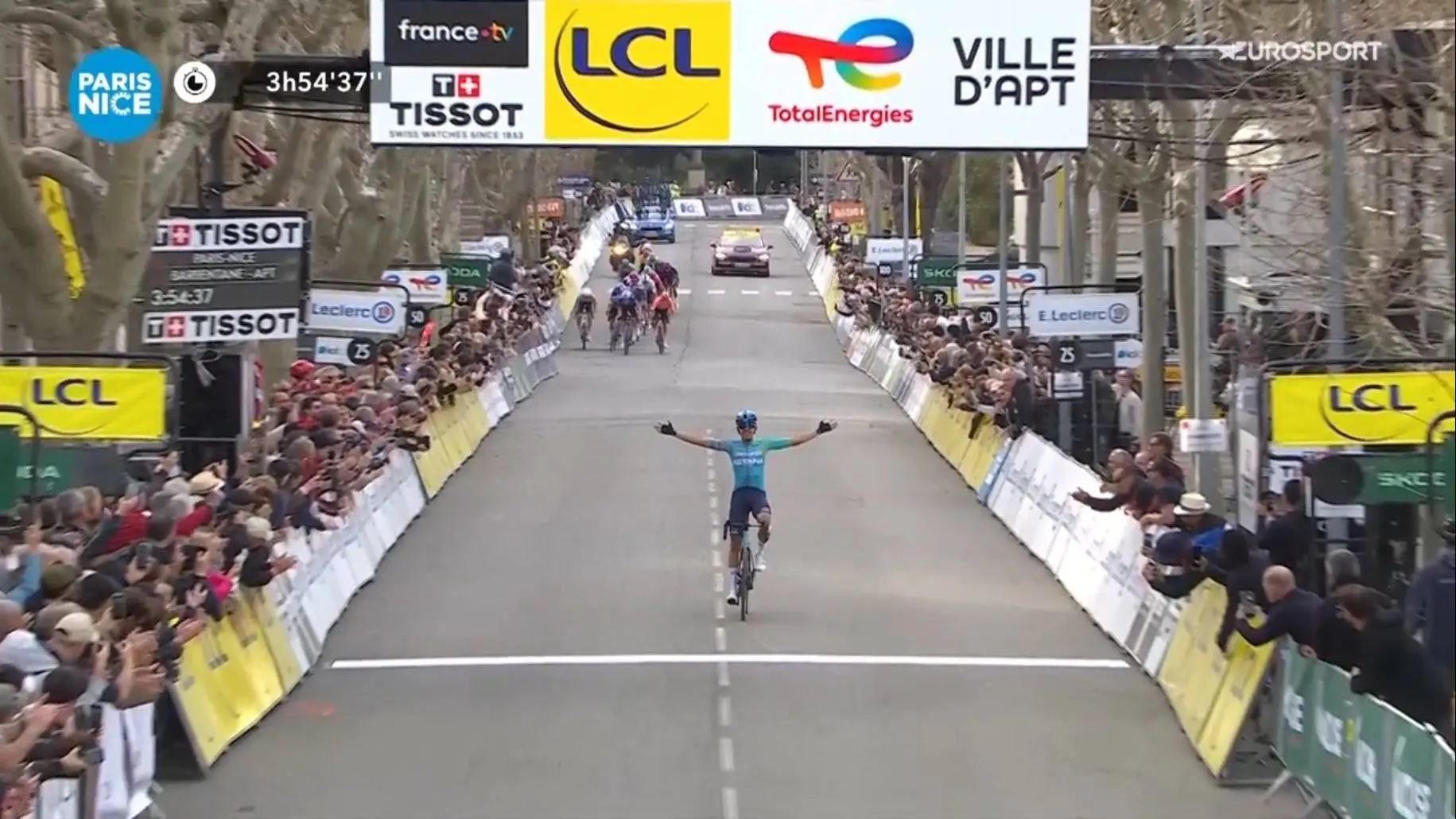
Over the summit, however, it was Harold Tejada who made the decisive move. The Colombian launched an attack just before the descent, quickly opening a gap and carrying his momentum through the fast run-in to the finish.
Tejada held off the chasers to take a well-timed victory for XDS Astana Team, while Dorian Godon sprinted to second place behind.
Tirreno - Adriatico
At Tirreno-Adriatico, stage 5 unfolded in a very different way, with the breakaway finally succeeding after two days dominated by the favourites.
The 184-kilometre stage featured 3800 metres of climbing and encouraged aggressive racing from the start, with a strong move forming that included Julian Alaphilippe, Edward Planckaert, Emiel Verstrynge, Joan Bou, Michael Valgren, Jack Haig, Georg Zimmermann and Sjoerd Bax.
The group worked well together across the repeated climbs, while in the peloton UAE Team Emirates - XRG controlled the pace without committing fully to the chase. With 26 kilometres remaining, Michael Valgren attacked on the penultimate ascent and was joined by Julian Alaphilippe, but the Frenchman could not hold the pace on the lower slopes of the final climb.
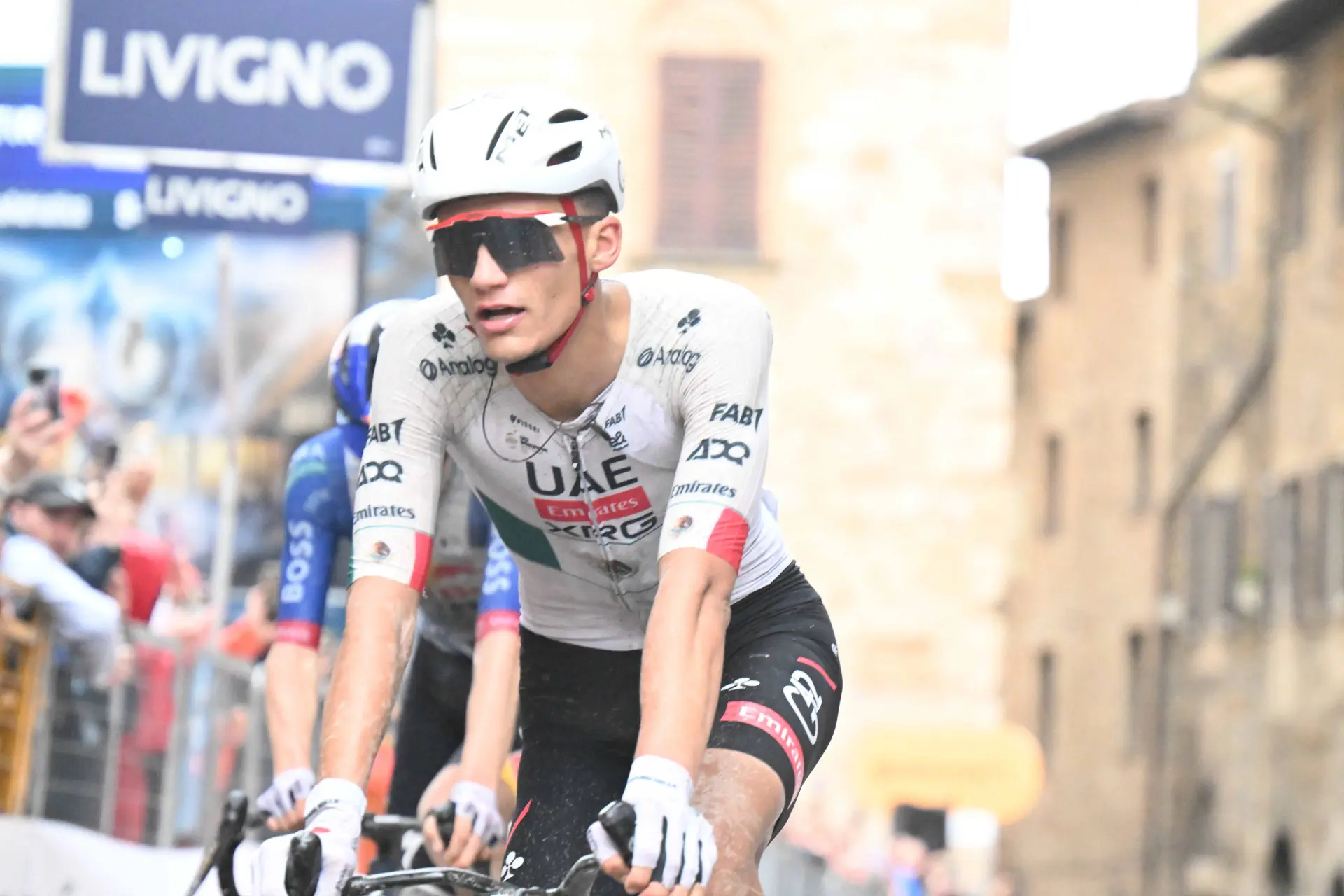
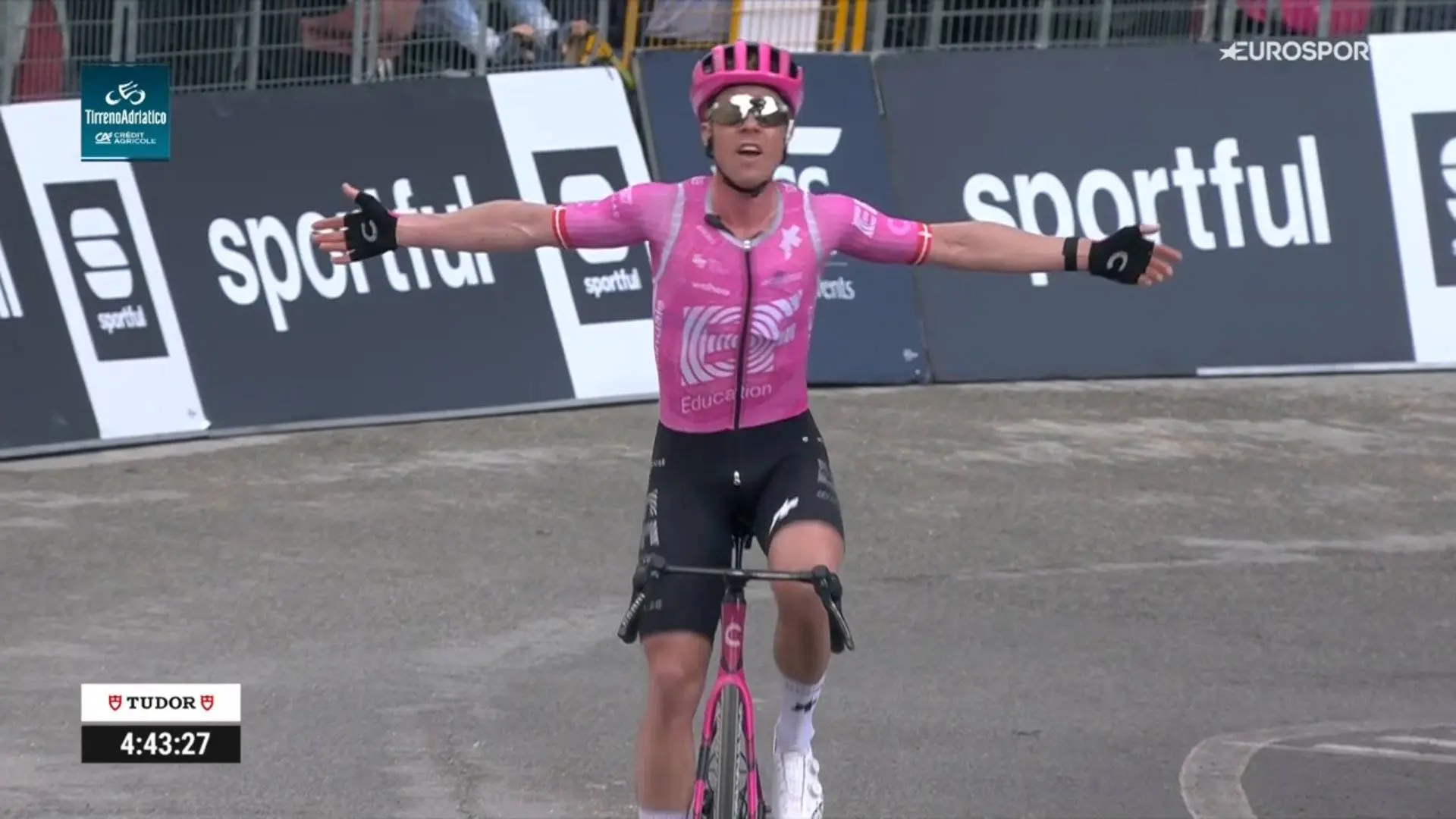
Valgren pressed on alone and never looked back, riding to his first victory since 2021 after a perfectly judged long-range move. Behind, the battle for the overall classification came alive on the final ascent.
UAE continued to set the tempo before Isaac del Toro launched an acceleration in the opening part of the climb, immediately putting pressure on Giulio Pellizzari, who had started the day in the race lead.
The Mexican briefly eased his effort but attacked again on the steepest section, this time creating a decisive gap. Del Toro sprinted to second place on the stage, with Matteo Jorgenson following, and the time gained was enough to reshuffle the general classification once more as Tirreno-Adriatico’s leadership changed hands.
With opportunistic attacks rewarded at Paris-Nice and the breakaway finally prevailing at Tirreno-Adriatico, both races remain finely poised, with the coming mountain stages expected to decide the overall winners.
Carlos Silva (CiclismoAtual)
Between Paris–Nice and Tirreno–Adriatico, it is impossible to remain indifferent to the Italian race. Attacks, counter-attacks, emotion, suspense, and a breakaway that at one point even made the general classification contenders uneasy.
Julian Alaphilippe must have started to dream about taking the race lead after more than 160 km had already been covered since the start in Marotta Mondolfo. The advantage was over four minutes and remained steady, even though teams like Red Bull – BORA – Hansgrohe and UAE Team Emirates – XRG were carefully controlling the gap between the breakaway and the peloton.
The real excitement came before the first passage over the finish line, when the gap dropped dramatically, and after that Alaphilippe and Valgren went clear at the front of the race. Alaphilippe blew up his engine and the EF Education–EasyPost rider continued alone, while behind the real battle had exploded.
Tiberi was dropped and came back. Pellizzari was suffering, but Roglič stayed true to himself… he never helped his teammate. Carapaz tried his luck, but it was only a short-lived burst. Isaac Del Toro and Matteo Jorgenson put on a show.
Watch out for the Visma rider in the calculations for tomorrow’s stage… he is in great form, and if he takes the lead, it will not be a surprise.
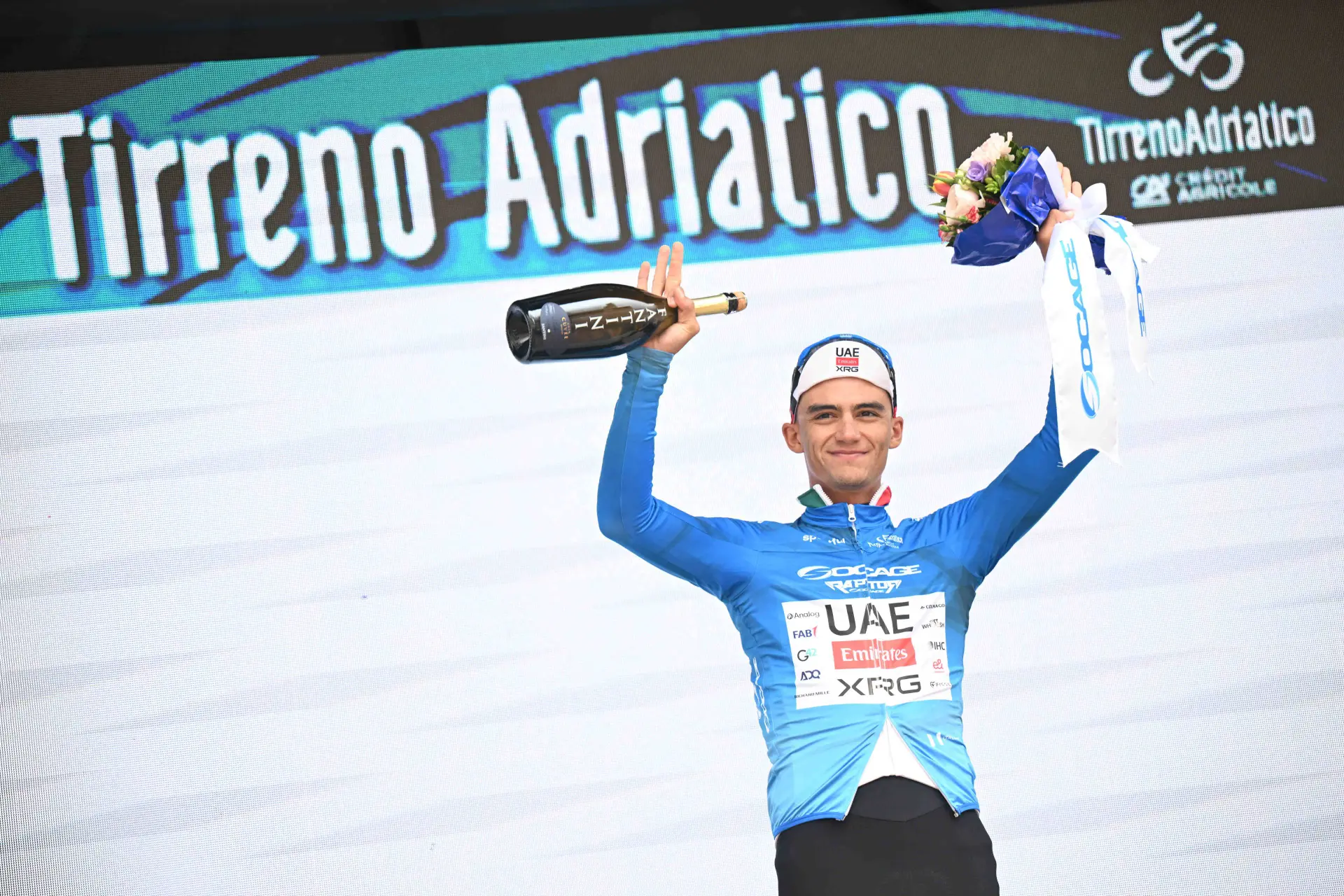
In Paris–Nice there is not much to write about. The break formed early and stayed away almost until the end. Cofidis did a great job at the front of the peloton, clearly with the stage in mind, perhaps for Izagirre, who descends very well. But the moves on the final climb were all controlled.
All except one.
Harold Tejada attacked, nobody reacted immediately, and the XDS Astana rider gained a small gap that proved decisive for the outcome of the day. Tejada won, and he deserved it for his boldness and determination.
As for the general classification, nothing has changed. Team Visma | Lease a Bike had a comfortable day, almost like watching from the sofa, as they protected their leader Jonas Vingegaard, who remains in the yellow jersey and heads into the final two stages with a very comfortable margin to secure victory in Nice.
Final note for the DNS's and DNF's. That day spent entirely in rain, wind and cold is still leaving its marks, and because of it nearly 30 riders have already abandoned the race. I understand this is cycling, but was any thought given to the riders’ safety that day?
Juan Lopez (CiclismoAlDia)
This edition of Tirreno Adriatico is proving that course design still matters enormously in modern cycling. When stages are built with constant terrain, short climbs, and circuits that force aggressive racing, the result is exactly what we are seeing this week: unpredictable, explosive, and entertaining racing almost every day.
Stage five was another perfect example. From the early breakaway to the relentless attacks in the final kilometres, the race never truly settled. The combination of climbs such as Monte delle Cesane and the repeated ascents to the Santuario Beato Sante created the ideal terrain for chaos.
Riders could attack, recover briefly, and then go again. The outcome was a finale where a breakaway rider fought to survive while the favourites attacked each other behind him. It is the kind of stage design that rewards initiative rather than passive control.
And that is precisely why Michael Valgren’s victory deserves enormous respect. At 34 years old, and after several difficult seasons, the Dane managed something very few riders in the peloton can do: resist the pressure of the strongest riders in the world on terrain that clearly suited them.
Winning from a breakaway is already difficult in modern cycling, where teams calculate everything and chase with precision. Doing it while riders like Isaac del Toro, Matteo Jorgenson and Primoz Roglic are attacking behind you makes it even more remarkable.
Read also
Valgren not only attacked at the right moment, distancing Julian Alaphilippe, but he also managed his effort perfectly in the final kilometres. Even when the gap was shrinking rapidly and the favourites were closing in, he never panicked. Holding off the best climbers and puncheurs in the race on a final uphill finish at his age is an achievement that says a lot about his experience and resilience.
Behind him, however, the bigger story might be the overall classification. After today, Isaac del Toro looks very close to sealing the race. The Mexican once again proved that he is the strongest rider in the peloton right now.
Every decisive acceleration came from him, and the way he distanced Giulio Pellizzari in the final climb made the hierarchy of the race very clear. Barring an unexpected collapse, it is hard to imagine anyone beating him for the overall victory.
If anything, the stage also raised questions about Movistar Team’s approach. The Spanish team appears fully focused on chasing a possible top ten in the general classification with Javi Romo, but in doing so they may be missing better opportunities.
In a race that is rewarding aggressive racing and breakaways, it is surprising not to see them committing more riders to stage hunting. A top ten is respectable, but stages like this one show that Tirreno Adriatico is offering chances for much more than that.
Ruben Silva (CyclingUpToDate)
At Paris-Nice I thought the breakaway would make it, but it was Lidl-Trek's late work that really brought it all together, work that didn't bring benefit as Mathias Vacek has really been far from his best level this week.
It was a victory of opportunity, which was a scenario that always had good chances of succeeding. The GC men battle on the final climb as Lenny Martínez gave it a go, and then it would always be the win of the rider whose attack wouldn't be followed.
It had to be someone strong, but far enough on GC that he wouldn't be followed by a direct rival. Harold Tejada is a rider of great quality who perhaps lacked those big wins in his palmarès, but it was a well earned triumph.
At Tirreno-Adriatico it was a day written out beforehand. An ideal raid stage fully ridden at pace in the peloton, but that didn't matter because you have Isaac del Toro who is by far the strongest in the race.
Although he spent too much time in the wind on that final climb, he still had the legs to create the difference and take over the race lead. He is again in the race lead and took advantage of a day where Giulio Pellizzari was not 'super'.
Michael Valgren's victory is one that brings joy taking into consideration the injuries he sustained a few years ago, it is a feel-good comeback story for the Dane.
Jorge Borreguero (CiclismoAlDia)
For much of the day, it looked as though the script would once again revolve around Jonas Vingegaard, who had just won two consecutive stages and whose team had made the race tougher to set up another select finish.
However, the outcome showed that in broken stages with technical finishes, there is still room for surprises. Harold Tejada read the key moment perfectly: Lenny Martínez’s attack on the final climb stretched the peloton and sowed doubt among the favourites.
The Colombian reacted quickly, reached the summit well-positioned and launched his move on the descent, a section where many riders hesitate but which he exploited to open up a gap.
Beyond the tactical aspect, the victory has a strong symbolic element. Tejada had spent several seasons proving himself to be a solid rider in the WorldTour peloton: a good climber, resilient in stage races and capable of slipping into dangerous breakaways.
However, the results had not fully rewarded that performance. Until now, his only professional win had come in the Tour de Colombia, so securing his first victory in Europe at the age of 28 holds special significance.
The psychological value of the victory is also worth highlighting. For a rider who has often worked in the shadows or come close to significant results without quite achieving them, winning a race of the prestige of Paris-Nice is a release and, probably, a turning point in his career.
Victories of this kind boost confidence and can change a cyclist’s role within his team and within the peloton.
In short, more than just a stage victory, Tejada’s win was a small sporting vindication: confirmation that his talent was always there and that, when the race presented him with the right opportunity, he knew how to seize it with courage and intelligence.
And you, what did you think of the Paris-Nice and Tirreno-Adriatico races? Give us your opinion and join the discussion.
Carlos Silva is a writer for CyclingUpToDate.com, where he contributes race reports, interviews, analysis pieces, and live coverage of the international cycling calendar. Holding a degree in Sports from the Jean Piaget Institute, he combines academic knowledge of performance, training, and competition with hands-on journalism experience in professional cycling.
Throughout his career, Carlos has conducted interviews with leading figures in the sport, including Alberto Contador, Joaquim Rodríguez, Óscar Pereiro, João Almeida, Isaac del Toro, Derek Gee, John Degenkolb and Geraint Thomas. These conversations reflect direct engagement with Grand Tour winners, Classics specialists, and emerging talents.
He has provided on-site coverage at major events ranging from the Vuelta a España to the Tour de France, alongside stage races such as Vuelta a Andalucía, Volta ao Algarve, Volta a Portugal and O Gran Camiño. Covering the mythical climbs of the Giro d'Italia remains one of his professional ambitions.
Carlos is responsible for liveblog coverage of all major WorldTour races and beyond, including the Tour de France, Giro d'Italia and Vuelta a España. His reporting integrates verified data from ProCyclingStats to ensure statistical accuracy, contextual depth, and analytical precision.
A lifelong cycling enthusiast, he approaches storytelling across written, photographic, and video formats with a focus on credibility, tactical insight, and informed race interpretation.
claps 2visitors 2
Just in
Popular news

Latest comments
- Tadej had a bad crash. A concussion can be horrific. He also had a stable vertebra break so no threat to his spinal cord and a broken collar bone. This headline, like most on this site, is a joke. To even compare Tadej to the others is ridiculous. Froome: • Fractured right femur (thigh bone) • Fractured hip / pelvis • Fractured right elbow • Multiple fractured ribs • Collapsed lung Lost 2 liters of blood. Hospitalized for 3 weeks. Couldn't get back on a bike for 3 months. And that was limited. On crutches for longer than Tadej was off a bike. Bernal • Fractured vertebrae (spinal trauma) • Fractured right femur • Fractured right patella (kneecap) • Punctured lung & chest trauma • Multiple fractured ribs • Serious facial trauma and broken hand/finger Lost 2.3 liters of blood, hospitalized for 13 days, not on a bike for months. He had a 95% chance of being paralyzed. Jonas • Collapsed lung (Pneumothorax) • Pulmonary contusion (bruising and bleeding of the lung tissue) • Seven broken ribs • Fractured sternum (breastbone) • Shattered collarbone (clavicle) Vingegaard coughed up blood and had lung injuries, including a pneumothorax and pulmonary contusion. He required a chest drain for approximately eight days. This was life threatening. Sorry Bob Roll, and all others, Tadej won't be affected. his accident was minor compared to these. Not saying he should ride. Not saying a concussion isn't serious. but nothing like what these guys went through.mij26-10-2026
- I think we are heading towards a style of Tour de France with two days of celebrations - stage 20 the sprinters' day and stage 21 the Champs-Elysées day where GC riders can get involved
 Rafionain-Glas26-10-2026
 - ““Pogacar is something I have never seen before" - World Tour veteran puts Slovenian above Froome, Contador and Wiggins” - Uhh? I can feel a Popes in the woods and bears in silly hats moment coming on!Lozza26-10-2026
- Not sure what to do with these guys. Most of the articles here have random sentences and are chock full of "AI slop".Occam26-10-2026
- what does this mean? "whilst in 2014 he crashed ahead of the spring in Harrogate - a day for the sprinters. " love what you're trying to do, but this stuff is pretty unreadable sometimes.Occam26-10-2026
- It’s not as if he races every race! Also, the developing riders are unlikely to be in the team with him anyway.Lozza26-10-2026
- OK, stop all the BS below!!! Don't you guys have anything better to do than to get on Pogi's case (injury)? The only thing I read from your comments was: blah blah blah ... and BLAH !!! Y'all remember one thing: Next year... 2027 ... Pogi - Baby Hulk will "smash" everyone!!! Remco will have nonstop excuses... Jonas is going to once again say to Skjelmose : "I'm doing my best numbers ever but Pogačar just rides away. What else can I do???" ... Everyone else will fight for second place. Pogi doesn't give a sh** about what podcasters and different cycling sites are saying or "barfing up" senseless words of foolishness and ignorance about him. He will chew up everyone and spit him out. Ad acta!!!PogiSloFans26-10-2026
- Concussion is being recognised as having a life-long impact on many athletes, with effects on the brain and links to mental health and cognitive decline being investigated. It can't be dismissed as being in the past (and obviously isn't a joke, though I realise you didn't mean it that way).Hills3326-10-2026
- Arrieta I think has more potential than Frigo and Balderstone. Ramírez is one who can become a GC rider, Fabries is more of a diesel climber. He only really does well in MTTs. When you add Molano and Sivakov, it seems a transfer loss overall. However, comparing the transfer season of a stacked team like UAE to lower teams isn't fair anyway. Riders tend to diffuse outwards anywayRafionain-Glas26-10-2026
- There's quite a large range of time where van der Poel is less likely to race than not, possibly a month. The Worlds sit in that window. So it seems that its more likely than not that he'll not race.Rafionain-Glas26-10-2026
Loading
Write a comment