DISCUSSION - Giro d'Italia stage 16 - Ciccone nervy and aggressive? Rubio took too many risks? A fierce battle for the podium
Cycling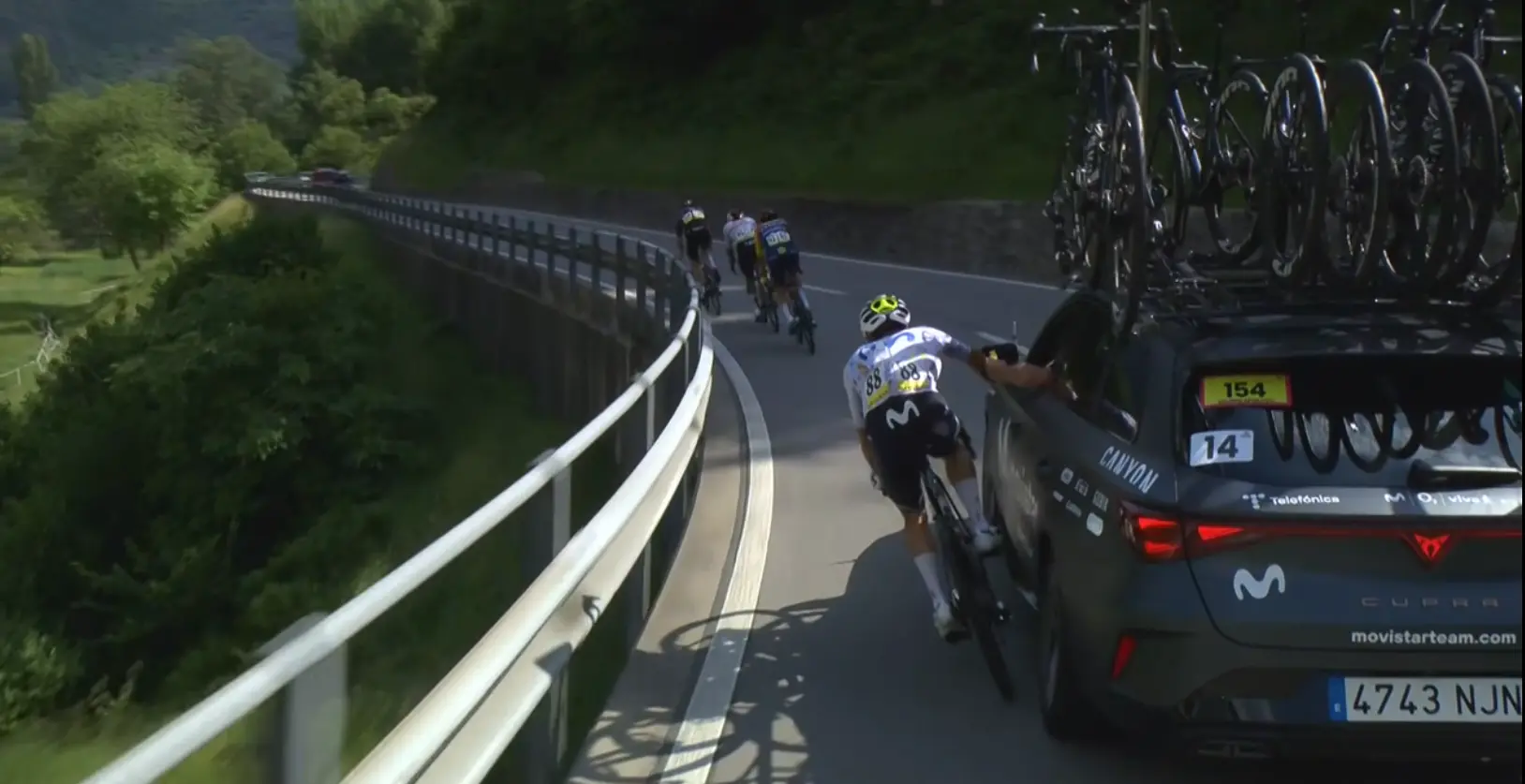
Jonas Vingegaard delivered another emphatic statement at the Giro d’Italia on Tuesday, storming to victory atop the brutal climb to Carì and strengthening his hold on the pink jersey with a fourth stage success of this year’s race.
The short but explosive Alpine stage into Switzerland was expected to create major gaps, and it did exactly that. Over just 113 kilometres, the peloton tackled repeated ascents of Torre and Leontica before the decisive final climb to Carì, an unforgiving 11,2 kilometres ascent averaging eight percent.
Aggressive racing from the opening kilometres
From the opening kilometres the racing was aggressive. Christiaan van der Lee launched the first move of the day, although the Dutchman was quickly reeled back in. Several attacks followed, with riders such as Frank van den Broek, Markel Beloki, Tim Torn Teutenberg and António Morgado all trying to establish a breakaway.
The peloton, however, never allowed the move much freedom. Lidl-Trek and UAE Team Emirates - XRG kept the gap tightly controlled, largely because Lidl-Trek wanted to position Giulio Ciccone for mountain points.
A second wave of attacks eventually formed a stronger escape group featuring Ciccone, Van der Lee, Van den Broek, Jan Christen, Jhonatan Narváez and several others. The constant climbing soon shattered that group as well, with Ciccone particularly active in his pursuit of points in the mountains classification.

Visma controls before Vingegaard explodes
Behind them, Team Visma | Lease a Bike controlled the race with calm authority. Riders like Bart Lemmen and Tim Rex set the tempo before the race exploded on the final ascent.
The breakaway survivors were swept up early on the climb to Carì, and immediately the general classification contenders began to suffer. Red Bull - BORA - hansgrohe briefly increased the pace, but the acceleration backfired as their own leader Giulio Pellizzari cracked badly and disappeared from contention.
One by one, the favourites began to fall away. Ben O’Connor and Afonso Eulálio were unable to handle the pace set by Victor Campenaerts and later Sepp Kuss. Even riders such as Michael Storer and Derek Gee eventually lost contact.

The moment Jhonatan Narváez withdrew from the Red Bull Km sprint
Vingegaard rides away from rivals
Only Felix Gall, Egan Bernal, Thymen Arensman and Jai Hindley managed to stay with Vingegaard deep into the climb. That changed with 6,6 kilometres remaining.
The Dane accelerated sharply and immediately opened a gap. None of his rivals could respond. Vingegaard quickly disappeared into the misty Swiss mountains, riding with the composure and rhythm of a rider fully in control of the race.
Behind him, Gall initially emerged as the strongest chaser while Bernal attempted to animate the pursuit group. Arensman, however, looked increasingly confident as the climb progressed. The Dutchman launched his own acceleration inside the final two kilometres, reducing the group even further and strengthening his grip on a podium place overall.
Gall eventually secured second place after opening the sprint from distance, while Hindley crossed the line in third and collected valuable bonus seconds. Arensman finished fourth on the stage, narrowly missing out on those time bonuses but moving ahead of Eulálio in the general classification.
Battle for the podium intensifies
With another commanding mountain display, Vingegaard now looks firmly on course for overall victory, while the battle for the remaining podium places promises to deliver more drama in the final week of the race.
Vingegaard tightens Giro grip as podium battle heats up
At the end of the day, Carlos Silva from CiclismoAtual made the following observations about the stage.
Jonas Vingegaard once again proved he is the best climber in the race, cruising to his fourth stage victory of the Giro while also smashing the Strava KOM on the climb to Carì, previously held by Oscar Onley. Team Visma | Lease a Bike once again demonstrated they possess the strongest mountain train in the race, fully at the service of their leader.
The battle for the remaining podium places is absolutely on fire and we are certainly set for some thrilling fights all the way to Rome. The other classifications also remain wide open. The points classification is heating up with the duel between Paul Magnier and Jhonatan Narváez, while the youth classification belongs to Afonso Eulálio. Right behind him now is Davide Piganzoli from Visma, who has been the final mountain domestique in the Visma train throughout the high mountains.
Read also
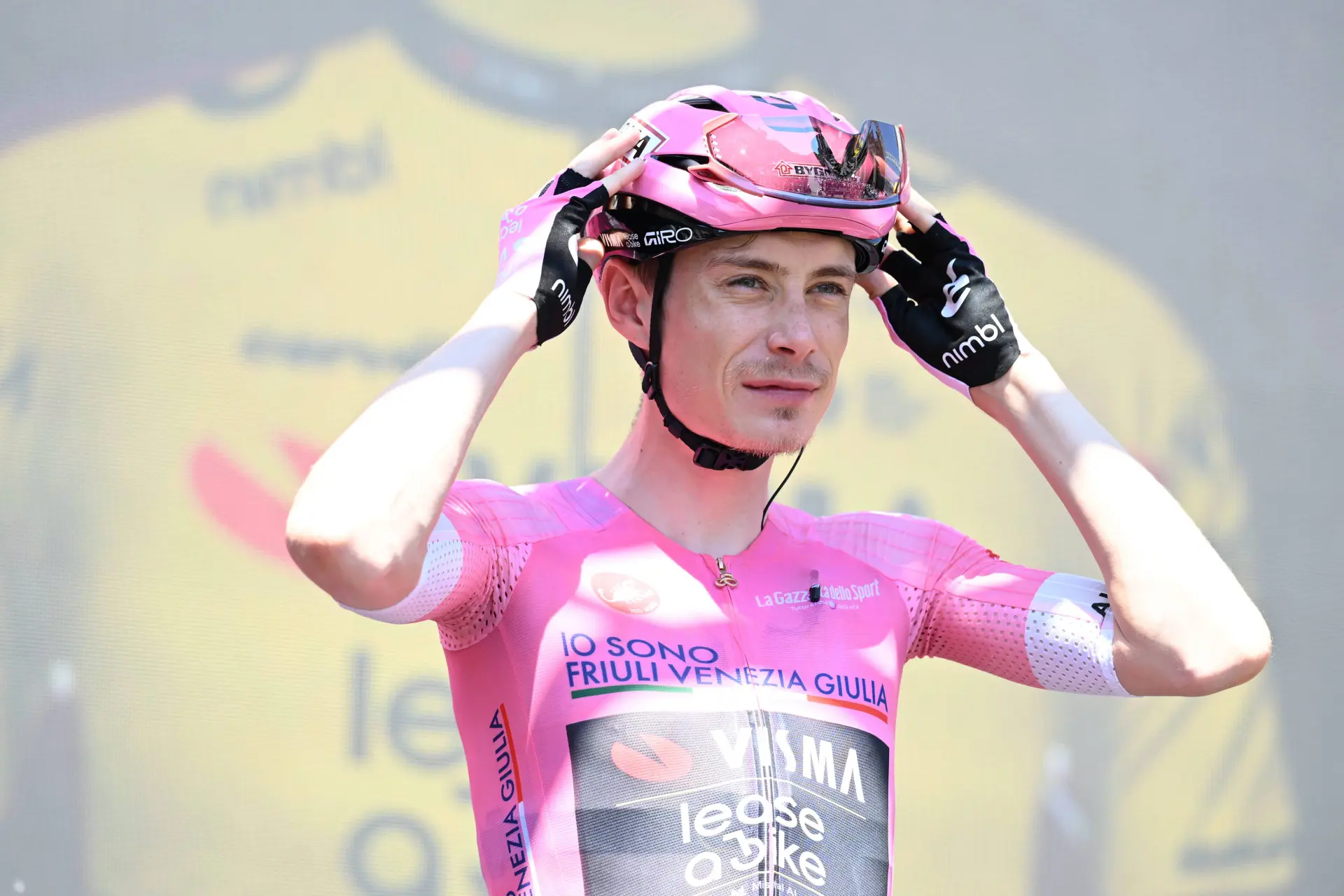
Giulio Ciccone collected a significant amount of KOM points today, but can he really dethrone Vingegaard, who still leads the classification with a comfortable advantage? All these storylines are more than enough ingredients to keep the race incredibly exciting, even if, barring disaster, the Pink Jersey already seems destined for Rome on Vingegaard’s shoulders.
A brief note as well for Ciccone, whose behaviour today did little to enhance his image. Perhaps the Lidl-Trek rider was frustrated or nervous, but what is certain is that he violently threw a full water bottle towards the roadside where fans were standing. The race commissaires should take a firm stance regarding the Italian rider’s actions.
One final word for Einer Rubio and the Movistar team car. The rider went back to the car to take supplies and, at over 80 km/h, disaster was avoided by pure luck. It was not a matter of composure because he probably did not even realise how close he came to hitting the tarmac. Once he watches the footage back, perhaps he will think twice next time before approaching the team car on a fast descent filled with technical corners.

Jonas Vingegaard attacks to win stage 16 of the Giro d'Italia 2026
Vingegaard strengthens Giro dominance as Visma crush rivals on another brutal mountain day
Ruben Silva from CyclingUpToDate, shared his thoughts on what happened on the road during stage 16 of the race.
There's no big arguments to be made on a day that was the replica of the previous mountain stage. Giulio Pellizzari's demise in the GC fight really is the main point of the day, as I had him set as favourite number 2 of this Giro at the start but that didn't prove to be the case.
Not because he wasn't good, but Felix Gall, Thymen Arensman and Jai Hindley have both been racing at their absolute peak - with Jonas Vingegaard as well, but a level above. The Italian was ill, perhaps suffers a bit from a long fitness peak that included the Tour of the Alps and also dedicates himself to Hindley's podium mission now. A disappointing day for him surely but not an indicator of his talent.
Visma had their own way this afternoon. Several teams controlled the breakaway early on, and in reality they only had 85 kilometers of stage to control - 10 of those being the final climb. The breakaway was never going to make it as they set out to chase the front groups right from the start of the first climb. With those classics men and climbers setting an infernal pace all day long, it is literally impossible to grow a gap of many minutes unless the riders believe the finish line is 50 kilometers away from the line.

Giulio Ciccone had an unfortunate moment during stage 16, when he violently threw a water bottle onto the roadside where spectators were watching the race
Hence they set Vingegaard up for victory, and he did not disappoint.Vingegaard is a level above the competition here, and he doesn't have to pull anything special off, he just has to do what he's proven to do. A fourth win is not surprising, but its his first in pink which he specifically wanted. With it also comes the likely KOM classification victory.
The podium fight between the other three main climbers is proving to be very tight and exciting, but that will also depend on the teams ignoring Visma and attacking each other on the coming days.
Felix Gall emerges as Vingegaard’s biggest challenger after crucial Giro podium battle on Carì
Our colleague from RadsportAktuell, Pascal Michiels, also shared his view on what unfolded in Switzerland.
Jonas Vingegaard was once again in a class of his own on stage 16 of the 2026 Giro d'Italia. But behind the dominant Dane, an equally interesting story unfolded on the final climb to Cari: the fight for the podium. And in that battle, Felix Gall sent a strong signal.
The Austrian could not truly respond to Vingegaard's attack, but he did not need to. What mattered was that he did not collapse afterward. Gall rode at his own pace, allowed Hindley and Arensman to come back, and still had enough left at the finish to beat both of them. That is exactly what made his performance so valuable.
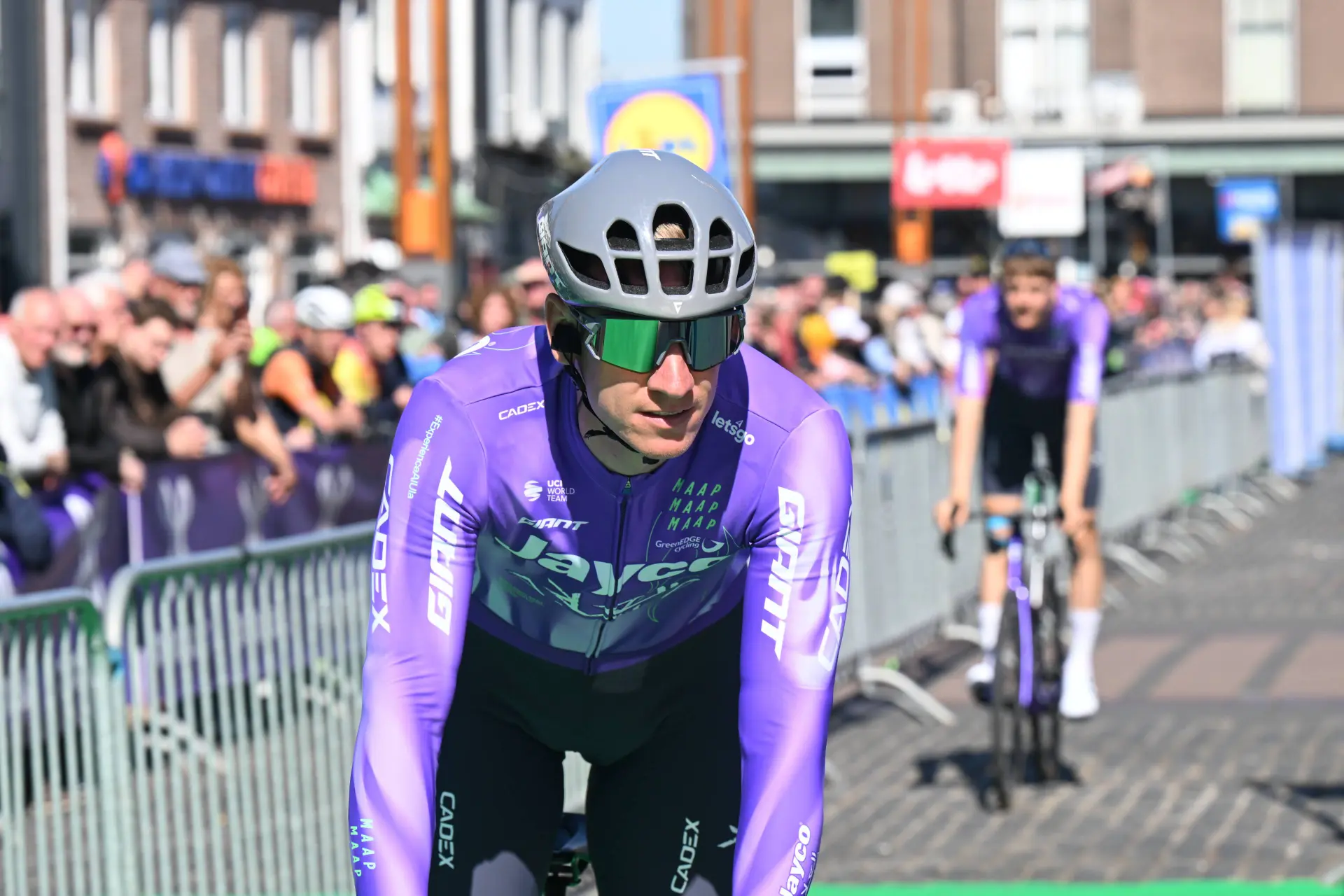
Gall showed not only resilience, but also race intelligence. Anyone who overpaces after a Vingegaard attack pays for it immediately on a climb like that. Gall stayed controlled, got himself back into the group, and then took important seconds and bonus seconds with his late acceleration. For a rider fighting for second place, that was almost the maximum possible return.
Jai Hindley also left a decent impression. Red Bull - Bora - hansgrohe even took responsibility before the final climb, which suggested Hindley was feeling good. In the end, though, he lacked that final punch. He stayed with Gall and Arensman, but lost contact in the sprint. It was not a collapse, but it was not a statement either.
For Thymen Arensman, it was a mixed day. Netcompany-Ineos played the Egan Bernal card cleverly as support, and Arensman tried to accelerate himself. But when it really came down to seconds, he had to let Gall and Hindley go. That is no disaster, but in the podium fight every small weakness counts.Gall was the strongest rider behind Vingegaard today. Hindley remains dangerous, Arensman remains in the race. But after Cari, Gall looks like the man both of them first have to crack.
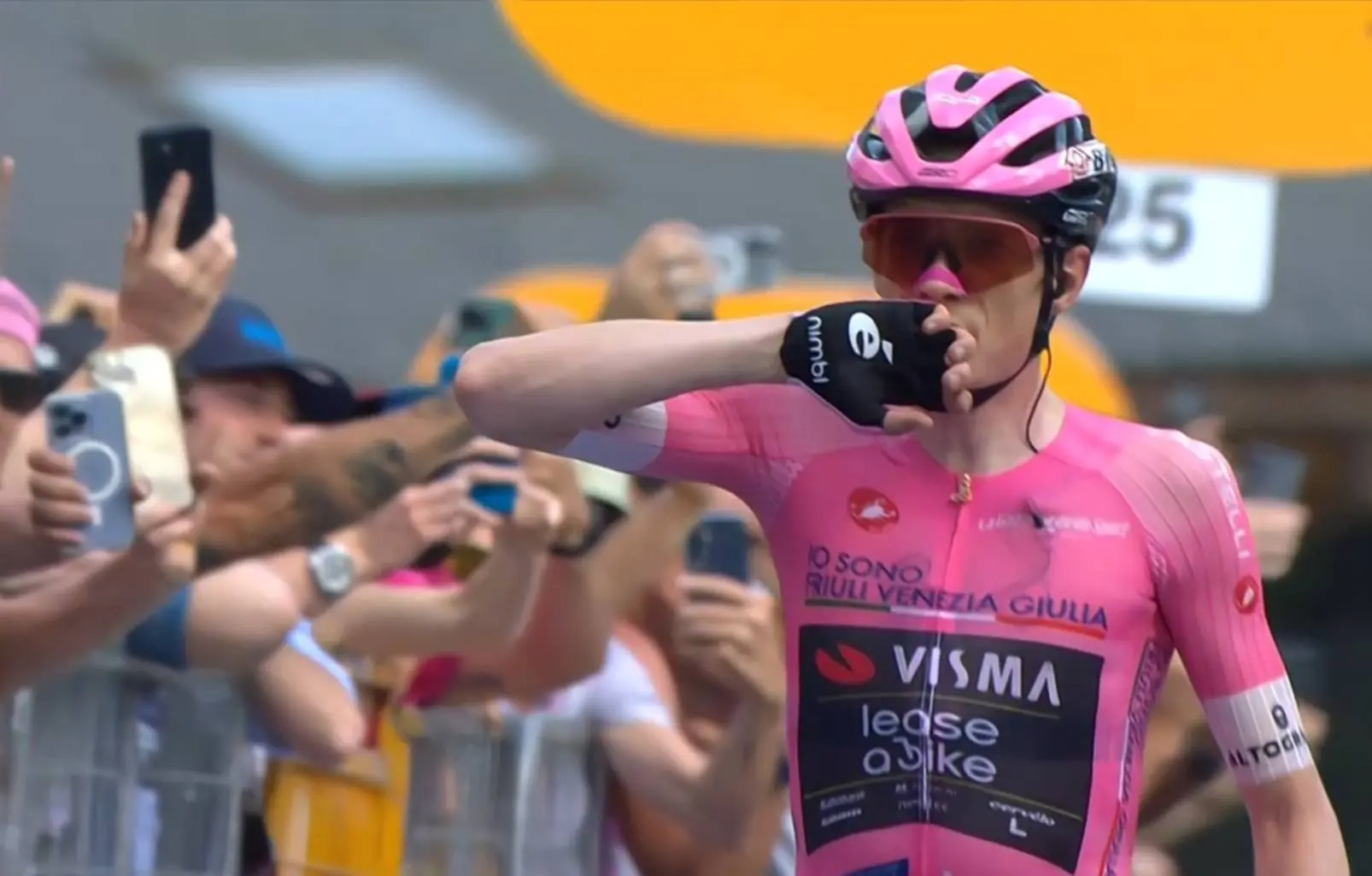
Modern cycling’s biggest problem: explosiveness over endurance
Meanwhile, Jorge Borreguero of CiclismoAlDia put into words what he had just witnessed, saying:
The stage perfectly summed up one of the biggest problems in modern cycling: the sport is trying to sell “explosiveness” while sacrificing the very essence of a Grand Tour. A mountain stage of just 111-113 kilometres, with so little accumulated fatigue and a relatively controllable final climb, inevitably turns into a highly predictable script for a dominant rider like Jonas Vingegaard.
The issue is not just the distance itself. It is the combination of a short route, absolute watt-based control, and hyper-organised teams. In that context, the breakaway is practically doomed from the start. Riders like Einer Rubio, Giulio Ciccone, Jhonatan Narváez or Chris Harper sounded exciting on paper out front, but they never truly gave the impression they could fight for the stage victory.
Team Visma | Lease a Bike knew exactly how much time to allow and exactly when to raise the pace. And when a rider like Vingegaard reaches the final 6-7 kilometres relatively fresh, the outcome becomes almost mathematical.

Giulio Ciccone throws in the towel: the fight for victory will have to wait till another day
In a Grand Tour there should be more fatigue, more uncertainty, and more room for improvisation. Stages of 180-220 kilometres with multiple climbs create genuine exhaustion and tactical mistakes. That is where crises emerge, where riders crack, where long-range attacks happen and surprises become possible. What happened in Carì felt more like a compressed mountain classic: huge tension at the start, enormous intensity, but very little endurance factor.
In fact, the most questionable aspect of the stage may not even be Vingegaard’s victory itself, because he simply did exactly what the strongest rider is supposed to do: race like the strongest rider. What is worrying is that the route design increasingly encourages a style of racing that is tactically sterile.
Everything was reduced to waiting for the Dane’s attack in the final kilometres. And when everybody knows exactly where the favourite is going to launch his move, it is a sign the stage design leaves very little room for anything different.
There is also an obvious contradiction in the way these stages are marketed. They are presented as a “massive Alpine stage” or a “decisive day”, yet the distance is more typical of a stage in the Critérium du Dauphiné or another one-week race.
Grand Tours need accumulated fatigue, not just television-friendly final climbs. Historically, the Giro d'Italia was synonymous with survival, endless days in the rain and relentless attrition. Now, many stages feel designed primarily to maximise television audiences during the final two hours.
Results powered by FirstCycling.com
The fight for the podium is reaching boiling point
Jonas Vingegaard is simply untouchable in this Giro. Another mountain stage, another statement victory from the Dane, who now looks completely in control of the race heading into the final week.
Behind him, the real war is for the podium. Felix Gall, Jai Hindley and Thymen Arensman continue to trade attacks and seconds, with barely anything separating them as the Giro approaches its decisive days.
And you? What did you make of the stage 16 of the Giro d'Italia 2026? Tell us your thoughts, share your opinion on all the key moments and incidents from the race, and join the discussion.
Carlos Silva is a writer for CyclingUpToDate.com, where he contributes race reports, interviews, analysis pieces, and live coverage of the international cycling calendar. Holding a degree in Sports from the Jean Piaget Institute, he combines academic knowledge of performance, training, and competition with hands-on journalism experience in professional cycling.
Throughout his career, Carlos has conducted interviews with leading figures in the sport, including Alberto Contador, Joaquim Rodríguez, Óscar Pereiro, João Almeida, Isaac del Toro, Derek Gee, John Degenkolb and Geraint Thomas. These conversations reflect direct engagement with Grand Tour winners, Classics specialists, and emerging talents.
He has provided on-site coverage at major events ranging from the Vuelta a España to the Tour de France, alongside stage races such as Vuelta a Andalucía, Volta ao Algarve, Volta a Portugal and O Gran Camiño. Covering the mythical climbs of the Giro d'Italia remains one of his professional ambitions.
Carlos is responsible for liveblog coverage of all major WorldTour races and beyond, including the Tour de France, Giro d'Italia and Vuelta a España. His reporting integrates verified data from ProCyclingStats to ensure statistical accuracy, contextual depth, and analytical precision.
A lifelong cycling enthusiast, he approaches storytelling across written, photographic, and video formats with a focus on credibility, tactical insight, and informed race interpretation.
claps 0visitors 0
Just in
Popular news
Latest comments
- I think it is a good sign to have only signed a couple of riders. it shows their system is working - retention of their own riders and using their development squad. As for retention of their own riders, they won a GT, a monument, they took a points jersey in another GT. They have a U23 WC. They have multiple one day and one week race wins. Keep the core. Their development squad has delivered fantastic results. And for all the talk of Vismas decline, their culture must be amazing since no one signed elsewhere. That is a very GOOD sign.mij17-10-2026
- Why is it beyond people's intellectual capabilities to stop accusing others of doping without proof? How are we supposed to live in a world where suspicion is evidence of guilt?This is pure infantile asinine nonsense.
 Brucegel17-10-2026
 - is that the standard for sharing thoughts here?OCexile17-10-2026
- If he was less brilliant than usual at the Tour, then I don't even want to imagine his 'usual' level of brilliance.Cooldude17-10-2026
- ok, i take back my wish. you’re right, i didn’t stop to think about how much i was damaging the sport. that was a close one. sometimes i forget how much power i wield and how capricious i can be…OCexile17-10-2026
- Reducing speed is not something that can realistically happen. This is all just a smokescreen for avoiding talking about the real solutions, such as airbags. A comparison to a more binary sport such as rock climbing (not free solo) would show this: Saying "go slower" is the same as "do easier climbs" Saying "use airbags" is like "use better harnesses"...
 Rafionain-Glas17-10-2026
 - Globalisation of pro cyclingRafionain-Glas17-10-2026
- So people are now guilty by virtue of having lived in a certain set of decades? Wonder how that argument would hold up in court?LMAO.Brucegel17-10-2026
- you can reduce speed by increasing bike weight and increasing air resistance but it will penalize riders with lower weight a lot. also downhill reaches 100k/hr and sprints reach 70-80k/hr, how do you even control that. these are the times of most accidents anywayabstractengineer17-10-2026
- Just trying to gall the reader for clicks.Seems to be working.Just ignore the assinine article.Brucegel17-10-2026
Loading
Write a comment