DISCUSSION | Amstel Gold Race 2026 - Evenepoel’s maturity. Cosnefroy replaces Pogacar in the podium photo. Blasi smashes the peloton and Vollering’s dream
Cycling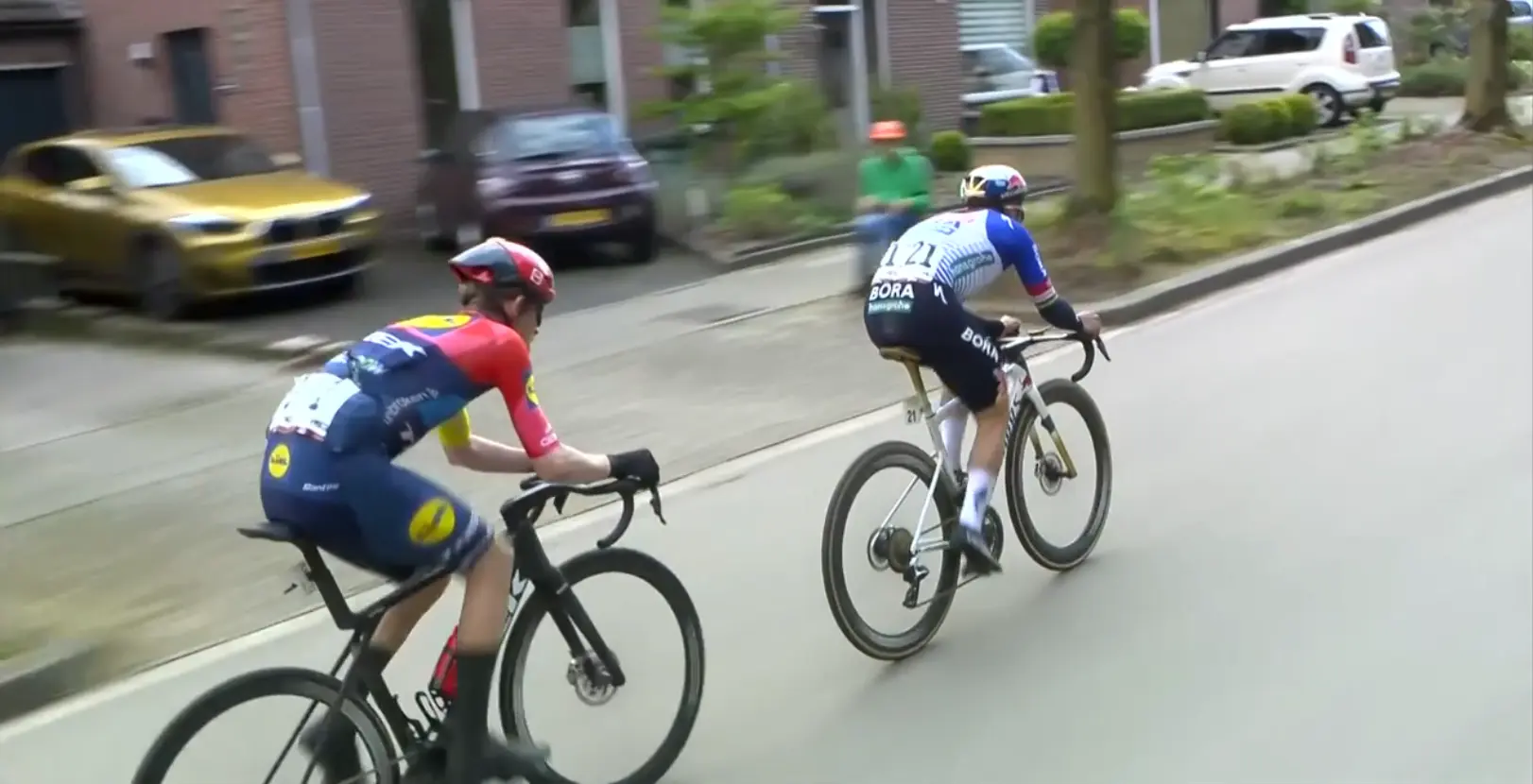
The roads of Limburg delivered another memorable chapter on Sunday as the Amstel Gold Race and the Amstel Gold Race Ladies produced two very different but equally compelling races.
In the men’s event, Remco Evenepoel added another prestigious Classic to his growing palmarès after defeating Mattias Skjelmose in a tense sprint finish. In the women’s race, Paula Blasi stunned the favourites with a sensational long-range solo attack to take the biggest victory of her career.
Evenepoel masters tactical finale in men’s race
The men’s Amstel Gold Race, celebrating its 60th edition, once again featured the traditional demanding route through South Limburg, with 33 climbs spread across the day. Among the key ascents were the Eyserbosweg, Keutenberg and the famous Cauberg, which once again played a decisive role in the outcome of the race.
A strong nine-man breakaway formed early in the contest and gave the peloton plenty to think about. Among those up the road were Warren Barguil, Marco Frigo, Filip Maciejuk and Dutch rider Huub Artz, joined by Xabier Mikel Azparren, Joseba Lopez, Siebe Deweirdt, Valentin Retailleau and Abram Stockman. The group built an advantage of around four minutes as the bunch, led primarily by Red Bull-BORA-hansgrohe, remained calm and controlled.
That tempo control was largely designed around Remco Evenepoel, who started the race as one of the major favourites. The Belgian’s team gradually reduced the gap as the race entered the more selective phase, with the repeated climbs and twisting roads beginning to sap energy from the breakaway and bunch alike.
The first major moment came on the opening passage of the Cauberg. Red Bull - BORA - hansgrohe increased the pace sharply, causing the first real split in the peloton. Several riders immediately lost contact, among them Belgian champion Tim Wellens, whose challenge ended earlier than expected. At the front, the breakaway was also reduced significantly, leaving only Artz, Frigo and Azparren still clear.
As the race moved deeper into the final hour, attacks began among the favourites. Romain Grégoire was the rider who truly ignited the finale, launching a powerful acceleration on the Kruisberg. Only a select group could respond, with Evenepoel, Skjelmose, Kévin Vauquelin, Matteo Jorgenson and Mathieu Burgaudeau making the split.
However, the race was turned upside down on the descent that followed. In a dangerous corner, Vauquelin crashed heavily and unintentionally brought down Jorgenson as well. That incident removed one of the strongest contenders and forced others to reorganise.
Evenepoel, Skjelmose and Grégoire managed to avoid the chaos and quickly moved clear. They soon caught Marco Frigo, who had become the final survivor from the original breakaway. But once the race reached the Keutenberg, Evenepoel made his intentions clear.
The Belgian launched a fierce acceleration on the steep slopes, putting his rivals under immediate pressure. Frigo was dropped after his long effort in the break, while Grégoire and Skjelmose just managed to hold the wheel. Evenepoel continued to drive the pace on the flat and over the next climbs, clearly determined to reduce the group further before the finish.
That decisive moment came on the penultimate ascent of the Cauberg. Evenepoel attacked once more and this time Grégoire could no longer respond. The Frenchman cracked, leaving only Skjelmose alongside the Belgian star.
Behind them, a chasing group containing Benoît Cosnefroy, Albert Philipsen, Mauri Vansevenant, Emiel Verstrynge and Senna Remijn attempted to limit losses, but they never seriously threatened the leading pair. Evenepoel continued to do most of the work at the front, trying repeatedly to break the Dane before the line.
Yet Skjelmose, winner of the race last year, proved extremely resilient. He followed every acceleration on the Geulhemmerberg, Bemelerberg and final Cauberg, refusing to surrender despite the relentless pressure.
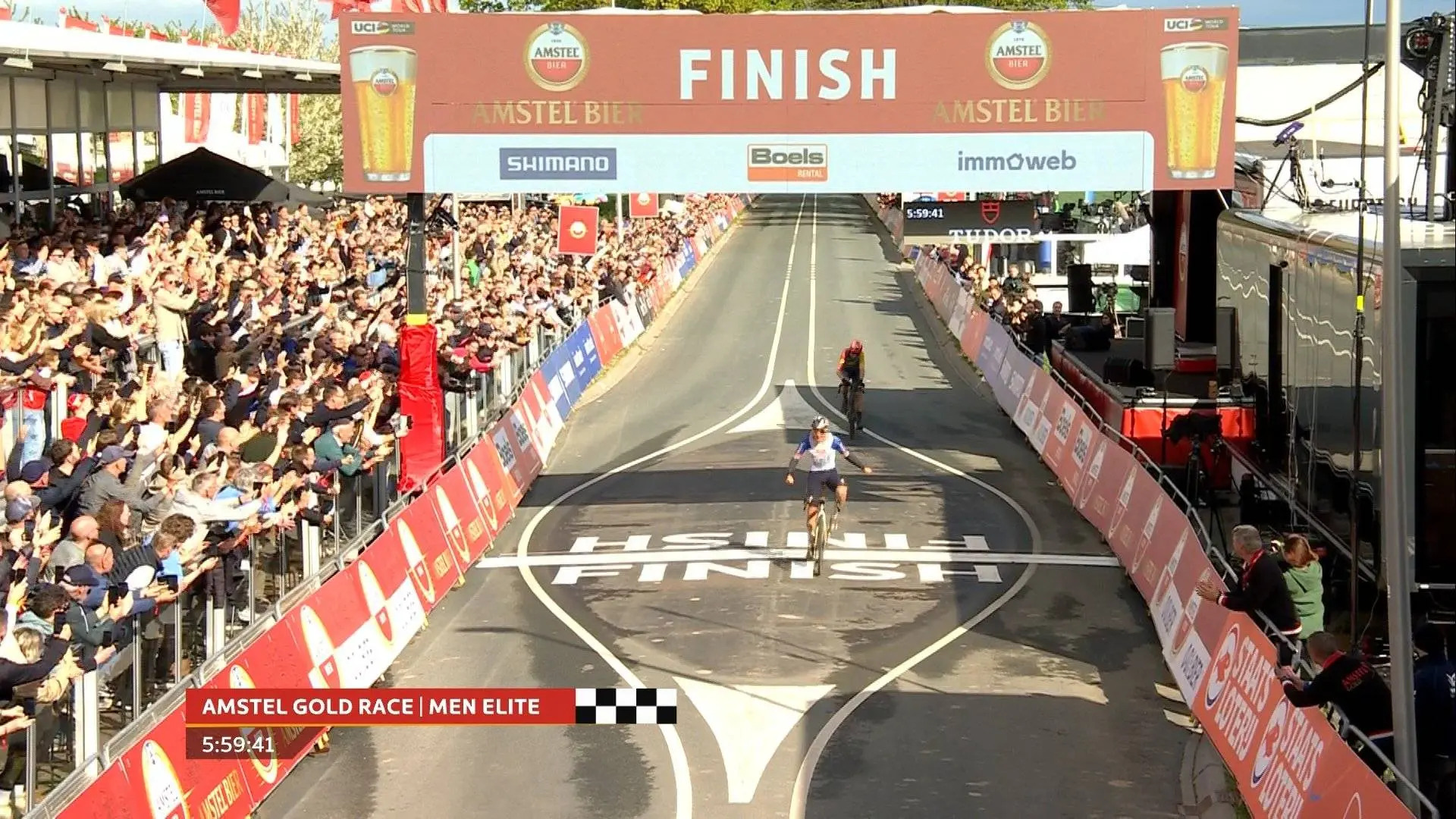
That meant the race would be decided in a two-man sprint. Unlike previous editions where timing errors had cost him, Evenepoel judged his effort perfectly this time. He remained patient, waited for the right moment and then exploded clear in the final metres to secure a convincing victory.
It was a major win for Evenepoel, adding another Monument-level style result to his résumé and confirming his excellent spring condition. Skjelmose had to settle for second after another outstanding ride, while Cosnefroy won the sprint from the chasers to complete the podium.
Blasi shocks the stars in women’s race
If the men’s race ended with a duel between two expected contenders, the women’s Amstel Gold Race Ladies delivered one of the biggest surprises of the season.
Pre-race attention focused heavily on names such as Demi Vollering, Kasia Niewiadoma, Lorena Wiebes, Marianne Vos and Puck Pieterse. Instead, it was Paula Blasi of UAE Team ADQ who stole the headlines with a fearless attack and remarkable solo triumph.
The women’s route included 21 climbs, with the decisive local circuit around Valkenburg featuring repeated ascents of the Geulhemmerberg, Bemelerberg and Cauberg. The terrain promised an aggressive race, but the opening phase was relatively controlled.
The first significant move came from Annelies Nijssen, who was later joined by Nicole Steigenga, Kiara Lylyk, Heidi Franz and Scarlett Souren. That group gained some freedom, but once the race entered the hill zone the break began to lose cohesion. Several riders were dropped and eventually the peloton brought everything back together before the final circuits.
Some favourites had already encountered problems. Magdeleine Valllières suffered a puncture and spent valuable energy chasing back, while Lorena Wiebes was later dropped after briefly showing herself near the front. That removed one of the fastest finishers from contention before the decisive phase.
Lidl-Trek then animated the race through a series of attacks from Niamh Fisher-Black, Fleur Moors, Shirin van Anrooij and Riejanne Markus. Their moves did not immediately split the race, but the repeated pressure gradually reduced the lead group and softened the opposition.
Anna van der Breggen also made an important acceleration on the Geulhemmerberg, prompting responses from riders such as Niewiadoma, Vollering and Noemi Rüegg. Yet the same pattern continued, many attacks but little cooperation.
That hesitation created the opening that changed the race. With 27 kilometres remaining, Paula Blasi attacked together with Nienke Vinke. For the first time all day, the favourites hesitated long enough to allow a dangerous gap to open.
Blasi sensed the moment perfectly. On the penultimate Cauberg she raised the pace once again, immediately dropping Vinke. The Dutch rider could not respond, while behind the chasing group still lacked unity.
Read also
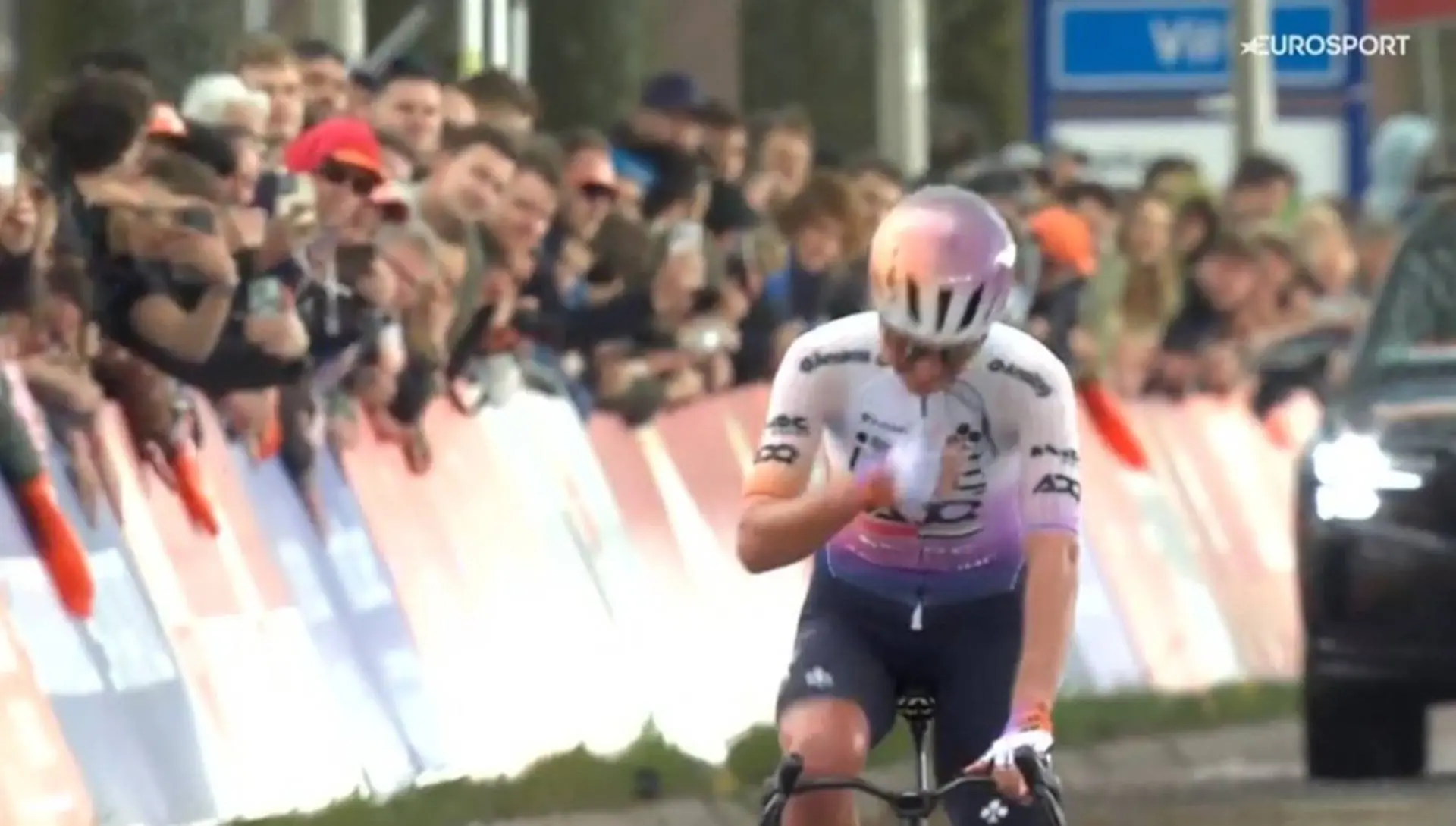
From there, Blasi produced the ride of her career. She powered alone over the Limburg climbs, extending her lead rather than losing time. FDJ-Suez attempted to organise the chase for Vollering, and Lidl-Trek also contributed later, but the Spaniard remained untouchable.
By the time she reached the final ascent of the Cauberg, Blasi still held an advantage of around one minute. At that point the victory was effectively secured.
Behind her, Niewiadoma and Vollering launched late attacks on the steepest part of the final Cauberg, but they were now racing only for second place. Neither could make any impact on the leader.
Blasi entered the finishing straight alone with time to celebrate an extraordinary success. It was the biggest result of her career and one of the standout surprise victories of the season.
Niewiadoma narrowly beat Vollering in the sprint for second, while Letizia Paternoster finished fourth and Noemi Ruegg rounded out the top five.
Carlos Silva (CiclismoAtual)
Tadej Pogacar was missing from the podium, otherwise the 2026 picture would have looked exactly like last year’s. In an honest analysis, perhaps the race and the podium would have been different if Kévin Vauquelin and Matteo Jorgenson had not been involved in that crash. It was unfortunate, but that is part of cycling.
Apart from that, everything went as expected. After a strong group had formed at the front following a sharp acceleration by Romain Grégoire, Remco Evenepoel raised the pace on the climbs to eliminate his rivals, who on paper would have been faster than him if it had come down to a sprint finish.
Than, Romain Grégoire was the lat to succumb to the power of the Belgian rider, and once he lost contact, he never managed to close the gap again.
I had said that Mattias Skjelmose could not be ruled out from the list of favourites, even though Lidl-Trek had stated that their rider had been ill during the week. That was clear in the way he was riding. He looked very strong.
Chapeau to Evenepoel, who got onto Skjelmose’s wheel in the final kilometre, did not crack, and knew exactly when to launch his sprint and win the race. Cheers.
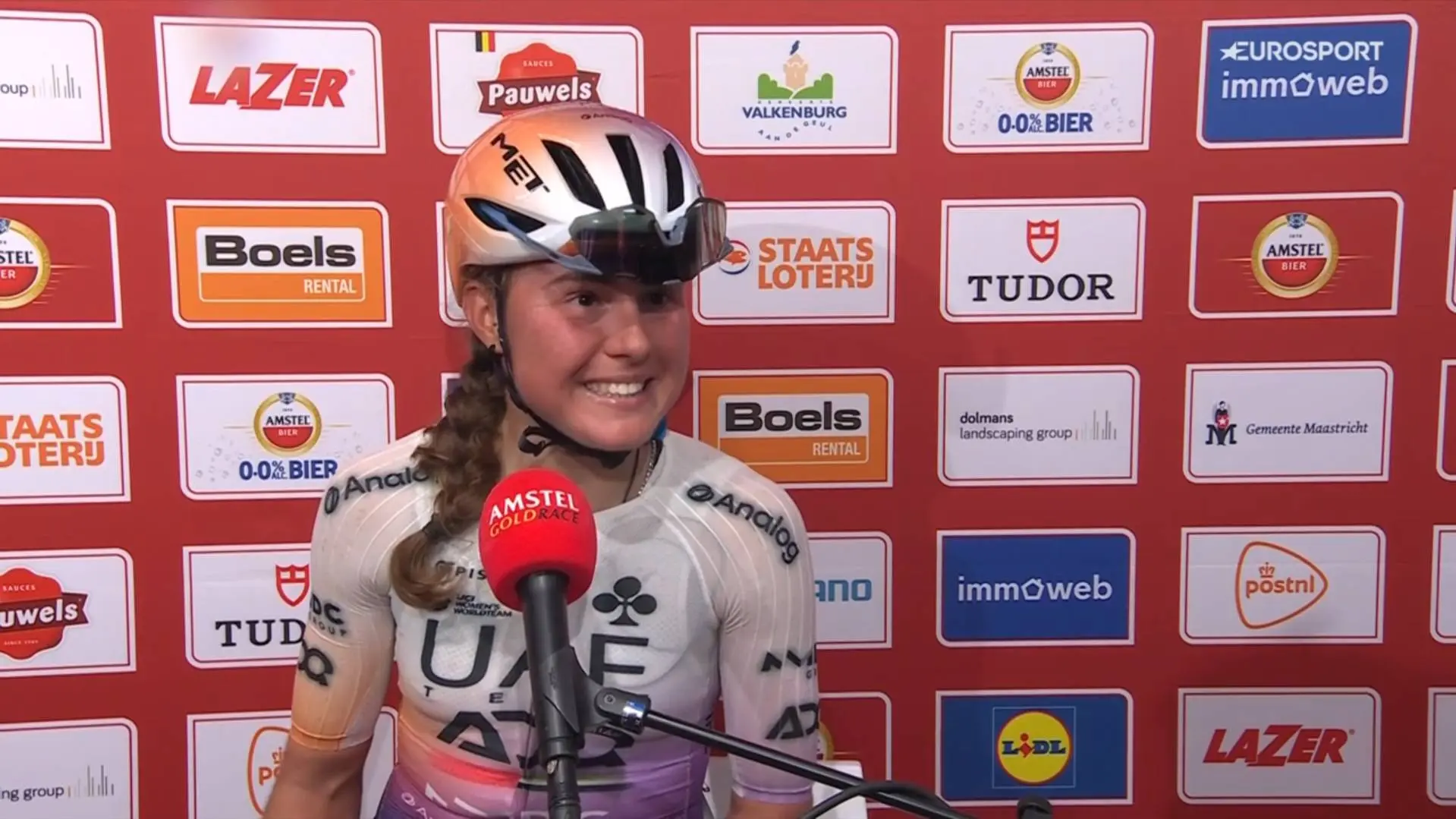
In the women’s race, what a surprise this victory was from the Spanish rider of UAE Team ADQ, Paula Blasi. I think her rivals underestimated her. They believed they would bring her back and then fight for victory among themselves. But the kilometres kept passing and Blasi refused to give in.
Demi Vollering came into this Ardennes Classic with clear ambitions to win, but in the end she was left only with the intention and the lowest step of the podium. Perhaps she was one of the losers of the day.
In summary, what a lesson in humility and hard work. Chapeau to Blasi.
Ruben Silva (CyclingUpToDate)
The women's race saw a well deserved win for Paula Blasi, truly a breakthrough one and it was interesting to see SD Worx and FDJ outsmarted in a race where they seemed to have the most responsibility and power.
FDJ did well and Demi Vollering was on point to try and win the race - whilst Kasia Niewiadoma of course was just as strong - however with the tactical aspect still proving to be crucial.
The men's race well, there weren't any tactics at play were there. Tadej Pogacar wasn't in the race, but Remco Evenepoel was still the strongest and clear man to beat. Red Bull controlled the race perfectly and created as much fatigue as possible before the race exploded.
Hence, no-one anticipated him, whilst the crash of Kévin Vauquelin and Matteo Jorgenson narrowed down the list of favourites and scenarios also. Both Romain Grégoire and Mattias Skjelmose could realistically beat Evenepoel in the final sprint, so they willingly collaborated with him.
It was a mere matter of pacing to the line and fighting in the sprint, in which he won. Hence, predictable, not much exciting I must say. Amstel, out of the Ardennes, is the only classic that could still be quite tactical but that didn't turn out to be the case.
Mattias Skjelmose was also very generous, specially when letting Evenepoel get in the wheel in the final kilometer, when they had an unmeasurable gap. In any case, Evenepoel looked good and he will need at the very least this to be competitive against Tadej Pogacar at Liège next next week.
Jorge Borreguero (CisclismoAlDia)
Paula Blasi’s victory in the Amstel Gold Race Ladies marks a real turning point. It’s not just about winning; it’s how she does it: fearlessly, without hesitation, and executing her move at the perfect moment.
Beating Demi Vollering on this terrain means she is now ready to compete against the elite on any Ardennes stage. Furthermore, her victory has structural significance. For Spanish women’s cycling, it opens a door that had been closed for years.
It is not an isolated surprise: if she confirms this level in races such as the Flèche Wallonne or Liège–Bastogne–Liège, we will be talking about a true leader, not a one-off revelation.
In Remco Evenepoel’s case, the story is different because it is no longer surprising that he wins. What is interesting is his tactical development. Facing rivals such as Romain Grégoire or Mattias Skjelmose, he chose the perfect moment on the Cauberg to break the race open and reduce it to a head-to-head battle.
That is competitive maturity. Evenepoel no longer races solely on instinct. He now races with control; he knows when to make his move, and that makes him far more dangerous in this type of classic, where he might previously have been too hasty.
Read also
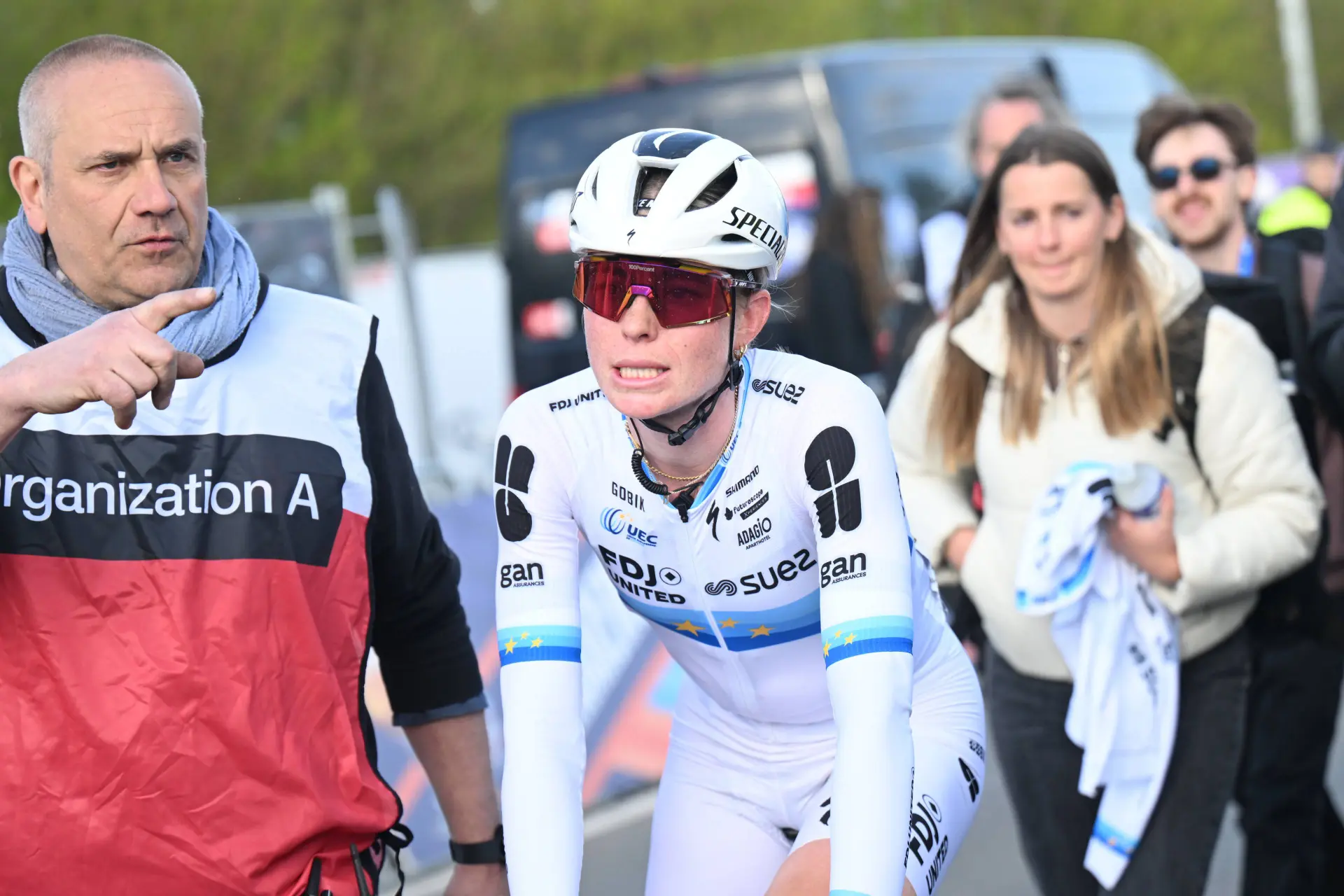

And you? What’s your opinion on Amstel Gold Race 2026? Tell us what you think and join the discussion.
Carlos Silva is a writer for CyclingUpToDate.com, where he contributes race reports, interviews, analysis pieces, and live coverage of the international cycling calendar. Holding a degree in Sports from the Jean Piaget Institute, he combines academic knowledge of performance, training, and competition with hands-on journalism experience in professional cycling.
Throughout his career, Carlos has conducted interviews with leading figures in the sport, including Alberto Contador, Joaquim Rodríguez, Óscar Pereiro, João Almeida, Isaac del Toro, Derek Gee, John Degenkolb and Geraint Thomas. These conversations reflect direct engagement with Grand Tour winners, Classics specialists, and emerging talents.
He has provided on-site coverage at major events ranging from the Vuelta a España to the Tour de France, alongside stage races such as Vuelta a Andalucía, Volta ao Algarve, Volta a Portugal and O Gran Camiño. Covering the mythical climbs of the Giro d'Italia remains one of his professional ambitions.
Carlos is responsible for liveblog coverage of all major WorldTour races and beyond, including the Tour de France, Giro d'Italia and Vuelta a España. His reporting integrates verified data from ProCyclingStats to ensure statistical accuracy, contextual depth, and analytical precision.
A lifelong cycling enthusiast, he approaches storytelling across written, photographic, and video formats with a focus on credibility, tactical insight, and informed race interpretation.
claps 1visitors 1
Just in

Popular news
Latest comments
- Nothing. Against Pogi nothingabstractengineer18-10-2026
- He didn't even try to sprint all outvappaxbipmv18-10-2026
- Campenaerts looked like a rolling pumpkin with that all orange leaders skinsuit !frieders318-10-2026
- He can take his dumb a$$ politics somehwere else !frieders318-10-2026
- good to have her back. fingers crossed she‘ll be able to stay!Ketterechts17-10-2026
- A tenner and he wins the Tour next year, too 😂anonymouscyclist17-10-2026
- the answer is either stick to classics or GTs but not bothabstractengineer17-10-2026
- the exodus already stared with Ciccone. Already they were struggling with two sprinters, now there are three. Also Ganna will demand leadership. Gall is the most proven GC, Ayuso has the most potential. GC leadership for everybody will be impossible. Literally a UAE style mess without pogi.abstractengineer17-10-2026
- I raced as an amateur for 12 years, including six years on my country’s national road cycling team. I secured two national titles and competed in three World Championships plus more than 15 international stage races. At 23, we travelled to Italy for a training camp—or so I assumed. On a rest day, we watched a presentation about adopting a more “professional” training approach. It was crystal clear what “professional” meant. That moment first exposed me to this dilemma. After returning from Italy, I left cycling—at least at the competitive level I had known. Over the following two years, the whole team was caught doping. I hold that everyone is innocent until proven guilty. In my view, current stakeholders operate on a different scale, and the sums involved are vast. I am unsure whether any doping would ever be revealed. I try to stay positive and enjoy the show. My 2c.
 vannpelt17-10-2026
 - Fiver he wins 🤣
 leedorney17-10-2026
Loading
Write a comment