Chasing the next prodigy - Agencies race to sign 15-year-old talent in high-stakes search for the next Pogacar
Cycling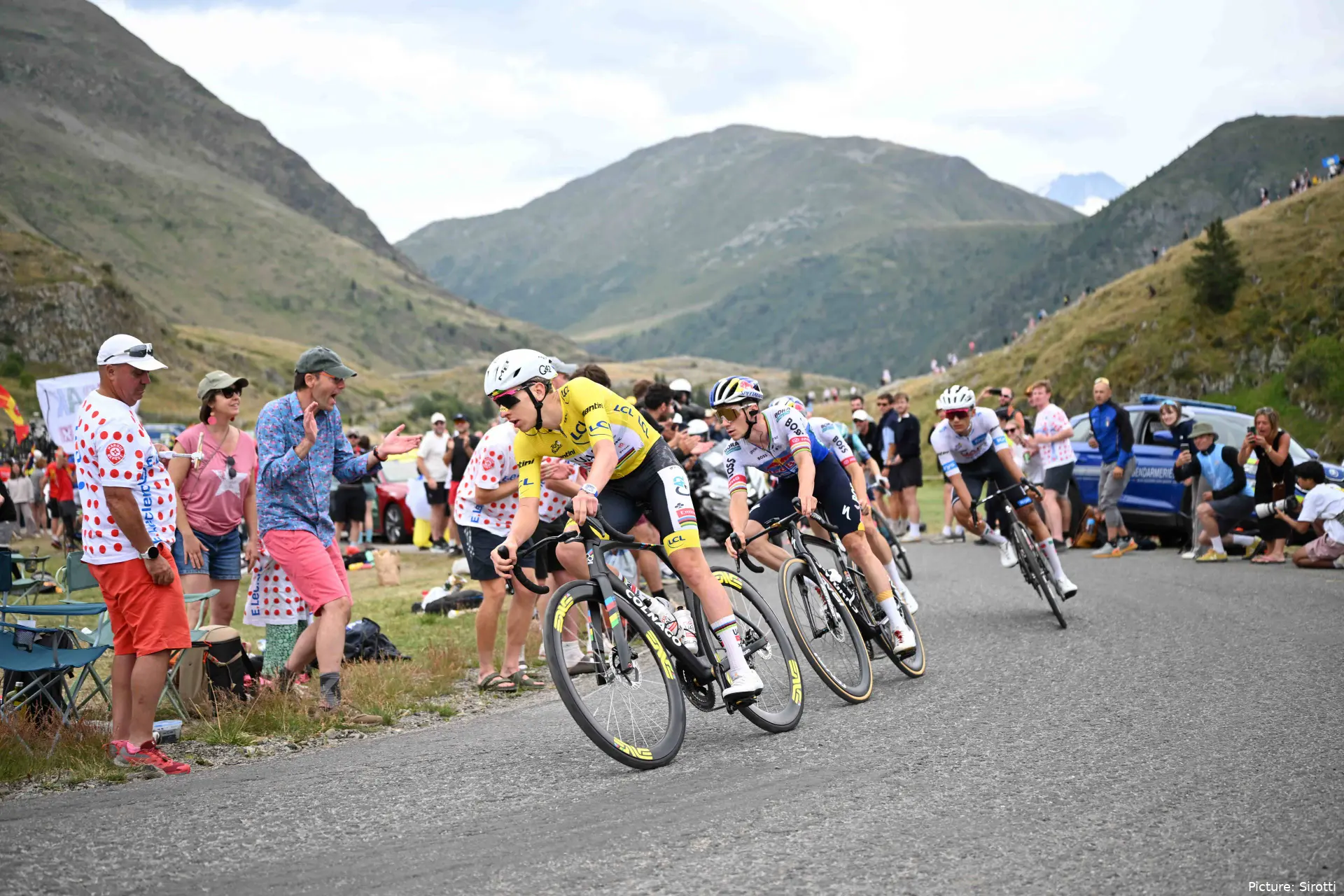
The battle to sign cycling's next generation of stars is moving further down the age groups. Riders who have barely entered their teenage years are increasingly becoming targets for management agencies, with representatives attending races where most of the competitors are still balancing cycling with school.
Fifteen-year-old Dane Philip Hyldtoft is already represented by SEG Cycling, while 16-year-old Belgian Lars Peers is managed by A&J Sports, the agency that also represents Tadej Pogacar. Their cases illustrate how early the professionalization of the talent market has begun, with agencies and teams increasingly unwilling to wait until riders reach the U23 ranks before deciding who might have the potential to become a future WorldTour star.
That represents a major change from the cycling industry of a decade ago. Rider agents traditionally became involved when a rider was approaching a professional contract, often after several seasons in the U23 ranks. Now, the competition for promising riders can begin while they are still juniors, and increasingly even before that stage.
The numbers reflect the shift. The average age at which riders sign their first professional contracts has fallen from almost 21 to just over 19, while contracts for young riders have become considerably longer. Instead of one- or two-year deals, teams are increasingly willing to commit for two or three seasons, and sometimes even further into the future.
The Evenepoel and Pogacar effect
The change has been accelerated by the emergence of riders such as Remco Evenepoel and Pogacar, who challenged the traditional development model by reaching the highest level exceptionally quickly.
Evenepoel went directly from junior cycling to Deceuninck-Quick-Step in 2019 and made his WorldTour debut at 19. Pogacar also turned professional at 20 with UAE Team Emirates and won the Tour de France one year later, becoming the youngest winner of the race in decades.
Their success has reinforced the belief that extraordinary riders can be identified early and that keeping them in the traditional development system for too long could mean losing them to a competitor. The emergence of increasingly sophisticated development programs has strengthened that trend, with WorldTour organizations investing heavily in identifying and nurturing riders before they reach the professional ranks.
The modern pathway is consequently becoming much more structured. A talented junior can be identified by an agent, receive representation, establish relationships with a professional team and potentially have a long-term career plan mapped out before reaching the U23 category.
Read also
A market growing faster than its rules
The increasingly aggressive search for young riders also exposes a regulatory problem. Cycling has rules governing professional teams, contracts and rider representation, but the reality of identifying talent at increasingly young ages has developed faster than the framework designed to regulate it.
That leaves parents playing a particularly important role. A 15- or 16-year-old rider cannot be expected to evaluate the long-term consequences of a management agreement or understand how different teams' development structures compare. Families therefore increasingly need to assess not simply whether an agent can find their child a contract, but whether the relationship is appropriate for a rider whose education and physical development remain fundamental considerations.
There is also a difficult balance for the agents themselves. Entering the market too early can mean investing time in riders who ultimately do not develop into professionals. Entering too late, however, can mean that the most promising riders are already tied to another agency.
The same dynamic can be seen among teams. WorldTour organizations have expanded development programs and increasingly scout riders well before they become established U23 competitors. The most successful programs offer young riders a clear route from junior racing through development teams and eventually into the WorldTour, making it easier for a team to secure a rider before competitors can intervene.
For the riders, however, the benefits of early security have to be weighed against the danger of becoming professionalized too quickly.
Félix SernaCycling Journalist
Félix Serna is a writer at CyclingUpToDate and has been part of the team since 2025. He covers professional cycling across both the men’s and women’s calendars, with a focus on UCI rankings, race developments, and rider performance. His work includes interview-based reports, liveblogs, and tournament coverage designed to provide clear, accurate context throughout the season.
In his reporting, Félix regularly uses ProCyclingStats for results, statistics, and historical reference. He places strong emphasis on careful sourcing, editorial accuracy, and updating articles promptly when new, verified information becomes available. He holds a bachelor’s degree in International Studies.
claps 1visitors 1
Just in
Popular news

Latest comments
- although he'll never be able to beat a healthy pogi in a grand tour, this year's tdf has demonstrated that in his absence he can probably win any grand tour...Ketterechts07-10-2026
- Nothing has changed, even after all these deaths. The UCI has blood on its hands.Pogboom07-10-2026
- I'm a retired pro photographer. We have been having a debate on this issue on a photography forum. Is the image we see that the ECF has issued accurate? In truth it is debatable. Why? What they are describing is basically high speed photography using a camera that shoots at 13000 frames per second. That is thirteen thousand single images every second. They are than using a process that most keen photographers know as "stacking." Each image taken within the set time period that the camera is set to shoot is then laid one on top of the other to get a single high resolution image. Does it tell the truth about the winning bikes position? Therein is the debate! My opinion is that unless you see the actual line on the road and its position relative to the actual finish line on the road and not a manufactured digital line purporting to be the finish line, there will always be questions on the accuracy of the image that the ECF has produced.Prorodsandstuff07-10-2026
- Take the thrown? Really?Trooph07-10-2026
- Maybe consider that it helps him work himself up into pushing his energy? A lot of people never start or do anything without some catalyst based on or created through negative feelings. Saying all continents is no longer acceptable without qualification, it must now be starred ;-) The amateur world of pioneers and seekers of thrills and fame has long since declared you have not been or won on all continents until you’ve included Antartica, to the great and sad loss of that place’s merit of having stayed more or less undiscovered by useless visitors.Jumpyjohn07-10-2026
- Now Hills33, don't you turn your back on me... you hear? They're all against me, because together they think, they have more power, but it ain't working for them. They keep losing out.PogiSloFans07-10-2026
- McEnremcoe?Jumpyjohn07-10-2026
- You make a statement like that and provide zero evidence or argument to back it up?Jumpyjohn07-10-2026
- For good measure, I would add a case of nuts tooJumpyjohn07-10-2026
- I don’t think anybody here is confused about who the real Mous are, they’re unmistakable so don’t worry too much about that.Jumpyjohn07-10-2026
Loading
Write a comment