“I want to become world champion” - Lidl-Trek's new diamond wants Spain back on the classics map
Cycling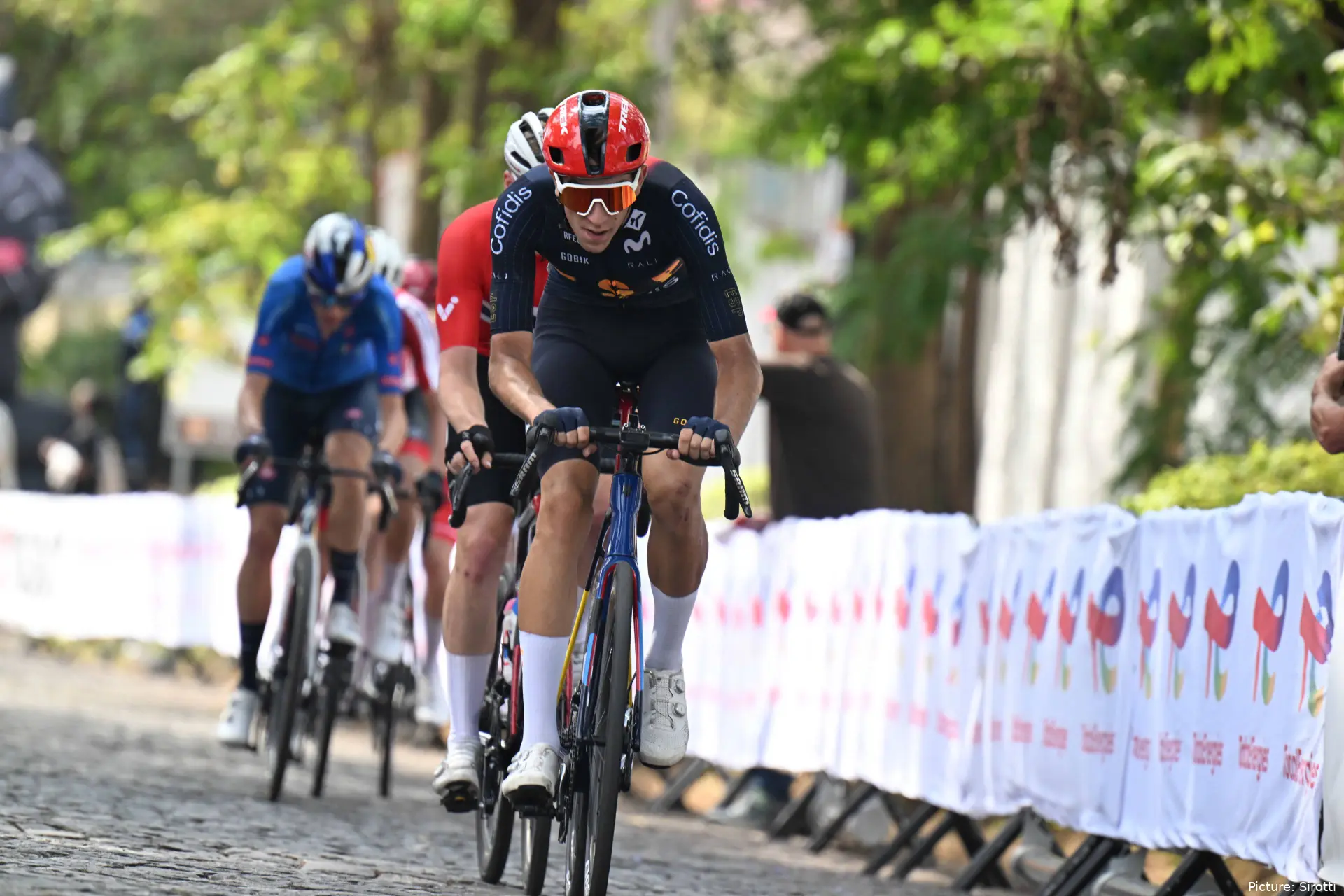
Héctor Álvarez had been knocking on the door for several years. Sixth at the junior World Championships, runner-up at the European Championships in the same category, fourth at his first U23 Worlds and third at the European Championships. Then came world silver and, finally, European gold. It was a steady progression that had made victory unfinished business for the rider from Alicante.
Winning the U23 European Championships was more than another medal. For Álvarez, it meant lifting “a weight off my shoulders” after several seasons spent coming close to the biggest prize. “We knew we had been knocking so hard that eventually one had to go in,” the rider explains, aware that the work of recent years had finally been rewarded.
Now, with the continental jersey on his shoulders, Álvarez is looking ahead without settling. This Wednesday, he will contest the time trial with a chance to complete a golden double, which he considers “a good objective” and “not at all unrealistic” given the course characteristics. He does acknowledge, however, that recovery will be decisive after the demands of the road race.
Beyond the medals, the Alicante rider wants to build a different career within Spanish cycling. “I want to show that Spain also has classics riders,” he told Marca. His references are not limited to the country’s great stage racers, but include riders such as Mads Pedersen, Wout van Aert and Mathieu van der Poel. His ultimate dream is equally clear: to become world champion.
Unfinished business finally settled
The silver medal at the World Championships had left Álvarez with a difficult feeling to process. After winning the sprint from the chasing group, he struck his handlebars as he crossed the finish line. It was not dissatisfaction with the result, but frustration at letting slip an opportunity that had felt within reach.
“You know you were the strongest in the group and that perhaps we lost focus and went a little later,” he recalls. Ashlin Barry had outplayed the favourites and, by the time Álvarez reacted, it was already too late. “Seeing that you win the group sprint and may have been the strongest does frustrate you a little. But then you look at it from the outside and you are happy.”
The European Championships told a different story. Spain took responsibility from the outset, as one of the leading favourites, and Álvarez decided to play his cards. He attacked at the right moment, opened a small gap on the flat and, although he was caught on the climb, realised that his rivals were at their limit.
When he reached favourable terrain again, he accelerated once more. This time, nobody could follow. The victory completed a journey that had begun years earlier and now allows him to race with much greater freedom. “I think I have got rid of all the stress I felt from wanting to win,” he admits. The unfinished business is now settled.

Héctor Álvarez, star of Spanish cycling
The classics rider determined to change Spain’s script
Álvarez has never hidden what type of rider he wants to be. He was drawn to the classics from an early age and, while Spain’s cycling culture was dominated by climbers and stage racers, he looked elsewhere for inspiration. “When I sit on the sofa, what I enjoy watching are the classics,” he explains.
Mads Pedersen, Wout van Aert and Mathieu van der Poel are part of that vision. So is an anecdote involving the Dane, which symbolises how Álvarez has developed his own identity. At the Boucles de la Mayenne, Pedersen put a sticker bearing his face on Álvarez’s helmet and told him he could not remove it until he had won a race. Now, after his European title, he has permission to take it off.
His biggest dream leaves no room for doubt: “I want to become world champion.” And if he ever had to choose one classic above all others, the answer would also be clear: the Tour of Flanders. However, he has no intention of limiting his profile. He would like to become a rider capable of competing in the classics while also working for a leader in the mountain stages.
That versatility also explains his interest in track cycling. Álvarez continues to work on combining both disciplines, with Los Angeles 2028 among his major objectives. “If I can combine the two, that would be ideal,” he says. On the road, meanwhile, the definitive step will come next season when he moves into the top tier.
“I still have a lot to improve”
Álvarez himself acknowledges that he is still far from reaching his ceiling. His progression has been deliberately measured, and he says there is still room to improve in practically every area: training, nutrition and preparation. That sense of calm, he explains, has been fundamental to allowing him to continue enjoying his bike.
“Since I was little, I have always treated it as a game, and I still do,” he says. It is precisely when he preserves that sense of fun that he produces his best results. But he knows change is approaching. Next year, he will have to “put all his cards on the table” and prove that he is ready to compete among the professionals.
He has also learned from the riders he has worked with. His experience alongside Juan Ayuso has shown him another dimension of cycling: the responsibility of being a leader and the importance of knowing how to support a teammate. His goal is to find the balance between both roles. “I would like to be a classics rider who can later help a great leader in the mountains,” he explains.
That development coincides with a Spanish generation beginning to achieve significant results in the junior ranks. Álvarez highlights the atmosphere within the group and the trust between riders who have shared national teams for years. “Seeing us fulfil our dreams and ride so well is unforgettable,” he says.

Hector Alvarez at the Baloise Belgium Tour
The double and a future already knocking
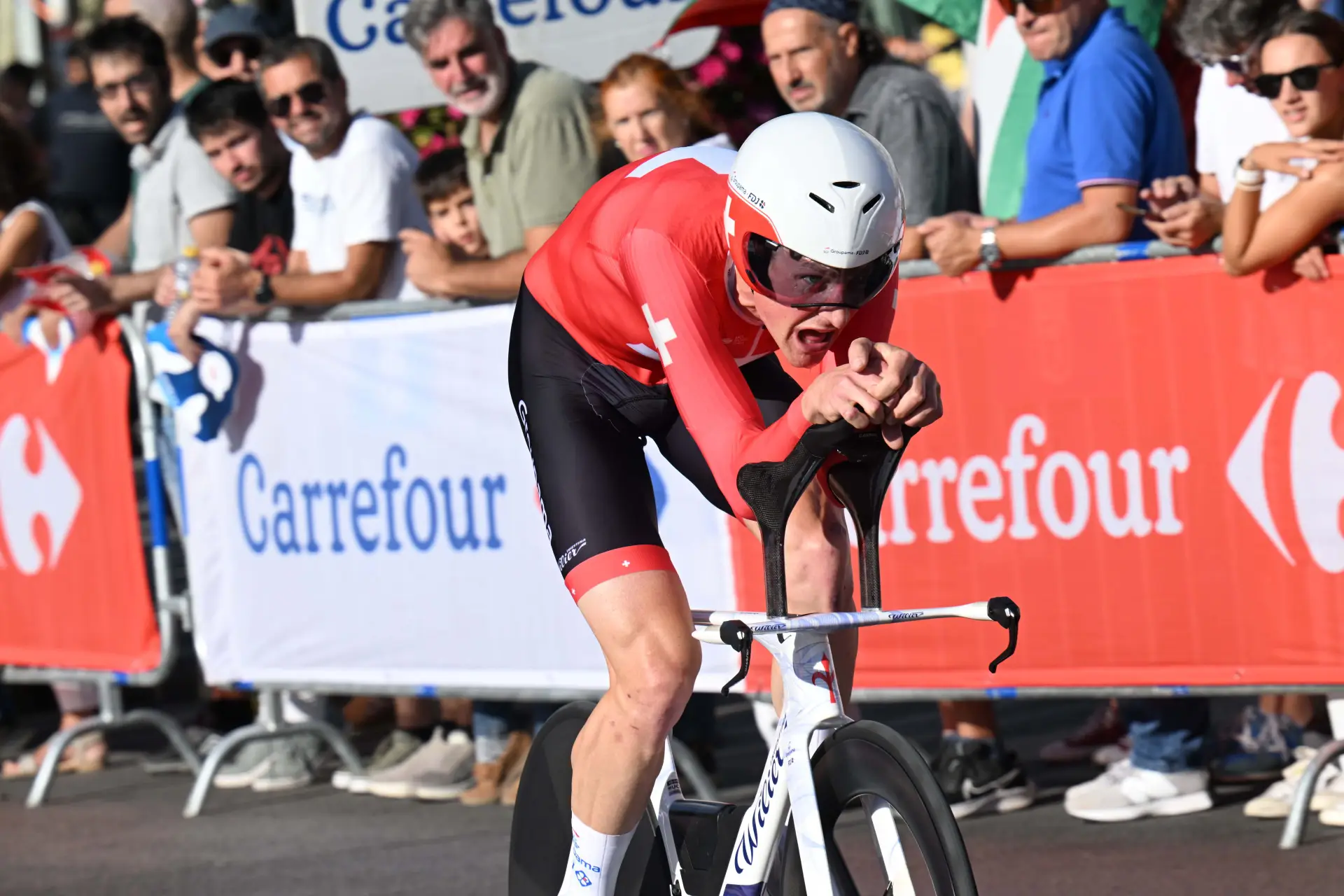
The European Championships could still bring him a second gold medal. The time trial is now the next challenge, just days after his road-race victory. Álvarez makes no secret of his ambition: “Win that one too.” The course makes him believe the double is possible, although he knows he must see how his body responds after the accumulated effort.
The success will also lead to a very special celebration. All his medals end up in his grandfather’s room, a family tradition he wants to preserve. If he wins a second gold, the two continental medals will share the same space. Before then, however, important objectives remain: the under-23 edition of Paris-Tours and the Track World Championships in China.

Meanwhile, his message goes beyond his own future. Álvarez wants his generation to broaden perceptions of Spanish cycling. “Spain is not just about climbers,” he insists. He also wants to see Spanish riders capable of shining in the classics and competing for the biggest one-day victories.
The message perfectly sums up his ambition. Álvarez does not want to be an exception, but the first member of a new generation. “We want to be the best,” he says. His European gold has already shown that it is possible. Now he wants the classics to speak Spanish too.
Javier RampeCycling Journalist
Javier Rampe is a sports analyst with more than 15 years of experience. He holds a degree in Economics from the University of Rome and a Diploma in Business Studies from the University of Cádiz. Despite coming from an academic background not particularly associated with cycling, his passion for both cycling and journalism was instilled in him from an early age. He grew up following Miguel Indurain and José María “El Chava” Jiménez. An admirer of Michael Robinson’s communication style and journalistic approach, he was inspired to pursue a degree in Journalism at the University of Buenos Aires, which he is currently completing.
He has always maintained close ties with the worlds of sport and culture, contributing from a young age to sports blogs and film and music review websites. His work has appeared in media outlets such as Cope, RAI, and Radio Con Vos. He is also the founder of the cycling-focused podcast El Contraanálisis and the football interview channel Días De Fútbol, dedicated to conversations with professional footballers.
In addition to his work at Ciclismoaldia, Javier has interviewed some of the most influential figures in modern cycling, including Alejandro Valverde and Tadej Pogačar, as well as key voices in anti-doping policy such as Alberto Yelmo, David Varillas, and Marcelo Milano. Marcos Maynar, in relation to the ‘Operación Ílex’ case, is also among the personalities he has interviewed. He enjoys conducting in-depth analysis of the cycling ecosystem and has attended major events such as Strade Bianche, the Vuelta a Andalucía, and Itzulia, as well as numerous national cyclo-cross races.
His background in economics, combined with extensive experience in marketing and corporate communications, drives his continuous study of positioning strategies and ensures that he always keeps his focus on crafting compelling and evocative headlines.
claps 0visitors 0
Just in
Popular news
Latest comments
- Take the thrown? Really?Trooph07-10-2026
- Maybe consider that it helps him work himself up into pushing his energy? A lot of people never start or do anything without some catalyst based on or created through negative feelings. Saying all continents is no longer acceptable without qualification, it must now be starred ;-) The amateur world of pioneers and seekers of thrills and fame has long since declared you have not been or won on all continents until you’ve included Antartica, to the great and sad loss of that place’s merit of having stayed more or less undiscovered by useless visitors.Jumpyjohn07-10-2026
- Now Hills33, don't you turn your back on me... you hear? They're all against me, because together they think, they have more power, but it ain't working for them. They keep losing out.PogiSloFans07-10-2026
- McEnremcoe?Jumpyjohn07-10-2026
- You make a statement like that and provide zero evidence or argument to back it up?Jumpyjohn07-10-2026
- For good measure, I would add a case of nuts tooJumpyjohn07-10-2026
- I don’t think anybody here is confused about who the real Mous are, they’re unmistakable so don’t worry too much about that.Jumpyjohn07-10-2026
- frieder3: "I'm Yosemite Sam Frieder… The meanest, toughest, rip-roarin-est, Edward Everett Horton-est hombre whatever packed a six shooter!... Oooooo! I hate you Mou! ... Say your prayers Mou, you long-eared galoot... I'm a-gonna blow you to smithereenies. Capish?"PogiSloFans07-10-2026
- Premature epogulation agan?Jumpyjohn07-10-2026
- I don’t want to say the obvious but I think that’s a really bad reference.Jumpyjohn07-10-2026
Loading
Write a comment