"At least for once it was nice to try" - Jonas Vingegaard on attacking attitude that marked his 2025 season
Cycling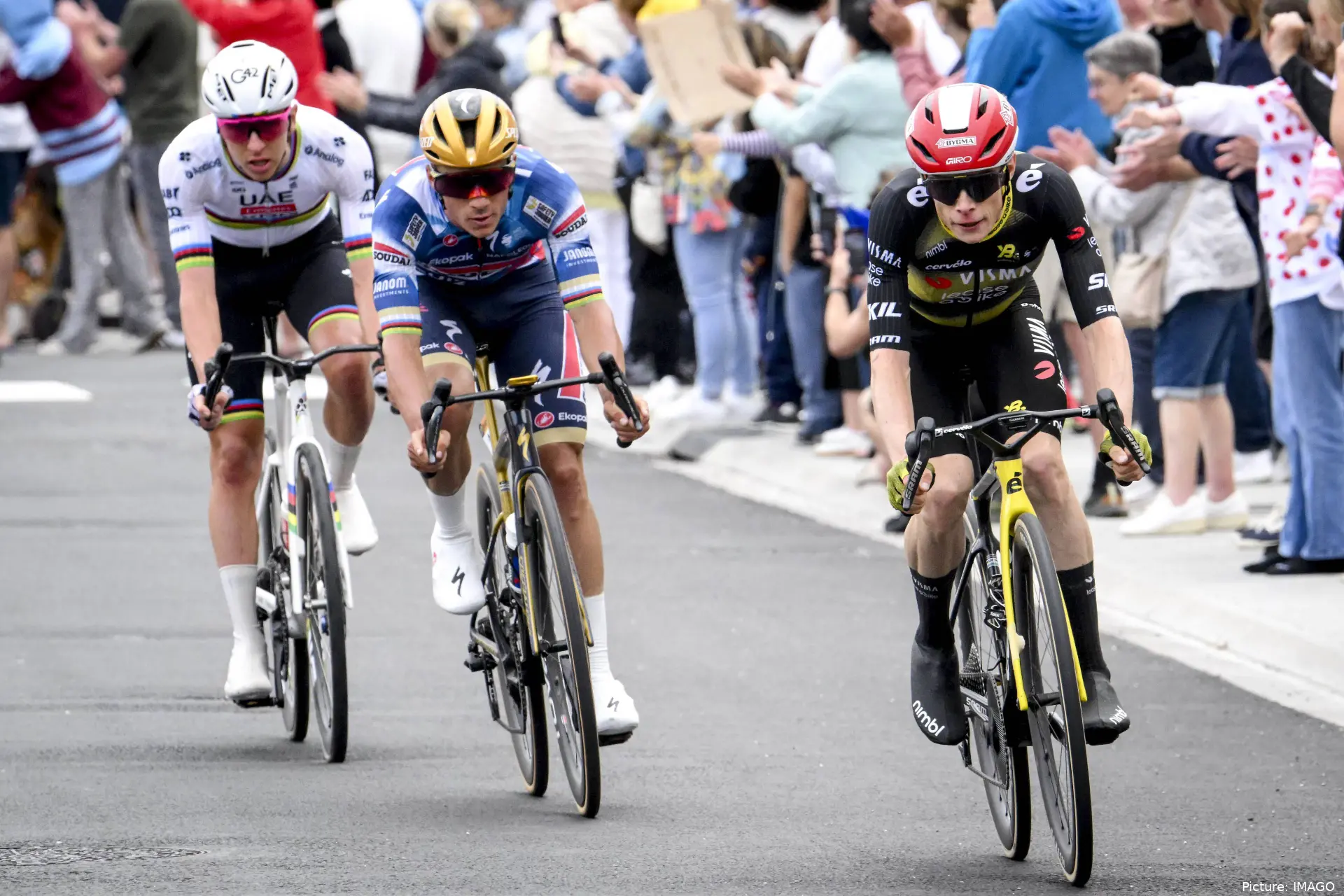
Jonas Vingegaard has for many years been seen as a defensive rider mostly, a rider who is an excellent climber and time trialist, but not as complete as his rivals such as Tadej Pogacar and Remco Evenepoel. In 2025 however he tried to turn that around with more aggressive and intuitive tactics, which have seen him take the spotlight in a few unexpected occasions.
"Yes, I liked it. It was a different way of relaunching than what we normally did in the past. I liked the fact that it was a little more based on feeling and that we were more aggressive," Vingegaard said in words to TuttoBiciWeb. "I'm not saying you should always race like this, but at least for once it was nice to try, and I think it's fair to say we gave it our all to win the race."
At Paris-Nice his loss against João Almeida at La Loge des Gardes was due to an early attack that did not prove successful, but the Dane never got to show great form in the spring before it ended with the crash on stage 5 of the French race. It was only at the Criterium du Dauphiné that he looked to be at his traditional level, but stage 1 saw a surprise attack from him in the hilly finale which triggered the formation of a golden group with Pogacar, Evenepoel, Mathieu van der Poel and Santiago Buitrago.
"I think switching from being defensive to attacking can be more difficult for some. You want to attack, but then it's not possible, so you just have to focus on chasing. If you just want to chase, you suddenly find yourself having to attack, and that can be more difficult. For me, it shows that I'm also a very strong rider instinctively and tactically, and that's how I want to race," he says.
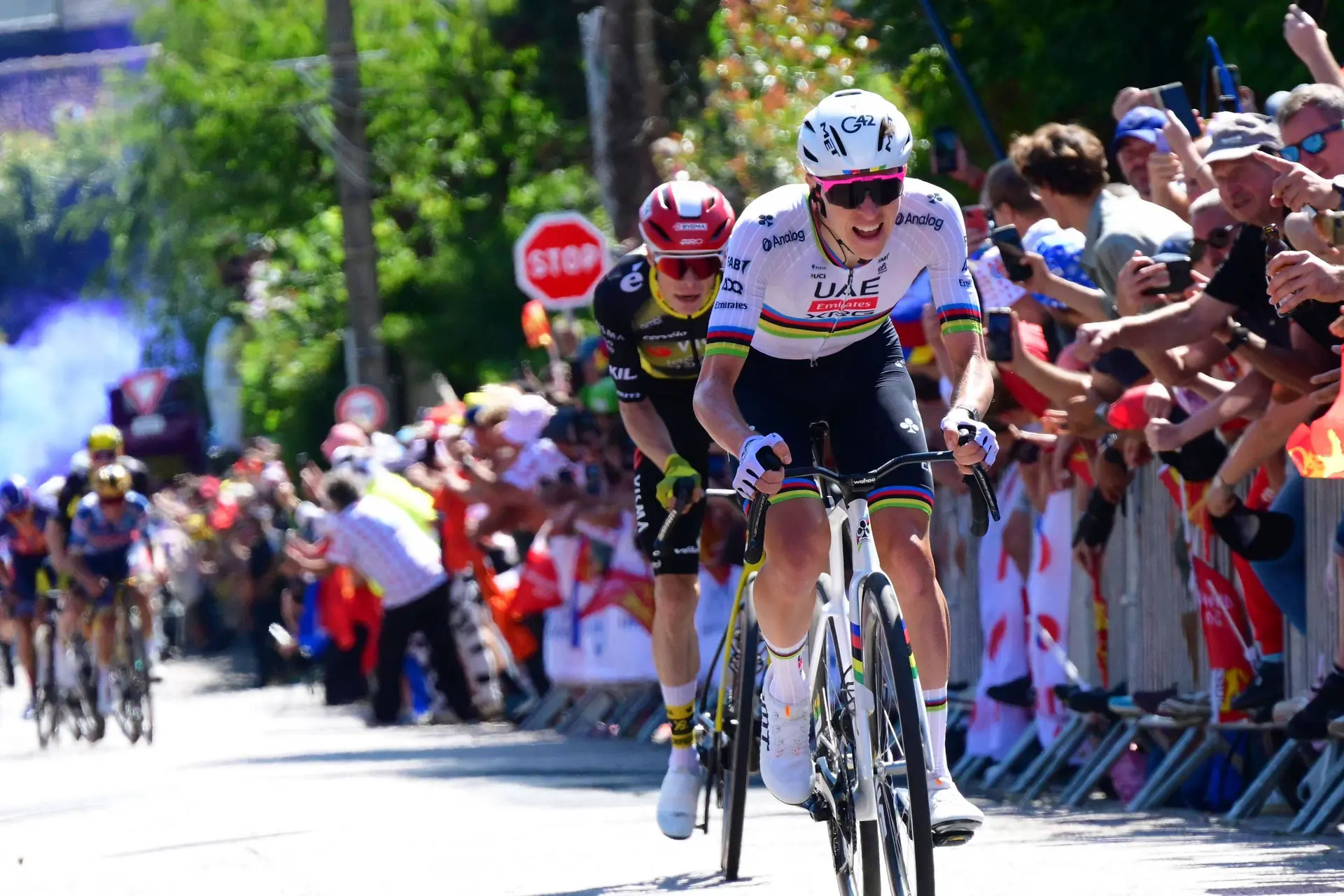
Against a peak form Tadej Pogacar there was nothing that could be done, but throughout the Tour de France Vingegaard also showed attacking mentality throughout many stages of the race, including some hilly ones where he tried to surprise as well. But every single one of his attacks was readily followed by the yellow jersey.
Season finale and rest
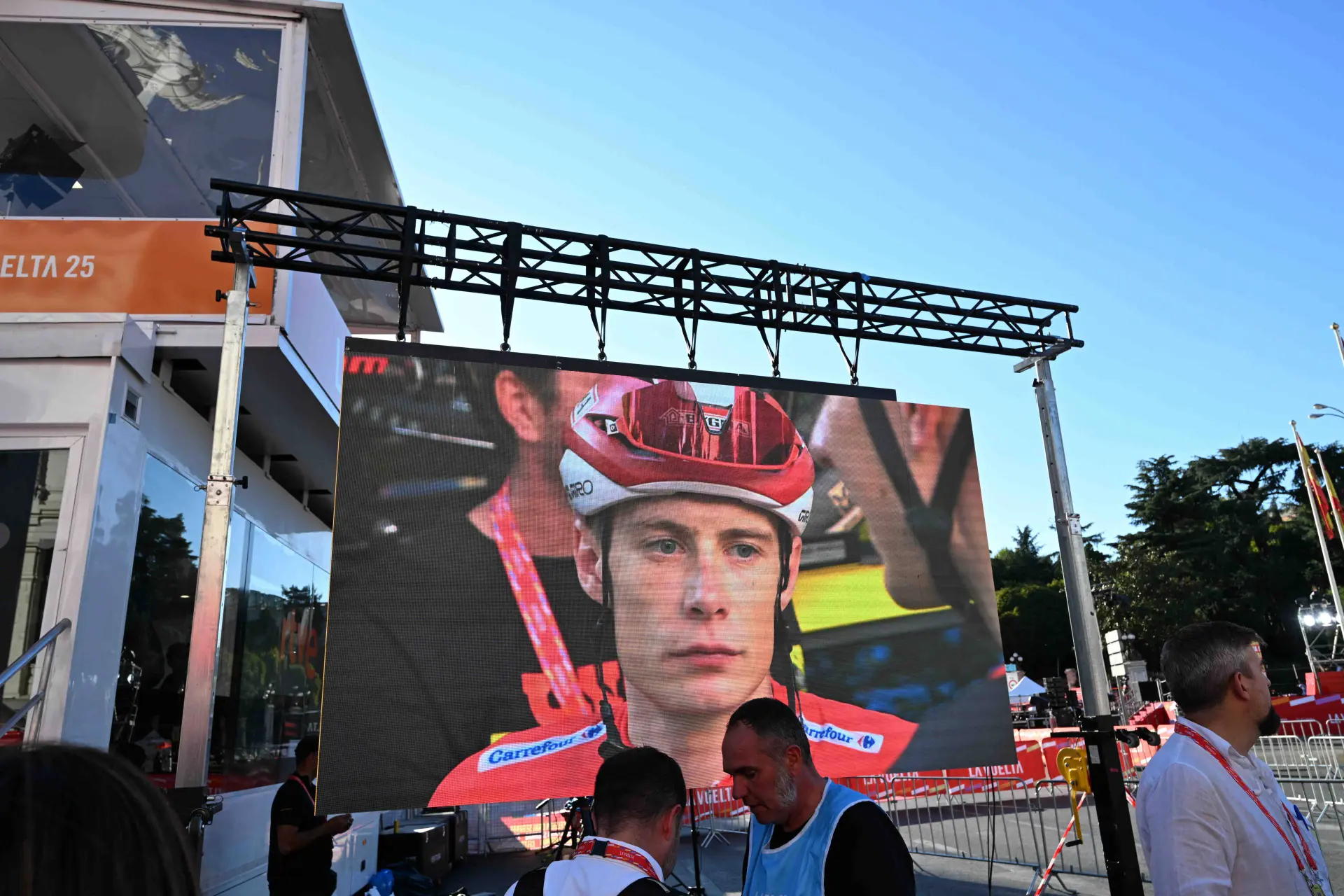
After the Tour the Dane raced and won the Vuelta a España, but then fatigue took over and he had no ability to contest races afterwards anymore. He ended his season with a participation at the climber-friendly European Championships, but was a non-finisher after getting dropped early on.
"I was happy to have competed in the European Championships, but to be honest, looking back, maybe I should have rested. I realized I needed a break more than I thought," he argues. "After the Vuelta, I had about a week of preparation and then I went to the European Championships, and the result wasn't what I hoped for." Ever since, he has been taking it easy, recovering from a long season, and now in December has began his focused preparation towards 2026 alongside Team Visma | Lease a Bike.
"Actually, I only had a few days of rest and then I continued training in Andorra and then I went to Japan (for the Saitama Criterium, which he won, ed.). I did low-intensity training three or four rides a week, and then I did intervals and kept the engine running for a bit. In Japan, I took my real vacation. Now I've gone to the Netherlands and then I'll work with the team in Spain (it is assumed that this was said in early December, ed.)."
Rúben SilvaEditor-in-Chief
A founding contributor to CyclingUpToDate since its launch in January 2022, Ruben Silva has played a central role in shaping the site’s editorial direction and long-term growth. Before joining the project, he built his experience through independent blogging at Echelons Hub and by producing race previews for Ciclismo Internacional, developing a strong analytical voice rooted in daily engagement with professional cycling.
Beyond editorial work, he has been closely involved in the expansion and coordination of CyclingUpToDate’s wider network, helping establish and support sister platforms across multiple languages. This includes ongoing collaboration with CiclismoAlDia (Spanish), CiclismoAtual (Portuguese), WielrennenUpToDate (Dutch), and RadsportAktuell (German), contributing to a shared editorial vision and consistent international coverage.
He also helps oversee editorial governance across the network, setting standards for accuracy and consistency and coordinating updates or corrections when needed.
Originally from the Porto metropolitan area in Portugal, he holds a bachelor’s degree in Geography. His path into cycling journalism was shaped not through formal media training, but through independent reporting, community engagement, and sustained on-the-ground involvement in the sport.
Over the course of his career, he has conducted approximately 100 interviews across road cycling and cyclocross, ranging from one-to-one conversations and online formats to press conferences and on-site pre- and post-race coverage. His interviews include leading riders, team managers, and prominent figures within cycling media: Tadej Pogacar, Jonas Vingegaard, Mathieu van der Poel, Primoz Roglic, Wout van Aert, Joao Almeida and Tom Pidcock; managers like Patrick Lefevere and Joxean Matxin; and YouTube personality Bryan Kennedy (BKXC)...
Within 18 months of launch, he helped grow CyclingUpToDate’s English-language platform into one of the most-read cycling news websites, built entirely from the ground up. As both a professional journalist and lifelong cycling enthusiast, his focus remains on delivering accurate, timely, and well-contextualized coverage.
claps 1visitors 1
Just in

Popular news
Latest comments
- Seixas is exactly what I would like Pogi to be mentally and in his statements. Both come across as shy and who don't talk much but with Seixas, you can see that he enjoys success, that it boosts his ego, unlike Pogačar who seems to feel increasingly uncomfortable the more he wins. He's won so many times, people are saying he's boring. The french media hate him for winning so much, the french cycling fans are booing him... etc. etc. But remember one thing, Seixas will never physically reach Pogi's level. He's excellent, but he isn't at that level nor will ever be. His talking to the media, his relationship with people is already at a high level.PogiSloFans13-10-2026
- Paul Seixas is now the second-best rider in the world.megasmacky13-10-2026
- When will they start dropping Pogi? Oh yeah, when Pogi reaches 40+ years, that's when young cyclists will start dropping him. But until then... eat your hearts out and cry. Pogi will remain the G.O.A.T. for years to come. Capish?PogiSloFans13-10-2026
- I figure he would have found out how to outsprint Paul and take the win, maybe. He's 28 now but I would say he's right at the peak of his powers. It was great race though, Paul showed me something different about himself.awp13-10-2026
- Slowly, very slowly... 5-7 yrs. ;)MajorPayne13-10-2026
- Up to this point: "It is just not yet at the level of Vingegaard and Pogacar." First Jonas, and then level of Tadej. Period!MajorPayne13-10-2026
- The sport has long had a divide between the more diesel-like riders and the more explosive riders. Where does Pogačar fit? His explosive attacks are followed by a high speed diesel climb and he's rarely been caught in the past 5 years (people can name the moments, it's so rare). Seixas is young and we have no idea where his body will end up on this spectrum (just like we didn't with Pogačar when he was 20 and being a diesel up the Vuelta mountains of 2019). Speculation is fun, being a fan while it unfolds is going to be more fun.RidesHills13-10-2026
- yeah it'll be an epoch shift when Pog can't drop people, and/or when they start dropping him.wrsty13-10-2026
- Yes, he won't ride away yet, but he will and that day will be notable
 leedorney13-10-2026
 - Expect the young French rider to slowly asphyxiate the Slovenian into retirement.
 Front24213-10-2026
Loading
Write a comment