“Anyone who's lost a nail knows how painful that can be” – Greg van Avermaet raises cobbled concern for Mathieu van der Poel after Milano-Sanremo crash
CyclingTuesday, 24 March 2026 at 12:30
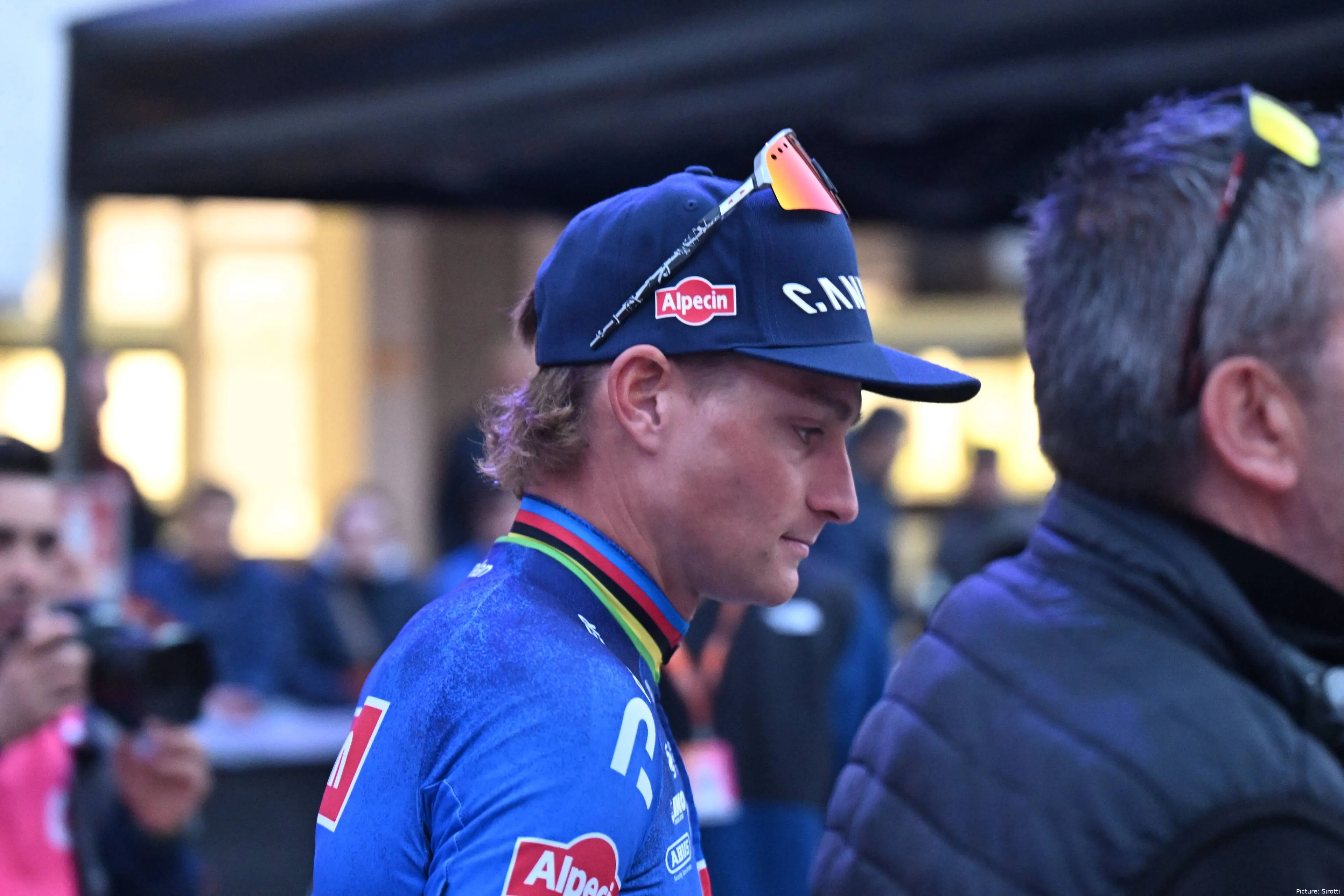
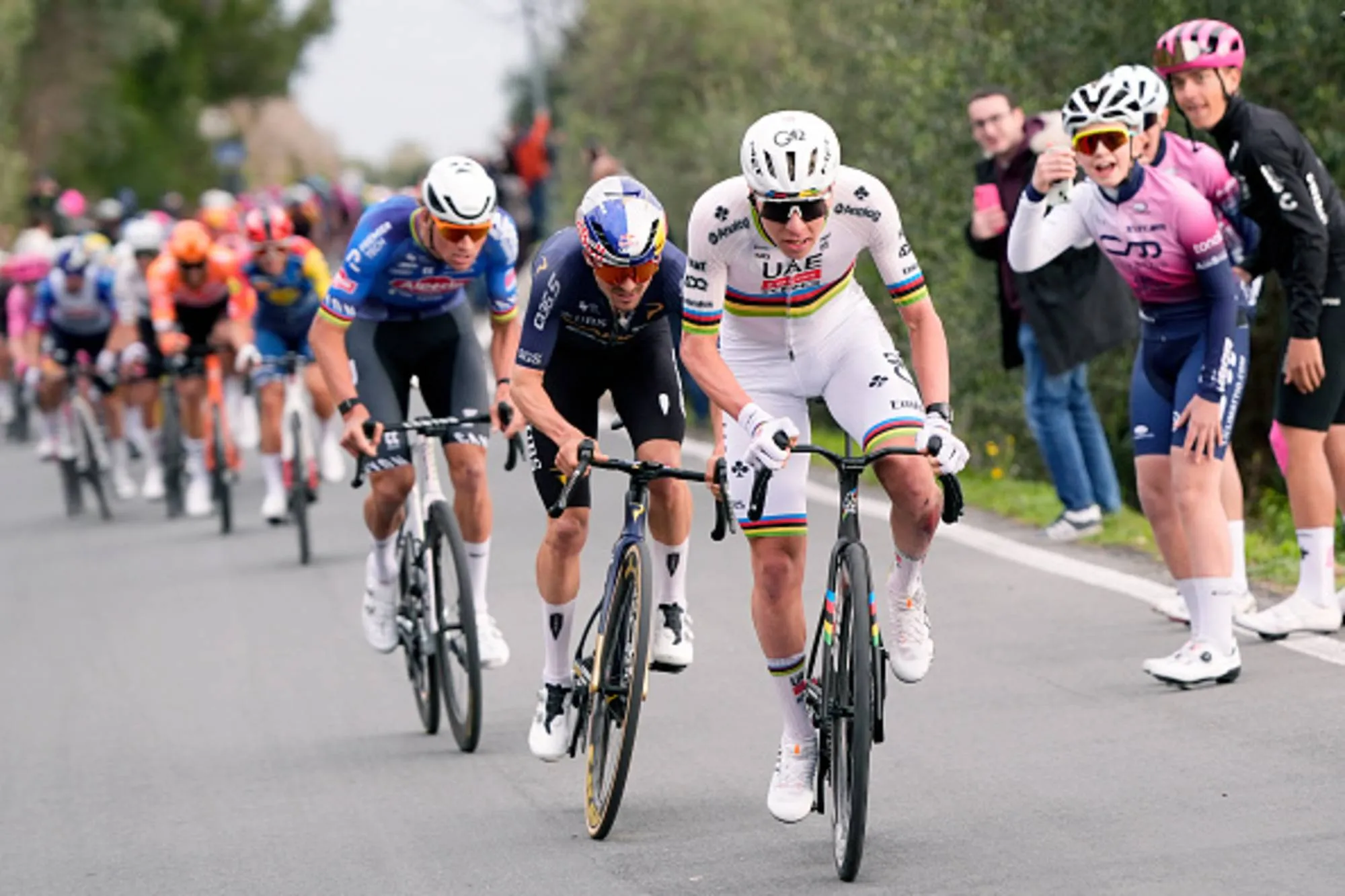
Mathieu van der Poel’s Milano-Sanremo ended not with a collapse, but with a margin finally slipping away. After surviving the decisive acceleration on the Cipressa, the Dutchman could not hold the wheel when Tadej Pogacar went again on the Poggio, leaving Pogacar and Tom Pidcock to fight out victory between themselves on Via Roma.
That alone would have been enough to fuel discussion around Van der Poel’s condition, given how often he has shaped this race in recent years. But the focus since Saturday has increasingly shifted to what happened before the Poggio, and what it might mean for the cobbled Classics now approaching fast.
Van der Poel revealed after the race that he had been struggling with pain in his hand and nail following his crash on the run in to the Cipressa. On smooth roads, that may be a nuisance more than a crisis. On cobbles, it becomes a very different conversation, and Greg van Avermaet did not need many words to explain why.
“As long as it’s not a bone, it’s manageable on the cobbles. But that nail was split, and anyone who's lost a nail knows how painful that can be," Van Avermaet told the HLN podcast. "That’s something I really admire about those riders.”
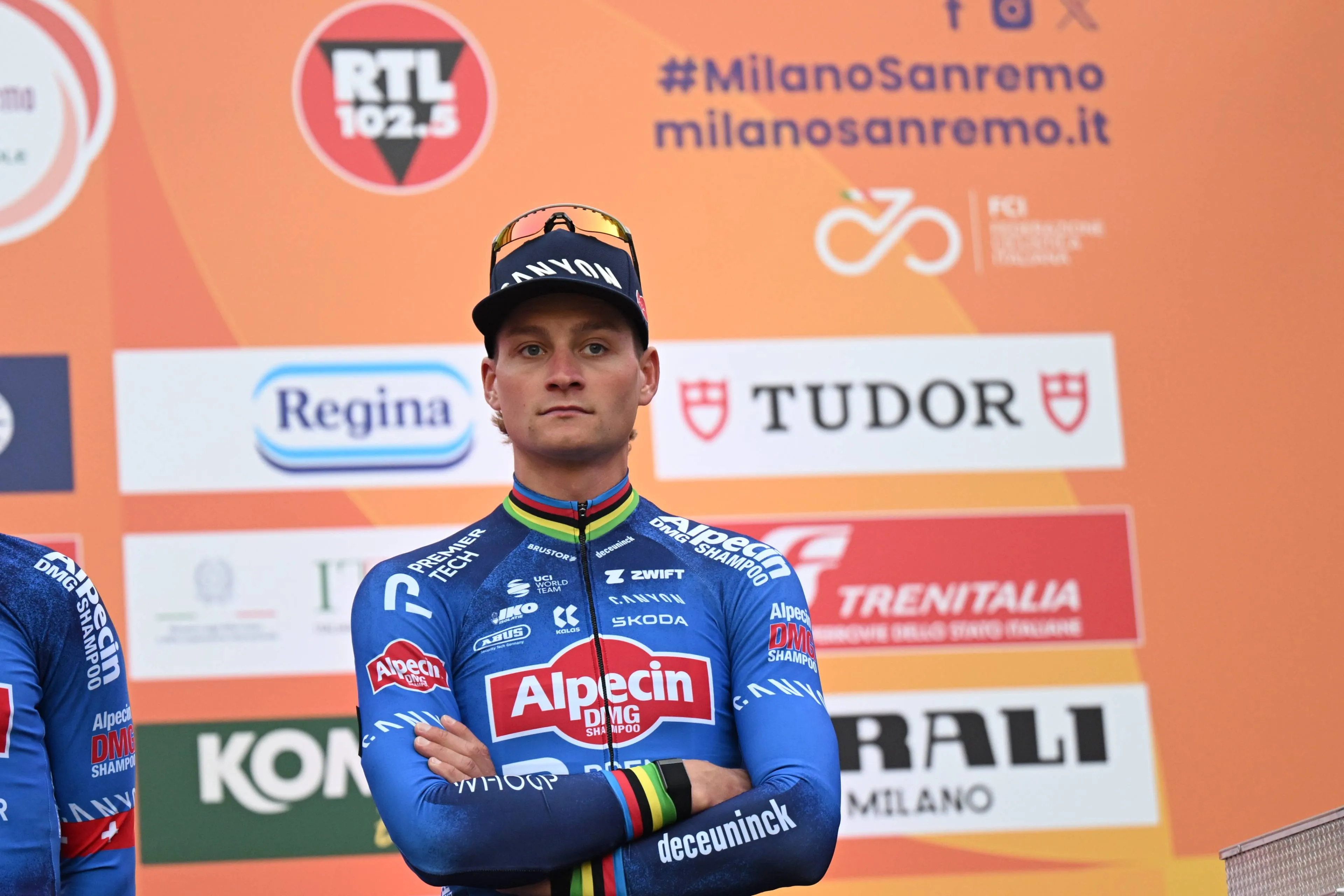
A Sanremo defeat shaped before the Poggio
Van der Poel’s race was not lost simply because his hand hurt. The way Milano-Sanremo was ridden in 2026 mattered just as much.
His brother David van der Poel offered the clearest explanation of that. “His effort was a lot longer because of the run-in to the Cipressa. Instead of an effort of eight minutes, it became maybe 14 minutes. That’s probably why he came up just short on the Poggio.”
That line matters because it moves the discussion away from the lazy idea that Van der Poel was simply below his best. By David’s account, the numbers did not tell that story at all. “He had to go a bit too deep there, but he said his times and power numbers were similar to last year. That mainly shows that Pogacar was simply faster than last year.”

Van der Poel followed Pogacar's initial attack
Why the hand issue still matters now
There has at least been some reassurance that the injury itself may not be severe. Oliver Naesen, speaking after seeing Van der Poel the next day, suggested there was little sign of anything more serious. “I don’t think it was too bad. The next day at the airport, I saw him, and he just had a normal plaster on it. There was no cast around it. I think it was just a cut.”
That should ease fears of a major setback. But it does not remove the central question. A rider can line up perfectly well and still be compromised once the racing starts, especially in the cobbled Classics, where grip, impact and repeated pressure through the hands matter so much.
That is why Van Avermaet’s point lands. This is not necessarily about absence. It is about discomfort, control and whether a seemingly small problem becomes harder to ignore once the terrain changes.
claps 0visitors 0
Just in
Popular news
Latest comments
- The Emiratis and their Slovenian guinea pig are carrying out the most complex cycling fraud in history. Even worse, it's celebrated. It's just sad...
 vannpelt24-03-2026
 - What is it you are trying so say about Vin? He is a cowered or what? Say it outright don't infer it. That's just sleazy.Cyclingsbestfan24-03-2026
- We are discussing Vin. but Vin isn't looking to do that is he? That fortune thing may be true mij for Pog, but If that frame had collapsed where would fortune have got brave Pogacar?Cyclingsbestfan24-03-2026
- No don't go. Your posts make us smile at times..Cyclingsbestfan24-03-2026
- I don't think Tadej would have known about the cracked frame during the race. He wouldn't have taken the risk if he knew the condition of the bike.PogiFan2Day24-03-2026
- The phrase “To take into account” means to deal with factual information. What you mean is “let’s imagine,” because the things you say all didn’t happen. Your favorite rider won, and you still engage in fantasy. Why is that?RidesHills24-03-2026
- you're right, I'm stupid. No more.
 maria2024202424-03-2026
 - Unless you’ve won all the GTs you’ve raced so far and were going for immortality with a monument sweep. Fortune favors the bold.mij24-03-2026
- A sensible approach I would have thought mij with more important three week races in front of him. Pog was very brave the way he raced. Foolhardy some might say?Cyclingsbestfan24-03-2026
- There's all the stuff going on with Soler, while Gianetti and Matxín don't exactly have the cleanest pasts [whether they'd make the same mistakes again is debatable, but you can say that once a liar always a liar]. But I don't see anything suspicious about Pogacar's Milano-Sanremo - he's struggled so much with it. If there is anything suspicious it's what he does in the mountains and hills, not in Milano-Sanremo. If Pogacar was not so dominant in the mountains this would not be a discussion. This Erwann chap is just bitter that he got caught.
 Rafionain-Glas24-03-2026
Loading
Write a comment