“If this was his best level, he’s going to get destroyed at the Tour of Flanders” – Mathieu van der Poel sent brutal warning after Milano-Sanremo collapse
Cycling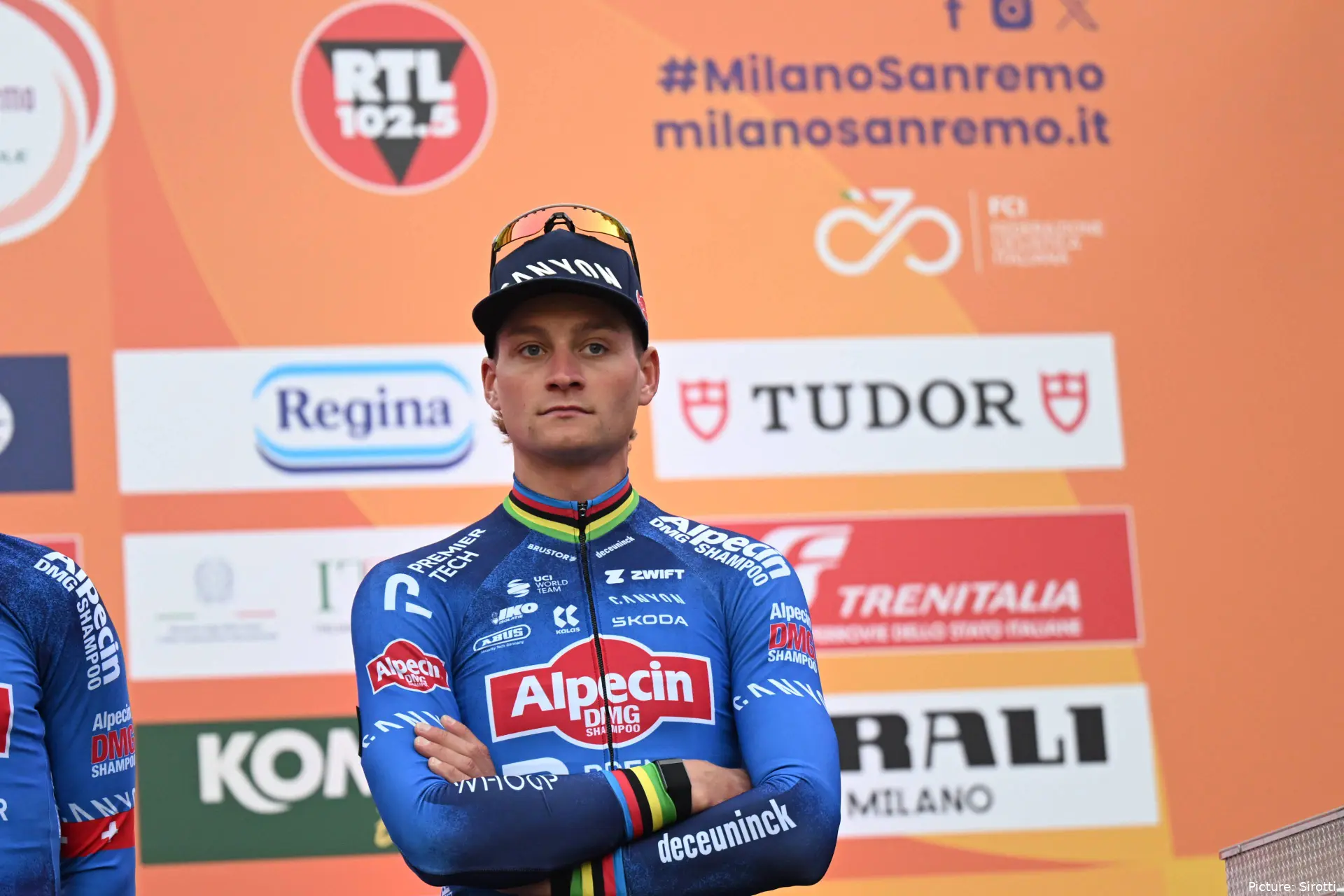
What unfolded on the Cipressa at Milano-Sanremo 2026 was already chaotic on the road. In the aftermath, it has also triggered a far sharper debate about Mathieu van der Poel’s level, with Thijs Zonneveld delivering a stark assessment of what it could mean for the weeks ahead.
Speaking on the In de Waaier podcast, Zonneveld did not hold back in his reading of the race and its implications.
With the Tour of Flanders looming in two weeks, his conclusion was blunt: “For Van der Poel, you have to hope he was really affected by that crash. Because if this was the best Van der Poel, then in two weeks he’s going to get destroyed.”
That warning lands heavily given the context. Van der Poel was not simply beaten in Sanremo. He was part of a sequence of events that saw the race tilt dramatically in Tadej Pogacar’s favour after a crash just before the Cipressa.
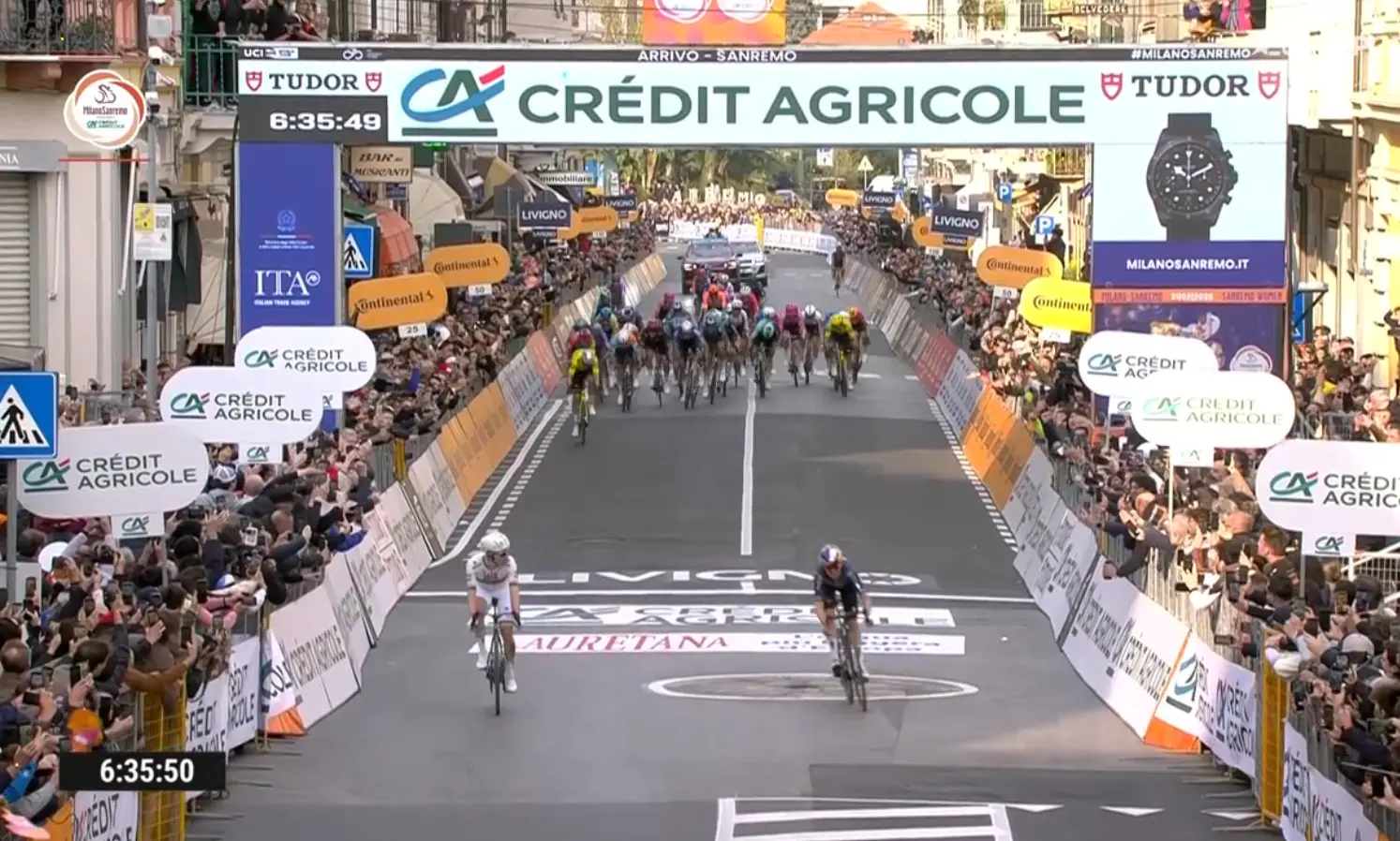
Crash chaos reshapes the race
Pogacar hitting the deck at that moment looked, at first glance, like the worst possible scenario for UAE Team Emirates-XRG. “The absolute worst thing that could happen at that moment,” Zonneveld said.
Yet the chaos that followed shifted the dynamic in a way that ultimately worked against Van der Poel. Crucially, he too was caught up in the disruption. While he returned to the front relatively quickly, the effort required to do so came at a cost.
Zonneveld pointed to the key difference in how both riders rejoined the race. “Van der Poel is brought back by Philipsen 500 metres before the Cipressa, and then he has to position himself at the front on his own.”
By contrast, Pogacar was guided back into position by his team, with Brandon McNulty playing a central role in delivering him to the front at exactly the right moment.
That contrast mattered. One rider was being reinserted into the race with support and structure. The other was forced into a longer, more exposed effort just as the decisive phase began.

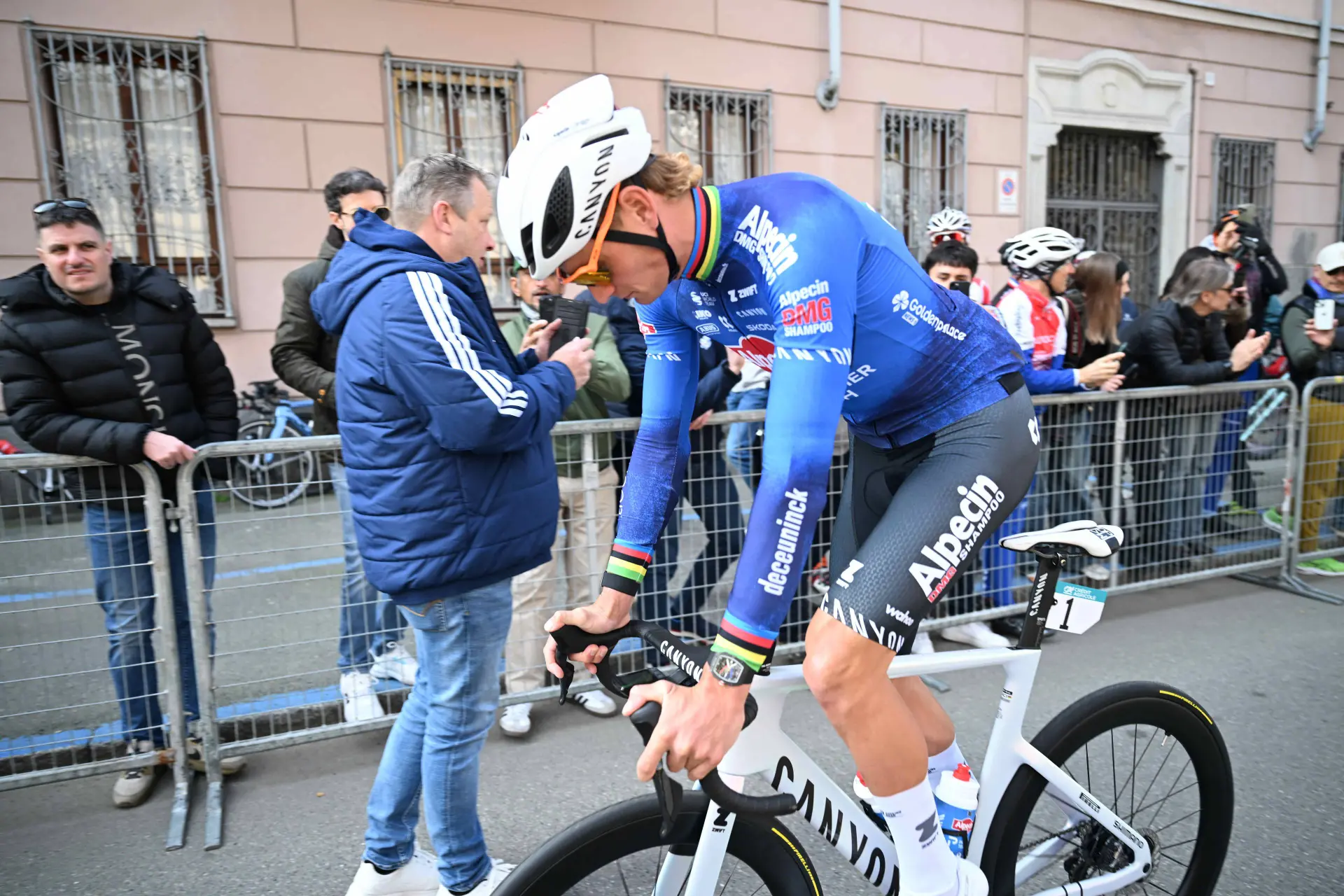
Mathieu van der Poel at Milano-Sanremo 2026
From explosive race to endurance battle
The consequence of that effort was not immediate, but it was decisive. According to Zonneveld, it fundamentally altered the nature of the Cipressa. “Because of that, the Cipressa for Van der Poel became not nine or ten minutes, but an effort of fourteen or fifteen minutes.”
That shift played directly into Pogacar’s hands. Rather than a short, explosive climb where Van der Poel’s punch could be decisive, the race became a prolonged effort designed to drain him.
From there, Pogacar executed his plan with precision. “You can see that Pogacar rides so hard on the descent of the Cipressa that Van der Poel is never comfortable in the wheel. He wants to make the effort as long and as hard as possible, without any moments of recovery.”
The objective was clear. Remove the Dutchman’s ability to produce a decisive acceleration later in the race. It worked.
A worrying signal ahead of Flanders?
The most striking element of Zonneveld’s analysis is not just what happened, but what it might mean. Pogacar, despite crashing, still managed to produce an even faster Cipressa effort than in previous editions.
That underlines the intensity of his performance, but it also sharpens the question around Van der Poel. “Not only did his race become harder, but Van der Poel’s race became harder as well. And that is exactly what Pogacar was looking for.”
In that scenario, the race moved away from explosiveness and into pure endurance. And in that arena, Pogacar proved untouchable.
Which brings the focus firmly onto the next major battleground. The Tour of Flanders is looming, and the expectation is that Van der Poel will once again go head-to-head with Pogacar.
Zonneveld’s warning cuts straight through that anticipation. If Sanremo represented Van der Poel at his current best, then the challenge ahead may be far greater than expected. It is a harsh conclusion, but one rooted in how the race unfolded. And with the Classics campaign only just beginning, it ensures that the conversation around Van der Poel’s condition is far from settled.
Kieran WoodDeputy Editor-in-Chief
Kieran Wood is a sports journalist based in Wales and has been active in journalism since 2022. He regularly contributes to DartsNews.com and CyclingUpToDate.com, where he covers professional cycling and darts. In cycling, his work includes liveblogs from major races, including the Tour de France, the Giro d’Italia, and La Vuelta a España, alongside race reports and analysis. He has also conducted interviews with professional riders.
His reporting spans the full racing calendar, from one-day classics to stage races, with a focus on accurate, real-time coverage and clear contextual analysis. For statistics, results, and historical context, he regularly uses resources such as ProCyclingStats. To support reporting on rider activity and training context where relevant, he also references Strava.
In his work, Kieran places strong emphasis on careful sourcing, editorial accuracy, and updating articles as new, verified information becomes available.
claps 5visitors 5
Just in
Popular news
Latest comments
- Jonas is declining now. A podium next year would be a good result for him.Renz16-10-2026
- unpredictability is not an issue. Most riders not named Pogi have that. The excuses are and the blaming teammates and other riders for insufficient support and blocking are. if weight is an issue get a nutritionist. If aircon is not working switch rooms. Position yourself or get your teammates and DS to keep reminding you of basic stuff if it is difficult to remember in a long race. Dont whine about other riders not working with you, use tactics yourself or get your DS to develop the tactics. Dont talk about noballs when you yourself have no ballsabstractengineer16-10-2026
- It’s worth remembering that cycling journalism has entered it’s “Shit-Stirring Hot Takes Winter” now in order to keep the clicks and views trickling in.wrsty16-10-2026
- Well that would be a major disappointment. The last two years are the first times I have bothered watching the last day. Maybe at worst it could be the 2nd last day but two classic finishes and then wompWaranga16-10-2026
- Vingegaard was the one showing signs of weakness. He was looking more likely to lose a podium spot or two than to make inroads on Tadej.Papijan16-10-2026
- Disagree with Ardennes, he has never done well there, not even a top 10. Giro Vuelta, avoid the stacked TDF where crashes can derail the rest of the season and even if he avoid that, at best a top 5 is possible. He is 31, no more time left for testing/trying.abstractengineer16-10-2026
- Respectfully disagree. He and the team will want to qualify the result at the Tour against TP, JV, and the other GT specialists who weren't in Spain. And remember, the team is looking for a new title sponsor. Or, at least a co-sponsor. So a run at the TDF would go a long way in securing that! As a fan of the team dating back to the Indurain days, I would love to see it. But I do not think that he can really take it to them in July. But I do think he will try. I do agree that he can do good rides, if not win, in Belgium.coachjulianx16-10-2026
- Kid, you just had to keep your mouth shut, now you opened it and it's too late, everyone knows you're dumb.elosanjos16-10-2026
- “He looked less than brilliant” then Pogacar attacked and distanced all his rivals, again! I swear these support riders are purely doing pr for their leaders at this point.Pedalmasher16-10-2026
- PogiFanBoy just doesn't like you attacking his Tadej boy ! He's quite protective of him as you may have noticed. No one can say a bad thing about him or fear reprisal.frieders316-10-2026
Loading
19 Comments