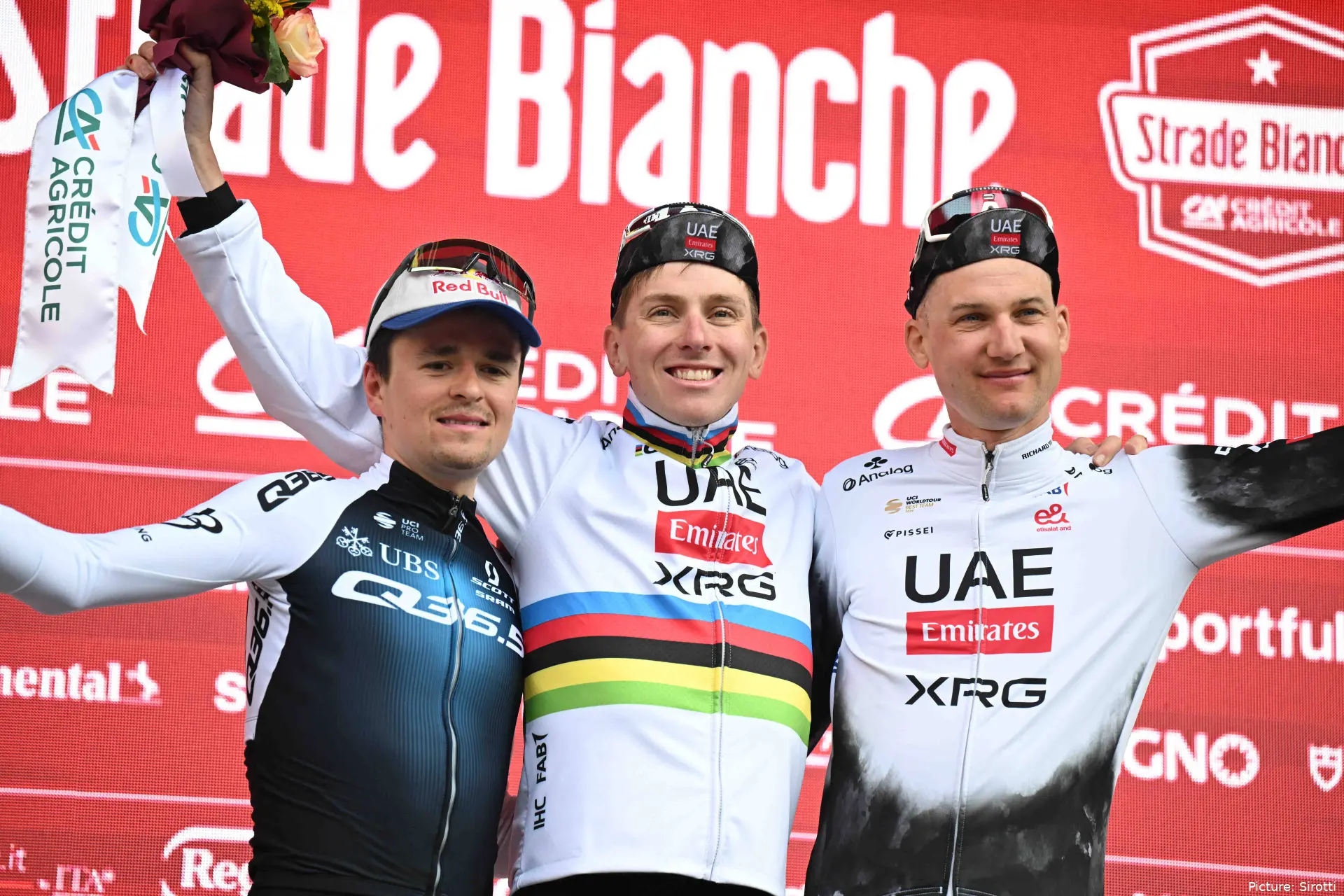
Milano-Sanremo on 21 March 2026 is the first
Monument on the calendar, which means the real drift from winter to spring is approaching
for us cycling fans. Between now and the Via Roma finish line, cycling offers a
fast-moving run of racing that has started in Australia, cuts through the mud of
cyclocross Worlds, then swings into the desert and finally into the European
week-long grind. The names that matter for the spring will start showing their
hands well before Sanremo, sometimes without meaning to. And if you like
guessing who’s ready, this is the stretch that gives the best clues.
16–22 February: UAE Tour
The UAE Tour is the first big stage race where the sport’s biggest names often
show up with serious intent, partly because the sponsor pull is strong and
partly because it’s a clean, controlled environment for testing form. In 2025,
Tadej Pogacar won overall and took two stage wins on the way, with Giulio
Ciccone and Pello Bilbao on the final podium.
The 2026 edition (16–22 February) should again
be a battle between pure climbers for Jebel Jais/Jebel Hafeet-style finishes
and the teams trying to keep things calm for the GC. Jonas Vingegaard, Remco Evenepoel and Isaac del Toro are going to headline what should be a thrilling GC battle.
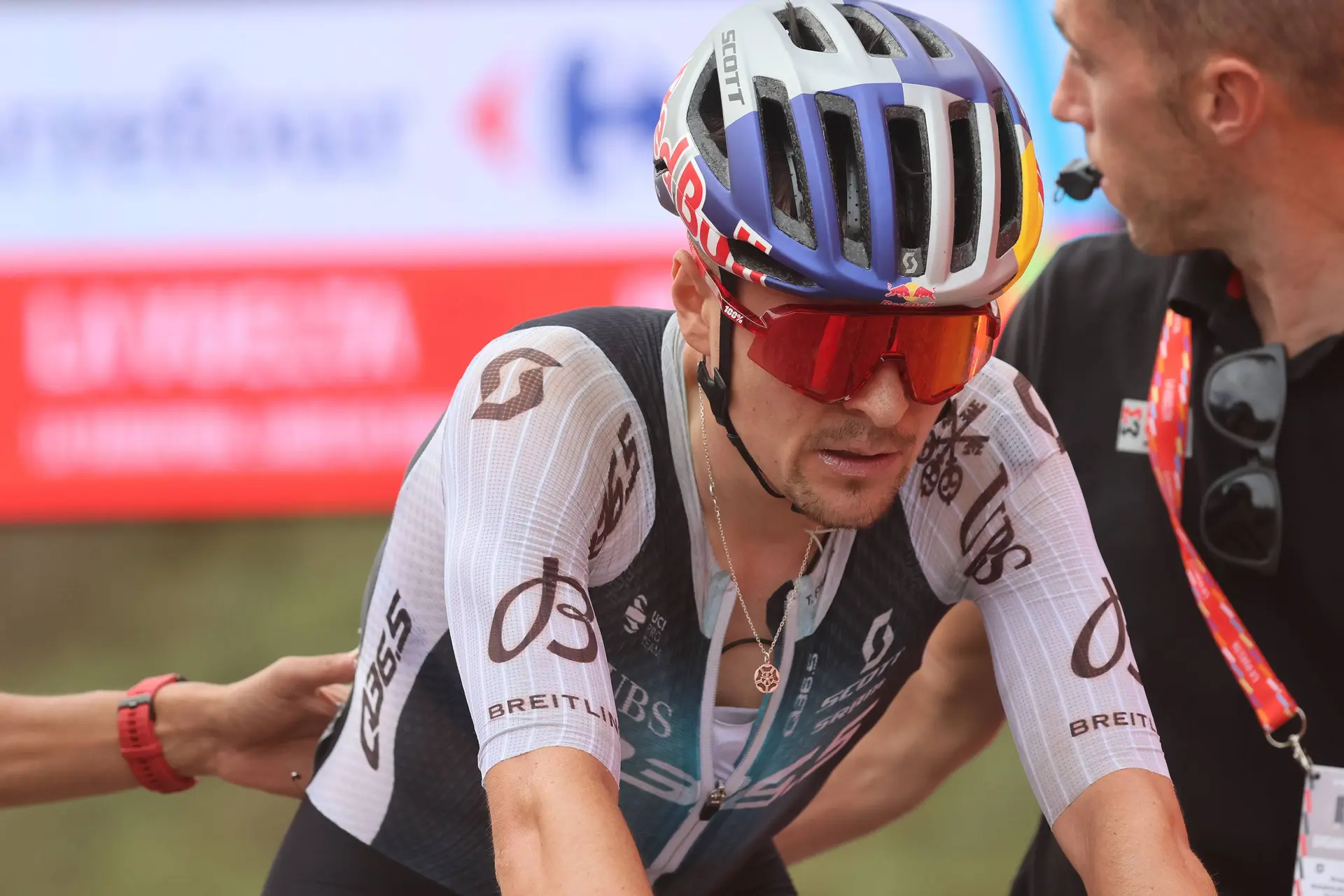
7 March: Strade Bianche
Strade has turned into a race where the strongest rider often makes it obvious,
and 2025 was as dramatic as it gets. Pogacar crashed hard with 50 kilometres to
go, got back on, returned to Tom Pidcock, then later dropped him and soloed to
a third Strade title in Siena. The key point isn’t just that he won, it’s how
he won: the race was violent enough to split the best from the rest, and still
required nerve after a major hit.
For 2026, you watch Strade for two things: who
can follow the first serious acceleration on gravel, and who can still make
clean decisions after things go wrong. It’s also the first big
“Monument-adjacent” race where you see teams reveal whether they have more than
one card to play. If a squad can place two riders into the decisive selection,
that’s usually the first sign they’re thinking beyond just surviving Sanremo
and into controlling Flanders/Roubaix later.
Expect Wout van Aert and Tadej Pogacar to be
at the start line on March 7th.
8–15 March: Paris-Nice
Paris-Nice is where stage-racing legs meet classics positioning, and 2025
delivered a clear winner: Matteo Jorgenson won overall for a second year
running for Visma | Lease a Bike, after teammate Jonas Vingegaard was forced to
abandon. Jorgenson’s win mattered because it signalled he wasn’t just a helper
with a big engine, he could close a race out across a full week of threats,
weather shifts, and tactical traps.
In 2026, this race will again be a measuring
stick for anyone targeting stage races later in the year, but it’s also hugely
relevant to Sanremo in a quieter way: it shows who has the repeatability to go
hard day after day. If a rider is floating across crosswinds, climbs, and
punchy finales here, they’re usually arriving in Italy with both form and
confidence.
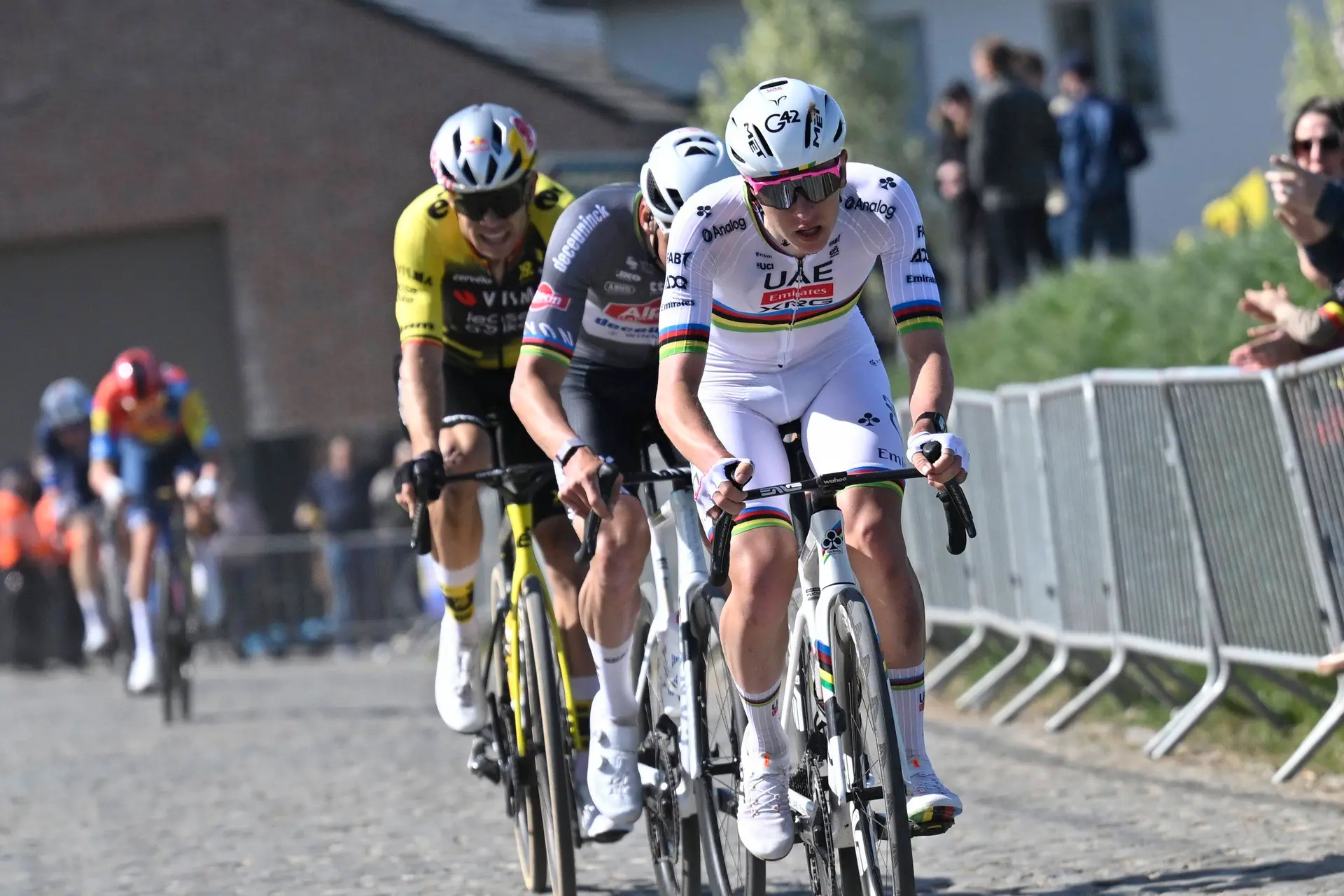
9–15 March: Tirreno-Adriatico
If Paris-Nice is “the Race to the Sun,” Tirreno is the Italian pressure cooker:
sharp stages, sprint trains, a GC that can change fast, and that sense that
riders are already thinking about Sanremo even when they say they aren’t. In
2025, Juan Ayuso won overall, with Filippo Ganna second and Antonio Tiberi
third, and the race ended with Jonathan Milan sprinting to another stage win
while Ayuso sealed the GC.
Tirreno’s 2026 intrigue comes from how it
feeds into Sanremo specifically. Sprinters who want Sanremo need two things
here: top-end speed and the ability to survive a week that isn’t built for
them. GC riders who want Sanremo as a target (rare, but not impossible) need to
show they can handle chaos and still have punch. And the
Ganna/Ayuso/Tiberi-style podium from 2025 is a reminder that this race can
reward a wide range of riders, from time trial power to climbers too depending
on how the decisive day unfolds.
Sanremo is famously hard to predict, but the
lead-in races do give away patterns: who is already winning uphill sprints, who
is recovering overnight, and who can handle stress when the race turns messy.
The early season isn’t about perfection, it’s about signals.
All eyes will be on Tadej Pogacar and Mathieu
van der Poel, after their epic duo last year. It is one of the few races
Pogacar is yet to win, can he finally master Milano-Sanremo in 2026?
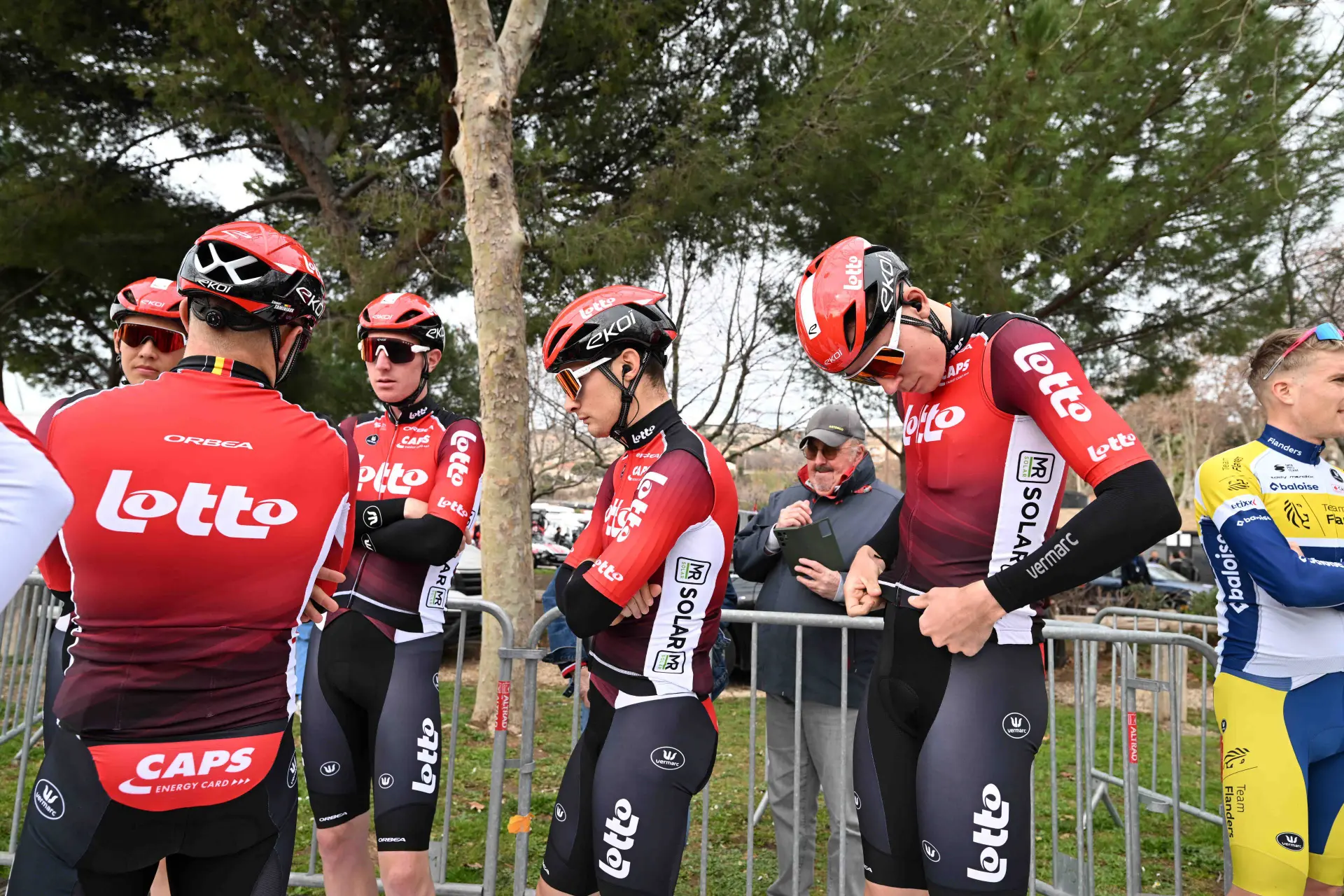

Fin MajorCycling Journalist
Fin Major is a UK-based writer at CyclingUpToDate and has been part of the team since 2024. He is the site’s main writer for FAQs and evergreen explainers and has written around 2,000 pieces for the platform. Alongside this work, he focuses on in-depth analysis and covers the biggest races on the calendar, including the Tour de France, the Giro d’Italia, and La Vuelta a España, providing clear context around performance trends, tactics, and key storylines.
In his reporting, Fin uses reputable data sources such as ProCyclingStats for results, statistics, and historical context. He places strong emphasis on careful sourcing, editorial accuracy, and updating articles promptly when new, verified information becomes available. Outside of writing, Fin is an active cyclist, which supports his practical understanding of the sport and its demands.
claps 0visitors 0
Just in

Popular news
Latest comments
- Nothing. Against Pogi nothingabstractengineer18-10-2026
- He didn't even try to sprint all outvappaxbipmv18-10-2026
- Campenaerts looked like a rolling pumpkin with that all orange leaders skinsuit !frieders318-10-2026
- He can take his dumb a$$ politics somehwere else !frieders318-10-2026
- good to have her back. fingers crossed she‘ll be able to stay!Ketterechts17-10-2026
- A tenner and he wins the Tour next year, too 😂anonymouscyclist17-10-2026
- the answer is either stick to classics or GTs but not bothabstractengineer17-10-2026
- the exodus already stared with Ciccone. Already they were struggling with two sprinters, now there are three. Also Ganna will demand leadership. Gall is the most proven GC, Ayuso has the most potential. GC leadership for everybody will be impossible. Literally a UAE style mess without pogi.abstractengineer17-10-2026
- I raced as an amateur for 12 years, including six years on my country’s national road cycling team. I secured two national titles and competed in three World Championships plus more than 15 international stage races. At 23, we travelled to Italy for a training camp—or so I assumed. On a rest day, we watched a presentation about adopting a more “professional” training approach. It was crystal clear what “professional” meant. That moment first exposed me to this dilemma. After returning from Italy, I left cycling—at least at the competitive level I had known. Over the following two years, the whole team was caught doping. I hold that everyone is innocent until proven guilty. In my view, current stakeholders operate on a different scale, and the sums involved are vast. I am unsure whether any doping would ever be revealed. I try to stay positive and enjoy the show. My 2c.
 vannpelt17-10-2026
 - Fiver he wins 🤣
 leedorney17-10-2026
Loading
Write a comment