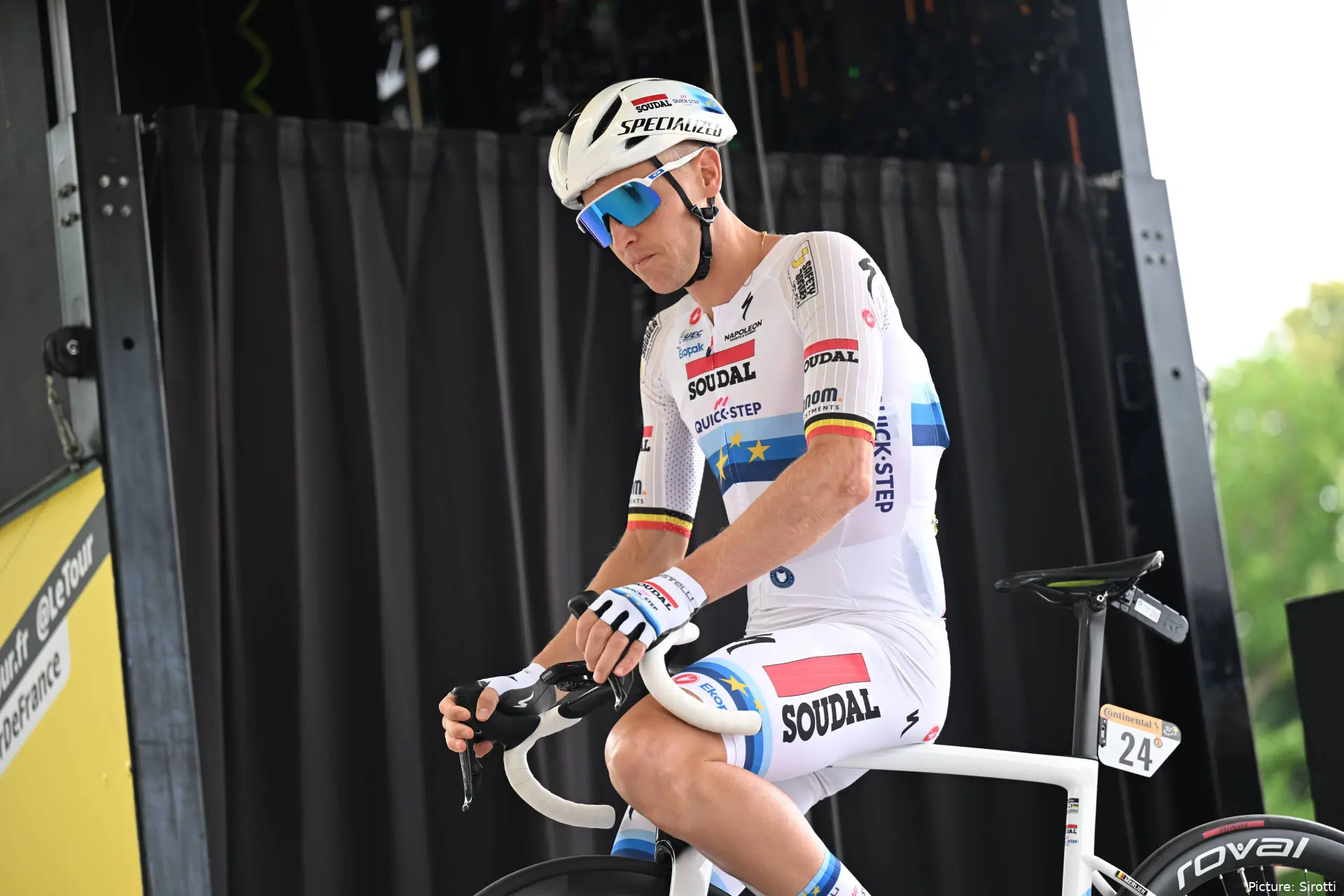
Today we will see who will become the 2025 European
Championships men’s road race winner. Will Tadej Pogacar add to his 2 world
titles, or will Remco Evenepoel complete his set of world, Olympic and European
titles on the road and time trial bike? Or, can Jonas Vingegaard upset the one
day racers in a rare outing outside a stage race? Before we find out about
today’s race, lets find out what happened in the past five editions of the
European Championships.
2024 - Hasselt (Belgium)
The 2024 European Championships returned a sprinter’s
script: 222.8km from Heusden-Zolder to Hasselt on fast roads that neutered most
long-range moves. After late skirmishes fizzled, Belgium massed for a textbook
lead-out and Tim Merlier finished the job, outsprinting Olav Kooij and Madis
Mihkels to become the first Belgian man to claim the elite road title.
What made it memorable wasn’t only the partisan roar in
Hasselt, but the jeopardy: Merlier said his chain briefly jumped inside the
final 300 meters, a hiccup he rode through to keep the jersey at home. The
officially published results underlined just how finely balanced it was, a
blanket finish after four and a half hours at nearly 48 km/h, with Jasper
Philipsen fourth and Alexander Kristoff fifth. Taken together, the day
validated Belgium’s decision to centre everything on a pure bunch kick, and it
burnished Merlier’s reputation as the sport’s most ruthlessly efficient closer
in flat finales. The European stripes, for once, were won without climbs,
cobbles or chaos, just speed, organization and nerve when it mattered most.
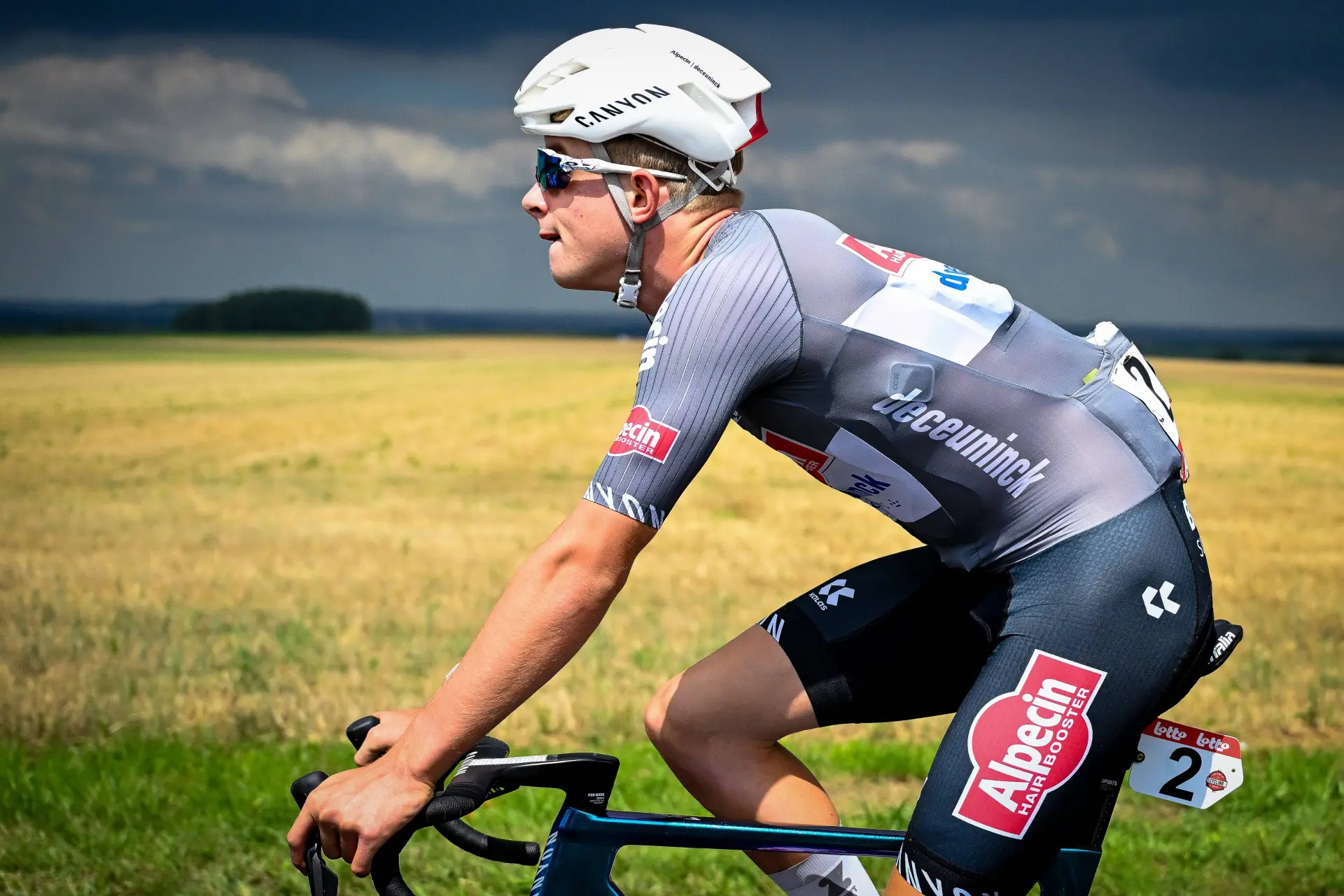
2023 - Drenthe (Netherlands)
Drenthe’s men’s road race was a study in attrition:
wind-bitten lanes, gravelly sectors and repeated ascents of the Col du VAM, the
landfill-turned-berg that has become Dutch cycling’s cruel little amphitheatre.
France’s Christophe Laporte lit the fuse with 12km to go,
prising open a gap on the run toward the final VAM passages. Behind, Wout van
Aert and Olav Kooij, both riding in rival national colours but fresh from
Jumbo-Visma domination that autumn, organized a desperate chase. They never
quite made it. Laporte crested with seconds to spare and held the line in a
reduced, breathless finale to take the jersey; Van Aert and Kooij completed the
podium. Tactically it was perfect France: mark the danger, surf the surges,
then pick one confident acceleration when everyone else is in the red. For
Laporte, it capped a personal arc from elite super-domestique to closer in his
own right; for the field, it proved how a short, steep, repeatable climb can
make a 200 km road race feel like a one-hour cyclo-cross.
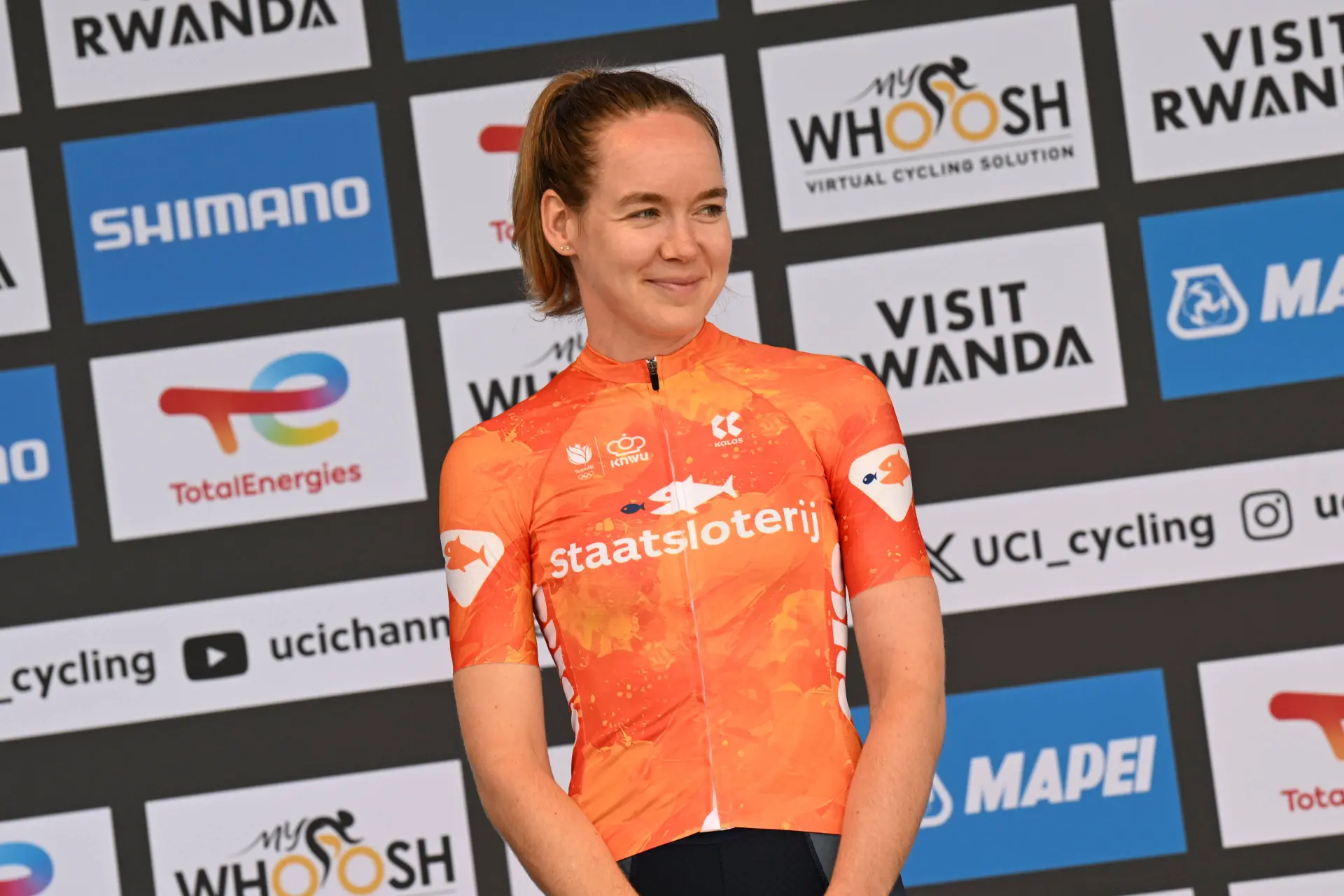
2022 - Munich (Germany)
On paper, Murnau - Munich (209km) looked tailor-made for
fast men, and the peloton rode it that way. A couple of brave late breaks were
hoovered up well before the city circuits, and the final kilometres became an
arms race of lead-out trains. The Netherlands played it to the letter for Fabio
Jakobsen: patient positioning, calm on the corners, then maximum torque in the
last 200 meters. Jakobsen surged past Tim Merlier and Arnaud Démare to take the
European jersey, confirming both his top-end speed and the Dutch squad’s
drill-sergeant discipline in flat finales. If Munich lacked the chaos of
crosswinds or cobbles, it compensated with a clinic in timing, hold the wheel,
avoid the elbows, open the sprint when the air is clean.
2021 - Trento (Italy)
Trento offered a hybrid test: an opening run through the Valle
dei Laghi, then eight laps of a 13.2 km city circuit with the Povo climb, steep
enough to grind a selection but not so savage as to rule out a kick. Belgium
tried to dictate through Remco Evenepoel, whose insistence on hard pace and
repeated surges forced a definitive split.
But Sonny Colbrelli, in the form of his life, refused to
crack on the final ascents. The result was a two-up drag race in the last
kilometre, and a masterclass in patience from Colbrelli, who launched late and
clean to take gold, with Benoît Cosnefroy rolling in for bronze over a minute
back. Over 179.2km and 3,400+ vertical metres, the race rewarded riders who
could both suffer and sprint. It was the closest Evenepoel has come to European
road race glory, although that may change today…
Read also
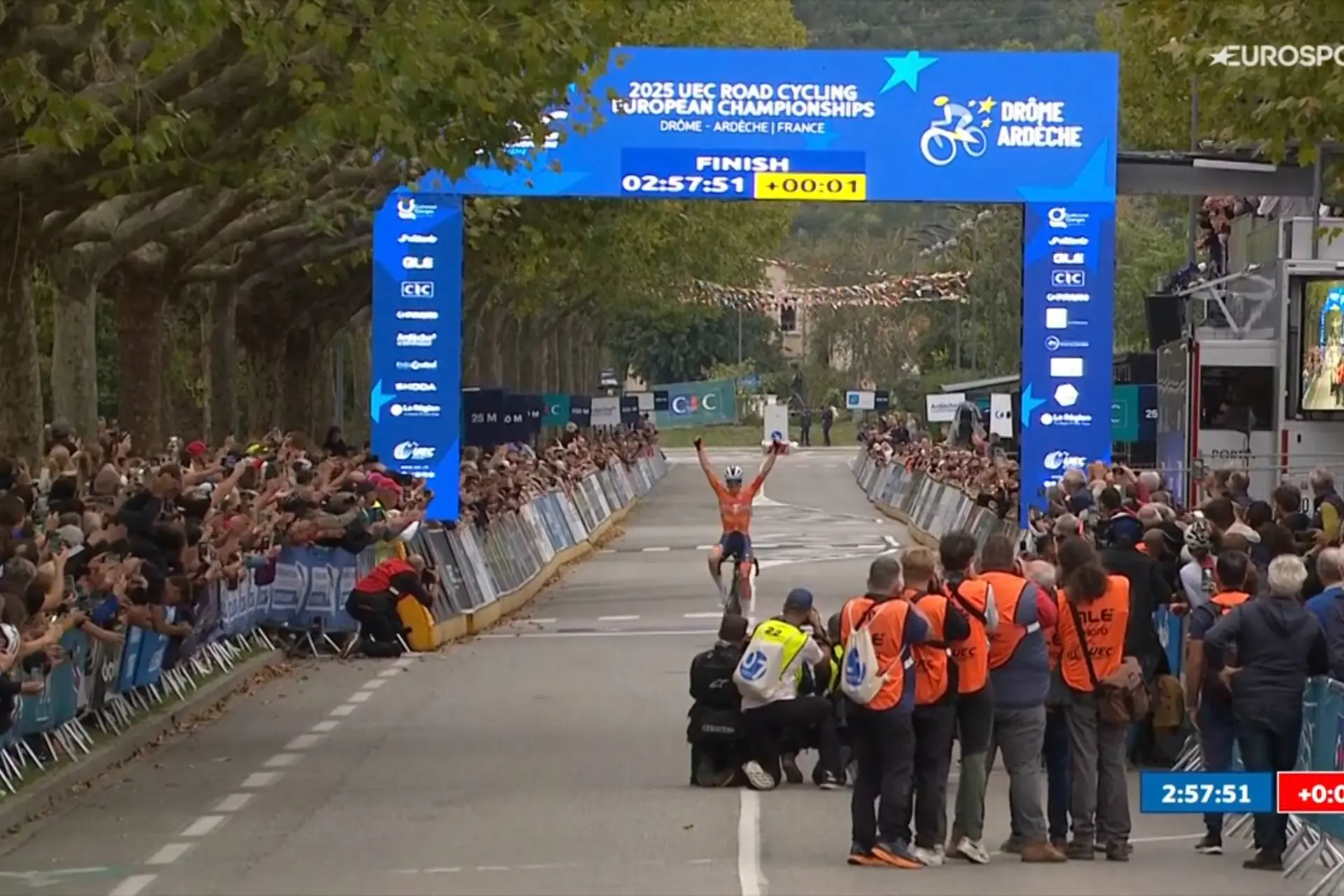
2020 - Plouay (France)
In the pandemic-compressed 2020 calendar, Plouay stepped in
as emergency host, drawing a punchy elite field onto Brittany’s rolling
circuit. Italy arrived with momentum and a simple brief: control the chaos,
deliver Giacomo Nizzolo to the final bend, and let the tricolore sprint. It
worked to perfection. After a late reshuffle of attacks and counters, the last
lap coalesced into a reduced sprint; Nizzolo, fresh off the Italian national
title, won with half-a-bike on Arnaud Démare, Pascal Ackermann third. Beyond
confirming Nizzolo’s status as Europe’s smoothest drag-strip finisher, the win
secured Italy’s third straight men’s European road title after Trentin (2018)
and Viviani (2019).
Read also

Fin MajorCycling Journalist
Fin Major is a UK-based writer at CyclingUpToDate and has been part of the team since 2024. He is the site’s main writer for FAQs and evergreen explainers and has written around 2,000 pieces for the platform. Alongside this work, he focuses on in-depth analysis and covers the biggest races on the calendar, including the Tour de France, the Giro d’Italia, and La Vuelta a España, providing clear context around performance trends, tactics, and key storylines.
In his reporting, Fin uses reputable data sources such as ProCyclingStats for results, statistics, and historical context. He places strong emphasis on careful sourcing, editorial accuracy, and updating articles promptly when new, verified information becomes available. Outside of writing, Fin is an active cyclist, which supports his practical understanding of the sport and its demands.
claps 0visitors 0
Just in

Popular news
Latest comments
- Nothing. Against Pogi nothingabstractengineer18-10-2026
- He didn't even try to sprint all outvappaxbipmv18-10-2026
- Campenaerts looked like a rolling pumpkin with that all orange leaders skinsuit !frieders318-10-2026
- He can take his dumb a$$ politics somehwere else !frieders318-10-2026
- good to have her back. fingers crossed she‘ll be able to stay!Ketterechts17-10-2026
- A tenner and he wins the Tour next year, too 😂anonymouscyclist17-10-2026
- the answer is either stick to classics or GTs but not bothabstractengineer17-10-2026
- the exodus already stared with Ciccone. Already they were struggling with two sprinters, now there are three. Also Ganna will demand leadership. Gall is the most proven GC, Ayuso has the most potential. GC leadership for everybody will be impossible. Literally a UAE style mess without pogi.abstractengineer17-10-2026
- I raced as an amateur for 12 years, including six years on my country’s national road cycling team. I secured two national titles and competed in three World Championships plus more than 15 international stage races. At 23, we travelled to Italy for a training camp—or so I assumed. On a rest day, we watched a presentation about adopting a more “professional” training approach. It was crystal clear what “professional” meant. That moment first exposed me to this dilemma. After returning from Italy, I left cycling—at least at the competitive level I had known. Over the following two years, the whole team was caught doping. I hold that everyone is innocent until proven guilty. In my view, current stakeholders operate on a different scale, and the sums involved are vast. I am unsure whether any doping would ever be revealed. I try to stay positive and enjoy the show. My 2c.
 vannpelt17-10-2026
 - Fiver he wins 🤣
 leedorney17-10-2026
Loading
Write a comment