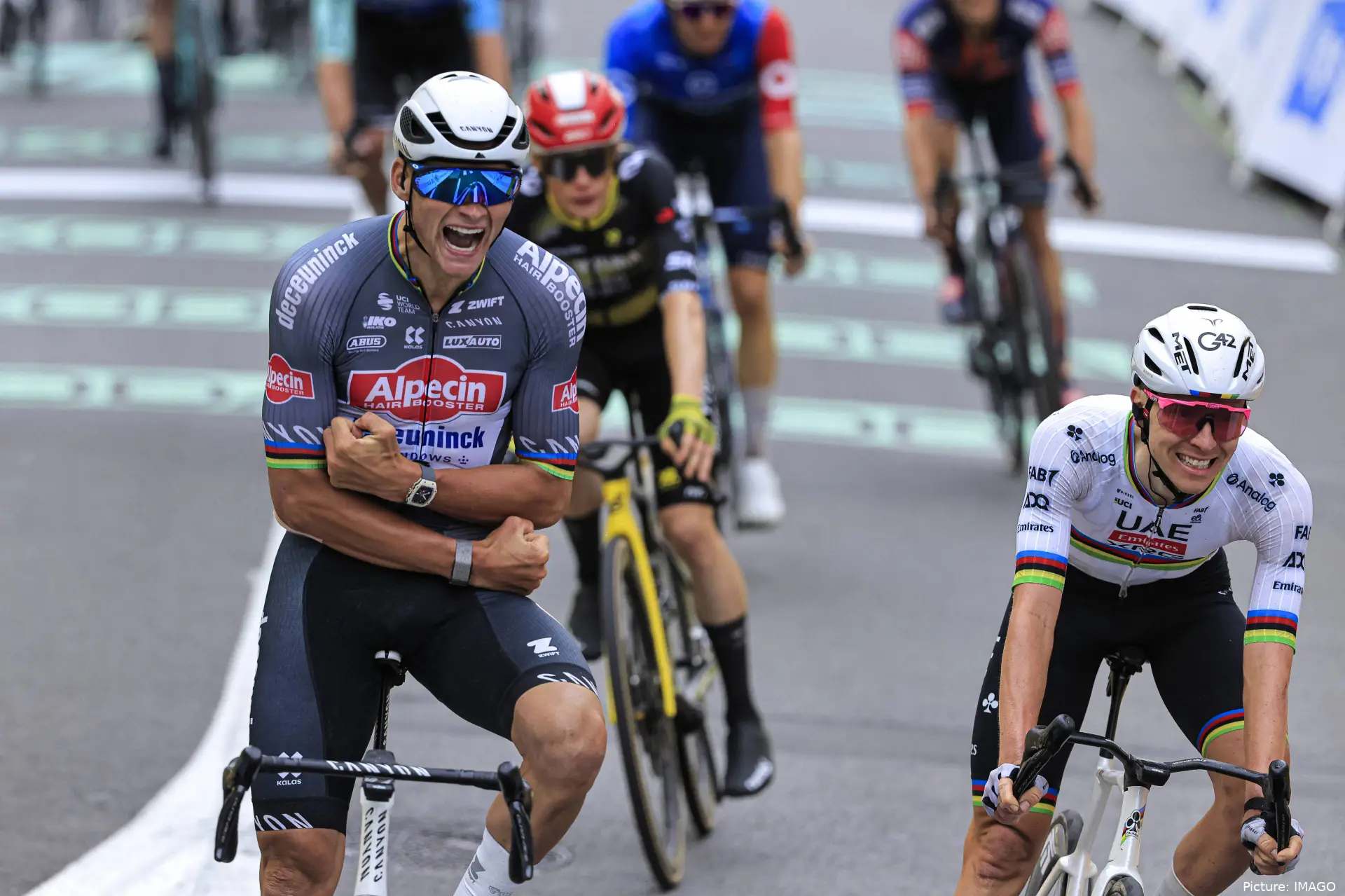
Today we are looking at three cycling Kings who each defined
a generation. Mathieu van der Poel, Peter Sagan, and Tom Boonen each represent
a different era of cycling, with unique strengths, achievements, and rivals throughout
their careers. Van der Poel is the modern all-rounder, able to win across
multiple disciplines while taking on some of the strongest riders the sport has
ever seen. Sagan brought an unmatched level of consistency and ruthless winning
streak to the Grand Tours, combined with his own flashes of brilliance in the
Monuments. Boonen was the quintessential cobbled classics specialist, building
his reputation on a mix of power and precision on the pavé.
So how do we compare them? Who is the overall number 1?
Comparing them is more than counting wins. We have to
consider the disciplines, the manner of the wins, and the rivals they came up
against to win. That is what we will attempt to accomplish in this article, and
then you will have the opportunity to vote and give your opinion in the
comments section below.
So, let’s dive straight in.

Palmares comparison
Van der Poel, who is now 30 years old, stands alone among
the three as an active rider with the chance to further expand his palmarès.
Born in Belgium but representing the Netherlands, he has, over the past three
seasons, reached new heights on the road while also continuing to add victories
in other cycling disciplines. In 2023, he claimed the road race world title in
Glasgow.
The following year, he added a gravel world title, and his
long-standing dominance in cyclocross brought his tally to a record-equalling
seven titles in that discipline. In total, that gives Van der Poel nine rainbow
jerseys across three cycling formats, a feat that illustrates that he is indeed
one of the most talented people to have ever ridden a bike. His ambitions are
far from over, as he openly admits his goal is to add a mountain bike world
title, which would make him, alongside Pauline Ferrand-Prévot, a world champion
in four different disciplines.

We may never see a multi-discipline talent like Van der Poel ever again
His Monuments record is equally impressive. Van der Poel has
won Milano–Sanremo twice, a feat neither Sagan nor Boonen managed. He has taken
Paris–Roubaix and the Tour of Flanders three times each, giving him a total of
eight Monuments. Beyond these, he has claimed victories at the E3 Saxo Classic,
Amstel Gold, where he delivered an unforgettable victory in 2019, and Strade
Bianche. On the Grand Tour front, he has two Tour de France stage wins and one
Giro d’Italia stage win, as well as having worn both the yellow and pink
jerseys during those races.
Peter Sagan’s career takes a different shape to Van der Poel’s.
While his Monuments tally stands at two, one Tour of Flanders and one
Paris–Roubaix, he stands above the rest of history in terms of his unrivalled
success in the Tour de France points classification. He has won the green
jersey a record seven times, collected 12 Tour stage victories, and also
claimed the Giro d’Italia points classification alongside two stage wins. At
the Vuelta a España, he added four stages to his tally.
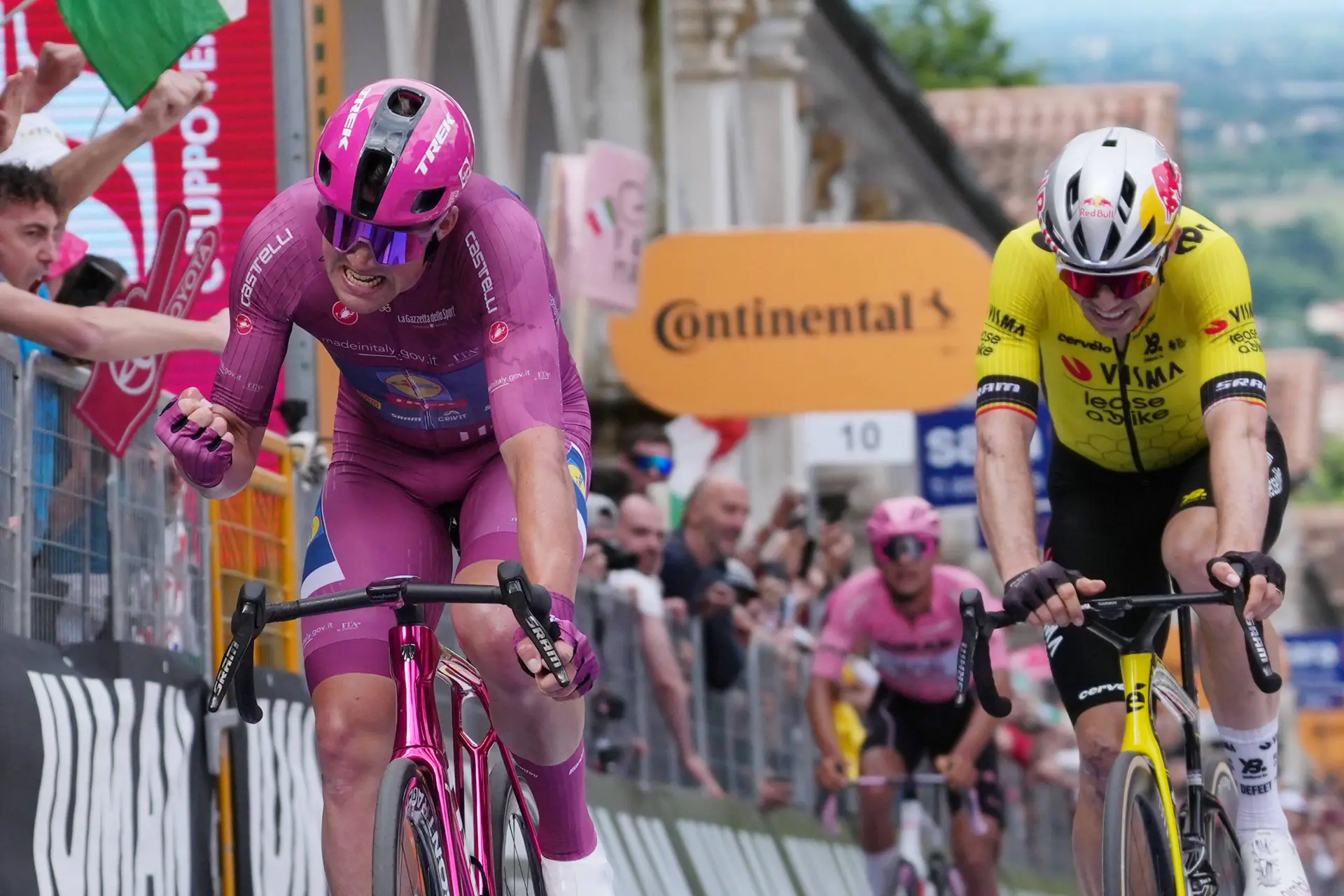
Sagan is also a three-time road world champion, securing
consecutive titles from 2015 to 2017, a streak unmatched in the modern era. His
early years in cycling included a junior world championship in mountain biking
and a cyclocross world championship medal at junior level, but unlike Van der
Poel, these disciplines did not remain part of his professional career success
in the senior ranks.
Boonen’s record is focused exclusively on the road, but
within that arena, he dominated his era. The 2005 road race world champion, he
won the Tour of Flanders three times and Paris–Roubaix a record four times,
cementing his status as the king of the cobbles. His Grand Tour record includes
the Tour de France points classification in 2007, six Tour stage wins in total,
and two Vuelta a España stage wins. Boonen’s seven Monuments put him just one
behind Van der Poel and well ahead of Sagan, and all came in the two most
punishing cobbled races on the calendar

Sagan was unbeatable in the points classification during the 2010s
What do the numbers say?
When the numbers are compared, Van der Poel holds the edge
in both variety and breadth. His eight Monuments come from three different
races, compared to Sagan and Boonen’s focus on two. His nine world titles,
though spread across disciplines, far outstrip Sagan’s three and Boonen’s one.
Critics might argue that cyclocross world titles do not carry the same prestige
as road world championships, given the smaller competitive pool, but Van der
Poel’s decade-long battle with Wout van Aert has provided a rivalry of rare
intensity. Only in recent years has he consistently pulled ahead of his Belgian
counterpart in the cross field.
In Grand Tours, Sagan is unquestionably ahead. His 18 stage
wins across the Tour, Giro, and Vuelta, combined with his nine points
classification jerseys, make him the standout rider in this area. Boonen’s
eight stage wins put him ahead of Van der Poel’s three, but far behind Sagan’s
total.
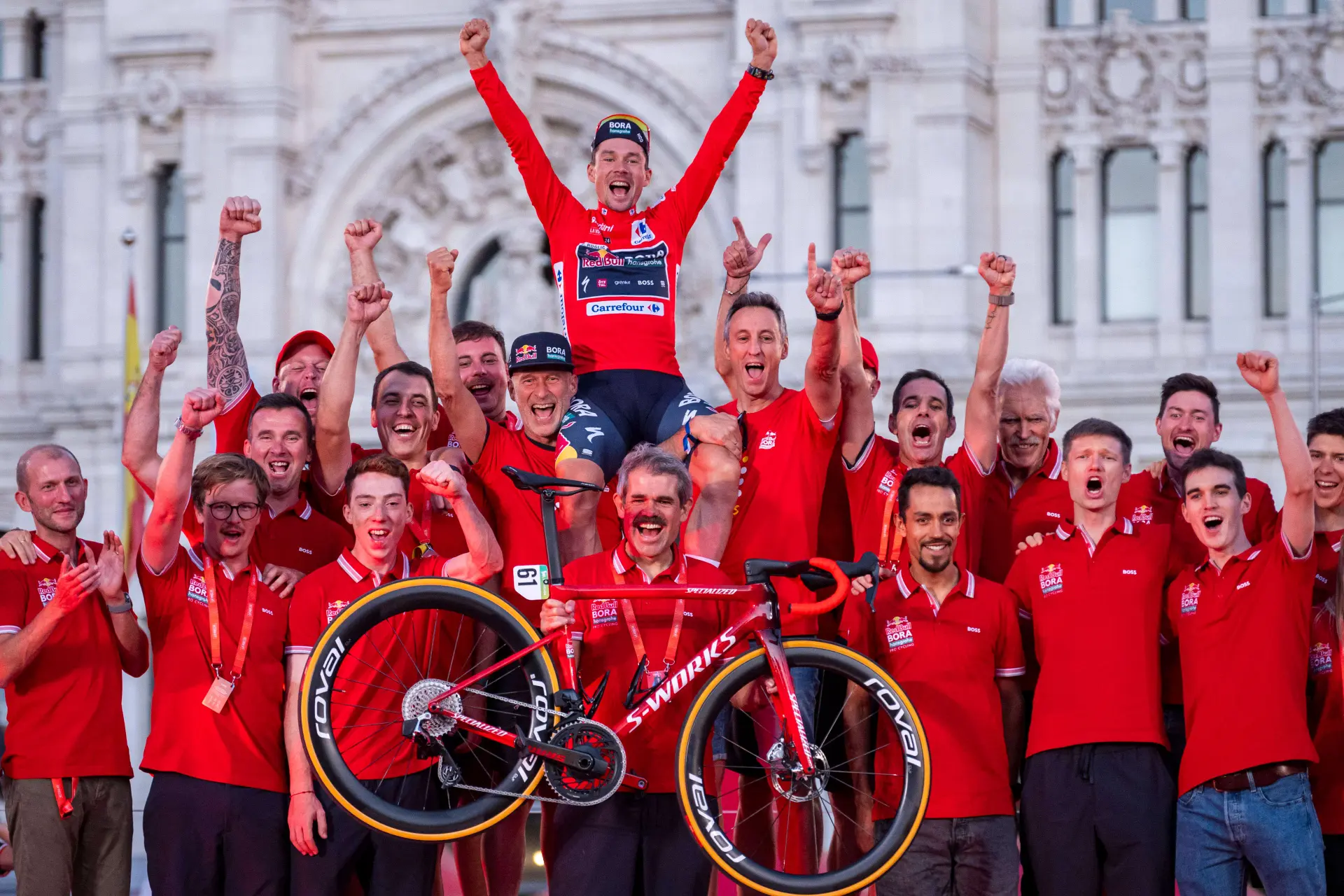
The head-to-head numbers tell part of the story. Sagan
finished his career with 121 professional wins, just one behind Boonen’s 122.
Van der Poel currently sits a long way back at 55, but given he is still
competing, the final number remains to be seen. More importantly, a larger
percentage of Van der Poel’s wins have come in major races, reflecting his
focus on cycling’s biggest prizes.
Who faced more difficult competition?
The question of rivals is critical to understanding these
careers. Van der Poel’s list of opponents is formidable: Tadej Pogacar, Julian
Alaphilippe, Wout van Aert, and Mads Pedersen. His ongoing duels with Pogacar
have defined the last few seasons, with the Dutchman emerging as the only
consistent challenger to the Slovenian in 2025. In Tadej Pogacar, Van der Poel
is quite possibly facing the greatest cycling of all time. Not just facing him
either, beating him too, as we saw in Roubaix and Sanremo earlier this year.

Boonen and Cancellara's rivalry is one of cycling's greatest
Boonen’s key rivals during his prime included Fabian
Cancellara, Alessandro Ballan, and Thor Hushovd, specialists in the same types
of races who made every classics campaign an incredible battle. Boone’s rivalry
with Cancellara was the greatest rivalrly of the generation, just before the
Van der Poel – Van Aert rivalry began. While these names brought immense
competition, the depth of all-round ability seen in Van der Poel’s era,
particularly from Pogacar, is arguably greater.
Sagan’s main rivals were found in the sprinters of his
generation, including Mark Cavendish, Elia Viviani and Fernando Gaviria. But,
part of what made Sagan so special was that he was such a unique rider, and that
he did not truly fit the profile of stereotypical sprinter or puncheur.

Verdict
So, who comes out on top in this head to head?
Van der Poel’s case for first place rests on his eight
Monuments from three different races, his nine world titles across multiple
disciplines, and his record against some of the most complete riders in
history. Sagan’s strength lies in his Grand Tour stage wins and his triple road
rainbow jerseys, achievements no other modern rider has matched. Boonen’s
position as the undisputed king of the cobbles secures his place in the
conversation, but the narrower scope of his palmarès places him just behind the
other two.
The ranking, then, is:
1. Mathieu van der Poel
2. Peter Sagan
3. Tom Boonen
Each rider’s greatness is undeniable, but it comes in
different forms. And at the end of the argument, we have found Mathieu van der
Poel to be the number 1. Whilst his grand tour palmares falls beneath the other
two, his success across different races and disciplines is unrivalled in the
men’s peloton.
Do you agree with this ranking? Let us know in the poll and
comments section below!

Fin MajorCycling Journalist
Fin Major is a UK-based writer at CyclingUpToDate and has been part of the team since 2024. He is the site’s main writer for FAQs and evergreen explainers and has written around 2,000 pieces for the platform. Alongside this work, he focuses on in-depth analysis and covers the biggest races on the calendar, including the Tour de France, the Giro d’Italia, and La Vuelta a España, providing clear context around performance trends, tactics, and key storylines.
In his reporting, Fin uses reputable data sources such as ProCyclingStats for results, statistics, and historical context. He places strong emphasis on careful sourcing, editorial accuracy, and updating articles promptly when new, verified information becomes available. Outside of writing, Fin is an active cyclist, which supports his practical understanding of the sport and its demands.
claps 3visitors 3
Just in

Popular news

Latest comments
- I get the point totally. We live in the snowflake society where some riders forget they are getting paid to ride and get results. When they have a few issues they try to look outside of the real issue instead of themselves. It odd so many of the team are making no complaints and getting on with their job. If you do not like what you do find another job simples. Tough love as my mum would say.paultryan200207-11-2026
- many people advise him to grow slowly and rather do giro and/or vuelta instead of tdf. but i can totally understand that he is not satisfied with taking over once pogi declines, but instead beat him in his prime. so if he goes for tdf again, i‘m all for it. let‘s hope that pogi recovers soon!Ketterechts07-11-2026
- So gracious to offer something no-one would be prepared to pay for. The Giro is not the Tour and doesn’t command the same interest or attract the same “elite” (those willing to pay to be a part of something they consider has ego boosting potential). Roadside viewing will always largely remain free for everyone outside circuits. Introduction of a symbolic entrance to mountain climbs is worthy of exploration. Asking 1-2€ isn’t going to repulse real fans (most will spend 50-100€ on their outing that day all things included) but will prevent a portion of the total knobhead thrillseekers who will join in any large gathering as long as it’s free, just because they’re attracted to crowds, without which it it difficult for them to work up their anti-social behaviour.Jumpyjohn07-11-2026
- How is radio going to help when someone went over a cliff or bridge or off the roadside into a forest unnoticed and is laying there unconscious?Jumpyjohn07-11-2026
- Yep, next we’ll be accusing F1 drivers of avoiding Le Mans.Jumpyjohn07-11-2026
- But on what is that opinion based? Are you holding him to a different standard than others? Are you saying he should do learn to like something he doesn’t Are you saying he hasn’t achieved enough Are you saying he pretends to be better than his results? It’s actually a really strange opinion to oust if you consider it objectively or rationally. Try applying it to others or yourself by asking if not EVERYONE should then be doing more? Nobody in athletics or swimming gets criticism for not expanding their repertoire when a rival or someone else does. In fact, most who move to another event get accused of running from their rival. Opinions are boring, the reasons behind them are what count.Jumpyjohn07-11-2026
- for a medical chief to throw things like is just bad. There are already radios which were banned for spectacle. allow radios. Gps trackers are not a complete solutionabstractengineer07-11-2026
- Yeah man...PogiSloFans07-11-2026
- any rider less than 25 whether they are really ready for the position of leadership of GT is probably not the case. I think Pogi himself suffered when he was defeated by Jonas in the TDF twice. But that would be the team's job to ensure support so that they can bounce back. It requires a team and time to get back up and win after getting knocked down.abstractengineer07-11-2026
- I'm very glad he got the big late Quickstep Vuelta win and I hope he has a few left for Euskaltel-Euskadi.flyer07-11-2026
Loading
5 Comments