ANALYSIS - Giro d’Italia 2026’s biggest losers: Giulio Pellizzari, Jonathan Milan and the riders exposed by Jonas Vingegaard’s dominance
CyclingSunday, 31 May 2026 at 15:30
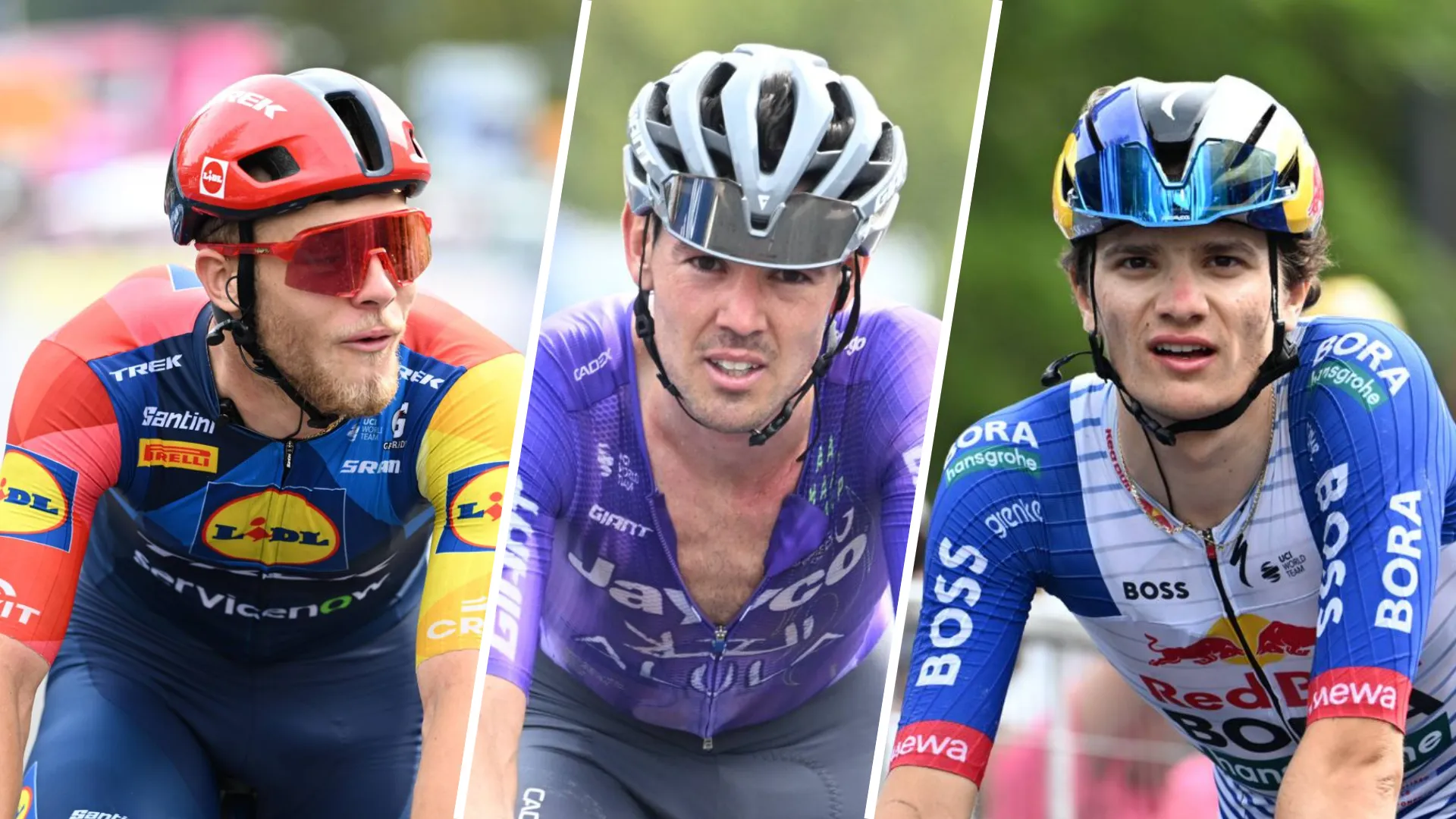
Jonas Vingegaard will leave the 2026 Giro d’Italia as the defining figure of the race. Five stage wins, the maglia rosa and a near-certain Grand Tour Triple Crown have turned the Dane’s Giro debut into a statement performance.
Behind him, the race also produced a clear group of winners. Paul Magnier dominated the points battle with three stage victories and the maglia ciclamino. Jhonatan Narvaez again showed his range with three stage wins of his own. Afonso Eulalio confirmed his breakthrough with nine days in pink and the young rider classification.
But a Grand Tour also exposes weakness. Over three weeks, expectations collapse in public. General classification plans fall apart. Sprint leaders lose their authority. Young riders discover how quickly a race can turn when health, pressure and fatigue all arrive at once.
By that measure, these were the five biggest losers of the 2026 Giro d’Italia.

1. Enric Mas
Enric Mas arrived at the Giro d’Italia with a clear aim. The Movistar Team leader was making his first appearance in the race and had publicly targeted the general classification podium before the start.
That ambition was gone almost as soon as the first major mountain test arrived. On the Blockhaus, Mas lost contact with the podium battle and also fell away from any realistic top-10 challenge. For a rider starting as Movistar’s main GC hope, it was a damaging start that shaped the rest of his race.
Even Eusebio Unzue later described the performance as a “fail”, a blunt assessment that matched the reality of Mas’ Giro. Once the GC had slipped away, only a stage win could rescue his race.
His best chance came on Stage 11, when he looked closer to his best level. Mas made the break, attacked repeatedly and eventually reduced the fight for the stage to a duel with Jhonatan Narvaez. The problem was the finish. Narvaez beat him in the sprint and Mas had to settle for second.
That was as close as he came. In the final week, he was no longer among the strongest breakaway climbers, and at times Einer Rubio looked the more dangerous Movistar option in the mountains. Mas leaves the Giro without a GC result, without a stage win and with his victory drought still stretching back to the 2022 Giro dell’Emilia.

Mas has failed to take a stage win or challenge for GC success
2. Jonathan Milan
Jonathan Milan’s Giro cannot be judged by the GC. It must be judged against his own sprinting standards, and against the rider who took control of the fast finishes.
Milan started the race as the major sprint favourite. With Lidl-Trek behind him and several stages suited to his power, the expectation was simple: wins, ciclamino contention and confirmation that he remained the reference point in Giro bunch sprints. Paul Magnier took that role instead.
The Soudal - Quick-Step sprinter won three stages and the points classification, while Milan repeatedly found himself close but not close enough. Second, third, fourth. The Italian was present in the finals, but he did not impose himself.
That is what makes his Giro disappointing. It was not a race where the opportunities disappeared. Milan had the chances. Magnier was faster, sharper and more decisive. Even a late win in Rome would only have softened the verdict. Milan did not come to this Giro to collect a consolation stage. He came to dominate the sprint field. Magnier left with that authority.
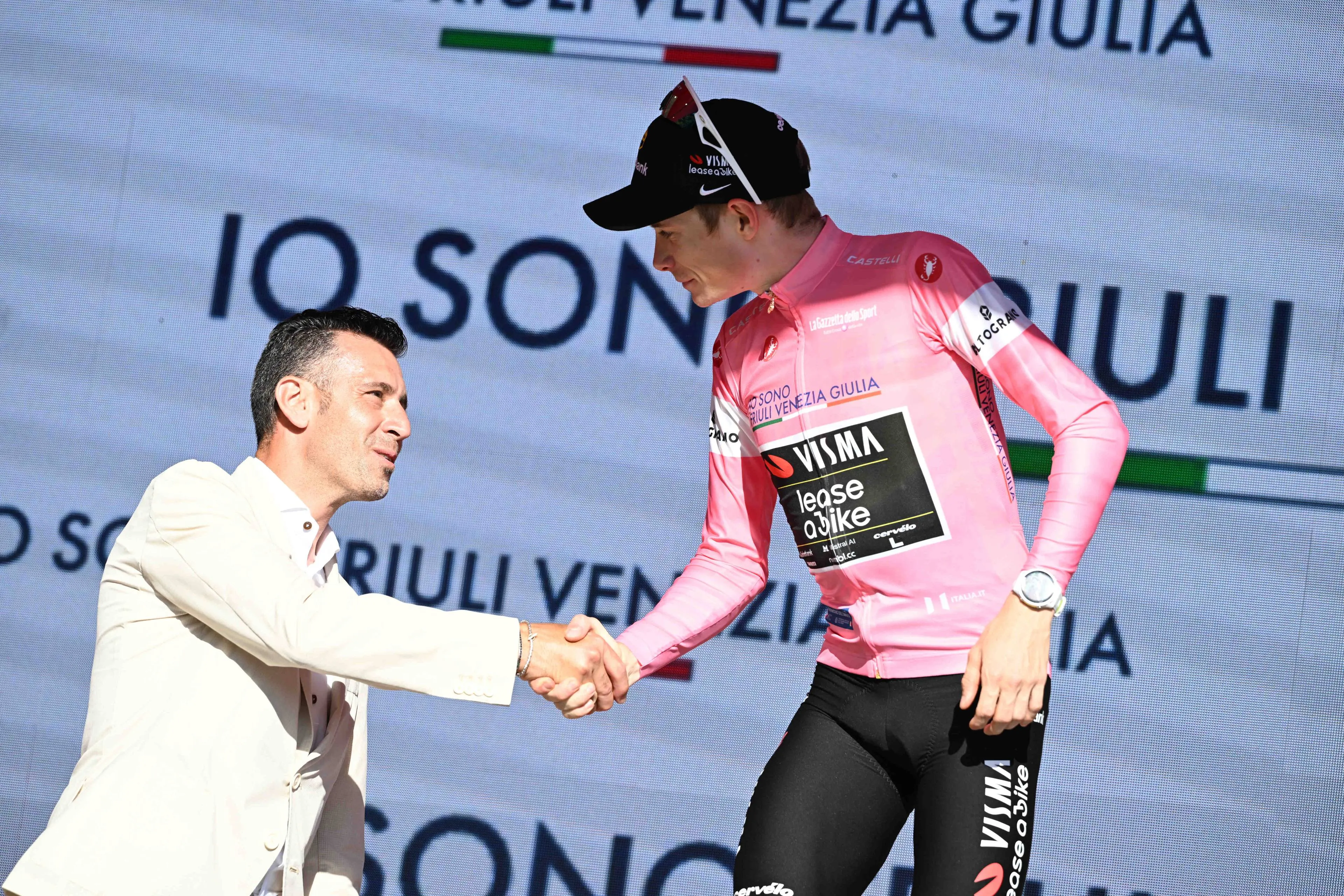
3. Giulio Pellizzari
Giulio Pellizzari’s race may be the most frustrating of all, because the opening phase suggested something far bigger. The young Italian arrived with major expectations after winning the Tour of the Alps, where he had also taken two stage victories. On the Blockhaus, he briefly looked like the rider most capable of troubling Vingegaard, finishing fourth and being the last man to resist before the Dane’s decisive move. That image did not become the story of his Giro.
Stomach problems soon disrupted his race and his level never fully returned. Pellizzari stayed inside the top 10 until Stage 15, which kept the possibility of a respectable GC result alive, but the third week exposed the damage. Each mountain stage brought another time loss. First he slipped out of the top 10, then the top 15, and eventually even the top 20.
The stage-hunting route did not rescue him either. Pellizzari never found the performance that could replace the lost GC campaign with a clear consolation prize.
His team still had success through Jai Hindley, who reached the podium for Red Bull - BORA - hansgrohe. That only sharpened the contrast. Pellizzari entered the race as one of the most talked-about challengers behind Vingegaard. He left it as one of the riders most clearly beaten by the demands of three weeks.
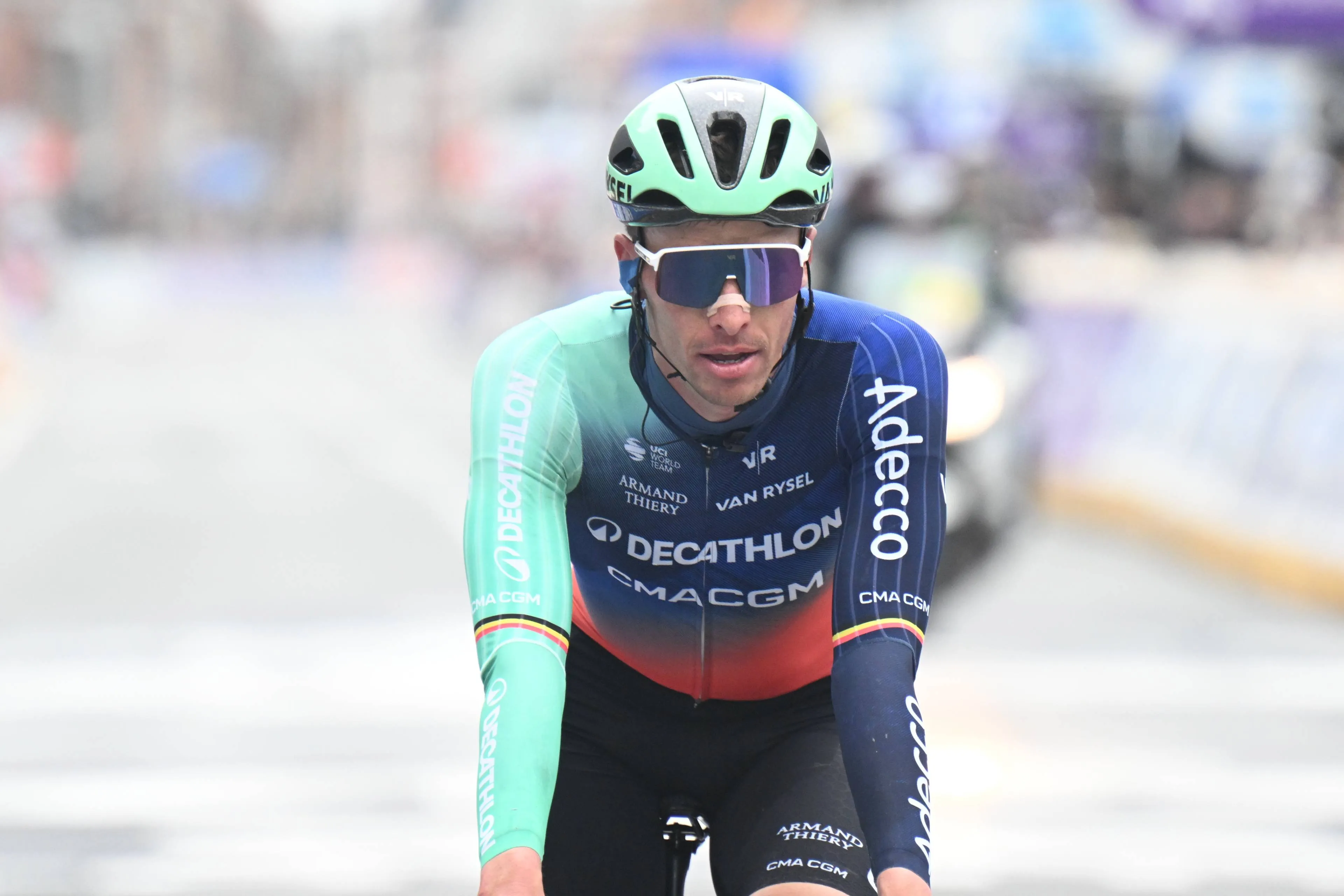
4. Ben O’Connor
Ben O’Connor’s Giro was less dramatic, but no less disappointing. After his strong 2024 Vuelta a Espana, the Australian was still searching for the level that had put him among the leading Grand Tour riders. The Giro looked like the right race to show it. Behind Vingegaard, the podium and top-five battle was open enough for a rider of his profile. Instead, O’Connor spent too much of the race surviving rather than shaping it.
He remained relatively well placed through the first two weeks, but rarely looked like a rider ready to attack the podium. While Felix Gall, Jai Hindley, Derek Gee-West and Afonso Eulalio all produced clear mountain performances, O’Connor’s race became increasingly defensive.
The third week ended his top-10 hopes. Fatigue accumulated, the gaps grew, and he slid to 16th overall. For a rider whose team needed a major GC result, that was a long way from the target.

Ben O'Connor in action on stage 19 of the 2026 Giro d'Italia
5. The Giro d’Italia route
The final loser is not a rider. It is the route itself. Vingegaard’s superiority would have been hard to break on almost any parcours, but the 2026 Giro rarely created the sense of chaos and attrition that has historically defined the race. There were fewer of the long, brutal mountain stages that make the Giro feel different from the Tour de France. The route often leaned towards shorter, more controlled racing, which suited a dominant team like Visma | Lease a Bike.
Visma controlled the key days with impressive calm. Once Vingegaard had the race in hand, there were limited opportunities for rivals to launch the kind of long-range attacks that might have forced a different dynamic.
The time trial balance also invites debate. One 42-kilometre individual time trial was a significant test, but still only one test against the clock in a three-week Grand Tour. Vingegaard lost more than a minute to Thymen Arensman there. A second time trial could have changed the pressure around the podium battle, even if it may not have changed the winner.
The 2026 Giro produced a dominant champion and several memorable individual performances. It did not always produce the uncertainty, brutality and tactical disorder that many fans expect from the Corsa Rosa.
Vingegaard leaves Rome with the race. Magnier, Narvaez and Eulalio leave with major gains. Mas, Milan, Pellizzari and O’Connor leave with very different questions.
claps 2visitors 2
Just in
Popular news

Latest comments
- Danish professor in psychology and cycling fan, Svend Brinkmann, wrote this on fb today (ai translation) When Jonas Vingegaard wins the Giro d’Italia today, he will have won all three Grand Tours and must be regarded as the greatest Danish athlete of all time. With all his victories, we gradually forget to appreciate just how incredible this achievement is, and how lucky we are as cycling fans! And to all the young men who supposedly lack masculine role models, who get lost in the manosphere, lift weights, looksmax, and follow Andrew Tate: you have a better role model right there in Jonas Vingegaard. He shows that you can be strong without having huge arms; that you can be a global star without chasing attention on social media; that you can work hard and still put your family first; that you can live in Glyngøre and be recognized around the world; that you can be a little awkward and shy and still win people’s hearts; and that you can absolutely be a real man while dressing head-to-toe in light pink. Congratulations to Jonas Vingegaard — and grazie mille for the effort and integrity!GreatDane31-05-2026
- Il Re Pescatore 🐟🩷GreatDane31-05-2026
- Well said again.anonymouscyclist31-05-2026
- *virtual clap* Well said GreatDane, excellent comment 😂anonymouscyclist31-05-2026
- In a sense, yes, the Tour always holds rank over the other GT's. However, historically the Giro has harder climbs than the Tour. This Giro was not as hard as previous years, but the Tour this year is also not as hard. In the 2026 Tour they only break 2000 meters twice before finishing the second day (they finish there on Stage 19 and 20 ) on Alpe D'huez. I think that Jonas has his best chance this year, and maybe his last chance to win a Tour before father time catches up. I'm interested in watching Tadej at the Tour de Suisse in a few weeks and seeing where his form is as well.awp31-05-2026
- The last 13 Giros had 13 different winners. Not the same with the TDF.Ride197431-05-2026
- Jonas, you are one of the few cyclists who truly moves me. Your open display of emotion and gratitude, not only to your team, but your wife and children, is deeply touching, and consistently brings tears to my eyes. His performance was a masterclass in tactical intelligence and heart. Achieving the ‘Triple Crown’ of Grand Tours is a monumental feat, and whatever the future holds, he will have already cemented his legacy as one of the true greats of cycling. This could not have gone to a more deserving rider. I genuinely could not be happier for him.anonymouscyclist31-05-2026
- This always brings tears to my eyes. Jonas adores his family, and he doesn’t just pay lip service to their support, he genuinely lives it. For someone who has conquered the rare heights of multiple Grand Tour victories, a feat achieved by only eight in men’s cycling history, he consistently shows the world that his success is not only rooted in his team, but also his partner and children. While some criticize his open display of emotion, I have nothing but profound respect for it. He is a truly humble, kind, and beautiful human being. Could not be happier for him. Chapeau Jonas, truly, truly remarkable.anonymouscyclist31-05-2026
- Following that logic Pogacar wasn’t a true winner in 2024 because the rider level and the route were also very tame in 2024. I think that both Pogacar and Vingegaard are true winners and can be very proud of their victories in the Giro.GreatDane31-05-2026
- Good for Jonas, I figured he was the shoe in, that early sickness had me worried but he was able to overcome. Now onto the Tour!awp31-05-2026
Loading
4 Comments