ANALYSIS | Did both Tadej Pogacar and Jonas Vingegaard misjudge their Tour de France preparation?
Cycling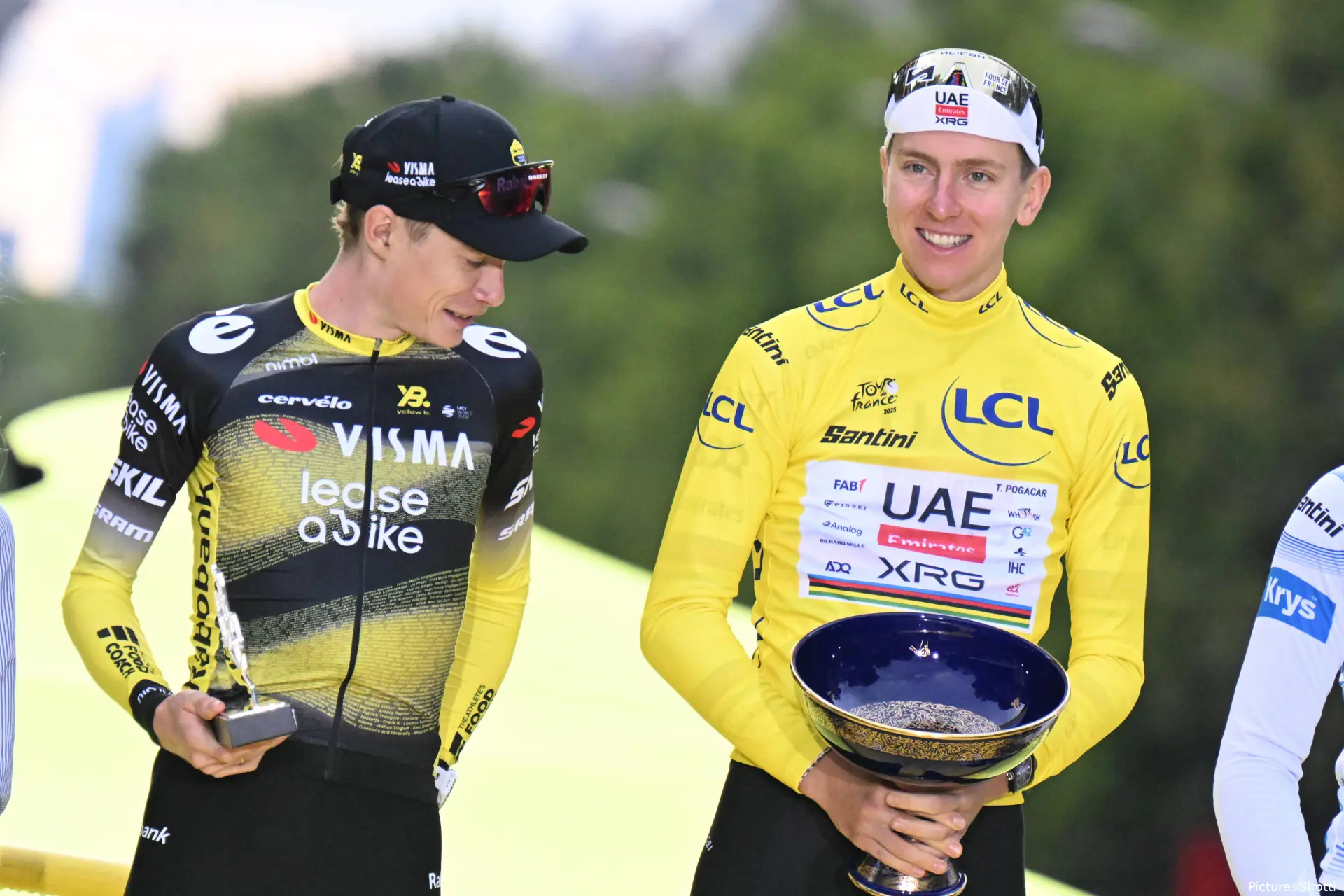
Tadej Pogacar won the 2025 Tour de France by a commanding
margin of 4 minutes and 24 seconds over Jonas Vingegaard, taking his fourth
yellow jersey and solidifying his dominance over the sport’s defining rivalry.
And yet, the final week of the race raised as many questions as it answered.
Pogacar looked fatigued, talked openly about burnout, and surprisingly faded
from stage-winning form. Vingegaard, on the other hand, grew stronger as the
race went on, but the damage had already been done and he still could not put a
dent into Pogacar.
The contrasting third weeks from the two best stage racers
in the world prompts a serious question: Did both of them get their Tour
preparations wrong this year? Was Pogacar overcooked from a long, intense
spring? Was Vingegaard lacking sharpness after a quiet build-up? Let’s look
deeper at their seasons, compare with previous years, and see what the data
tells us about what might have gone wrong, and right.
Pogacar was drained
From the outside, Pogacar's fourth Tour win looked
inevitable by the midpoint of the race. He was relentless in the first two
weeks, winning four stages, including back-to-back victories in the Pyrenees, and
putting huge time into Vingegaard on Stage 5's time trial and again on Stage 12
up to Hautacam. Those two stages alone accounted for a combined 3 minutes and
15 seconds of the final 4:24 gap, and it is true that after the Hautacam the
battle for the GC was over.
But after those two defining performances, the Slovenian’s
form plateaued for his own incredible standards. He stopped hunting stages. He
looked visibly flat. And in press conferences he struck a more philosophical
tone than usual. He said, “Burnouts happen, and it could happen to me too.” He
even mentioned the idea of retirement, telling reporters that burnout is common
in many sports and that he wouldn’t mind stepping away if it ever hit him too.
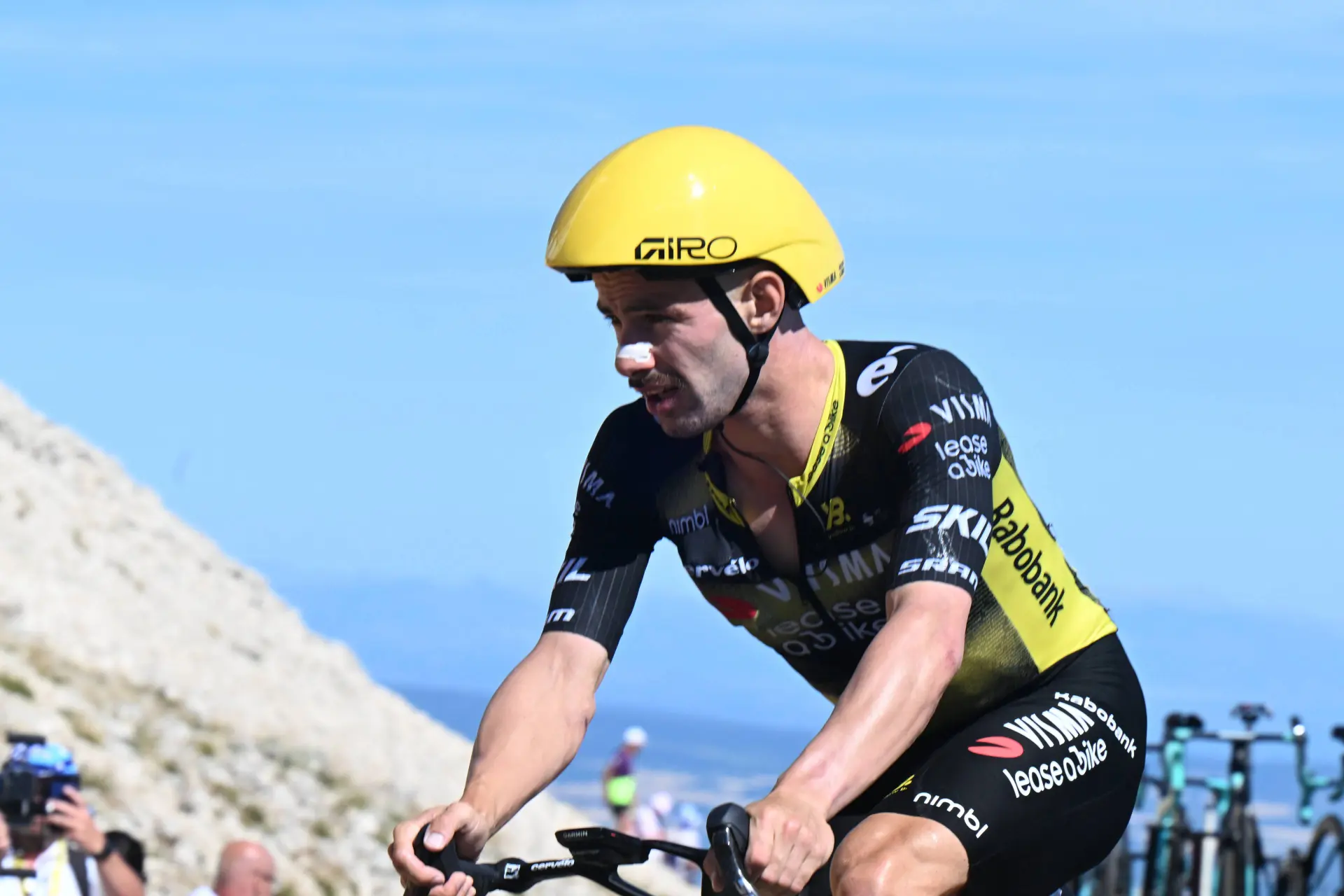
Pogacar, tired, winless in the third week, and talking about
retirement…It felts like the apocalypse!
For a rider who won six stages at last year’s Tour, three of
them in the final three stages, this was a notable shift. In 2024, he raced and
won the Giro-Tour double, taking six stages in both Grand Tours, while also
winning Strade Bianche and Liège. That season, he racked up 52 race days by the
end of July.
In 2025, Pogacar’s schedule looked lighter on paper, ‘just’
43 race days by the same date, but the composition of those days tells a
different story. He began his season on February 17 at the UAE Tour, a
seven-stage race, before throwing himself fully into the Spring Classics:
Strade Bianche, Milano-Sanremo, Tour of Flanders, Paris-Roubaix, Amstel Gold,
La Flèche Wallonne, and Liège. That’s seven tough one-day races, each ridden at
full gas, especially in the company of Mathieu van der Poel.
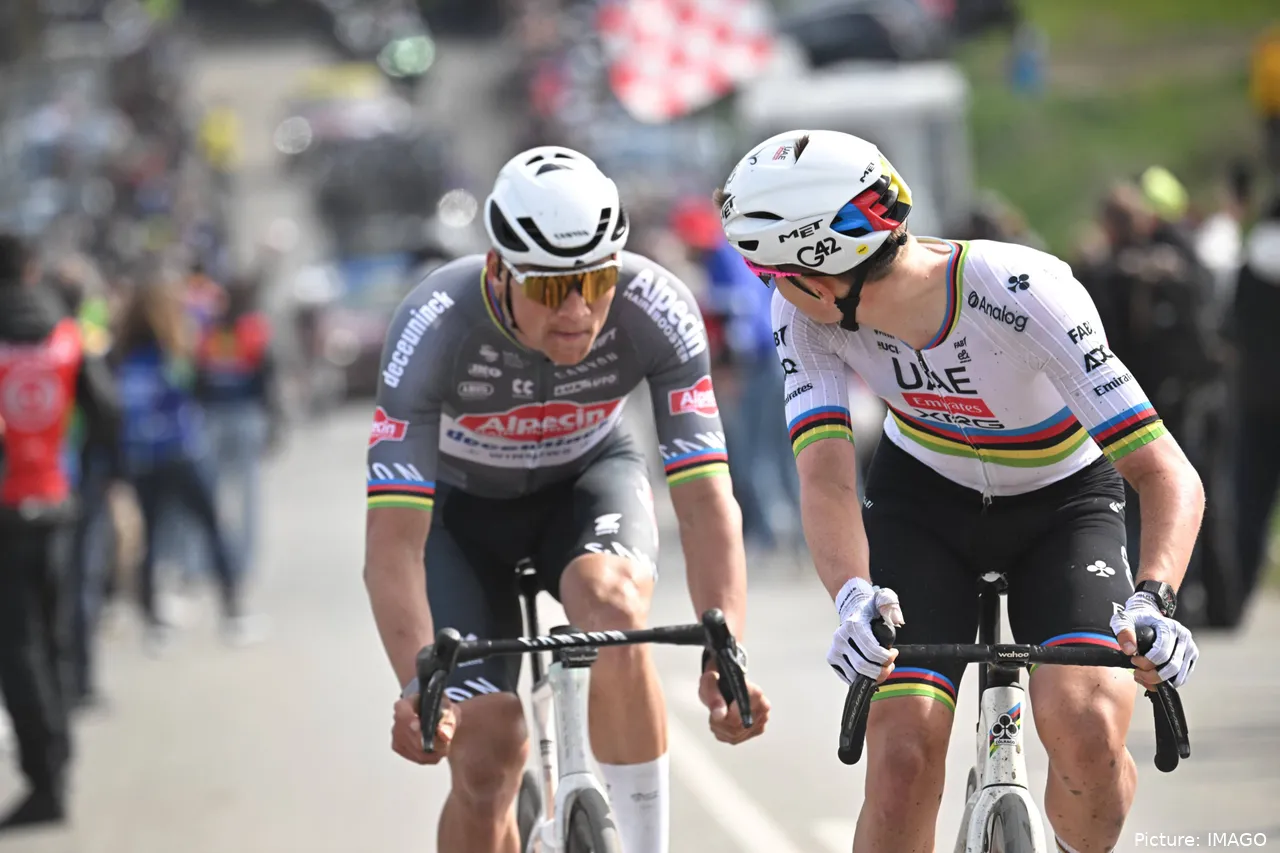
Pogacar and Van der Poel's spring battles were possibly the highlight of the season
He then raced the eight stages of the Dauphiné, winning the
GC there, just as he had at UAE Tour. That’s 22 race days before the Tour even
began. Compared to 2024, where he raced two Grand Tours but faced light
competition at the Giro, the 2025 schedule may have been less voluminous but
more intense.
Every single one of the classic he raced this year were
ridden at full gas. And it's true: duelling Van der Poel in the monuments and
cobbled classics arguably took more out of him than riding away with an
uncontested Giro in 2024, where he won by nearly 10 minutes.
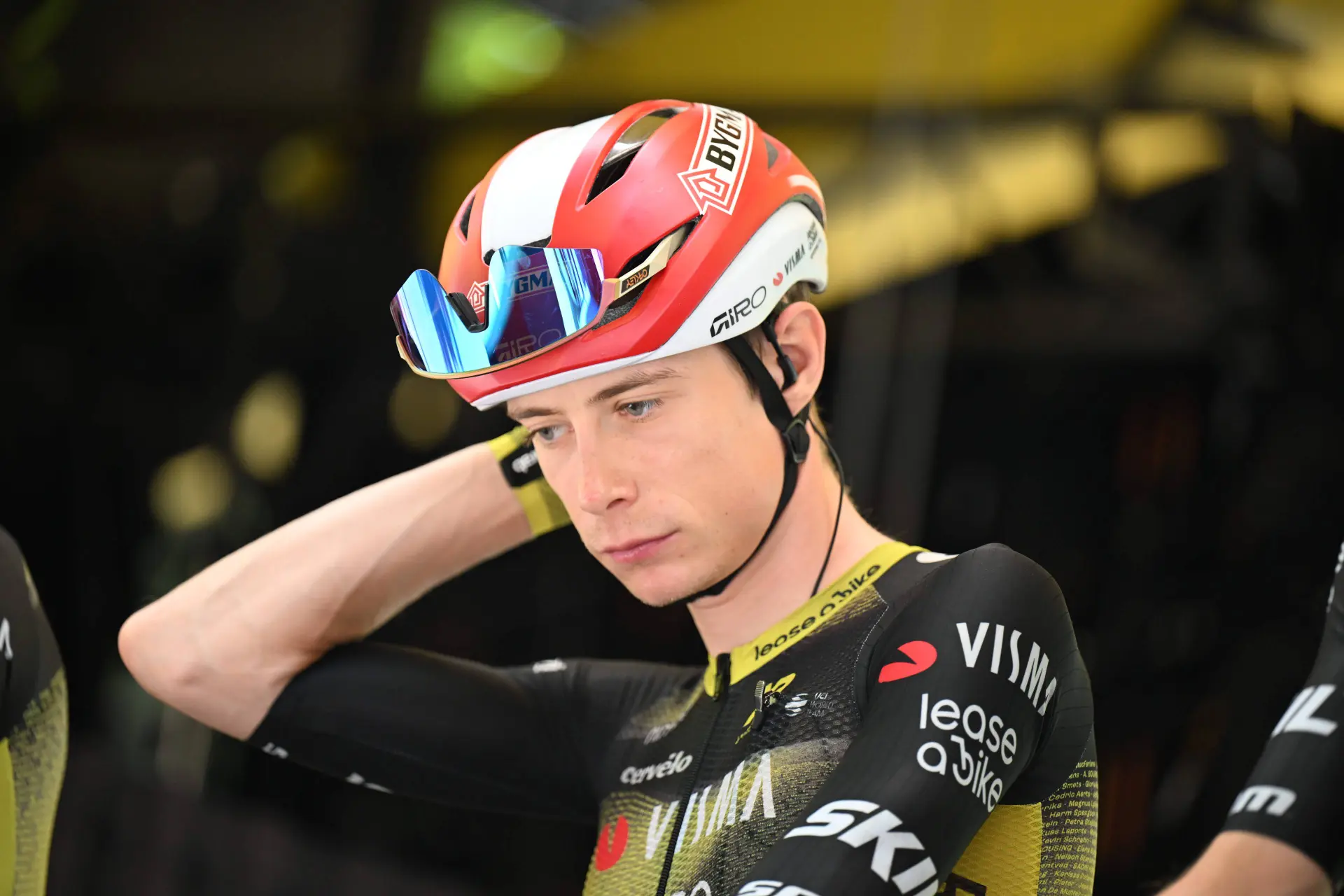
So while Pogacar’s 2025 prep looked leaner numerically, the
effort may have been far greater. And by the third week of the Tour, it showed.
The spark we are so accustom to seeing had faded ever so slightly. Yes, he
still comfortably defended yellow, but he didn’t look like a rider aiming to
break records anymore. He looked like someone who needed a break, and now,
he’ll get one. He’s confirmed he’ll skip the Vuelta and take time to recover
ahead of the World Championships.
Of course, despite what most believe, Pogacar is only human.
But for a man whose appetite for victory is usually relentless, the last week
of the Tour showed a different side to him.
Where was Vingegaard?
In sharp contrast, Jonas Vingegaard rode into the Tour with
a very different approach. After crashing out of Paris-Nice on March 13, he
didn’t race again until the Dauphiné on June 8, a gap of nearly three months.
That left him with just 18 race days in his legs before the Tour began. By
comparison, Pogacar had 22. And in terms of intensity, the difference is even
starker.
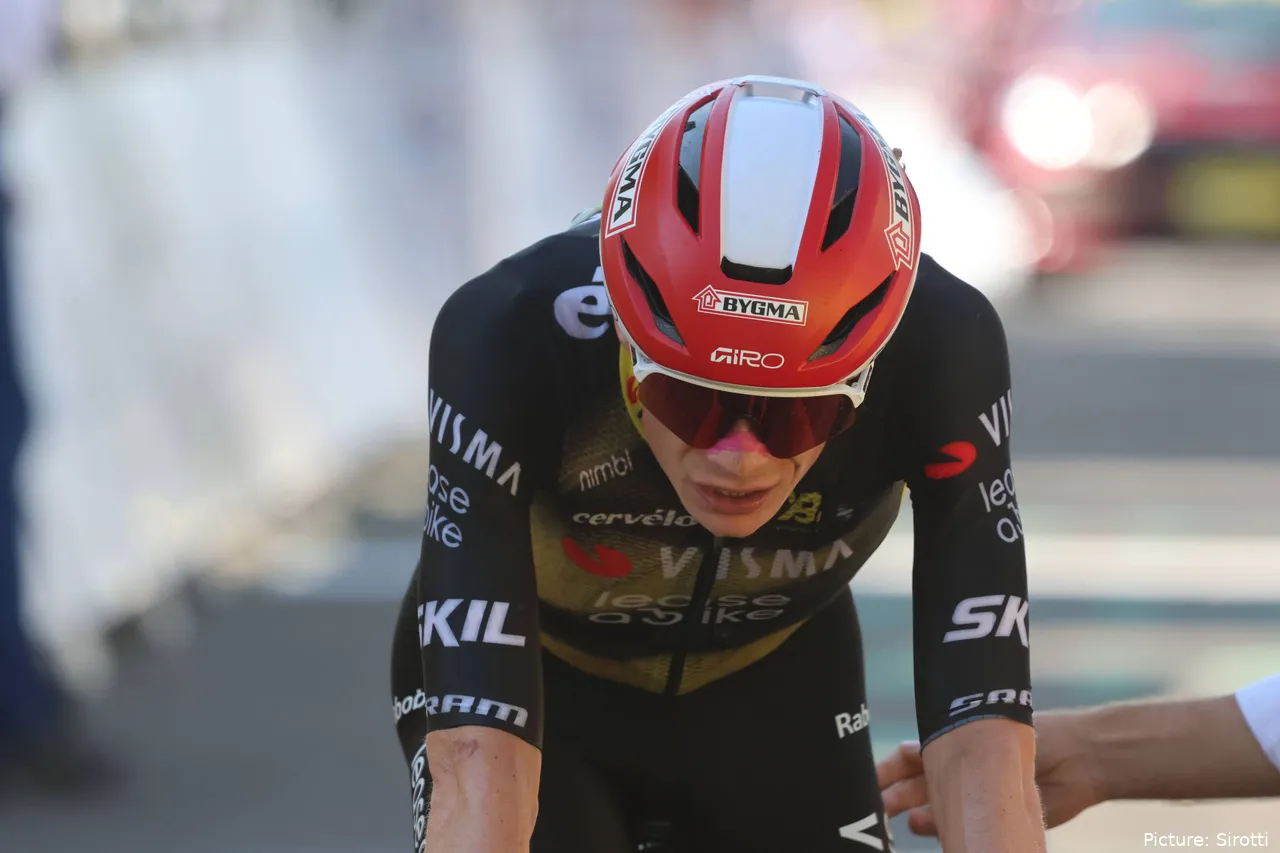
Does Vingegaard compete regularly enough?
Vingegaard’s only win of the season before the Tour was at
the Volta ao Algarve, and even that was by a slim margin. His buildup was
cautious, low-profile, and largely reactive to injury. The question heading
into the race was whether he would have enough racing in his legs to be sharp
in week one. Early on, Vingegaard was attacking Pogacar on the classics style
stages, and it looked set to be a tightly contested battle for yellow.
That did not last long.
Vingegaard’s Tour unravelled on two key days. Stage 5’s time
trial saw him lose 1:05 to Pogacar. Then came the hammer blow on Stage 12 at
Hautacam, where he cracked and conceded 2:10. Outside of those stages, he was
close to Pogacar, well matched, in fact, but the damage was done.
And yet, Vingegaard says he felt at his highest level this
Tour. He was adamant that “I’m feeling much better than last year,” and pointed
to those two bad days as rare anomalies for him. “Usually I don’t suffer
cracks,” he said. That comment raises questions about what really caused those
lapses, bad luck, or a lack of deep conditioning?
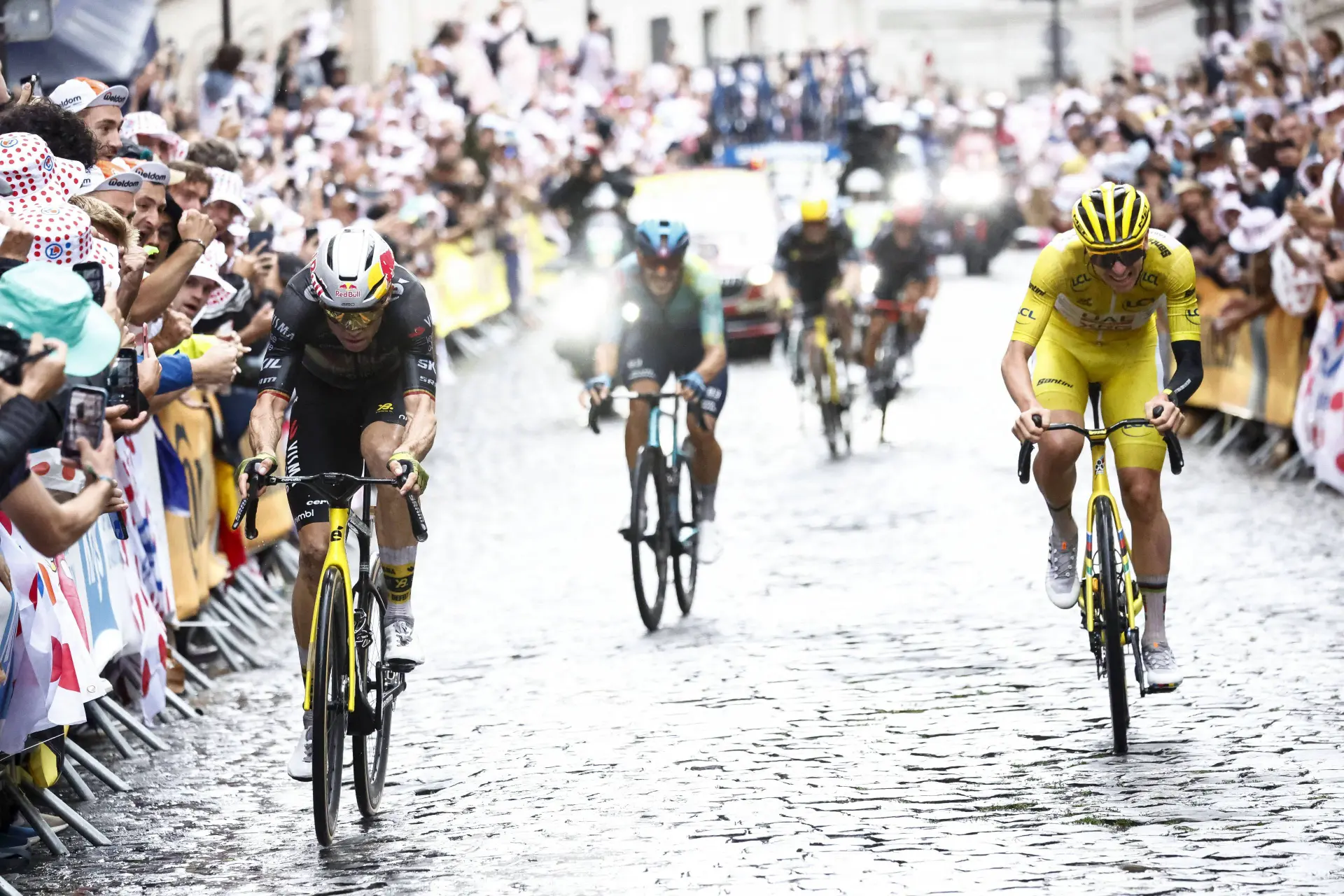
Compare this to 2023, the year Vingegaard won the Tour in
dominant fashion. That year, he raced 26 stages before July: he won O Gran
Camiño, placed third at Paris-Nice, won Itzulia Basque Country, then the
Dauphiné. His racing gaps were smaller too, the longest was under two months.
In 2025, the near three-month layoff from March to June might have cost him
vital sharpness.
That also helps explain his attitude in the third week. No,
Vingegaard was not able to crack Pogacar on Ventoux or the Col de la Loze,
where he has done previously, but he seemed ready to race. He even told
reporters mid-race that he couldn’t wait for the Vuelta to start, and he’ll now
head there aiming to win red and salvage his season. Whilst his rival spends time
recovering, the Dane will now head to Spain in several weeks’ time, a race
where he finished second two years ago.
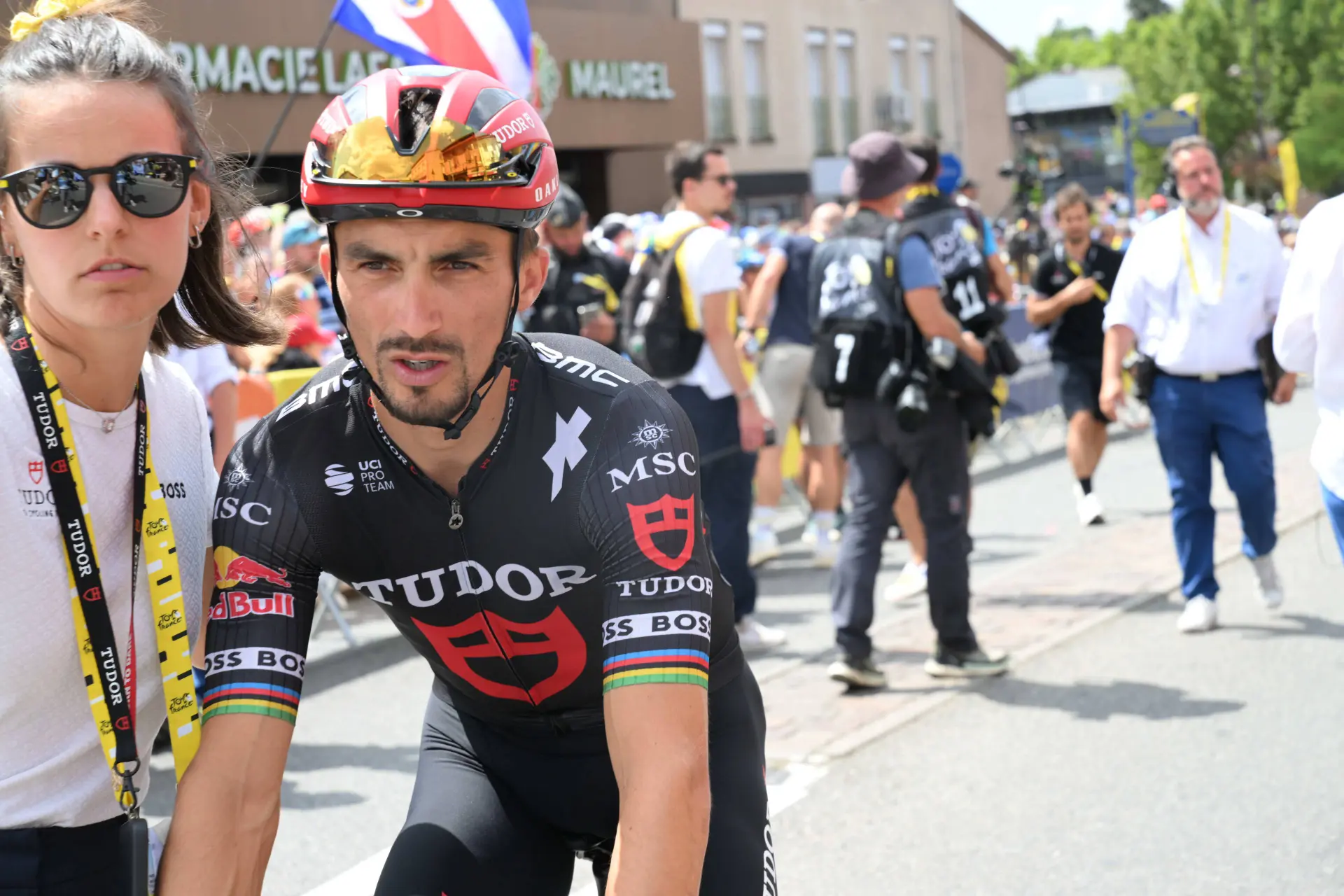
Overcooked vs undercooked?
So, can we seriously say either of these elite riders got their
preparation ‘wrong?’
It is a tough argument to make. Pogacar just won the Tour
comfortably, and Vingegaard was a long way clear of the rest. But could Pogacar
have been more dominant without such an intense spring? And could Vingegard
have been closer with a more intense spring?
Perhaps.
Pogacar may have pushed too hard in the spring, pouring
energy into full-gas classics that left him ever so slightly depleted in the
final stages. His third week was a shadow of the first two, and for the first
time in two years, he looked mortal.
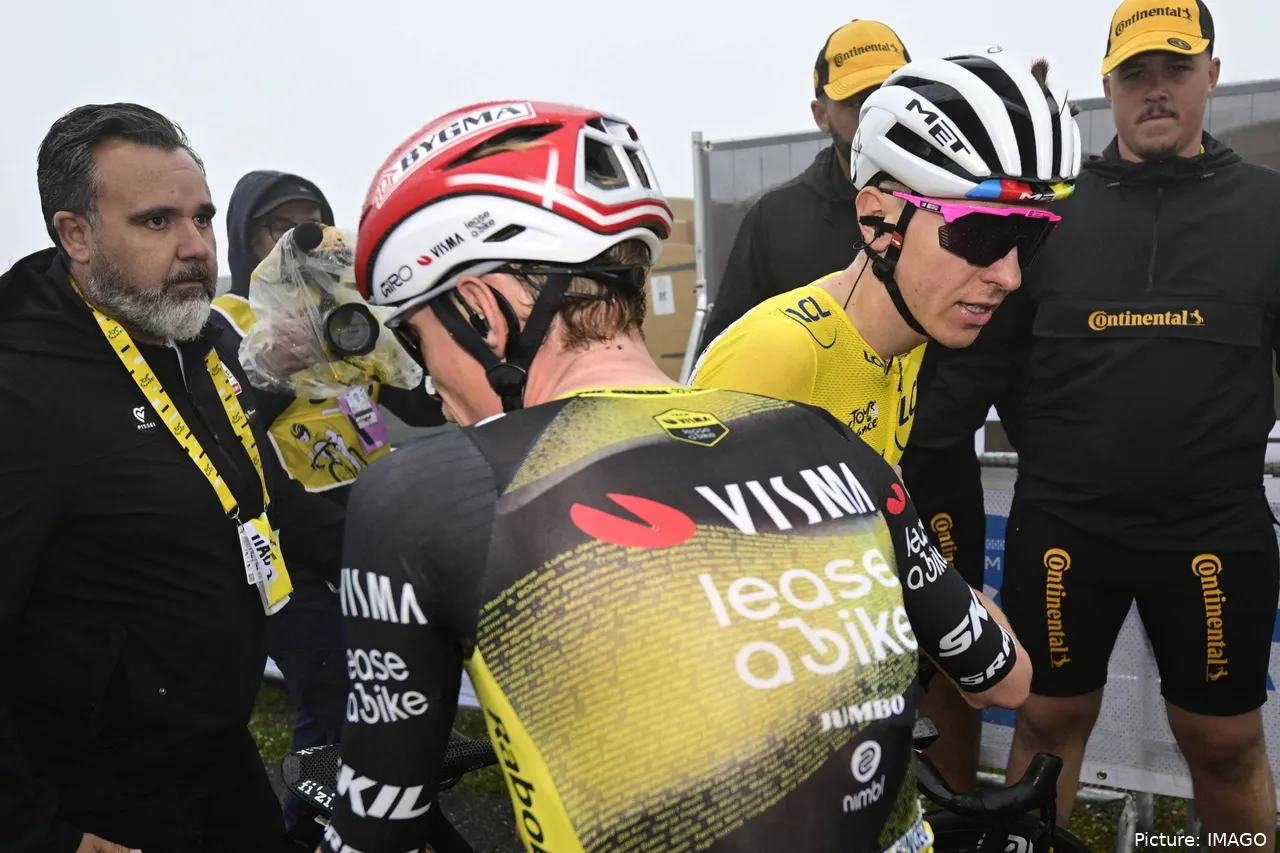
Was 2025 the strangest of Pogacar and Vingegaard's 'battles?'
Vingegaard, on the other hand, may have held back too much.
Eighteen race days before the Tour, with a three-month gap, might work for
some, but it didn’t work for him this year. His form was late to arrive, and by
the time it did, Pogacar was already too far gone. Those two bad days aren’t
common for him, but they were decisive here.
The irony is that both riders probably had better blueprints
in their recent past. Pogacar in 2024 was fresher in July despite a busier
calendar, likely because the Giro didn’t push him to his limit. Vingegaard in
2023 had a steadier ramp-up with regular competition and won the Tour with
overwhelming force. But in 2025, both altered their approaches, and neither
seemed to be at their very, very best.
The biggest immediate consequence is Pogacar’s decision to
skip the Vuelta. That’s not a small move for someone chasing Eddy Merckx’s
records. He clearly needs to recover, physically and mentally, and focus on
ending the season well at the World Championships.
Vingegaard’s opposite decision, racing the Vuelta, suggests
he feels his form is still on the rise. Whether he peaks too late or strikes
gold in Spain remains to be seen, but he will certainly be the favourite for
red.
Unfortunately for fans, it likely means we will have to race
another year for a true head to head between the sports top two. There will be
no rematch at La Vuelta, and should the two race again at the world
championships, Vingegaard will be coming in with two grand tours in his legs.
For now, the strange week 3 of this year’s Tour is one we
will have to continue to debate.

Fin MajorCycling Journalist
Fin Major is a UK-based writer at CyclingUpToDate and has been part of the team since 2024. He is the site’s main writer for FAQs and evergreen explainers and has written around 2,000 pieces for the platform. Alongside this work, he focuses on in-depth analysis and covers the biggest races on the calendar, including the Tour de France, the Giro d’Italia, and La Vuelta a España, providing clear context around performance trends, tactics, and key storylines.
In his reporting, Fin uses reputable data sources such as ProCyclingStats for results, statistics, and historical context. He places strong emphasis on careful sourcing, editorial accuracy, and updating articles promptly when new, verified information becomes available. Outside of writing, Fin is an active cyclist, which supports his practical understanding of the sport and its demands.
claps 4visitors 4
Just in

Popular news
Latest comments
- The article makes it sound like a great thing and something to be applauded. The reality is is gives the Americans another 6 years to fleece European cycling fans or force them to hunt around Europe with VPN’s for free feeds. Not something to be celebrated in my book. Before someone points out that coverage of this depth costs money, yes, I agree but not £30+ per month a fee I will wager will gradually increase now this deal has been cemented.Paul53119-10-2026
- Great. Thrilled. (Satire) Oh, how I miss the days of GCN. Still wear my GCN hoodie with pride.anonymouscyclist19-10-2026
- You could also look at it another way. How many riders have had better or more consistent results since the Tour?Jumpyjohn19-10-2026
- Whilst I love Tadej (and Remco, who deserves to be mentioned here, too), @JumpyJohn makes a valid point, and he isn’t wrong @MajorPayne. It is a fact that today’s official broadcasters of cycling struggle to keep our attention once the likes of Tadej (or Remco) attacks at ~80km or so. In the 142nd issue of Rouleur, Ned Boulting reflects on the often stressful paradox of commentating on a race that is effectively over before the broadcast window even hits its stride. In this edition, he centres on Remco’s 1hr solo at the Challenge Mallorca this year, and captures the panic and dread shared by the commentators when a dominant rider kills off the racing tension early. I recommend you read it, it’s a fascinating insight into the world of commentary, and the true viewing figures of today’s cycling. I must add here, I love Tadej and Remco, but I would be lying if my heart rate wasn’t higher when watching the World Championships this year. And I’m sure Rob Hatch would say something akin regarding his commentary!anonymouscyclist19-10-2026
- The shattered women’s marathon record was clean and highly surprising and then a few months later the athlete was very positive in another test for something not taken by mistake when recording far less impressive results. Sounds to me like the problem is still the age old one, detection is often way behind. Just like with crime, it’s not because you can’t catch the criminals that you aren’t aware of the crime.Jumpyjohn19-10-2026
- Listen, you have a point but on the other hand in cycling, once some of the riders go solo and build a minute’s gap, there’s hardly any action left to watch. Cycling is definitely not for today’s generations of accelerated viewing. Other people find skydiving or chess exciting but you can’t force everyone to feel the same.Jumpyjohn19-10-2026
- That’s a funny one. Yeah obviously he’s more aero than some but most of the aero effect at elite level is the bike. Now you have me starting to feel sorry for the guy behind him when he pulls a groupetto.Jumpyjohn19-10-2026
- Knew a World Tour promotion was coming for Ben this season. Thrilled for him, and can't wait to see what he can do at this level. Another one to watch at the TTs.anonymouscyclist19-10-2026
- It honestly breaks my heart to see this. I had a feeling this might happen over the last few years, but I kept praying it wouldn't, and that Joey would find his niche, especially back racing alongside his brother. After growing up racing alongside PH-MAS, the Pidcock brothers have always felt like one of our own, as we’ve watched them grow from Club level all the way up to PC and WT. I wish Joey nothing but the best of luck in whatever he does next, but selfishly… I do wish for him to move into the role of Q36.5 team staff.anonymouscyclist19-10-2026
- Predictable, sure! But boring??? OMG! Was Mike Tyson predictable and boring in his prime? Air Jordan? Schumacher or Senna? OMG!!!MajorPayne19-10-2026
Loading
Write a comment