“A lot was said about Jonas Vingegaard being ill, but it was a glorified cold” - Victor Campenaerts shuts down media hype over Visma leader's Giro illness
Cycling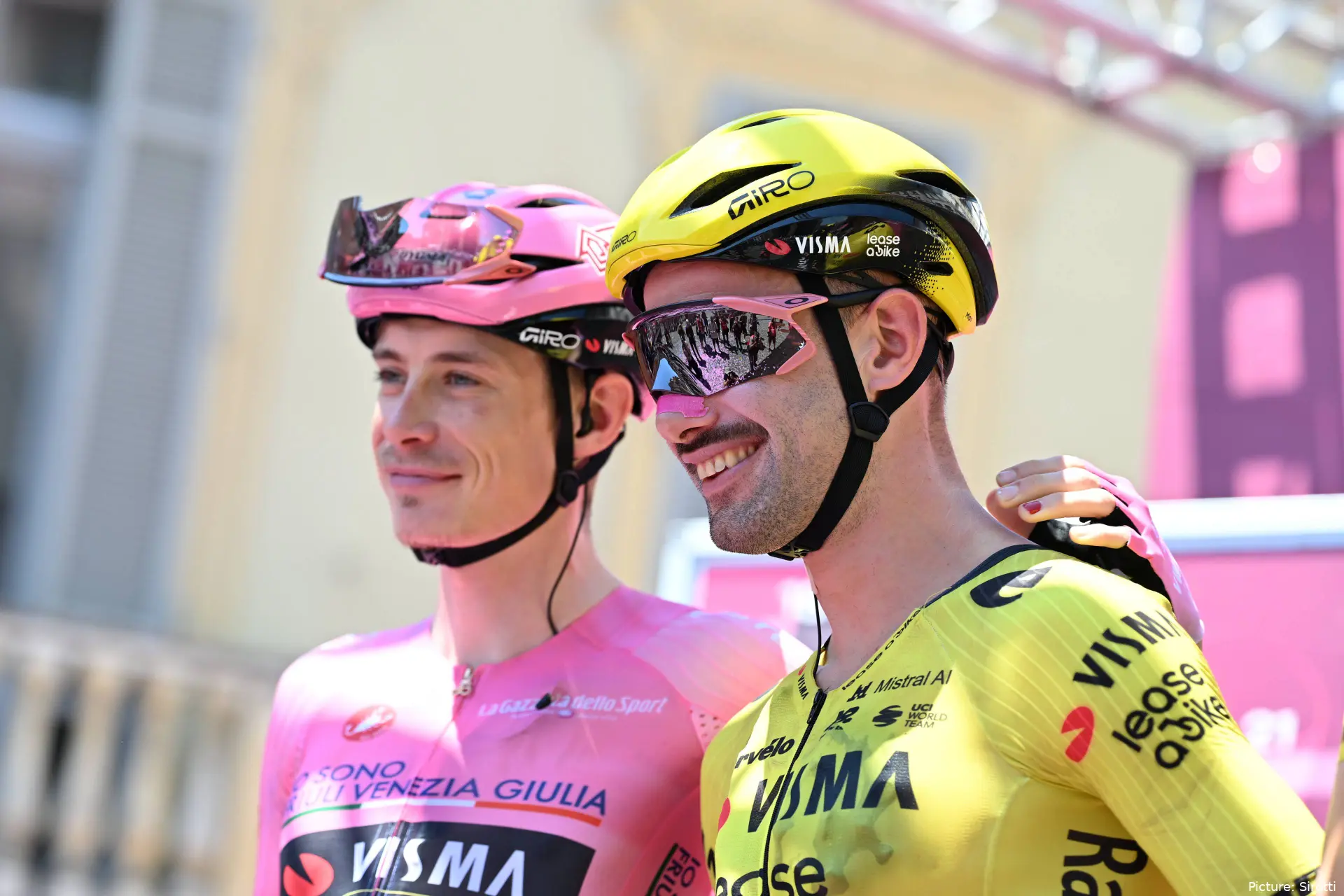
Victor Campenaerts has played down the illness concerns around Jonas Vingegaard at the 2026 Giro d’Italia, insisting there was never a moment when Team Visma | Lease a Bike’s race leader was in real difficulty.
Vingegaard’s condition became one of the major talking points of the second week after Visma confirmed he had been among the riders affected by illness in the peloton. The concern came at a point when the Dane had not yet fully imposed himself on the race, leaving open the question of whether rivals might find a window to test him.
That question has since been answered emphatically on the road. Vingegaard now has four stage wins at this Giro, holds a lead of more than four minutes in the general classification, and remains firmly on course for overall victory after stage 17 to Andalo.
For Campenaerts, the illness narrative has grown larger than the reality inside the Visma camp. “A lot was said about being ill, but I would rather describe it as a glorified cold,” Campenaerts told Sporza. “It was a cold that was going around the whole peloton. There was never a moment when Jonas was in trouble.”
Visma keep focus despite commanding lead
The comments come after Visma had previously confirmed Vingegaard was among those affected by the illness symptoms that had circulated during the race.
Sports director Jesper Morkov had earlier said the team had dealt with “a bit of coughing and tickling in the throat among some of the boys”, before confirming of Vingegaard: “He has also been one of them, but everything seems to be fine.”
Since then, the balance of the Giro has changed completely. Any suggestion that Vingegaard might be vulnerable has been replaced by the reality of a rider who has strengthened his grip on the maglia rosa and repeatedly distanced his GC rivals in the mountains.
Still, Campenaerts made clear that Visma are not treating the final days as a procession. “It stays serious,” he said. “We drink a glass of champagne, but we cannot celebrate it like Alberto Bettiol celebrated his victory.”
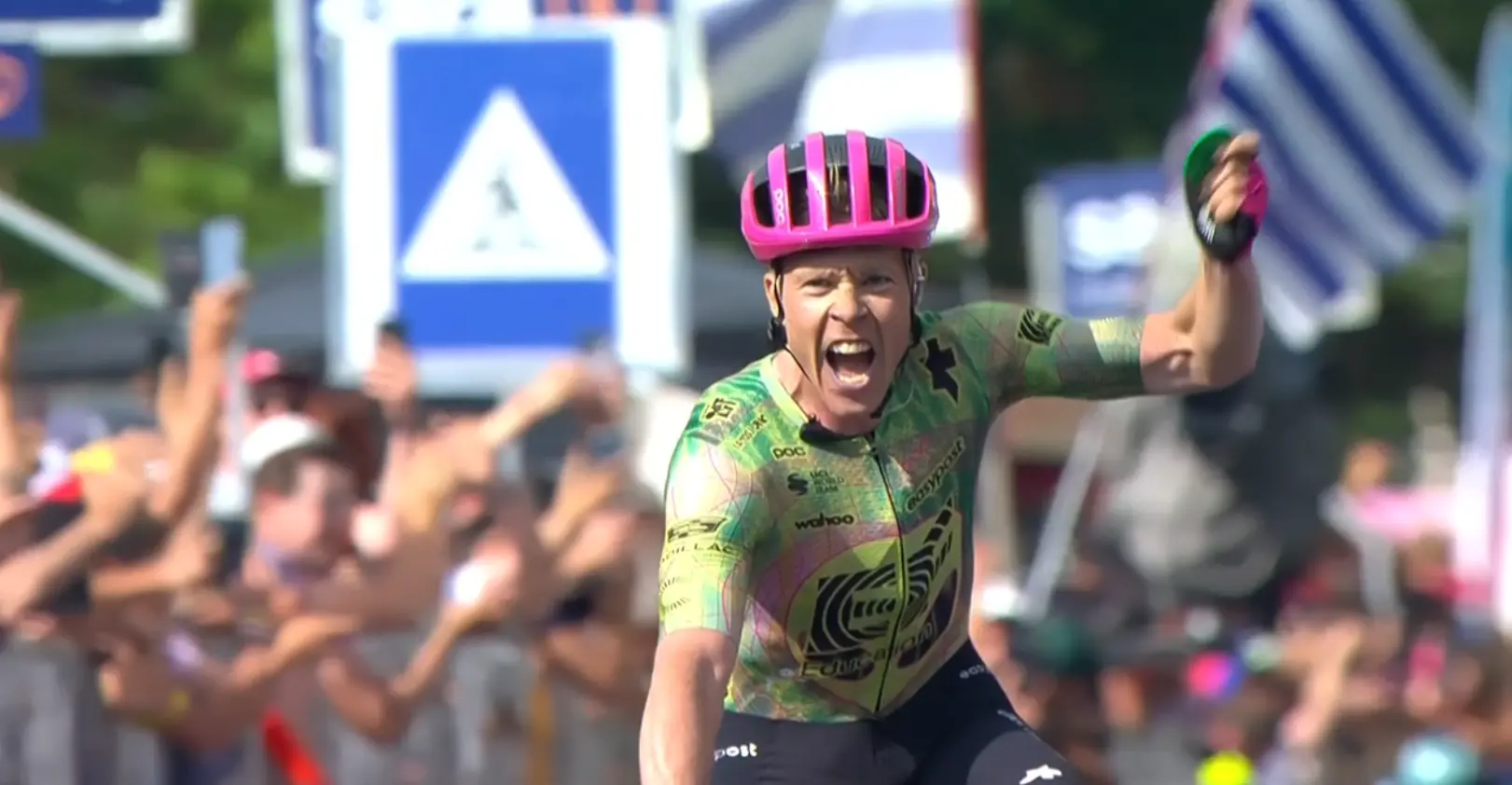
Bettiol’s stage 13 win gave XDS Astana another major success at this Giro, but Visma’s situation is different. Their target is the overall title, and with the decisive mountain stages still to come, Campenaerts stressed that the team remain fully locked in. “We are putting absolutely everything into winning,” he said. “It is no secret that Friday and Saturday are the important stages.”

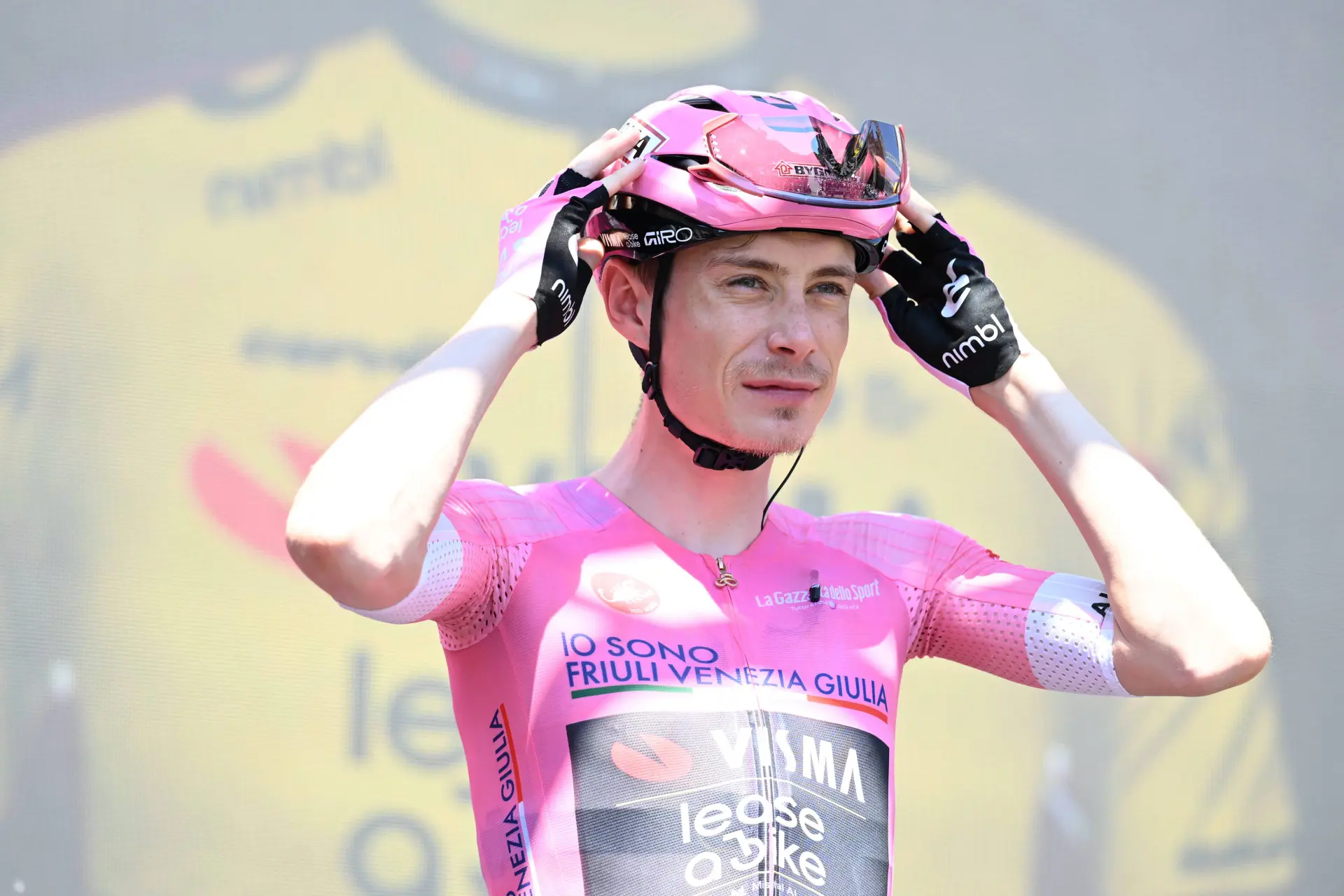
Jonas Vingegaard at the 2026 Giro d'Italia
Vingegaard illness question fades after mountain dominance
The illness story mattered because of its timing. In the opening week, Vingegaard had not looked in trouble, but nor had he yet turned the Giro into the controlled race it has since become. Once Visma confirmed he had been affected, it gave rivals and observers a possible explanation for why the race had not already been blown apart.
That window now looks to have closed. Vingegaard’s performances since then have shifted the illness discussion from a live weakness to a resolved subplot. His victory in pink on stage 16 to Cari was the clearest sign yet that the Dane had moved beyond any early race concern. Stage 17 then passed without drama for the maglia rosa, as Michael Valgren won from the breakaway and Visma kept the overall race under control behind.
Campenaerts’ comments do not deny that Vingegaard was affected. They reframe the scale of the problem. Illness did pass through the peloton, and Vingegaard was among those who felt it, but Visma’s message is now clear: it never reached the point where their leader’s Giro challenge was truly under threat.
With two major mountain days still standing between Vingegaard and Rome, that distinction matters. The scare may have added intrigue to the second week, but the race now belongs to a rider whose team insists he was never as vulnerable as the outside noise suggested.
Kieran WoodDeputy Editor-in-Chief
Kieran Wood is a sports journalist based in Wales and has been active in journalism since 2022. He regularly contributes to DartsNews.com and CyclingUpToDate.com, where he covers professional cycling and darts. In cycling, his work includes liveblogs from major races, including the Tour de France, the Giro d’Italia, and La Vuelta a España, alongside race reports and analysis. He has also conducted interviews with professional riders.
His reporting spans the full racing calendar, from one-day classics to stage races, with a focus on accurate, real-time coverage and clear contextual analysis. For statistics, results, and historical context, he regularly uses resources such as ProCyclingStats. To support reporting on rider activity and training context where relevant, he also references Strava.
In his work, Kieran places strong emphasis on careful sourcing, editorial accuracy, and updating articles as new, verified information becomes available.
claps 5visitors 5
Just in
Popular news
Latest comments
- Campenaerts looked like a rolling pumpkin with that all orange leaders skinsuit !frieders318-10-2026
- He can take his dumb a$$ politics somehwere else !frieders318-10-2026
- good to have her back. fingers crossed she‘ll be able to stay!Ketterechts17-10-2026
- A tenner and he wins the Tour next year, too 😂anonymouscyclist17-10-2026
- the answer is either stick to classics or GTs but not bothabstractengineer17-10-2026
- the exodus already stared with Ciccone. Already they were struggling with two sprinters, now there are three. Also Ganna will demand leadership. Gall is the most proven GC, Ayuso has the most potential. GC leadership for everybody will be impossible. Literally a UAE style mess without pogi.abstractengineer17-10-2026
- I raced as an amateur for 12 years, including six years on my country’s national road cycling team. I secured two national titles and competed in three World Championships plus more than 15 international stage races. At 23, we travelled to Italy for a training camp—or so I assumed. On a rest day, we watched a presentation about adopting a more “professional” training approach. It was crystal clear what “professional” meant. That moment first exposed me to this dilemma. After returning from Italy, I left cycling—at least at the competitive level I had known. Over the following two years, the whole team was caught doping. I hold that everyone is innocent until proven guilty. In my view, current stakeholders operate on a different scale, and the sums involved are vast. I am unsure whether any doping would ever be revealed. I try to stay positive and enjoy the show. My 2c.
 vannpelt17-10-2026
 - Fiver he wins 🤣
 leedorney17-10-2026
 - “…measures to reduce speeds.” Might as well shorten the race course to just 50km as well? ASO generates at minimum €300m a year and 30- 40% profit. Maybe stop being greedy and spend more of the profit to protect the riders instead.b3tlla17-10-2026
- he also had quite the life off the bike during his pro years. he used his celebrity status to full affect.mij17-10-2026
Loading
Write a comment