OPINION | Are Mathieu van der Poel and Wout van Aert’s attitudes to cyclocross unsportsmanlike?
Cyclocross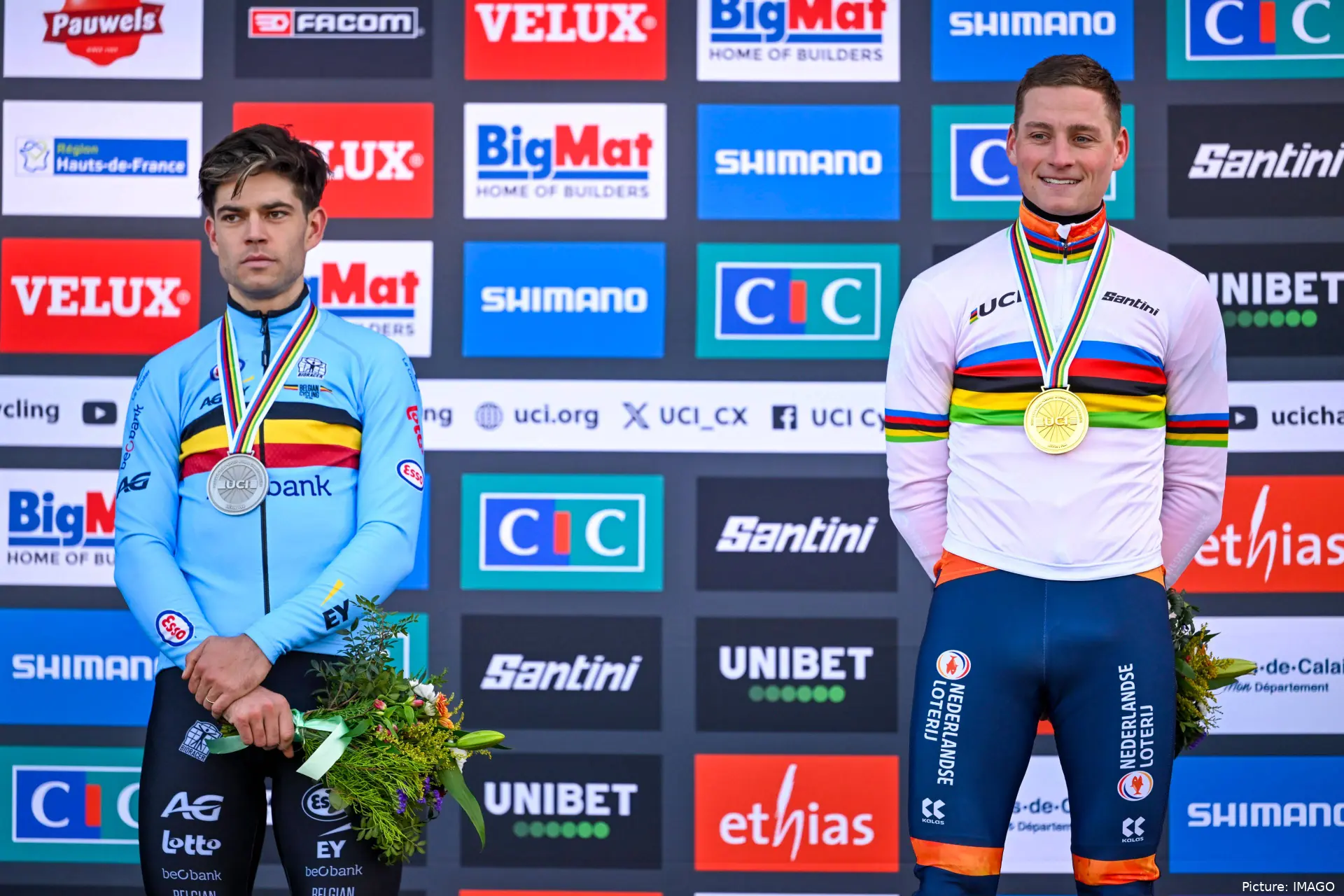
I’ve gone back and forth on this more times than I care to
admit. The 2025/26 cyclocross season is about to light up, and with it comes
the familiar question: is it fair, never mind sporting, for Mathieu van der
Poel and Wout van Aert to parachute into a handful of winter races, maul the
field, and then vanish back to the road? The heart says yes, because who
doesn’t want to watch the two greatest mud magicians of the era square off? The
head says… it’s complicated.
“A victory”
Let’s start with the simple truth: their very presence
supercharges the discipline. Sven Nys, who understands the sport’s pulse better
than anyone, put it bluntly in 2023, “The fact that they continue to cross is a
victory.” That single line captures the promotional power and cultural gravity
those two bring; when they toe a start line, the barriers are five-deep and
every rider in the call-up gets a more valuable day out.
But box-office isn’t a synonym for fair play, and that’s
where the debate gets thornier. The UCI has spent the last few seasons trying
to protect the World Cup’s integrity and visibility. In late 2023, President
David Lappartient warned that riders who “pick and choose” World Cup rounds
risked losing their path to the World Championships, “Every rider has to play
the game.” The rules conversation continued in 2024 with participation
requirements tightened to keep top names on elite start lines. The logic is
obvious: a World Cup is only a “cup” if it rewards consistency, not cameo
appearances.
And yet, here’s the paradox: the very stars the UCI wants on
those start lines built their global appeal by not playing the game in the
conventional way. Mathieu van der Poel has calibrated a short, surgical cross
block for years, target the World Championships, pick a selective schedule, and
turn every start into a near-certainty. Wout van Aert’s program tends to be
even more compact. Last winter, Alpecin-Deceuninck and Visma confirmed what we
all suspected: van der Poel around 11 events, Van Aert about six, enough to
sharpen the blade for February, not enough to chase a series.
If you want to call that unsportsmanlike, you certainly won’t
be alone. Should the champion really be someone that rides the sport part time?
But there’s an equally strong case that “unsportsmanlike” is
the wrong frame for what is fundamentally a calendar-design problem, not an
ethical lapse by two riders. Neither van der Poel nor Van Aert hides their
intentions. Van Aert said it out loud when his team laid out a six-race plan
last winter, “This winter, we’ve opted for a compact schedule of six races that
fit well into my training plan. It will be a cyclocross season I approach
purely out of love for the sport, but with modest ambitions.” You can quarrel
with how “modest” those ambitions look between the tape, but you can’t accuse
him of gaming an opaque system. He’s telling you the plan, and he’s honouring
it.
On the other side of the ledger, ask any promoter whether
their event was better off when the rainbow jersey or the Belgian materialized
in the call-up. Crowds spike. Rights fees hold. Sponsors re-up. The television
shot of van der Poel floating ruts at speed or Van Aert jet-washing the sand
pit is effectively marketing spend the discipline could never afford. Again:
“The fact that they continue to cross is a victory.”
What’s unfair?
So what, exactly, feels “unfair”? Three things, mainly.
First, the dominance without the ‘grind’. When van der Poel
won his seventh world title at Liévin in February 2025, 45 seconds ahead of Van
Aert on a muddy, technical loop, he was potentially at his best ever. He’d
fine-tuned for a single apex while the rest of the field spent months logging
hard Sundays in wind-whipped industrial parks. For full-time crossers, the
message can land like this: you worked the whole semester, they aced the final.
That sting is real.
Second, the tension with the World Cup’s identity. A series
is meant to reward breadth, travel, weather, course styles, and form
fluctuations. That’s why governing bodies floated stricter participation and
qualification rules heading into 2024-25. If your two biggest stars are willing
to skip rounds (or series altogether) to perfect a World Championships peak,
the series risks feeling like a sideshow to the one-day crown. There have even
been public musings from officials about penalties for habitual skipping,
underlining the stakes for the World Cup’s prestige.
The intention is sound, even if the enforcement remains
tricky. Because, let’s be honest, no one is ever going to ban Van der Poel or
Van Aert from a race.
Third, the psychological tax on the rest. Eli Iserbyt has
been candid about how tough it is to win when those two appear. He admitted
earlier this year that every season you think van der Poel can’t get better, “then
he arrives and he’s just phenomenal.” Those aren’t sour grapes, they’re a
full-timer’s reality check. A bronze on a van der Poel-Van Aert day can be a
career-best performance, but no elite sportsmen really looks at third as the pinnacle.
Still, the counterarguments are equally viable.
Firstly, part-time isn’t the same as easy. What looks like
selective dominance is built on the most unforgiving road calendar in the
sport. Van der Poel doesn’t turn up undercooked, he turns up sword-sharp from
Monuments and Worlds on the road. Van Aert’s winter is often a delicate rebuild
from a season that has already spanned cobbles, Grand Tours, and championships.
So it’s not as if Van der Poel or Van Aert are coasting!
Secondly, cyclocross, unlike road stage racing, is uniquely
well-suited to star cameos. A one-hour race tolerates varied build-ups in a way
a three-week Grand Tour never could. The World Cup is vital, but the highlight
that converts a casual viewer is usually a one-lap demolition by a legend on a
course that looks like a painting left in the rain. The sport needs both.
Thirdly, the rulebook is evolving in the right direction.
Participation nudges were introduced precisely to balance star power with
series integrity. If organisers enforce them predictably, and if the UCI avoids
whiplash policies, a middle path exists: ensure teams field strong riders every
round while allowing megastars the freedom to build toward the jerseys that
matter to them. The stick is there if the skipping gets egregious; the carrot
is that the biggest stage (the Worlds) still belongs to those who start it.
So yes, its tough for the other riders who race every World
Cup race, only to then be trounced when the top two show up. But the reality is
Van Aert, and Van der Poel in particular, are simply on another level to
everyone else. Sometimes, you just have to appreciate greatness.
My thoughts
Where do I land? I don’t think van der Poel and Van Aert are
unsportsmanlike. I think they’re rational. But I do sympathise with the other
riders, it must be infuriating for them.
The most compelling dramas in sport are the ones with a
clear villain (dominance itself) and an underdog who keeps coming, week after
week, mud-splattered and undeterred. Van der Poel and Van Aert don’t make that
story unfair, they make it necessary. Thibau Nys is planning a 22-race winter
“geared up” to narrow the gap. He’s not opting out of the fight because two
giants step into the ring, he’s adding rounds to fine tune himself. That’s the
spirit I want cyclocross to amplify.
Read also
And if you still worry that the stars are disrespecting the
discipline, listen (literally) to how they talk about it. Van Aert again:
“Cyclocross remains my first love.” Then he explains why his program is
compact: after the toll of his road year, “it’s essential to make the best use
of the time I have to prepare for the road season.”
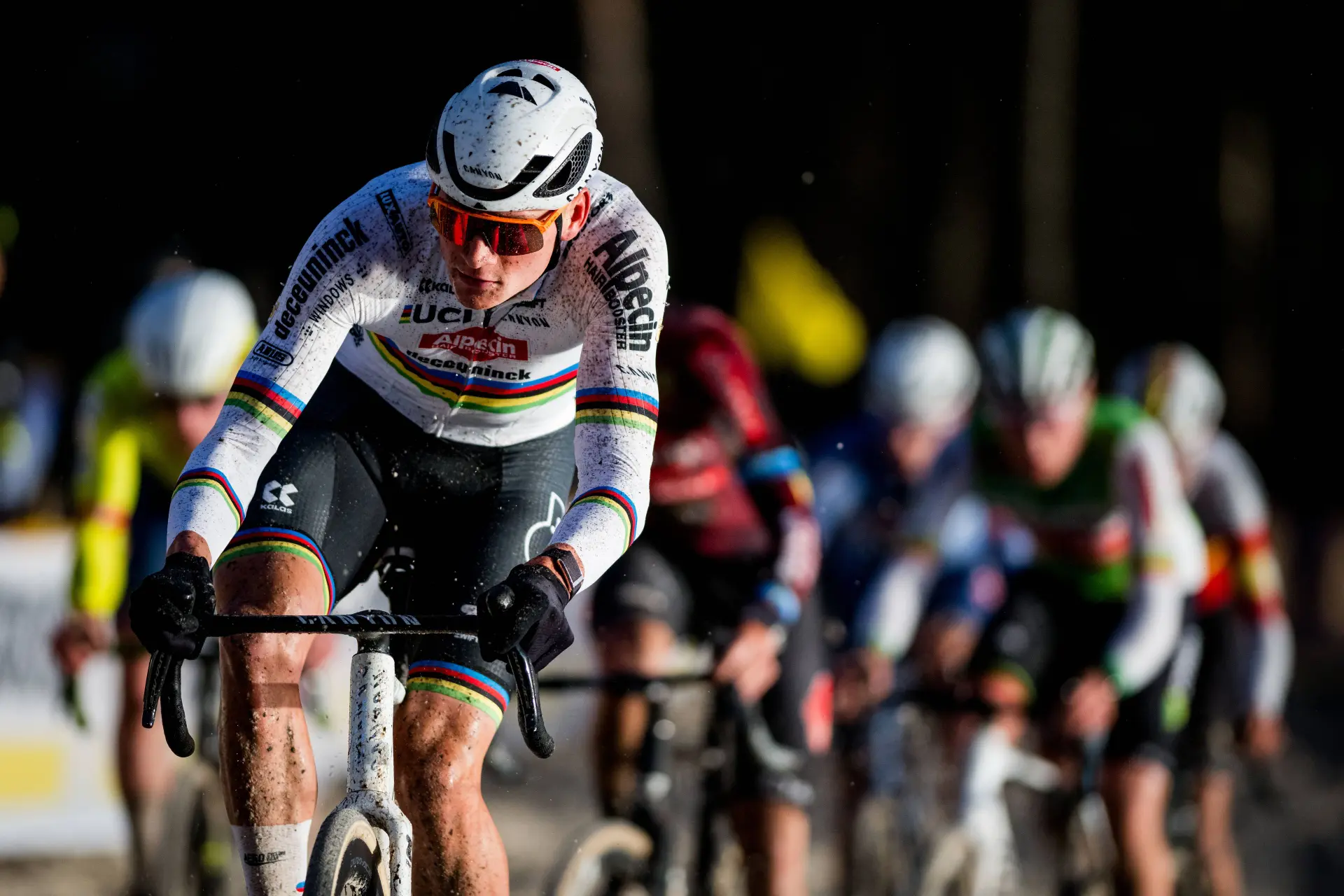
As for van der Poel, the best argument that his winter
approach is fair is the one he delivers every time the tape drops. Nobody rides
a course the way he does: lighter over the front wheel, calmer in chaos,
savagely economical on the accelerations that matter. He’s built a career on
peaking perfectly, and cyclocross has benefited from those peaks more than it
has suffered from his absences.
In truth, Van der Poel is most likely the greatest cross
rider we will ever see. He is likeable too, and the vast majority of fans
(myself included) are in awe of him on a cross. No doubt, it is brutal for the
other riders who 99% of the time will never beat him. But just like boxing fans
watching Floyd Mayweather, or F1 fans watching Max Verstappen, sometimes you
have to just accept you are watching an all time great.
So, is it unsportsmanlike for van der Poel and Van Aert to
drop in, dominate, and duck out? I say no. It’s the honest byproduct of a
calendar that still straddles two ecosystems, road and cross, without perfectly
aligning their incentives. The officials’ job is to keep tuning the series so
that consistency is rewarded and star power is welcomed. The riders’ job is to
race the races that matter to them, as hard as they can, as often as their bodies
allow. The fans’ job is the easiest of all: keep showing up, because when those
two names are on the start sheet, you’re guaranteed a masterclass.

Fin MajorCycling Journalist
Fin Major is a UK-based writer at CyclingUpToDate and has been part of the team since 2024. He is the site’s main writer for FAQs and evergreen explainers and has written around 2,000 pieces for the platform. Alongside this work, he focuses on in-depth analysis and covers the biggest races on the calendar, including the Tour de France, the Giro d’Italia, and La Vuelta a España, providing clear context around performance trends, tactics, and key storylines.
In his reporting, Fin uses reputable data sources such as ProCyclingStats for results, statistics, and historical context. He places strong emphasis on careful sourcing, editorial accuracy, and updating articles promptly when new, verified information becomes available. Outside of writing, Fin is an active cyclist, which supports his practical understanding of the sport and its demands.
claps 2visitors 2
Just in

Popular news
Latest comments
- He didn't even try to sprint all outvappaxbipmv18-10-2026
- Campenaerts looked like a rolling pumpkin with that all orange leaders skinsuit !frieders318-10-2026
- He can take his dumb a$$ politics somehwere else !frieders318-10-2026
- good to have her back. fingers crossed she‘ll be able to stay!Ketterechts17-10-2026
- A tenner and he wins the Tour next year, too 😂anonymouscyclist17-10-2026
- the answer is either stick to classics or GTs but not bothabstractengineer17-10-2026
- the exodus already stared with Ciccone. Already they were struggling with two sprinters, now there are three. Also Ganna will demand leadership. Gall is the most proven GC, Ayuso has the most potential. GC leadership for everybody will be impossible. Literally a UAE style mess without pogi.abstractengineer17-10-2026
- I raced as an amateur for 12 years, including six years on my country’s national road cycling team. I secured two national titles and competed in three World Championships plus more than 15 international stage races. At 23, we travelled to Italy for a training camp—or so I assumed. On a rest day, we watched a presentation about adopting a more “professional” training approach. It was crystal clear what “professional” meant. That moment first exposed me to this dilemma. After returning from Italy, I left cycling—at least at the competitive level I had known. Over the following two years, the whole team was caught doping. I hold that everyone is innocent until proven guilty. In my view, current stakeholders operate on a different scale, and the sums involved are vast. I am unsure whether any doping would ever be revealed. I try to stay positive and enjoy the show. My 2c.
 vannpelt17-10-2026
 - Fiver he wins 🤣
 leedorney17-10-2026
 - “…measures to reduce speeds.” Might as well shorten the race course to just 50km as well? ASO generates at minimum €300m a year and 30- 40% profit. Maybe stop being greedy and spend more of the profit to protect the riders instead.b3tlla17-10-2026
Loading
8 Comments