“I’d stopped finding any joy. I lost myself as a person” – Fem van Empel open and honest on mental struggles that marred her 3rd Cyclocross World Championship win
Cyclocross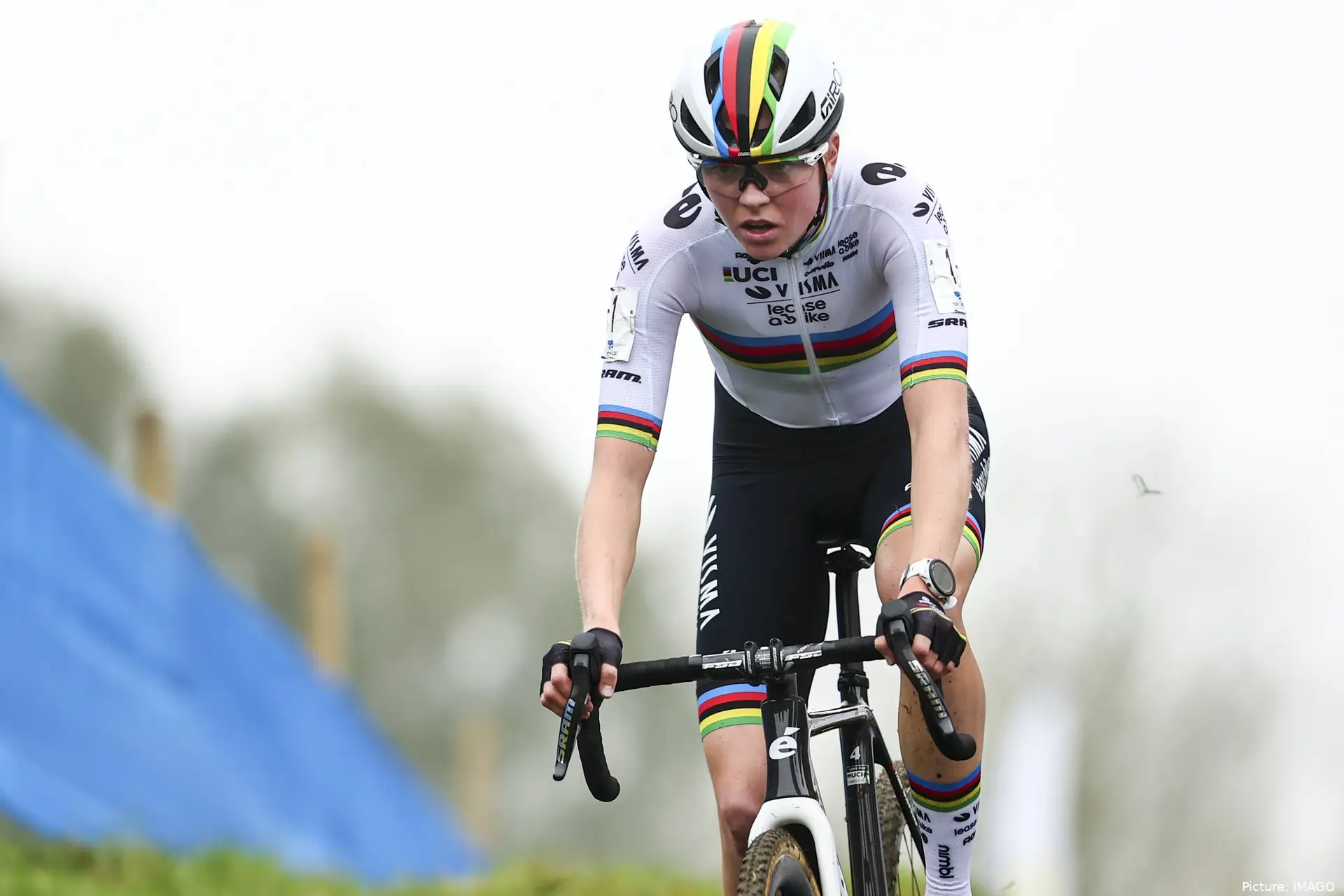
Barely six weeks after clinching her third successive cyclocross world title, Fem van Empel walked away from cycling. In March 2025, the now-23-year-old quietly abandoned the Trofeo Binda and then announced an indefinite break, just as the Classics season was beginning. For the most dominant rider in women’s cyclocross, it was a startling move – but, as she has now reflected in conversation with Het Nieuwsblad, it had been a long time coming.
“After that third world title I actually never enjoyed it,” Van Empel admitted. “People didn’t know that I’d stopped finding any joy in the sport. Through my own perfectionism, I lost myself as a person.”
Since bursting to the top of cyclocross in 2022, Van Empel has rewritten the sport’s hierarchy. Three consecutive world titles, three European crowns and close to 60 wins in barely three seasons have confirmed her as the most dominant rider of her generation. Yet behind that success lay a growing sense of emptiness. “Because of my perfectionism I focused only on what I was good at,” she explained. “I went into every detail to make things as perfect as possible – training, nutrition, rest. If I hadn’t done one of those things perfectly, I questioned whether I was ready. Looking back, that’s nonsense. I was more an athlete than a human being.”
When she triumphed in Hoogerheide in 2023, it should have been the crowning moment of a rapid rise. Instead, it marked the start of an identity crisis. “A huge weight fell off my shoulders,” she recalled. “But the next day I thought: and now what? I kept winning, and after every victory it was Monday again and another new goal arrived.”
Rediscovering balance
By early spring this year, Van Empel realised something had to change. She met with her team, Team Visma | Lease a Bike, and admitted she could no longer continue as before. Then, for perhaps the first time in years, she let herself relax.
“It felt good to have an ice cream after my meeting with the team. I’d never allowed myself that before,” she said. “In that period I let go of cycling completely. I started running, took long walks with my uncle – sometimes 30 kilometres. I just did whatever I felt like doing.”
The time away gave her space to reconnect with life outside the sport. She baked, gardened and spoke with other athletes who had faced similar struggles. “People around me soon noticed I’d become more open, more social,” she added. “It made me realise I had to stay true to myself. I began asking what I actually enjoy doing.”

Van Empel has been the dominant force in women's cyclocross over recent years
Learning to let go
As she returns to cyclocross for the 2025/26 winter, Van Empel does so with a different mindset. “It’s varied, challenging and has a family feel. That’s the world where I feel most at home,” she said of the mud-soaked discipline that first made her a star. “I don’t need to find out what I can achieve on the road – not right now.”
She has also learned to handle external pressure more lightly. “You do it for yourself and no one else,” she explains. “Giving an opinion is the easiest thing in the world, but I don’t think most people realise how much impact that can have on a young athlete. When you win a world title, you get hundreds of congratulations, but the few who say you didn’t deserve it – those are the comments that stay with you.”
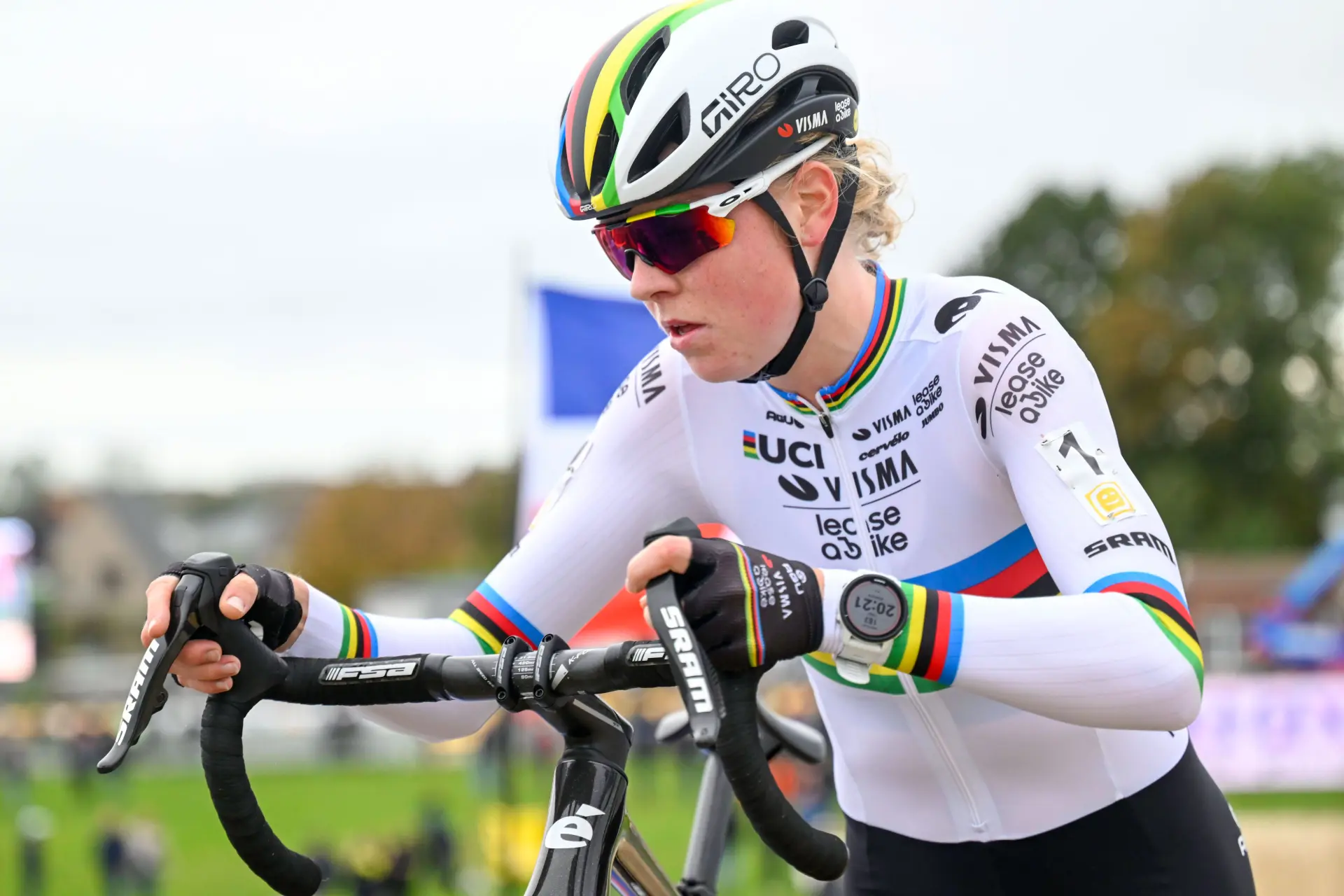
Still, she remains fiercely competitive. After her return race in Ruddervoorde, Van Empel will line up at the Nacht van Woerden and Heerderstrand, with her eyes ultimately on Hulst in February, where she aims to defend her rainbow jersey for a fourth straight time. “If I’d stopped now, I’d have had a beautiful career,” she reflected. “But I’m not done yet. I’m going to enjoy this winter in the rainbow bands – something I probably haven’t done enough of in the past few years. I’m still competitive enough to always want to win, but when the race is done, I also want to be able to relax.”
A champion redefined
Van Empel’s openness offers a rare glimpse into the mental toll of sustained success. Her journey from perfectionism and pressure to balance and self-acceptance mirrors a broader conversation within elite sport – one that reminds even the most dominant athletes that joy, not just victory, defines a career.
As the 2025/26 cyclocross season begins, the reigning world champion seems ready to rediscover what first drew her into the mud: freedom, playfulness and pure love of the bike. And should sound like a loud warning to all of those who hope to challenge her dominance this winter.
Kieran WoodDeputy Editor-in-Chief
Kieran Wood is a sports journalist based in Wales and has been active in journalism since 2022. He regularly contributes to DartsNews.com and CyclingUpToDate.com, where he covers professional cycling and darts. In cycling, his work includes liveblogs from major races, including the Tour de France, the Giro d’Italia, and La Vuelta a España, alongside race reports and analysis. He has also conducted interviews with professional riders.
His reporting spans the full racing calendar, from one-day classics to stage races, with a focus on accurate, real-time coverage and clear contextual analysis. For statistics, results, and historical context, he regularly uses resources such as ProCyclingStats. To support reporting on rider activity and training context where relevant, he also references Strava.
In his work, Kieran places strong emphasis on careful sourcing, editorial accuracy, and updating articles as new, verified information becomes available.
claps 2visitors 2
Just in
Popular news
Latest comments
- Paul Kimmage will be rubbing his hands in glee. Another page on the sports section lol🫣🫣🫣🫣🫣🫣paultryan200228-11-2026
- Cycling is so much harder now. Lots if not most of the peleton are well versed in nutrition and training methods now. The days of Paul Kimmage when the peleton were rather chunky or over weight and not really professional compared to todays riders is long gone. Better bikes equipment and training methods. Sorry Paul as much as i enjoyed your book you did not really come across as a professional rider at all just a good amateur on a mediocre French team at best.paultryan200228-11-2026
- While none of us know if they are doping, I prefer to believe they aren't until it comes out, if it ever does. I think it's a disservice to the top riders who constantly have to defend themselves.awp28-11-2026
- I'm surprised because he seemed pretty happy with things, at least a few years ago. He was saying the racing was believable and the teams were more open than ever.megasmacky28-11-2026
- When?
 Rafionain-Glas27-11-2026
- No need to apologize. You make excellent points!RidesHills27-11-2026
- The cycling world typically doesn't like ambition, and likes deference to team leadership deciding what to race and the team for one's win. It's uncouth, in a way, to be so blunt about desires. But I get it. He wants to win, and claims to be good enough to do so. Of course, there's that middle ground, why not become a second option for Mads? Why do I like this idea? To pick but one race each, one of them has attacked repeatedly in Lombardia, the other has attacked repeatedly in Flanders, and both are great to watch when they do it. One of them is a past world champion, and the other could have been had he not been reeled back in (while the next attack from the US squad wasn't reeled in, and there you go). Meaning: this could be fun, if it happens. Or it could be a disaster, two egos not making space. Who knows, until it happens.RidesHills27-11-2026
- Merckx raced against plumbers and pipefitters. There is no comparison, had Tadej and Jonas been racing in Merckxs' day he would have never won a grand tour.awp27-11-2026
- Is Paul writing another book? He must be..awp27-11-2026
- I don't know if they're doping, and I'm not sure I care. I almost stopped watching the sport in the early 2000's because I couldn't enjoy a race without wondering if the performances were real. So I decided I liked watching bike races more than I cared about the doping. There is, however, reason to believe that Pogacar is being honest. Besides the insane speeds today, I don't see any of the usual evidence of a heavily doped peloton that we saw in the 90's and 2000's. We're not seeing unknown riders suddenly winning big races. We're not seeing ridiculous sights like George Hincapie winning the queen stage at the 2005 Tour. We're not seeing largely Classics riders suddenly turning into the greatest GT rider of his generation(cough, Armstrong, cough). One of the problems with EPO especially was it levelled up the peloton. These days, top riders start attacking with 80kms or more left, because they know only the very best will be able to follow. If you attacked with 80 k's left in 2002, 150 riders would follow, and the DS would be screaming into your ear that you wasted energy. So we saw hard Monuments with intact pelotons 15 kms from the finish. I used to bitterly joke that LBL was a 240 km training ride with a 15 km race tacked onto the end. Roleurs were suddenly climbers, and on and on. Now the best riders win, either alone or in a small group of elite riders, just like it was before EPO. As far as the speeds go, even though we all scoff at the claims of tech and training improvements, that is true. Training programs even from half a decade ago are badly outdated. The riders are far, far lighter than they've ever been. The big thing though, and I don't see this spoken about at all, is the riders are arriving at races perfectly prepped and fresh. With the exception of the rare top rider going for the double, we're not seeing riders arriving at the Tour with the Giro and the Dauphine and the Tour de Suisse in their legs. Pogacar did the classics and Romandie, and then he buggered off for altitude training. Evenepoel spent over two months at altitude, arriving perfectly prepared and fresh. If you go back to pre-EPO days, look at LeMond in '86. He started racing in February, did all the classics including Roubaix, rode the Giro and finished 3rd, did the Dauphine and Tour de Suisse(I think), then won the Tour, did a bunch of crits, raced Worlds, and the old Coors Classic. All of those were raced hard and raced to win. There were no tune-ups, nothing, just hard racing for almost 9 months. Do you think he was ever fresh? Now they can all target and prep for individual races or race blocks. That has never happened in the history of the sport, and people are surprised the guys are crazy fast? I don't know if they're doping, maybe I'm just gullible or delusional. I doubt the sport is completely clean. But if a midlevel rider micro doses a little EPO so he can do his job, and if small-scale doping isn't really affecting the race results or the racing, then I'm fine with it. Sorry for the long comment.megasmacky27-11-2026
Loading
Write a comment