"We’re just as expensive as F1, but without any revenue": Vaughters worried by cycling's out-dated financial model
CyclingFriday, 19 December 2025 at 03:30
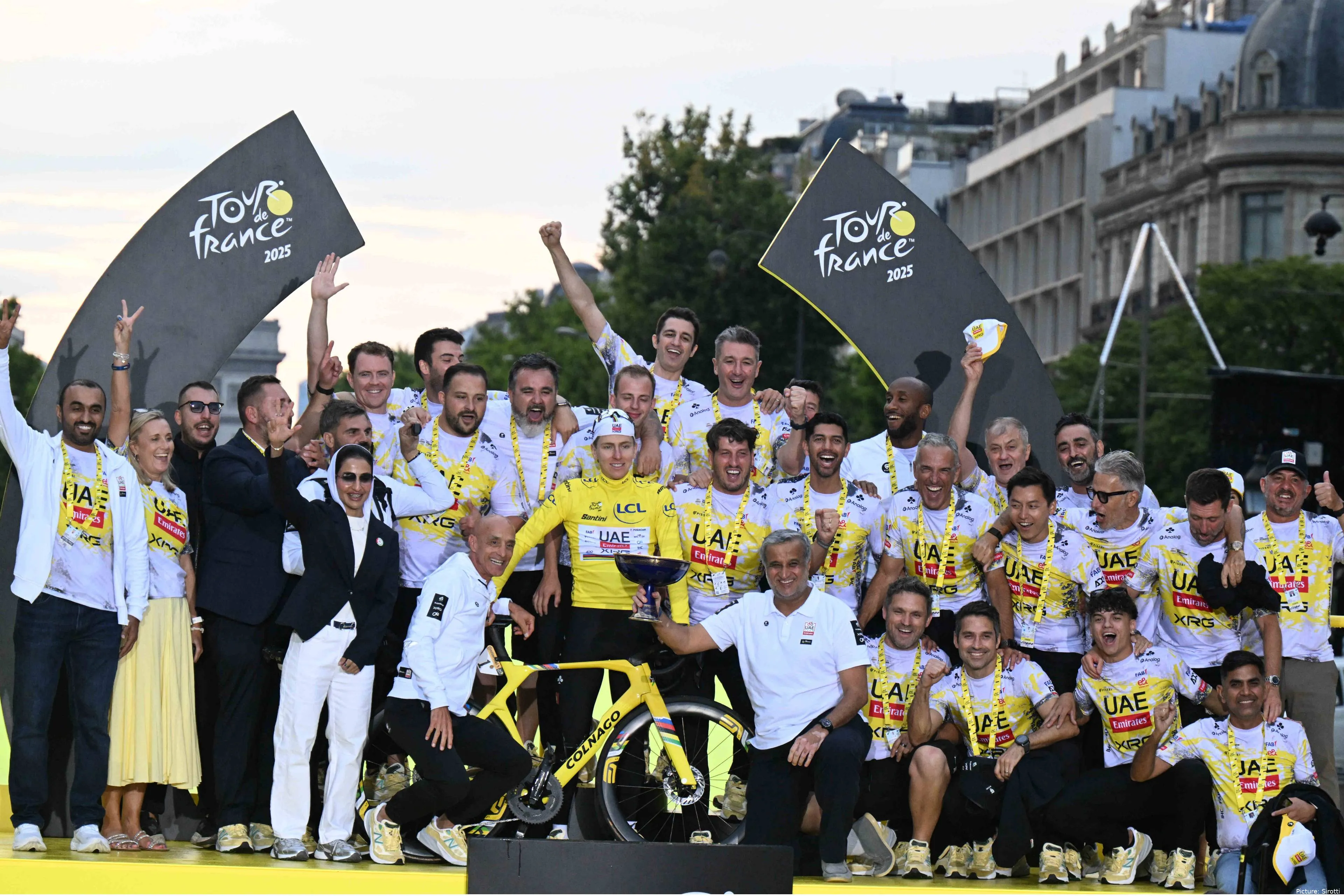
How long can cycling carry on with the way it's financial model works at the moment? That's a question many sponsors ask themselves before they politely refuse a team's inquiry regarding a future partnership. No wonder the Pro-division has shrunk from 27 teams in 2018 to 16 in 2026. But for the average WorldTour team, it's just as much a battle for survival year in, year out. And UCI? Doesn't seem to be bothered by the turn of events.
"The teams are operating on these flimsy three-year licenses that are actually reviewed every year," EF Education-EasyPost owner Jonathan Vaughters says on the Domestique Hotseat podcast. "So it’s effectively a one-year license really."
"Certainly the biggest cost increase in cycling is the riders' salaries and then all the peripheral, you know, sports science and whatnot that support that goes around that. A team like UAE goes 'we will spend as much as we need to spend to win everything'. Well, that’s just going to bleed out into the rest of the marketplace. That’s going to inflate everything."
And other teams seem to have decided to fight fire with even more fire. "Red Bull has the same philosophy right now 'we’ll just spend until we get there,'" he says. The knock-on effect is predictable and punishing for everyone else. "It raises the cost of sponsoring a winning team, you know, a team that can win big things."
Read also
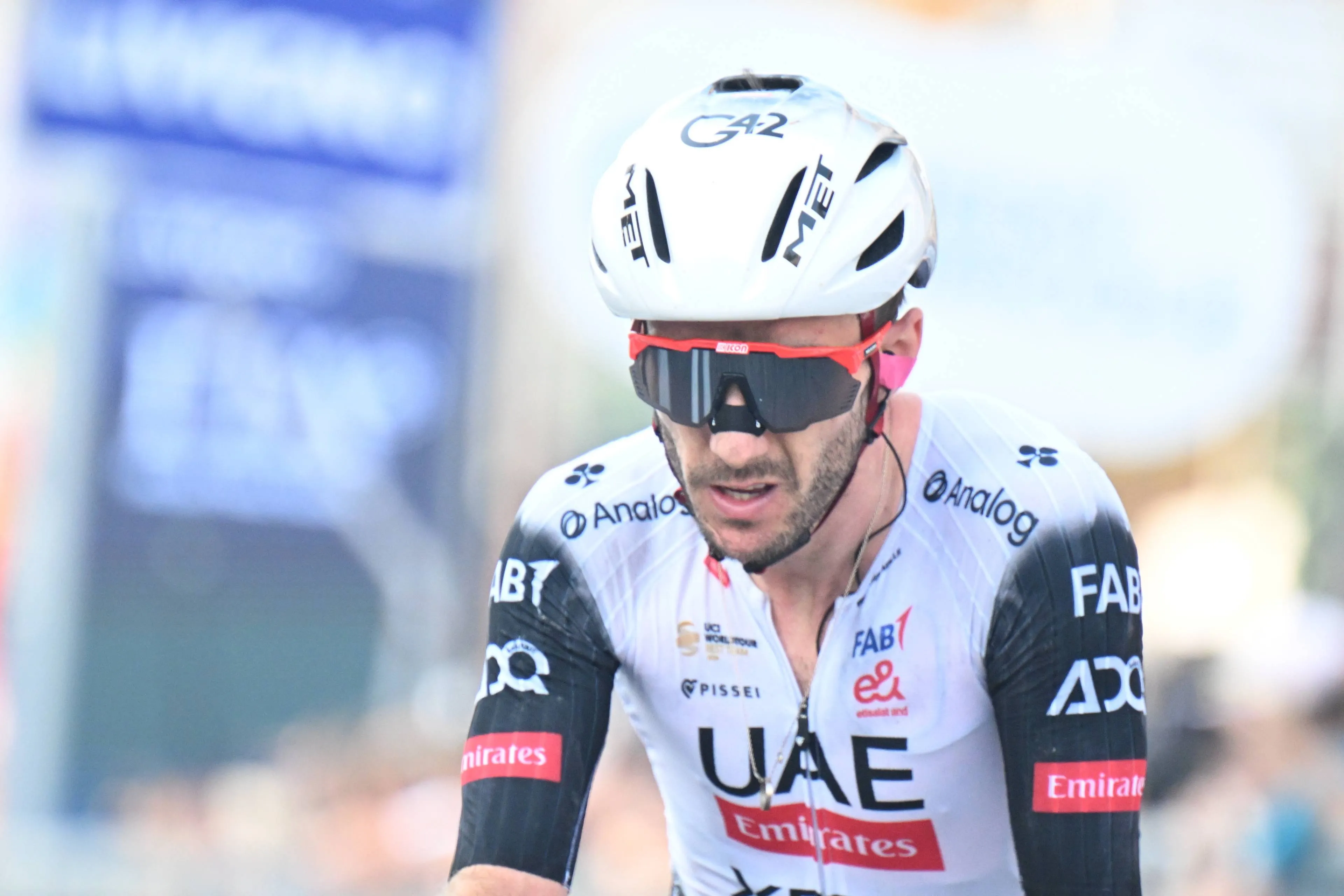
As expensive as F1 or soccer
The sums of money involved in the transfers within the upper league right now are quite worrying Vaughters. His team EF Education-EasyPost never belonged to the richest formations in the peloton. Now, the gap is growing even further and Vaughters has to worry that one day, his riders' agents will simply inform him that a contract has been voided for a sum of money.
But what really gets Vaughters going in the morning is the severely out-dated financial system of cycling. Right now, the entire model runs on a whim, a decision of a sponsor or two to come together and support a certain team's project. Then they invest money they are unlikely to ever see return. That's because race organizers such as ASO monopolize all the profit for themselves.
"We’re just as expensive as F1. We’re just as expensive as European football, or a lot of American sports," Vaughters says. In those sports, he argues, sponsorship is not asked to carry the whole structure. "Those sports are operating on a principle that the core revenue is the media rights revenue. And then additionally merchandising and ticket sales. Sponsorship is just a frosting on the cake, right?"

Cycling is a sinking ship
Cycling, by contrast, is trying to float without a hull. "We’re trying to float the entire ship on just sponsorship because these other sources of revenue don’t exist," he says. "We don’t have collective merchandising. The teams do not receive anything from media rights."
If that sounds like something that should be fixable, Vaughters does not share the optimism. "That’s tricky because ASO owns essentially all the media rights, or at least the valuable ones," he says. And this stand-off between teams and the likes of ASO lasts for three decades now.

The 2025 Tour de France jersey winners: Jonathan Milan (green), Tadej Pogacar (yellow & polka dot) and Florian Lipowitz (white)
How to get out of this vicious circle?
Vaughters proposes a solution or two to make cycling more sustainable. The first is creating images for teams that people will be able to relate to. Right now, some teams can change 5+ title sponsors within five season, destroying any sort of identity:
"Create permanent franchises so that people will invest as opposed to donate and keep the cost a little bit more under control so that cycling is an attractive place that generates value for a sponsor."
And then a way to restrict the virtually unlimited financial options of some sponsors, creating an even playing field. "We can call it all kinds of things; salary caps or budget caps,"
he says.
One such effort was already in motion since 2023 - the One Cycling project. However its proposal was thrown out of the window by UCI. Vaughters has his own opinion about that: "The UCI actually pushes against the commercial interests of the teams."
Read also

claps 1visitors 1
Just in
Popular news

Latest comments
- Mistermaumau, you are obnoxious beyond belief, grow up.
 Senna196001-03-2026
 - “ If they keep up this pace, I'll fall asleep.”. I think it’s time for that long nap MOU and give ur keyboard a rest. 👍b3tlla01-03-2026
- You'll find the listing in www.cyclingranking.com/riders/overall. It says "Riders score points based on their results in the races. These points depend on the (historic) importance of the race, the competition during the race and the toughness of the course." I volunteered this info in order to eliminate subjectivity in the discussion. Some MVDP fans say he's "great".. others say he's not. But I guess fans will always disagree on most anything. It depends on which side of the fence you're on.FredMan01-03-2026
- I don't see this result as "monstrous". Yes he's ahead a bit, but there were 20 riders within 50 seconds, many of whom we've hardly ever heard of. Most big dogs weren't there. But congratulations anyway.Ride197401-03-2026
- Interesting... Bock or Finn to be the leader for the Baby Giro? (from what we can tell, Lorenzo Finn has not started the season in great shape)
 Rafionain-Glas28-02-2026
 - I think the Tudor rider (someone might think of interviewing him) can count himself very lucky, more than half the other riders would have ended up riding (either through lack of capability of an alternative or through a look out for number 1 attitude) straight over his neck. In line with new Strade marketing, maybe they should rename this the Mathieuberg?Mistermaumau28-02-2026
- Del Toro has 15 years to seek results, Horners’ was a last gasp attempt to become relevant just like our slickheaded friend from UAEMistermaumau28-02-2026
- What about doing your own research? Emilia San Sebastian 2x Euro RR WC RR Not many tour matchups exist and until recently those weren’t Remco’s order of the day, it remains to be seen how motivated he stays to convert but considering he had zero cycling background he’d be wise to take time to build a base of volume to catch up those bred on bikes.Mistermaumau28-02-2026
- LOL.....you beat me to this ....you hit the nail on the head.Zone0Rider28-02-2026
- I said TOO! Don’t miss the few occasions where I grant you your feelings ;-) I’m humble too, when I’m silent, so the smart thing to do is to avoid provoking me :-)Mistermaumau28-02-2026
Loading
1 Comments