"We have never used it to enhance performance" — INEOS forced to admit CO usage as report claims riders had to sign consent forms during 2025 training camp
Cycling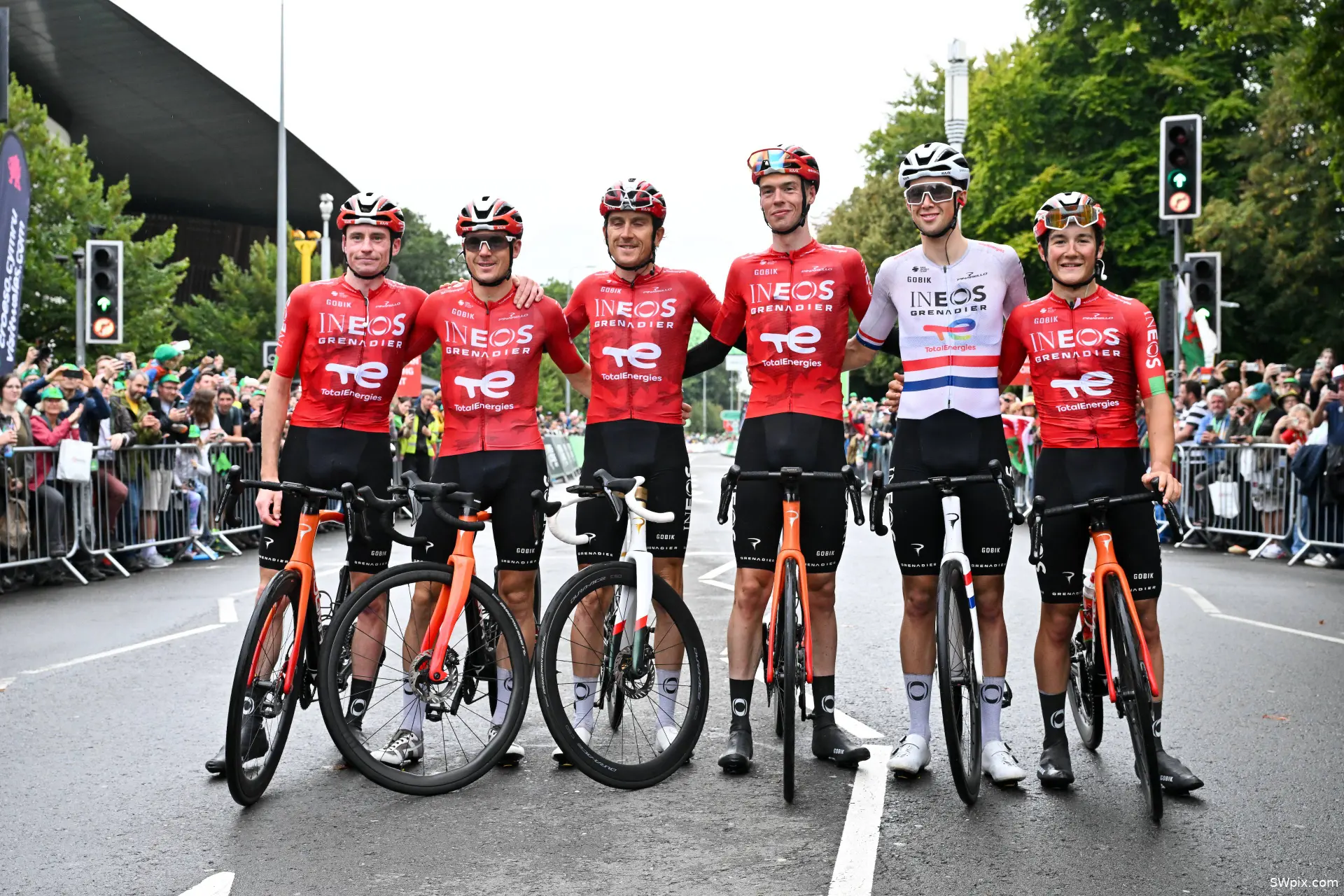
INEOS Grenadiers have confirmed the use of carbon monoxide (CO) rebreathers during a 2025 training camp, following a report by The Times that claimed riders had been asked to sign consent forms before undergoing the now-controversial testing method.
The British team had initially denied employing CO rebreathers in 2024, including during the Tour de France, after allegations surfaced linking several WorldTour outfits — including UAE Team Emirates, Team Visma | Lease a Bike and Israel-Premier Tech — to the use of the performance-monitoring technology. However, documents obtained by The Times show that INEOS did conduct carbon monoxide rebreathing tests in Room 101 of the Syncrosfera Fitness and Health Hotel in eastern Spain, just days before new anti-doping rules came into effect.
The Times wrote in their report: “It was only when confronted with The Times’s knowledge of the testing in Spain, and the fact that the team’s director of communications had denied conducting tests during the 2024 Tour de France, that INEOS confirmed their use of carbon monoxide.”
"We have never used it to enhance performance"
In a statement issued to Road.cc, the team maintained that its use of the method was strictly diagnostic: “The INEOS Grenadiers did not use this method in the 2024 racing season or seasons before that – for the avoidance of doubt, that includes the 2024 Tour de France."
"The team has since used this as a diagnostic tool – this has only ever been used as a measurement method to check how individual riders respond to altitude (this can be simulated or natural altitude) as well as heat stress and training," INEOS continued. "We have never used it to enhance performance and have always adhered to UCI rules and regulations on this issue.”

INEOS Grenadiers team poses during a team presentation at the 2025 Tour de France
Why is CO2 rebreathing controversial?
The testing, according to The Times, involved seven riders — some reportedly teenagers — inhaling a mixture of oxygen and carbon monoxide for five to six minutes, followed by a short rest and then a second test. While experts cited in the report noted that repeated testing in one session can be standard scientific practice to establish an average value, the procedure's timing raised eyebrows.
The second round of tests took place on February 1 — the very same day the World Anti-Doping Agency (WADA) announced new measures restricting carbon monoxide rebreather use. From February 10, the UCI introduced a rule limiting CO inhalation to a single test per two-week period, with usage only permitted under strict medical supervision for diagnostic purposes.
The report also states that the tests were overseen by a professor from the Inland University in Lillehammer, Norway, who has since joined Q36.5, another UCI-registered team. Sources told The Times that not all participating riders had been involved in altitude training at the time, and one reportedly experienced nausea and breathing difficulties during the back-to-back sessions.
INEOS’ acknowledgement comes amid a wider reckoning in professional cycling over the ethics, legality and potential performance-enhancing effects of carbon monoxide rebreathing, a technique originally developed in the 1980s to measure total haemoglobin mass (Hb-mass). While long considered a valid diagnostic tool, concerns have emerged over whether repeated usage could stimulate erythropoiesis — the production of red blood cells — thus mimicking the physiological adaptations of altitude training.
WADA has now included non-diagnostic use of carbon monoxide inhalation on its 2026 Prohibited Methods list, citing evidence that the method can induce hypoxia and increase erythropoietin production under certain conditions. The UCI’s ban already covers repeated use, and mandates medical oversight for all diagnostic applications.

Kieran WoodDeputy Editor-in-Chief
Kieran Wood is a sports journalist based in Wales and has been active in journalism since 2022. He regularly contributes to DartsNews.com and CyclingUpToDate.com, where he covers professional cycling and darts. In cycling, his work includes liveblogs from major races, including the Tour de France, the Giro d’Italia, and La Vuelta a España, alongside race reports and analysis. He has also conducted interviews with professional riders.
His reporting spans the full racing calendar, from one-day classics to stage races, with a focus on accurate, real-time coverage and clear contextual analysis. For statistics, results, and historical context, he regularly uses resources such as ProCyclingStats. To support reporting on rider activity and training context where relevant, he also references Strava.
In his work, Kieran places strong emphasis on careful sourcing, editorial accuracy, and updating articles as new, verified information becomes available.
claps 4visitors 3
Just in


Popular news
Latest comments
- TT But he won by a minute so he could have cut down on some of it
 Rafionain-Glas13-10-2026
 - weight is measurable. power is measurable. So why didn't he prepare that way from the TDF if he wanted to beat Pogi and after Pogi wasn't going to be there, to win.abstractengineer13-10-2026
- I hope Thibau and Tibor don't do the sameRafionain-Glas13-10-2026
- Seixas is exactly what I would like Pogi to be mentally and in his statements. Both come across as shy and who don't talk much but with Seixas, you can see that he enjoys success, that it boosts his ego, unlike Pogačar who seems to feel increasingly uncomfortable the more he wins. He's won so many times, people are saying he's boring. The french media hate him for winning so much, the french cycling fans are booing him... etc. etc. But remember one thing, Seixas will never physically reach Pogi's level. He's excellent, but he isn't at that level nor will ever be. His talking to the media, his relationship with people is already at a high level.PogiSloFans13-10-2026
- Paul Seixas is now the second-best rider in the world.megasmacky13-10-2026
- When will they start dropping Pogi? Oh yeah, when Pogi reaches 40+ years, that's when young cyclists will start dropping him. But until then... eat your hearts out and cry. Pogi will remain the G.O.A.T. for years to come. Capish?PogiSloFans13-10-2026
- I figure he would have found out how to outsprint Paul and take the win, maybe. He's 28 now but I would say he's right at the peak of his powers. It was great race though, Paul showed me something different about himself.awp13-10-2026
- Slowly, very slowly... 5-7 yrs. ;)MajorPayne13-10-2026
- Up to this point: "It is just not yet at the level of Vingegaard and Pogacar." First Jonas, and then level of Tadej. Period!MajorPayne13-10-2026
- The sport has long had a divide between the more diesel-like riders and the more explosive riders. Where does Pogačar fit? His explosive attacks are followed by a high speed diesel climb and he's rarely been caught in the past 5 years (people can name the moments, it's so rare). Seixas is young and we have no idea where his body will end up on this spectrum (just like we didn't with Pogačar when he was 20 and being a diesel up the Vuelta mountains of 2019). Speculation is fun, being a fan while it unfolds is going to be more fun.RidesHills13-10-2026
Loading

🔺 EXCLUSIVE: Seasoned professionals and teenagers from Sir Jim Ratcliffe’s Ineos team underwent controversial rebreathing tests of deadly carbon monoxide in room 101 of a Spanish hotel ✍️ @Lawton_Times
Write a comment