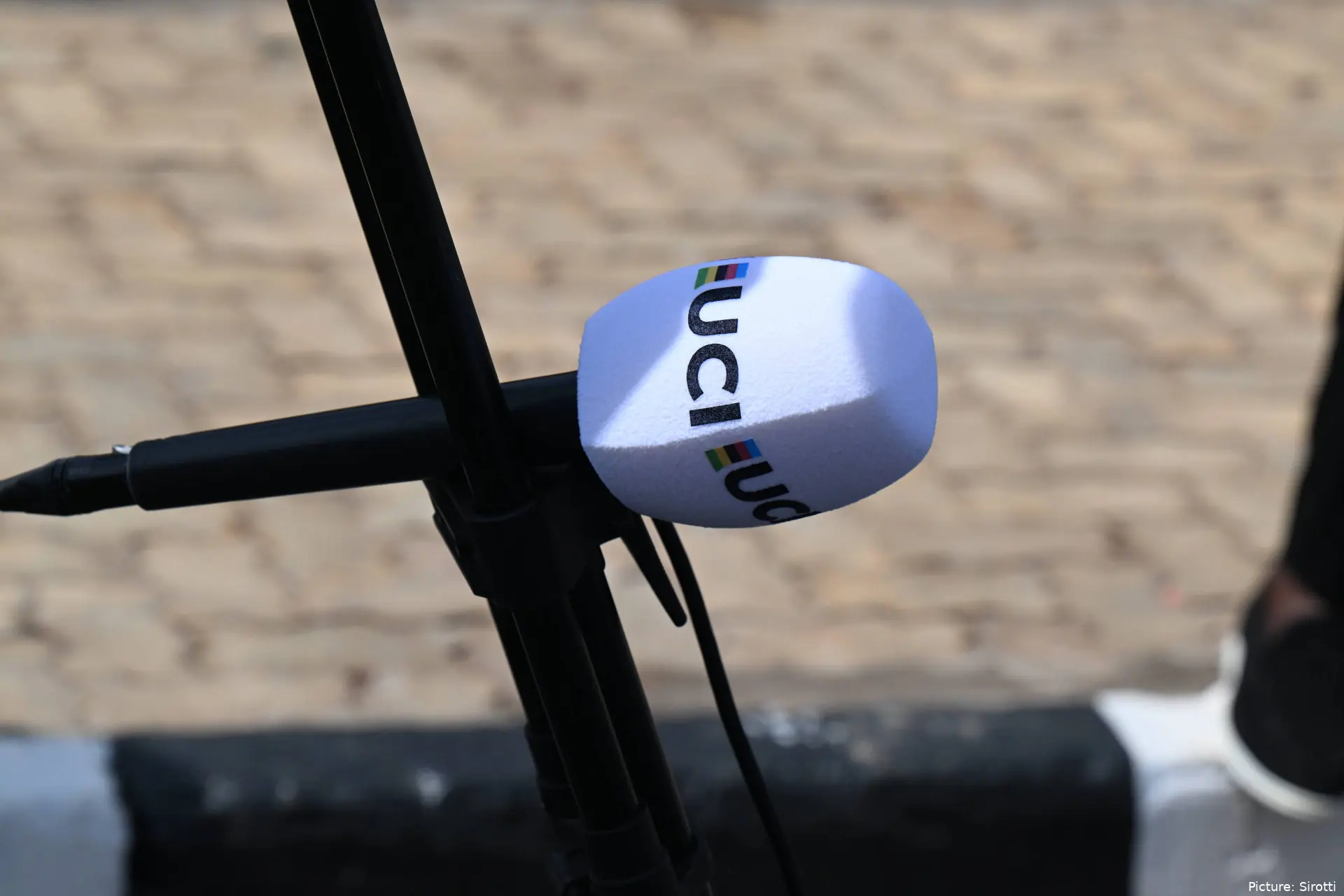
The World Anti-Doping Agency (WADA) has officially added carbon monoxide (CO) rebreathing to its Prohibited List, categorizing it as a performance-enhancing method under section M1.4 of the 2026 code. However, the move stops short of a full ban — the use of CO for diagnostic purposes will still be permitted.
WADA’s update follows growing scrutiny over the use of carbon monoxide within professional cycling, where a handful of World Tour teams were linked to the practice during the 2024 season. While no evidence of direct performance enhancement was found at the time, the potential for CO to stimulate erythropoiesis — the production of red blood cells — has raised concerns about its manipulation in elite sport.
“The non-diagnostic use of carbon monoxide (CO) was added to the Prohibited Methods as a new section, M1.4,” WADA stated in its announcement. “It can increase erythropoiesis under certain conditions.”
CO inhalation can simulate the effects of altitude training by inducing a state of mild hypoxia — a lack of oxygen — which in turn prompts the body to produce more oxygen-carrying red blood cells. That physiological response is highly sought after in endurance sports like cycling, where oxygen transport can directly influence performance.
Importantly, WADA clarified that diagnostic applications remain permitted, specifically when used to assess total haemoglobin mass or pulmonary diffusion capacity. These tests have been employed by teams to measure blood volume and track physiological adaptations to altitude training, and are considered legitimate medical procedures when done appropriately. “The current wording was chosen to differentiate between illicit use and the intake resulting from natural combustion processes (e.g. smoking), the environment (e.g. exhaust gases), or diagnostic procedures,” WADA said.
The UCI, had previously urged WADA to take a clear position: “The UCI clearly asks teams and riders not to use repeated CO inhalation. Only the medical use of a single inhalation of CO in a controlled medical environment could be acceptable,” it stated in a 2024 press release.
While the use of CO rebreathers for performance purposes now faces an outright ban from 2026 onward, the nuanced policy approach reflects the complex dual role of CO in both medical diagnostics and potential doping practices. For teams, the challenge will now lie in staying on the right side of that line.
📢 The 2026 List of Prohibited Substances and Methods is here.
— WADA (@wada_ama) September 24, 2025
Approved by our Executive Committee, the List will take effect on 1 January 2026.
Discover the main modifications for 2026 now ✅ https://t.co/xpVjcnwqRa pic.twitter.com/Flo9HUDM5k

Kieran WoodDeputy Editor-in-Chief
Kieran Wood is a sports journalist based in Wales and has been active in journalism since 2022. He regularly contributes to DartsNews.com and CyclingUpToDate.com, where he covers professional cycling and darts. In cycling, his work includes liveblogs from major races, including the Tour de France, the Giro d’Italia, and La Vuelta a España, alongside race reports and analysis. He has also conducted interviews with professional riders.
His reporting spans the full racing calendar, from one-day classics to stage races, with a focus on accurate, real-time coverage and clear contextual analysis. For statistics, results, and historical context, he regularly uses resources such as ProCyclingStats. To support reporting on rider activity and training context where relevant, he also references Strava.
In his work, Kieran places strong emphasis on careful sourcing, editorial accuracy, and updating articles as new, verified information becomes available.
claps 0visitors 0
Just in


Popular news
Latest comments
- Predictable, sure! But boring??? OMG! Was Mike Tyson predictable and boring in his prime? Air Jordan? Schumacher or Senna? OMG!!!MajorPayne19-10-2026
- how it is "We’ve taken another big step forward for next year" he just lost in lombardia to a 20 year old, and two 30+ year olds. and not even top 10 for WCRR.abstractengineer19-10-2026
- This is similar to Lebron. first he said i need to consult my family , my daughter, need respectable money blah blah blah and then dont care about family , dont care about money, only onion rings, am off to Philly, very very far from family. Off season should be with family more, no?abstractengineer19-10-2026
- I hope he comes back strong for a proper battle with Tadejmij19-10-2026
- congrats to a great career and good retirement.mij19-10-2026
- Any artificial product should be reported.Any team that doesn't should be stripped of wins and fined.I know that this level of transparency does not and will never exist.All anyone can do is continue to test riders on a regular and surprise basis.If the test comes back clean then all any of us can assume is the rider is clean.
 Brucegel19-10-2026
 - Also, it's supposed to be hard to gain an advantage from drafting off Remco because he is so aero.Hills3319-10-2026
- How would stats back it up? You realise tactics involved could mean Vine saved his legs for a faster finish? Some riders can choose to go all out and fade later in the ride, others can hold steady state the whole way, and others can have a reserved start and power up later in the ride. You can't judge just by the stats unless you have power data to be able to prove Vine is riding faster even though he is putting out the same or less power (suggesting drafting). I'm sure the stats prove that Vine didn't cheat because UCI would monitor the stats to make sure this exact scenario doesn't happen (and disqualify them for drafting if the stats proved it).Pogboom19-10-2026
- Only one person would say such a thing here. Sorry to burst your bubble but I’m afraid that window of opportunity has now closed. You can beat some of the people all of the time and all of the people some of the time but you can’t beat all of the people all of the time.Jumpyjohn19-10-2026
- Both prizes are actually pathetic, almost amateur like, not even covering the cost of participatingJumpyjohn19-10-2026
Loading
Write a comment