UCI announces major regulatory overhaul: Front jersey pockets banned and bike computer sizes limited
CyclingSunday, 07 June 2026 at 01:00

The UCI Management Committee has signed off on a series of significant regulatory reforms targeting equipment, rider safety, and the yellow card system. These updates will phase in over the coming seasons, with the earliest changes taking effect next month.
The ban on front jersey pockets (Effective July 1, 2026)
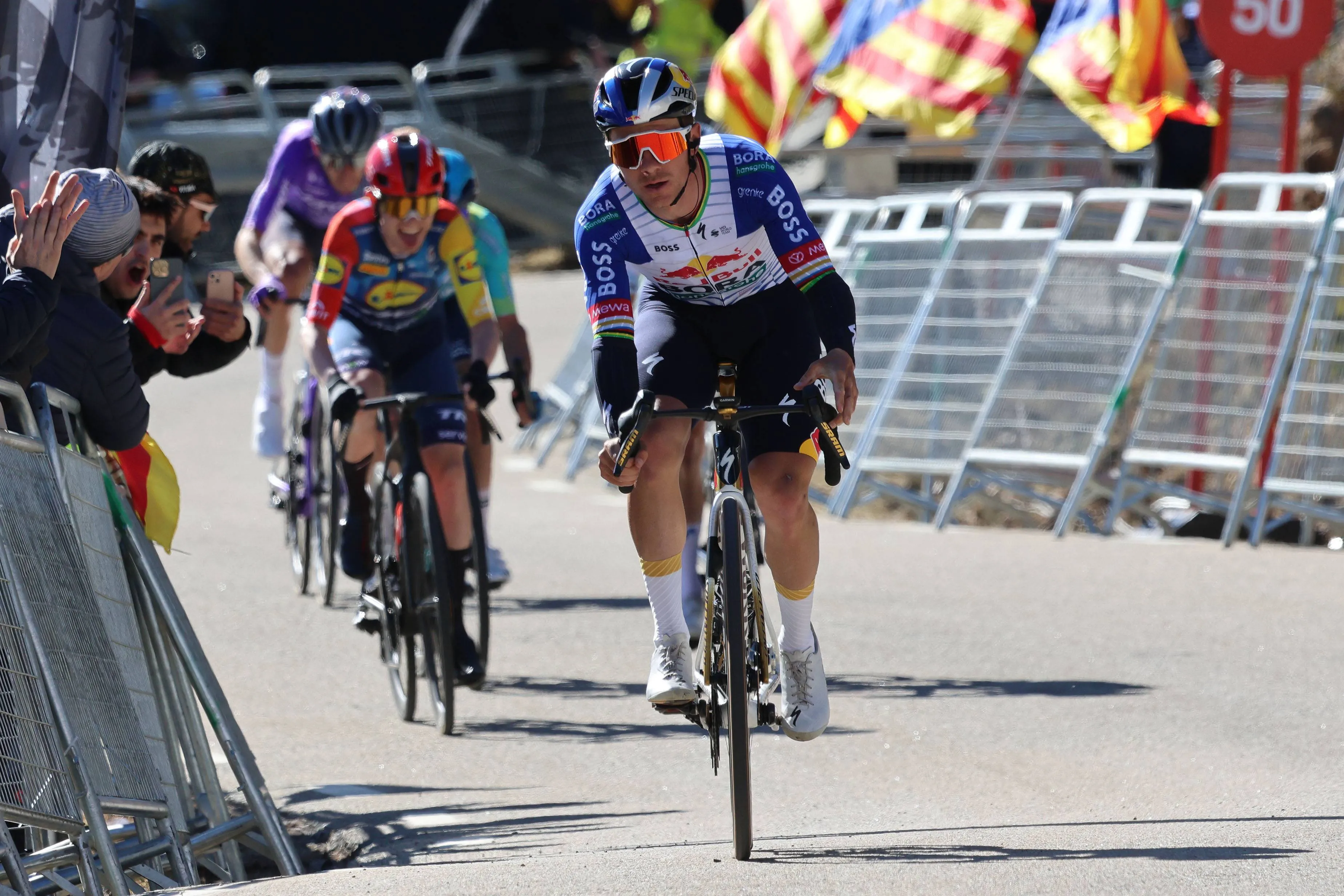
In an immediate move to crack down on aerodynamic loopholes, the UCI will completely prohibit front-mounted jersey pockets starting next month. The governing body noted that teams have been using internal front pockets stuffed with nutrition products purely to alter the rider's frontal profile and gain an aerodynamic advantage.
The UCI argued that this practice compromises sporting fairness and introduces safety risks by increasing race speeds. "The nutritional products were generally not consumed because they were extremely difficult, or even impossible in race conditions, to access. These pockets result in significant alterations to the riders’ body shape," the UCI said in an official statement.
Going forward, pockets will be restricted entirely to the rear of the jersey, with one exception. "Any pocket positioned on the front of a jersey will be prohibited, with the exception of a possible pocket intended solely to hold a radio communication device."
Read also
Caps on bike computer dimensions (Effective January 1, 2028)
Looking further ahead, the UCI will regulate the physical size of onboard electronics. Beginning in 2028, bike computers will be restricted to a maximum dimension of 126mm by 71mm. The UCI justified the restriction by pointing to the psychological strain and distraction caused by excessive on-screen data.
"Several studies have shown that the increasing volume of data available to riders during competition can contribute to an increased cognitive workload, a key factor in the occurrence of accidents. Limiting the size of bike computers is intended to prevent an excessive increase in the amount of data available during races, which could significantly compromise rider safety."

Danny van Poppel received 4 yellow cards in 2025
Expanding the yellow card system and hazard warnings
The UCI also announced a broader rollout for its controversial yellow card system. Following feedback from its trial in the WorldTour and ProSeries, the system will expand to Elite men's and women's Class 1 events at the start of the 2027 season.
Similar to soccer, race commissaires issue yellow cards for dangerous infractions that threaten peloton safety. The system relies on a cumulative penalty structure. Receiving two yellow cards in a single-day race or a single stage results in immediate disqualification and an automatic seven-day suspension. Cards accumulate over set periods to trigger multi-day suspensions for repeat offenders.
"This system aims to improve safety by increasing the accountability of the various individuals present in races," the UCI stated. "Although the accumulation of yellow cards can result in short-term suspensions, the objective of the system is above all to prevent potentially dangerous behaviour."
Additionally, the UCI will introduce standardized hazard pictograms across the international calendar. "These new safety pictograms signalling dangerous points (e.g. road narrowings, sharp turns, speed bumps, level crossings etc.) will start to be adopted by race organisers for next season and will provide riders with uniform safety signage at events across the international calendar."
claps 0visitors 0
Just in



Popular news

Latest comments
- Without the back jersey pockets riders are alot more aerodynamic and the front pockets do not outweigh that. What the danger is from front pockets I do not know. Put the bike computers somewhere where the riders can't see them. I don't think that the riders' "television" really has much of an impact because most riders in the peloton are not pushing. As Luca Guercilena said, the way to increase safety is to focus on the OUTCOME before the MEANS. The goal should be to decrease the intensity of positioning battles, and action to do so. Removing race radios is a possibility but won't necessarily make fights for positioning less intense. Just because the rouleurs aren't being told not to be at the front doesn't mean that they won't do it anyway. Also race radios increase safety on unknown technical descents. Wider roads are a possibility too but decrease the spectacle and the skill required. And it's not possible to widen Flanders' roads. Could changing squad sizes for races have an impact? Reducing the number of teams Could decrease the fights. Increasing them could have a similar impact as fewer teams can afford to commit to the front.
 Rafionain-Glas07-06-2026
 - In Tirreno-Adriatico and Paris-Nice, Evenepoel would've had a chance, as there are no mountains and Pogačar wasn't there. He'd have taken time in the ITT/TTT. It's more likely, however, that Giulio Pellizzari would've done better than himRafionain-Glas07-06-2026
- You really think he's going to lose bone density from cutting weight for a couple of months?Veganpotter07-06-2026
- As for Ayuso, stop living in the past, it's 2026 ... as for Remco, the only reason Remco disappeared and isn't racing is because he wouldn't win any preparation race. Now let's be reasonable and let's take a look at what would've happened: Remco would have no chance against Vingegaard in Paris-Nice or Catalunya... or against Pogi in Tour of Romandie... or against Seixas in Itzulia Basque Country... or Isaac del Toro in Tirreno Adriatico. Let's remember that he lost the UAE Tour against Isaac. Remco would also have no chance in the upcoming races like Tour Auvergne-Rhône-Alpes (Dauphine) against Seixas and Del Toro ... and Tour de Suisse against Pogi. He would have lost everything. Now just imagine losing everything before going to the Tour against the same riders that kept beating him over and over again. So tactically he skipped all the races, regardless the BS Remco and the Red Bull bosses are telling us. And you know something, Remco will never even come close to the podium in the Tour. Those second class ciciban races, he was winning in february and march, mean nothing. Ad acta.Ante-Ustashe07-06-2026
- Has went?paule07-06-2026
- Ouch..He hasnt missed Lidl-Trek.. Their results basically up to the Giro femmes(not sure they would have been as good except with Weibes dsq) has been underwhelming for both mens and womens for a so called superteam. They shouldnt have paid anything for Derek G except his salary! As for Ayuso not sure they should had to pay a transfer but those figures of 10-15 mill are ridiculousDavide07-06-2026
- As usual their convoluted thinking means half of the people there are insane. Front pockets make it easier for people to get and store things, they donot offer a aero advantage that it can cause someone to crash. Make Bike computers smaller means riders will focus a lot more to read the data leading to loss of concentration and more accidents. No bike computers mean that can be eliminated.abstractengineer07-06-2026
- The UCI is the worst thing about cycling. It prevents innovation and generally acts like a control-freak. That's why the US has largely abandoned it and has gone to gravel.acem8207-06-2026
- Now this is UCI stupid - having this race in Abu Dhabi so late !frieders307-06-2026
- Pfffttttt...they can have a week or two separation from the end of the Vuelta to the RR or TT races. Lots of crying here without any definite dates!frieders307-06-2026
Loading
2 Comments