Tour de France 2026 stage 10 preview, profiles, favourites and predictions - Will UAE raid the Massif Central day?
CyclingMonday, 13 July 2026 at 09:58
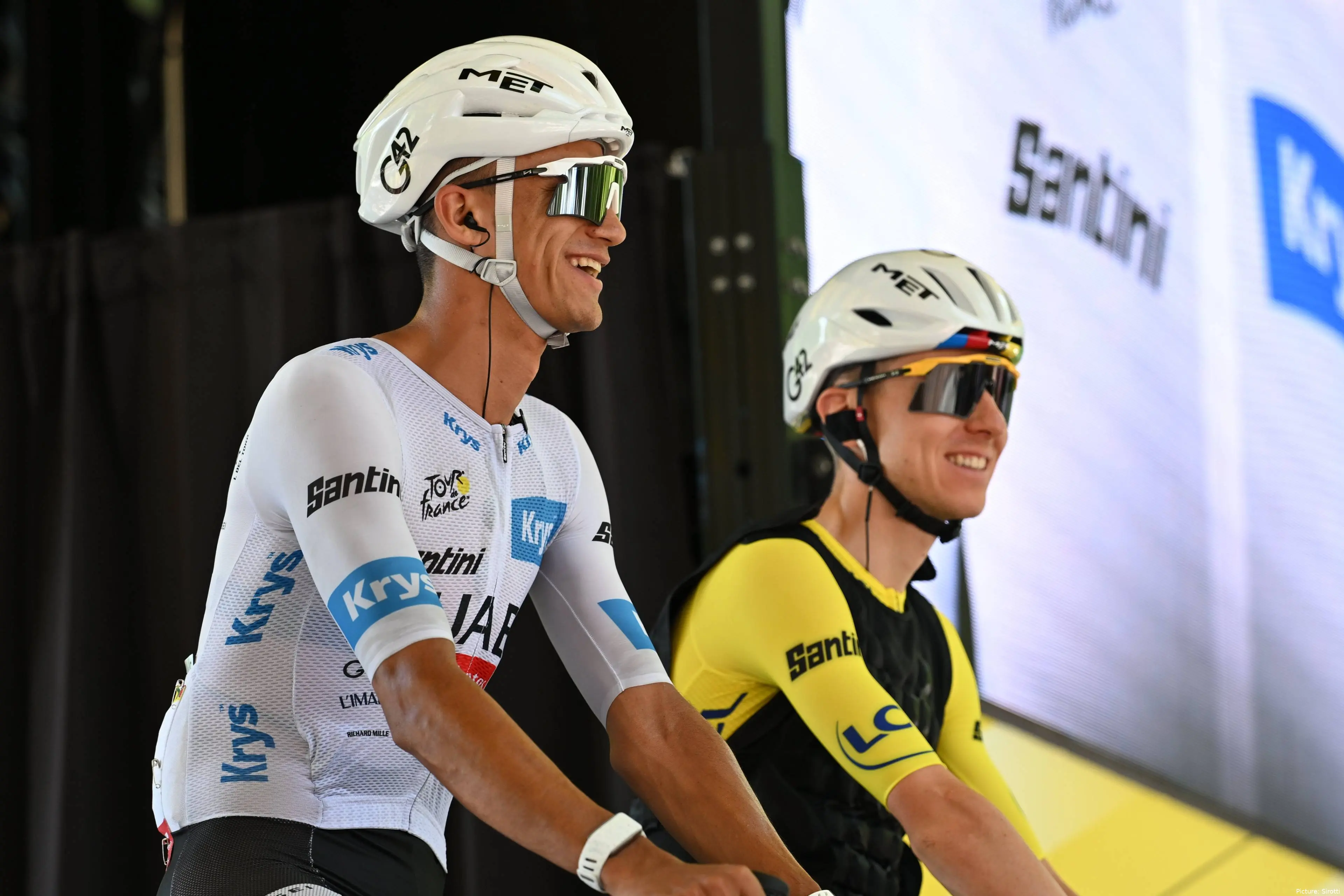
The 2026 Tour de France will take place from the 4th to the 26th of July. Throughout the 21 stages, the peloton will be racing through the mountains, sprint stages, cobblestones, individual and team time trials, and even. We take a look at all stages, their official profiles, and preview the days - including climbs such as the Alpe d'Huez, the Col du Galibier, and the Plateau de Solaison.
The race was first held in 1903, first won by Maurice Garin. You can find information regarding the 2026 edition and the race's history. The Grand Boucle was at first created by the French newspaper L'Auto as a means of promoting it, and ended up turning into what is one of sport's most recognizable and watched events. Throughout 21 stages, a peloton containing most of the world's very best riders ride through the roads of France - this year, also Spain, as the Grand Depart takes place in Catalunya, hosted by the city of Barcelona.
The Tour has created legends. Unlike many other races, it was not only won by some of the biggest names in the sport, but it also made them. Jacques Anquetil, Eddy Merckx, Bernard Hinault, Greg Lemond, Miguel Indurain... All riders whose careers were marked by the Tour and whose names were ingrained in cycling's history. Lance Armstrong's more modern connection to the Tour also propelled it to further heights internationally, although his demise then also became one of cycling's most difficult moments.
In recent decades, the best have also won in France, including Alberto Contador on two occasions officially; Vincenzo Nibali, who conquered the treble in 2014; Chris Froome, who won four editions and led the Team Sky era; and, most recently, the many battles between Tadej Pogacar and Jonas Vingegaard, who are not only marking the current generation but also the Tour's history. In 2026, Pogacar has the chance to make history by equaling the five-win record currently held by Anquetil, Merckx, Hinault, and Indurain, whilst in 2024, Mark Cavendish set the record for the most stage wins: 35.
Stages Tour de France 2026
| Stage | Distance (km) | Start | Finish | Start Time (CET) | Finish Time (CET) |
| 1 (TTT) | 19.7 | Barcelona | Barcelona | 17:05 | 19:15 |
| 2 | 182 | Tarragona | Barcelona | 13:45 | 17:25 |
| 3 | 196 | Granollers | Les Angles | 12:10 | 16:55 |
| 4 | 182 | Carcassonne | Foix | 13:10 | 17:25 |
| 5 | 158 | Lannemezan | Pau | 14:05 | 17:35 |
| 6 | 186 | Pau | Gavarnie-Gèdre | 12:25 | 17:30 |
| 7 | 175 | Hagetmau | Bordeaux | 13:15 | 17:15 |
| 8 | 182 | Périgueux | Bergerac | 13:15 | 17:20 |
| 9 | 185 | Malemort | Ussel | 14:00 | 17:45 |
| 10 | 167 | Aurillac | Le Lioran | 13:10 | 17:10 |
| 11 | 161 | Vichy | Nevers | 13:50 | 17:30 |
| 12 | 181 | Circuit Nevers Magny-Cours | Chalon-sur-Saône | 13:30 | 17:30 |
| 13 | 205 | Dole | Belfort | 13:00 | 17:45 |
| 14 | 184 | Mulhouse | Le Markstein Fellering | 13:10 | 17:25 |
| 15 | 169 | Champagnole | Plateau de Solaison | 13:10 | 17:40 |
| 16 (ITT) | 26 | Évian-les-Bains | Thonon-les-Bains | 13:00 | 17:50 |
| 17 | 169 | Chambéry | Voiron | 13:20 | 17:18 |
| 18 | 171 | Voiron | Orcières-Merlette | 12:35 | 17:10 |
| 19 | 130 | Gap | Alpe d'Huez | 14:00 | 17:24 |
| 20 | 110 | Le Bourg-d'Oisans | Alpe d'Huez | 11:20 | 16:10 |
| 21 | 132 | Thoiry | Paris (Champs-Élysées) | 16:15 | 19:30 |
This edition features a team time trial and an individual time trial on stages 1 and 16, respectively, set to test riders' abilities against the clock in a very meaningful way, with the GC not decided only in the mountains. The Grand Depart takes place in Barcelona, with stages 2 and 3 featuring hilltop finishes where minor differences and explosive finishes are expected.
The race will feature seven stages very likely to finish in a bunch sprint (5, 7, 8, 11, 12, and 17), with the finales into Foix (4) and Paris (21) also likely to see sprint finishes, though there will be climbs on the way.
Stages 9 and 13 are designed for the breakaway specialists, who will have golden opportunities in both first weeks to succeed in hilly profiles.
The mountain stages will consist of a day in the Pyrenees (6) with a summit finish in Gavarnie-Gedré after climbing the Col du Tourmalet; Le Lioran (10) in the Massif Central after a few explosive and steep ascents and Le Markstein (14) after a few climbs on the Vosges; with the three mountain ranges being represented before the arrival into the Alps.
In the Alps there will be the summit finish to Plateau de Solaison (15) which can make big differences at the end of the second week; whilst in the final week there will be a summit finish in Orcieres-Merlette (18) before two arrivals at the Alpe d'Huez. One on stage 19 will have that ascent as the highlight of the day, whilst stage 20 will be a colossal day through the mountains featuring for example the Col du Galibier, before finishing in the ski station once again after ascending the Col de la Sarenne.
Read also
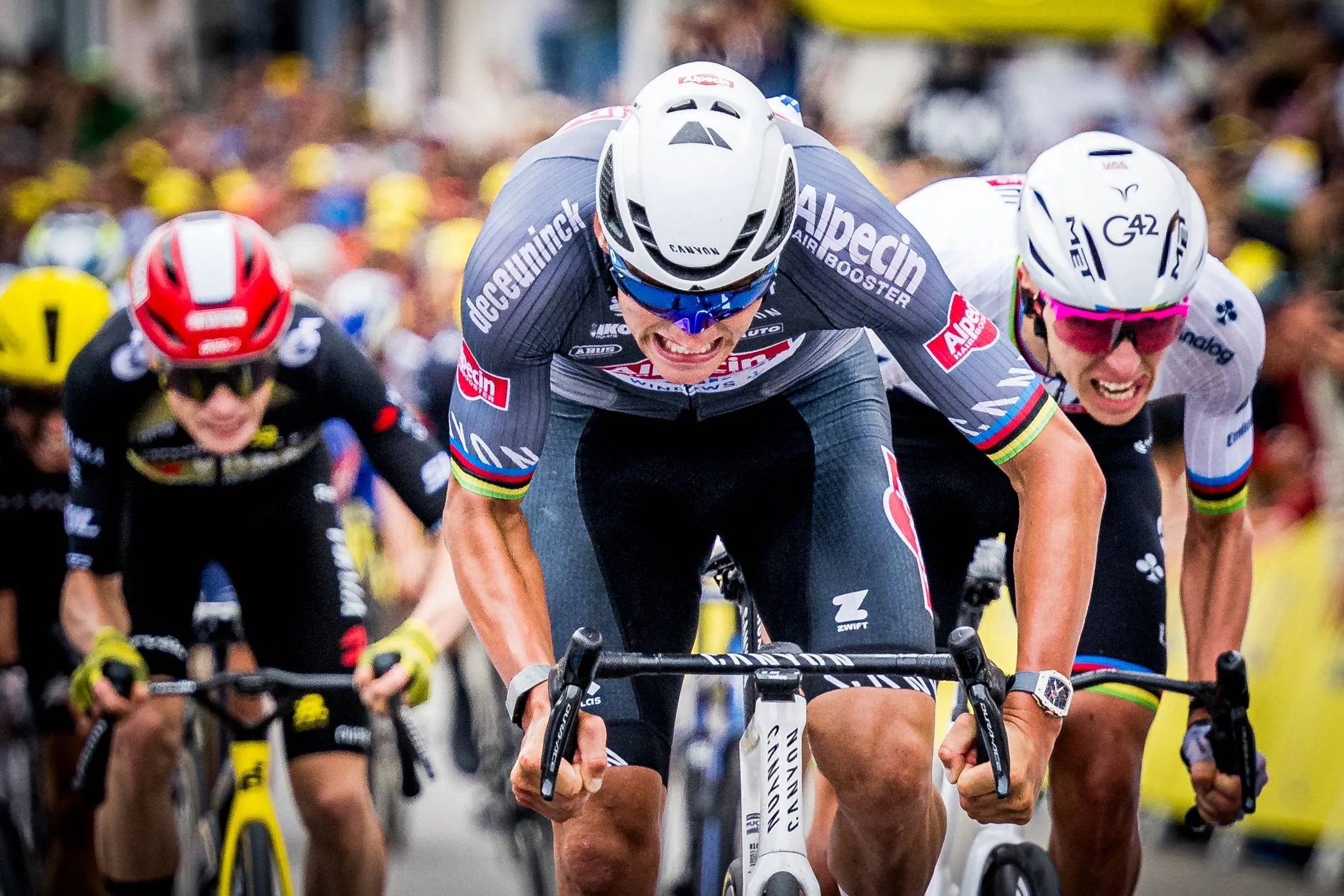
Preview Tour de France 2026 stage 10
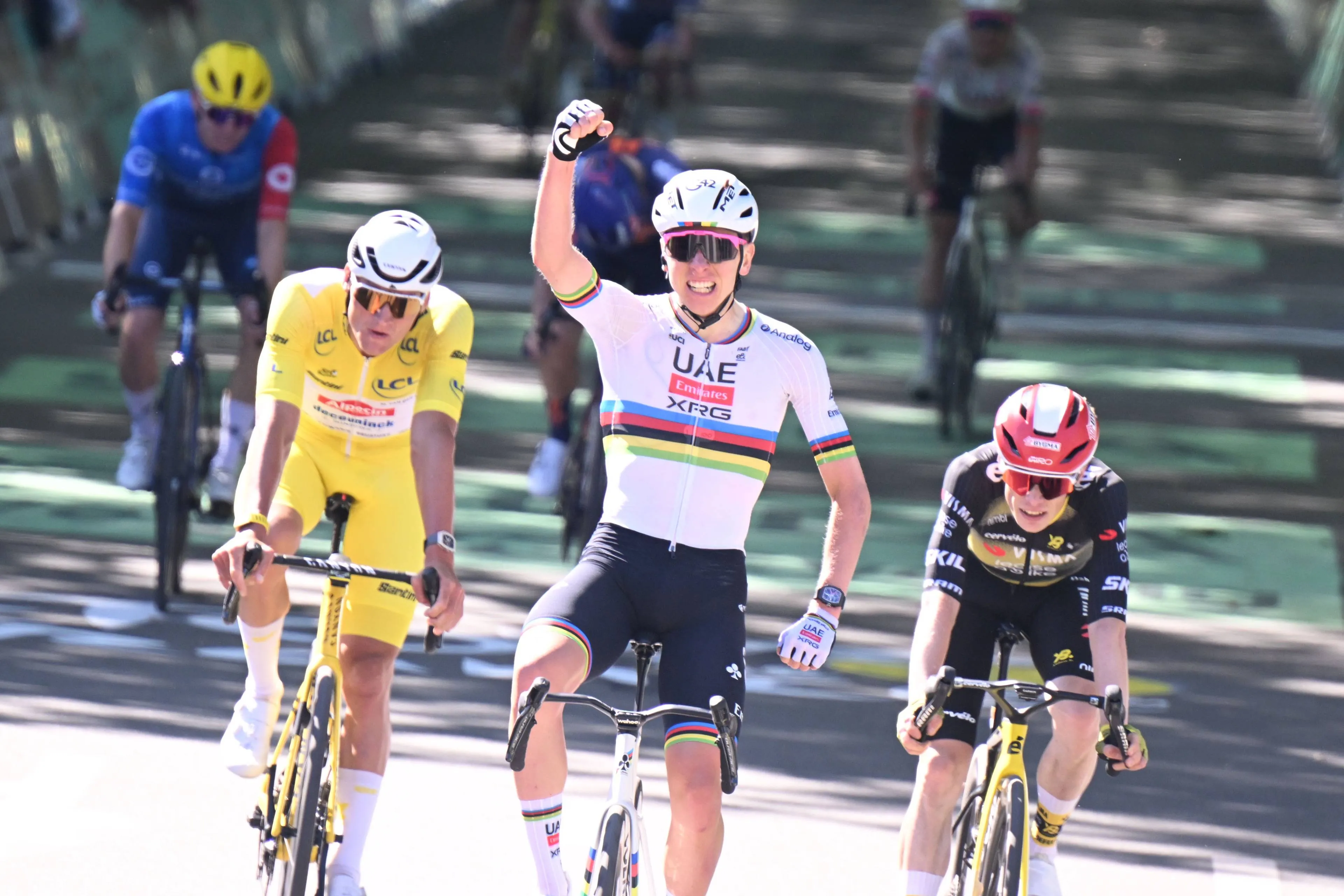
GC Fight - It will be interesting to see what UAE's tactics are on day that on paper suits Tadej Pogacar much better than Jonas Vingegaard. But will the World Champion try to create more damage in the overall classification, or simply control the situation whilst aiding Isaac del Toro in potentially winning a few seconds on his competition with a tactical attack. Simultaneously, he might want to attack early so that later on Del Toro is able to follow wheels and perhaps make the difference in the final kilometers - although seconds is the most he would be able to win normally.
UAE has the upper hand, and the start of the stage is flat so it is not overly hard to control. Visma won't chase, Red Bull won't chase, Decathlon won't chase... They won't win time on Pogacar or Vingegaard in any normal circumstance, but amongst themselves they might. But most likely, they won't have the initiative. The climbs are hard enough for the climbers to truly make the difference, but you could make the argument that Remco Evenepoel could perhaps attack and try to make the difference early on - also to spare the German team from having difficult choices to make. But all main GC figures should handle this terrain well.

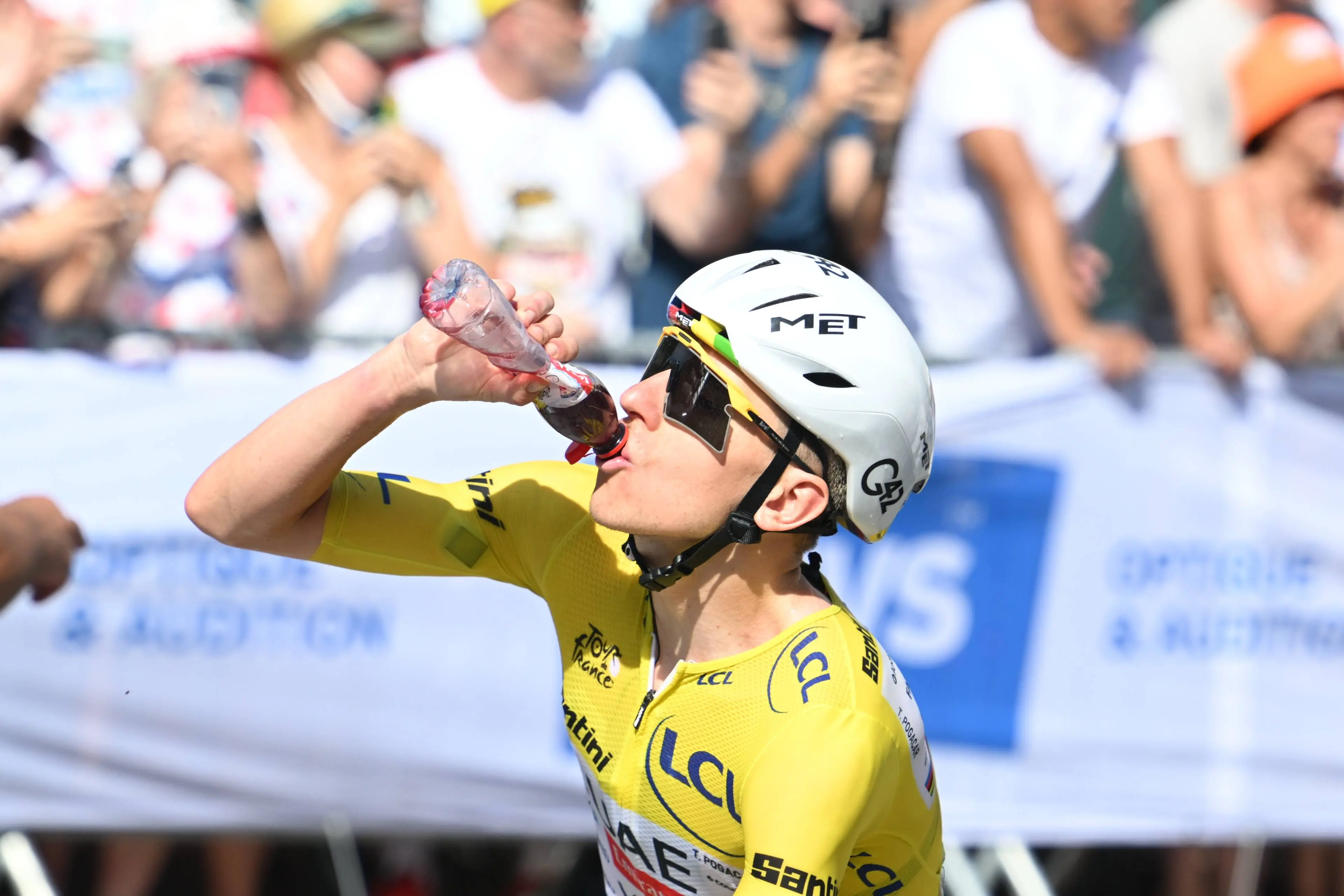
Will Tadej Pogacar look to go for another stage win?
On paper Tobias Johannessen, Tom Pidcock and Lennert van Eetvelt can also do quite well on a day like this, with explosive and shorter climbs. But in this part of the overall classification, others may look to be in the breakaway because if the peloton lets them go it may be a matter of minutes they win at the end of the day.
If a breakaway is to succeed, we will see a climber win most certainly, or a puncheur who is able to defend himself very well on longer climbs. That is because the differences will be made on the 8% climbs at the end what should be a very hard day on the bike.
The climbers are the big favourites though, and don't be surprised to see pure climbers at the front. Richard Carapaz, Alex Baudin or Valentin Paret-Peintre are riders who might very well make the difference on the longer efforts and simply take a solo win from far.
There are, on the opposite side of the spectrum, other riders who are classics specialists but can do the longer efforts quite well such as Mathias Vacek and Tiesj Benoot, two men who are in stage-winning form, just need the right timing and attack.
Jayco have Ben O'Connor, Luke Plapp and Mauro Schmid who are very well adapted to such a stage whilst INEOS have Thymen Arensman and Kévin Vauquelin who would on a good day in theory stand a good chance as well.
Ramses Debruyne, Chris Harper, Maxim van Gils, Pablo Castrillo, Michael Storer, Harold Tejada and someone like Ion Izagirre are also men to take into consideration for such a stage; but it very much depends on feel in the day.
Prediction Tour de France 2026 stage 10:
*** Tadej Pogacar
** Isaac del Toro, Jonas Vingegaard, Richard Carapaz, Alex Baudin
* Remco Evenepoel, Paul Seixas, Florian Lipowitz, Juan Ayuso, Valentin Paret-Peintre, Ben O'Connor, Luke Plapp, Tom Pidcock, Tobias Johanessen, Lennert van Eetvelt, Chris Harper
Pick: Tadej Pogacar
How: Solo win.
Profile Stage 10: Aurillac - Le Lioran

Stage 10: Aurillac - Le Lioran, 166.6 kilometers
On Bastille Day the riders head into the Massif Central for a day packed with short climbs, but some where a lot has happened in the past - most recently 2024, where in the same finale Tadej Pogacar and Jonas VIngegaard had an epic showdown.
It is a hilly day, but one that is much harder than the previous stage, and is better suited to the climbers - whilst we may also well see a GC battle on terrain that is not comfortable for all climbers. 3800 meters of climbing, 3600 meters and a flat start. With the math made, this does actually reveal an incredibly hard last two thirds of the stage, even if it misses a large climb in duration or gradient.
The riders find an intermediate sprint early on and then move towards the climb. All of them average between 5 and 8%, and there wll be seven categorized ascents all in less than 100 kilometers. 3Km at 7.2%; 5.9Km at 6.7%; 3.1Km at 6.5%; 5.2Km at 5.3%...
The real action then should begin on the climb to Pas de Peyrol, which is 7.8 kilometers long at 6.8%. The climb ends with just over 30 kilometers to go, at the end of a hard sequence of climbs and with a descent right after that leads directly onto the other ones. it should be the longest effort of the day and the gradients can be enough for an explosive attack that would blow up the peloton.
The descent is technical and leads the riders directly onto the base of the Col de Perthus, which is the steepest (and perhaps hardest) of the day. 4.4 kilometers at 8.5% is an effort that can't be understated, specially at this point of the day. The climb ends with 13 kilometers to go.
After a short descent there is yet another hilltop in the form of the Col de Font de Cère, which is 3.1 kilometers long at 5.8% and ends with a mere 2.7 kilometers of the line. The riders are in sight of the finish in Le Lioran, but do still find the same uphill sprint finish where Pogacar and Vingegaard sprinted it out 24 months ago.
Profile Stage 11: Vichy - Nevers

Stage 11: Vichy - Nevers, 161.3 kilometers
Stage 11 sees the peloton have an easier day, with no climbs on the profile and a route that favours the sprinters. The stage starts out in Vichy, and has its intermediate sprint with a mere 27 kilometers ridden. But there are no ascents on a day that covers 161 kilometers, towards Nevers which will host the finale.
The final kilometers will feature a few slight corners but nothing too technical or within the city center, meaning it will be rather safe for the riders. The fight for the green jersey has, here, an important day.
Profile Stage 12: Magny-Cours Circuit (Nevers) - Chalon-sur-Saone

Stage 12: Magny-Cours Circuit (Nevers) - Chalon-sur-Saone, 179.1 kilometers
Stage 12 is another opportunity for the sprinters to give it their all and fight for a stage win. It is not a difficult day, starting out in Nevers - this time around in the Magny-Cours racing circuit. Once again, the riders don't find difficulties out the gate, and have an intermediate sprint early on.
There are three categorized climbs on the day, but they are all almost replicas of themselves - with around 2 kilometers at 4%. The last of which ends with 24 kilometers to go, which has to be taken into consideration for the finale, however shouldn't be a climb that will really put sprinters into difficulties.
The riders head towards Chalon-sur-Saone where, after 179 kilometers, they will reach the stage finish. The riders head eastwards all day long and then in the final city itself, will have a few difficult corners that will require a lot of attention inside the final 10 kilometers. It will be a tense and likely very fast finale, with the teams fresh after a flat day.
Profile Stage 13: Dole - Belfort

Stage 13: Dole - Belfort, 205.8 kilometers
The race heads northeast towards the Vosges and presents an interesting day, one on paper designed for the success of a breakaway, however with possibilities for different types of riders. The stage begins in Dole and is the longest of the race - and in fact, the only one above 200 kilometers throughout the whole three weeks.
But it will also be a fast one, certainly, as most of it is pan-flat. The start of the stage, and in fact the first two thirds of the day don't have a single meaningful difficulty, categorized climb or intermediate sprint. Everything is paced inside the final 75 kilometers.
Climbing wise, the Col des Croix opens things up with 5.1 kilometers at 4.8%, ending with 48 kilometers to go. The race then begins heading south, with the Ballon d'Alsace left to be climbed. The ascent is 8.9 kilometers long at 6.9%, so it is a pretty serious climb.
It is hard enough for GC attacks; but if not attacked, it can be ridden by a medium-sized peloton, guided by a team that would want to thin down the peloton but take the race to a sprint. But not many riders will suit this profile, hence, many will try and get in the breakaway where the climbers and puncheurs would stand a chance at winning the stage.
The climb ends with 30 kilometers to go, and the descent is around 12 kilometers long. Those final 18 kilometers, albeit flat, are also partly going downhill and so the speeds will be very hard, and chasing down any group would in no way be easy. The riders reach Belfort where a sprint, a breakaway win or even a GC day could decide the winner.
Profile Stage 14: Mulhouse - Le Markstein

Stage 14: Mulhouse - Le Markstein, 155.3 kilometers
A day full of mountains in the Vosges. Namely it is only 155 kilometers long, but the riders never leave the region in which the climbs are often inconsistent and the descents are technical. Treacherous terrain, as the Tour returns to the high mountains one week later.
The depart takes place in Mulhouse and there is no easing into the climbs. The Grand Ballon will be the first one right away, with a total of 21.5 kilometera at almost 5%, a gradient that is highly influenced by a downhill section that exists in the climb. The last 6 kilometers of the climb average 8% and the riders can actually almost see the finish line from there on, but they will go on a full loop in the mountains beforehand.
They go up the Côl du Page and the Ballon d'Alsace, both of which will add to the fatigue but ultimately should not create major developments in the race. The peloton then goes through a transition period before heading into the climb of the Col du Haag.
This climb is one of the race's novelties, and potentially one of its key moments. The ascent is 11.2 kilometers long at 7.3%, but it is far from an average climb. Unlike most others in this Tour, it is rather inconsistent. A lot of the climb, both at its start and finish, is ridden at around 10%, but there is a flat section halfway through it.
The ascent ends with 6 kilometers to go and the riders then have a small flat plateau section all the way into the finish at Le Markstein.
Profile Stage 15: Champagnole - Plateau de Solaison

Stage 15: Champagnole - Plateau de Solaison, 183.9 kilometers
The race arrives in the Alps and features two incredibly steep and hard climbs to finish the second week. It is a day where all of the decisions will likely happen only on the final climb, but a lot can be expected.
There will be 183 kilometers on the menu, with the riders starting out in Champognle and then going through a few ascents. The main notable one is the Col de la Croisette, 4.6 kilometers long at 11% which ends with 50 kilometers to go. Due to the stage's nature, it's unlikely to have a major effect, but it is in every way a climb that can blow the race apart and will have to be taken into consideration. Shortly after the Côte du Mont (2.1Km at 8.3%) will also create further damage in the race.
The riders then go down into Thuet where the final climb will begin. There will be no surprises, the ascent was just ridden at the recent Tour Auvergne. It is 11.3 kilometers long at 9%, making it one of the hardest summit finishes of the race. It is a steep climb with a very difficult start, one for the pure climbers and one in which you cannot hide.
Profile Stage 16 (ITT): Evian-les-Bains - Thonon-les-Bains

Stage 16 (ITT): Evian-les-Bains - Thonon-les-Bains, 26.1 kilometers
The race's sole individual time trial, but one that does not suit the specialists in any way. The Tour organizers have gone out of their way to ensure that there wouldn't be any flat challenge against the clock this year, with a hilly TTT and now ITT. It is short too, meaning the differences will be limited.
It isn't a mountain time trial but starts off with a 10-kilometer ascent out of Evian-les-Bains. The Côte de Larringes averages 4.3% and will have an intermediate point at the summit. It is a climb that will be ridden very quickly, and so aerodynamics will still be crucial.
The descent will then be very fast, and also quite technical at points, meaning that the riders have to be quite careful on the TT bike where they are not used to taking up such roads in a race situation.
There will only truly be 8 flat kilometers to the time trial, already within Thonon-les-Bains, but even these will be somewhat technical, lacking the long straight flat sections where differences can really be cemented.
Profile Stage 17: Chambery - Voiron

Stage 17: Chambery - Voiron, 174.7 kilometers
Stage 17 begins in Chambery, one of the Alps' main cities, and provides the profile for a stage that can be interesting. That is because, although this is a stage that would ordinarily be designed for the sprinters (maybe even be their last opportunity), the riders climb 900 meters of altitude within the first 50 kilometers.
This is the effect of three categorized climbs. But if the breakaway goes up the road early on, the main one - the 3.5Km Col des Pres - may not be too difficult. This climb averages almost 7% and in the final week, there is a lot more urgency to form a breakaway.
The day is not overall very hard, but even so, if a strong group goes up the road it might be quite difficult to chase it down. The finale, after 174 kilometers, will be in Voiron. The French city hosted a similar finale at last year's Vuelta, after the race came from Italy.
It is slightly harder this time around, but also slightly uphill. The riders have a 2.5-kilometer long climb at 4% that ends with just over 3 kilometers to go. If the breakaway is fighting for the win, it can lead to the winning attack. If not, some sprinters might still struggle in it, whilst attacks are also possible.
The riders still find a relatively uphill ramp to the line, meaning this is not a pure sprint, but more one for those who can survive the climbs.
Profile Stage 18: Voiron - Orcieres-Merlette

Stage 18: Voiron - Orcieres-Merlette, 185.2 kilometers
Stage 18 opens up the final mountain set of stages but it's a day for a breakaway, as the GC riders will be saving their legs and the summit finish in Orcieres-Merlette isn't realistically hard enough to create differences.
That is the short summary of the day that will also begin in the city of Voiron, with a flat start. However soon enough, attacks should be aplenty on the Côte d'Engins. It is 11.4 kilometers at 5.4%, and the rides continue to climb afterwards, meaning that by the time the riders reach the summit, a strong group should already be up front.
The peloton then takes up a set of rolling climbs throughout the whole day. The stage was designed fully within the Alps, but avoiding the major climbs. There will be 185 kilometers on the menu, heading towards the summit finish at Orcieres-Merlette.
The climb will be 7.1 kilometers long at 6.7%. However you can potentially expect attacks here, as it's a mini Alpe d'Huez in terms of format. The many switchbacks provide plenty opportunities for attacks, whilst the climb is not too likely to be ridden at a constant pace.
Profile Stage 19: Gap - Alpe d'Huez

Stage 19: Gap - Alpe d'Huez, 127.9 kilometers
The race returns to the mythical Alpe d'Huez and in glory. The very short 128-kilometer long stage has an uphill start with the Col Bayard and shortly after the Col du Noyer to be tackled. The day begins in Gap, and has two hard climbs within the opening 25 kilometers.
Then we have a long flat valley section as the riders make their way into what is potentially the most famous climb in all of pro cycling. An intermediate sprint at Le Perier with 39 kilometers to go will be followed by the Col d'Ornon, 5.4 kilometers at 6.4% which ends with 28 kilometers to go.
But all of this will be a warm-up towards the real highlight of the day: the Alpe d'Huez. In all its glory, the 13.8-kilometer long climb averages 8.1% and is a festival of switchbacks, loud crowds... It is a climb where true differences can be made, and massive W/Kg performances are expected at the end of such a short stage.
Profile Stage 20: Le Bourg d'Oisans - Alpe d'Huez

Stage 20: Le Bourg d'Oisans - Alpe d'Huez, 170.9 kilometers
The queen stage. Although it lacks the distance, it's an absolute monstrous day in the mountains with 5600 meters of climbing. This year, the organizers have not held back when it came to designing a difficult stage to end the mountainous terrain, and have designed what is by far the most difficult finale.
And in fact, it is a stage designed to turn the race around. Long climbs, steep gradients, high altitude and a finish at the mythical Alpe d'Huez (but through a different side, introducing novelty) can all have a major impact on the race.
There is no real chance to take it easy. The riders, after 10 kilometers, begin going up the Col de la Croix de Fer, which is 24 kilometers at 5.2%. A lot of the climb is spent at around 8%, with two downhill sections inbetween, and a summit finish at over 2000 meters.
The riders immediately have a difficult task right off the start, but it only gets harder. The Col du Galibier will be climbed, and through its hardest side - via the Col du Télégraphe. The first climb is 11.9 kilometers at 7%, and then there is a small descent.
The riders then go up the actual Galibier which is 17.7 kilometers long at 6.9%. Again, the grand majority of the climb is spent at around 8%, and the riders go up to 2642 meters in altitude. It is a brutal effort, and very long too. This is the kind of climb where riders can blow up after three weeks, and they have to be at their absolute best on day 20 otherwise they may lose what they've spent weeks working towards.
The race can be blow to bits already there, with 60 kilometers to go. The descent off the Galibier will then be very fast, and the riders will go down into the base of the Col de Sarenne.
The riders first passed it in 2013. At the Tour, they now climb up it for the first time before a stage finale. It is 12.8 kilometers at 7.3%, with its summit at 1999 meters of altitude. A very hard climb, but above all because of what the riders have done beforehand.
Still, there will be 24 kilometers to the finish from this point onwards. The riders descend and find some rolling roads before reaching the road of the Alpe d'Huez. The final 3.8 kilometers of the climb will be ridden, averaging 6% and providing a perfect finale for the race's mountainous section.
Profile Stage 21: Thoiry Zoo Safari - Paris (Champs-Élysées)

Stage 21: Thoiry Zoo Safati - Paris (Champs-Élysées), 133 kilometers
The riders arrive to Paris on the final day of the race, one that should be exciting in terms of action once again. The stage begins at the Thoiry Zoo Safari, and will go through the outskirts of Paris before reaching the final circuit.
There will be a 700 meter long ascent with 89 kilometers to go that may open up the action, it averages 10% and so it may be the point in which riders will begin racing competitively.
If not, then it will happen as the riders enter the streets of Paris itself, with an intermediate sprint placed just outside the final 10 kilometers. Afterwards, three laps of a circuit that includes the cobbled climb to the Butte Montmartre.
This time around the circuit was changed in order to provide the sprinters will better chances. But the cobbled climb, turned famous at the 2024 Olympics, will have its summit with just over 10 kilometers to go.
It is hard enough to create differences, and narrow enough to split the peloton. An attack can succeed, whilst a reduced bunch sprint is also quite possible but only if there is proper organization to chase down all attacks.
Previous previews
Preview Tour de France 2026 stage 6
The big question in on whether either Tadej Pogacar or Jonas Vingegaard will want to go all-out and attack. Do they need to?
Tadej Pogacar - Tied in time with the Dane, he does not need to attack, and if Isaac del Toro does so on the Tourmalet, it's unlikely to drop Jonas Vingegaard. But they may gain numerical advantage over their rivals or perhaps even dispatch them, so they may try something to test out in what is the first big climbing test of the race. Both UAE and Visma will urgently try to have men in the breakaway (as every GC team should) because the descent off the Tourmalet and mainly the slight final climb is perfect terrain for satelite riders.
I think Pogacar and Del Toro are both very explosive riders and should instead try to attack the final climb to Gavarnie, where Vingegaard may not be able to respond as effectively and where their numbers may actually make a difference.
Jonas Vingegaard - I think psychologically speaking, the Dane may not want to open up his card deck just yet. The gaps are very small, and if he is inferior to Pogacar, he can lose massive time on a day like this if it blows up on the Tourmalet. Rather, I think Visma will want to keep things as they are, the gaps small and the Slovenian within reach - remember last year Pogacar took his entire winning gap on the first 12 stages. If Vingegaard avoids that this Friday, he effectively avoids that possibility almost entirely. Visma will want men around Vingegaard and not to attack, unless Visma have a clear superiority in the breakaway and he has the chance to risk.

Will Pogacar and Vingegaard test each other on the Tourmalet?
For the GC men, it will be an important day. For those aiming for the Top10 specially, because if they get dropped on the Tourmalet and don't get the GC train up the final hour of racing, then they may lose minutes to those who survived. Men like Tobias Johannessen, Richard Carapaz, Tom Pidcock, Lenny Martínez and Ilan van Wilder may benefit massively even if they don't actually go on the attack. The same applies to other GC outsiders who are weighting out their chances and form.
When it comes to the yellow jersey we've got an interesting battle. Torstein Traeen goes into the day in yellow, with 7:53 minutes advantage to Pogacar. If the race fully blows up, this gap is actually closeable, but that's unlikely. However, Sean Quinn sits a mere 28 seconds behind him, and this can indeed be closed - although the Norwegian may be the strongest of the two. Mathias Vacek, halfway at 3:50, is also someone to consider as his current form is outstanding.
Then we've got the GC outsiders. Paul Seixas? He is fine, Decathlon has won today, and he does not have a reason to attack. He should want a conservative race which would increase his chances of being consistent all the way to Paris, and he remains in a good place to fight for the podium.
Red Bull? Florian Lipowitz and Remco Evenepoel do in fact have the numbers game, but the German is the least explosive out of all climbers in the mix and so he won't be able to go far on the final ascent. But Evenepoel has one effort that is perfect for him, he may in fact be one of the most important factors, if the race doesn't blow up on the Tourmalet.
Juan Ayuso and Mattias Skjelmose both benefit from maintaining the situation as it is, solid for both riders and with Vacek also in the mix now to some degree. The team would rather sit in the wheels and not see the Tourmalet distance their men.
The breakaway does actually stand good chances. Yes, the start of the stage is flat, but the fight might go into the first climb and I think most teams will want men in front and so they will spend bullets for that. This means we might get a big group, and very strong riders who may end up fighting for the stage win - plenty men have the freedom by this point.
Harold Tejada, Pablo Castrillo, Alex Baudin, Antonio Tiberi, Kévin Vauquelin, Matteo Jorgenson, Valentin Paret-Peintre and Michael Storer are all men to consider.
Prediction Tour de France 2026 stage 6:
*** Tadej Pogacar, Isaac del Toro
** Jonas Vingegaard, Paul Seixas, Remco Evenepoel
* Richard Carapaz, Juan Ayuso, Tobias Johannessen, Florian Lipowitz, Lenny Martínez, Tom Pidcock, Alex Baudin, Valentin Paret-Peintre, Michael Storer
Pick: Isaac del Toro
How: Solo win with a tactical attack on the final climb.
Profile Stage 6: Pau - Gavarnie-Gedré

Stage 6: Pau - Gavarnie-Gedré, 186.2 kilometers
Stage 6 is the first day in the high mountains and the only one on the first week of the race. In good Tour tradition, the start of the stage is actually flat, in order to not put the sprinters under tremendous stress.
There will be a few hilltops but only after 75 kilometers will the riders actually begin climbing more seriously - and after the intermediate sprint. What everyone will be focused on will be the trio of climbs towards the finale of the stage: Col d'Aspin, Col du Tourmalet and the climb to Gavarnie-Gèdre.
The first is 12 kilometers long at 6.5, and ends with 68 kilometers to go. This combination is often used, and the riders then go up the mythical Tourmalet - the climb that has been used the most in the Tour's history.
But its reputation lies not only in its frequency, but difficulty. 17.1 kilometers at 7.3, climbed from the La Mongie side. It is a difficult climb, marked by its constant gradients throughout a very extensive length, and also the altitude factor - 2115 meters at the top.
If we are to see big attacks on this day, it will be on this climb - and there are good reasons to think this may happen. It is also a stage where tactics can be key, as having satelite riders in the breakaway can then save (or boost an attack) after the climb. The ascent ends with 39 kilometers to go, but half of the way to the finish is the fast downhill.
When the riders reach Luz Saint-Sauver, they turn towards Gavarnie. The climb in total is 18.7 kilometers long at 3.7%. In these gradients, having teammates can make all of the difference, the final climb may see attacks and opportunists making their moves, if this doesn't happen beforehand.
But the climb in itself is not a very difficult effort, for the Grand Tour specialists of course. There is the chance to attack towards the end, but the gradients never go above the 6-7%. It is also a 'valley climb', meaning that it is almost fully in a straight line and so there are no obvious places to attack - whilst it is hard for the riders to ever leave their rivals' line of sight.
Preview Tour de France 2026 stage 7
A very hot day, one that will be easy on paper but on the road will feel like hell for quite a few in the peloton. It can also add to the fatigue for certain, and make the final sprint quite more complicated as we've seen in Pau. Hence whilst we had a set of names as clear favourites, a sprint can change quite a bit.
Take Astana as an example, who have done a masterful work leading out Max Kanter in the final sprint, and the German came close to the win. If they repeat it, they may be lucky this time around - although they would ideally avoid those big names directly behind them.
Jasper Philipsen and Tim Merlier are now two riders under pressure, with the sprints kicking off and a vivid memory of the Giro d'Italia where a few of the fast men either did not win or had to wait until the final stage to open their tally. They want to avoid the pressure, and they have both the legs and team to make it happen.
Then Olav Kooij of course, clear winner in the one bunch sprint so far, and someone who will have little pressure - which may help him. It will be a hard challenge of course, but the Decathlon man has the form and the motivation that is for sure.
Biniam Girmay and Mads Pedersen will also want to finish as high as possible, specially eyeing the green jersey which is their main objective. It will be a key day for that jersey.
Pavel Bittner, Milan Fretin, Phil Bauhaus and Soren Waerenskjold are danger men who could finish right behind or, in the right setting, even surprise with a stage win. For the sprint finish we should also consider Pascal Ackermann, Dorian Godon, Arvid de Kleijn, Anthony Turgis and the surprise in the last sprint: Huub Artz.
Prediction Tour de France 2026 stage 7:
*** Jasper Philipsen, Tim Merlier, Olav Kooij
** Biniam Girmay, Max Kanter
* Mads Pedersen, Pavel Bittner, Milan Fretin, Soren Waerenskjold, Phil Bauhaus
Pick: Tim Merlier
How: Regular bunch sprint.
Profile Stage 7: Hagetmau - Bordeaux

Stage 7: Hagetmau - Bordeaux, 175.1 kilometers
The race heads off from the Pyrenees and into Bordeaux for the 'real' start of the race for the sprinters. They will have earned it, and stage 7 of the race goes from Hagetmau to Bordeaux.
Profile wise, there actually isn't a way to get around it. There is one categorized climb on the stage, however it doesn't present any difficulty, even for the purest of sprinters. The climb ends with 38 kilometers to go whilst the intermediate sprint was placed with 55 kilometers to go.
It is a transition stage, heading north almost in its entirety, through territory that is often very hot and also exposed to the elements - the tradition fields of the French interior. The riders reach Bordeaux after 175 kilometers.
The final will be by the river and will not feature any meaningful technical features, making it a day for the fast men in every way.
Preview Tour de France 2026 stage 8
We've got another bunch sprint stage on our hands. I believe a few teams, who have no chances of taking the win in a sprint and barely chances in any other terrain, should aim to be in the breakaway. Combining a few strong riders in the head of the race and executing a good tactic could end up in a surprise win, but it will always be hard.
The sprinter teams will make it their mission to have the opportunity. From today onwards, two men have already accomplished their goal: Tim Merlier and Olav Kooij. Hence these two men, without major leadouts as an additional note, are going into the sprint with less pressure which can ultimately help them. But notably, both have taken dominant wins, we can point out, which means the two may be the main favourites to win in Bergerac.
Jasper Philipsen looked to have the perfect leadout today, but faded in the final meters. A worrying sign that the Belgian hasn't looked like himself in the sprints so far, it may be an indicator of fatigue, or perhaps that he had bad luck with the win in today's finale. In any case, Mathieu van der Poel's leadout was perfect and if Philipsen has the legs, he also has the team to put him in place. Astana and Max Kanter can argue the same, although the German does face competition that is typically above him.
Mads Pedersen and Biniam Girmay will be present, unlikely to win the stage but they will need to gather good points for the green jersey. But they will also have to battle with all the other outsiders. Soren Waerenskjold today came close to the win for example, and has shown that he does have the legs to do it.
Huub Artz did another very strong sprint today which cements him as an outsider for a result here. We will add Dorian Godon, Pascal Ackermann, Fernando Gaviria, Pavel Bittner and Milan Fretin as the other outsiders expected to perform.
Prediction Tour de France 2026 stage 8:
*** Olav Kooij, Tim Merlier
** Jasper Philipsen, Biniam Girmay, Soren Waerenskjold
* Mads Pedersen, Pavel Bittner, Milan Fretin, Phil Bauhaus, Max Kanter
Pick: Tim Merlier
How: Regular bunch sprint.
Profile Stage 8: Périgeux - Bergerac

Stage 8: Périgeux - Bergerac, 180.4 kilometers
Stage 8 will once again suit the sprinters. After a very difficult and hilly start to the Tour, the fast men now get two days in a row where they can benefit from the race's profile, in a stage where it will be very hard to prevent the inevitable scenario of a bunch sprint.
The day's intermediate sprint will take place with 58 kilometers to go, and there will be two small categorized climbs right before and after that point of the stage. The day begins in Périgeux and heads towards Bergerac.
It is not a technical finale, however not a straight line one either. It avoids the city enter and finishes in a park, however positioning will always be crucial.
Preview Tour de France 2026 stage 9
It is a day for the breakaway, one of the few designed for that purpose in this year's route. The stage is packed with small climbs, right from the start where we should have an epic breakaway formation battle. Everyone looking for their opportunity will try, and although we are only on stage 9, that's already the grand majority of the peloton due to the gaps already created in the overall classification.
It will be interesting to see if the yellow jersey changes hands. Tadej Pogacar won't want to keep it, neither UAE or Visma will bother chasing anyone outside the Top9 because the gaps in the mountains will render a time loss meaningless. Hence the 'Torstein Traeen scenario' could happen again. I am leaning towards Mathias Vacek, 10th on GC to jump into the race lead and maybe win the stage, as it's a perfect day for him, his form is extraordinary, Lidl-Trek's collective power for such a stage is off the charts and Mads Pedersen will help him win if possible - it's long overdue.
But riders such as Egan Bernal, Sean Quinn, Tobias Johannessen, Ilan van Wilder, Tom Pidcock, Lennert van Eetevelt, Jordan Jegat, Harold Tejada, Ramses Debruyne... All of these men are tremendously talented and have at least one foot on a full-on GC tilt, and so if they gain extensive minutes it can reaffirm their position in the fight - although a yellow jersey as a potential reward is already enough motivation.
The start is hard enough for the climbers to move, but not hard enough to prevent the rouleurs from going into the head of the race, which creates a very interesting dynamic. The day can see climbers deal damage, but they have to do so from early on mostly. This applies to riders such as Matteo Jorgenson, Richard Carapaz or Kévin Vauquelin - although all have some degree of explosivity as well.
Some of the very best classics riders in the world should have the freedom and pursue the win here. The quality is so incredible, actually. Mathieu van der Poel here has one of the very few opportunities to win in this race, and the likes of Tom Pidcock, Romain Grégoire, Maxim van Gills and Ben Healy who are on paper specialists for such a course are the kind of riders who can make the difference on small climbs.
Quinn Simmons, Tiesj Benoot, Luke Plapp, Mauro Schmid, Marco Frigo, Pablo Castrillo, Lennert van Eetvelt and Alex Aranburu are also riders capable of making the difference uphill, and are specialists in such course. The likes of Mads Pedersen, Michael Matthews, Fred Wright and Dorian Godon can also take advantage of their strong sprint aside from their ability in the rolling terrain.
In addition plenty more can be mentioned, all reasonable figures to win the stage. Victor Campenaerts, Jan Tratnik, Nico Denz, Kasper Asgreen, Jasper Stuyven, Emiel Verstrynge and Raul García Pierna are all to be be considered.
Prediction Tour de France 2026 stage 9:
*** Mathias Vacek, Quinn Simmons, Jonas Abrahamsen
** Tiesj Benoot, Mads Pedersen, Tom Pidcock, Romain Grégoire, Mathieu van der Poel
* Victor Campenaerts, Maxim van Gils, Ben Healy, Kévin Vauquelin, Jasper Stuyven, Marco Frigo, Pablo Castrillo, Lennert van Eetvelt, Fred Wright, Alex Aranburu
Pick: Mathias Vacek
How: Solo win from the breakaway, an attack before the final categorized climb.
Profile Stage 9: Malemort - Ussel

Stage 9: Malemort - Ussel, 185.9 kilometers
Stage 9 from Malemort to Ussel is a transition day and an unusual one. The peloton, on its second Sunday, heads towards the Massif Central for a stage that can only be described as a breakaway's dream.
it's an explosive day, featuring 185 kilometers, 3300 meters of climbing but not a single major climb. The rolling roads are a characteristic of the region, which often leads to interesting stages and outcomes - as the fatigue often builds up in a different way than a regular stage, and tactics usually take up a much larger percentage of the way the stage will be decided.
Right from the first kilometer the peloton begins climbing slightly. Both categorized and uncategorized, the climbs will be felt and all have that gradient of 3-5%, where the heavy men and classics specialists can make just as much of an impact as the climbers.
This is terrain where controlling a race is very hard, and GC men may try to sneak into the breakaway as it is not expected that any team will want to take control of the entire stage. Hence, many sub-plots can develop on the stage.
The riders have four categorized climbs. The meaningful ones are Suc au Mau (3.8Km; 7.7%; 80 kilometers to go) and the Côte de la Croix du Pey (4.8Km; 6%; 56Km to go). On these, the climbers that make it in front will want to push the pace in order to create differences but above all thin down the group on terrain that won't suit a few riders and thus increase their own chances of succeeding.
Those final 55 kilometers will then be a constant up and down. There will be a small categorized climb at Mont Bessou but it is only a 900-meter long ramp at 7% (differences can be made, but the race won't be turned on its head).
That ascent marks the end of the long plateau section, which is 24 kilometers away from the finish line. A descent follows which can be key for the outcome of the stage. Gaps can be expanded, and those out front can recover, in time for the final big effort.
There are two more small hilltops that end inside the final 15 kilometers to go, but at this point it is more a matter of who has the legs, who can sprint and what tactics will come at play. A sprint at the end of this stage is not impossible, but hard to see.
Rúben SilvaEditor-in-Chief
A founding contributor to CyclingUpToDate since its launch in January 2022, Ruben Silva has played a central role in shaping the site’s editorial direction and long-term growth. Before joining the project, he built his experience through independent blogging at Echelons Hub and by producing race previews for Ciclismo Internacional, developing a strong analytical voice rooted in daily engagement with professional cycling.
Beyond editorial work, he has been closely involved in the expansion and coordination of CyclingUpToDate’s wider network, helping establish and support sister platforms across multiple languages. This includes ongoing collaboration with CiclismoAlDia (Spanish), CiclismoAtual (Portuguese), WielrennenUpToDate (Dutch), and RadsportAktuell (German), contributing to a shared editorial vision and consistent international coverage.
He also helps oversee editorial governance across the network, setting standards for accuracy and consistency and coordinating updates or corrections when needed.
Originally from the Porto metropolitan area in Portugal, he holds a bachelor’s degree in Geography. His path into cycling journalism was shaped not through formal media training, but through independent reporting, community engagement, and sustained on-the-ground involvement in the sport.
Over the course of his career, he has conducted approximately 100 interviews across road cycling and cyclocross, ranging from one-to-one conversations and online formats to press conferences and on-site pre- and post-race coverage. His interviews include leading riders, team managers, and prominent figures within cycling media: Tadej Pogacar, Jonas Vingegaard, Mathieu van der Poel, Primoz Roglic, Wout van Aert, Joao Almeida and Tom Pidcock; managers like Patrick Lefevere and Joxean Matxin; and YouTube personality Bryan Kennedy (BKXC)...
Within 18 months of launch, he helped grow CyclingUpToDate’s English-language platform into one of the most-read cycling news websites, built entirely from the ground up. As both a professional journalist and lifelong cycling enthusiast, his focus remains on delivering accurate, timely, and well-contextualized coverage.
claps 18visitors 10
Just in

Popular news
Latest comments
- Yes, sure, Pog had been injured. But Jonas said he would win by minutes and did it. in two days, as everyone remembers. But he hasn't yet won races all year round,, so people who want to bring up this topic tend to talk about Pog.Hills3313-07-2026
- I bet Seixas has extra cold AC.mrvco13-07-2026
- Now it's clear why Simon left.MajorPayne13-07-2026
- Wondering if there is any other teams at that hotel. Or if another team has anything to do with the AC. Don't laugh as stuff this paying fans to throw thumbtacks on the roan or crowd some riders on climbing stages have been talked about for yearsmd197513-07-2026
- First thing: That's not true. In 2023 Pogi completely blew up. Any cyclist that day would have beaten him. He said himself: 'I'm gone. I'm dead.' Vingegaard never blew up, but he loses 80% of the time when he goes mano a mano against Pogi. Second thing: We have "two" Pogi's... one from 2019-2023... and the second from 2024-on. He will not blow up again. OK, maybe Pogi will lose a stage against Jonas here and there, but he will win 80% of them. Ad acta!!!mus-musculuspeedypogigonzales13-07-2026
- To be honest, this is at least where I expected Pogi to be relative to the field, based on the parcours of the tour so far. I was actually surprised that he didn't take more time in Stages 2 and 4. If Jonas was ever going to challenge Pogi in GC, it was going to be late in week 3. His only hope has been that somehow he's more durable, that he recovers from the heat better, and that he can out-diesel Pogi in stages 19 and 20. I think it's unlikely, but I do think he still has a small chance.DAS13-07-2026
- Some chose to live/watch cycling with a 'glass half empty' mindset -- must be tiring.b3tlla13-07-2026
- Oh Lance - why are you still here? Why do you cling to this foolish notion? And CUTD and Peacock, why on earth give this a hole a platform?Crashjames13-07-2026
- Utterly hilarious... you never know what to expect from Red Bull
 Rafionain-Glas13-07-2026
 - Thanks, so basically he’d be battling with others for 4thJumpyjohn13-07-2026
Loading
27 Comments