
The 2026 Tour de France is set take over cycling as the grand tour starts on July 4th. Cycling's biggest race, the grand tour kicks of in Barcelona for an epic Grand Depart as the peloton prepare for the three-week showdown.
The 2026 Tour de France route including 21 stages and over 3,300 kilometers of racing, riders will take in iconic climbs, stunning locations across an array of different stages that tests riders on terrain like flat finishes, high mountains, punchy hills, daring descents, an individual time trial and a mouth-watering team time trial.
On the menu for the peloton in the 2026 edition include the iconic Col du Tourmalet and Alpe d'Huez climbs, journeys through the Pyrenees and Alps as well as an intriguing opening stage team time trial - among three weeks of racing.
The legendary race will bring most of cycling's biggest names to the start line as the world watches on, with huge prize money awards and UCI rankings points on offer. The 2026 Tour de France will be on television across dozens of countries and forms one of the world's biggest sporting spectacles.
FAQ about the 2026 Tour de France:
1. When does the Tour de France 2026 begin?
2. Where does the Tour de France take place?
3. What does the Tour de France mean for cycling?
4. Activities beyond the race and key dates
5. Stages, route and schedules Tour de France 2026
6. How to watch on TV and follow the Tour de France live online
7. List of Tour de France winners
8. List of Tour de France classification and jerseys
2. Where does the Tour de France take place?
3. What does the Tour de France mean for cycling?
4. Activities beyond the race and key dates
5. Stages, route and schedules Tour de France 2026
6. How to watch on TV and follow the Tour de France live online
7. List of Tour de France winners
8. List of Tour de France classification and jerseys
1. When does the Tour de France 2026 begin?
The 2026 Tour de France takes place from July 4th to 26th. Taking in 21 stages, including a team time trial and an individual time trial, the Tour de France will be raced through the majority of July.
There will be two rest days; after stage 9 on July 13th and then after stage 15 on July 20th. You can be informed about the 2026 edition's stages and its previews.

Vingegaard and Pogacar at the Tour de France 2025
2. Where does the Tour de France take place?
The majority of the 2026 Tour de France will be raced along the roads of France. After a foreign Grand Depart in Barcelona, Spain, the race sweeps up through the Pyrenees, into the heart of France, and then the Alps before finishing in Paris in a blaze of glory.
2026 Barcelona Grand Départ
The 2026 Grand Départ in Barcelona brings the peloton into the backdrop of the Mediterranean. A much-talked about team time trial through streets will kick off the race. The peloton then takes on the Montjuïc circuit in the city for stage 2 before a ride out towards the Pyrenees.
Race returns to France
The race crosses the border north and into the Pyrenees, where irregular, twisting climbs are sure to shake up the general classification. From there, the peloton rides through central France, where rolling countryside and Bastille Day festivities. The route then moves into the Massif Central region.
The Tour always heads to the Alps and this year will be no different. A decisive phase include iconic ascents like Alpe d’Huez and the Col du Galibier that will likely form the true general classification battleground.
Finally, the race returns Paris, where the Champs-Élysées awaits. But first, the final punch in this year's race is a triple ascent of the Montmartre climb before the traditional avenue finish is sure to make for yet another box office finale.
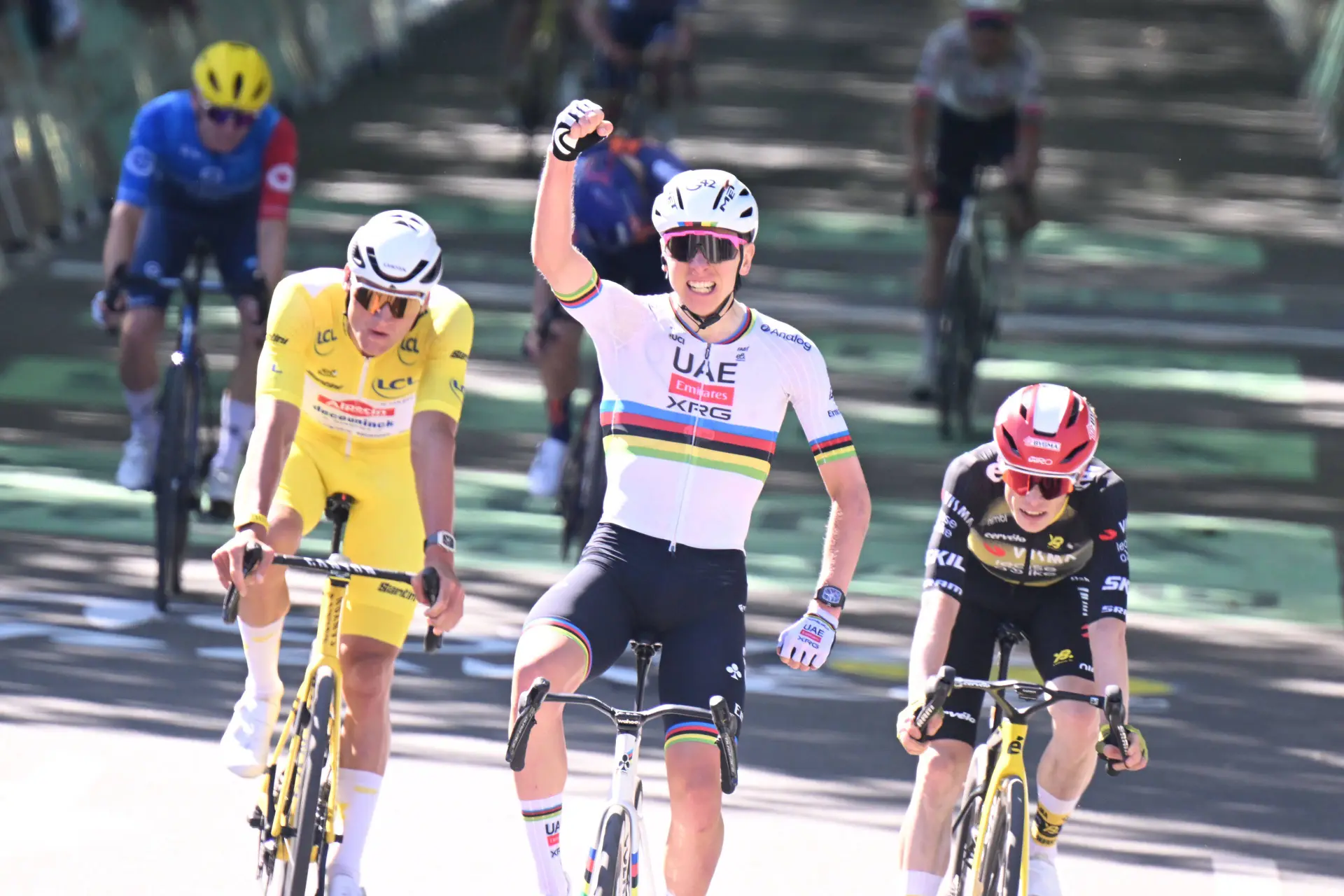
3. What does the Tour de France mean for cycling?
The Tour de France is the most prestigious and important race in professional cycling. It is a three-week epic and the premier grand tour of the sport, alongside the Giro d'Italia and Vuelta a Espana.
Steeped in history and in the innovation and evolution of the sport, the earliest edition came in the early years of the 20th century. The race is the showcase of professional cycling on the global stage, and is the most popular race among international viewers and listeners.
In modern times, the race offers huge financial and UCI ranking points for its competing teams, as well as the honour and prestige of winning one of the classifications or a stage of the race.
The first edition took place back in 1903 and has been won by some of the sport's biggest names including Eddy Merckx, Bernard Hinault, Miguel Indurain and Jacques Anquetil are some famous names to have won the race multiple times, with those names holding the record for being crowned five times during their careers.
Lance Armstrong previously held the record after winning seven straight titles from 1999 to 2005, but those titles were stripped due to doping investigations as his record was erased. Over the past 20 years, icons such as Alberto Contador, Vicenzo Nibali, Egan Bernal, Jonas Vingegaard and Tadej Pogacar have all won the race.
British riders also dominated the race in the 2010's as Chris Froome won four titles, while Bradley Wiggins and Geraint Thomas also stood on the top step of the podium. Other famous winners of the race include American three-time winner Greg LeMond.
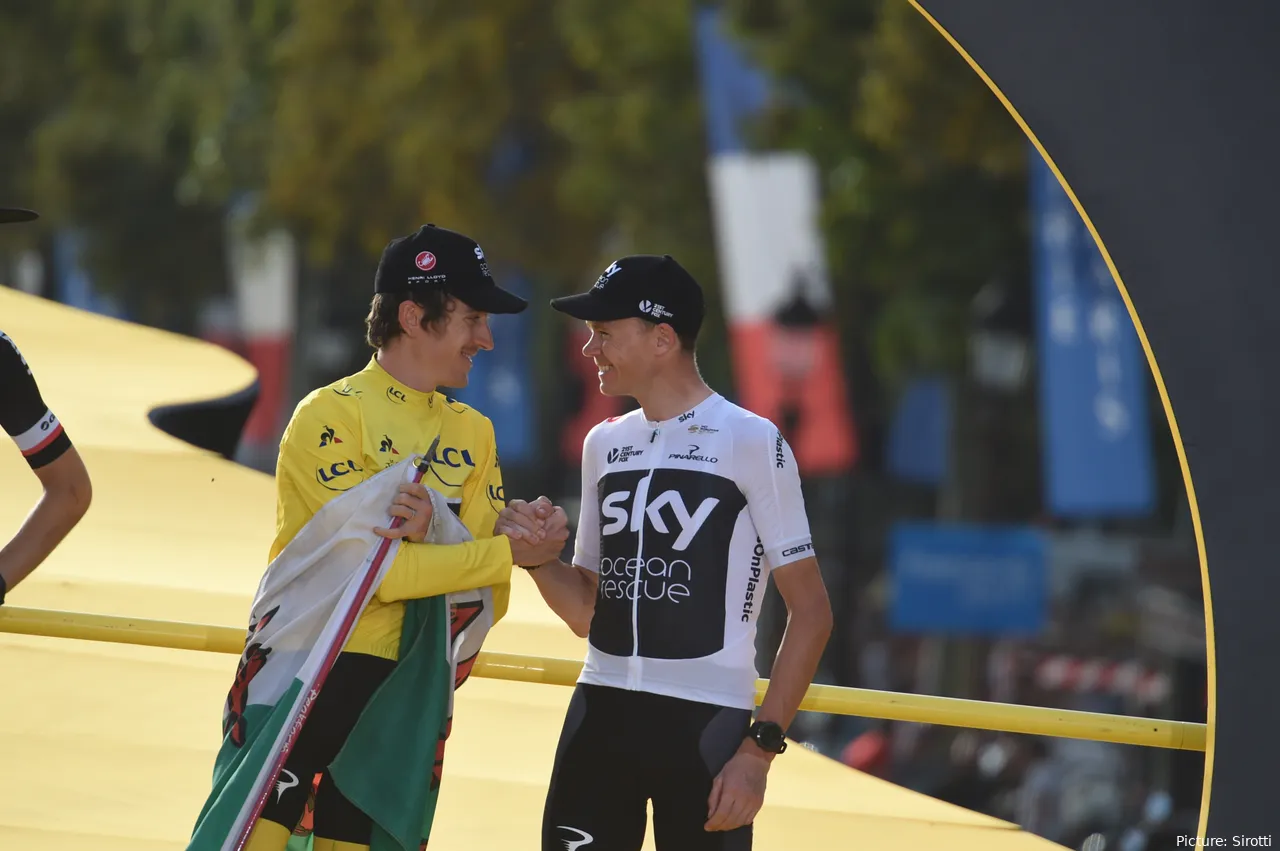
Geraint Thomas after winning the 2018 Tour, alongside Chris Froome
4. Activities beyond the races and key dates
Outside of just watching stages of the 2026 Tour de France, there's plenty of activities and things to see if fans are in France for the Grand Boucle:
La Caravane Publicitaire
Daily sponsor parade with giveaways before each stage. They usually pass by the route around 1-2 hours before the riders.
Fan Villages (Start & Finish Zones)
Big screens, food stalls and music offer a unique experience in certain zones around the route.
L'Etape du Tour (July 19th)
The mass-participation ride where amateurs complete an official Tour mountain stage on closed roads is one of the biggest days of the year for many.
Bastille Day (July 14th)
National holiday with huge crowds, roadside celebrations, and fireworks during the race.
Team Presentation (Grand Départ week)
Official rider introductions on the 2nd of July, Thursday. Also shows and fan events at the Spanish city which hosts the first days of the Tour.
Paris Final Day Celebrations
Champs-Élysées festivities include the podium and the end-of-race fan celebrations.

Wout van Aert beat Tadej Pogacar in the final stage of Tour de France 2025 in Paris
5. Stages, route and schedules Tour de France 2026
Route overview
| Number of stages | 21 |
| Start date | 4 July 2026 |
| End date | 26 July 2026 |
| Start location | Barcelona, Spain |
| Finish location | Paris (Champs-Élysées), France |
| Total distance | ~3,334 km |
Stage-by-Stage Breakdown
Stage 1
| Route | Barcelona → Barcelona (19.7 km) |
| Start | 17:05 CET |
| Finish | 19:15 CET |
| Date | Saturday, July 4, 2026 |
| Description | A fast and technical team time trial through the streets of Barcelona that will create the first overall time gaps and award the first yellow jersey. |
Stage 2
| Route | Tarragona → Barcelona (182 km) |
| Start | 13:45 CET |
| Finish | 17:25 CET |
| Date | Sunday, July 5, 2026 |
| Description | A hilly stage from Tarragona to Barcelona featuring repeated climbs around Montjuïc before an uphill finish suited to puncheurs and general classification contenders. |
Stage 3
| Route | Granollers → Les Angles (196 km) |
| Start | 12:10 CET |
| Finish | 16:55 CET |
| Date | Monday, July 6, 2026 |
| Description | The race heads into the Pyrenees for the first mountain stage, finishing with a summit finish at Les Angles after several significant climbs. |
Stage 4
| Route | Carcassonne → Foix (182 km) |
| Start | 13:10 CET |
| Finish | 17:25 CET |
| Date | Tuesday, July 7, 2026 |
| Description | A challenging mountain stage through the Ariège with multiple climbs before a finish in Foix. |
Stage 5
| Route | Lannemezan → Pau (158 km) |
| Start | 14:05 CET |
| Finish | 17:35 CET |
| Date | Wednesday, July 8, 2026 |
| Description | A flat stage across the foothills of the Pyrenees that should favour the sprinters. |
Stage 6
| Route | Pau → Gavarnie-Gèdre (186 km) |
| Start | 12:25 CET |
| Finish | 17:30 CET |
| Date | Thursday, July 9, 2026 |
| Description | The first major high-mountain stage tackles iconic Pyrenean climbs, including the Col du Tourmalet, before finishing uphill at Gavarnie-Gèdre. |
Stage 7
| Route | Hagetmau → Bordeaux (175 km) |
| Start | 13:15 CET |
| Finish | 17:15 CET |
| Date | Friday, July 10, 2026 |
| Description | A predominantly flat sprint stage that heads north to Bordeaux, where the fast men should battle for victory. |
Stage 8
| Route | Périgueux → Bergerac (182 km) |
| Start | 13:15 CET |
| Finish | 17:20 CET |
| Date | Saturday, July 11, 2026 |
| Description | A flat stage through the Dordogne that should suit the sprinters, finishing in Bergerac after a largely straightforward day. |
Stage 9
| Route | Malemort → Ussel (185.5 km) |
| Start | 13:35 CET |
| Finish | 17:20 CET |
| Date | Sunday, July 12, 2026 |
| Description | A hilly, Classics-style stage across the Corrèze with repeated short climbs that favour breakaway specialists and puncheurs. |
Stage 10
| Route | Aurillac → Le Lioran (166.6 km) |
| Start | 13:10 CET |
| Finish | 17:10 CET |
| Date | Tuesday, July 14, 2026 |
| Description | Bastille Day brings a demanding mountain stage through the Massif Central, finishing at Le Lioran after a succession of steep climbs. |
Stage 11
| Route | Vichy → Nevers (161.3 km) |
| Start | 13:50 CET |
| Finish | 17:30 CET |
| Date | Wednesday, July 15, 2026 |
| Description | A flat transition stage with few major obstacles, giving the sprint teams another excellent opportunity. |
Stage 12
| Route | Circuit Nevers Magny-Cours → Chalon-sur-Saône (181 km) |
| Start | 13:30 CET |
| Finish | 17:30 CET |
| Date | Thursday, July 16, 2026 |
| Description | Another predominantly flat stage that begins at the famous Magny-Cours circuit before heading east to Chalon-sur-Saône. |
Stage 13
| Route | Dole → Belfort (205.8 km) |
| Start | 13:00 CET |
| Finish | 17:45 CET |
| Date | Friday, July 17, 2026 |
| Description | The Tour's longest stage is an undulating day through eastern France, ideal for strong breakaway riders. |
Stage 14
| Route | Mulhouse → Le Markstein Fellering (184 km) |
| Start | 13:10 CET |
| Finish | 17:25 CET |
| Date | Saturday, July 18, 2026 |
| Description | A major Vosges mountain stage featuring several difficult climbs, including the new Col du Haag, before a summit finish at Le Markstein. |
Stage 15
| Route | Champagnole → Plateau de Solaison (169 km) |
| Start | 13:00 CET |
| Finish | 17:50 CET |
| Date | Sunday, July 19, 2026 |
| Description | A brutal Alpine mountain stage with the steep Col de la Croisette and a summit finish on the Plateau de Solaison. |
Stage 16
| Route | Évian-les-Bains → Thonon-les-Bains (26.1 km) |
| Start | 13:00 CET |
| Finish | 17:50 CET |
| Date | Tuesday, July 21, 2026 |
| Description | An individual time trial around Lake Geneva where the general classification contenders will race against the clock. |
Stage 17
| Route | Chambéry → Voiron (169 km) |
| Start | 13:20 CET |
| Finish | 17:18 CET |
| Date | Wednesday, July 22, 2026 |
| Description | A flat stage across the Alps' foothills that offers one of the final opportunities for the sprinters. |
Stage 18
| Route | Voiron → Orcières-Merlette (171 km) |
| Start | 12:35 CET |
| Finish | 17:10 CET |
| Date | Thursday, July 23, 2026 |
| Description | A long Alpine mountain stage culminating in the climb to Orcières-Merlette. |
Stage 19
| Route | Gap → Alpe d'Huez (130 km) |
| Start | 14:00 CET |
| Finish | 17:24 CET |
| Date | Friday, July 24, 2026 |
| Description | A short but explosive mountain stage finishing atop Alpe d'Huez after legendary Alpine climbs, making it one of the race's defining GC battles. |
Stage 20
| Route | Le Bourg d'Oisans → Alpe d'Huez (110 km) |
| Start | 11:20 CET |
| Finish | 16:10 CET |
| Date | Saturday, July 25, 2026 |
| Description | The Queen Stage of the 2026 Tour, featuring over 5,600 metres of climbing. It features the Col de la Croix de Fer, Col du Telegraphe, Col du Galiier and the Col de Sarenne before a second consecutive finish atop Alpe d'Huez. |
Stage 21
| Route | Thoiry → Paris Champs-Élysées (133 km) |
| Start | 16:15 CET |
| Finish | 19:30 CET |
| Date | Sunday, July 26, 2026 |
| Description | A finale into Paris featuring multiple climbs of Montmartre before the traditional finish on the Champs-Élysées. |
6. How to watch on TV and follow the Tour de France live online
| Location | TV |
| United States | NBC Sports; Peacock |
| Canada | FloBikes |
| United Kingdom | TNT Sports |
| Australia | SBS |
| France | France Televisions; Diverto |
| Germany | ARD |
| Austria | Servus TV |
| Belgium | RTBF; VRT |
| Czech Republic | Czech TV |
| Denmark | DKTV2 |
| Norway | TV2 Norway |
| Spain | RTVE |
| Ireland | TG4 |
| Italy | Rai Sports |
| Luxembourg | RTL |
| Netherlands | NOS |
| Basque Country | EITB |
| Portugal | RTP |
| Slovakia | STVR |
| Slovenia | RTV Slovenija |
| Switzerland | SRG-SSR |
| Hungary | MTVA |
| Russia | OKKO |
| Wales | S4C |
| Middle East & North Africa | Abu Dhabi Sports |
| Sub-Saharan Africa | Supersports |
| Southeast Asia | BeIN Sports Asia |
| China | Zhibo TV; CCTV |
| Japan | J Sports; WOWOW |
| Taiwan | ELTA |
| Sourth Korea | Coupang |
| New Zealand | Sky Sports |
| Latin America & Caribbean | ESPN |
| Colombia | Caracol TV; RCN |
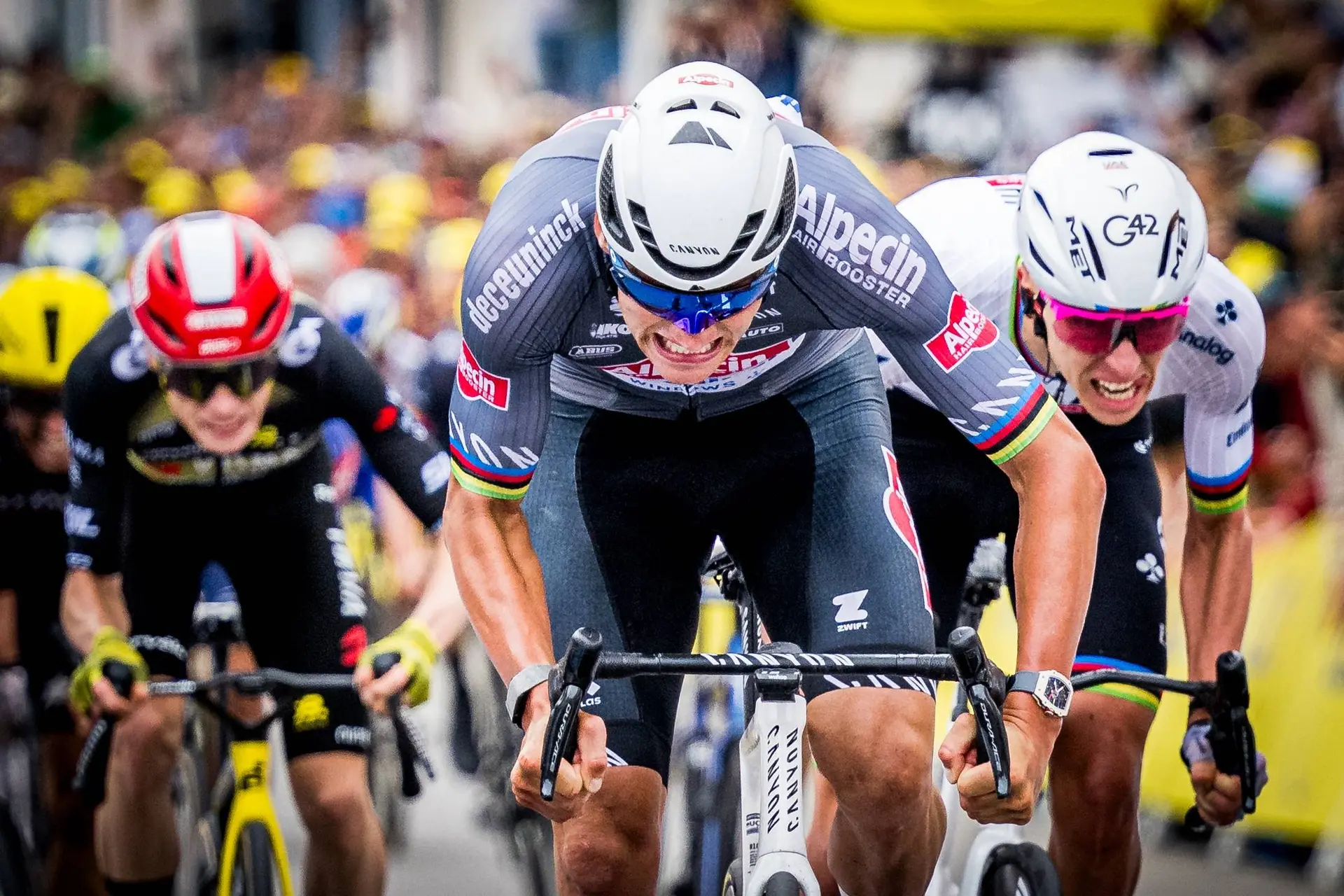
7. List of Tour de France winners & podium finishers over the past 15 years
| 2025 |
| POGAČAR Tadej |
| VINGEGAARD Jonas |
| LIPOWITZ Florian |
| 2024 |
| POGAČAR Tadej |
| VINGEGAARD Jonas |
| EVENEPOEL Remco |
| 2023 |
| VINGEGAARD Jonas |
| POGAČAR Tadej |
| YATES Adam |
| 2022 |
| VINGEGAARD Jonas |
| POGAČAR Tadej |
| THOMAS Geraint |
| 2021 |
| POGAČAR Tadej |
| VINGEGAARD Jonas |
| CARAPAZ Richard |
| 2020 |
| POGAČAR Tadej |
| ROGLIČ Primož |
| PORTE Richie |
| 2019 |
| BERNAL Egan |
| THOMAS Geraint |
| KRUIJSWIJK Steven |
| 2018 |
| THOMAS Geraint |
| DUMOULIN Tom |
| FROOME Chris |
| 2017 |
| FROOME Chris |
| URÁN Rigoberto |
| BARDET Romain |
| 2016 |
| FROOME Chris |
| BARDET Romain |
| QUINTANA Nairo |
| 2015 |
| FROOME Chris |
| QUINTANA Nairo |
| VALVERDE Alejandro |
| 2014 |
| NIBALI Vincenzo |
| PERAUD Jean-Christophe |
| PINOT Thibaut |
| 2013 |
| FROOME Chris |
| QUINTANA Nairo |
| RODRÍGUEZ Joaquim |
| 2012 |
| WIGGINS Bradley |
| FROOME Chris |
| NIBALI Vincenzo |
| 2011 |
| EVANS Cadel |
| SCHLECK Andy |
| SCHLECK Fränk |
8. List of Tour de France classifications and jerseys
General Classification – Yellow Jersey
this classification ranks the rider with the lowest cumulative time across all stages. The rider leading the overall race wears the yellow jersey (maillot jaune). Riders can also compete for bonus seconds that are taken away from their total time on certain stages.
Points Classification – Green Jersey
The rider with the most points earned at stage finishes and intermediate sprints takes the maillot vert. It generally favours sprinters, although versatile riders can take points on hilly stages.
King of the Mountains (KOM) Classification – Polka Dot Jersey
Points are earned by being among the first riders over categorised climbs. The leader wears the polka dot jersey (maillot à pois). Climbs are categorised by their difficulty, with more points on offer based on the difficulty of the climb.
Young Rider Classification – White Jersey
Awarded to the best-placed young rider based on the general classification. In order to be eligible, riders must be under 26 on January 1st, 2026. The leader wears the white jersey (maillot blanc).
Teams Classification
Team are ranked based on the combined cumulative times of its three best riders. The leading team doesn't wear a special jersey a jersey. However, its riders wear yellow race numbers.
Most Aggressive Rider – Combativity Award
Awarded to the rider judged by the race jury to have shown the greatest resilience and attacking flair during a stage, often favouring riders who animate the stage in moves such as breakaways or attacks. That rider wears a red race number on the following stage. At the end of the Tour, an overall Super-Combativity Award is given to the rider who best showcases those attributes over the course of the entire race.

Gavin QuinnCycling Journalist
Gavin Quinn is a cycling journalist and ultra-distance cyclist with a BA in Journalism from Dublin City University. Formerly the Press & Communications Officer for Cycling Ireland, Gavin has worked inside the national team at the World Championships and has reported for the Irish Mirror, Mirror UK, and The42.
His expertise is backed by elite-level access, having interviewed stars like Sam Bennett and Ben Healy, as well as immense personal endurance. In 2025, he completed a 12,000km solo cycle from Ireland to Vietnam, following a 4,600km tour across Europe. From the cobbles of Paris-Roubaix to the gradients of the Tourmalet, Gavin’s writing focuses on the "romance and brutality" of the sport. Having visited 50+ countries, he brings a global, cultural perspective to his coverage of the pro peloton for CyclingUpToDate.
claps 2visitors 2
Just in
Popular news
Latest comments
- Being the best rider left in the race is pretty much the only way to win in any edition, surely? Seems reductive to say "they only won because the entire peloton wasn't as absolutely stacked as it could've been" - you can only beat who is in front of you.wrsty08-10-2026
- I’m sorry but generally the coverage on your site is first class but this incident highlights something I just don’t get with cycling journalism. This accident should never have been allowed to happen, it comes uncomfortably close to the Finlay Tarling tragedy and two other incidents took place within days of this. I checked all of the cycling websites and you all put out basically the same story. Pidcock gave journalists the perfect opening to blow this sky high, what has the UCI got to say? What is Adam Hansen doing? What do the organisers say? Nothing, you all trot out the same easy quotes taken from Pidcocks interview after the race but do nothing to follow it up. I see it time and time again, journalists taking the easy way out but being outraged when it happens again as it surely will. Riders can’t do this but journalists should be independent and should be able to raise these uncomfortable questions but cyclinguptodate and every other on line publication prefer to take the easy way out. That’s the real tragedy here.Paul53108-10-2026
- Happy to help :-)Mistermaumau08-10-2026
- Well, ok but, it’s also a structural, team, budgeting, direction and all sorts of other issueMistermaumau08-10-2026
- I wouldn’t call it an analogy but maybe his criticism is a little unfair. On the other hand, the fact Cicco made a public affair out of it despite having received all the explanations and proof makes me feel he now deserves being criticised for not accepting there is nothing to discuss.Mistermaumau08-10-2026
- Much as I like him (one of my favourites), I do want to attract a little attention to the coincidence of his recent performances in the current context. Not the first time a rider improves noticeably when there’s a job interview to prepare. In the same lighthearted humour of his, i hope the UCI will let him wear it at home as the rules quite strictly state you can only wear it during participation in the discipline you won in, and we all know how capable they are of interpreting rule interpretation ;-) Also, if it’s going to be retirement (please not), I wouldn’t call that an agreement as somebody will probably feel they didn’t get what they wanted.Mistermaumau08-10-2026
- Agreed. There used to be a team willing to pay though. I take all these figures (that vary enormously according to who is publishing) with handfuls of salt. We don’t know how salaries are treated (especially between a UK employer and Andorran resident), we don’t know how numbers are derived and from where, if deductions have been taken into consideration, etc. but if he returns to Colombia, he’s going to need quite a bit in protection money.Mistermaumau08-10-2026
- And another one gone, another one gone, another one bites the dust. Ah gonna get you too…Mistermaumau08-10-2026
- Top marks RidesHills. A great post that sums up exactly Egan Bernals situation.Cyclingsbestfan08-10-2026
- Thanks for pointing out that typo. Now ammended.Prorodsandstuff08-10-2026
Loading
Write a comment