“They were missing experienced guys who know how to steer the ship” – New signing reveals what INEOS lacked in recent seasons
Cycling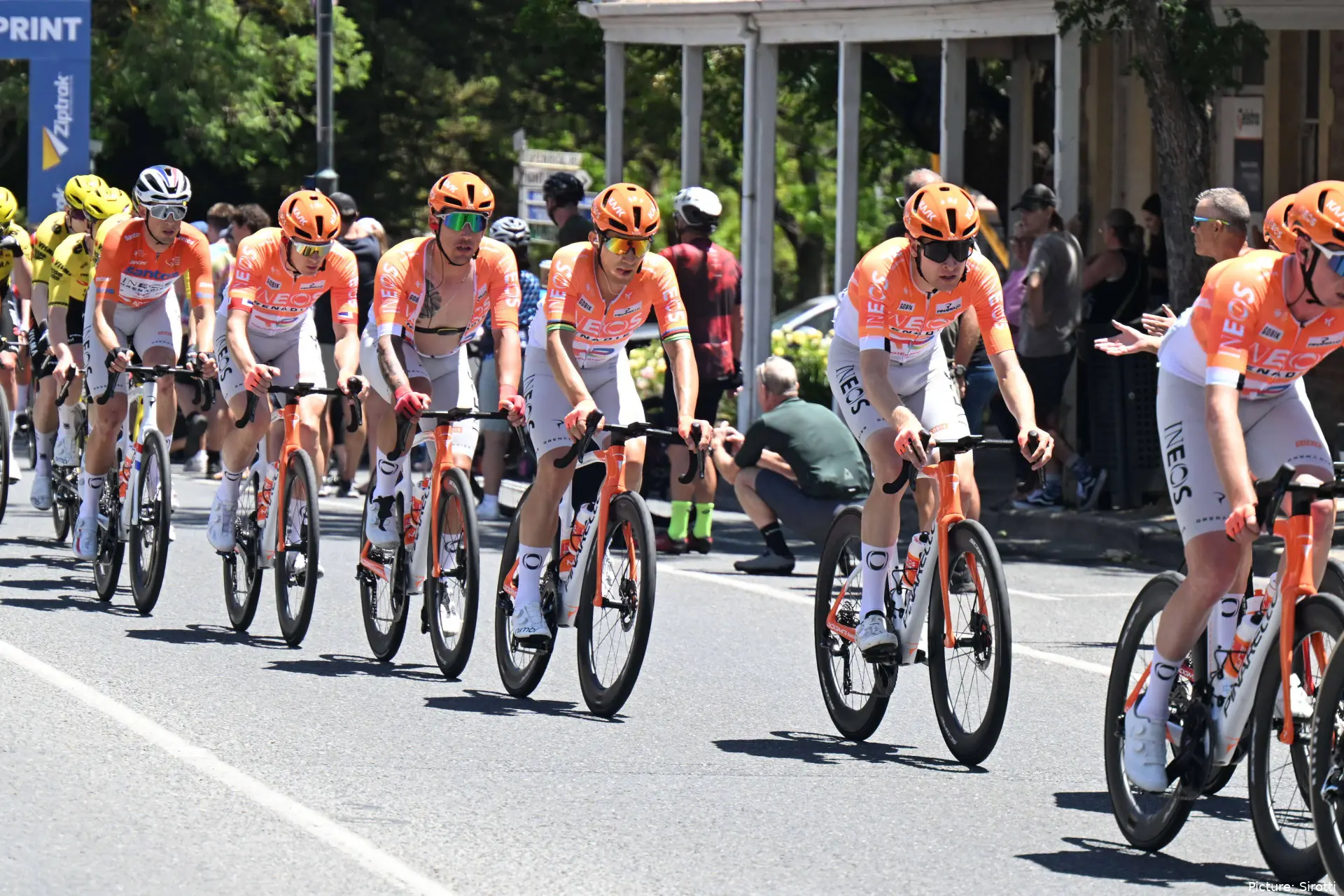
When Jack Haig tried to explain why a move to INEOS Grenadiers made sense for him in 2026, he ended up explaining something much bigger about the team itself.
“Maybe they were missing some more experienced guys that really know how to steer the ship in the right direction in certain critical moments,” he said in conversation with Cycling News.
It is a line that lands harder than perhaps even Haig intended. Because for the past two seasons, that is precisely what INEOS appeared to lack.
The gap left behind
The retirements of Geraint Thomas at the end of 2025 and Luke Rowe the year before did not just remove experience from the roster. They removed riders who understood how to control a race from inside it. Riders who could read moments before they unfolded. Riders who did not need instructions over the radio to know when something was about to go wrong.
In their absence, INEOS often found themselves present in races without ever quite feeling in control of them. Strong line-ups, talented leaders, good legs on the day, but missing the calm authority that once defined the Team Sky and early INEOS years.
Haig’s observation cuts straight to that reality. “I hope I can step into that,” he added, speaking about his role within the squad. “Be at the front of the bike race, making some sort of critical decisions in critical moments – hopefully being more of an influential player.”
He is not describing a domestique role. He is describing a road captain.
A deliberate rebuild, not a coincidence
Haig’s arrival does not sit in isolation. It comes alongside the return of Dave Brailsford to day-to-day involvement with the team at the back end of 2025, a move widely viewed as a reset moment for the British outfit. It comes as INEOS launch their first-ever in-house development structure through the INEOS Grenadiers Racing Academy, aimed at rebuilding culture and standards from the bottom up.
And it comes after two seasons in which the team’s results rarely matched the strength of the names on paper.
Through different voices, a consistent theme has emerged. Young riders inside the Academy speak about organisation, clarity and presence returning. Senior figures talk about hunger and standards. Now, a new signing points out the practical racing element that had quietly disappeared.
The ability to steer the ship.
Why Haig fits the need
Haig knows what that looks like. He was part of a Grand Tour-winning structure with Orica. He stood on the Vuelta podium himself. He spent five seasons at Bahrain Victorious in a team built around collective decision-making in chaotic race situations.
He is not arriving to chase his own GC ambitions. He is arriving because he believes INEOS can once again become a team capable of podiuming and winning Grand Tours, and because he sees a role for himself in making that happen.
“I think it’s a really nice place that I can restart the career, find a bit more motivation, find a bit more enjoyment, and just be part of a nice environment,” he said.
That enjoyment, he explains, comes from being involved in the decisive parts of races again.
A team finding its balance again
Viewed alongside the wider changes at INEOS, Haig’s comments feel less like personal motivation and more like a missing piece being put back into place.
Leadership at the top through Brailsford. Structure and pathway through the Racing Academy. And now, race intelligence and experience are returning into the peloton itself.
For a team openly intent on working its way back to the top step of the Tour de France, that combination may prove as important as any headline signing.
Because, as Haig’s words quietly underline, INEOS did not forget how to train riders or sign talent.
They simply lost, for a while, the people who knew how to win bike races when it mattered most.

Kieran WoodDeputy Editor-in-Chief
Kieran Wood is a sports journalist based in Wales and has been active in journalism since 2022. He regularly contributes to DartsNews.com and CyclingUpToDate.com, where he covers professional cycling and darts. In cycling, his work includes liveblogs from major races, including the Tour de France, the Giro d’Italia, and La Vuelta a España, alongside race reports and analysis. He has also conducted interviews with professional riders.
His reporting spans the full racing calendar, from one-day classics to stage races, with a focus on accurate, real-time coverage and clear contextual analysis. For statistics, results, and historical context, he regularly uses resources such as ProCyclingStats. To support reporting on rider activity and training context where relevant, he also references Strava.
In his work, Kieran places strong emphasis on careful sourcing, editorial accuracy, and updating articles as new, verified information becomes available.
claps 1visitors 1
Just in
Popular news
Latest comments
- Much as I like him (one of my favourites), I do want to attract a little attention to the coincidence of his recent performances in the current context. Not the first time a rider improves noticeably when there’s a job interview to prepare. In the same lighthearted humour of his, i hope the UCI will let him wear it at home as the rules quite strictly state you can only wear it during participation in the discipline you won in, and we all know how capable they are of interpreting rule interpretation ;-) Also, if it’s going to be retirement (please not), I wouldn’t call that an agreement as somebody will probably feel they didn’t get what they wanted.Mistermaumau08-10-2026
- Agreed. There used to be a team willing to pay though. I take all these figures (that vary enormously according to who is publishing) with handfuls of salt. We don’t know how salaries are treated (especially between a UK employer and Andorran resident), we don’t know how numbers are derived and from where, if deductions have been taken into consideration, etc. but if he returns to Colombia, he’s going to need quite a bit in protection money.Mistermaumau08-10-2026
- And another one gone, another one gone, another one bites the dust. Ah gonna get you too…Mistermaumau08-10-2026
- Top marks RidesHills. A great post that sums up exactly Egan Bernals situation.Cyclingsbestfan08-10-2026
- Thanks for pointing out that typo. Now ammended.Prorodsandstuff08-10-2026
- Great signing by Uno-X. Hope he develops and can get som great results.
 Vikingrider08-10-2026
 - It always worries me when people so knowledgeable about a subject base lengthy detailed explanations or analysis on a single erroneous fact or figure so blatantly wrong thereby invalidating just about everything they made the effort to say. I always wanted to meet some top theoretical physicist to make sure they hadn’t overlooked something obvious as their figures for the mass of the universe don’t work out. This is like basing the US budget on a debt of 4 trillion instead of 40, something I know one person would be very capable of attempting.Jumpyjohn08-10-2026
- His analogy is bad, there are a lot of things we use, we dont know how it works not do we have the brain capacity to know everything we use. as a cyclist he is supposed to know to how to race, not every detail about every tech on his bike or around him.abstractengineer08-10-2026
- Db cant do anything, its a physical issue not a mental or training issueabstractengineer08-10-2026
- If they’d run a poll, I’d vote this best CUTD post of 2026.Jumpyjohn08-10-2026
Loading
Write a comment