“There’s no pressure on Mads Pedersen now. He has a legitimate excuse” – Danish expert sees injury as unexpected freedom for Lidl-Trek ‘warrior’
Cycling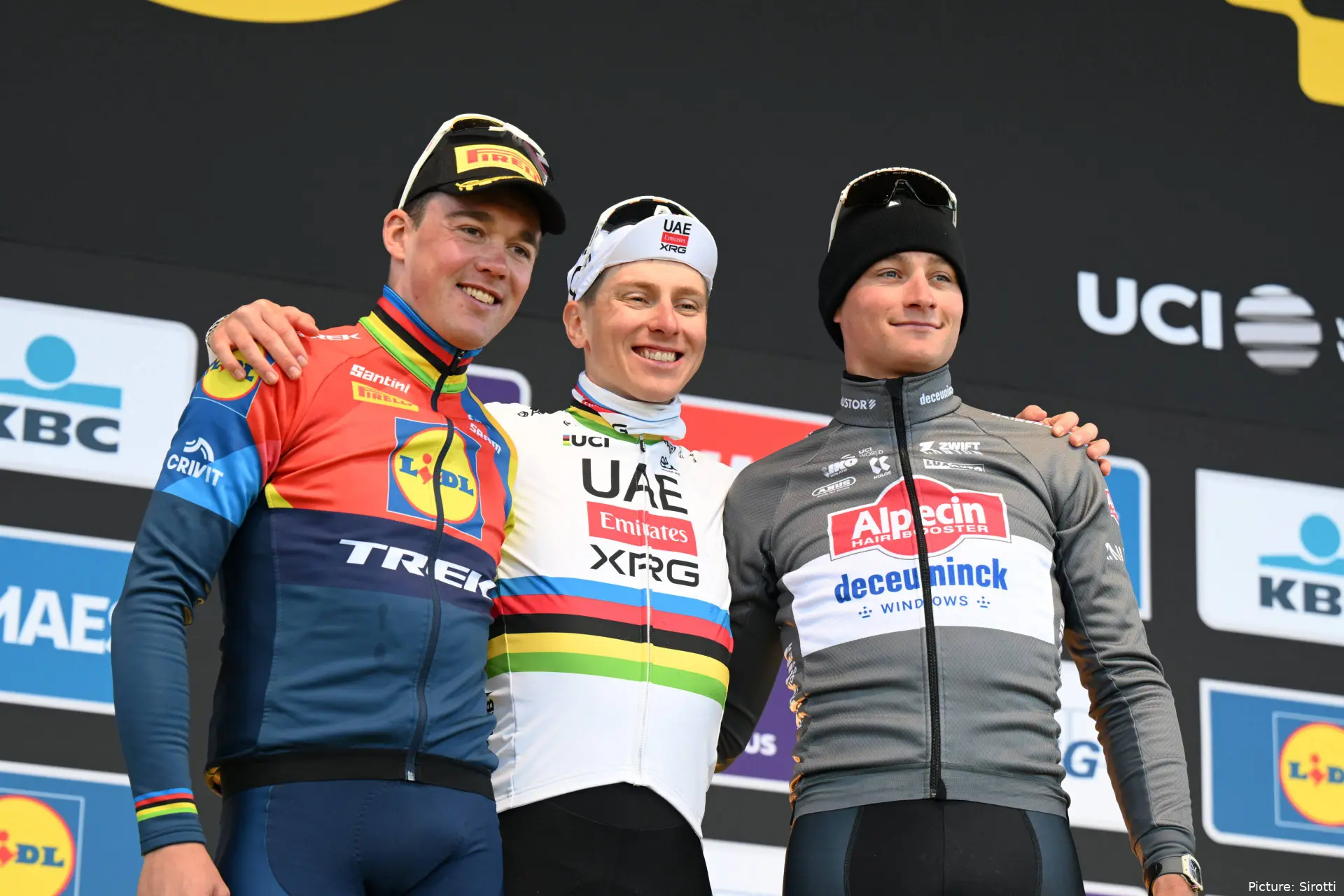
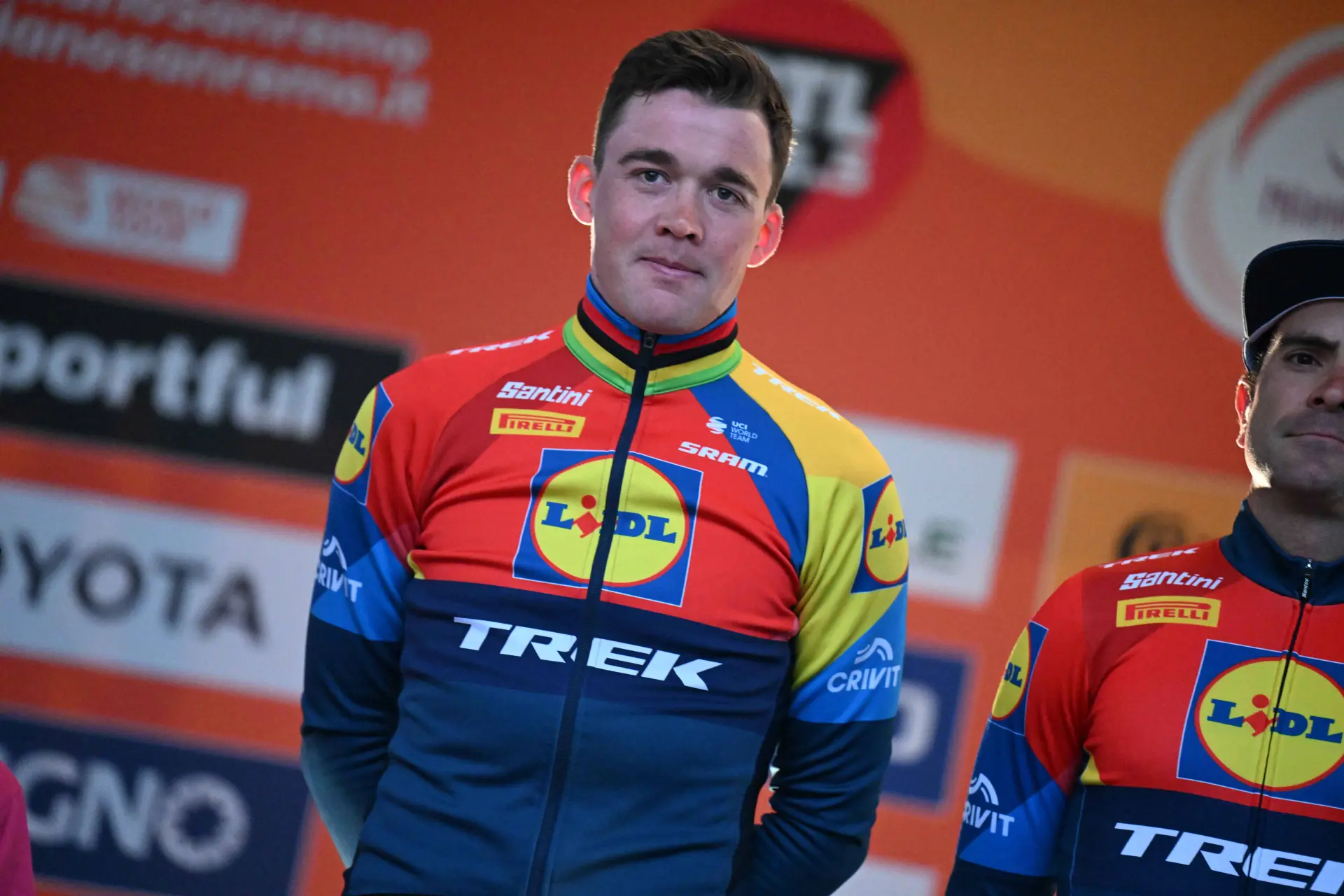
For the first time since his brutal season-opening crash, the conversation around Mads Pedersen has shifted away from deadlines and damage control. Instead of asking how quickly he can get back, Danish expert Lars Bak believes the injury has removed something equally significant. Pressure.
Speaking after listening to Pedersen’s own update on his Lang Distance podcast, Bak framed the situation not as a race against time, but as an unexpected reset. With Paris-Nice and Milano-Sanremo now off the table, the immediate obligation to deliver has disappeared.
“There’s no pressure on him now,” Bak said in his analysis for TV2 Sport. “If he doesn’t get a result in Flanders or Roubaix, he also has a legitimate excuse.”
It is a striking reframing, especially for a rider whose spring ambitions had been sharply defined long before a wheel ever turned in Valencia.
From obligation to opportunity
Pedersen’s crash on the opening stage of the Volta a Comunitat Valenciana left him with fractures to both wrist and collarbone. Those injuries immediately derailed a carefully structured run in to the Classics. Surgery followed, then uncertainty, and finally the realisation that the traditional stepping stones through February and early March would be missed entirely.
That absence has consequences, but it also alters expectations.
Bak does not question Pedersen’s mindset or willingness to push through adversity. If anything, he sees those traits as constants. “He is always happy and optimistic and is a racer. He is a man who can eat the pain,” Bak said. “It seems like there is quite good control of the situation and that they have a good plan.”
The difference, in Bak’s view, is that Pedersen no longer needs to justify every training decision against an approaching start line. The urgency that normally defines his spring has eased.
The ‘warrior’ without the stopwatch
Pedersen himself has been open about how precarious the situation remains. With only limited time back on the road before the Classics, he has acknowledged that “it already looks really, really difficult”, adding that “it only takes one setback” for the plan to unravel completely.
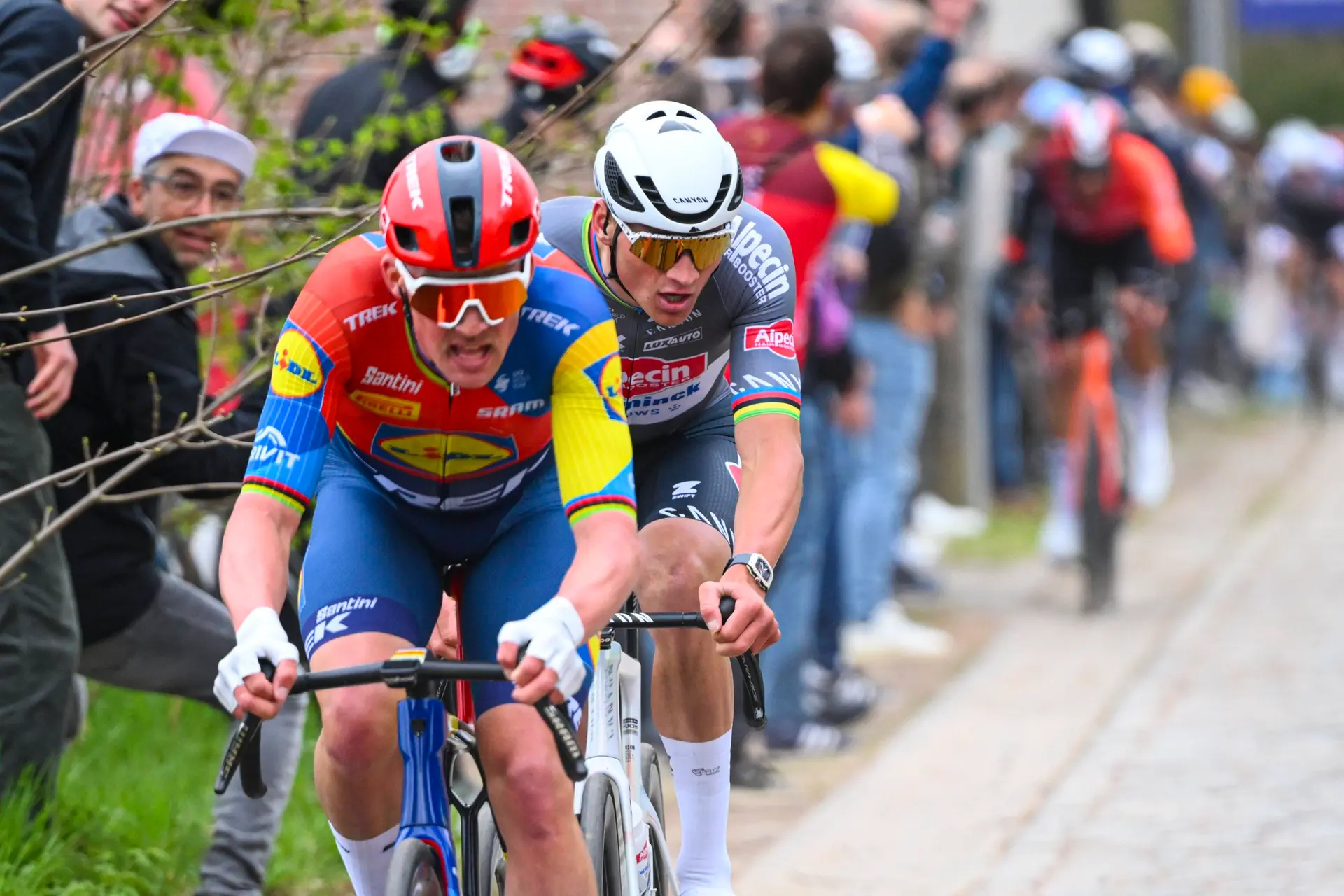
Bak does not downplay those risks. He doubts Pedersen can reach peak condition quickly enough to go head-to-head with riders such as Mathieu van der Poel and Tadej Pogacar at the biggest moments of the spring.
But crucially, he sees that reality as liberating rather than limiting. “But I think he should give it a shot,” Bak said. “There’s also no pressure on him now.”
It is a subtle but important shift. Pedersen is still chasing the same long-term goal of winning a Monument, but the route toward it no longer needs to be perfect.
Freedom to adapt
Bak has already floated the idea of alternative race blocks, suggesting that easing back in to competition away from the cobbles could prove wiser than forcing an immediate return to the most punishing races on the calendar. That flexibility did not exist when Pedersen’s season began. Now, it does.
Pedersen has already resumed structured indoor training, gradually increasing his workload while protecting the injured wrist. The collarbone, reinforced with a longer plate and multiple screws, is expected to stabilise predictably. The wrist remains the unknown, but even there, the absence of immediate pressure allows decisions to be made conservatively rather than reactively.
For Bak, that matters just as much as raw fitness. “He feels that he owes the team something by being ready for the Tour of Flanders and Paris-Roubaix,” he said. “That’s why he will, of course, do everything he can, because the big goal is to win a Monument.”
The difference now is that failing to do so would no longer be framed as failure.
A different kind of spring
Pedersen’s spring is still defined by uncertainty. Participation in the Tour of Flanders and Paris-Roubaix cannot be guaranteed, and even if he does make the start line, expectations will be tempered.
But as Bak sees it, that is not necessarily a disadvantage.
Freed from the obligation to peak on schedule, Pedersen can focus on recovery, progression, and opportunity rather than outcomes. For a rider repeatedly described as a ‘warrior’, the lack of pressure may prove just as powerful as any training block.
And in a spring already shaped by disruption, that unexpected freedom could yet become an advantage.

Kieran WoodDeputy Editor-in-Chief
Kieran Wood is a sports journalist based in Wales and has been active in journalism since 2022. He regularly contributes to DartsNews.com and CyclingUpToDate.com, where he covers professional cycling and darts. In cycling, his work includes liveblogs from major races, including the Tour de France, the Giro d’Italia, and La Vuelta a España, alongside race reports and analysis. He has also conducted interviews with professional riders.
His reporting spans the full racing calendar, from one-day classics to stage races, with a focus on accurate, real-time coverage and clear contextual analysis. For statistics, results, and historical context, he regularly uses resources such as ProCyclingStats. To support reporting on rider activity and training context where relevant, he also references Strava.
In his work, Kieran places strong emphasis on careful sourcing, editorial accuracy, and updating articles as new, verified information becomes available.
claps 0visitors 0
Just in

Popular news
Latest comments
- He didn't even try to sprint all outvappaxbipmv18-10-2026
- Campenaerts looked like a rolling pumpkin with that all orange leaders skinsuit !frieders318-10-2026
- He can take his dumb a$$ politics somehwere else !frieders318-10-2026
- good to have her back. fingers crossed she‘ll be able to stay!Ketterechts17-10-2026
- A tenner and he wins the Tour next year, too 😂anonymouscyclist17-10-2026
- the answer is either stick to classics or GTs but not bothabstractengineer17-10-2026
- the exodus already stared with Ciccone. Already they were struggling with two sprinters, now there are three. Also Ganna will demand leadership. Gall is the most proven GC, Ayuso has the most potential. GC leadership for everybody will be impossible. Literally a UAE style mess without pogi.abstractengineer17-10-2026
- I raced as an amateur for 12 years, including six years on my country’s national road cycling team. I secured two national titles and competed in three World Championships plus more than 15 international stage races. At 23, we travelled to Italy for a training camp—or so I assumed. On a rest day, we watched a presentation about adopting a more “professional” training approach. It was crystal clear what “professional” meant. That moment first exposed me to this dilemma. After returning from Italy, I left cycling—at least at the competitive level I had known. Over the following two years, the whole team was caught doping. I hold that everyone is innocent until proven guilty. In my view, current stakeholders operate on a different scale, and the sums involved are vast. I am unsure whether any doping would ever be revealed. I try to stay positive and enjoy the show. My 2c.
 vannpelt17-10-2026
 - Fiver he wins 🤣
 leedorney17-10-2026
 - “…measures to reduce speeds.” Might as well shorten the race course to just 50km as well? ASO generates at minimum €300m a year and 30- 40% profit. Maybe stop being greedy and spend more of the profit to protect the riders instead.b3tlla17-10-2026
Loading
Write a comment